35 Ergebnisse
1816Best.-Nr. 315888Paris: Hamelin-Bergeron 1816. Second expanded edition. xxxii-50 i.e. 509; xi-1-542 pp. Atlas: first 8 plates with 9 hand-coloured figures per plate of wood grains; IX-XXXIX; Atlas Tome II LVII plates some folding. 96 plates in all. 3 vols. 4to atlas; 8vo text. Contemporary quarter tan calf rubbed. Signed by the publisher opposite opposite title page of volume 1 and along title page margin as receipt of purchase for 60 fr. Text and plates clean and fresh. Atlas vol. rebacked preserving spine. Second expanded edition. xxxii-50 i.e. 509; xi-1-542 pp. Atlas: first 8 plates with 9 hand-coloured figures per plate of wood grains; IX-XXXIX; Atlas Tome II LVII plates some folding. 96 plates in all. 3 vols. 4to atlas; 8vo text. Second edition of the definitive contemporary work on the lathe originally published in 1792-96. The illustrations show wood turning machinery and tools finished products and hand-colored depictions of 72 varieties of wood grain. Brunet I-785; Ogden Bibliography of Turning item 27 Hamelin-Bergeron unknown books
1934Best.-Nr. 49765Tokyo æ±äº¬: Koyosha Henshubu 洪洋社. 編輯部 1934. First edition. Spiral_bound. vg- to vg. Quarto. 3pp. 20pp. 2. Spiral-bound illustrated red black and white wrappers. Volume 13 of the scarce series of Japanese photographic surveys on modernist furniture. At least 16 volumes were known to have been published between 1932 and 1934. This volume is the second part following vol.11 which focuses on the furniture and decorative furnishings from Japanese cafes during the early 1930s. The first three pages contain text captions in numerical order followed by 20 plates of beautifully printed b/w photogravure images of the furniture. The final two pages contain publishers advertisements. Text throughout in Japanese. Wrappers with some light staining and smudges to the wrappers. Light rubbing to extremities. Back cover with chipping to the bottom left corner as well as some small closed tears along the spiral binding and the left side. Interior with some light smudging and some sporadic minor to light water stains throughout mostly in the margins with images mostly still clean and bright. Wrappers and in very good- interior in very good condition overall. Koyosha Henshubu (洪洋社. 編輯部) unknown books
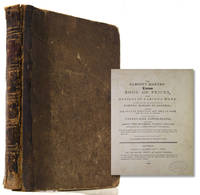
1793Best.-Nr. 315883London: Printed by W. Brown and A. O'Neil 1793. Second edition with additions. Engraved frontispiece 29 copper engraved plates after Shearer and Hepplewhite. xvi 266 pp 24 leaves of letterpress tables printed on one side only. 1 vols. 4to. Old quarter calf and boards. Spine rubbed lower board detached several plates trimmed just inside plate line with loss of numeral in one plate otherwise clean internally. Second edition with additions. Engraved frontispiece 29 copper engraved plates after Shearer and Hepplewhite. xvi 266 pp 24 leaves of letterpress tables printed on one side only. 1 vols. 4to. Second edition with 9 additional plates. Provenance: J. Thomas Cabinet Maker and Upholsterer Ock St Abingdon ink stamp in lower margin of title. Kress 15605; ESTC T120479 Printed by W. Brown and A. O'Neil unknown books
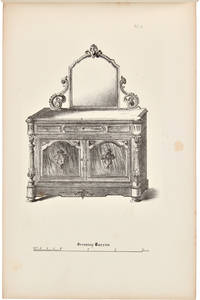
1868Best.-Nr. 32817Philadelphia: Henry Carey Baird 1868. An American Furniture Design Book The third furniture pattern book published in America issued simultaneously with another Baird title GOTHIC ALBUM FOR FURNITURE MAKERS. It was preceded by books called THE CABINET-MAKER'S ASSISTANT published in 1840 and 1842. Depicted are a variety of bed stands bureaus wardrobes tables bookcases and more in a Renaissance Revival style. They are patterned after mid-19th-century French designs. All early American furniture books are rare. Oblong octavo. Original green cloth gilt-stamped cover. Front hinge starting. Internally bright and clean. Very good. hardcover books
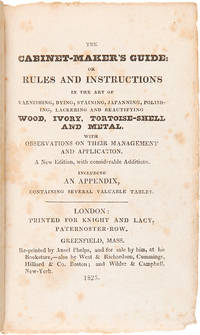
1825Best.-Nr. 56380Greenfield MA. 1825. First Cabinetmaker's Guide Published in America The first American printing of the first American furniture finisher's manual reprinted from the original British edition by G.A. Siddons. "A new edition with considerable additions. Including an appendix containing several valuable tables." Clear and concise instructions are given for dying and staining woods making glue making and applying varnish polishing japanning cleaning woods and metals and much more. For example to make furniture oil "Take linseed oil put it in a glazed pipkin with as much alkanet root as it will cover; let it boil gently and you will find it become of a strong red color: let it cool and it will be fit for use." Six tables in the appendix provide assistance for figuring lengths and weights and an index follows. Western Massachusetts was obviously a place of great architectural and design innovation during the American Federal period as both the present title and Asher Benjamin's landmark architecture book The Country Builder's Assistant. were printed in Greenfield. Not in AMERICAN IMPRINTS. Highly desirable and a landmark in American crafts. 16mo. Original printed paper-covered boards. Moderate staining to boards minor chipping to spine ends minor edge wear. Moderate scattered foxing. Very good and wholly unsophisticated. Untrimmed. RINK 1793. hardcover books
1830Best.-Nr. 315876Birmingham 1830. 163 engraved plates irregularly numbered 1 to 278. 1 vols. Oblong 4to 13 x 9 inches. Quarter brown leather and boards with the same printed index B-W on front and back pastedowns. worn. 163 engraved plates irregularly numbered 1 to 278. 1 vols. Oblong 4to 13 x 9 inches. Rare engraved early nineteenth century brassfounder's trade catalogue with the manufacturer's name given usually not noted in such a work. While the actual catalogue appears to be ca. 1820-1830 some of the actual copper plates would appear to have been engraved somewhat earlier ca. 1800-1810 Plates present : 111 17 19 26 29 31 33 37. 39 41 47 59 65 66 74 75 7980 84 86 90 9899 101 102 105111 112 116 117 118 125 128 129 130 131 132 134 136 137 138 140 141 142 143 145 147 149 152 163-190 192-196 199-203 205-222 224 226 227 230 230A 231 232 234 235 240 241 242 242A 243-248 248A 249 250 253 254-265 267-278. unknown books
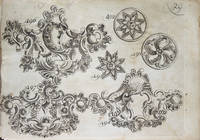
1775Best.-Nr. 315877Birmingham 1775. 92 copper plates of which four are folding on laid paper with crown and "GR" i.e. George Rex watermark some numbered in the plate with breaks from 2 to 145 prices in ink in manuscript. 1 vols. 4to. Some edge wear chipping. Housed n a quarter brown morocco clamshell box and chemise. 92 copper plates of which four are folding on laid paper with crown and "GR" i.e. George Rex watermark some numbered in the plate with breaks from 2 to 145 prices in ink in manuscript. 1 vols. 4to. A rare collection of copper plates of brass hardware for furniture likely manufactured in Brimingham in the last quarter of the 18th century. Includes doorknobs drawer-pulls hinges keyholes etc. in the rococo style. unknown books
1740Best.-Nr. 2420Augsburg: Johann Jacob Haid & son 1740. Six tall narrow folio-sized engravings with etching platemarks 400 x 207 mm. sheets 435 x 277 mm. deckle edges unsigned but by Jacop Wangner after Watteau numbered 1-6 in the plate at lower right imprint at lower right I. Haid et filius excudit A. V. Augustae Vindelicorum. Upper edges archivally tipped to mats. Fine. A perfectly preserved suite of six large rococo engravings reproducing Watteau's paintings for a folding screen intended to be cut out by ladies for use in furniture decoration. Watteau's influence on 18th-century decorative arts throughout Europe by way of the many engravings after his work published by Gersaint has long been recognized but the use of the engravings as actual sheets to be cut up and applied to household objects has garnered little attention until recently. The vogue for decoupage probably first appeared in the late seventeenth century and by the 1720s the hobby of cutting out colored prints for application to various household objects and pieces of furniture was all the rage in France Germany and beyond. The process which remained a favorite pastime throughout the eighteenth century was known as la découpure in French as Ausschneidekunst in German and as lacca contrafatta or lacca povera in Italian although "the latter term appears to be a true misnomer considering the amount of minute work involved" Kisluk-Grosheide p. 83. It consisted of neatly cutting out hand-colored engraved or woodcut motifs or figures applying them to a textile or sometimes cardboard ground and varnishing them. These creations were applied to furniture as well as to "screens folding screens wall hangings ceilings the tops of coaches and sedan chairs" loc. cit. affording a passable imitation of Asian lacquer. The craze which created a goldmine for certain print publishers reached the point that bibliophiles and collectors were warned to keep a vigilant eye on their most precious books prints and paintings lest eager young ladies attack them with scissors. In 1728 six engravings after Watteau's paintings for a folding screen were commissioned by the art collector Jean de Julienne as part of a vast program of reproductions of Watteau's painted oeuvre. They were engraved by Louis Crépy fils and published by the Paris marchand-mercier art dealer and print publisher Edmé-François Gersaint. An announcement of their upcoming publication in the November 1727 Mercure de France explicitly described them and two other Crépy-Watteau engravings as "marvelously appropriate for decoupages with which ladies these days make such pretty furniture" Crépy grave actuellement six morceaux en hauteur . d'après un Paravant peint par Watau dont les compositions sont très-galantes. De pareils sujets peints sur des fonds blancs conviennent à merveille aux découpures dont les Dames font aujourd'hui de si jolis meubles Mercure de France 1 Novembre 1727 p. 2492 digitized on Gallica. Indeed the publisher himself highlighted this usage in his own note in a later issue of the Mercure cited by Glorieux p. 212: pointing out that all of the decorative motifs in the Watteau engravings were "most useful for painters fan-makers sculptors goldsmiths tapestry-weavers embroiderers etc." he added that "all these ornaments can be perfectly used in decoupage" tous ces ornements réussissent parfaitement en découpure. These and other rococo engravings were quickly taken up by German publishers especially in Augsburg Metken p. 102. This paravent folding screen suite was one of the first of the Watteau engravings to be copied in Germany. The present very close reverse copies of Crépy's six plates appeared in Augsburg only a few months after their publication in June 1728 in Paris: engraved by Jacob Wangner or Wagner ca. 1703-1781 they were published by the heirs of Jeremias Wolff in 1729. This set is an otherwise unrecorded reissue of the Wangner copperplates. A lavishly decoupage-decorated secretary in the collections of the Metropolitan Museum of Art includes cutouts that were almost certainly from these Augsburg plates as they are from "reverse copies of the prints by Crépy" Kisluk-Grosheide p. 88 noting other examples of Augsburg copies of Watteau prints used on the same secretary. Her assertion that "it has not been shown that these engravings were actually used for this purpose" p. 84 is only applicable to the French plates. Indeed other examples of lacca povera objects described in her article point to the German production of copies of French rococo prints as the main source for decoupage at this time on pieces produced throughout Europe including in Italy and in France itself. The general title appears at the foot of the first plate. Each engraving presents a central figure or scene set within a frame of delicate rococo arabesques and ornaments. Three show the Comédie italienne figures of Pierrot Harlequin and Colombine a woman playing the lute on a rug-bedecked stage a pair of allegorical figures flanking an awning above and at bottom the smiling visage of a Commedia dell'Arte character of the opposite sex. The remaining pastoral scenes of courtship or douceur de vie are set within naturalistic elements two with streams flowing over a dripping shell-shaped basin or ledge under which a ghostly face can be dimly discerned. Watteau's designs were based on earlier designs by Claude III Audran decorative painter for Louis XIV at Versailles and Fontainebleau to whom Watteau had apprenticed. "After joining forces with ornamentalist Claude III Audran about 1708 he Watteau began inserting figures in Comédie-Italienne costumes into Audran's trademark arabesques" Judy Sund "Watteau's Pierrots Why so Sad" The Art Bulletin vol. 98 no. 3 2016 p. 325 reproducing the Pierrot panel from the present series. OCLC locates a single copy of the Wolff issue at the Bibliothèque nationale de France reproduced in Gallica. In the present issue of which I locate no other copies the engraver's signatures were removed. On the Wolff issue cf. W. Augustyn "Augsburger Buchillustration im 18. Jahrhundert" in Augsburger Buchdruck und Verlagswesen von den Anfangen bis zur Gegegenwart 1997 p. 820 citing E. Isphording Gottfried Bernhard Göz 1708-1774 1997 pp. 35 ff.; Thieme Becker 35:150. On the Crépy engravings cf. Guilmard Maitres ornemanistes p.145; Dacier & Vauflart Jean de Julienne et les graveurs de Watteau au XVIII. siècle 159-163; E. de Goncourt Catalogue Raisonné de l'Oeuvre . d'Antoine Watteau 1875 p. 224 nos. 309-314; G. Glorieux À l'enseigne de Gersaint: Edme-François Gersaint marchand d'art sur le Pont Notre Dame Paris 2002 pp. 189-192; Mark Millard Collection: French Books no. 170.35 5 of the 6 plates. On the use of these engravings for decoupage see: D. O. Kisluk-Grosheide "'Cutting up Berchems Watteaus and Audrans': A Lacca Povera Secretary at The Metropolitan Museum of Art" Metropolitan Museum Journal 31 1996 pp. 81-97; and S. Metken Geschnittenes Papier Munich 1978 pp. 101-2 & 113. Johann Jacob Haid & son unknown books
1860Best.-Nr. 17012Paris: Not published. ca 1860. Original three-quarter leather over cloth. Very good; joints chafed. Oblong folio album sheet size 385 x 265 mm with 138 watercolor renderings heightened in gum arabic and retaining a bright fresh finish of tables consoles bed side tables chairs writing desks work tables cabinets buffets clocks etc. There are an additional pair of renderings from a smaller album that are inserted; these retain what appear to be autograph stock number and measurement notations. The drawings measure appx. 150 x 190 mm.; some are smaller and two to a page. Most are drawn directly on the album page thick glazed sheets of paper; a few are drawn on paper and mounted to the album sheets. An exquisitely rendered and engaging album of color furniture designs in the style of Louis XIV; most likely a trade catalog. Each design is fully appointed in great detail and with appropriate colors. A Archambaut who has signed one of the renderings is designated a furniture designer in the V&A catalog under the six drawings it holds in its collection. The explanation for the ornate high style design of the contents of this catalog is given in the last chapter of Madeline Jarry and Pierre Devinoy's book Le Siège Francais 1973. There they deftly develop the argument of why there was a renascence in the Imperial style at the time. This domestic demand was augmented by the managed and manipulated international market for French "antiques" see Diana Davis The Tastemakers. British Dealers and the Anglo-Gallic Interior 1785-1865 esp. chapter one. A most uncommon survival. The foundation and evolution of this kind of trade in France from design and 'jobbing' in the eighteenth and into the nineteenth century is described in Carolyn Sargentson's book Merchants and Luxury Markets .; Auslander Taste and Power - Furnishing Modern France - an important and informative study of the evolution and meaning of furniture style and taste two sides of the same coin for the author in French society. Not published. hardcover books
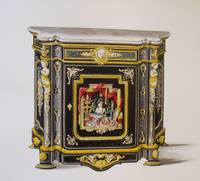
1890Best.-Nr. 3212Paris 1890. Oblong folio 395 x 260 mm. 135 drawings of ornate furniture in lead and watercolor highlighted in gum arabic on 104 leaves of heavy paper later pencil foliation including four mounted drawings on tinted paper and two smaller loose drawings one of the latter signed A. Archambaut del. both with notes of measurements and pattern or stock numbers the second with specifications of colors and material. No. 93 a bed apparently unfinished. Foxing and soiling to first and last leaves occasional light foxing elsewhere marginal soiling especially to first few leaves fol. 104 detached two drawings on fols. 15 and 25 with small abraded areas 5 other drawings with tiny abrasions or white flecks the rest of the drawings in fine condition. The drawings on guards bound in half shagreen and pebble-grained cloth rubbed spine gilt lettered “Album Meubles Fantaisies.” A spectacular manuscript album of watercolor designs of colorfully decorated painted and inlaid furniture in Louis XV Louis XVI and Second Empire styles by a female artist and furniture designer. Depicted are commodes large and small tables desks cabinets wardrobes sideboards dressers armchairs mirrored stands stands holding manicure sets multi-drawered sécrétaires beds clocks and even bellows and brooms for the chimney. Most are highly ornate and include colorful painted or inlaid decoration meticulously rendered often in minute detail by the artist-designer. With their cabriole legs serpentine curves and lavish inlay and marquetry these delightful creations express to a sometimes impractical degree the late 19th-century vogue for Louis XV and Louis XVI-style furniture. The artist can be identified as Aline Anne Archambault née Carrausse 1847-1908 thanks to the one signed drawing loosely inserted which matches stylistically those of the album. The only child of the Paris furniture designer Jean Marie Carrausse Archambault moved in artistic and artisanal circles: in 1877 she married Arthur Eugène Archambaut a graveur ciseleur or engraver of luxury metalwork; the four witnesses at their marriage were his uncle a sculptor; his cousin a printer; and two friends identified respectively as a printer and a furniture maker this information from Geneanet.org. The Victoria and Albert Museum holds six furniture drawings by her also signed with her first initial and last name and a few lithographs after her one of the drawings V&A accession number E.284-1952 has an additional printed signature “P. Levant Carrausse del.” clearly a member of her family. Since Aline was married and died in the 4th arrondissement in Paris it is likely that this album was created there. The title on the binding “Album of Furniture Fantasies” implies that at least some of the pieces were not intended to be built: they abound in bright colors and witty details such as the tree-branches wrapping around two basket stands fol. 17 or the wildly ornate bed with which the album ends. While the element of fantasy in these accomplished paintings is thus clear many probably did function as specimens of furniture that could be ordered from members of the artist’s entourage of furniture makers. This is evident from the two inserted drawings both of chests of drawers which have measurement notes and stock numbers. One has the inkstamped name “G. Cauvet” on the verso. The archival records indicate that Aline lost a daughter in infancy in 1877 when she was 30. She had no other children. The ebullient drawings in this album betray no hint of tragedy and it is tempting to view them as a work of youth before shadows arrived to dim the joy of creation. “The best known of the nineteenth-century revivals was that for Louis XV and Louis XVI furniture. The Louis XV revival intensified during the Second Empire when it departed so much from the 18th-c. prototype that it is best called `Rococo’.” H. Osborne ed. The Oxford Companion to the Decorative Arts 1988 p. 359 unknown books