576 résultats
1800réf. 199628Paris: Fabre 1800. Folio. Good Folio is heavily worn with scuffing/smudging and dampstaining on the bottom right; spine strip is worn and peeling; plates are in good condition with some edgewear and toning as expected with age and some foxing and occasional smudging. Oversized red folio; one illustrated title sheet; 21 plates. Text in French. Fabre unknown books
1800réf. 199630Paris: Fabre 1800. Folio. Good Folio is heavily worn with scuffing/smudging and heavy discoloration; spine strip is worn and peeling; plates are in good condition with some edgewear and toning as expected with age and some foxing and occasional smudging. Oversized red folio; one illustrated title sheet; 19 plates. Text in French. 19 plates in good condition. Fabre unknown books
1800réf. 199629Paris: Fabre 1800. Folio. Good Folio is heavily worn with scuffing/smudging and heavy discoloration on 1/3 vertically; spine strip is worn and peeling; plates are in good condition with some edgewear and toning as expected with age and some foxing and occasional smudging. Oversized red folio; one illustrated title sheet; 23 plates. Text in French. 23 plates in good condition. Fabre unknown books
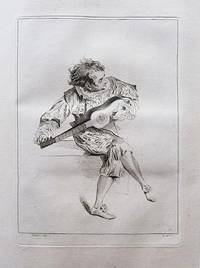
1850réf. 2315807S.N 1850. Large Hardcover. Good/No Jacket. Watteau A.; Marks W. Front board weakening spine heavily rubbed bookplate on front endpaper some pages lightly foxed. 1850 Large Hardcover. A collection of 43 engravings by W. Marks. "Jean-Antoine Watteau was a French painter and draughtsman whose brief career spurred the revival of interest in colour and movement as seen in the tradition of Correggio and Rubens. He revitalized the waning Baroque style shifting it to the less severe more naturalistic less formally classical Rococo. Watteau is credited with inventing the genre of fetes galantes scenes of bucolic and idyllic charm suffused with a theatrical air. Some of his best known subjects were drawn from the world of Italian comedy and ballet. S.N hardcover books

2024réf. 209507Paris France: LienArt 2024. Hardcover. As New Still in plastic. Color illustrated boards with white text. 238 pp. Many color illustrations. Published on the occasion of the exhibition held at Musée du Louvre Paris France October 16 2024-February 3 2025. Contents : Ce que Pierrot veut dire. Pierrot Crispin et la Folie. Le théâtre comique parisien à l'époque de Watteau -- Portrait de l'artiste en comédien. Antoine Watteau et le théâtre -- Un tableau en quête d'auteur. Watteau et la genèse du Pierrot -- Chercher Pierrot. Sa postérité en peinture au XVIIIe siècle -- La découverte du "Gilles" -- Pierrot. Portraits de l'artiste en enfant du XIXe siècle -- Pierrot et la Grande Parade. Épilogues aux XXIe siècles -- État des connaissances sur la matérialité du Pierrot d'Antoine Watteau / Clarisse Delmas et Bénédicte Trémolières. LienArt hardcover books
1979réf. 13113Pontoise France: Musée de Pontoise 1979. VG. Green wraps. 20 pp. 12 bw plates. Two-page introduction by Edda Maillet essays by Catherine Lobstein and André Watteau catalogue of 101 works several nice plates. Published to accompany the exhibition held in Pontoise France: Musée de Pontoise Nov. 18 to Feb. 8 1979. Musée de Pontoise paperback books
1889réf. 86426Berlin: Wasmuth 1889. hardcover. good. 60 plates elephant folio old boards; rubbed crudely rebacked in modern cloth. Berlin: Ernst Wasmuth 1889. Although the binding is worn the plates are in fine condition. Wasmuth unknown books
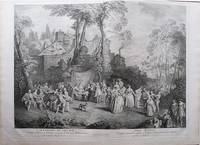
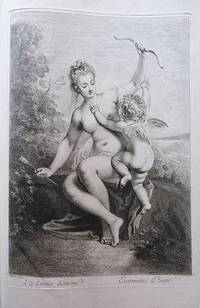
1735réf. 41751Paris: chez Gersaint and others 1735. Folio. 21 1/2 x 18 inches. Manuscript title 'Estampes d'apres Watteau.' 69 fine engravings on 63 sheets - 7 with two engravings to the page the rest single sheet plates with the double page plates counted as one plate. Included are 7 rococo images a set of the seasons a horizontal set and 5 double-page plates the bibliography calls for 7 and here we have four of the listed double page plates and one unlisted L'Accordee de Village. 35 of the plates have been trimmed to the margin but with their titles present and laid on sheets to fit the binding. 5 plates have an almost invisible fold. Bound in a spectacular 19th century binding by Leighton full morocco spine with elaborate gilt floral tooling in compartments borders with wide gilt fillets and gilt turn-ins. There is a very detailed description of this work the Schuhmann copy with 206 plates in Cohen de Ricci. It states that the vertical plates are in volume one and the horizontal plates are in volume two of 'Oeuvres'. Here we have 19 from volume one and 39 from volume two and 11 plates not listed in the bibliography. It further states that the Edmond de Rothschild incomplete collection contains the finest impressions. This collection contains the bookplate of Alfred Charles Freiherr de Rothschild of Halton House Bucks. The impressions of the engravings in this album is superb mostly in the rococo Fetes Galantes style for which Watteau is legendary. They were engraved by the finest engravers of the time- Huquier Liotard Audran Fessard etc. Antoine Watteau was the master of Rococo and Fetes Galantes. Many of the subjects were drawn from the world of Italian comedy and ballet. Cohen de Ricci 1059. chez Gersaint and others unknown books
1735réf. 41750Paris: chez Gersaint 1735. Folio. 25 x 19 inches. Fine engraved title within an elaborate rococo design by Watteau engraved by Moyreau - 60 engravings on 58 plates 2 with two engravings per plate. Bound in a spectacular 19th century binding by Leighton full morocco spine with elaborate gilt floral tooling in compartments borders with wide gilt fillets and gilt turn-ins A collection of plates from the first and the fourth volume only two volumes were published. There is a very detailed description of this work the Schuhmann copy with 206 plates in Cohen de Ricci. It states that the vertical plates are in volume one and the horizontal plates are in volume two. Here we have 20 from volume one and 35 from volume two and 3 plates not listed in the bibliography. It further states that the Edmond de Rothschild incomplete collection contains the finest impressions.This collection contains the bookplate of Alfred Charles Freiherr de Rothschild of Halton House Bucks. The impressions of the engravings in this album are superb. Among the plates are two sets of the seasons- Spring Summer Autumn Winter- one horizontal and one vertical within oval cartouches plus La Musette L'ille Enchante Les Agreements de l'Ete- in fact they are all wonderful images mostly in the rococo Fetes Galantes style for which Watteau is legendary. They were engraved by the finest engravers of the time- Huquier Liotard Audran Fessard etc. Antoine Watteau 1684-1721- the master of Rococo and Fetes Galantes. Many of the subjects were drawn from the world of Italian comedy and ballet. Cohen de Ricci 1059. chez Gersaint unknown books
1747réf. 16913Paris: chez Gersaint et chez Surugue 1747. Engraving printed on laid paper. Very good condition with the exception of some repair in the bottom right hand corner of sheet. Image size: 13 7/8 x 19 inches. A charming arabesque depicting a group of children playfully engaged in an argument from Moyreau's "Oeuvres Des Estampes Gravées d'après Les Tableaux & Desseins de feu Antoine Watteau." Born in Valenciennes in 1684 the versatile artist Jean-Antoine Watteau was primarily renowned for his fête galante paintings depicting aristocratic men and women amorously conversing in the outdoors. Following a brief apprenticeship to the local painter Jacques-Albert Gérin Watteau moved to Paris in 1702 where he later studied with Claude Gillot scene painter for the comédie italienne who introduced him to the commedia dell'arte which later became a recurrent theme in his work. In 1708 he began to work with the decorator Claude Audran under whose tutelage he produced several innovative ornamental decorations that were for porcelain furniture and textiles. Watteau was also a prolific draughtsman and his varied and substantial oeuvre includes military genre religious mythological and theatrical scenes as well as tapestry cartoons. After Watteau's death in 1721 his friend Jean de Jullienne commissioned a comprehensive body of engravings after the artist's drawings and paintings which further solidified his reputation as one of the most influential and prominent artists of the Rococo period. Cf. Benezit Dictionnaire des Peintres Sculpteurs Dessinateurs et Graveurs vol 14 p. 473-6; cf. Dacier & Vuaflart Jean de Jullienne et Les Graveurs de Watteau au XVIIIeime Siècle 119. chez Gersaint et chez Surugue unknown books
1735réf. 41749Paris: chez Audran 1735. Volume 1 of 2. Folio. 21x14 inches. Engraved title engraved portrait of Watteau by Boucher 8 pp. of engraved text and 132 numbered engravings on 101 plates. Bound in a spectacular 19th century binding by Leighton full morocco spine with elaborate gilt floral tooling in compartments borders with wide gilt fillets and gilt turn-ins Provenance: Bookplate of Alfred Charles Freiherr de Rothschild of Halton House Buckinghamshire The original edition of volume one of this beautiful collection of engravings published with the encouragement of Jean de Julienne the director of La Manufacture des Gobelins who was a collector and a friend of Watteau. The plates were engraved by the best engravers of the time Boucher Jean and Benoit Audran Cochin Desplaces and others. Antoine Watteau was the master of Rococo and Fetes Galantes styles of art and decoration. Many of the subjects were drawn from the world of Italian comedy and ballet. Cohen de Ricci 1063; Sander 2043. chez Audran unknown books
1740réf. 2420Augsburg: Johann Jacob Haid & son 1740. Six tall narrow folio-sized engravings with etching platemarks 400 x 207 mm. sheets 435 x 277 mm. deckle edges unsigned but by Jacop Wangner after Watteau numbered 1-6 in the plate at lower right imprint at lower right I. Haid et filius excudit A. V. Augustae Vindelicorum. Upper edges archivally tipped to mats. Fine. A perfectly preserved suite of six large rococo engravings reproducing Watteau's paintings for a folding screen intended to be cut out by ladies for use in furniture decoration. Watteau's influence on 18th-century decorative arts throughout Europe by way of the many engravings after his work published by Gersaint has long been recognized but the use of the engravings as actual sheets to be cut up and applied to household objects has garnered little attention until recently. The vogue for decoupage probably first appeared in the late seventeenth century and by the 1720s the hobby of cutting out colored prints for application to various household objects and pieces of furniture was all the rage in France Germany and beyond. The process which remained a favorite pastime throughout the eighteenth century was known as la découpure in French as Ausschneidekunst in German and as lacca contrafatta or lacca povera in Italian although "the latter term appears to be a true misnomer considering the amount of minute work involved" Kisluk-Grosheide p. 83. It consisted of neatly cutting out hand-colored engraved or woodcut motifs or figures applying them to a textile or sometimes cardboard ground and varnishing them. These creations were applied to furniture as well as to "screens folding screens wall hangings ceilings the tops of coaches and sedan chairs" loc. cit. affording a passable imitation of Asian lacquer. The craze which created a goldmine for certain print publishers reached the point that bibliophiles and collectors were warned to keep a vigilant eye on their most precious books prints and paintings lest eager young ladies attack them with scissors. In 1728 six engravings after Watteau's paintings for a folding screen were commissioned by the art collector Jean de Julienne as part of a vast program of reproductions of Watteau's painted oeuvre. They were engraved by Louis Crépy fils and published by the Paris marchand-mercier art dealer and print publisher Edmé-François Gersaint. An announcement of their upcoming publication in the November 1727 Mercure de France explicitly described them and two other Crépy-Watteau engravings as "marvelously appropriate for decoupages with which ladies these days make such pretty furniture" Crépy grave actuellement six morceaux en hauteur . d'après un Paravant peint par Watau dont les compositions sont très-galantes. De pareils sujets peints sur des fonds blancs conviennent à merveille aux découpures dont les Dames font aujourd'hui de si jolis meubles Mercure de France 1 Novembre 1727 p. 2492 digitized on Gallica. Indeed the publisher himself highlighted this usage in his own note in a later issue of the Mercure cited by Glorieux p. 212: pointing out that all of the decorative motifs in the Watteau engravings were "most useful for painters fan-makers sculptors goldsmiths tapestry-weavers embroiderers etc." he added that "all these ornaments can be perfectly used in decoupage" tous ces ornements réussissent parfaitement en découpure. These and other rococo engravings were quickly taken up by German publishers especially in Augsburg Metken p. 102. This paravent folding screen suite was one of the first of the Watteau engravings to be copied in Germany. The present very close reverse copies of Crépy's six plates appeared in Augsburg only a few months after their publication in June 1728 in Paris: engraved by Jacob Wangner or Wagner ca. 1703-1781 they were published by the heirs of Jeremias Wolff in 1729. This set is an otherwise unrecorded reissue of the Wangner copperplates. A lavishly decoupage-decorated secretary in the collections of the Metropolitan Museum of Art includes cutouts that were almost certainly from these Augsburg plates as they are from "reverse copies of the prints by Crépy" Kisluk-Grosheide p. 88 noting other examples of Augsburg copies of Watteau prints used on the same secretary. Her assertion that "it has not been shown that these engravings were actually used for this purpose" p. 84 is only applicable to the French plates. Indeed other examples of lacca povera objects described in her article point to the German production of copies of French rococo prints as the main source for decoupage at this time on pieces produced throughout Europe including in Italy and in France itself. The general title appears at the foot of the first plate. Each engraving presents a central figure or scene set within a frame of delicate rococo arabesques and ornaments. Three show the Comédie italienne figures of Pierrot Harlequin and Colombine a woman playing the lute on a rug-bedecked stage a pair of allegorical figures flanking an awning above and at bottom the smiling visage of a Commedia dell'Arte character of the opposite sex. The remaining pastoral scenes of courtship or douceur de vie are set within naturalistic elements two with streams flowing over a dripping shell-shaped basin or ledge under which a ghostly face can be dimly discerned. Watteau's designs were based on earlier designs by Claude III Audran decorative painter for Louis XIV at Versailles and Fontainebleau to whom Watteau had apprenticed. "After joining forces with ornamentalist Claude III Audran about 1708 he Watteau began inserting figures in Comédie-Italienne costumes into Audran's trademark arabesques" Judy Sund "Watteau's Pierrots Why so Sad" The Art Bulletin vol. 98 no. 3 2016 p. 325 reproducing the Pierrot panel from the present series. OCLC locates a single copy of the Wolff issue at the Bibliothèque nationale de France reproduced in Gallica. In the present issue of which I locate no other copies the engraver's signatures were removed. On the Wolff issue cf. W. Augustyn "Augsburger Buchillustration im 18. Jahrhundert" in Augsburger Buchdruck und Verlagswesen von den Anfangen bis zur Gegegenwart 1997 p. 820 citing E. Isphording Gottfried Bernhard Göz 1708-1774 1997 pp. 35 ff.; Thieme Becker 35:150. On the Crépy engravings cf. Guilmard Maitres ornemanistes p.145; Dacier & Vauflart Jean de Julienne et les graveurs de Watteau au XVIII. siècle 159-163; E. de Goncourt Catalogue Raisonné de l'Oeuvre . d'Antoine Watteau 1875 p. 224 nos. 309-314; G. Glorieux À l'enseigne de Gersaint: Edme-François Gersaint marchand d'art sur le Pont Notre Dame Paris 2002 pp. 189-192; Mark Millard Collection: French Books no. 170.35 5 of the 6 plates. On the use of these engravings for decoupage see: D. O. Kisluk-Grosheide "'Cutting up Berchems Watteaus and Audrans': A Lacca Povera Secretary at The Metropolitan Museum of Art" Metropolitan Museum Journal 31 1996 pp. 81-97; and S. Metken Geschnittenes Papier Munich 1978 pp. 101-2 & 113. Johann Jacob Haid & son unknown books
réf. B243102-1Paris 2006. 36 3pp. Prof. illus. in color. 4to. Wraps. Paris, 2006. paperback books
2018ill., br. La presente pubblicazione è dedicata a Antoine Watteau (Valenciennes 1684 - Nogent-sur-Marne 1721). In sommario: Un fiammingo a Parigi; Due tematiche fondamentali; Il rapporto con la commedia dell'arte; L'Insegna di Gersaint; I disegni. Come tutte le monografie della collana Dossier d'art, una pubblicazione agile, ricca di belle riproduzioni a colori, completa di un utilissimo quadro cronologico e di una ricca bibliografia.
1974Mm 210x210 Brossura originale con copertina illustrata, 154 pp. con 77 tavole in nero comprese nel testo, presentazione di Didier Bodart, Opera in buone condizioni complessive, spedizione in 24 ore dalla conferma dell'ordine.
1950Mm 225x250 "Collection Prométhée". Volume rilegato in tela, sopracoperta originale, 263 pagine con numerose figure in nero e e colori nel testo in lingua francese - french text. Saggio introduttivo di René Huyghe. Ottima copia, spedizione in 24 ore dalla conferma dell'ordine.
1968Mm 240x315 Classici dell'Arte Rizzoli. Volume cartonato di pp. 131 con con 64 tavole a colori e numerose illustrazioni in bianco e nero. Apparati critici e filologici a cura di E. C: Montagni. Dorso ingiallito, normali segni d'uso. SPEDIZIONE IN 24 ORE DALLA CONFERMA DELL'ORDINE. WORLDWIDE DELIVERY
1921Mm 370x460 Cartella editoriale in mezza tela e piatti cartonati contenente dei fascicoli sciolti, 24 pagine e 58 tavole in bianco e nero fuori testo. Ordinari segni del tempo alla cartella, peraltro buona copia. Testo in lingua francese - french text. SPEDIZIONE IN 24 ORE DALLA CONFERMA DELL'ORDINE.
1875This is a very good hardcover copy in withdark green leather spine and marbled boards. The leather spine has raised bands and titles and decorations in gilt. Deaccessioned from a small library, but just two small oval stamps to the half-title page. Wear to spine tips. There are two ghosts of removed bookplates inside the front and rear boards. Hinges strengthened, binding still very firm. Very clean inside. Text in French. One black & white illustration as frontispiece. 8 1/2" high X 5 1/2" wide, 374 pages. This book will be securely wrapped and packed in a sturdy box and shipped with tracking.
1952Skira 1952. In-4 relié toile sous jaquette de 145 pages illustrées de vignettes contrecollées. Déchirure à la jaquette.
1967Hachette 1967. In-Folio broché couverture illustrée rempliée de 16 planches + texte .Bon état
1912Paris, Hachette et Cie, 1912. In-4 relié percaline rouge de l'éditeur, plat et dos à motifs dorés. XXXI-188 pages. Nombreuses reproductions en noir.
1984Ministére de la Culture / Editions de la Réunion des musées nationaux 1984, grand et fort In-4, cartonnage de l'éditeur illustré. 583 pages. Trés nombreuses reproductions. Parfait état. Superbe catalogue de l'exposition WATTEAU à la National Gallery of Art de Washington, au Grand Palais à Paris et au chateau de Charlottenbourg à Berlin.
1970Editions Flammarion 1970 collection les classiques de l'art, in-4 cartonné sous jaquette, 132 pages, avec de nombreuses photographies, bon état.
1912Librairie Nationale d'Art et d'Histoire 1912, grand In-8 broché, 226 pages. Illustrations à pleines pages. Des rousseurs sur les dernières pages et dos recollé.