6 819 résultats
1831réf. D8879Rome: Cuccioni 1831. Paperback. Good. Original printed wrappers; oblong 8vo; with engraved title page and 58 plates. Wraps and first two leaves with significant edgewear; otherwise corners a little dog-eared and some light spotting. Sold as is. Cuccioni paperback
1831réf. D8879Rome: Cuccioni 1831. Paperback. Good. Original printed wrappers; oblong 8vo; with engraved title page and 58 plates. Wraps and first two leaves with significant edgewear; otherwise corners a little dog-eared and some light spotting. Sold as is. Cuccioni paperback books
1987réf. 148509N.p.: N.p. 1987. Vintage script for the 1988 Broadway play which premiered on May 3 1988 at the Royal Theatre and ran for 279 performances. David Mamet's incendiary take on the world of Hollywood movie-making a black comedy that stands alongside Nathanael West's "The Day of the Locust" in the subtlety and accuracy of its indictments. Nominated for three Tony Awards including Best Play and Best Direction of a Play for Gregory Mosher and winning one for Best Actor in a Play for Ron Silver. Revived on Broadway in 2008. Pink titled wrappers with credits for playwright David Mamet on the front wrapper dated June 1987. Title page present with a credit for Mamet dated June 1987. 146 leaves with last page of text numbered 141. Xerographic duplication rectos only. Pages Near Fine wrapper Very Good plus lightly foxed to the fore edge and bottom edge of the front wrapper bound with two gold brads. N.p. unknown
1987réf. 148509N.p.: N.p. 1987. Vintage script for the 1988 Broadway play which premiered on May 3 1988 at the Royal Theatre and ran for 279 performances. David Mamet's incendiary take on the world of Hollywood movie-making a black comedy that stands alongside Nathanael West's "The Day of the Locust" in the subtlety and accuracy of its indictments. Nominated for three Tony Awards including Best Play and Best Direction of a Play for Gregory Mosher and winning one for Best Actor in a Play for Ron Silver. Revived on Broadway in 2008. Pink titled wrappers with credits for playwright David Mamet on the front wrapper dated June 1987. Title page present with a credit for Mamet dated June 1987. 146 leaves with last page of text numbered 141. Xerographic duplication rectos only. Pages Near Fine wrapper Very Good plus lightly foxed to the fore edge and bottom edge of the front wrapper bound with two gold brads. N.p. unknown books
1983réf. 16699JLos Angeles: The Edward S. Feldman Company 1983. Original 128 page revised draft script. Bradbound in printed studio wrappers. “is a 1984 American comedy-drama film directed by Sidney Lumet and starring Anne Bancroft Ron Silver and Carrie Fisher with a cameo appearance by Betty Comden as Greta Garbo. Catherine Hicks Steven Hill and the first screen appearance of Mary McDonnell. It also featured the final screen appearances of veteran actors Howard Da Silva and Hermione Gingold. Bancroft was nominated for a Golden Globe.” When Greta Garbo came to Hollywood in the silent film era she became somewhat of a mysterious oddity in that she would not do interviews or sign autographs. She would work hard at her film work but otherwise was a a quiet remote private person. The script title “is a reference to the first film in which Greta Garbo's speaking voice is heard. Her husky voice and purposefully exaggerated Swedish accent debuted in Eugene O'Neill's Anna Christie 1930 which was publicized with the slogan "Garbo Talks" as hearing the mysterious Garbo speak for the first time was a major event. Anne Bancroft stars as a dying woman who has a wish to meet Garbo who she has long admired. Her son Ron Silver starts a hunt to find Garbo. In Barry Paris’s book biography of the real life Garbo he states that Garbo eventually saw the finished film and liked it. The Edward S. Feldman Company unknown
1962réf. 172606Paris: Michel Salou 1962. Superb shot taken onstage close behind Silver who is framed by the raised lid of the piano through which bassist Gene Taylor is visible. This probably dates to the Paris Olympia gig of 6 October 1962 which featured the classic lineup of his quintet. Silver 1928-2014 is "the defining stylist of hard-bop piano and one of the most enduring of small-group leaders" Cook & Morton. At this time his group comprised Junior Cook tenor Blue Mitchell trumpet and Roy Brooks drums. A recording of the date was finally released in 2002 as Horace Silver: Paris Blues: "In essence this is hard bop reaching perfection neither al dente nor over-cooked. All of the songs are lengthy Silver compositions" All About Jazz website. The photographer Michel Salou worked as a music executive producing albums by among others Sun Ra Live in Paris at the "Gibus" 1973 the Mal Waldron Trio Ursula 1978 and French pianists George Arvanitas and Rene Urtreger. He also appears in the annals of the Art Ensemble of Chicago as their "first booking agent. who helped them secure concert dates across France and elsewhere in Europe" Steinbeck p. 130. His excellent work as a lensman appears to have gone virtually unnoticed except that the National Portrait Gallery holds a single print of Ray Charles in performance. Original carbon print 240 x 180 mm printed on heavy stock paper identifying note in pencil on verso. In excellent condition. Richard Cook & Brian Morton The Penguin Guide to Jazz Recordings eighth ed. 2006; Paul Steinbeck Message to Our Folks: The Art Ensemble of Chicago 2017. unknown
réf. SONG1878739557Brand: Waite Group Pr 0000-00-00. paperback. Used: Good. 5.25x0.50x8.75. Buy with confidence. Excellent Customer Service & Return policy. Brand: Waite Group Pr paperback
19043 vols., folio, First Edition, on laid paper, with 62 coloured plates, 62 plates in photogravure and 149 plates in monochrome; original two-tone blue cloth gilt, gilt backs, gilt tops, covers mildly age-marked, backstrips lightly scuffed and frayed at heads and tails, else a very good, clean copy. EDITION LIMITED TO 1025 SETS.
1787réf. 9408Paris, Méquignon, 1787 ; in-8 ; plein veau havane marbré, dos à nerfs décoré de filets dorés, pièce de titre grenat (reliure de l'époque) ; 32, 430, (2) pp. de Privilège et 7 planches dépliantes dessinées par William Bell et gravées par Dupin.
1751réf. PHO-1679Londres, Nourse, 1751. 2 volumes in-12, veau marbré, dos à nerfs orné, pièces de titre et de tomaison, tranches rouges (Reliure de l'époque), coiffes usées, manque les pièces de titre et tomaison au tome 2
1694réf. 6757Lyon, J. Bapt. et Nicolas De Ville, 1694 ; in-12 ; plein veau havane moucheté, dos à nerfs décoré et doré, pièce de titre grenat, roulette sur les coupes (reliure de l'époque) ; (14), 559, (3) pp., et 2 vignettes gravées dont 1 au titre, 2 planches gravées dépliantes (tables d'airain) et quelques figures dans le texte.
réf. 32167Broadside. 4to 9½" X 12". Near fine. Faintly age toned and with just the slightest bit of edgewear. Puerto Plata also spelled Porto Plata is the capital city of a province bearing the same name on the north coast of the Dominican Republic and on the night of August 21 1871 a fire engulfed that city's commercial district crippling this remote district. On this occasion the province's governor RAMON D. PACHECO and the president of its Ayuntamiento municipality council FEDERICO M. LEYBA signed in type this broadside which consists of two side-by-side columns in English. In highly flowery language and twisted grammar Pacheco and Leyba describe the fire and what it did to their city and its residents. In part: "Forty six buildings which encircled the only and most valuable that held the greatest credit that represented the complement of the towns welfare the support of the majority of the population and in short were the prop of the Government the guarantee of wealth the fountain of labor the stability of the present and rich signification of the future have in three hours been converted into smoking ruins; horrible tomb of so many lives that moments before were agitating with overflow of stamina." They plead for help from the international community: "Porto Plata knows that its appeal will be heeded and therefore does not falter but addresses readily all nations brothers in sufferings; all peoples sympathizers with distress; all the powerful compassionate to misfortune in search of the help it requires to even prove after that if it knows to beg it also will know to fulfil and guard in each bosom of its children altars of lasting gratitude. For this end it directs its wailings to the representatives of the Republic." Dated "Porto-Plata August 23d 1871." At the bottom between Pacheco and Leyba's bold typeface names appears the large 2" diameter official circular blind-embossed imprint of the Ayuntamiento of Puerto Plata. On the verso of this intriguing broadside appear four dockets -- seals and notarizing signatures from four consulates testifying to the truth of the devastation described in the broadside. "This is to certify" pens the first docket "that the foregoing is a correct statement and that Ramon D. Pacheco is Governor of this district and Federico M Leyba President of the Town Council. Porta Plata August 25h 1871. Theodore Farrington B.V. Consul." Alongside this is the circular blind-embossed seal of the British Vice Consul of Porto Plata. Below this appears the circular blind-embossed seal of the U.S. Commercial Agency of Puerto Plata with the illegible signature of that official plus title "U.S. V.C. Agt"; below that the circular blue inkstamped seal of the North German Consulate in Porto Plata and the illegible signature and title of that official; below that the circular blind-embossed seal of the Danish Consul at Puerto de Plata and the signature of G.L.H. Zeller with title; and below that the signature of "Charles Albert Neumann / Consul for Austria=Hungaria" who also pens "consular Seal" in lieu of a missing official Austro-Hungarian consular seal; and in a second column at right the illegible signature and rank of the French vice consul who also pens "Consular Seal" in lieu of a missing official French consular seal. A provocative and rare broadside uniquely docketed by six diplomatic officials on the verso. Ironically that other great fire of 1871 would take place about one and a half months after this: the great Chicago fire of 1871 which caused far greater destruction and got far greater press attention. Accompanying this broadside is a 1930s vintage printed manila folder from pioneering Midwest autograph dealer Forest H. Sweet "American Historical Material / Battle Creek Michigan" with his early catalogue description of this item affixed at center. unknown
First edition, thick folio (385 x 285 mm), lxxxvii, [1], 566pp., one of 506 numbered copies, 145 collotype plates, original green publishers buckram, letter in gilt, uncut, t.e.g. a very good copy. "Over two thousand pieces of silver anterior to the year 1825 are described and more than a thousand are illustrated in this book. Of these about one thousand six hundred and forty were made by American silversmiths. The remainder consists chiefly of English plate, which numbers over two hundred and fifty pieces."?Introduction. Provenance: Small circular stamp of the Assay Office, Birmingham.
1995réf. x-0471943924John Wiley & Sons Inc 1995. Hardcover. New. 1st edition. 450 pages. 9.50x6.25x1.25 inches. John Wiley & Sons Inc hardcover
1980réf. 154434N.p.: N.p. 1980. Two Final Draft scripts one First Draft script and one Revised Draft script for four episodes of the popular sitcom television series "Soap" including scripts for episodes 55 71 72 and 75. Scripts belonging to actor Jimmy Balo with his name in manuscript ink annotation to the top right corner of the front wrapper and his manuscript ink annotations marking dialogue to the screenplay for Episode 72. Episode 71 missing ten pages likely as used or issued. Created by Susan Harris "Soap" was a parody of melodramatic daytime soap operas. The series aired 85 episodes over the course of four seasons from September 13 1977 to April 20 1981 and broadcast on ABC either late at night-or not at all-by many affiliates. "Soap" courted controversy in the early years of its broadcast for its graphic sexual content and satirical depictions of infidelity homosexuality and religion. ABC also found itself in a glass house with regard to its censorship concerns as memos about the show's controversial themes and language were leaked to the press on several occasions. Notable as an early role for actor and comedian Billy Crystal and a milestone for subversive comedy and satire rivaling other marginal programs at the time that are today held in high regard such as "SCTV" "Fernwood Tonight" and its 1977 soap opera parody antecedent "Mary Hartman Mary Hartman." Set in the fictional town of Dunn's River Connecticut. Episode 55: Blue titled wrappers noted as FINAL DRAFT on the front wrapper dated September 19 1979 with credits for screenwriters Susan Harris and Stu Silver. Title page present. 49 leaves with last page of text numbered 44. Xerographic duplication rectos only. Pages Near Fine wrapper Very Good plus bound with two gold brads. Episode 71: Red titled wrappers noted as REVISED DRAFT on the front wrapper dated July 10 1980 with credits for screenwriters Susan Harris Stu Silver Dick Clair and Jenna McMahon. Title page present dated July 10 1980 with credits for screenwriters Susan Harris Stu Silver Dick Clair and Jenna McMahon. 57 leaves with last page of text numbered 53. Xerographic duplication rectos only. Pages Near Fine wrapper Near Fine bound with two gold brads. Episode 72: Cream titled wrappers noted as FIRST DRAFT on the front wrapper dated July 21 1980 with credits for screenwriters Susan Harris Stu Silver Dick Clair and Jenna McMahon. Title page present dated July 21 1980 with credits for screenwriters Susan Harris Stu Silver Dick Clair and Jenna McMahon. 36 leaves with last page of text numbered 42. Xerographic duplication rectos only. Pages Near Fine wrapper Very Good plus bound with two gold brads. Episode 75: Pink titled wrappers noted as FINAL DRAFT on the front wrapper dated October 29 1980 with credits for screenwriters Susan Harris Stu Silver Dick Clair and Jenna McMahon. Title page present dated October 29 1980 with credits for screenwriters Susan Harris Stu Silver Dick Clair and Jenna McMahon. 52 leaves with last page of text numbered 61. Xerographic duplication rectos only. Pages and wrapper Near Fine bound with two gold brads. N.p. unknown
1980réf. 154434N.p.: N.p. 1980. Two Final Draft scripts one First Draft script and one Revised Draft script for four episodes of the popular sitcom television series "Soap" including scripts for episodes 55 71 72 and 75. Scripts belonging to actor Jimmy Balo with his name in manuscript ink annotation to the top right corner of the front wrapper and his manuscript ink annotations marking dialogue to the screenplay for Episode 72. Episode 71 missing ten pages likely as used or issued. Created by Susan Harris "Soap" was a parody of melodramatic daytime soap operas. The series aired 85 episodes over the course of four seasons from September 13 1977 to April 20 1981 and broadcast on ABC either late at night-or not at all-by many affiliates. "Soap" courted controversy in the early years of its broadcast for its graphic sexual content and satirical depictions of infidelity homosexuality and religion. ABC also found itself in a glass house with regard to its censorship concerns as memos about the show's controversial themes and language were leaked to the press on several occasions. Notable as an early role for actor and comedian Billy Crystal and a milestone for subversive comedy and satire rivaling other marginal programs at the time that are today held in high regard such as "SCTV" "Fernwood Tonight" and its 1977 soap opera parody antecedent "Mary Hartman Mary Hartman." Set in the fictional town of Dunn's River Connecticut. Episode 55: Blue titled wrappers noted as FINAL DRAFT on the front wrapper dated September 19 1979 with credits for screenwriters Susan Harris and Stu Silver. Title page present. 49 leaves with last page of text numbered 44. Xerographic duplication rectos only. Pages Near Fine wrapper Very Good plus bound with two gold brads. Episode 71: Red titled wrappers noted as REVISED DRAFT on the front wrapper dated July 10 1980 with credits for screenwriters Susan Harris Stu Silver Dick Clair and Jenna McMahon. Title page present dated July 10 1980 with credits for screenwriters Susan Harris Stu Silver Dick Clair and Jenna McMahon. 57 leaves with last page of text numbered 53. Xerographic duplication rectos only. Pages Near Fine wrapper Near Fine bound with two gold brads. Episode 72: Cream titled wrappers noted as FIRST DRAFT on the front wrapper dated July 21 1980 with credits for screenwriters Susan Harris Stu Silver Dick Clair and Jenna McMahon. Title page present dated July 21 1980 with credits for screenwriters Susan Harris Stu Silver Dick Clair and Jenna McMahon. 36 leaves with last page of text numbered 42. Xerographic duplication rectos only. Pages Near Fine wrapper Very Good plus bound with two gold brads. Episode 75: Pink titled wrappers noted as FINAL DRAFT on the front wrapper dated October 29 1980 with credits for screenwriters Susan Harris Stu Silver Dick Clair and Jenna McMahon. Title page present dated October 29 1980 with credits for screenwriters Susan Harris Stu Silver Dick Clair and Jenna McMahon. 52 leaves with last page of text numbered 61. Xerographic duplication rectos only. Pages and wrapper Near Fine bound with two gold brads. N.p. unknown books
1997réf. 30235HBDJ October 1997 stated 1st edition with #1 Intact Number line copyright pg Black & White decorated Cloth 42 pgs NF/NF LITE WEAR SIGNED ON FRONT DJ Warner Books hardcover
1877réf. 2082702114602879Domei-sha 1877. Soft Cover. Fine. Number of books: 1 Domei-sha paperback
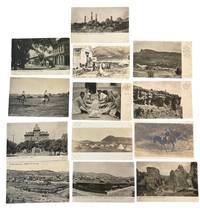
1907réf. 236281907. Silver City and southwestern New Mexico real photo postcard group circa 1907 depicting Indigenous community life beside the mining civic medical and commercial infrastructure reshaping the territory five years before statehood. Images of Indigenous women preparing tortillas families gathered near frame buildings a camp of conical shelters and two children riding a burro record Native presence in a region increasingly represented through mining towns tourist landmarks and expanding institutions. The postcards belong to a period when Silver City founded as a mining settlement in 1870 had become the principal commercial center of Grant County while New Mexico continued its protracted campaign for admission to the Union. New Mexico entered the United States as the forty seventh state on January 6 1912. Photo archive of 13 silver gelatin real photo postcards each approximately 5.5 x 3.5 inches Silver City and southwestern New Mexico circa 1907. Four cards depict Indigenous people: women kneeling around metates and shaping tortillas in a view captioned "Tortilla makers Silver City N. Mex."; a larger gathering of adults and children beside a small frame building with several figures wrapped in blankets and goats standing nearby; an encampment of conical shelters and rectangular tents with horses and wagons dispersed across open ground; and two children riding together on a burro along an unpaved road. The remaining views describe the developing territorial city and its surrounding landscape. They include the smokestacks processing buildings ore piles and elevated works of the "Silver City Reduction Works"; the Grant County courthouse; South Bullard Street with two story commercial buildings and a footbridge crossing the roadway; the St. Joseph Sanitarium and its grounds; and a card identifying the Santa Rita copper mine with the caption noting that an Indigenous settlement formerly occupied the site. Additional cards show bronco riding the Gila Cliff Dwellings and the rock formations captioned "City of Rocks Silver City N. Mex." Several bear printed numbers and location captions one is credited in the negative to "The Arts Shop Silver City N. Mex." and two carry manuscript dates of 1907. The Indigenous scenes were made during a period shaped by the dispossession confinement and surveillance of Apache peoples across the Southwest but they direct attention away from the military imagery that had dominated nineteenth century representations. Women grind corn and prepare food families congregate in domestic spaces children travel by burro and people maintain mobile settlements within the same regional economy that produced reduction works hospitals courthouses and commercial streets. Silver City itself had developed near a traditional Warm Springs Apache camping place after mineral discoveries drew settlers and former soldiers into the district making the growth recorded here inseparable from the displacement of Native communities. The cards also show how early postcard publishers made Indigenous life industrial production archaeological sites ranch spectacle and geological scenery into a public image of territorial New Mexico presenting Native people as visible markers of regional identity while civic and mining views advertised material progress. Overall good condition with staining and toning on the versos and slight silvering to several images. A concentrated visual record of Indigenous presence and industrial development in southwestern New Mexico during the final years of territorial rule. unknown
1907réf. 236281907. Silver City and southwestern New Mexico real photo postcard group circa 1907 depicting Indigenous community life beside the mining civic medical and commercial infrastructure reshaping the territory five years before statehood. Images of Indigenous women preparing tortillas families gathered near frame buildings a camp of conical shelters and two children riding a burro record Native presence in a region increasingly represented through mining towns tourist landmarks and expanding institutions. The postcards belong to a period when Silver City founded as a mining settlement in 1870 had become the principal commercial center of Grant County while New Mexico continued its protracted campaign for admission to the Union. New Mexico entered the United States as the forty seventh state on January 6 1912. Photo archive of 13 silver gelatin real photo postcards each approximately 5.5 x 3.5 inches Silver City and southwestern New Mexico circa 1907. Four cards depict Indigenous people: women kneeling around metates and shaping tortillas in a view captioned "Tortilla makers Silver City N. Mex."; a larger gathering of adults and children beside a small frame building with several figures wrapped in blankets and goats standing nearby; an encampment of conical shelters and rectangular tents with horses and wagons dispersed across open ground; and two children riding together on a burro along an unpaved road. The remaining views describe the developing territorial city and its surrounding landscape. They include the smokestacks processing buildings ore piles and elevated works of the "Silver City Reduction Works"; the Grant County courthouse; South Bullard Street with two story commercial buildings and a footbridge crossing the roadway; the St. Joseph Sanitarium and its grounds; and a card identifying the Santa Rita copper mine with the caption noting that an Indigenous settlement formerly occupied the site. Additional cards show bronco riding the Gila Cliff Dwellings and the rock formations captioned "City of Rocks Silver City N. Mex." Several bear printed numbers and location captions one is credited in the negative to "The Arts Shop Silver City N. Mex." and two carry manuscript dates of 1907. The Indigenous scenes were made during a period shaped by the dispossession confinement and surveillance of Apache peoples across the Southwest but they direct attention away from the military imagery that had dominated nineteenth century representations. Women grind corn and prepare food families congregate in domestic spaces children travel by burro and people maintain mobile settlements within the same regional economy that produced reduction works hospitals courthouses and commercial streets. Silver City itself had developed near a traditional Warm Springs Apache camping place after mineral discoveries drew settlers and former soldiers into the district making the growth recorded here inseparable from the displacement of Native communities. The cards also show how early postcard publishers made Indigenous life industrial production archaeological sites ranch spectacle and geological scenery into a public image of territorial New Mexico presenting Native people as visible markers of regional identity while civic and mining views advertised material progress. Overall good condition with staining and toning on the versos and slight silvering to several images. A concentrated visual record of Indigenous presence and industrial development in southwestern New Mexico during the final years of territorial rule. unknown books
18378vo [22 x 14 cm]; 6 volumes, 81 fine hand-colored plates including some folding, extra engraved title pages, other illustrations including garden plans, folding garden plan, folding plate of garden furniture, indexes. contemporary leather backed marbled boards, title lettering on spines, covers rubbed, light wear, few spine labels chipped or lacking, interiors clean and near fine, in very good covers. A picture of this book is available upon request by email. This is a run of six year's of articles from this respected monthly magazine, on all aspects of flowers, including lists of new and rare plants, with submissions from various authors. The attractive hand coloured engraved plates mostly depicting several varieties of flowers, all nicely colored.
1885folio [36 x 27 cm]; 90 pp, 24 fine color lithographed (chromolithograph) plates from the author's paintings of live plants. original pictorial gilt cloth, gilt spine title lettering, all edges gilted, light wear and chip to spine ends, interior clean with only light offsetting from plates on opposite leaves, a near fine copy in bright covers, plates with good impressions. A pi Bennett (American Nineteenth Century Color Plate Books) p. 78: 'This is the ranking work on the subject, and very striking'. According to Bennett the first edition, Boston 1885, was issued with text in wrappers and text and plates enclosed in a portfolio, later US issues were bound in one volume. Nissen BBI 1382. This is apparently the first color plate orchid book by an American. The plates include Dendrobium, Masedvallia, Cattleya, Laelia, Phalaenopsis, Oncidium, Calanthe, Odontoglossum, Lycaste, Cymbidiums, Vanda, etc. Woodburn-Hedrick 577: 'large format with bightly colored chromolithographs'.
réf. 9781611225181NOVA SCIENCE PUBLISHERS INC
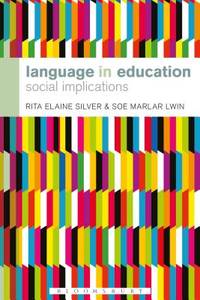
réf. Bloomsbury-9781441151940Bloomsbury Academic. Hardback. New. 216 pages Bloomsbury Academic hardcover