Scultet, Jean (Ulm 1595 - 1655) :Livre Rare Book
8 065 résultats
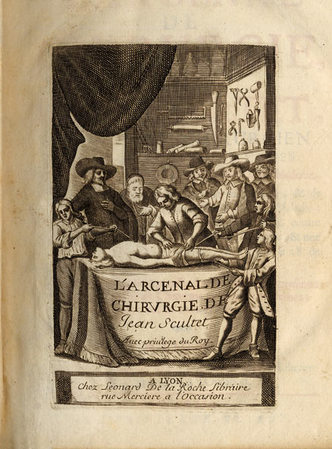
1712réf. 9402Lyon, Léonard De La Roche, 1712 ; in-4 ; plein veau havane, dos à nerfs richement décoré et doré, pièce de titre grenat, tranches mouchetées rouges (reliure de l'époque) ; (16) y compris le frontispice gravé, titre en rouge et noir, Dédicace aux médecins et chirurgiens de Lyon, table, 369, (3), 138, (22) pp. de tables ; 46 planches numérotées plus 4 non chiffrées soit 50 planches gravées hors-texte au total, certaines dépliantes, représentant de très nombreux outils et appareils, des opérations et 3 planches de monstres.
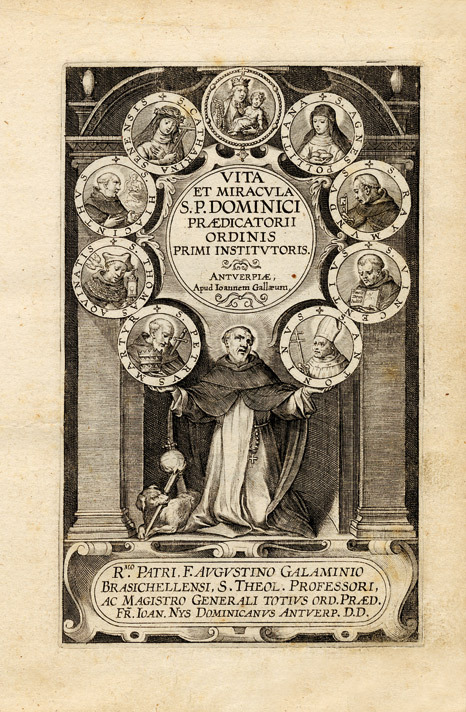
1630réf. 11321Antverpiae, Joan Galle, (circa 1630) ; F. Ioannes Nys invenit, Peter de Jode figuravit, Theodor Galle sculpsit et excudit ; titre gravé, portrait et 32 planches légendées. SUIVI de 4 planches gravées par JOAN GALLE : I- Prudentia, II- Justitia, III- Fortitudo, IV- Temperantia (les 4 vertus cardinales). SUIVI de 14 planches de sujets religieux, gravées par CORNELIUS GALLE le Vieux : Silva sacra, Fugit familia sacra, S. Barbara, S. Ianvarius Neapolis patronis, S. Lucia, S. Leontius martyr miraculis gloriossus in Muris Helvetiorum, S. Iacobus Maior, Benedicite omnes bestiae et pecora domino, S. Hieromymus, Vierge à l'Enfant, etc. Soit en tout 52 planches, reliées en 1 volume petit in-4 ; plein vélin ivoire, titre au dos, tranches rouges (reliure du XIXe).
First edition, 2 vols., 4to (290 x 225 mm), Large paper copy, vol. I: viii, 96 hand-coloured plates with unpaginated accompanying text; Vol. II: 80 hand-coloured plates and accompanying text followed by 32 page index with an errata leaf, some light offsetting to text leaves, light spotting to endpapers, cont. calf, rubbed, rebacked, both vols., with a dark stain to base of spine, overall a clean and presentable set. Sir William Jackson Hooker (1785?1865), born and educated in Norwich, an inheritance gave him the means to travel and to devote himself to the study of natural history, particularly botany. He married Maria, the eldest daughter of the Norfolk banker Dawson Turner, in 1815, afterwards living in Halesworth for eleven years, where he established a herbarium that was renowned amongst botanists at the time. This is the rare large paper copy with all engravings hand-coloured, Hooker published more than twenty major botanical works over a period of fifty years, this being one of his scarcest works. Provenance: Bookplates of Sir Robert Harry Inglis Palgrave, grandson of Dawson Turner. Stafleu & Cowan, 2990; Nissen, Botanische Buchillustration, 925; BM (NH), p. 870; Pritzel, 4210.
18054to [28 x 22 cm]; xiv, 487, [i, errata] pp, 20 fine hand colored stipple and line engravings (complete) on heavier paper, index, list of plates. contemporary full calf, new spine, spine title lettering on leather labels, original gilt decorated boards, marbled endpapers, light edge wear, few lower margins with light stain, short tear in margin of index pages, very good, clean in handsome binding. A comprehensive description of Peru including the territory, natural history, mineralogy, commerce, Lima, native peoples, topography, literature, climate, etc. The Longevity section describes Don Juan Modesto who lived to 133 years. Appendices describe missions to Caxamarquilla, travels to river Huallago, lake of Gran Cocama in 1790, rivers Maranon and Ucayali, and to Manoa tribes in 1791, travels in mountainous territories, itinerary from Chavin to Chicoplaya. The colored plates show the costume of various parts of Peruvian society, including nobility, natives, bullfighter, llamas, etc. Abbey Travel 723. Hiler 802. Sabin 81615. Palau 315564. Lipperheide I, 389. Skinner seems to have based the work on his translated portions from El Mercurio Peruano.
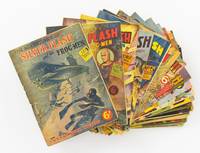
1950réf. 146961Sydney: Invincible Press 1950. First Edition. Paperback. Sydney Invincible Press 1950 to 1955. Quarto 50 of 54 issues with 24 pages of black and white comic strips plus the colour-pictorial wrappers per issue with all artwork by Virgil Reilly. Saddle-stapled colour-pictorial wrappers; acidic newsprint slightly brittle with occasional chips and tears a few expertly repaired; #43 lacks a thin strip at the foot of the front wrapper; all leaves of #8 torn for a third of the way in from the leading edge; #8 and #27 have minor loss to the leading edges throughout probably not worth the expense of restoration but still readable; minor signs of age and handling but overall in very good to excellent condition. A nearly complete run of this rare Australian comic from Number 1 to Number 54 lacking only number 18 25 31 and 32. It features the underwater adventures of Captain Silver and his sidekicks Guns and Frogface as they battle deep-sea creatures supervillains atom bombs flying saucers artificial icebergs in Sydney Harbour and more. The comic is variously titled 'The Adventures of Silver Flash and his Frog-men' a few early issues 'Silver Flash and his Frog-men' and simply 'Silver Flash' from number 17 onwards. Virgil Reilly 1892-1974 was a prolific artist for newspapers and other popular publications of the day. 'Silver Flash' ceased publication when Invincible Press changed ownership; Reilly then published just three issues of the sequel 'Captain Silver Flash' with Calvert Publishing. 50 Items. Invincible Press paperback
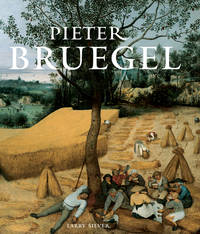
2011réf. 93633Abbeville Press. New. 2011. Hardcover. 0789211041 . FREE UPGRADE to Courier/Priority Shipping Upon Request - IN STOCK AND IMMEDIATELY AVAILABLE FOR SHIPMENT - Flawless copy brand new pristine never opened -- 424 pages; over 300 illustrations most in color. Catalogue Raisonne Catalog Raisonné Complete Works Life and Work Raisonnee Abbeville Press hardcover
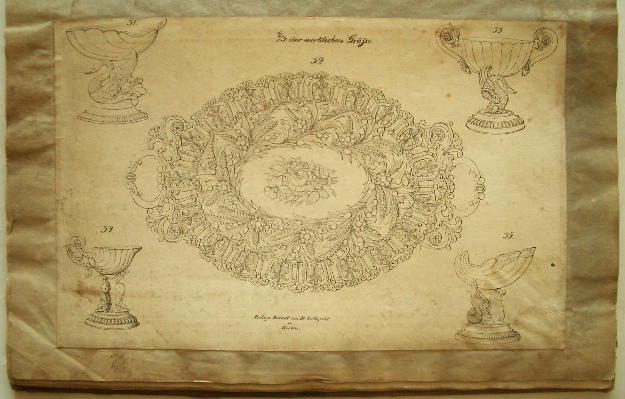
1850réf. 630558 montierte lithographierte Tafeln mit 366 Abb. (nummeriert 31-396) auf 29 Blatt. Berlin, ca. 1830-1850. Folio. Blattgröße: 43,0 x 28,5 cm; montierte Tafeln: 23,0 x 35,5 cm. Orig.-Leinwandband mit blindgeprägtem Bezug, breiter goldgeprägter klassizistischer Randbordüre u. Messingschließe.
1975réf. 059748Santa Barbara: Capra Press 1975. 1st Edition 1st Printing. Hardcover. Near Fine. 52 Pp. Light Green Cloth With Paste-On Illustration By Carrington Gilt Spine Lettering. #10 Of 150 Copies Designed And Printed By Noel Young For Capra Press Bound By Emily Paine Signed By Leonora Carrington. Fine No Wear Or Fading 2" X 3/16" Area Of Light Foxing In Gutter Near Bottom Of Rear Spine Edge. Do Dust Jacket As Issued. Capra Press hardcover
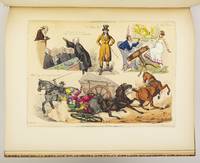
1822réf. ST16606London: Thomas M'Lean Repository of Wit and Humour 1822. FIRST EDITION. 432 x 342 mm. 17 1/8 x 13 1/2". Without text as issued. Very appealing late 19th century scarlet crushed morocco gilt by Riviere & Son stamp-signed on front turn-in covers with French fillet and drawer-handle tool borders upper cover with gilt lettering; raised bands spine gilt in compartments with central floral sprig surrounded by small tools volute cornerpieces gilt titling turn-ins with decorative floral rolls moss green watered silk doublures and endleaves all edges gilt. WITH 17 ANIMATED AQUATINT ENGRAVINGS COLORED BY HAND 14 plates in "Moments" and three plates in "Byron". Front flyleaf with bookplate of Ernest G. Mocatta. For "Moments": Tooley 40. See also: Ray p. 32; Houfe p. 217. ◆Leather with hints of dulling from leather preservative but the binding virtually unworn with a lustrous spine. A couple of trivial smudges to one margin and occasional light offsetting but A FINE COPY the plates clean and bright with vivid coloring and all imperfections insignificant. With plates that include comical scenes of horsemanship hunting soldiers and disastrous coach rides this attractively bound book brings together two separately published works by an artist Ray calls "the premier sporting illustrator of his time." The first work "Moments of Fancy and Whim" was originally published in two parts consisting of seven plates each. There are several different illustrations on every plate most of which use a play on words or a phrase especially one of the many uses of the word "fancy" to frame the scene. The illustrations lampoon familiar character types and aspects of English society--particularly those with an affinity for the equine--to wonderful comic effect. The second work here is composed of three plates each with four separate scenes accompanied by a line of verse from Byron's "Childe Harold" or "The Giaour." In this unexpected pairing Byron's lyric poetry is given an entirely new lowered context when interpreted through Alken's pen; for example the line "Tis Greece--but living Greece no more" is depicted as three men sitting down to a greasy dinner of roast duck. Henry Thomas Alken 1785-1851 was the son of a sporting artist. He received early training from his father and later studied under miniaturist J. T. Barker Beaumont. A talent for depicting horses and dogs led to a profitable career in sporting prints. As DNB relates "The fertility of Alken's pencil was amazing . . . . In all Alken's works there is a freedom of handling and a happy choice of subject which rendered them very popular in their day." The present works are both excellent examples of his signature style and are here in such marvelous condition that they can be fully appreciated for their wit spirit and vibrancy. Both are also quite rare on the market with "Moments" often showing up incomplete and "Byron" appearing only once in ABPC and RBH. Thomas M'Lean Repository of Wit and Humour unknown
1822réf. ST16606London: Thomas M'Lean Repository of Wit and Humour 1822. FIRST EDITION. 432 x 342 mm. 17 1/8 x 13 1/2". Without text as issued. Very appealing late 19th century scarlet crushed morocco gilt by Riviere & Son stamp-signed on front turn-in covers with French fillet and drawer-handle tool borders upper cover with gilt lettering; raised bands spine gilt in compartments with central floral sprig surrounded by small tools volute cornerpieces gilt titling turn-ins with decorative floral rolls moss green watered silk doublures and endleaves all edges gilt. WITH 17 ANIMATED AQUATINT ENGRAVINGS COLORED BY HAND 14 plates in "Moments" and three plates in "Byron". Front flyleaf with bookplate of Ernest G. Mocatta. For "Moments": Tooley 40. See also: Ray p. 32; Houfe p. 217. ◆Leather with hints of dulling from leather preservative but the binding virtually unworn with a lustrous spine. A couple of trivial smudges to one margin and occasional light offsetting but A FINE COPY the plates clean and bright with vivid coloring and all imperfections insignificant. With plates that include comical scenes of horsemanship hunting soldiers and disastrous coach rides this attractively bound book brings together two separately published works by an artist Ray calls "the premier sporting illustrator of his time." The first work "Moments of Fancy and Whim" was originally published in two parts consisting of seven plates each. There are several different illustrations on every plate most of which use a play on words or a phrase especially one of the many uses of the word "fancy" to frame the scene. The illustrations lampoon familiar character types and aspects of English society--particularly those with an affinity for the equine--to wonderful comic effect. The second work here is composed of three plates each with four separate scenes accompanied by a line of verse from Byron's "Childe Harold" or "The Giaour." In this unexpected pairing Byron's lyric poetry is given an entirely new lowered context when interpreted through Alken's pen; for example the line "Tis Greece--but living Greece no more" is depicted as three men sitting down to a greasy dinner of roast duck. Henry Thomas Alken 1785-1851 was the son of a sporting artist. He received early training from his father and later studied under miniaturist J. T. Barker Beaumont. A talent for depicting horses and dogs led to a profitable career in sporting prints. As DNB relates "The fertility of Alken's pencil was amazing . . . . In all Alken's works there is a freedom of handling and a happy choice of subject which rendered them very popular in their day." The present works are both excellent examples of his signature style and are here in such marvelous condition that they can be fully appreciated for their wit spirit and vibrancy. Both are also quite rare on the market with "Moments" often showing up incomplete and "Byron" appearing only once in ABPC and RBH. Thomas M'Lean Repository of Wit and Humour unknown books
1698[Figurato Ornamentazione] (cm. 38x42,5) solida piena pelle dell' epoca (una cuffia rinforzata). Frontis inciso entro ricca decorazione, 31 tavole numerate mirabilmente incise all' acquaforte di eccezionale bellezza. illustrano argenterie, fregi, candelabri, carrozze, mobili, camere da letto, culle, stemmi, altari, specchiere, urne funebri, baldacchini, reliquiari, carri trionfali e addirittura un' organo musicale. Opera assolutamente rarissima sconosciuta alle massime bibliografie compreso: Fowler, Comolli, Cicognara, Michel-Michel, Vinciana, Graesse e Brunet. Choix e Berlin Katalog la citano con 32 tavole. Non sappiamo se la 32 contenga un colophon o meno. Il nostro esemplare è costituito da 31 tavole numerate e all' inizio si legge la seguente antica notazione: "Libro di N° 31 carte ad uso del Rev. Sig. D. Giov. Gerardi Comm. della SS. Inq. della città di Regalbuto quale costò...nell' anno 1756". Per notizie sull' autore (nato forse a Roma 1638-1698?) confronta i vari repertori specializzati come Thieme-Becker, Nagler, Pelliccioni, Gandellini, Iessen, Guilmard ecc. Esemplari di questa opera sono in Getty Center Library e Columbia University Library. Il Census nazionale Iccu, non registra alcun esemplare nelle biblioteche italiane. Esemplare bellissimo a grandi margini con incisioni in eccellente tiratura impresso su carta grave, legatura un pò lenta. * choix 15148: * Berlin-Katalog 3515; * Bm. Stc. Italian XVII Cent. Vol. II pag. 983 Appendix I. [F80] Libro
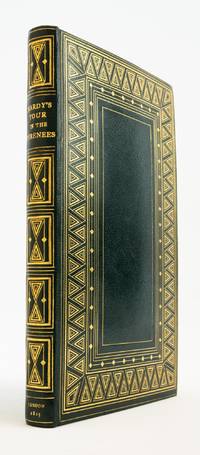
1825réf. ST20491London: R. Ackermann 1825. FIRST EDITION. 236 x 144 mm. 9 1/4 x 5 3/4". vii 1 84 pp. STRIKING DARK GREEN MOROCCO VERY ELABORATELY GILT BY CUNEO stamp-signed on lower front turn-in for Mildred B. Davey named stamped on upper front turn-in covers with geometric Art Deco frame smooth spine in compartments with triangle ornaments gilt lettering git-ruled turn-ins marbled endpapers. Housed in matching green morocco-backed clamshell box lined with fleece. Engraved map and 24 FINE DELICATELY HAND-COLORED PLATES inlaid on heavy stock as issued; original tissue guards. Verso of front free endpaper with engraved bookplate of Mildred Davey and red morocco ex-libris of Paul Edward Chevalier; front flyleaf with 19th century ink owner inscription of William Mitchell. A Large Paper Copy. Abbey Travel 210; Tooley 245; S. T. Prideaux "Aquatint Engraving: A Chapter in the History of Book Illustration" p. 229. See Peter Thorold "The British in France: Visitors and Residents since the Revolution" p. 64. A very small ink spot just intruding on very bottom edge of a handful of leaves a few vague spots of foxing to map isolated faint offsetting from illustrations but A VERY FINE COPY in all other ways--the text clean fresh and bright the plates immaculate the margins spacious the binding lustrous and sparkling. This is a lovely copy of a work with plates Prideaux considers "among the most beautiful to be found in aquatint engraving" and it comes in a handsome binding commissioned by Mildred Benson Davey and later owned by Paul Chevalier. Issued by a publisher known for his lavishly illustrated travelogues the volume takes us on a journey through the scenic French Pyrenees escorted by Englishman Joseph Hardy who adds his insights on the local population and government gives recommendations on the best mineral baths and describes in word and image the breathtaking scenery. The views are small measuring approximately 90 x 70 mm. but as Abbey notes "part of their charm is certainly in their small size." Sarah Prideaux praised their composition: "The ground is exceedingly fine and there is no line whatever. The colouring is most delicate and all the twenty-four illustrations are exquisite." We can only be impressed by the achievement of the colorist; the detail is cleanly executed the colors are luminescent and the images do not disappoint even under magnification. Thorold notes that this work was "a great success" and was later translated into French. Our copy was bound in a bold modern design at the Chicago workshop founded by in 1926 by John Cuneo 1884-1977. Cuneo hired fine British craftsmen like the Englishman Leonard Mounteney to create bibliophile-quality bindings for American collectors. After apprenticing at the bindery of G. & J. Abbott in Nottingham and studying ornamental design at the Battersea Polytechnic Mounteney worked as an exhibition finisher for Riviere before emigrating to Chicago where he initially worked with Alfred de Sauty at the R. R. Donnelley bindery before joining Cuneo's hand bindery. The present binding was a commission for Mildred Benson Davey 1890-1953 daughter of the founder of Benson & Rixon men’s clothiers. Cuneo also bound books for Chicago retail magnate Marshall Fields. Later our binding was appreciated by distinguished connoisseur Paul Chevalier whose library of beautiful volumes was uniformly characterized by outstanding workmanship and superb condition. The sale of his books in 1990 represented one of the best collections of 20th century bindings brought to auction in the past half century. Laid in is Christie's slip from Chevalier's 9 November sale where this appeared as lot 23 selling for $935. R. Ackermann unknown
1825réf. ST20491London: R. Ackermann 1825. FIRST EDITION. 236 x 144 mm. 9 1/4 x 5 3/4". vii 1 84 pp. STRIKING DARK GREEN MOROCCO VERY ELABORATELY GILT BY CUNEO stamp-signed on lower front turn-in for Mildred B. Davey named stamped on upper front turn-in covers with geometric Art Deco frame smooth spine in compartments with triangle ornaments gilt lettering git-ruled turn-ins marbled endpapers. Housed in matching green morocco-backed clamshell box lined with fleece. Engraved map and 24 FINE DELICATELY HAND-COLORED PLATES inlaid on heavy stock as issued; original tissue guards. Verso of front free endpaper with engraved bookplate of Mildred Davey and red morocco ex-libris of Paul Edward Chevalier; front flyleaf with 19th century ink owner inscription of William Mitchell. A Large Paper Copy. Abbey Travel 210; Tooley 245; S. T. Prideaux "Aquatint Engraving: A Chapter in the History of Book Illustration" p. 229. See Peter Thorold "The British in France: Visitors and Residents since the Revolution" p. 64. A very small ink spot just intruding on very bottom edge of a handful of leaves a few vague spots of foxing to map isolated faint offsetting from illustrations but A VERY FINE COPY in all other ways--the text clean fresh and bright the plates immaculate the margins spacious the binding lustrous and sparkling. This is a lovely copy of a work with plates Prideaux considers "among the most beautiful to be found in aquatint engraving" and it comes in a handsome binding commissioned by Mildred Benson Davey and later owned by Paul Chevalier. Issued by a publisher known for his lavishly illustrated travelogues the volume takes us on a journey through the scenic French Pyrenees escorted by Englishman Joseph Hardy who adds his insights on the local population and government gives recommendations on the best mineral baths and describes in word and image the breathtaking scenery. The views are small measuring approximately 90 x 70 mm. but as Abbey notes "part of their charm is certainly in their small size." Sarah Prideaux praised their composition: "The ground is exceedingly fine and there is no line whatever. The colouring is most delicate and all the twenty-four illustrations are exquisite." We can only be impressed by the achievement of the colorist; the detail is cleanly executed the colors are luminescent and the images do not disappoint even under magnification. Thorold notes that this work was "a great success" and was later translated into French. Our copy was bound in a bold modern design at the Chicago workshop founded by in 1926 by John Cuneo 1884-1977. Cuneo hired fine British craftsmen like the Englishman Leonard Mounteney to create bibliophile-quality bindings for American collectors. After apprenticing at the bindery of G. & J. Abbott in Nottingham and studying ornamental design at the Battersea Polytechnic Mounteney worked as an exhibition finisher for Riviere before emigrating to Chicago where he initially worked with Alfred de Sauty at the R. R. Donnelley bindery before joining Cuneo's hand bindery. The present binding was a commission for Mildred Benson Davey 1890-1953 daughter of the founder of Benson & Rixon men’s clothiers. Cuneo also bound books for Chicago retail magnate Marshall Fields. Later our binding was appreciated by distinguished connoisseur Paul Chevalier whose library of beautiful volumes was uniformly characterized by outstanding workmanship and superb condition. The sale of his books in 1990 represented one of the best collections of 20th century bindings brought to auction in the past half century. Laid in is Christie's slip from Chevalier's 9 November sale where this appeared as lot 23 selling for $935. R. Ackermann unknown books
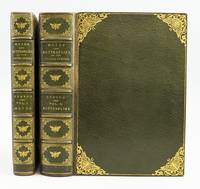
1900réf. CJW1901Boston: J. B. Millet Company 1900. No. 306 OF 500 COPIES. 256 x 181 mm. 10 x 7 1/8". Two volumes. Very attractive contemporary olive green morocco covers with gilt border incorporating an elaborate cornerpiece design of a butterfly; raised bands expertly rebacked preserving original backstrips spines gilt in compartments with lacy frames enclosing a large central butterfly gilt turn-ins marbled endpapers leather hinges all edges gilt. With more than 400 photographic illustrations and 62 ACTUAL ENTOMOLOGICAL TRANSFERS FROM LIFE all but one of the latter with original tissue guards. Bennett p. 33; McGrath p. 177; Nissen ZBI 1079; Reese "Nineteenth Century American Color Plate Books" 107. Spines faintly sunned two leaves with minor thumbing one corner crease otherwise AN EXTREMELY FINE SET the very appealing bindings quite lustrous and entirely sound and the text and plates clean fresh and bright with virtually no signs of use. This is a collection of butterfly and moth illustrations printed by direct transfer from the insects the creation of a leading innovator in the display of lepidoteral specimens. Sherman Foote Denton 1854-1937 came from a family of amateur naturalists who managed to turn their favorite pastime into a global business. Denton patented a butterfly mount that captured a specimen on a white plaster tablet where it could be pressed under glass avoiding the mess smell and eventual degradation of butterflies and moths mounted on paper using pins. The present publication presents a collection of specimens in a far more portable form that still preserves the color and detail of the insects' wings. The author collected by his own count more than 50000 specimens to produce the color plates for this limited edition. He explained his process: "The colored plates or Nature Prints used in the work are direct transfers from the insects themselves; that is to say the scales of the wings of the insects are transferred to the paper while the bodies are printed from engraving and afterward colored by hand." Since each specimen could be used only once it was necessary to obtain 500 perfect specimens of each species pictured. The effort and expense prevented larger runs of such publications and Reese observes that "new methods of printing color often too difficult to be practical were sometimes undertaken by enthusiasts.". J. B. Millet Company unknown
1900réf. CJW1901Boston: J. B. Millet Company 1900. No. 306 OF 500 COPIES. 256 x 181 mm. 10 x 7 1/8". Two volumes. Very attractive contemporary olive green morocco covers with gilt border incorporating an elaborate cornerpiece design of a butterfly; raised bands expertly rebacked preserving original backstrips spines gilt in compartments with lacy frames enclosing a large central butterfly gilt turn-ins marbled endpapers leather hinges all edges gilt. With more than 400 photographic illustrations and 62 ACTUAL ENTOMOLOGICAL TRANSFERS FROM LIFE all but one of the latter with original tissue guards. Bennett p. 33; McGrath p. 177; Nissen ZBI 1079; Reese "Nineteenth Century American Color Plate Books" 107. Spines faintly sunned two leaves with minor thumbing one corner crease otherwise AN EXTREMELY FINE SET the very appealing bindings quite lustrous and entirely sound and the text and plates clean fresh and bright with virtually no signs of use. This is a collection of butterfly and moth illustrations printed by direct transfer from the insects the creation of a leading innovator in the display of lepidoteral specimens. Sherman Foote Denton 1854-1937 came from a family of amateur naturalists who managed to turn their favorite pastime into a global business. Denton patented a butterfly mount that captured a specimen on a white plaster tablet where it could be pressed under glass avoiding the mess smell and eventual degradation of butterflies and moths mounted on paper using pins. The present publication presents a collection of specimens in a far more portable form that still preserves the color and detail of the insects' wings. The author collected by his own count more than 50000 specimens to produce the color plates for this limited edition. He explained his process: "The colored plates or Nature Prints used in the work are direct transfers from the insects themselves; that is to say the scales of the wings of the insects are transferred to the paper while the bodies are printed from engraving and afterward colored by hand." Since each specimen could be used only once it was necessary to obtain 500 perfect specimens of each species pictured. The effort and expense prevented larger runs of such publications and Reese observes that "new methods of printing color often too difficult to be practical were sometimes undertaken by enthusiasts.". J. B. Millet Company unknown books
1867réf. 2091202133201488Day and son 1867. Soft Cover. Fine. Volume: 1 Day and son paperback
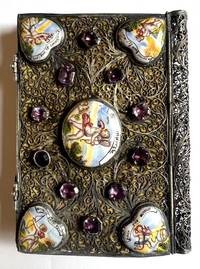
réf. 4426Paris 18th century. Silver filigree binding 82 x 60 mm. including spine. The covers of filigree volutes and curling tendrils with inset painted enamel oval centerpiece and heart-shaped corner-pieces showing putti in pastoral settings below love-related mottos in French central plaque on front cover slightly damaged both covers decorated with ten glass “amethysts”; hollow tubular filigree spine pair of fore-edge clasps and catches the silver binding mounted over later yellow silk-covered thin pasteboards the yellow silk liners with pockets front and back; preserved in a modern morocco case. Containing a 20th-century illustrated manuscript on parchment pasted in partly loose. This silver binding with painted enamel plaques belongs to a group of similarly decorated late 17th- or 18th-century miniature bindings. Several are on late 17th-century printed books or 18th-century manuscripts which have an Italian connection and although their style may have been imitated in various centers of book production it seems likely that most of the bindings were produced in Italy. I know of 15 such bindings including this one. Most are found on various late 17th-century editions of the Office of the Virgin printed in Paris from the 1670s to the early 1690s but including editions in Italian; these little Offices seem to have been produced at least in part for the Italian market. Two of the bindings were used for Hebrew manuscript prayerbooks produced in Italy. A census is available on request: it expands on that drawn up and kindly shared by Dr. Jan Storm van Leeuwen who published an earlier version in the catalogue of Patricia Pistner’s miniature book collection A Matter of Size no. 123. All but one of the bindings are miniature measuring approximately 82 x 55/58 mm. and are adorned with 12 to 20 cut-glass “jewels.” The silverwork is of two types: ten are filigree with spiraling volutes as in this binding and five are in a floral ajouré or openwork design with stems leaves and blossoms as in the Pistner example. The enamel plaques are also of two types not correlated with the two different silverwork types. The majority eleven show Christian religious figures with no inscriptions; these are in at least two different styles and were probably produced in different workshops. They are all found on editions of the Office of the Virgin printed between 1672 and 1693 all but one in Paris. Four bindings including this one have secular plaques painted in a rough folk-art style with putti and archaically spelled mottos relating to love. The other three bindings with secular motifs are the Pistner binding which is empty and two other filigree examples both bound over Jewish or Hebrew manuscripts: one is in a private Swiss collection and the other in which the plaque inscriptions are in Italian is held by Penn State University acquired from us. All four of these “secular” bindings have oddly shaped spines some slightly deformed. This seems to be the result of reworking the spines to accommodate thinner text blocks than those for which they were originally intended. The design of the catches and joints of the present binding and its filigree silverwork are similar to the other filigree secular bindings. The plaques especially resemble those of the example in the Swiss collection; one of the central plaques shares the same inscription here Rien m’arrest; in the other binding Rien m’arreste. However the fine condition and perfectly rounded spine of this binding may also point to some 19th-century restoration. Bookbindings of silver and previous metal were kept and reused through generations and thus often appear on much later books or manuscripts. This binding presently houses a 20th-century mildly erotic manuscript in French on 10 vellum leaves the title Cantique de Salomon in a crowned frame the 9 following leaves containing amateurish pencil and watercolor drawings with one- or two-line captions on rectos only. Originally glued in most of the leaves are now loose. The manuscript is disposed in the style of a Hebrew codex with the page order from left to right and the Hebrew transcription of the name of God YHWH appears at the top of the title. For examples of the analogous bindings see A Matter of Size: Miniature bindings and texts from the collection of Patricia J. Pistner 2019 no. 123 referring to 7 such bindings; F. Malaguzzi Collezioni del Museo civico d'arte antica di Torino: legature Turin 2011 no. 92; Luigi Mallé Smalti - Avori del Museo d’Arte Antico Turin 1969 pp. 113-114; G. Fletcher Judging a Book by its Cover: Bookbindings in the Collections of the Grolier Club NY 2023 no. 3.13; Musinsky Rare Books Catalogue 28 item 7; Patrick Olson NY Book Fair List 2024. unknown
réf. 4426Paris 18th century. Silver filigree binding 82 x 60 mm. including spine. The covers of filigree volutes and curling tendrils with inset painted enamel oval centerpiece and heart-shaped corner-pieces showing putti in pastoral settings below love-related mottos in French central plaque on front cover slightly damaged both covers decorated with ten glass “amethysts”; hollow tubular filigree spine pair of fore-edge clasps and catches the silver binding mounted over later yellow silk-covered thin pasteboards the yellow silk liners with pockets front and back; preserved in a modern morocco case. Containing a 20th-century illustrated manuscript on parchment pasted in partly loose. This silver binding with painted enamel plaques belongs to a group of similarly decorated late 17th- or 18th-century miniature bindings. Several are on late 17th-century printed books or 18th-century manuscripts which have an Italian connection and although their style may have been imitated in various centers of book production it seems likely that most of the bindings were produced in Italy. I know of 15 such bindings including this one. Most are found on various late 17th-century editions of the Office of the Virgin printed in Paris from the 1670s to the early 1690s but including editions in Italian; these little Offices seem to have been produced at least in part for the Italian market. Two of the bindings were used for Hebrew manuscript prayerbooks produced in Italy. A census is available on request: it expands on that drawn up and kindly shared by Dr. Jan Storm van Leeuwen who published an earlier version in the catalogue of Patricia Pistner’s miniature book collection A Matter of Size no. 123. All but one of the bindings are miniature measuring approximately 82 x 55/58 mm. and are adorned with 12 to 20 cut-glass “jewels.” The silverwork is of two types: ten are filigree with spiraling volutes as in this binding and five are in a floral ajouré or openwork design with stems leaves and blossoms as in the Pistner example. The enamel plaques are also of two types not correlated with the two different silverwork types. The majority eleven show Christian religious figures with no inscriptions; these are in at least two different styles and were probably produced in different workshops. They are all found on editions of the Office of the Virgin printed between 1672 and 1693 all but one in Paris. Four bindings including this one have secular plaques painted in a rough folk-art style with putti and archaically spelled mottos relating to love. The other three bindings with secular motifs are the Pistner binding which is empty and two other filigree examples both bound over Jewish or Hebrew manuscripts: one is in a private Swiss collection and the other in which the plaque inscriptions are in Italian is held by Penn State University acquired from us. All four of these “secular” bindings have oddly shaped spines some slightly deformed. This seems to be the result of reworking the spines to accommodate thinner text blocks than those for which they were originally intended. The design of the catches and joints of the present binding and its filigree silverwork are similar to the other filigree secular bindings. The plaques especially resemble those of the example in the Swiss collection; one of the central plaques shares the same inscription here Rien m’arrest; in the other binding Rien m’arreste. However the fine condition and perfectly rounded spine of this binding may also point to some 19th-century restoration. Bookbindings of silver and previous metal were kept and reused through generations and thus often appear on much later books or manuscripts. This binding presently houses a 20th-century mildly erotic manuscript in French on 10 vellum leaves the title Cantique de Salomon in a crowned frame the 9 following leaves containing amateurish pencil and watercolor drawings with one- or two-line captions on rectos only. Originally glued in most of the leaves are now loose. The manuscript is disposed in the style of a Hebrew codex with the page order from left to right and the Hebrew transcription of the name of God YHWH appears at the top of the title. For examples of the analogous bindings see A Matter of Size: Miniature bindings and texts from the collection of Patricia J. Pistner 2019 no. 123 referring to 7 such bindings; F. Malaguzzi Collezioni del Museo civico d'arte antica di Torino: legature Turin 2011 no. 92; Luigi Mallé Smalti - Avori del Museo d’Arte Antico Turin 1969 pp. 113-114; G. Fletcher Judging a Book by its Cover: Bookbindings in the Collections of the Grolier Club NY 2023 no. 3.13; Musinsky Rare Books Catalogue 28 item 7; Patrick Olson NY Book Fair List 2024. unknown books
1856folio [46 x 31 cm]; 12 hand colored lithographed plates as issued by E. Prugue from the original paintings of A.A. BonnaffÚ. original blind-stamped cloth portfolio, gilt title lettering on cover, light staining on front cover but heavier on rear cover, a few light foxing spots but most in the tissue guards, very good impressions of plates. A picture of this book is available up Hilier and Hilier 101. Palau 32375. The plates are of people in Lima in period costume, activities, the titles being El Cholo Coste±o, La Chola Quesera, El Heladero, La Chola Frutera, El Biscochero, La Chola Rabona, La Tapada (de noche), El Indio de la Sierra, La Tapada, La Chola de la Sierra, La Tapada (Saya y manto), La Tapada (Saya y Manto). This copy has 6 additional duplicate plates from another copy (two with margins chipped, lightly foxed). The book was not issued with a title page or text.
First edition, 4to (280 x 210 mm), [6], xl, 252, cxlivpp., with errata slip, folding engraved chart frontispiece (lightly offset onto title), 2 folding engraved maps, 29 aquatint plates of which 15 are hand-coloured (some folding), 3 large folding engraved meteorological registers, with an appendix of scientific observations and reports, some offsetting, cont. half calf, marbled boards, five raised bands, five compartments with triple gilt filet borders, the sixth with leather label lettered in gilt, marbled edges, a very handsome copy. "A famous, even notorious, voyage, led by Captain John Ross. As his lieutenants, Ross had aboard William Parry, James Clark Ross, and Edward Sabine, all of future fame as explorers. Ross attempted to proceed westward through Lancaster Sound, but being deceived, presumably by a mirage, he described the passage as barred by a range of mountains, which he named the Croker Mountains, despite the disbelief of his colleagues. On returning to England in November, the report was, at first, accepted as conclusive, and Ross was promoted to post rank in December, 1818. In the following year he published this volume. A controversy soon arose which called Ross's courage into question and opened a life-long quarrel between him and Sir John Barrow, Secretary of the Admiralty".?Hill. Provenance: Armorial bookplate of Colonel Ernest William Greg (1862?1934) to front paste-down. Abbey Travel, 634; Hill, 1488; Lande, 1425.
1726réf. 3094Paris, Rollain, Quillau, Desaint, 1726 ; quatre tomes in-4 ; plein maroquin rouge cerise à grain long, dos à nerfs ornés, titre doré, triple filet doré d'encadrement des plats, filet doré et fleurons décoratifs en écoinçons, roulette décorative dorée sur les coupes et en intérieur, toutes tranches dorées (Thouvenin, relieur de 1813 à 1834) ; (6) ff., 696 pp. ; (1) f., 719 pp. ; (1) f., 552, 4 pp., (1) f. ; (1) f., 240, 408, 221, XX pp. et en tout, portrait gravé de l'auteur en frontispice, 6 cartes et plans et 70 portraits gravés blasonnés hors-texte et 4 vignettes.
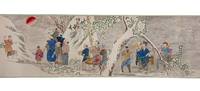
1938réf. 108041938. Scroll 275 x 13850 mm. borders of speckled silver inner front endpaper with silver decoration outer side covered with gold & red silk brocade inner wooden core roller. At end in trans.: “Adachi Ginrei 足立銀嶺 the artist…copied by Ōju 應需 1938.” A richly illustrated scroll in fine colors including metallic pigments such as silver of the mining activities at the Ikuno silver mine. Silver was mined at the Ikuno Ginzan Ikuno silver mine from the 9th century until the late 20th century and was an important source of income for the shogunate. There were several entrances to the mine. The main tunnel was 2.6 km long and extended 1 km deep. Lead copper zinc and gold were extracted along with silver. More than 20000 residents were in some way involved in the local mining industry. One of the most productive periods for the mine was the 18th century when in some months the production of silver reached about 562 kilograms. This is a long and fine scroll concerning the mine with many scenes. The beginning images depict a procession on the second day of the year with workers and government officials making offerings for good fortune. Following are scenes of the several entrances to the mine offices and storage facilities and miners preparing to enter the mine carrying baskets. Remarkably a long 755 mm. shikake 仕掛㑠flap “trick picture” is attached and present underneath the scroll itself depicting the mine shafts and activities of the labor. On the scroll itself there are two deliberately cut-away sections each suggesting the shikake below: one of an entrance to the mine and another of a grilled escapeway for the mine’s water. This is followed by scenes of laborers in the river sifting away impurities; various smelting and refining processes and furnaces including an image of the nanban process; government officials observing and keeping records of output using the abacus; liquid silver flowing out of the furnace; officials weighing and recording the finished product; the transportation of the silver to Osaka in a procession with dignitaries in a palanquin laborers and horses carrying the silver the trademarks of silver merchants are present on the horses’ saddles; the reception of the silver at Osaka by officials; the treasury inside Osaka Castle; and finally an extended scene of festivities at the silver mine following the successful delivery of the silver. Each segment of the scroll has a manuscript title and text describing the following scenes and within each image are many labels giving titles functions and mining terminology. In fine condition preserved in a box. unknown
1938réf. 108041938. Scroll 275 x 13850 mm. borders of speckled silver inner front endpaper with silver decoration outer side covered with gold & red silk brocade inner wooden core roller. At end in trans.: “Adachi Ginrei 足立銀嶺 the artist…copied by Ōju 應需 1938.” A richly illustrated scroll in fine colors including metallic pigments such as silver of the mining activities at the Ikuno silver mine. Silver was mined at the Ikuno Ginzan Ikuno silver mine from the 9th century until the late 20th century and was an important source of income for the shogunate. There were several entrances to the mine. The main tunnel was 2.6 km long and extended 1 km deep. Lead copper zinc and gold were extracted along with silver. More than 20000 residents were in some way involved in the local mining industry. One of the most productive periods for the mine was the 18th century when in some months the production of silver reached about 562 kilograms. This is a long and fine scroll concerning the mine with many scenes. The beginning images depict a procession on the second day of the year with workers and government officials making offerings for good fortune. Following are scenes of the several entrances to the mine offices and storage facilities and miners preparing to enter the mine carrying baskets. Remarkably a long 755 mm. shikake 仕掛㑠flap “trick picture” is attached and present underneath the scroll itself depicting the mine shafts and activities of the labor. On the scroll itself there are two deliberately cut-away sections each suggesting the shikake below: one of an entrance to the mine and another of a grilled escapeway for the mine’s water. This is followed by scenes of laborers in the river sifting away impurities; various smelting and refining processes and furnaces including an image of the nanban process; government officials observing and keeping records of output using the abacus; liquid silver flowing out of the furnace; officials weighing and recording the finished product; the transportation of the silver to Osaka in a procession with dignitaries in a palanquin laborers and horses carrying the silver the trademarks of silver merchants are present on the horses’ saddles; the reception of the silver at Osaka by officials; the treasury inside Osaka Castle; and finally an extended scene of festivities at the silver mine following the successful delivery of the silver. Each segment of the scroll has a manuscript title and text describing the following scenes and within each image are many labels giving titles functions and mining terminology. In fine condition preserved in a box. unknown books
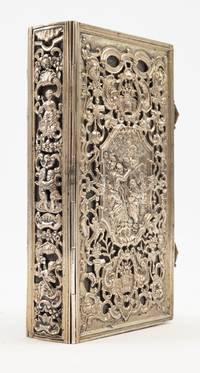
1885réf. ST20549cOxford: Printed at the University Press for Peacock Mansfield and Britton London ca. 1885. 146 x 80 mm. 5 3/4 x 3 1/8". 536 pp. IN A LOVELY 18TH CENTURY SILVER BINDING over contemporary brown morocco DONE IN THE FRENCH RÉGENCE STYLE combining piercing with repoussé ornamentation the covers with central cartouche depicting a scene from the life of Christ in repoussé that on the front cover showing the Baptism of Christ with two hallmarks at the upper left an "A" and a rooster that on the lower cover showing the Ascension this surrounded by a pierced frame of rocaille drawer handles vases of flowers swans a leafy fronds spine pierced with rocaille and flowers separating three allegorical putti ornaments representing Faith Hope and Charity two openwork rocaille clasps. Endpapers rather worn at fore edge isolated very faint foxing otherwise A FINE COPY the text clean and fresh and THE SILVER BINDING SPARKLING AND UNMARRED. This glittering binding is a lovely example of 18th century silverwork in nearly flawless condition. While we have been unable to identify the maker the binding is probably French. A silver binding on a 1686 copy of a Rotterdam "Speculum Poenitentiae" catalogued by Antiquariat Roo is identical to ours in size and design except for the content in the large central frames and is identified by them as French. They find a master's mark of "T. G" beneath the front scene not present on our binding. In any case the delicate symmetrical ornamentation featured on our binding is typical of French Régence decorative arts with scrolls studded with naturalistic embellishments that reward close inspection. Many charming details are hidden within the sea of volutes such as the swans stealing treats from overflowing baskets of fruit. The central scenes from the life of Christ come to life through meticulous execution as our silversmith has taken great care with the details: water trickles from John the Baptist's outstretched arm and voluminous curls of cloud frame Christ's Ascension. The later Book of Common Prayer the binding now contains is a testament to the binding's enduring appeal as a precious devotional object. Printed at the University Press for Peacock, Mansfield, and Britton, London unknown
1885réf. ST20549cOxford: Printed at the University Press for Peacock Mansfield and Britton London ca. 1885. 146 x 80 mm. 5 3/4 x 3 1/8". 536 pp. IN A LOVELY 18TH CENTURY SILVER BINDING over contemporary brown morocco DONE IN THE FRENCH RÉGENCE STYLE combining piercing with repoussé ornamentation the covers with central cartouche depicting a scene from the life of Christ in repoussé that on the front cover showing the Baptism of Christ with two hallmarks at the upper left an "A" and a rooster that on the lower cover showing the Ascension this surrounded by a pierced frame of rocaille drawer handles vases of flowers swans a leafy fronds spine pierced with rocaille and flowers separating three allegorical putti ornaments representing Faith Hope and Charity two openwork rocaille clasps. Endpapers rather worn at fore edge isolated very faint foxing otherwise A FINE COPY the text clean and fresh and THE SILVER BINDING SPARKLING AND UNMARRED. This glittering binding is a lovely example of 18th century silverwork in nearly flawless condition. While we have been unable to identify the maker the binding is probably French. A silver binding on a 1686 copy of a Rotterdam "Speculum Poenitentiae" catalogued by Antiquariat Roo is identical to ours in size and design except for the content in the large central frames and is identified by them as French. They find a master's mark of "T. G" beneath the front scene not present on our binding. In any case the delicate symmetrical ornamentation featured on our binding is typical of French Régence decorative arts with scrolls studded with naturalistic embellishments that reward close inspection. Many charming details are hidden within the sea of volutes such as the swans stealing treats from overflowing baskets of fruit. The central scenes from the life of Christ come to life through meticulous execution as our silversmith has taken great care with the details: water trickles from John the Baptist's outstretched arm and voluminous curls of cloud frame Christ's Ascension. The later Book of Common Prayer the binding now contains is a testament to the binding's enduring appeal as a precious devotional object. Printed at the University Press for Peacock, Mansfield, and Britton, London unknown books