1989rif. 2080202105200145Yufuin Town Magazine Publishing Association 1989. Soft Cover. Fine. Number of pages: 1287p540p Yufuin Town Magazine Publishing Association paperback
2006rif. Q-0738531022Arcadia Publishing 2006-05-29. paperback. New. In shrink wrap. Looks like an interesting title! Arcadia Publishing paperback
1983rif. 164266北京. Beijing.: 文物出版社.Wen wu chu ban she. 1983. Maps one folded black and white illustrations 54 pp black and white plates 161pp appendices corners little bumped with minor rubbing otherwise very good hardback copy. Text in Chinese with English abstract. 26.7 x 19.3cm. Chinese Yangshao Culture was a Neolithic culture circa 5000BC - 3000 BC along the Yellow River. Yuanjunmiao Archaeological site is located in Huaxian County Shaan'xi Province. The site was first excavated around 1958 - 1959. . 文物出版社.[Wen wu chu ban she]. hardcover
1998rif. 2083002115800037Literature reproduction center 1998. Soft Cover. Fine. Number of books: 3 Literature reproduction center paperback
1985rif. DYTWW10302Yuanshan Yingju Exhibition National Implementation Committee 1985. Soft Cover. Fine. Number of books£º1 Yuanshan Yingju Exhibition National Implementation Committee paperback
2011rif. x-0415612853Routledge 2011. Paperback. New. 1st edition. 232 pages. 9.25x6.25x0.75 inches. Routledge paperback
2005rif. SONG0415361826Routledge 2005-04-04. 1. hardcover. Used: Good. 6.50x0.75x9.75. Buy with confidence. Excellent Customer Service & Return policy. Routledge hardcover
rif. A9780415612852Paperback / softback. New. paperback
rif. 61804699Taylor & Francis Group . Papeback. New. pp. 4 Taylor & Francis Group unknown
1964rif. 2092902140307118Kashiwashobo 1964. Soft Cover. Fine. Number of books: 1 Kashiwashobo paperback
2012rif. 2090202118103428Picture Book Yuu-chan and the Magical Rose: Rose Town Fukuyama Production Committee Minamiteshiro-cho Fukuyama City Hiroshima Prefecture 2012. Soft Cover. Fine. The book is in fine condition. Picture Book Yuu-chan and the Magical Rose: Rose Town Fukuyama Production Committee (Minamiteshiro-cho, Fukuyama City, Hiroshima paperback
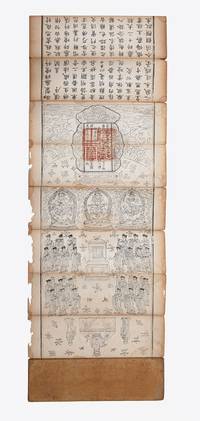
rif. 10529Two & one-half woodcut illus. 44 sheets each folded into multiple pages. Oblong small 8vo 89 x 288 mm. orig. stiff boards in concertina format one board loose. Beijing: Fanjing chang 番經廠 1617 date of colophon; woodblocks carved in 1599. One of three surviving copies of a Tibetan-Chinese bilingual liturgy of Bhaiṣajyaguru the Medicine Buddha printed under Ming imperial patronage at the Tibetan scripture workshop Ch. fanjing chang 番經廠. Tibetan books printed in pre-1644 Beijing are very rare and precious; this is the only copy we have encountered. Our copy has the well-known 廣é‹ä¹‹å¯¶ seal on the frontispiece representing Ming royal provenance. Many of the early-Ming emperors were devout followers of Tibetan Buddhism and sponsored large-scale sutra printing projects including the first printed edition of the Tibetan Kanjur canon completed in 1411 under the patronage of the Yongle Emperor r. 1402-24. This veneration declined during the reign of the Jiajing Emperor r. 1521-64 who favored Daoism and dissolved many longstanding Buddhist institutions in the capital. It was after his rule in 1572 that the court reestablished the Tibetan scripture workshop in part to secure the alliance of the Altan Khan 1508-82 of the Tümed Mongols a powerful patron of the Gelug sect. Despite its name the Tibetan scripture workshop seems to have printed few Buddhist texts with the notable exception of a new 1605 edition of the Kanjur. Falling under the jurisdiction of the Directorate of Ceremonials Ch. Silijian å¸ç¦®ç›£ the workshop's main responsibility was to officiate routine Buddhist rituals within the palace complex. As the court was hesitant to admit Tibetan Buddhist monks into the inner palace these rituals were led instead by trained eunuchs and courtesans some of whom lived and practiced as nuns within the workshop 陳楠 "法渊寺與明代番經廠雜考" ä¸åœ‹è—å¸ 2006.2 pp. 138-43. According to the Preface in our copy this bilingual ritual of the 12 vows of the Medicine Buddha was prepared in Wanli 27 1599 by the palace eunuch Zheng Li 鄭利 master of rituals at the Tibetan scripture workshop. The Tsinghua University Library currently exhibiting one of the two other surviving copies describes the book as follows in trans.: "First edition published in 1599 by the scripture workshops of the Directorate of Ceremonials in the inner palace. Only surviving copy sic. It begins with a frontispiece in three pages followed by the preface of Zheng Li explaining the conditions around the translation and publication of the text which is valuable for understanding the functions of the Ming scripture workshops. The text consists of prayers for incense offering light offering and purification followed by the twelve vows of the Medicine Buddha and the dedication of merit.The page is wide and large the layout is generous the characters are large as coins the engraving is exquisite and the paper is of high quality. These are typical of the 'palace workshop' editions. To accommodate the bilingual text the Chinese text is written horizontally from left to right making it an exemplar of early horizontally written Chinese texts. The binding also differs from the traditional Chinese sutra binding. To accommodate the horizontal text the tuipeng 推篷 or 'push-awning' binding is used instead. It is a rare example of a Ming-era book in the 'push-awning' binding."-"万å·ç³ç…--馆è—å部善本特展" accessed Oct. 3 2026. A provisional comparison of the Chinese and Tibetan texts shows that with the exception of a few short passages neither is a direct translation of the other and the bilingual text likely formed an integrated liturgy conducted with a mixture of languages including Sanskrit mantras in Tibetan transliteration. This linguistic hybridity is echoed by the unusual choice of a vertical concertina binding which ingeniously brings together the layout and reading practices of the Tibetan pecha with a Chinese binding traditionally associated with Buddhist scriptures. As mentioned above ours is one of three surviving copies. While the exact state of completeness and condition of the Tsinghua University copy is unclear a comparison with the copy digitized by the Berlin State Library Pander C 18 shows that its frontispiece with the colophon dated Wanli dingsi 1617 when 120 copies were printed and royal seal fully present in our copy is damaged and mostly lacking in the Berlin copy. The front board of the Berlin copy has the bilingual title Mi 'khrugs pa'i 'cho ga dang po bzhugs sto A chu fo tan chang jing 阿閦佛壇塲經 but its relation to the text is unclear. The comparison also shows the final part of the illustration at the end of our copy to be damaged and incomplete. Our copy nevertheless contains a short final inscription "shang g.yi kyen tha'i kyen zin gon dbang shing tshin kci yin tsog" which appears to transcribe an unidentified Chinese phrase and is lacking in the Berlin copy. The Berlin copy was evacuated to Silesia during the World War II and then taken to Krakow when that region became part of Poland. It remains in Krakow. We believe that our book comes from the collection of Japanese sinologist Kanda Nobuo 神田信夫 1921-2003. As mentioned Tibetan books published in Ming-era Beijing are extremely rare; we find no other example in WorldCat. The Tibetan scripture workshop was dissolved during the Ming-Qing transition and the region later became home to the famous Songzhusi 嵩ç¥å¯º temple complex the center of Tibetan publishing in Qing Beijing. Fine copy; some tears in the margins with no loss of text and some marginal dampstaining as well as the aforementioned loss of half an illustration at the end. One board is loose. Preserved in a modern hantao. unknown books
rif. 10529Two & one-half woodcut illus. 44 sheets each folded into multiple pages. Oblong small 8vo 89 x 288 mm. orig. stiff boards in concertina format one board loose. Beijing: Fanjing chang 番經廠 1617 date of colophon; woodblocks carved in 1599. One of three surviving copies of a Tibetan-Chinese bilingual liturgy of Bhaiṣajyaguru the Medicine Buddha printed under Ming imperial patronage at the Tibetan scripture workshop Ch. fanjing chang 番經廠. Tibetan books printed in pre-1644 Beijing are very rare and precious; this is the only copy we have encountered. Our copy has the well-known 廣é‹ä¹‹å¯¶ seal on the frontispiece representing Ming royal provenance. Many of the early-Ming emperors were devout followers of Tibetan Buddhism and sponsored large-scale sutra printing projects including the first printed edition of the Tibetan Kanjur canon completed in 1411 under the patronage of the Yongle Emperor r. 1402-24. This veneration declined during the reign of the Jiajing Emperor r. 1521-64 who favored Daoism and dissolved many longstanding Buddhist institutions in the capital. It was after his rule in 1572 that the court reestablished the Tibetan scripture workshop in part to secure the alliance of the Altan Khan 1508-82 of the Tümed Mongols a powerful patron of the Gelug sect. Despite its name the Tibetan scripture workshop seems to have printed few Buddhist texts with the notable exception of a new 1605 edition of the Kanjur. Falling under the jurisdiction of the Directorate of Ceremonials Ch. Silijian å¸ç¦®ç›£ the workshop's main responsibility was to officiate routine Buddhist rituals within the palace complex. As the court was hesitant to admit Tibetan Buddhist monks into the inner palace these rituals were led instead by trained eunuchs and courtesans some of whom lived and practiced as nuns within the workshop 陳楠 "法渊寺與明代番經廠雜考" ä¸åœ‹è—å¸ 2006.2 pp. 138-43. According to the Preface in our copy this bilingual ritual of the 12 vows of the Medicine Buddha was prepared in Wanli 27 1599 by the palace eunuch Zheng Li 鄭利 master of rituals at the Tibetan scripture workshop. The Tsinghua University Library currently exhibiting one of the two other surviving copies describes the book as follows in trans.: "First edition published in 1599 by the scripture workshops of the Directorate of Ceremonials in the inner palace. Only surviving copy sic. It begins with a frontispiece in three pages followed by the preface of Zheng Li explaining the conditions around the translation and publication of the text which is valuable for understanding the functions of the Ming scripture workshops. The text consists of prayers for incense offering light offering and purification followed by the twelve vows of the Medicine Buddha and the dedication of merit.The page is wide and large the layout is generous the characters are large as coins the engraving is exquisite and the paper is of high quality. These are typical of the 'palace workshop' editions. To accommodate the bilingual text the Chinese text is written horizontally from left to right making it an exemplar of early horizontally written Chinese texts. The binding also differs from the traditional Chinese sutra binding. To accommodate the horizontal text the tuipeng 推篷 or 'push-awning' binding is used instead. It is a rare example of a Ming-era book in the 'push-awning' binding."-"万å·ç³ç…--馆è—å部善本特展" accessed Oct. 3 2026. A provisional comparison of the Chinese and Tibetan texts shows that with the exception of a few short passages neither is a direct translation of the other and the bilingual text likely formed an integrated liturgy conducted with a mixture of languages including Sanskrit mantras in Tibetan transliteration. This linguistic hybridity is echoed by the unusual choice of a vertical concertina binding which ingeniously brings together the layout and reading practices of the Tibetan pecha with a Chinese binding traditionally associated with Buddhist scriptures. As mentioned above ours is one of three surviving copies. While the exact state of completeness and condition of the Tsinghua University copy is unclear a comparison with the copy digitized by the Berlin State Library Pander C 18 shows that its frontispiece with the colophon dated Wanli dingsi 1617 when 120 copies were printed and royal seal fully present in our copy is damaged and mostly lacking in the Berlin copy. The front board of the Berlin copy has the bilingual title Mi 'khrugs pa'i 'cho ga dang po bzhugs sto A chu fo tan chang jing 阿閦佛壇塲經 but its relation to the text is unclear. The comparison also shows the final part of the illustration at the end of our copy to be damaged and incomplete. Our copy nevertheless contains a short final inscription "shang g.yi kyen tha'i kyen zin gon dbang shing tshin kci yin tsog" which appears to transcribe an unidentified Chinese phrase and is lacking in the Berlin copy. The Berlin copy was evacuated to Silesia during the World War II and then taken to Krakow when that region became part of Poland. It remains in Krakow. We believe that our book comes from the collection of Japanese sinologist Kanda Nobuo 神田信夫 1921-2003. As mentioned Tibetan books published in Ming-era Beijing are extremely rare; we find no other example in WorldCat. The Tibetan scripture workshop was dissolved during the Ming-Qing transition and the region later became home to the famous Songzhusi 嵩ç¥å¯º temple complex the center of Tibetan publishing in Qing Beijing. Fine copy; some tears in the margins with no loss of text and some marginal dampstaining as well as the aforementioned loss of half an illustration at the end. One board is loose. Preserved in a modern hantao. unknown
rif. 1312371129.Gpaperback. Good. Access codes and supplements are not guaranteed with used items. May be an ex-library book. paperback
rif. 1142791327.Gpaperback. Good. Access codes and supplements are not guaranteed with used items. May be an ex-library book. paperback
1986rif. 2083002115707718The National Museum of Art Osaka 1986. Soft Cover. Fine. Number of pages: 1 volume without pagination Size: 20x21cm Number of volumes: 1 volume The National Museum of Art, Osaka paperback
2002rif. 2092902141300287Nihon Keizai Shimbun 2002. Soft Cover. Fine. Number of books: 1 Nihon Keizai Shimbun paperback
2000Very Good English Original bdg. HC. 4to. (30 x 23 cm) In Turkish. 574 p. 1st of 3. Yozgat temettuat defterleri. Vol. I.
1988Fine Turkish Paperback. Roy. 8vo. (23 x 16 cm). In Turkish. 432 p., b/w ills. Yozgat sair ve yazarlari.
1992rif. Q-0310900344Zondervan 1992. paperback. New. In shrink wrap. Looks like an interesting title! Zondervan paperback
2003rif. Q-031024689XZondervan/Youth Specialties 2003-01-01. Paperback. New. In shrink wrap. Looks like an interesting title! Zondervan/Youth Specialties paperback
1992rif. Q-0310900336Zondervan 1992-10-01. Hardcover. New. New. In shrink wrap. Looks like an interesting title! Zondervan hardcover
1991rif. Q-0310542316Zondervan 1991-10-24. Paperback. New. New. In shrink wrap. Looks like an interesting title! Zondervan paperback
rif. 1332287662.Gpaperback. Good. Access codes and supplements are not guaranteed with used items. May be an ex-library book. paperback
rif. 133061903X.Gpaperback. Good. Access codes and supplements are not guaranteed with used items. May be an ex-library book. paperback