1979RARE yearbook of Ugaritic studies published on the occasion of 80th birthday of the founder of Ugaritic studies Claude Frédéric-Armand Schaeffer (1898-1982). 2.6kg. 300x210mm. XIV+905 pages. Green cloth Hardcover. Black lettering on front cover and spine. Cover and spine very slightly dirty and rubbed. Cover corners slightly peeling. Front cover corners and edges, and spine bottom edge bumped. Spine edges very slightly bumped. Fore edge slightly stained. [SUMMARY]: This extremely rare Festschrift, comprising articles by the preeminent scholars of the Old Testament, Semitic languages and ancient Near Eastern history and culture, is in good condition. PLEASE NOTE: This item is overweight. We may ask for extra shipping costs.
1997RARE yearbook of Ugaritic studies by renowned scholars of the ancient Near East and Old Testament, such as Manfried Dietrich, Oswald Loretz, Israel Finkelstein, Johannes C. de Moor, Roland Lamprichs, A.F. Rainey, W.H. van Soldt and others. Contains b&w plates. 245x170mm. XIV+972 pages. Green cloth Hardcover with black lettering on front cover and spine. Cover slightly stained. Cover corners and spine edges very slightly bumped. Front whitepage edges slightly stained. [SUMMARY]: This extremely rare collection of Ugaritic studies is in good condition. PLEASE NOTE: This item is overweight. We may ask for extra shipping costs.
1998RARE yearbook of Ugaritic studies in English, German, French, Italian and Spanish by renowned scholars of the ancient Near East and Old Testament, such as Michael C. Astour, Oswald Loretz, Zipopra Cochavi-Rainey, Ingo Kottsieper, Wilfred van Soldt, Manfreid Dietrich and others. 245x170mm. VI+865 pages. Green cloth Hardcover with black lettering on front cover and spine. Cover slightly dirty. Cover corners, front cover edge and spine edges bumped. [SUMMARY]: This extremely rare collection of Ugaritic studies is in good condition. PLEASE NOTE: This item is overweight. We may ask for extra shipping costs.
1904Best.-Nr. 154021904. Gayaza School classroom lantern slide 1904 documents girls receiving classroom instruction at the pioneering Church Missionary Society school established at Gayaza in Buganda present-day Uganda. Founded in 1904 as a school for girls Gayaza developed into what is now Gayaza High School identified by the school as Uganda's oldest all-girls boarding secondary school. The image dates from the institution's founding period and records African girls engaged in reading under two female teachers providing unusually detailed visual evidence of girls' education within an early twentieth-century missionary school in Uganda. Original glass lantern slide 3¼ x 4 inches published by the Young People's Missionary Movement of the United States and Canada. Scratched into the negative beneath the image is the identification: "Gayaza A Class in School." Girls of varying school ages occupy the classroom; approximately half sit on the floor holding open books while others sit on a bench at a table with books before them. Two female teachers stand among the pupils. Classroom equipment includes a blackboard on an easel two wall maps a clock and a globe resting on a cabinet. The girls wear garments wrapped or draped around the lower body. These details record both instructional practice and the material furnishings available in the school's early classroom. The slide also documents how images of African mission schools circulated beyond Uganda. The Young People's Missionary Movement described lantern slides as its most extensively used form of pictorial material and supplied such images to mission boards for missionary education. This example therefore preserves two related historical records: the classroom at Gayaza and the presentation of girls' education in Uganda to North American Christian audiences. Gayaza subsequently developed into a secondary boarding school for girls retaining its Church foundation. unknown books
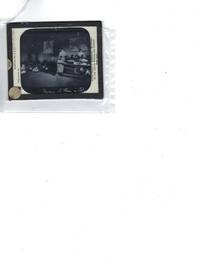
1904Best.-Nr. 154021904. Gayaza School classroom lantern slide 1904 documents girls receiving classroom instruction at the pioneering Church Missionary Society school established at Gayaza in Buganda present-day Uganda. Founded in 1904 as a school for girls Gayaza developed into what is now Gayaza High School identified by the school as Uganda's oldest all-girls boarding secondary school. The image dates from the institution's founding period and records African girls engaged in reading under two female teachers providing unusually detailed visual evidence of girls' education within an early twentieth-century missionary school in Uganda. Original glass lantern slide 3¼ x 4 inches published by the Young People's Missionary Movement of the United States and Canada. Scratched into the negative beneath the image is the identification: "Gayaza A Class in School." Girls of varying school ages occupy the classroom; approximately half sit on the floor holding open books while others sit on a bench at a table with books before them. Two female teachers stand among the pupils. Classroom equipment includes a blackboard on an easel two wall maps a clock and a globe resting on a cabinet. The girls wear garments wrapped or draped around the lower body. These details record both instructional practice and the material furnishings available in the school's early classroom. The slide also documents how images of African mission schools circulated beyond Uganda. The Young People's Missionary Movement described lantern slides as its most extensively used form of pictorial material and supplied such images to mission boards for missionary education. This example therefore preserves two related historical records: the classroom at Gayaza and the presentation of girls' education in Uganda to North American Christian audiences. Gayaza subsequently developed into a secondary boarding school for girls retaining its Church foundation. unknown
Best.-Nr. 1331349540.Gpaperback. Good. Access codes and supplements are not guaranteed with used items. May be an ex-library book. paperback
1935Best.-Nr. 3554907228231935. London H. M. Eastern African Trade and Information Office or "Publicity" Entebbe Uganda 1935. A softback production. Publisher's thin card illustrated covers. 106 pages adverts photographs bibliography. A guide to the country including living conditions big game hunting angling hotels roads and ferries etc. A VG copy slight surface loss at the head of the spine. Map at the rear of the book in excellent condition. Quite scarce. unknown
1976Best.-Nr. 2082702114600104Kobunsha fixed price 900 yen 1976. Soft Cover. Fine. Number of books: 1 Kobunsha fixed price 900 yen paperback
Best.-Nr. 1329217470.Gpaperback. Good. Access codes and supplements are not guaranteed with used items. May be an ex-library book. paperback
1999Best.-Nr. Q-0786883960Hyperion 1999-05-26. Paperback. New. New. In shrink wrap. Looks like an interesting title! Hyperion paperback
1777Best.-Nr. 253801777 Siena - Presso Pazzini Carli 1777 - Reliure à la fanfare; in8 du XVIIIe siècle en plein maroquin grenat,dos lisse richement ornée de compartiments fleuronnés et cloisonnés, pas de pièce de titre, jeux de filets et roulettes et large dentelle dorés en encadrement des plats, roulette maroquin rouge, dos lisses ornés de pièces d'armes dorées, jolie dentelle dorée encadrant les plats,, coupes et bordures intérieures décorées, doublures et gardes de papier dominoté doré, tranches dorées sur marbrure (reliure de l'époque). Sous etui boite en cuir époque,orné de filets dorés ternis,doublé d'un papier carton d'époque dominoté,trés bon état.RARE CONDITION.- legatura dell’epoca in marocchino rosso decorata in oro,Note BibliograficheCm. 18, pp. (6) xlviii, 345 (3). Frontespizio figurato e 9 splendide tavole incise in rame fuori testo (tra cui l'antiporta che succede al frontespizio). esemplare in ottimo stato di conservazione. Edizione originale con dedica degli stampatori a doppia pagina a Maria Luisa d'Austria. Particolarmente belle e decorative le tavole fuori testo.con frontespizio figurato inciso in rame e 8 tavole a piena pagina incise in rame fuori testo. In ottime condizioni.
1971Best.-Nr. 2082702114605801Gunma Prefecture Board of Education 1971. Soft Cover. Fine. Number of books: 1 Gunma Prefecture Board of Education paperback
1985Best.-Nr. 2082402113802869Kumamoto Prefecture Kuma-gun Uemura Board of Education 1985. Soft Cover. Fine. Number of books: 1 (Kumamoto Prefecture) Kuma-gun Uemura Board of Education paperback
Best.-Nr. 2111902160201127Shahon N.A. Soft Cover. Fine. Volume: 1 Shahon paperback
1857Best.-Nr. 1225288Hannover, Rümpler, 1857. 12, 136 S. (Horae Belgicae 1). Ppbd d. Zeit m. Rückenvergoldung u. farb. Rückenschild (Kanten u. Außenfalz beschabt, Vorsätze gebräunt).
1903Best.-Nr. 44237(Leipzig, Johann Ambrosius Barth, 1903). Without wrappers.. In ""Annalen der Physik. Vierte Folge. Bd. 10. No 1. (Entire issue offred). With halftitle to vol. 10. 224 pp. and 1 folded plate. Seidentopf & Zsigmondy's paper: pp. 1-39 a. textillustrations. The issue punched in inner margin after cords. 3 small stamps in the text.
1903Best.-Nr. 44237Leipzig Johann Ambrosius Barth 1903. Without wrappers. In "Annalen der Physik. Vierte Folge. Bd. 10. No 1. Entire issue offred. With halftitle to vol. 10. 224 pp. and 1 folded plate. Seidentopf & Zsigmondy's paper: pp. 1-39 a. textillustrations. The issue punched in inner margin after cords. 3 small stamps in the text. First printing of the paper in which Zsigmondy describes his invention of the Ultramicroscope by which is became possible to see the Brownian movements of molecules. His microscope is still of great importence in colloid studies but in most fields where great magnification is required it has been outdistanced by the electron microscope."Zsigmondy was a figure of paramount importance on colloid chemistry during the first quarter of the twentieth century. His receipt of the Nobel Prize in 1925 for invention of the ultramicroscope and his work on colloids was the first time this fledgling science had been so honored. In 1926 work by J. B. Perrin and Theodor Svedberg that followed directly from Zsigmondy’s achievement was recognized by the Nobel Prizes in physics and in chemistry respectively. No Nobel Prize since then has been awarded for work solely in colloid chemistry. DSB.The offered issue contains another importent paper by MAX ABRAHAM "Prinzipien der Dynamik des Elektrons. Pp. 105-179. In 1902 Abraham said "It now becomes necessary to base the dynamics of the electrons from the outset on electromagnetic considerations" In 1903 the paper offered he published his main detailed article on the rigid electron"Pais in Subtle is the ord" pp. 157 ff."The ultramicroscope is form of microscope that reveals the presence of particles that cannot be seen with a normal optical microscope. Colloidal particles smoke particles etc. are suspended in a liquid or gas in a cell with a black background and illuminated by an intense cone of light that enters the cell from the side and has its apex in the field of view. The particles then produce diffraction-ring systems appearing as bright specks on the dark background. unknown
1887Best.-Nr. 44842Leipzig, Johann Ambrosius Barth, 1887. Without wrappers as issued in ""Annalen der Physik und Chemie. Hrsg. von G. Wiedemann."", Neue Folge Bd. 31, 7. Heft. With the titlepage to vol. 31. Pp. 337-544 a. 2 folded plates, (entire issue offered ""Heft"" 7). Hertz's paper: pp. 421-448 A. PP. 543-544. A Stamp on titlepage and verso of. Clean and fine.
1887Best.-Nr. 44842Leipzig Johann Ambrosius Barth 1887. Without wrappers as issued in "Annalen der Physik und Chemie. Hrsg. von G. Wiedemann." Neue Folge Bd. 31 7. Heft. With the titlepage to vol. 31. Pp. 337-544 a. 2 folded plates entire issue offered "Heft" 7. Hertz's paper: pp. 421-448 A. PP. 543-544. A Stamp on titlepage and verso of. Clean and fine. First edition of Hertz's seminal paper on electromagnetic waves in which he empirically demonstrates Maxwell's equations. This discovery and its demonstration led directly to the invention radio of communication television and Radar. The paper is the "ANNOUNCEMENT OF THE DISCOVERY OF THE PRODUCTION BY ELECTRICAL DISCHARGE OF WAVES WHICH HAVE THE PROPERTY OF VERY LONG WAVES"H.M. Evans.Hertz demonstrates what Maxwell had predicted that electromagnetic waves radiated in space with the speed of light. Hertz determined these waves to be of greater length than light and that they could be reflected."Experimental proof by Hertz of the Faraday-Maxwell hypothesis that electrical waves can be projected through space was begun in 1887 eight years after Maxwell's death. The two main requirements were a a method of producing the waves supposing that they existed and b a method of detecting them once they were produced." PMM 377. In the present paper Hertz "describes the apparatus that he had devised for the detection and measurement of electromagnetic waves the key to his later success. To prove that electromagnetic waves can be projected through space it was necessary to devise a means of both producing the waves and more difficult at the time of detecting them once produced." Norman Library No. 1123."Hertz's researches on electrical waves vindicated the Helmholtz ideal of the physicist as one whose competences embraced both experiment and mathematics. Hertz entered physics at the right time for one of his abilities to make a critical contribution; because the outstanding problem of physics was the disorderly condition of electrodynamics what was needed was someone with the theoretical power to analyze the competing theories and with the experimental judgment to produce the evidence that would persuade the physical community that a decision between the theories had been reached." DSB VI 348b."In the early 1890's the young inventor Guglielmo Marconi read of Hertz's electric wave experiments in an Italian electrical journal and began considering the Possibility of communication by wireless waves. Hertz's work initiated a technological development as momentous as it physical counterpart." DSB VI 349a. unknown
1828Best.-Nr. 43317Leipzig, Johann Ambrosius Barth, 1828. Without wrappers as issued in ""Annalen der Physik und Chemie. Hrsg.von Poggendorff"", Bd. 12, Zweites Stück. Pp. 161-336 (the entire issue offered (Heft 2) together with the titlepage to 12. Band). Wöhler's paper: pp. 253-256. Clean and fine, printed on good paper.
1828Best.-Nr. 43317Leipzig Johann Ambrosius Barth 1828. Without wrappers as issued in "Annalen der Physik und Chemie. Hrsg.von Poggendorff" Bd. 12 Zweites Stück. Pp. 161-336 the entire issue offered Heft 2 together with the titlepage to 12. Band. Wöhler's paper: pp. 253-256. Clean and fine printed on good paper. First appearance of this milestone paper marking the beginnings of organic chemistry in which Wöhler describes how he managed to synthezise urea from cyanate of ammonia. This broke down the old distinction between organic and inorganic substances. "This was the first synthesis of an organic compound and this accomplishment is generally regarded as the beginning of organic chemistry."Sparrow "Milestones of Science" p.37. The discovery destroyed the vitalistic theory which held that organic compounds could be produced only by living organisms and led eventually to the brilliant results that have been achieved in attempts to synthesize other organic compounds.Dibner: Heralds of Science no. 45. - Sparrow: Milestones of Science no. 197. - Garrison & Morton no. 671. See also DSB XIV p.475. unknown
1894Best.-Nr. 43650Leipzig, Johann Ambrosius Barth, 1894. Without wrappers. In ""Annalen der Physik und Chemie. Hrsg. von G. Wiedemann."", Neue Folge Bd. 51, No. 2. (Entire issue offered). Pp. 225-416 a. 2 plates. Lenard's paper: pp. 225-267 a. 1 arge folded lithographed plate, showing the apparatus. Clean and fine.
1894Best.-Nr. 43650Leipzig Johann Ambrosius Barth 1894. Without wrappers. In "Annalen der Physik und Chemie. Hrsg. von G. Wiedemann." Neue Folge Bd. 51 No. 2. Entire issue offered. Pp. 225-416 a. 2 plates. Lenard's paper: pp. 225-267 a. 1 arge folded lithographed plate showing the apparatus. Clean and fine. First appearance of Lenard's importent paper on cathode rays for the work on which he was awarded the Nobel Prize in 1905."After many experiments with aluminium foil of various thickness he was able to publish in 1894 the paper offered his great discovery that the plate of quartz that had until then been used to close the discharge tube could be replace by a thin plate of aluminium foil just thick enough to maintain the vacuum inside the tube but yet thin enough to allow the cathode rays to pass out. It thus became possible to study the cathode rays and also the fluorescence they caused outside the discharge tube and Lenard concluded from the experiments that he then did that the cathode rays were propagated through the air for distances of the order of a decimetre and that they travel in a vacuum for several metres without being weakened. Although Lenard at first followed Hertz in believing that the cathode rays were propagated in the ether he later abandoned this view as the result of the work of Jean Perrin in 1895 Sir J.J. Thomson in 1897 and W. Wien in 1897 which proved the corpuscular nature of the cathode rays."Nobel Prize.org.Shiers "Early Television" no 239. unknown
1852Best.-Nr. 43564Leipzig, Johann Ambrosius Barth, 1852. Without wrappers as issued in ""Annalen der Physik und Chemie. Hrsg.von Poggendorff"", Dritte Reihe Bd. 26, Achtes Stück.(= Heft No. 8 of 1852). (The entire issue (No. 8) offered). Titlepage to vol. 26. Pp. 501-600. Helmholtz's paper: pp. 501-523. Clean and fine.
1852Best.-Nr. 43564Leipzig Johann Ambrosius Barth 1852. Without wrappers as issued in "Annalen der Physik und Chemie. Hrsg.von Poggendorff" Dritte Reihe Bd. 26 Achtes Stück.= Heft No. 8 of 1852. The entire issue No. 8 offered. Titlepage to vol. 26. Pp. 501-600. Helmholtz's paper: pp. 501-523. Clean and fine. First appearance of this founding paper in the modern theory of colour in which Helmholtz proved the surprising fact that there are only two among the colours of the spectrum yellow and indigo-blue which together yields pure white that is are complementary to each other whereas their combination had always been supposed to produce green."Helmholtz turned to the intricate problems of color vision in 1852 with an attack on Sir David Brewster's new theory of light. Brewster had maintained the objective reality of three primary colors by supposing in opposition to Newton that there exist three distinct kinds of light each of which excites in the eye one of the sensations red yellow or blue. Helmholtz regarded the theory as still another confusion of physical stimulus and subjective responce.He also revived Young's theory of color visoin.only to refute it. He had discovered that spectral colors when mixed always yield a duller color of less-than-spectral saturation. Therefore the whole idea that all colors may be obtained from mixtures of three primary colors must be incorrect he concluded for the spectral colorss at least can never be obtained in their full saturation by mixing any three of their number.Although Helmholtz dismissed Young's theory in 1852 by 1858 he had changed his mind and become its formost advocate. In order to save Ypoung's theory.Helmholtz asumed that Young's physiological primaries are not spectral colors att all but colors of far greater-than-spectral saturation."DSB VI pp. 246-247. Garrison & Morton 1508. unknown