9.212 resultados
1771ref. 16613In Parigi, Apresso Agostino Delalain, Pietro Durand, Gio. Claudio Molini, 1771. 2 volumes grands in-4 de 331; 340 pages, plein maroquin rouge, dos à nerfs ornés de fleurons et petits fers dorés, triple filet doré en encadrement des plats, double filet aux coupes et roulette dorée aux chasses, tranches dorées.
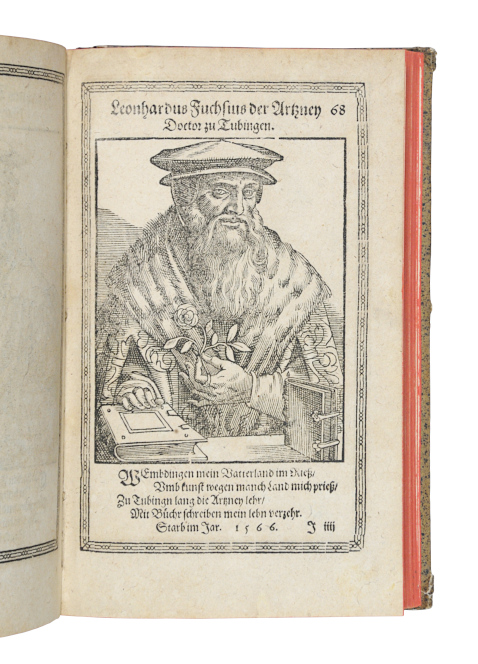
1587ref. 57906Ohne Ort (Straßburg), Bernhard Jobin, 1587. 8°. Titel in Rot u. Schwarz m. Holzschn.-Druckermarke. Mit 103 fast blattgr. Portrait-Holzschnitten von Tobias Stimmer. 8 nn., 102 num., 2 nn. Bll., Späterer Ppbd. m. goldgepr. Rückenschild u. dreiseitigem Rotschnitt.
1869ref. 18641Paris, Alphonse Lemerre, 1869. In-8 de [4]-109-[7] pages, demi-maroquin lie-de-vin à coins, dos à nerfs, tranches dorées, couvertures et dos conservés. Reliure signée Semet & Plumelle.
ref. 18273S.l.n.d. In-folio, [24] ff., veau marbré havane de René Kiefer, plats ornés d'un quadrillage à froid et une vignette dorée, dos lisse orné de caissons à froid (petits frottements et décharges).
1750ref. 7546Très célèbres estampes d’après Rigaud, dans son cadre en bois doré d'époque. Belleudy n° 1. Extrêmement rare. C'est l'estampe qui a causé l'exil de Baléchou à Avignon … Paris 1750
1546Folio, cc. (4), 102, (4), marca tipografica incisa su legno al frontespizio, ripetuta all'ultima carta. Nota di possesso manoscritta al front. e leggero timbro. Esemplare con ampi margini. Legatura in piena pergamena. Ininfluenti piccoli fori di tarlo. Prima rara edizione di questo catalogo della più importante e nota galleria di ritratti del Rinascimento. Questo bel catalogo a stampa di Giovio dei ritratti di studiosi e scrittori, morti e vivi, non descrive i quadri stessi ma riproduce le iscrizioni che egli aveva progettato per accompagnare i quadri. Questi elogia erano scritti a inchiostro su cartigli di pergamena da apporsi sotto ogni ritratto. L’edizione non è illustrata perché, Giovio spiega nella sua dedica a Ottavio Farnese, copiare i ritratti sarebbe stato difficile e molto di più per contro si sarebbe potuto guadagnare dalla semplice lettura degli elogia (un precoce esempio di storia dell'arte basata sui testi). Questi elogia diventavano inoltre per chi leggeva degli exempla, modelli di condotta eccellente. Giovio collezionò i suoi ritratti raccogliendoli da svariate fonti, non soltanto sollecitandone l'invio tramite lettere, ma anche copiando degli originali in altre collezioni, da monete e medaglie, o commissionandoli direttamente. Alcuni gli furono donati, per esempio Giulio Romano gli lasciò le copie degli allievi di Raffaello dei ritratti di Bramantino nella Stanza di Eliodoro al Vaticano prese prima che venissero cancellati dai nuovi affreschi. In questi vari modi Giovio fu in grado di mettere insieme una straordinaria e incomparabile galleria, forse la più grande mai costituita di questo genere, e e diede nuovo impulso alla tradizione che vedeva la serie di uomini illustri adornare palazzi pubblici italiani fin dal primo Rinascimento. E' ancora oggi la fonte originale per conoscere le fattezze di molti uomini famosi, inclusi Cristoforo Colombo e Cesare Borgia.
ref. 16571Paris, Chez l'auteur, M. David, 1787 - 1796. 5 volumes in-4, plein maroquin havane, dos lisses richement ornés de roulettes, filets et fleurons dorés, plats ornés de roulettes, grecques et filets dorés, canthares dorés en écoinçon, roulette dorée aux coupes, dentelle dorée intérieure, garde de soie moirée fleur d'amarante, tranches dorées. Etiquette du relieur Bradel le jeune.
1820ref. 104014Slnd. 1820 In-8, cartonnage souple, 1 pentaptype, 1 quadriptyque, 7 triptyques, 14 diptyques et 17 monotypes. Format 16X23. Cartonnage souple usé et déréglé. Bel état des estampes.
ref. 122459aafLondon, Reeve & Co., (John Edward Taylor, Printer), 1863 - 1867, lg. in-8vo, 6 volumes with each 24 tipped-in original photogr. mounted on stiff white leaves with yellow frame (albumin prints), overall a fine original, complete set, original contemporary clothbound, spine with gilt title & publisher, covers with gilt central piece and blindpressing (binder’s ticket in vol. V: Bound by Westleys & Co. London).
1824ref. ST18708London: Robert Triphook 1824. FIRST EDITION. 233 x 143 mm. 9 1/8 x 5 3/4". 2 p.l. v 3 206 pp. 1 leaf ads. HANDSOME SCARLET MOROCCO BY RIVIERE & SON stamp-signed on front turn-in front cover WITH FIVE MINIATURE PORTRAITS OF SHAKESPEARE on ivory under glass ALMOST CERTAINLY BY MISS C. B. CURRIE surrounded by delicate gilt tooling rear cover and spine compartments framed by double gilt fillets raised bands gilt lettering to two compartments gilt-ruled turn-ins olive green silk endleaves top edge gilt other edges untrimmed. In a maroon fleece-lined slipcase. With five engraved plates reproducing portraits of Shakespeare. Jaggard pp. 586-87. Slight wear to silk endleaves at front hinge isolated small printing smudges or other trivial defects final leaf ads with short closed tear at head otherwise A VERY FINE COPY the text with no signs of use and the splendid binding in perfect condition. This analysis of portraits purporting to depict Shakespeare is the perfect vehicle for a Cosway binding used here to present the leading contenders on the front cover these likenesses also appear on engraved plates in the book. The portrait at the center of our cover is considered the most authoritative being that done by Martin Droeshout for the First Folio of 1623. The other portraits shown in the plates and in the miniatures are the Chandos Head the Stratford Bust the engraving by W. Marshall from the 1640 edition of the poems and the Jansen portrait of 1610. A Shakespeare scholar who raised the alarm about forgeries of Shakespeare manuscripts in the 1790s Boaden 1762-1839 sets forth here as indicated in the preface "a careful examination of the evidence" by which "the pretended portraits have been rejected and the genuine confirmed and established." The so-called "Cosway" binding with painted miniatures inlaid in handsome morocco--either inside or as here on the outside of the front cover--apparently originated with the London bookselling firm of Henry Sotheran about 1909. In that year G. C. Williamson's 1905 book entitled "Richard Cosway" which celebrated the career of this leading Georgian and Regency miniature painter was remaindered by Sotheran and presumably given this special decorative treatment in order to boost sales. The name "Cosway" then was used to describe any book so treated whatever its subject. The finest miniatures on Cosway bindings were executed by Caroline Billin Currie 1849-1940 who is known to have created such paintings for Sotheran's from 1910 until her death usually from designs by J. H. Stonehouse and typically for bindings executed as here by Riviere. Not present in this volume is an inserted leaf acknowledging Currie's work--something normally seen with Cosway bindings featuring her miniatures; but she has a distinctive deftness to her brush strokes and a recognizably refined execution that are clearly present here. The precision and detail of these portraits and the wonderfully expressive eyes are hallmarks of her work. Robert Triphook unknown
1824ref. ST18708London: Robert Triphook 1824. FIRST EDITION. 233 x 143 mm. 9 1/8 x 5 3/4". 2 p.l. v 3 206 pp. 1 leaf ads. HANDSOME SCARLET MOROCCO BY RIVIERE & SON stamp-signed on front turn-in front cover WITH FIVE MINIATURE PORTRAITS OF SHAKESPEARE on ivory under glass ALMOST CERTAINLY BY MISS C. B. CURRIE surrounded by delicate gilt tooling rear cover and spine compartments framed by double gilt fillets raised bands gilt lettering to two compartments gilt-ruled turn-ins olive green silk endleaves top edge gilt other edges untrimmed. In a maroon fleece-lined slipcase. With five engraved plates reproducing portraits of Shakespeare. Jaggard pp. 586-87. Slight wear to silk endleaves at front hinge isolated small printing smudges or other trivial defects final leaf ads with short closed tear at head otherwise A VERY FINE COPY the text with no signs of use and the splendid binding in perfect condition. This analysis of portraits purporting to depict Shakespeare is the perfect vehicle for a Cosway binding used here to present the leading contenders on the front cover these likenesses also appear on engraved plates in the book. The portrait at the center of our cover is considered the most authoritative being that done by Martin Droeshout for the First Folio of 1623. The other portraits shown in the plates and in the miniatures are the Chandos Head the Stratford Bust the engraving by W. Marshall from the 1640 edition of the poems and the Jansen portrait of 1610. A Shakespeare scholar who raised the alarm about forgeries of Shakespeare manuscripts in the 1790s Boaden 1762-1839 sets forth here as indicated in the preface "a careful examination of the evidence" by which "the pretended portraits have been rejected and the genuine confirmed and established." The so-called "Cosway" binding with painted miniatures inlaid in handsome morocco--either inside or as here on the outside of the front cover--apparently originated with the London bookselling firm of Henry Sotheran about 1909. In that year G. C. Williamson's 1905 book entitled "Richard Cosway" which celebrated the career of this leading Georgian and Regency miniature painter was remaindered by Sotheran and presumably given this special decorative treatment in order to boost sales. The name "Cosway" then was used to describe any book so treated whatever its subject. The finest miniatures on Cosway bindings were executed by Caroline Billin Currie 1849-1940 who is known to have created such paintings for Sotheran's from 1910 until her death usually from designs by J. H. Stonehouse and typically for bindings executed as here by Riviere. Not present in this volume is an inserted leaf acknowledging Currie's work--something normally seen with Cosway bindings featuring her miniatures; but she has a distinctive deftness to her brush strokes and a recognizably refined execution that are clearly present here. The precision and detail of these portraits and the wonderfully expressive eyes are hallmarks of her work. Robert Triphook unknown books
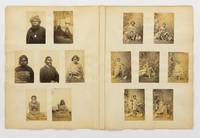
ref. 84432First Edition. Hardcover. Very Good. Large quarto four thin card leaves sewn together with a total of 35 mounted albumen silver prints most approximately 90-95 × 55-60 mm. Leaves a little cockled and lightly tanned around the edges; some prints a little unevenly discoloured; overall in excellent condition now housed in a custom-made cloth portfolio with a contrasting leather title-label on the front cover. The Aboriginal portraits of Thomas Jeston Washbourne 1832-1905 are rare on the open market and in institutional holdings and their attribution can be problematic. The most readily-attributable images are a series of ten tableaux taken in or near Wangaratta around 1866. They show 'King' Billy Elengeit Barwidgee and members of his extended family and community in a studio setting adorned with eucalyptus foliage. All sitters have been identified see Ruth E. Lawrence: 'Thomas Jeston Washbourne's photographs of Indigenous Australians' in 'The La Trobe Journal' Number 107 2022. This group includes two prints of a single portrait of Maggie Stone granddaughter of Billy and Queen Mary. The remaining images comprise individual or group portraits most likely taken at Coranderrk Aboriginal Station. All but one are posed against a plain white cloth backdrop but these portraits are less formal than the studio tableaux with the sitters generally ungroomed and in everyday clothes or partial undress. These are also likely by Washbourne. One of them explicitly attributed to Washbourne by the National Library of Australia PIC/18179 shows Thomas Bamfield a Taungerong clan head circa 1866 and the others are in the same style. Some are captioned in pencil although these captions appear to be later and are not always accurate. One image a half-profile portrait of a well-groomed man in his Sunday best may be by Carl Charles Walter as it is in keeping with his fine series of portraits of the inhabitants of Coranderrk produced for the 1866 Intercolonial Exhibition although it does not feature in the panel held by the State Library of Victoria H91.1/1-106. Several of these images have been attributed to Italian anthropologist and zoologist Enrico Hillyer Giglioli 1845-1909. Four are reproduced in Aldo Massola's 'Coranderrk: A History of the Aboriginal Station' 1975 and six are attributed to Giglioli or 'Giglioli' in the finding aid for the 'Aldo Massola Collection: historical photographs principally from Victoria' at the Australian Institute of Aboriginal and Torres Strait Islander Studies AIATSIS. However Giglioli was known as a collector rather than a photographer and this attribution may have resulted from his habit of signing his name at the foot of the album leaves on which he mounted images by other photographers. Jane Lydon has added to the confusion in her 2005 book 'Eye Contact. Photographing Indigenous Australians' pages 95-98. Eleven further photographs are mounted on the same album leaves. The first is a contemporary view captioned 'Dandenong State Forest. Sassafras Creek - view under the fronds' 155 × 206 mm. The remainder are of New Zealand interest and comprise a view of Nelson College 135 × 210 mm; an oval carte-de-visite of Port Lyttelton; a very large view of eight giant moa skeletons 215 × 295 mm most likely in the Canterbury Museum; a view of two individuals in traditional dress in front of a Maori house; and six carte-de-visite portraits of Maori people some of whom we have identified from institutional holdings. 1 An unidentified man captioned 'Fifeu Reuboi Chief' apparently in error; 2 Tomika Te Mutu chief of Ngaiterangi by John Crombie miscaptioned 'Rewi Maori Chief'; 3 Nopera Te Ngiha a chief miscaptioned 'Remera Teiko'; 4 An unidentified woman captioned 'Maori Girl'; 5 Haniota Henere; 6 Haniota Henere with another woman. hardcover