25 501 résultats
2006réf. 1-1432805290Thomson Gale 2006. Paperback. New. 334 pages. 7.00x4.75x0.83 inches. Thomson Gale paperback
réf. ria9780823263660_inpPaperback. New. New Book; Fast Shipping from UK; Not signed; Not First Edition; Since independence from Spain a trope has remained pervasive in Latin America's republican imaginary: that of an endless antagonism pitting civilization against barbarism as irreconcilable poles within which a nation's life unfolds. Th paperback

réf. ria9781292223049_inpPaperback. New. New Book; Fast Shipping from UK; Not signed; Not First Edition; N/A paperback
réf. ria9781510449541_inpPaperback / softback. New. New Book; Fast Shipping from UK; Not signed; Not First Edition; Ensure that the needs of all IB Students are met with this comprehensive and flexible Student Book written specifically for the updated Spanish ab initio course paperback
réf. ria9781478000075_inpHardback. New. New Book; Fast Shipping from UK; Not signed; Not First Edition; Gathered from Rafael Campo's over twenty year career as a poet-physician these eighty-eight poems-thirty of which have never been previously published in a collection-pull back the curtain in the ER laying bare our pain and joining us hardcover
réf. ria9781107194182_inpHardback. New. New Book; Fast Shipping from UK; Not signed; Not First Edition; This book challenges flawed readings of Aristotle's psychology offering the first book-length treatment in English of his thinking about mind. Scholars of ancient Greek philosophy and particularly of Aristotelian psychology will find hardcover
1996réf. 1-0822317427Duke Univ Pr 1996. Paperback. New. 136 pages. 9.25x5.75x0.75 inches. Duke Univ Pr paperback
2000réf. 1-1583304312Feldheim Publishers 2000. Hardcover. New. 330 pages. 9.75x7.00x1.25 inches. Feldheim Publishers hardcover
2014réf. 1-1598260456Feldheim Publishers 2014. Hardcover. New. new revised bl edition. 1180 pages. 9.25x6.50x1.75 inches. Feldheim Publishers hardcover
2018réf. 1-9587812417Pontificia Universidad Javeriana 2018. Paperback. New. 440 pages. Spanish language. 9.45x6.69x1.00 inches. Pontificia Universidad Javeriana paperback
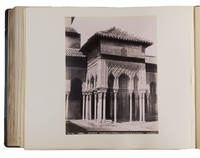
1890réf. ABC_473841890. Half blind-tooled greenish brown calf and grey/green net grained cloth over boards with the title in gold on the front board red edges and decorated endpapers. Large oblong album 32 x 40 cm. 89 original photographs mostly 20 x 26 cm. In 711 a Muslim army led by Tariq ibn Ziyad conquered most of the Iberian Peninsula which was then part of the Visigothic Kingdom. This region became known as Al-Andalus with Cordoba serving as its capital. In 756 Abd ar-Rahman I established the Emirate of Cordoba as an independent state. The present photo album covers in many photographs the magnificent architecture and features of the Great Mosque of Cordoba which is considered one of the most significant architectural monuments of the western Islamic world. Built in 785 the mosque's most notable feature was its enormous hypostyle hall comprised of rows of columns connected by double tiers of arches. The lower tier included horseshoe arches and was constructed with alternating red brick and light-colored stone. Abd ar-Rahman II expanded the mosque's dimensions in 836 while preserving its original design. His successors Muhammad Al-Mundhir and Abdallah also added new features to the mosque. One of the mosque's western gates Bab al-Wuzara' now known as Puerta de San Esteban is a famous prototype of later Moorish architectural forms and motifs featuring horseshoe arches with alternating coloured and decorated voussoirs set within a decorative rectangular frame called an alfiz. At the centre of Garzóns photographic work on Córdoba was the Palace of the Lions also known as the Court of the Lions Patio de los Leones; . Situated in the center of the Alhambra with its ancient citadel consisting of a complex of forts palaces and gardens this is one of the most buildings of the period of Muslim rule. The palace was commissioned by the Nasrid sultan Muhammed V of the Emirate of Granada during the second phase of his reign between 1362 and 1391 AD. The general layout of the Palace of the Lions courtyard comprises an elongated rectangle with two halls facing each other at opposite ends which is a common feature in numerous earlier palaces throughout Al-Andalus including other Nasrid palaces located within the Alhambra such as Comares Palace. Similar designs can even be traced back to the 10th century at Madinat al-Zahra located near Cordoba. What sets the Palace of the Lions apart is the addition of two more halls which face each other across the courtyard's shorter axis. This innovation is accompanied by an extension of the columned portico to encompass all four sides of the courtyard. The four converging water channels within the courtyard's floor are generally believed to be a symbolic representation of Paradise which both Muslim and Christian traditions describe as having four rivers. This arrangement may have drawn inspiration from the Persian chahar bagh tradition which involves a garden divided into four symmetrical parts along its central axis. The Palace of the Lions combines this with the classical peristyle tradition which features a portico or arcade surrounding a courtyard. Other monuments in Al-Andalus and North Africa where they are commonly referred to as a riad or riyad also feature gardens with a chahar bagh-type quadripartite division.Rafael Garzón 1863-1923 was born in Granada became known as one of Spains foremost photographers of the early twentieth century. He owned studios situated inside the Alhambra of Granada and in Seville. His photographic work mainly focused on capturing the landscapes and monuments of Andalucía particularly his photographic portraits which gained him recognition. His studio inside The Alhambra became particularly famous. Upon his arrival in Seville in 1901 he established a studio with an elaborate Arabic theme to enhance his photographs. He photographed the aristocrats of Seville as well as the earliest tourists of the 19th century who visited Andalucía. The spread of his photographs contributed greatly to the rising touristic interest in Spain. Garzón's photography encompassed two distinct styles. His monumental photography of prominent Spanish structures such as the Alhambra the Mosque-Cathedral of Córdoba and the Cathedral and Reales Alcázares of Seville. The other style was a popular type of photography designed to cater to the preconceived notions of foreign visitors seeking classic gypsy portraits from Sacromonte or the Carmenes from Córdoba or Seville. His photographic work was both of high quality and commercially attractive and Garzón distributed them in various formats including postcards collector's items and travel books.The binding shows very slight signs of wear mainly around the foot of the spine the interleaved tissue paper is slightly browned the upper-outer corner of the leaves is occasionally slightly dustsoiled. hardcover
1922réf. ABC_47166Paris: Paul Geuthner 1922. Text volume in modern half cloth with the original publishers printed front wrapper mounted on the front board kept with the plates in a modern half cloth portfolio with velcro fasteners with the original publishers printed front wrapper for the atlas volume mounted on the front board. Small folio 21 x 29.5 cm. Text volume with 21 illustrations in the text mostly photographs. Atlas volume with 58 loose plates mostly plans and photographic views as issued. 2 volumes text and atlas. Third and final instalment of the Archaeological mission to Arabia series published by the Societé des Fouilles Archéologiques between 1909 and 1922 this issue dedicated entirely to the famous qusur or qasr: so-called desert castles of the Umayyad Caliphate 661-750 CE; AH 41-132: Quseir Amra a hunting lodge Qasr Al-Kharanah and Qasr Tuba in present-day northeastern Jordan. The authors found the previously published description of Qasr Harâna and Qasr Tûba faulty and unreliable and re-describe them completely. They give numbers of views of Qeseir Amra and a briefer description. The text includes also itineraries and historical and epigraphical notes. It is well arranged and seems to supply all the information that can possibly be wanted; the plans and views too are excellent. JRAS.Slight traces of worming in foot margin no loss of text. Folder slightly rubbed around the edges otherwise generally in good condition.l review no. 12 Journal of the Royal Asiatic Society vol. 57 1925 p. 161; WorldCat 490111584. Paul Geuthner, hardcover
réf. 97319Freiburg Herder 1960. 8° 283 S. OLwd. m. OU Min. gebrauchspurig wenige Anstreichugnen in Blei Widmung a. Vors. - gutes Ex. 010 Freiburg, Herder, 1960 unknown
réf. 1844658414.Gpaperback. Good. Access codes and supplements are not guaranteed with used items. May be an ex-library book. paperback
réf. MEDI1519Wien Trattner 1782. 8°. Titelbl. 13 nn. Bll. 160 S. 1 nn. Bl. II mehrf. gef. gest. Taf. grave per Assner mit gestochener Titelblattvignette dessinee et gravee par J. C. Reinsperger e. gestochenen Vignette sowie Initialen Kopfleisten u. Schlussvignetten. Gut erhaltener marmorierter Pappband aus neuerer Zeit Rückenschildchen goldgeprägt minimal bestoßen bzw. berieben Rotschnitt Vorsatz erneuert. Seiten frisch u. nahezu fleckenlos. Vgl. Hamberger/Meusel 3611 Ausg. 1774. Wurzbach 385. Hayn. Bibliotheca germanorum gynaecologica130. Hirsch 5519f. Sehr seltener Neudruck dieser erstmals 1774 von Trattner verlegten Schrift. Der aus Innsbruck stammende Autor R. J. Steidele 1737-1823 namhafter Chirurg und Geburtshelfer u. a. Professor der Geburtshilfe an der Wiener Universität wurde zu seiner Zeit als "eine Autorität ersten Ranges" auf diesem Gebiet angesehen Die auch bei anderen Ausgaben Steidelscher Werke verwendete allegorische Titelblattvignette mit einer Darstellung der römischen Göttin der Geburtshilfe Lucina wurde von Johann Christoph Reinsperger 1711-1777 die Tafeln mit den Abbildungen verschiedener Instrumente von Franz Assner 1742-1810 gestochen. Wien, Trattner 1782. unknown
réf. MEDI1521Wien Trattner 1779. 8°. Titelbl. 15 nn. Bll. 482 S. mit 26 gefalteten Kupfertafeln gest. Titelblattvignette Initialen Schlussvignetten u. Kopfstücken. Neuerer stummer Pappband die ersten Blätter etwas angeschmutzt und fingerfleckig anfangs am unteren Rand bzw. im Innenfalz wasserrandig sonst staubrandig zuweilen stockfleckig. Titelblatt u. zwei Schlussblätter angerändert defekter Innenfalz der Anfangsblätter mit Papierstreifen hinterklebt. Mit bibliographischen Bleistiftanmerkung am vorderen Innendeckel. VD18 11615125; Giese 1661; Hayn Bibl. germ. gynaecologica 130; vgl. Hirsch 5519f.; Lesky 630; Waller 9200 1784 irrig als 3. Aufl. - Zweite Auflage der 1775 zuerst erschienenen Neuausgabe dieses zu jener Zeit in Wien für Hebammenschülerinnen verpflichtenden Lehrbuchs für Geburtshilfe dessen erste Fassung 1774 unter dem Titel Unterricht für Hebammen erschienen war - allerdings noch ohne Kupfer. Dargestellt werden auf diesen meist Föten in unnatürlichen Lagen oder auch Zwillinge. Der aus Innsbruck stammende Chirurg und Geburtshelfer R. J. Steidele 1737-1823 u. a. Professor der Geburtshilfe an der Wiener Universität wurde zu seiner Zeit als "eine Autorität ersten Ranges" auf diesem Gebiet angesehen. Wien, Trattner 1779. unknown
réf. ALDR0601Wien Johann David Hörling 1787. Titelblatt an der Unterkante beschnitten Druckjahr bibliographisch erschlossen. Kl.8°. Titelbl. 15 nn. Bll. 287 S. mit gestochener Titelblattvignette Seb. Mansfeld del. et sc. und gestochenen Illustrationen auf den Seiten 1 101 169 221. Lederband d. Zeit Rückenschildchen und Rückenverzierung in Goldprägung Vorsatz aus zweifärbig bedrucktem Buntpapier Buchschnitt rot gefärbt Ecken bestoßen berieben und beschabt Rücken gebrochen mit Wurmgängen im vorderen Innengelenk Bindung gelockert hinterer Buchdeckel fast lose Vorsatz leimschattig Schnitt fleckig. Seiten kaum vergilbt und wenig fleckig. VD18 10665528. Wurzbach 385. Hirsch 5519f. Vgl. Hayn. Bibliotheca germanorum gynaecologica130 - der aus Innsbruck stammende Chirurg und Geburtshelfer R. J. Steidele 1737-1823 zu seiner Zeit als 'eine Autorität ersten Ranges' auf dem Gebiet der Geburtshilfe betrachtet war u. a. Professor der Geburtshilfe an der Wiener Universität. Der Mediziner verbesserte durch seine Schriften die Ausbildung der Hebammen und trug zur Spezialisierung der ärztlichen Geburtshilfe bei. Titel- u. Textkupfer sind Arbeiten des in Wien ansässigen 'k. k. Graveurs' Sebastian Mansfeld 1751-1816 vgl. Wurzbach 16398. Wien, Johann David Hörling 1787. (Titelblatt an der Unterkante beschnitten, Druckjahr bibliographisch erschlossen). unknown
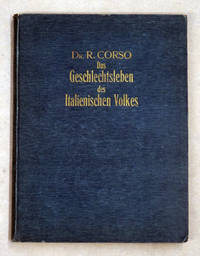
réf. 95458Nicotera Selbstvlg. 1914. 4° 238 S. 6. Tafeln m. 21 Abb. Kart. Deckel etwas berieben etwas stockfleckig. = Beiwerke zum Studium der Anthropophytheia. Jahrbücher für folkloristische Erhebungen und Forschungen zur Entwicklungsgeschichte der geschlechtlichen Moral.- Die Anthropophyteia ist eine Sammlung zur Sexualfolklore und ethnologischen Sexualforschung die mit zwei begleitenden Reihen den Beiwerken und den Historischen Quellenschriften zusammen erschien. Das wichtige Grundlagenwerk zur Sexualforschung und Sittengeschichte wurde von Friedrich S. Krauss als Fortsetzung der Kryptadia gegründet und ab Band IV im Verein mit Bernhard Hermann Obst herausgegeben. Sie erschien von 1904 bis 1913 in Leipzig bei der Deutschen Verlag-Aktien-Gesellschaft und ab Bd. VII im Ethnologischen Verlag. Die Schriften erschienen als Privatdruck und waren „nur für Gelehrte nicht für den Buchhandel bestimmt“.Es ist eine der umfassendsten Sammlungen zur ethnologischen Sexualforschung. Zahlreiche herausragende Vertreter der Völkerkunde Medizin und Rechtswissenschaften haben daran mitgewirkt. Die Reihe erschien unter redaktioneller Mitwirkung und Mitarbeiterschaft von Thomas Achelis Friedrich J. Bieber Iwan Bloch Franz Boas Georg Buschan Albert Eulenburg Sigmund Freud Anton Herrmann Juljan Jaworskij Alexander Mitrovic Albert Neisser Giuseppe Pitrè Ferdinand Freiherr von Reitzenstein Isak Robinsohn Karl von den Steinen Gerald Camden Wheeler und anderen.Der Herausgeber wurde ab 1910 in zahlreiche Prozesse verwickelt in deren Zuge es auch zur Beschlagnahme der Jahrbücher kam. 010 Nicotera, Selbstvlg., 1914 unknown
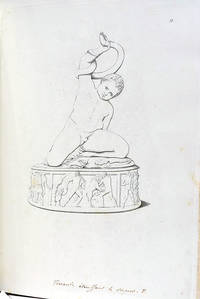
réf. 107336A Naples 1868. 4 tomes en 2 volumes. 1 feuillet. 60 planches. 3 feuillets. 60 planches. 2 feuillets. 1 feuillet. 60 planches. 3 feuillets. 60 planches dont 8 planches dépliantes. 2 feuillets. 295x235 Cm. Demi-percaline noire. Dos à nerfs. Pièces de titre en maroquin noir. Coins émoussés. Dos un peu frottés. Catalogue de la collection du Musée archéologique national de Naples préparé par le conservateur et ancien marchand d'antiquités napolitain Raffaele Gargiulo. Les 240 gravures sur cuivre sont accompagnées de courte notices descriptives en français et en anglais regroupées à la fin de chaque volume. Parmi les pièces référencées on trouve des vases sculptures et objets en terre cuite issus des collections privées de Caroline Bonaparte Farnèse ou de Raffaele Gargiulo lui-même. Céramiste et restaurateur expert personnage de première importance sur le marché des antiquités du début du XIXe siècle Gargiulo avait en effet vendu sa propre collection de vases antiques en terre cuite au Musée de Naples en 1855. Bon exemplaire à part les rousseurs éparses. A Naples, 1868. unknown
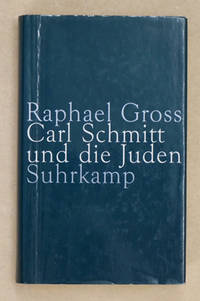
réf. 96032Frankfurt Suhrkamp 2000. 8° 441 S. Kart. m. OU. Tadell. Carl Schmitt 1888-1985 einer der einflußreichsten deutschen Staatstheoretiker des 20. Jahrhunderts war von der »Judenfrage« geradezu besessen. Seiner Aura hat dies keineswegs geschadet. Im Gegenteil der Kontrast zwischen der Abgründigkeit seiner Judenfeindschaft und seinem als brillant gerühmten Denken hat die Faszination seines Werks nur erhöht.Gross untersucht den historischen Kontext in dem Schmitts ständige Auseinandersetzung mit Juden und »dem Jüdischen« stand und wie sich dies in seinen wichtigsten Begriffspaaren niederschlug: Freund und Feind Nomos und Gesetz Katechon und Antichrist. Dabei wird deutlich wie sich seine politische Theologie im Nationalsozialismus wandelte als Schmitt eine Biologisierung des Politischen unternahm und eine »artgerechte« »deutsche« Rechtslehre entwarf. Sein Denken läßt wie Gross zeigt die übergänge von einer religiös begründeten Judenfeindschaft zum modernen Antisemitismus sichtbar werden. Dieses Buch befindet sich in unserem Aussenlager; sollten Sie dieses im Laden abholen wollen bitten wir Sie um vorgängige Nachricht. 010 Frankfurt, Suhrkamp, 2000 unknown
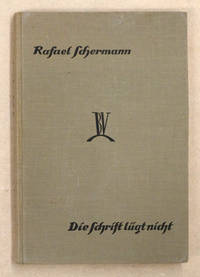
réf. 95950Berlin Brücken 1929. 8° Fronti. 175 S. 142Abb. OLwd. Einige Bl. wasserändig sonst tadell. Rafael Schermann geboren 18. März 1874 in Krakau Österreich-Ungarn; gestorben ungefähr 1943 in einem Arbeitslager in der Sowjetunion war ein Graphologe und Hellseher. 010 Berlin, Brücken, 1929 unknown
1920réf. 038227New York: Henry Holt 1920. 1st Edition. Hardcover. Very Good/No Dust Jacket. Octavo. 1st printing. Spine sun browned. Prior owner details and inscription to flyleaf. The Author's daughter has signed the inscription. Henry Holt hardcover
1401réf. mon0003001111Frederick A. Stokes 1914-01-01. Hardcover. Good. . Frederick A. Stokes hardcover
1891réf. 1210E230London: Macmillan and Co. Ltd. 1891. 2nd Impression . Hardback. Printed pages: xiv 382 6. Very Good. 5.25 x 7.25 inches 13.5 x 18.5 cm. Green cloth binding. Light stain to spine. Light browning to page edges. Good solid binding very clean text throughout. Overall condition is Very Good. Size: 5.25 x 7.25 inches 13.5 x 18.5 cm. Macmillan and Co. Ltd. hardcover
réf. mon0000303693Park Books 2019-04-24. Hardcover. New. HARDBACK SHRINKWRAPPED Park Books hardcover