HOLBEIN Hans / LODGE EdmundMareMagnum

708 risultati
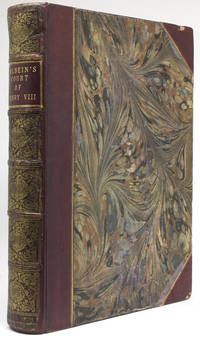
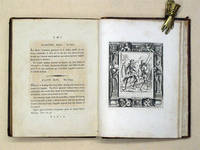
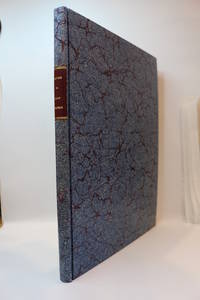
1828In-4 gr. (mm. 353x245), mz. pelle con ang. coeva (lievi abras.), dorso a cordoni con ricca decoraz. e tit. oro, tagli dorati, cc.nn. 71, intervallate da 84 magnifiche tavole di ritratti inc. in rame e colorati a mano, ad imitazione dei disegni originali di Holbein. In Indice ne sono indicati solo 80, gli altri 4 sono: di Holbein e sua moglie, di Henry e Charles, figli di Charles Brandon, Duke of Suffolk. In questa splendida collezione, le illustrazioni sono stampate su carta pesante bianca o color rosa (come gli originali), sempre precedute da un foglio bianco di protezione, e sono accompagnate da una biografia del personaggio. I disegni originali si devono al grande artista tedesco Hans Holbein il Giovane (1497-1543) che divenne pittore aulico di Enrico VIII (dopo il 1532) e “nei suoi ritratti mostra una finezza di indagine psicologica e una precisione tecnica superiori a quelle che si riscontrano nel padre, Hans il Vecchio”. Così Diz. Treccani,V, p. 787. A distanza di due secoli, l’iniziativa di raccogliere i magnifici ritratti di importanti personaggi della corte di Enrico VIII e di trarne delle tavole incise fu di John Chamberlaine, antiquario inglese vissuto tra il XVIII e l’inizio del XIX secolo, mentre le note biografiche sono a firma di Edmund Lodge. "Seconda edizione" con le tavole della prima del 1812. I ritratti su carta bianca hanno il bordo del margine bianco annerito per ca. 15 mm. (non quelle su carta rosa); solo 1 tav. con fiorit., altrimenti esemplare ben conservato.
1828rif. 44152London: William Bulmer and Co. Shakespeare Printing-Office 1828. Second edition. With 84 hand-colored stipple engravings after drawings by Hans Holbein in the Royal collections with tissue guards. Printed on pink or white paper. Unpaginated. 1 vols. Folio 14 x 10 inches. Contemporary 3/4 red morocco panelled spine elaborately gilt with brown morocco lettering-piece a.e.g. original spine neatly laid down. Second edition. With 84 hand-colored stipple engravings after drawings by Hans Holbein in the Royal collections with tissue guards. Printed on pink or white paper. Unpaginated. 1 vols. Folio 14 x 10 inches. A handsome collection of portraits many printed on toned paper with letterpress commentaries on the subjects' lives. In addition to the 80 portraits called for in the printed "List of Plates" there should also be 4 plates which that list omits: the portrait of Holbein himself that of his wife and the portraits of Henry and Charles sons of Charles Brandon Duke of Suffolk. William Bulmer and Co., Shakespeare Printing-Office unknown books
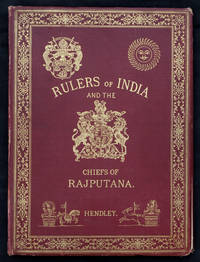
2011rif. 92904Mapin Publishing Gp Pty Ltd. New. Hardcover. FREE UPGRADE to Courier/Priority Shipping Upon Request - IN STOCK AND IMMEDIATELY AVAILABLE FOR SHIPMENT - Flawless copy brand new pristine never opened -- 168 pages; 68 illustrations. Description: "The Jeypore Exhibition of 1883 was regarded as among the most important industrial exhibitions of 19th century where specimen of the best art work of India was curated. Credited to the arduous efforts of Thomas Holbein Hendley a British officer in the princely state of Jaipur the Exhibition was primarily an attempt to showcase local skills. A permanent 'memorial' of the Exhibition was produced as a four-part set of illustrated volumes authored by Hendley and commissioned by the visionary Maharaja of Jaipur. The first volume contained a number of chromo-lithographs and a general description of the plates in the first three books of the set. The second and third volumes contained 100 photographs of Indian art work while Volume IV also included reproductions in platinum of the illustrations of Emperor Akbar's own copy of the Razmanama the Persian epic. Published by W. H. Griggs some sets were presented to leading museums of the world and very few copies were sold. This facsimile edition of a rare copy of Volume I preserved at Jawahar Kala Kendra in Jaipur is now published to recreate those splendors documented by Hendley for modern-day scholars and connoisseurs." -- with a bonus offer--; Volume 1; The Jeypore Exhibition of 1883 was regarded as among the most important industrial exhibitions of 19th century where specimen of the best art work of India was curated. . 2011. 1935677144 . Mapin Publishing Gp Pty Ltd hardcover
1997rif. 68950Schwabe & Co. AG. New. Hardcover. FREE UPGRADE to Courier/Priority Shipping Upon Request - IN STOCK AND IMMEDIATELY AVAILABLE FOR SHIPMENT - Flawless copy brand new pristine never opened -- Text in German. 336 pp. With 410 ills. 2 col. one foldout. 29 x 24 cm. -- with a bonus offer-- . 1997. 3796510442 . Schwabe & Co. AG hardcover
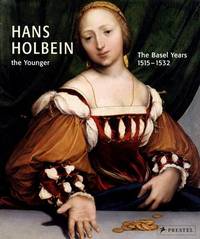
2006rif. 72221Prestel Publishing. New. Hardcover. FREE UPGRADE to Courier/Priority Shipping Upon Request - IN STOCK AND IMMEDIATELY AVAILABLE FOR SHIPMENT - Flawless copy brand new pristine never opened -- Text in English. 528 pp. With 439 ills. 217 col. . 29 x 25 cm. -- with a bonus offer-- . 2006. 3791335804 . Prestel Publishing hardcover
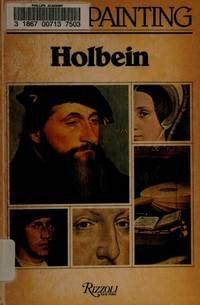
1980rif. 26635Italy: Rizzoli. As New. Paperback. FREE UPGRADE to Courier/Priority Shipping Upon Request - IN STOCK AND IMMEDIATELY AVAILABLE FOR SHIPMENT - -- with a bonus offer--; T-STRONG; HOLBEIN HANS 1497 1543 ARTISTS . 1980. 0847803112 . Rizzoli paperback
2016rif. 118914Imhof. New. Paperback. FREE UPGRADE to Courier/Priority Shipping Upon Request - IN STOCK AND IMMEDIATELY AVAILABLE FOR SHIPMENT - IN STOCK AND IMMEDIATELY AVAILABLE FOR SHIPMENT - Flawless copy brand new pristine never opened - Text in German. -- with a bonus offer-- . 2016. 373190327X . Imhof paperback
1988rif. 85280Kunstmuseum Basel. New. Paperback. FREE UPGRADE to Courier/Priority Shipping Upon Request - IN STOCK AND IMMEDIATELY AVAILABLE FOR SHIPMENT - Flawless copy brand new pristine never opened -- Corresponds to ISBN: 3720400565. 272 pages; many illustrations. -- with a bonus offer--; German Edition . 1988. 3720400565 . Kunstmuseum Basel paperback
2005rif. 72272Richter Verlag. New. Hardcover. FREE UPGRADE to Courier/Priority Shipping Upon Request - IN STOCK AND IMMEDIATELY AVAILABLE FOR SHIPMENT - FLAWLESS COPY BRAND NEW PRISTINE NEVER OPENED -- Corresponds to ISBN: 3937572341. Text in German and English. 368 pp. With 324 ills. 181 col. . 30 x 24 cm. -- with a bonus offer-- . 2005. 3937572341 . Richter Verlag hardcover
rif. 55654Les Editions Braun & Cie. . As New. Hardcover. FREE UPGRADE to Courier/Priority Shipping Upon Request – – IN STOCK AND IMMEDIATELY AVAILABLE FOR SHIPMENT - AS NEW THE TEXT BLOCK IS PRISTINE CLEAN UNMARKED AND IN EXCELLENT CONDITION - appears unread - ND Circa 1950 Text in French; 60 works catalogued and illustrated. -- with a bonus offer-- . N.D. Les Editions Braun & Cie. hardcover
1828rif. 44152London: William Bulmer and Co. Shakespeare Printing-Office 1828. Second edition. With 84 hand-colored stipple engravings after drawings by Hans Holbein in the Royal collections with tissue guards. Printed on pink or white paper. Unpaginated. 1 vols. Folio 14 x 10 inches. Contemporary 3/4 red morocco panelled spine elaborately gilt with brown morocco lettering-piece a.e.g. original spine neatly laid down. Second edition. With 84 hand-colored stipple engravings after drawings by Hans Holbein in the Royal collections with tissue guards. Printed on pink or white paper. Unpaginated. 1 vols. Folio 14 x 10 inches. A handsome collection of portraits many printed on toned paper with letterpress commentaries on the subjects' lives. In addition to the 80 portraits called for in the printed "List of Plates" there should also be 4 plates which that list omits: the portrait of Holbein himself that of his wife and the portraits of Henry and Charles sons of Charles Brandon Duke of Suffolk. William Bulmer and Co., Shakespeare Printing-Office unknown
rif. 68935Edinburgh o. Vlg. 1788. 8° 1 Bl. 2 Kupfern Portrait D. Deuchar; frz. Titelkupfer von Mechels Kupferstich von 1780 aber mit Duchars Namen u. der Jahreszahl 1786 als Fronti. bzw. Taf. I Titelbl. Portrait H. Holbein 2 S. Preface 1 Kupfer «Creatio Mundi» 46 S. Text wechselnd mit 46 Kupfern. Zusätzlich: 1 Kupfer Mortalium Nobilitas 2-streifiger Kupferstich: Dolchscheiden-Totentanz. Ldr. d. Zeit gold.geprägt. m. Rückenschild. Blätter durchgängig fingerfleckig Monogramm a. erstem Kupferstich a. Vs. Meist Abklatsch der Kupfern auf Textseite ein Blatt am Steg minimal verstärkt. Die Kupfern manchmal etwas flach abgezogen. Ohne das Wappen des Todes. Die Bildunterschriften in den Kupfern in Latein die erläuternden Texte engl./frz. - David Deuchar 1743 - 1808 kopierte recht unbeschwert die 30 Totentanzstiche von Wenzel Hollar 1607-1677 den jener nach Holbein neu gestochen hatte. Die dekorative Rahmen um die Kupferstiche nach Abraham van Diepenbeck 1596-1675. - Massmann 57. - 010 Edinburgh, o. Vlg., 1788 unknown
rif. biblio15This book an original publication not the reproduced one. A major attraction is its hardcover which has beautiful coat of arms designs ornamentation on border and text printed in gold with red color background and the same have been shown engraved on the back hardcover. For the promotion of Indian art this book had been written after examining the collections of most of the native princes and especially their libraries pictures and portraits. The book is soiled. Hardcover has wears tears on edges and corners and some color fade marks. The pages are slightly detached from the spine but binding not loose. The pages have foxing marks. Some initial pages have slight wears on edges whereas next few pages are in fine condition. The pages of black and white illustrations are fine. Some colored illustration pages have wears and tears which were pasted with brown tape and some with white tape. A few pages have many cracks tears light stains and some part of the page is missing. One colored page in last has a few stains and very damaged which have been repaired by a back up sheet. The head for edge and tail have rubbed edges and foxing marks. Pages are not loose. hardcover
rif. 114481London Printed by William Bulmer and Co/ Shakespeare Printing-Office 1812. 4to 338x265 mm. 71 ll. 84 engr. colour plates several printed on pink paper. One plate with stain. Contemporary red half calf spine gilt with raised bands embossed red cloth boards spine and corners a bit worn. Abbey Life in England 205 note. Second edition complete with all 84 finely colour printed portraits after Holbein including the two full page portraits of Hans Holbein and his wife and the two finely coloured miniatures. It was first published in 1792-1800 in folio. The plates are re-engraved to this new edition in a lesser size and by several new engravers. The biographical notices were provided by Edmund Lodge 1756-1839. ”The original Holbein drawings upon which these prints are based were nearly lost and were hardly seen for centuries until their rediscovery by none other than Queen Caroline of England. Upon being liberated from a bureau of the queen's personal closet at Kensington Palace colour printed 'imitations' of the drawings were subsequently published under the auspices of John Chamberlaine 1745-1812 Keeper of the drawings of George III.” hardcover
1780rif. 77640Basle:: Chez Guillaume Haas 1780. First edition. old quarter leather and pebbled boards. Small old ink signature and gilt armorial small bookplate; text leaves foxed; some very slight occasional marginal foxing to the plates which generally are clean unworn and very attractive. Edges of binding worn; scuffs to binding; tight and sound. Folio. 61 engraved plates two double-page. Chez Guillaume Haas, hardcover
1803rif. 985London: W. Smith and Co. 1803. Hardcover. Very Good. Very Good condition. "Descriptions of each plate in French and English with the Scripture Text from which the designs were taken. Printed by W. Smith and Co. King Street Seven Dials for John Scott No. 447 Strand: & Thomas Ostell No. 3 Ave Maria Lane 1803". Engraved frontispiece engraved title engraved portrait of Holbein. All gilt edges full leather cover with embossed design and gilt decoration. Foxing or spotting evident to many pages but is generally light. Note that two editions were printed this same year the other printed by Gosnell. Leather cover shows some slight corner wear cover wear and top of spine heavily worn. This is a very hard to find rare book. W. Smith and Co. hardcover
1780rif. 72088Chez Guillaume Haas | Basle 1780-1794 | 31 x 40 cm | 4 parties reliées en un volume
1523rif. LCPCVOY-0031(La Géographie de Strabon dans un séduidant exemplaire du XVI siècle, illustrée de gravures sur bois d'après Hans Holbein) STRABON. (vers 60 av. J.-C. - 20 ap. J.-C.) "EN TIBI LECTOR STUDIOSE STRABONIS GEOGRAPHICORUM COM(M)E(N)TARIOS, OLIM A GUARINO VERONESE...". 1523, Basileae, V. Curio. 1 volume in-fol. (308x215 mm) (dimensions pages 305x205 mm) (18) ff. (titre, dédicace, index des auteurs et index) avec 3 encadrements sur bois, 566 pp., (1) f. (avec la marque de l'imprimeur) ((4) ff., Aa6, Bb8, a-z6, A-Z6, &8) Reliure du XVIIe siècle en vélin rigide. Séduisante édition de cette traduction latine des humanistes Guarino de Vérone (livres I-X) et Grégoire Trifernate (livres XI-XVII), améliorée par C. Herensbach. Elle est illustrée avec des superbes encadrements gravés sur bois par Iacobus Faber (chiffre IF à côté des gravures d'Aristote et d'Erate) d'après Hans Holbein le Jeune. Quelques frottements à a reliure, usures à trois coins et petite fente de 4 cm dans la partie inférieure de la charnière du premier plat. Tout petit manque de vélin dans la charnière du second plat. Le premier f. de garde partiellement détaché. Mouillure claire dans l'angle supérieur des vingt premiers ff., plus foncée dans les 4 premiers ff. Mouillure claire dans l'angle inférieur des cent derniers ff. Une petite déchirure, sans perte, sur la p. du titre et tout petit manque dans la marge externe de l'encadrement gravé. Une petite galerie de ver dans la marge supérieure des cahiers d-f. Un autre galerie de ver qui touche quelques lettres au centre des pages sur moitié du volume. Une tache dans la marge des ff. r4 et r5. Quelques pages avec des rousseurs. Bel exemplaire en général. Strabon, issu d'une famille illustre d'Amasée, "s'installa à Rome probablement juste avant la mort de César, ce qui fait de lui une source supplémentaire pour l'étude de l'histoire romaine sous Auguste. A ses nombreux séjours à Rome s'ajoutent d'autres voyages, notamment dans le reste de l'Italie, en Gaule mais aussi en Afrique (Ethiopie et Egypte en particulier)... Ses nombreux voyages lui permires d'accumuler une documentation suffisante pour écrire la Géographie, un ouvrage en 17 livres organisés par régions. Fondé sur une démarche scientifique et ethnographique, cet ouvrage apparaît comme une oeuvre notable pour l'époque du fait de son ampleur". "Si son oeuvre reprend parfois des textes antérieurs de plusieurs siècles, sa connaissance du droit romain des différentes cités en fait aussi une source essentielle pour décrire les débuts de la romanisation en Gaule et dans la péninsule ibérique... Il consacre quelques lignes... aux événements en Gaule lors de la révolte des Gaulois et confirme l'importance des effectifs qui furent rassemblés par Vercingétorix". "L'oeuvre de Strabon resta dans l'ombre sous l'empire romain... Ce n'est qu'à partir du Ve siècle qu'elle commence à être citée, et que Strabon devient même l'archétype du géographe". "Au XVe siècle l'érudit italien Guarino de Vérone traduisit la totalité de l'oeuvre de Strabon, contribuant ainsi à sa redécouverte". (Source Wikipedia) Provenance : Un ex libris L. Pedrini (1718). (LCPCVOY-0031) (2.800,00 €)
1567rif. 127481567 un volume, reliure, reliure plein maroquin noir (19ème) petit in-octavo (full morocco in-octavo), dos long (spine without raised band), décoré or (gilt decoration) - titre frappé or (gilt title) - , plats décorés d'un encadrement à double filets à froid (cover with double line blind-stamping), tête lisse (top edge smooth), toutes tranches lisses (all smooth edges) noires (all edges black), orné de 53 bois de Hans HOLBEIN gravés sur bois en noir (woodcuts) par Antoine Silvius, 1567 Cologne héritiers de Arnold Birckmann Editeurs (Coloniae : Apud haeredes Arnoldi Birckmanni, 1567),
1780rif. 72088Basle Basel: Chez Guillaume Haas 1780. Fine. Chez Guillaume Haas Basle Basel 1780-1794 31 x 40 cm 4 parties reliées en un volume First edition of these four suites of engravings uncut proofs etched and aquatint in sepia entitled ""The Triumph of Death"" 12 plates containing 4 views each as well as 2 full-page ""The Passion of Our Lord"" frontispiece and 12 plates ""Costumes of men and women of the sixteenth century"" frontispiece and 15 plates including 2 on double page and ""Portraits"" 10 plates. Modern Bradel binding in full pebbled paper smooth spine decorated with a red morocco label. Armorial bookplate of the Taets van Amerongen library remounted on the front pastedown. The first part is preceded by twelve pages of explanation of the plates the other three contain none like the other copies we have been able to consult. The engravings of great delicacy are the work of Chrétien de Méchel after drawings by the German Renaissance master Hans Holbein. Chez Guillaume Haas unknown
rif. 4491Basle, Chrétien de Merchel, MDCCXC [1790]. 37,5 x 28,5 cm pour l'album contenant la page de titre et 10 gravures 27 x 18 cm au niveau de la cuvette + 3 gravures dans des cadres avec passe-partout et verre 46 x 36 cm. L'album, sous couverture d'attente brune, est débroché, mais les planches en très bel état.Rarissime ensemble complet des 12 gravures à l'eau-forte et aquatinte entièrement rehaussées en couleurs d'après Holbein le Jeune. Les planches 1, 3 et 4 des hommes sont encadrées, à part, extraites de cet exemplaire. Les planches 2, 5 et 6 des hommes sont dans l'album avec les planches des femmes, numérotées 1 à 6. Une septième planche de costume féminin a été ajoutée, titrée "Jeune bourgeoise de Basle" ; il semblerait que ce soit un tirage XIXe d'une composition absente de cette première édition. Le seul exemplaire complet répertorié à notre connaissance est celui du British Museum, fonds Robert Wylie Lloyd, inv. 1958,0712.3056.1-12.
rif. 4491Basle, Chrétien de Merchel, MDCCXC [1790]. 37,5 x 28,5 cm pour l'album contenant la page de titre et 10 gravures 27 x 18 cm au niveau de la cuvette + 3 gravures dans des cadres avec passe-partout et verre 46 x 36 cm. L'album, sous couverture d'attente brune, est débroché, mais les planches en très bel état.Rarissime ensemble complet des 12 gravures à l'eau-forte et aquatinte entièrement rehaussées en couleurs d'après Holbein le Jeune. Les planches 1, 3 et 4 des hommes sont encadrées, à part, extraites de cet exemplaire. Les planches 2, 5 et 6 des hommes sont dans l'album avec les planches des femmes, numérotées 1 à 6. Une septième planche de costume féminin a été ajoutée, titrée "Jeune bourgeoise de Basle" ; il semblerait que ce soit un tirage XIXe d'une composition absente de cette première édition. Le seul exemplaire complet répertorié à notre connaissance est celui du British Museum, fonds Robert Wylie Lloyd, inv. 1958,0712.3056.1-12.
Das mit Abstand schönste Abbildungswerk enthält sämtliche Zeichnungen Holbeins in Originalgröße und den originalen Farben, und wurde im Auftrag des Deutschen Vereins f. Kunstwissenschaft herausgegeben. Bd. I-II: Portraits. Bd. III: Compositions et études. Bd. IV: Projets de vitraux. Bd. V-VI: Art appliqué. Bd. VII-VIII: Illustrations de l'éloge de la folie. Nur in kleiner Auflage erschienen, und sehr selten.
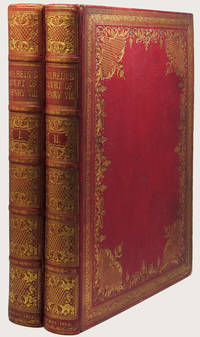
1812rif. 34168London: Published by John Chamberlaine the Keeper of the King's Drawings and Medals. Printed by William Bulmer and Co. Shakespeare Printing Office 1812. 2 volumes. First Edition of the century First Issue the second edition overall. A RARE EXAMPLE WITH THE PLATES BOTH IN COLOURED AND UNCOLOURED STATE THUS WITH DOUBLE THE NUMBER OF PLATES NORMALLY ENCOUNTERED. With 84 hand-coloured plates and 84 plates uncoloured all separately printed on India paper and tipped onto full-page leaves each facing the other the plates with protective leaf separating the two each image with two variations mezzotint portraits of Holbein and his wife a total of 168 illustrations on full-page plates four plates dated from the first printing in 1792 the other 164 dated 1812 as with the publishing date. The plates are printed on a variety of papers slightly different from one another--grey buff white lavender and pink. Folio 34.5 x 2 beautifully bound in full red morocco gilt extra the spines with gilt tooled raised bands separating the compartments which are elaborately gilt decorated within triple gilt filleted frames gilt stippling to the borders of the frames lettered in gilt in one compartment the covers beautifully gilt decorated in all-over designs the borders with gilt stippled lines enclosing three gilt filleted borders surrounding an elaborate gilt inner border of floral tooling bordered again by a stippled and multi-filleted gilt frame the whole surrounding elaborate and large gilt tooled decorations at the inner corners and along the rules the edges gilt ruled the turnovers gilt rolled marbled endleaves all edges gilt very elaborate and beautifully preserved binding work. unpaginated. Fine copies beautifully preserved very light wear or age evidence to the bindings which remain strong the pages and plates all in good order some very occasional light foxing to the papers as is typical the colours remain vibrant and as printed the giltwork on the bindings is in very pleasing condition a very handsome set indeed. FIRST EDITION AND AN UNUSUALLY SPECIAL COPY BOUND IN FULL RED MOROCCO GILT EXTRA WITH THE PLATES PRINTED ON INDIA PAPER IN BOTH COLOURS AND BLACK AND WHITE A COPY WITH DOUBLE THE NUMBER OF PLATES USUALLY ENCOUNTERED. Hans Holbein the Younger; c. 1497 – between 7 October and 29 November 1543 was a German-Swiss painter and printmaker who worked in a Northern Renaissance style and is considered one of the greatest portraitists of the 16th century. He also produced religious art satire and Reformation propaganda and he made a significant contribution to the history of book design. He is called "the Younger" to distinguish him from his father Hans Holbein the Elder an accomplished painter of the Late Gothic school. Holbein was born in Augsburg but worked mainly in Basel as a young artist. At first he painted murals and religious works and designed stained glass windows and illustrations for books from the printer Johann Froben. He also painted an occasional portrait making his international mark with portraits of humanist Desiderius Erasmus of Rotterdam. Holbein travelled to England in 1526 in search of work with a recommendation from Erasmus. He was welcomed into the humanist circle of Thomas More where he quickly built a high reputation. He returned to Basel for four years then resumed his career in England in 1532 under the patronage of Anne Boleyn and Thomas Cromwell. By 1535 he was King's Painter to Henry VIII. In this role he produced portraits and festive decorations as well as designs for jewellery plate and other precious objects. His portraits of the royal family and nobles are a record of the court in the years when Henry was asserting his supremacy over the Church of England. Holbein's art has sometimes been called realist since he drew and painted with a rare precision. His portraits were renowned in their time for their likeness and it is through his eyes that many famous figures of his day are pictured today such as Erasmus and More. He was never content with outward appearance however; he embedded layers of symbolism allusion and paradox in his art to the lasting fascination of scholars. In the view of art historian Ellis Waterhouse his portraiture "remains unsurpassed for sureness and economy of statement penetration into character and a combined richness and purity of style." For Holbein "everything began with a drawing". A gifted draughtsman he was heir to a German tradition of line drawing and precise preparatory design. Holbein's chalk and ink portraits demonstrate his mastery of outline. He always made preparatory portraits of his sitters though many drawings survive for which no painted version is known suggesting that some were drawn for their own sake. Ellis Waterhouse wrote that "modern" painting in England may be said to have begun with Holbein. That later artists were aware of his work is evident in their own sometimes explicitly. Hans Eworth for example painted two full-length copies in the 1560s of Holbein's Henry VIII derived from the Whitehall pattern and included a Holbein in the background of his Mary Neville Lady Dacre. The influence of Holbein's "monumentality and attention to texture" has been detected in Eworths' work. According to art historian Erna Auerbach: "Holbein's influence on the style of English portraiture was undoubtedly immense. Thanks to his genius a portrait type was created which both served the requirements of the sitter and raised portraiture in England to a European level. It became the prototype of the English Court portrait of the Renaissance period". Holbein worked for Thomas Cromwell as he masterminded Henry VIII's reformation. Cromwell commissioned Holbein to produce reformist and royalist images including anti-clerical woodcuts and the title page to Myles Coverdale's English translation of the Bible. Henry VIII had embarked on a grandiose programme of artistic patronage. His efforts to glorify his new status as Supreme Head of the Church culminated in the building of Nonsuch Palace which started in 1538. By 1536 Holbein was employed as the King's Painter on an annual salary of 30 pounds—though he was never the highest-paid artist on the royal payroll. see C. Müller et al. This striving for perfection is very evident in his portrait drawings where he searches with his brush for just the right line for the sitter's profile. The critical faculty in making this choice and his perception of its potency in communicating decisively the sitter's character is a true measure of Holbein's supreme greatness as a portrait painter. Nobody has ever surpassed the revealing profile and stance in his portraits: through their telling use Holbein still conveys across the centuries the character and likeness of his sitters with unrivalled mastery. see J. Rowlands Hans Holbein the Younger 1985 Published by John Chamberlaine, the Keeper of the King's Drawings and Medals. Printed by William Bulmer and Co., Shakespeare Pri hardcover
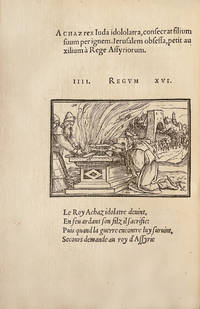
rif. ABAA6Lugduni Apud Ioannem Frellonium1547. Small 4to of 52 ll. sign. A-N with 98 woodcuts l. L2 remargined brown Jansenist morocco spine ribbed gilt edges gilt inner border. Chambolle-Duru. 198 x 135 mm. First issue "of this beautiful book" Brunet supplément 647 exceedingly rare with such wide margins height 198 mm; it is taller than the superb copy of James de Rothschild. Harvard 281; Baudrier vol. 5 p. 209; Rothschild vol. 1 n°16 ; Duplessis op. cit. N°276 p. 60-62 ; Woltmann Holbein vol. 2 p. 172-173 e ; Bouchereaux Corrozet n°127 ; Didot Essai col.73. Each one of the 94 Holbein's engravings occupies a page with Latin text above and French quatrains by Gilles Corrozet below. Didot in his Essai sur la gravure sur bois analyzes what he calls a "masterpiece": "The compositions in this masterpiece are of the highest style and as in The Simulacra of Death the expressions of the figures are righteous and offer a blend of simplicity energy and naivety that characterize Holbein." "First edition of 1547. There were two editions of the Icones printed by Frellon in 1547. These are often cited as issues but the text was entirely reset. This edition described by Brunet III 252-253 and others as the earlier may be identified by the fifth line of the title ending in "emenda-" and the first line of the French text on leaf LIr ending in "uices". A distinguishing feature of this edition is the use of v for u at the beginning of words in the Latin text. Brunet initiated a certain amount of controversy by quoting from E. Tross a theory that the second edition of 1547 No. 282 was printed from clichés rather than from the original blocks. Both Hofer op. cit. No. 276 ; p. 166-167 and Davies Murray vol. I no. 244 reject the idea of clichage. On the basis of breaks in the woodblocks Davies reverses Brunet's order of the two editions but evidence is introduced in the Hofer article to indicate that the condition of the blocks is in this case insufficient to prove priority. Aside from the woodcuts the changes in the text support the order of editions given by Brunet. Comparison of the French text of 1539 with that of this 1547 edition shows that out of the ninety-four verses fifty-one have from one to four lines revised. Signatures D and L are the only ones in which the text is unchanged. The text of the other 1547 edition corresponds to this one but has in addition seven of the eight quatrains in signature L revised. "Harvard. Known for their beauty and fine execution these Icones are considered as a significant milestone in the illustrated book of the Renaissance.Superb copy bound in Jansenist morocco by Chambolle-Duru like the copy of James de Rothschild. French Lugduni Apud Ioannem Frellonium1547. Petit in-4 de 52 ff. non chiffrés sign. A-N avec 98 figures sur bois f. L2 réenmargé maroquin brun janséniste dos à nerfs tranches dorées roulette intérieure dorée. Chambolle-Duru. 198 x 135 mm. Premier tirage "de ce beau livre" Brunet supplément 647 de la plus extrême rareté avec d'aussi grandes marges hauteur 198 mm ; il dépasse le superbe exemplaire James de Rothschild. Harvard 281 ; Baudrier vol. 5 p. 209 ; Rothschild vol. 1 n°16 ; Duplessis op. cit. N°276 p. 60-62 ; Woltmann Holbein vol. 2 p. 172-173 e ; Bouchereaux Corrozet n°127 ; Didot Essai col.73. Chacune des 94 gravures d'Holbein occupe une page avec texte latin au-dessus et quatrains français de Gilles Corrozet au-dessous. Didot dans son Essai sur la gravure sur bois analyse longuement ce qu'il nomme " chef-d'œuvre " : " Les compositions de ce chef-d'œuvre sont du plus haut style et comme dans les Simulachres de la Mort les expressions des figures sont justes et offrent un mélange de simplicité d'énergie et de naïveté qui caractérisent Holbein ". "First edition of 1547. There were two editions of the Icones printed by Frellon in 1547. These are often cited as issues but the text was entirely reset. This edition described by Brunet III 252-253 and others as the earlier may be identified by the fifth line of the title ending in "emenda-" and the first line of the French text on leaf LIr ending in "uices". A distinguishing feature of this edition is the use of v for u at the beginning of words in the Latin text. Brunet initiated a certain amount of controversy by quoting from E. Tross a theory that the second edition of 1547 No. 282 was printed from clichés rather than from the original blocks. Both Hofer op. cit. No. 276 ; p. 166-167 and Davies Murray vol. I no. 244 reject the idea of clichage. On the basis of breaks in the woodblocks Davies reverses Brunet's order of the two editions but evidence is introduced in the Hofer article to indicate that the condition of the blocks is in this case insufficient to prove priority. Aside from the woodcuts the changes in the text support the order of editions given by Brunet. Comparison of the French text of 1539 with that of this 1547 edition shows that out of the ninety-four verses fifty-one have from one to four lines revised. Signatures D and L are the only ones in which the text is unchanged. The text of the other 1547 edition corresponds to this one but has in addition seven of the eight quatrains in signature L revised. "Harvard. Reconnues pour leur beauté et leur finesse d'exécution ces Icones sont considérés comme un jalon marquant du livre illustré de la Renaissance. Superbe exemplaire relié comme l'exemplaire James de Rothschild en maroquin janséniste de Chambolle-Duru. hardcover