725 resultados
1929ref. 300450Berlin, Bard, 1929. M. 135 Abb. 353 S. OLwd.
1938ref. 602378Berlin, Juncker, (1938). M. 32 (8 farb.) Taf. 17 S. OLwd.
ref. 155The Sylvan Press. Hardcover. Very Good. 1947 Limited Edition. Hardcover no dust jacket. Decorative black cloth hardcover with gilt lettering. Top edge dyed red. Bottom edge has "HOLBIEN DANCE OF DEATH" inscribed in black marker. Birdland Books is a small family-owned independent bookseller. Every book we list is in our store. We strive to provide accurate information for all books we list and the photos you see are of the actual book you will receive. The Sylvan Press hardcover
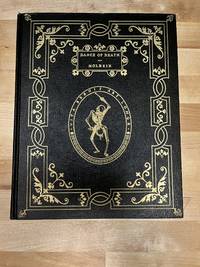
1974ref. G0879231025I5N01Cygnet Press 1974. Hardcover. Acceptable. Missing dust jacket; Readable copy. Pages may have considerable notes/highlighting. ~ ThriftBooks: Read More Spend Less.Dust jacket quality is not guaranteed. Cygnet Press hardcover
1974ref. mon0000074425Cygnet Press 1974T. hardcover. Good. in x in x in. Ex-library hardcover. No dust jacket. Library stickers labels and stamps on cover and inside. Cover is in good condition with shelf wear on the edges and some white spots on the back cover. Spine is tight. Print on the spine is faded. Pages are clean free of markings notes or stains. Ships from Friends bookstore to benefit Beaverton Oregon library. Cygnet Press hardcover
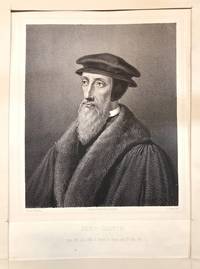
1830ref. P5455Edinburgh : Schenck & Ghemar c.1830. Very Good. Notes: John Calvin 10 July 1509–27 May 1564 was a French theologian pastor and reformer in Geneva during the Protestant Reformation. He was the principal figure in the development of the system of Christian theology later called Calvinism. He was a Religious reformer. Image Size : 268x223 mm 10.55x8.78 Inches Platemark Size : Paper Size : 392x283 mm 15.43x11.14 Inches Coloring: Black & White Medium: Lithograph Categories: Portraits Others; Schenck & Ghemar unknown
ref. 1d654Nach Hans Lutzelburger´s Original- Holzschnitten im Dresdner Kabinett zum ersten Mal treu copirt von Heinrich Loedel mit erläuternden Denkversen und einer geschichtlichen Abhandlung über die Todtentänze von Dr. Adolf Ellissen. Verl. der Dieterichschen Buchhandl. Göttingen 1849. 131 S. brosch. ohne Umschlag/locker/einige Seiten unaufgeschnitten/wenige Bleistiftunterstreichungen. unknown
2005ref. m00013New Haven and London: Yale University Press 2005. Hardcover. As New/As New. 4to - over 9¾ - 12" tall. Yale University Press hardcover
1895ref. ZB1279678Hanfstaengel 1895. large folio 2 page introduction in German followed by 54 page-sized portraits hardcover wear to spine and covers but the portraits are in very good condition. - If you are reading this this item is actually physically in our stock and ready for shipment once ordered. We are not bookjackers. Buyer is responsible for any additional duties taxes or fees required by recipient's country. Photos available upon request. Hanfstaengel hardcover
ref. 24396London Printed by C. Whittingham sold by John Harding 1804. Small 4to.72pp. 33 inserted engraved plates including two portraits Holbein and Hollar and a folding plate to accompany "Dance of Macaber' at rear. Original pale blue papered boards recently re-cased and re-backed with rather amateurish label. Some internal foxing the Holbein engravings less affected. Some marginal loss to last two text leaves. Overall a very good copy. . Scarce and important. London, Printed by C. Whittingham, sold by John Harding, 1804. hardcover
1983ref. 47982London/New York: Johnson Reprint Company Limited/ Harcourt Brace 1983. Hardcover. Very Good. Elephant folio. Text volume and set of plates housed in a half leather solander box. Limited to 520 sets of which 500 are for sale. This is copy 441 with the limitation sheet mounted to the front board of the text volume. The box scuffed with some uneven tanning or faint staining to the leather spine. Overall a very good copy. Johnson Reprint Company Limited/ Harcourt Brace hardcover
ref. SKU0580090Penguin Classics 2017-01-03. paperback. Good. 5x0x7. Textbook May Have Highlights Notes and/or Underlining BOOK ONLY-NO ACCESS CODE NO CD Ships with Tracking Penguin Classics paperback
1745ref. 64270Amsterdam: Francois L'Honoré 1745. Nouvelle édition." 12mo 15.5cm. Disbound now in later cream paper wrappers titled in gilt on spine all edges stained red; xxiv34020pp; with 5 folding plates lacking the sixth numerous in-text woodcuts and an engraved portrait of Erasmus cut out and laid down on title page verso. Title page printed in two colors. Occasional minor chips to leaf edges closely trimmed and lacking one plate but otherwise pleasing: Good only. Erasmus's famous lampoon of religion tradition and superstition also known as Moriae Encomium or In Praise of Folly was published in 1511 and quickly became popular. An edition with illustrations by Hans Holbein the Younger was published in 1515-16; the illustrations in this edition are based on Holbein's work. This edition is a French translation by Nicolas Gueudeville 1652-1721 likely bearing a false imprint. 64270. Francois L'Honoré unknown
1803ref. FB5537 /4DRed leather binding with raised banding gilt decoration and title on the spine. Gilt 'Cambridge panel' on the boards. "Descriptions of each plate in French and English with the Scripture Text from which the designs were taken. Printed by W. Smith and Co. King Street Seven Dials for John Scott No. 447 Strand: & Thomas Ostell No. 3 Ave Maria Lane 1803". Engraved frontispiece engraved title engraved portrait of Holbein. Full leather cover with embossed design and gilt decoration. This is a very hard to find rare book. Note: this book is lovingly reset in its original papers by the expert bookbinder Brian Cole. It is again in fantastic condition which ought to see out a further two hundred years. The Dance of Death 1493 by Michael Wolgemut from the Nuremberg Chronicle of Hartmann Schedel The Danse Macabre also called the Dance of Death is an artistic genre of allegory from the Late Middle Ages on the universality of death. The Danse Macabre consists of the dead or a personification of death summoning representatives from all walks of life to dance along to the grave typically with a pope emperor king child and laborer. The effect is both frivolous and terrifying beseeching its audience to react emotionally. It was produced as memento mori to remind people of the fragility of their lives and how vain the glories of earthly life. Its origins are postulated from illustrated sermon texts; the earliest recorded visual scheme apart from 14th century Triumph of Death paintings was a now-lost mural at Holy Innocents' Cemetery in Paris dating from 1424 to 1425. Hans Holbein the Younger Hans Holbein der Jüngere; c. 1497 – between 7 October and 29 November 1543 was a German-Swiss painter and printmaker who worked in a Northern Renaissance style and is considered one of the greatest portraitists of the 16th century. He also produced religious art satire and Reformation propaganda and he made a significant contribution to the history of book design. He is called "the Younger" to distinguish him from his father Hans Holbein the Elder an accomplished painter of the Late Gothic school. Holbein was born in Augsburg but worked mainly in Basel as a young artist. At first he painted murals and religious works and designed stained glass windows and illustrations for books from the printer Johann Froben. He also painted an occasional portrait making his international mark with portraits of humanist Desiderius Erasmus of Rotterdam. When the Reformation reached Basel Holbein worked for reformist clients while continuing to serve traditional religious patrons. His Late Gothic style was enriched by artistic trends in Italy France and the Netherlands as well as by Renaissance humanism. The result was a combined aesthetic uniquely his own. Holbein travelled to England in 1526 in search of work with a recommendation from Erasmus. He was welcomed into the humanist circle of Thomas More where he quickly built a high reputation. He returned to Basel for four years then resumed his career in England in 1532 under the patronage of Anne Boleyn and Thomas Cromwell. By 1535 he was King's Painter to Henry VIII of England. In this role he produced portraits and festive decorations as well as designs for jewellery plate and other precious objects. His portraits of the royal family and nobles are a record of the court in the years when Henry was asserting his supremacy over the Church of England. Holbein's art was prized from early in his career. French poet and reformer Nicholas Bourbon the elder dubbed him "the Apelles of our time" a typical accolade at the time. Holbein has also been described as a great "one-off" in art history since he founded no school. Some of his work was lost after his death but much was collected and he was recognized among the great portrait masters by the 19th century. Recent exhibitions have also highlighted his versatility. He created designs ranging from intricate jewellery to monumental frescoes. Holbein's art has sometimes been called realist since he drew and painted with a rare precision. His portraits were renowned in their time for their likeness and it is through his eyes that many famous figures of his day are pictured today such as Erasmus and More. He was never content with outward appearance however; he embedded layers of symbolism allusion and paradox in his art to the lasting fascination of scholars. In the view of art historian Ellis Waterhouse his portraiture "remains unsurpassed for sureness and economy of statement penetration into character and a combined richness and purity of style'. Renowned for his Dance of Death series the famous designs by Hans Holbein the Younger 1497–1543 were drawn in 1526 while he was in Basel. They were cut in wood by the accomplished Formschneider block cutter Hans Lützelburger. William Ivins quoting W. J. Linton writes of Lützelburger's work wrote: "'Nothing indeed by knife or by graver is of higher quality than this man's doing.' For by common acclaim the originals are technically the most marvelous woodcuts ever made." These woodcuts soon appeared in proofs with titles in German. The first book edition containing forty-one woodcuts was published at Lyons by the Treschsel brothers in 1538. The popularity of the work and the currency of its message are underscored by the fact that there were eleven editions before 1562 and over the sixteenth century perhaps as many as a hundred unauthorized editions and imitations. Ten further designs were added in later editions. The Dance of Death 1523–26 refashions the late-medieval allegory of the Danse Macabre as a reformist satire and one can see the beginnings of a gradual shift from traditional to reformed Christianity. That shift had many permutations however and in a study Natalie Zemon Davis has shown that the contemporary reception and afterlife of Holbein's designs lent themselves to neither purely Catholic or Protestant doctrine but could be outfitted with different surrounding prefaces and sermons as printers and writers of different political and religious leanings took them up. Most importantly "The pictures and the Bible quotations above them were the main attractions … Both Catholics and Protestants wished through the pictures to turn men's thoughts to a Christian preparation for death.". The 1538 edition which contained Latin quotations from the Bible above Holbein's designs and a French quatrain below composed by Gilles Corrozet 1510–1568 actually did not credit Holbein as the artist. It bore the title: Les simulachres & / HISTORIEES FACES / DE LA MORT AUTANT ELE/gammēt pourtraictes que artifi/ciellement imaginées. / A Lyon. / Soubz l'escu de COLOIGNE. / M.D. XXXVIII. "Images and Illustrated facets of Death as elegantly depicted as they are artfully conceived." These images and workings of death as captured in the phrase "histories faces" of the title "are the particular exemplification of the way death works the individual scenes in which the lessons of mortality are brought home to people of every station." John Scott & Thomas Ostell. hardcover
ref. 89078Zürich Ammann Verlag 2008 Auflage: 1. kartoniert gebunden; grüner Einband mit weissem farbig illustriertem Schutzumschlag grünes Lesebändchen / Anz. Seiten: 1006 / 184 x 268 cm / Zustand: sehr gut geringe Gebrauchsspuren; Schutzumschlag etwas berieben Schnitt leicht gebräunt Inhalt eine Auswahl: Herbert Achternbusch Mohammed Ali Woody Allen Idi Amin Günther Anders Hans Christian Andersen Angelus Silesius Josephine Baker Bashô Benedikt XVI. Sarah Bernhardt Joseph Beuys William Blake Ernst Bloch Dieter Bohlen Anton Bruckner Charlie Chaplin Prinz Charles Camille Claudel Erich von Däniken Dalai Lama Nr. 14 Salvador Dali Demokritos Karl Wilhelm Diefenbach Diogenes von Sinope Donovan Eugen Drewermann Abu Dschahl Isabelle Eberhardt Till Eulenspiegel Eva & Adele Ezechiel Fitzcarraldo Franziskus von Assisi Muammar al-Gaddafi Sir Francis Galton Mahatma Gandhi Gelsomina Di Constanzo Andy Goldsworthy Holly Golightly Glenn Gould Gusto Gräser Billy Graham Grock Pater Anselm Grün Forrest Gump Fritz Haarman Hafiz Nina Hagen Hadschi Halef Omar Peter Handke Kaspar Hauser Eckhard Henscheid Dieter Hildebrandt Hildegardt von Bingen Adolf Hitler Turnvater Jahn Jean Paul Jesus von Nazaret Johannes Paul II. Janis Joplin Franz Kafka John Harvey Kellogg Petra Kelly Klaus Kinski Karl Kraus Jiddu Krishnamurti Elisabeth Kübler-Ross Pippi Langstrumpf Laozi Else Lasker-Schüler Timothy Leary Theodor Lessing Ludwig II. von Bayern Oskar Matzerath Merlin Milarepa Gustaf Nagel Nasruddin Hodscha Rüdiger Nehberg Filippo Neri Wolfgang Neuss Niklaus von Flüe Novalis Orpheus Osama bin Laden Osho Papageno Peregrinus Proteus Fernando Pessoa Johann H. Pestalozzi Gerhard Polt Grigori J. Rasputin Perry Rhodan Adrian Ludwig Richter Rainer Maria Rilke Henri Rousseau M. de Sainte-Colombe Annemarie Schimmel Arno Schmidt Daniel Paul Schreber Josef Schwejk Peter Sloterdijk Alexis Sorbas Rudolf Steiner Ginka Steinwachs Karlheinz Stockhausen Georg Trakl Uriella Oscar Wilde Xerxes Zhuangzi Zürich, Ammann Verlag, 2008, Auflage: 1. unknown
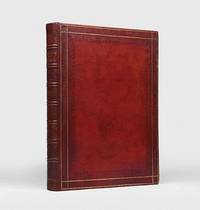
1792ref. 160199London: W. Bulmer and Co. Shakespeare Printing-Office 1792-1800. This magnificent work" - Holbein rendered by Bartolozzi First edition of this superlative folio about which the leading authorities are in full agreement: "in every way a splendid book" Abbey and "this magnificent work is surely the finest early example of English colour printing" Ray. This is a most handsome copy in contemporary red morocco. "During his second stay in England 1532-43 Hans Holbein made a series of drawings of sitters connected with the court of Henry VIII that ranks among his finest achievements. Most of these were discovered as a group pasted into an album in a bureau at Kensington Palace by Queen Caroline in 1728 and the majority are now in the Royal Collection Windsor" Oliver et al p. 168. The album had a chequered history passing through several royal and noble hands - Charles I swapped it for a single painting by Raphael - before finding its way into the celebrated collection of Thomas Howard 14th earl of Arundel who "amassed what stands as the first major British art collection" British Library. It then returned to royal ownership a reunion that was recorded in Alexander Browne's Ars Pictoria 1675: "this book has been long a Wanderer but is now most happily fallen into the King's Collection". It then lay undisturbed until Queen Caroline's discovery. Solicitous of artworks in the royal collections she had them removed from their binding individually framed and hung in her country residence of Richmond Lodge. A native of Florence Francesco Bartolozzi 1728-1815 had by the early 1760s established himself as one of the finest engravers in Italy. An invitation to London in 1764 led to his employment to make prints after drawings by Guercino which entered the Royal Collection. He became engraver to the king and was a founder member of the Royal Academy. His imprimatur on an engraving was in high demand and he established "a vogue for dotted prints or 'stipples' and this became his characteristic manner" ODNB. Extensive work for many of the leading London print-sellers followed for which he employed a large studio to cope with commissions. This led to accusations of shoddy workmanship about which Bartolozzi was very sensitive; and yet he continued to attract high-level commissions such as the present work the admirable presswork for which was by the best London printer of the day William Bulmer. It was published under the auspices of the antiquary John Chamberlaine Keeper of George III's drawings with biographical notices provided by Edmund Lodge. Dr Lucy Peltz Head of Collection Displays Tudor to Regency at the National Portrait Gallery notes a contemporary "patriotic fashion for collecting engraved portraits of illustrious figures" ODNB entry for Edmund Lodge. "Published in parts during the years 1792 to 1800. the book evidently had a very considerable success for the plates appear in several states" Abbey. The present copy includes hand-coloured plates on white paper pink paper and trimmed pink paper mounted to white sheets with a double-border in wash. The sitters include Anne Boleyn Edward VI Sir Thomas Eliot Catherine Howard Sir Thomas More Jane Seymour Henry Howard earl of Surrey and Sir Thomas Wyatt. Folio 543 x 400 mm. With 84 colour-printed stipple engravings on 83 sheets all but four by Francesco Bartolozzi after Holbein on white or pink paper some on pink paper mounted on card. Contemporary red straight-grain morocco gilt spine with seven pairs of raised bands gilt lettered direct in second compartment and at foot each compartment filled with decorative blind tooling sides with intersecting gilt frames enclosing blind panels comprising interlocking drawer-handle tools and anthemion rolls 12-point corner rosettes gilt chain-link edge roll gilt rope-twist turn-ins drab bluish green surface-paper endpapers gilt edges. Binding professionally refurbished a few old abrasions to binding front leaves creased one mounted plate with repaired closed tear some foxing to plates on white paper a few captions shaved rear free endpaper sympathetically renewed. A handsome copy. Abbey Life 205 the plates accord with Abbey's states 2 3 and although not examined by him possibly 5; Lowndes I p. 405; Ray The Illustrator and the Book in England from 1790 to 1914 1991 19. Lois Oliver et al "New evidence towards an attribution to Holbein of a drawing in the Victoria and Albert Museum" The Burlington Magazine Vol. 148 No. 1236 March 2006. hardcover
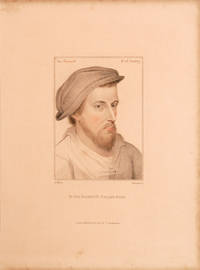
1812ref. 73591London: John Chamberlaine 1812. Bartolozzi developed his style to imitate the subtleties of renaissance and baroque chalk drawings and became deservedly famous for his stipple engraving. The portraits in this collection show how effective this technique was in reproducing with such incredible fidelity Holbein's original designs. Engraved by BARTOLOZZI Francesco in IMITATIONS OF ORIGINAL DRAWINGS BY HANS HOLBEIN IN THE COLLECTION OF HIS MAJESTY FOR THE PORTRAITS OF ILLUSTRIOUS PERSONS OF THE COURT OF HENRY VIII. WITH BIOGRAPHICAL TRACTS. Stipple engraving. Printed colour. Size: 333 x 250 mm Fine condition. unknown
1812ref. 73587London: John Chamberlaine 1812. Bartolozzi developed his style to imitate the subtleties of renaissance and baroque chalk drawings and became deservedly famous for his stipple engraving. The portraits in this collection show how effective this technique was in reproducing with such incredible fidelity Holbein's original designs. Engraved by BARTOLOZZI Francesco in IMITATIONS OF ORIGINAL DRAWINGS BY HANS HOLBEIN IN THE COLLECTION OF HIS MAJESTY FOR THE PORTRAITS OF ILLUSTRIOUS PERSONS OF THE COURT OF HENRY VIII. WITH BIOGRAPHICAL TRACTS. Stipple engraving. Printed colour. Size: 333 x 250 mm Fine condition. unknown
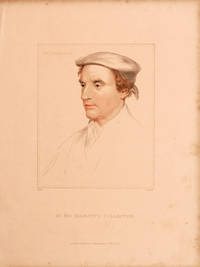
1812ref. 73601London: John Chamberlaine 1812. Bartolozzi developed his style to imitate the subtleties of renaissance and baroque chalk drawings and became deservedly famous for his stipple engraving. The portraits in this collection show how effective this technique was in reproducing with such incredible fidelity Holbein's original designs. Engraved by BARTOLOZZI Francesco in IMITATIONS OF ORIGINAL DRAWINGS BY HANS HOLBEIN IN THE COLLECTION OF HIS MAJESTY FOR THE PORTRAITS OF ILLUSTRIOUS PERSONS OF THE COURT OF HENRY VIII. WITH BIOGRAPHICAL TRACTS. Stipple engraving. Printed colour. Size: 333 x 250 mm Fine condition. unknown
1812ref. 73583London: John Chamberlaine 1812. Bartolozzi developed his style to imitate the subtleties of renaissance and baroque chalk drawings and became deservedly famous for his stipple engraving. The portraits in this collection show how effective this technique was in reproducing with such incredible fidelity Holbein's original designs. Engraved by BARTOLOZZI Francesco in IMITATIONS OF ORIGINAL DRAWINGS BY HANS HOLBEIN IN THE COLLECTION OF HIS MAJESTY FOR THE PORTRAITS OF ILLUSTRIOUS PERSONS OF THE COURT OF HENRY VIII. WITH BIOGRAPHICAL TRACTS. Stipple engraving. Printed colour. Size: 333 x 250 mm Fine condition. unknown
1812ref. 73612London: John Chamberlaine 1812. Bartolozzi developed his style to imitate the subtleties of renaissance and baroque chalk drawings and became deservedly famous for his stipple engraving. The portraits in this collection show how effective this technique was in reproducing with such incredible fidelity Holbein's original designs. Engraved by BARTOLOZZI Francesco in IMITATIONS OF ORIGINAL DRAWINGS BY HANS HOLBEIN IN THE COLLECTION OF HIS MAJESTY FOR THE PORTRAITS OF ILLUSTRIOUS PERSONS OF THE COURT OF HENRY VIII. WITH BIOGRAPHICAL TRACTS. Stipple engraving. Printed colour. Size: 333 x 250 mm Good condition. unknown
1812ref. 73615London: John Chamberlaine 1812. Bartolozzi developed his style to imitate the subtleties of renaissance and baroque chalk drawings and became deservedly famous for his stipple engraving. The portraits in this collection show how effective this technique was in reproducing with such incredible fidelity Holbein's original designs. Engraved by BARTOLOZZI Francesco in IMITATIONS OF ORIGINAL DRAWINGS BY HANS HOLBEIN IN THE COLLECTION OF HIS MAJESTY FOR THE PORTRAITS OF ILLUSTRIOUS PERSONS OF THE COURT OF HENRY VIII. WITH BIOGRAPHICAL TRACTS. Stipple engraving. Printed colour. Size: 333 x 250 mm Good condition. unknown
1812ref. 73582London: John Chamberlaine 1812. Bartolozzi developed his style to imitate the subtleties of renaissance and baroque chalk drawings and became deservedly famous for his stipple engraving. The portraits in this collection show how effective this technique was in reproducing with such incredible fidelity Holbein's original designs. Engraved by BARTOLOZZI Francesco in IMITATIONS OF ORIGINAL DRAWINGS BY HANS HOLBEIN IN THE COLLECTION OF HIS MAJESTY FOR THE PORTRAITS OF ILLUSTRIOUS PERSONS OF THE COURT OF HENRY VIII. WITH BIOGRAPHICAL TRACTS. Stipple engraving. Printed colour. Size: 333 x 250 mm Fine condition. unknown