(PITH PAINTINGS).Biblio.com
2718 risultati
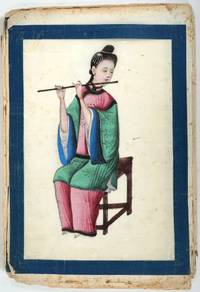
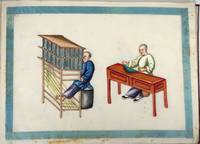
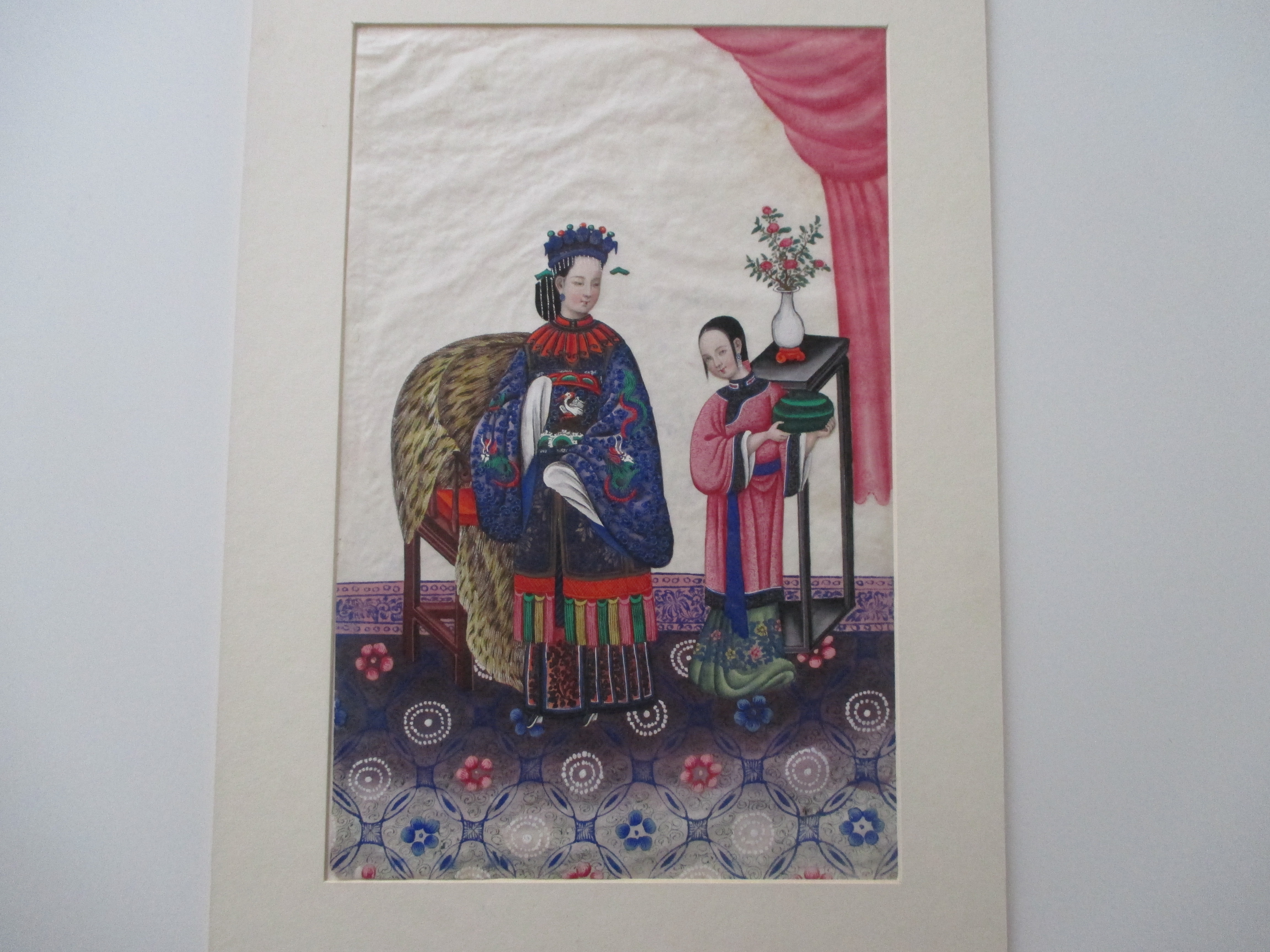
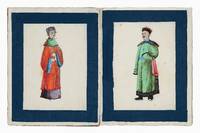
rif. 65895China c.1870. 8vo. 20 x 15 cm. Album of contemporary patterned cloth covered boards with 12 leaves of finely coloured illustrations on pith paper each secured with blue silk border. 4 of the images with just minimal cracking. Pith came into use for painting to satisfy the increasing demand for small inexpensive and easily transported souvenirs following the massive growth in the China Trade in the first half of the nineteenth century. Paintings in oils on board and canvas were costly and difficult to carry home. Earlier and more prestigious export water-colours had often been on a larger scale and painted on fine Chinese paper or on paper imported from Europe. The albums of pith paintings and later the little glass-fronted boxes were inexpensive light easy to pack and gave the pictures some protection on the long voyage home. Because many were sold in albums and hence protected from the light they retain their bright colours to this day. Pith comes from the central column of spongy cellular tissue in the stem of a small tree called Tetrapanax Papyrifera native to south-west China. It has had a variety of some going back many centuries. At the imperial court both men and women wore coloured flowers made from pith in their hair. For use in painting it is cut by hand with a knife into thin sheets from short lengths of the spongy tissue. Cutting is highly skilled and the constraints of the process mean that the finished sheets for painting seldom if ever measure more than about 30cms by 20cms. The sheets are dried trimmed and used for painting without any further processing. Because of the nature of pith and its cellular structure the gouache used by the Chinese sat on the surface and produced a bright and even sparkling effect. Very fine detail could be achieved but pith did not lend itself to the flat wash of colour favoured for European watercolours. These albums are difficult to date specifically as they are seldom signed and never actually dated. They are known to have been produced from the 1830s through to the 1870s [China, c.1870] hardcover
1902rif. 18922AB1902. London Bell 1902. 29 : 22 cm. XV 176 pages 57 plates with many illustrations and some illustrations in the text. Full brown morocco on 5 raised bands spine and board outstandingly decorated with floral gilt designes title in gold on spine and on each board in the middle top edge gilt triple gilt dentelles inside in the corner gilt floral decorationbordeaux-red fly leaves. A superb binding excellent preserved in a slipcase.- One of 360 copies only copy in this wonderful binding. - One plate loose. - From the Library of Max Safron with his Exlibris in the inner fron board another exlibris in the inner back board. hardcover
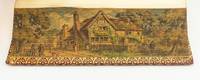
1797rif. ST19344London: Printed by T. Gillet for Longman et al. 1797. 265 x 163 mm. 10 3/8 x 6 3/8". Two volumes. Contemporary green straight-grain morocco covers with double gilt fillet border raised bands gilt titling turn-ins with decorative gilt roll marbled endpapers all edge gilt inexpert older repairs to joints. EACH VOLUME WITH RICHLY DETAILED FORE-EDGE PAINTING that on volume I depicting the old Tabard Inn Southwark and that on volume II showing Furnival's Inn Holborn. Housed in a fleece-lined double-compartment slipcase. Title pages with engraved vignette. Front flyleaf of each volume with ink ownership inscription of Mary Erskine dated 1803 noting it was a wedding gift from her cousin Lord Wodehouse and with later ink presentation inscription to "Walter and Katherine" on their 13th wedding anniversary 17 February 1931 from "their mother Kate Goodrich." Spines faded to brown as usual with green morocco and with half a dozen minor abrasions joints somewhat worn front joint of vol. II with four-inch crack at head but the bindings entirely solid the contents clean and fresh with only insignificant imperfections and the fore-edge paintings very well-preserved. This is a charming pair of large fore-edge paintings depicting two historic London inns each full of detail and painted on text blocks that fan out beautifully with very little effort. The text here is a late 18th century edition of a controversial and short-lived periodical known as "The Guardian" spearheaded by writer and politician Richard Steele who also founded "The Tatler" and "The Spectator". "The Guardian" as DNB relates ran from 12 March to 1 October 1713 and "is chiefly remembered for the quality of the contributors on whom Steele drew including Edward Young George Berkeley Alexander Pope and of course Joseph Addison." The two inns depicted in the fore-edge paintings here also have literary credentials: the Tabard Inn in Southwark was chosen by Chaucer as the starting point for the "Canterbury Tales" and Furnival's Inn in Holborn will be known to Dickens enthusiasts as the place where he began writing "The Pickwick Papers." The original Tabard Inn burned down in the Great Fire but was immediately rebuilt and became a popular stopping point for stagecoaches as depicted in the present painting. The dirt road in front of the inn is dominated by a large covered wagon and team of horses with a pair of men gesturing in the foreground and others idling nearby; Furnival's Inn by contrast was an Inn of the Chancery and enjoyed much tidier surroundings: the streets in the fore-edge painting here are cobbled the ladies and gentlemen are well dressed and even the rubbish has been neatly piled to one side. Both paintings date from the late 19th century and are based on engravings found in "Old and New London" by George Walter Thornbury ca. 1880. Though unsigned they are extremely well done and offer wonderful views of London haunts from both sides of the Thames. Printed by T. Gillet for Longman et al. unknown
1764rif. 4482Paris, H-L. Guerin & L. F. Delatour, 1764. 2 volumes in-4 de XVI-XLVII-430 pages; XIV- et de pages 431 à 708. Plein veau marbré de l’époque, dos à nerfs ornés de filets dorés.
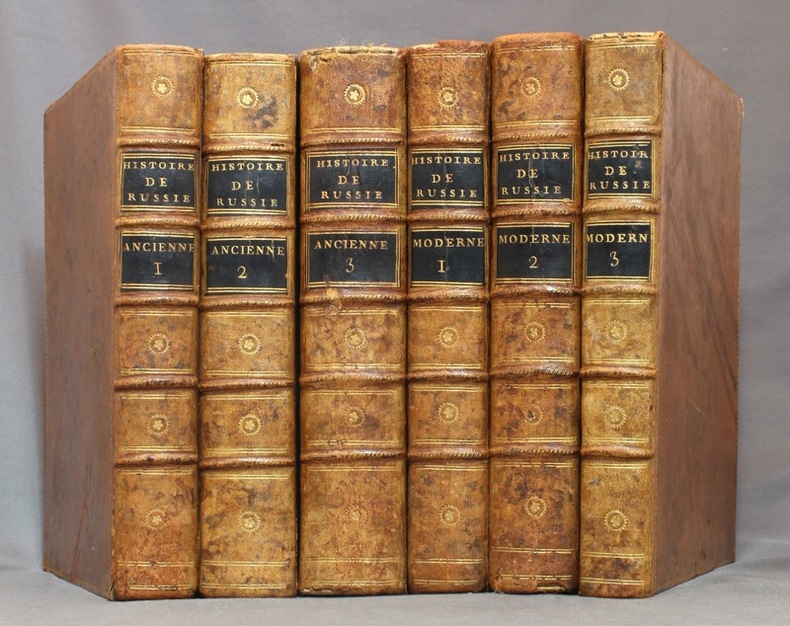
1783rif. 15434A Paris et à Versailles, Chez Froullé, Maradan et Chez Blaizot, 1783-1794. 6 volumes in-4 de [4]-VII-[1]-XX-510-[2]; [4]-XXIV-560-[2]; [4]-VI-[2]-748; [4]-536-VIII; [4]-619; VIII-424 pages. Pleine basane racinée du temps, dos à nerfs ornés de filets et petits fleurons dorés, roulette dorée sur les plats, tranches marbrées. Coins tapés et accrocs à quelques coiffes.
1870rif. 279111870. Finely executed portraits of women and their musical instruments larger and more detailed than many other albums. From the school of Youqua. The portraits have no background painting. 8 images mounted with dark turquoise border silk some with cracks; 3 images are mounted on card at a later date. All images loose in papered boards which open Western style and are disbound and very rubbed. Most images are in lovely and larger than most. Besides some small cracks they are in very good condition. 4to 11 1/2 x 8 unknown
rif. GF30513Un catalogue in-4 broché non paginé imprimé sur papier glacé - nombreuses reproductions d'oeuvres en noir et en couleurs -
1809rif. KOS06200786Suharaya ihachi 1809. Soft Cover. Fine. KOS06200786 Suharaya ihachi paperback
1850rif. 27212Canton 1850. Silk covered hard boards. Fine condition. An album on pith paper with twelve colorful paintings of Chinese occupations the artisans shown in pairs. Trades include gem cutting forging carpentry fabric weaving & dying pottery and shoe making - some trades not identifiable. No artist or studio is recorded. Paintings in fine condition rimmed with light blue silk margins. One image cracked at lower right corner not affecting the image. Oblong 8vo violet silk covers 11 3/4 x 8 1/2" are worn at corners with green ties present. unknown
1914rif. 20454Paris, Bernheim-Jeune, 1914. In-folio de [2]-75-[9 pages, reliure en carton recouvert d'un papier recouvert de peinture façon palette de peintre! Dos lisse, titre doré au dos, un filet doré sur chaque plat, couvertures et dos conservés. Non rogné.
1932rif. 2092902138301036Not Available 1932. Soft Cover. Fine. The book is in fine condition. Not Available paperback
1930Affixed to first blank leaf is a heartfelt handwritten note signed by the artist, Jack Spurling [1870-1933], to a Mr. Hardcastle, dated 15 December 1929. On opposite leaf is affixed a typed gift plate from one Lt. L.B. Whetstone, R.N., beneath which is written in pencil "H.M.S. Dauntless August, 1930". Laid-in is a one-page colour-illustrated magazine ad for this volume which reads in part "The life and colour of the golden days of sail, painted by Mr. Jack Spurling (30 colour plates and one photogravure) and described by Mr. Basil Lubbock. As great a treasure for book-lovers as for sea-lovers." "Appended are a subject index, an index of the names of ships which occur in the text, and a foldout chart of the routes chiefly followed by the clippers in pursuit of their various trades." - Editor's Note. 12.4" x 10.5". XII, 153 pages. All plates, photogravure and chart present. Binding shaken. Both hinges open. Front free endpaper loose but present. Above-average wear to gilt decorated blue publisher's cloth. Light to moderate foxing to contents. Book
1843rif. ST20616London: Tilt and Bogue 1843. 207 x 135 mm. 8 1/8 x 5 5/8". Two volumes. With a memoir and critical remarks by James Montgomery. Pleasing contemporary burgundy pebble-grain morocco gilt covers with graceful frame of cresting roll accented with lancets large lyre centerpiece with leafy flourishes and small birds raised bands spine compartments densely gilt gilt lettering gilt turn-ins all edges gilt. WITH LOVELY FORE-EDGE PAINTINGS BY THE "DOVER PAINTER" one of Milton's cottage at Chalfont and the other of St. Giles Church Cripplegate. With decorative engraved initials and 95 engraved vignettes after drawings by William Harvey. Weber "Annotated Dictionary of Fore-edge Painting Artists & Binders" pp. 98-103. Muir "Victorian Illustrated Books" p. 28. Spines gently and evenly sunned joints and extremities a little rubbed one margin with faint paint trail from fore-edge painter's brush other trivial imperfections but A VERY APPEALING COPY internally clean and fresh in solid bindings with bright gilt and the fore-edge paintings especially well preserved. This copy of Milton's collected poems is very attractively illustrated inside and out with an extremely skillful painting by a famous artist adorning each of the fore edges. Designed by William Harvey 1796-1866 who Muir tells us was "the longest lived and most important of Bewick's pupils" the engravings here range from charming figural initials to writhing residents of Hell in their smoky abyss to gentle-faced angels bathed in beams of light. The fore-edge paintings are recognizable as the work of the so-called "Dover Painter" the name given by Jeff Weber to the artist who produced very high quality painted fore edges in the 1920s and 1930s for the famous London bookseller Marks & Company. These two depict Milton's cottage and his final resting place St. Giles' Church in London. The cottage is depicted in an idyllic scene of Milton's time with aproned peasants milling about the ivy-covered building under the shade of the trees that frame the scene. The other painting shows a lively urban street: the church's venerable structure is flanked by bustling shops visited by gentlemen with fashionable canes while the smoke from the chimneys trails upward into the cloudy sky. These clouds and the trees surrounding the cottage are particularly demonstrative of our artist's distinctive style of applying dabs of paint a technique that almost suggests a quasi-pointillism. Taken together the substantial content lovely contemporary red morocco bindings and finely executed and well-preserved fore-edge paintings combine to make up a set of considerably seductive appeal. Tilt and Bogue unknown
1972rif. 052333Little Brown 1972. 1st Edition . Hardcover. Fine/Fine. 89 Pp. Black Cloth Gilt. First Printing Indicated. Fine In Fine Price-Clipped Dust Jacket. Inscribed By Bonestell To Jpl Astronomer Ray L. Newburn "With Best Wishes"; Newburn Shared Information And Advice With Bonestel Newburn Is Specifically Cited In The Acknowledgments And They Were Friends For Many Years. Little, Brown hardcover
1786rif. 8485Lausanne, J. P. Heubach et compagnie, 1786. 4 volumes in-4 de [6]-CVIII-408-[4]; [4]-546-[4]; [4]-314-[6]; [4]-360-[4] pages, plein veau écaille, dos à nerfs richement ornés de filets et fleurons dorés, pièces de titre et tomaison en maroquin vert, triples filets dorés encadrant les plats, double filets dorés sur les coupes, tranches jaspées bleues. Un petit manque à la coiffe supérieure du tome trois, deux coins frottés, premiers feuillets légèrement brunis au début des volumes.
1857rif. 2111902160603014Published by Eikyudo 1857. Soft Cover. Fine. Size: 12x17.7 cm Published by Eikyudo paperback
1781rif. 60351781 Paris , Bassan et Poignant 1781, In-4 , (300 x 220 mm ) Exemplaire avec, au titre la mention "dedié à Mr le Comte d' Orsay ".Illustration : une vignette au deuxieme feuillet non chiffré et 120 planches d'apres Rubens, Veronèse, Breuguels, Le Moine.....Reliure signée Hardy : maroquin rouge , plats et dos ornés . La date au dos " 1791" est erronée. Feuillets de titre et d'avertissement . References : Cohen 116
1949rif. 009094Paris Librairie Auguste Blaizot 1949 51 x 38 cm En feuilles, couverture illustrée, chemise et étui éditeur
1880rif. 14997ABca. 1880. 33 : 22 cm. 8 coloured paintings on stiff paper, mounted under passepartout.
1870rif. 27226Canton: SunQua 1870. Silk covered boards. Otherwise very good condition. This album bears the red stamp of Sunqua with border & stars. The nobility include the Emperor and Empress who are followed by the nobility men and their women. The painting is particularly fine with intricate robes and portraits. The National Library of Australia in their collection holds a similar but later rendition of this album where they identify the individual paintings. Small folio silk patterned album 14 x 10 1/4" complete with the original silk ties. The green silk is decorated in daisy & vine floral pattern which is typical of many SunQua albums. Leaves mounted with pale turquoise silk ribbon to paper leaves with some images floating and no longer within the borders. There are some cracks in the pith paintings none however affecting the image themselves. Western binding opening from the right lightly rubbed on corners & foredge very good overall. SunQua unknown
1780rif. 16745Paris, Ph. D. Pierres (imp.), Eugene Onfroy, 1780. 4 volumes in-4 de [4]-5-(V-XX)-200-XX-(203-445)-59; [4]-444-178; [4]-702-59; [4]-476-27-8-LVI-59 pages, plein veau blond moucheté, dos à nerfs ornés de fleurons et petits fers dorés, pièces de titre en maroquin rouge, double filet doré aux coupes, tranches rouges.
rif. 8505Agréable portrait début XIXè avec annotation ancienne au dos : autoportrait de Melle Julie Duvidal de Montferrier. Celle-ci, élève de Gérard, deviendra la belle-sœur de Victor Hugo. Il s'agit d'une réduction du portrait conservé à l'École des Beaux-Arts de Paris. Accidents 40 x 32 cm
1802rif. 9239Didot l’aîné 1802 3 volumes in-folio plein veau marbré, dos lisse, tranches dorées, filets, dentelles et fleurons, pièces de titre et de tomaison, triple filet sur les plats, roulettes sur les coupes et contreplats. I : 2 ff.- frontispice - VI- 36 pp.- 9 gravures hors-texte - 272 pp. - 68 gravures hors-texte 1 à 68. II : 2 ff.- frontispice - pp. 273 à 580 - 76 gravures hors-texte de 69 à 144. III : 3 ff. - frontispice - 123 pp. 60 gravures hors-texte. Coiffes absentes, charnières fendillées. Quelques rousseurs marginales sur les planches. Bon exemplaire.
1870rif. 27902Canton: SunQua Studio 1870. Silk covered boards. 12 magnificent fish paintings on pith with incredible detail including unusual sparkle paint. Includes Koi eel catfish etc. with multiple fish in each image. Leaves mounted with pale turquoise silk ribbon to paper leaves. Oblong 4to 9 1/4 x 13 1/4" with original ties. Western binding opening from the right. Bound in a green gold blue and red silk woven in a daisy & vine pattern which sometimes appears with a Sunqua stamp. Sunqua was active 1830-1870. Borders on two prints missing one strip. Binding in very good condition. SunQua Studio unknown
rif. 8653218. CHINESE PITH PAINTINGS. ALBUM OF 30 FISH ON 12 SHEETS. Album of 12 sheets of pith approximately 19 x 26 cm each mounted onto pages within covers approx. 24.7 x 34.3 cm covered in brocade with ties. A wonderful mid-19th century example of this realistic genre which uses the three dimensionality afforded by the surface of the inner plant pith of the Tetrapanax papyriferum a ginseng relative that grow to the size of a small tree shaved as here into thin sheets and painted with opaque colors. The fish sparkle and the colors glow the fish accuraely depicted in form and color. Pith by its very nature is extremely fragile and larger sheets such as those employed here even more than usually frangible. Thus the completeness of the sheets with almost no lost pigmeted sections is most unusual. The covers are a bit worn though as usual the paintings show occasional cracking and repair but a worthy example of its kind. unknown books