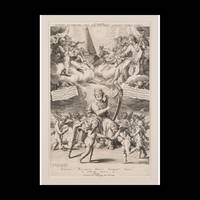
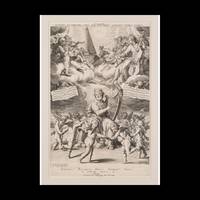
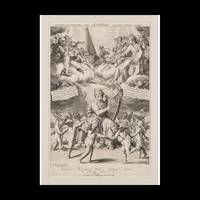
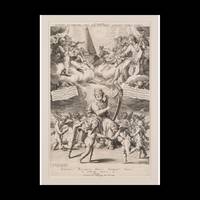
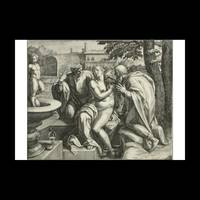
Marcus Sadeler (Haarlem 1586-87)MareMagnum

6 250 résultats
Bulino misure: mm 201 x 263 I Sadeler furono una numerosa famiglia di artisti fiamminghi, principalmente incisori di riproduzione, attivi in tutta Europa tra il XVI e il XVII secolo. Lo stile dei membri della famiglia è molto simile e non sempre facilmente distinguibile ma per tre generazioni, spostandosi dall’Olanda all’Italia, fermandosi in Germania e a Praga, questi incisori, editori e commercianti di stampe hanno giocato un ruolo centrale nella diffusione delle immagini. Marcus o Marco, fu uno stampatore e forse anche editore che operò ad Haarlem nel periodo 1586-87, si presume sia stato un membro della famiglia anche se non ci restano documenti che ne provino il legame. In questa stampa protagonista è il letto di un torrente montano scavato fra le rocce e gli alberi con ricche foglie. In primo piano sulla sinistra sono descritti due cacciatori con il loro cane da caccia, discutono fra di loro e procedono verso lo spettatore lungo una strada sterrata. Dietro di loro un contadino e i suoi asini da soma avanzano in direzione opposta. Appena accennato sullo sfondo il fiume sfocia in un lago solcato da imbarcazioni. Sempre sullo sfondo a sinistra è appena visibile una città. Il cielo è coperto da nubi cariche di pioggia, realizzate con forti giochi chiaroscurali che vanno dal nero al grigio chiaro, lasciano intravedere i raggi del sole. In basso a destra, oltre l’immagine inciso "Marco Sadeler excudit" Buona eccellente. Ottimo stato di conservazione, eccetto una piega verticale al centro. Rifilata alla battuta del rame.
réf. 349511Contentum Ltd. Loose sheet. New. High-quality art print based on an original work from the Met. Created in the 16th century ca. 1590–1600. Professionally printed on premium fine-art paper Photo Rag Bright White premium quality in size A2. The artwork is printed with a white border museum-style presentation. Contentum Ltd. unknown
réf. 349512Contentum Ltd. Loose sheet. New. High-quality art print based on an original work from the Met. Created in the 16th century ca. 1590–1600. Professionally printed on premium fine-art paper Museum Etching museum quality in size A2. The artwork is printed with a white border museum-style presentation. Contentum Ltd. unknown
réf. 349509Contentum Ltd. Loose sheet. New. High-quality art print based on an original work from the Met. Created in the 16th century ca. 1590–1600. Professionally printed on premium fine-art paper Museum Etching museum quality in size A3. The artwork is printed with a white border museum-style presentation. Contentum Ltd. unknown
réf. 349510Contentum Ltd. Loose sheet. New. High-quality art print based on an original work from the Met. Created in the 16th century ca. 1590–1600. Professionally printed on premium fine-art paper Photo Matt Fibre in size A2. The artwork is printed with a white border museum-style presentation. Contentum Ltd. unknown
réf. 349486Contentum Ltd. Loose sheet. New. High-quality art print based on an original work from the Met. Created in the 16th century 1587 or later. Professionally printed on premium fine-art paper Museum Etching museum quality in size A2. The artwork is printed with a white border museum-style presentation. Contentum Ltd. unknown
réf. 349485Contentum Ltd. Loose sheet. New. High-quality art print based on an original work from the Met. Created in the 16th century 1587 or later. Professionally printed on premium fine-art paper Photo Rag Bright White premium quality in size A2. The artwork is printed with a white border museum-style presentation. Contentum Ltd. unknown
réf. 349484Contentum Ltd. Loose sheet. New. High-quality art print based on an original work from the Met. Created in the 16th century 1587 or later. Professionally printed on premium fine-art paper Photo Matt Fibre in size A2. The artwork is printed with a white border museum-style presentation. Contentum Ltd. unknown
réf. 349483Contentum Ltd. Loose sheet. New. High-quality art print based on an original work from the Met. Created in the 16th century 1587 or later. Professionally printed on premium fine-art paper Museum Etching museum quality in size A3. The artwork is printed with a white border museum-style presentation. Contentum Ltd. unknown
1938réf. 190332Prague: Prague Society of German book lovers in Bohemia Prague Haase 1938. Hardcover. Very Good. German language text. Brown cloth boards. 1 sheet 108 pages 9 sheets 1 portrait 7 illustrations. LImited to 300 copies this is copy 186. Colophon: "This fourteenth publication of the Society of German Book Friends in Bohemia appears as a gift for the year 1936 in an edition of 300 copies."/ Colophon: "The printing and the bookbinding work was done by A. Haase in Prague." Prague Society of German book lovers in Bohemia Prague Haase hardcover
1938réf. 190332Prague: Prague Society of German book lovers in Bohemia Prague Haase 1938. Hardcover. Very Good. German language text. Brown cloth boards. 1 sheet 108 pages 9 sheets 1 portrait 7 illustrations. LImited to 300 copies this is copy 186. Colophon: "This fourteenth publication of the Society of German Book Friends in Bohemia appears as a gift for the year 1936 in an edition of 300 copies."/ Colophon: "The printing and the bookbinding work was done by A. Haase in Prague." Prague Society of German book lovers in Bohemia Prague Haase hardcover books
réf. 6542Bibliothèque royale de Belgique, Bruxelles, 1992. In-4, broché sous couverture illustrée, 66 pp. - pl. Avant-propos, par Denise de Weerdt - Introduction. - Catalogue. - Bibliographie. - Index. - Illustrations.
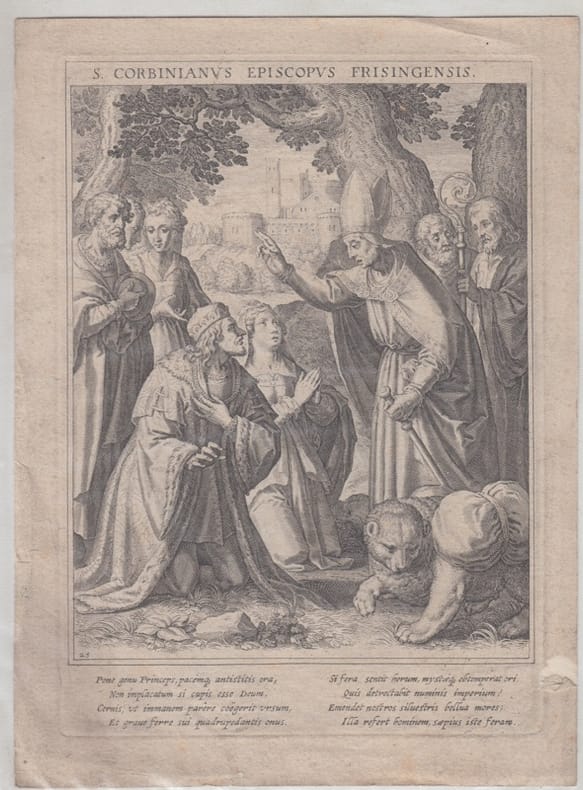
1615réf. 279631615 1615. '25. S. CORBINIANUS EPISCOPUS FRISINGENSIS.'Copperplate engraving on hand laid (verge) paper. Watermark: not visible on sheet . Sheet size: 19,5 x 27,5 cm. (7,7 x 10,8 inch). Image size: 15 x 21,5 cm. (5,9 x 8,5 inch).From 'Bavaria Sancta .', by Matthäus Rader, published in Munich. Condition: good, given age.
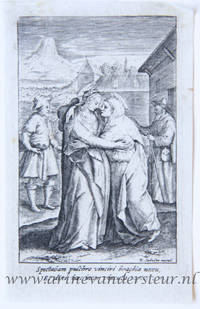
réf. 65947Tiny print representing the Biblical episode of the Visitation the pregnant Mary visiting her cousin Elizabeth also pregnant with St. John.Signed on bottom right: ""R. Sadeler excud."" with two verses of Latin text below: ""Spectabam pulchro vinciri brachia nexu / Et dixi: haec inter vincula captus ero"". Possibly designed to decorate a small book like the ""Otium Spirituale"" published in Munich in 1617 by Anna Bergia with plates by Sadeler. The closest composition to this is perhaps the Visitation by Maarten de Vos engraved by Johann Sadeler: on the Virgin's back hangs a hat and her right arm unfolds outwards to hold the shoulder of Elizabeth. The elder woman's right hand reaches around the neck of Mary. In this small impression the respective husbands of the women stand on each side of the representation whereas in de Vos' they stand both on one side. Rare. Engraving on paper with small margins; plate mark: 78 x 48 mm total: 85 x 54 mm; traces of previous mountings; undocumented in Hollstein. unknown
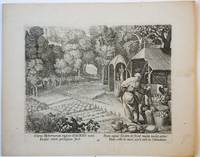
réf. 63529St Fiacrius seen from behind with a basket of vegetables in a well tended allotment; plate 18.Lettered below centre with a privilege and at right ""Raph. Sad. fe Vos fig"". and further: 'Clarus Hybernorum regione FIACRIVS horti / Exigui cultor prodigiosa facit. Dum signat fossam in fossa multa insilitabros / Dum sedet in saxo saxum abit in Cathedram.'De heilige Fiacrius Ierland rond 610- Meaux rond 670 in het Iers 'Fiachra' en in het Frans 'Fiacre' of ook 'Fèvre' genoemd verliet zijn geboorteland Ierland en werd kluizenaar in een bos nabij Meaux dat hij van de plaatselijke bisschop Faro gekregen had. Op deze plaats ontstond later een klooster. Volgens de legende werd het bos een bloemenhof toen Fiacrius de grond met zijn staf aanraakte. Fiacrius bezat ook de gave van genezing door handoplegging. Zo genas hij koorts blindheid poliepen en bovenal fistels. Engraving on paper with margins; plate mark: 165 x 207 mm total: 215 x 272 mm; small brown stain among the trees on the left; Hollstein 1068 Maarten de Vos. unknown
réf. 60451Landscape with ruins man on horse and shepherd.Signed on the bottom: 'P. Stephani inuentor'and on the right:'Raph . excud.' Engraving on paper trimmed to platemark; total: 206 x 273 mm; dirt and mold above and a lacuna on the bottom right; only state; Hollstein 221. unknown
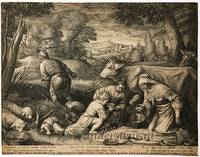
réf. 60449After a composition by Jacopo Bassano a young milkmaid is giving out milk to a child and an older lady. Sheeps and a dog on the left. In the background a landscape.Underneath six lines of Latin text: 'Multiplicem. caue.' One line :'PER HONESTI VIRI CAROLI HALEMANNI CIVIS ANDOCERPIANI LIBERALITATE TABVLAM IACOB. BASSANI ARTE ET MANV DEPICTAM RAPH. SADELER EXCVLPSIT.'Within picture on the bottom: 'Cum privil Summi Pontif. et S. Caes. Mai R. Sadeler excud 1601.' Engraving on paper trimmed within platemark; total: 228 x 296 mm; some dirt and some repaired margins along the margins; only state; Hollstein 215 W 109. unknown
réf. 219323Contentum Ltd. Loose sheet. New. High-quality art print based on an original work from the Fng. Created in the unknown century 1582. Professionally printed on premium fine-art paper Museum Etching museum quality in size A3. The artwork is printed with a white border museum-style presentation. Contentum Ltd. unknown
Bulino misure: mm 207 x 267 I Sadeler furono una numerosa famiglia di artisti fiamminghi, principalmente incisori di riproduzione, attivi in tutta Europa tra il XVI e il XVII secolo. Lo stile dei membri della famiglia che collaborarono spesso fra di loro è molto simile, per tre generazioni, spostandosi dall’Olanda all’Italia, fermandosi in Germania e a Praga, questi incisori, editori e commercianti di stampe hanno giocato un ruolo centrale nella diffusione delle immagini. Rapheael I si stabilì a Monaco nel 1588, si trasferì poi a Venezia dal 1596 fino alla morte del fratello Jean nel 1600 quando tornò a Monaco pur mantenendo interessi commerciali con Venezia. In questa stampa, tratta da un'invenzione de l pittore e incisore paesaggista fiammingo Paul Brill (Anversa 1554 - Roma 1626), vediamo un paesaggio in cui la natura è protagonista. Il primo piano è dominato da maestosi alberi con grosse radici che escono dal terreno, con fronde ricche di foglie alcune illuminate dai raggi del sole, altre in ombra. La composizione è molto ben architettata, alberi e rocce rappresentano una sorta di cortina in primo piano dalla quale si aprono due varchi a mo’ di binocolo, oltre un paesaggio pianeggiante costruito con un segno leggero e argenteo che suggerisce la profondità della scena. Sulla sinistra lo sguardo dello spettatore è attirato da tre figure, una è su un cavallo o un asino, è ben vestita e si protegge dal sole con un ombrello, gli altri due, molto probabilmente contadini, la scortano su questa strada di campagna che conduce a una città fortificata visibile sulla destra. Nel margine inferiore inferiore oltre l'immagine "Raph Sadeler excudit". Impressione eccellente. Ottimo stato di conservazione. Ampi margini oltre la battuta del rame. Filigrana: "W" Bibliografia: Hollstain 223.
Bulino misure: mm 207 x 269 I Sadeler furono una numerosa famiglia di artisti fiamminghi, principalmente incisori di riproduzione, attivi in tutta Europa tra il XVI e il XVII secolo. Lo stile dei membri della famiglia che collaborarono spesso fra di loro è molto simile, per tre generazioni, spostandosi dall’Olanda all’Italia, fermandosi in Germania e a Praga, questi incisori, editori e commercianti di stampe hanno giocato un ruolo centrale nella diffusione delle immagini. Rapheael I si stabilì a Monaco nel 1588, si trasferì poi a Venezia dal 1596 fino alla morte del fratello Jean nel 1600 quando tornò a Monaco pur mantenendo interessi commerciali con Venezia. In questa stampa, tratta da un'invenzione di Paul Bril, vengono descritte, grazie all'abile uso delle tecnica, le rovine di una città arroccata. Sembra quasi un pestaggio fantastico. Fanno da quinta teatrale, sulla destra in primo piano incisi con un segno marcato, una roccia occupata da un grosso tronco con rami ormai quasi privi di foglie e collegata tramite un ponte ad un’abitazione in pietra. Appena oltre una scena di vita comune, dei pastori con il loro bestiame si stanno dirigendo alle rovine di una città costruita sopra un monte che occupa la parte centrale della scena in secondo piano. Sulla cima del monte le rovine di un tempietto circolare. E ancora, un dolce degradare di colline e case si apre verso l’infinito. L'artista fa molta attenzione a descrivere alcuni particolari come un uccellino sul ramo, il fumo che esce dal camino della casa sullo sfondo e il cielo carico di nubi. Nel margine inferiore, inciso oltre l'immagine "Paulus Bril inventor” e "Raph Sadeler excudit". Impressione eccellente. Ottimo stato di conservazione. Ampi margini oltre la battuta del rame. Nel margine superiore destro numero 9 a penna, in grafia antica. Filigrana: "W" e un stemma araldico. Bibliografia: Hollstain 218.
2026réf. LRB9005754Paris: Editions Recreasoft 2026 Idioma: Español. Aproximadamente 744 páginas. Español : Reimpresión bajo demanda. Edición original : 1640. Obra emblemática mayor de la literatura política del Siglo de Oro español articulada en cien empresas grabadas y acompañada de comentarios de Diego de Saavedra Fajardo. El conjunto asocia reflexión moral arte de gobernar y simbolismo visual en una composición erudita y ambiciosa muy buscada por su importancia en la historia de la emblemática del pensamiento político y del grabado barroco. Imágenes del libro no contractuales English : Print-on-demand reprint. Original edition : 1640. Major emblematic work of the political literature of the Spanish Golden Age structured in one hundred engraved emblems and accompanied by comments by Diego de Saavedra Fajardo. The whole combines moral reflection the art of government and visual symbolism in a learned and ambitious composition highly sought after for its importance in the history of emblem literature political thought and Baroque engraving. Book images are non-contractual. Editions Recreasoft. Softcover. New. Editions Recreasoft paperback
réf. 5254D'après Martin de Vos. Belle épreuve mais coupée au trait carré. vers 1583 20,5 x 25,5 cm.
1966réf. 130244Bergamo, Istituto Italiano d’Arti Grafiche, coll. « Monumenta Bergomensia », n° XVIII 1966 In-folio à l’italienne 29,5 x 38,5 cm. Reliure éditeur cartonnée ivoire, report du titre sur le dos et le premier plat de couverture, 24 pp., 35 figures dans le texte, 143 planches avec légendes commentées en regard, bibliographie, index. Exemplaire en bon état.
réf. 89287Paris, Librairie Larousse, 1979. 11 x 17, 159 pp., broché, bon état (couverture légèrement défraîchie).
1592réf. 6604D’après Renaldi Mytens 1592 18,5 x 12,5