2116 risultati
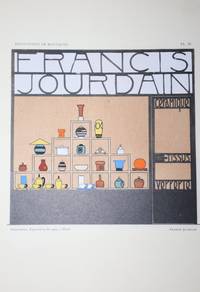
1927rif. 007641Paris: Éditions Albert Lévy 1927. First edition. Portfolio. Ribbon tie. Paper pastedown on boards. Very Good Plus. Beautiful folio of Parisian shop windows epitomizing the pinnacle of Art Deco design. Folio 33 by 26 cm. 12 pp. including introduction and table of contents followed by 48 plates of Parisian shop windows from the 1920s each on a heavy card stock. 24 of the 48 plates are pochoir color plates executed by the great master of the pochoir print Jean Saudé. The shops depicted are of a wide variety: perfumeries furriers jewelers furniture stores ceramic or china stores hatters hair salons etc. With each the designers is credited. The folio was intended to make the case for modern design and one can not deny it succeeded magnificently. Condition: The cloth on the spine is torn the entire length both front and rear joint with fraying and the board beneath revealed. The top of the spine also has layers of lower cardboard meant to be hidden now exposed and fanning slightly outward. Light soiling of the paper pastedown on the portfolio boards but much of this can be erased if one applies oneself. Plates are generally clean and bright. Éditions Albert Lévy unknown books
1856rif. 640978J. B. Lippincott and Co 1856. First Edition. Leather Binding. Very Good. First Edition. 7.25 x 10.5 in. 298pp. with 50 lithographic plates printed and colored by J.T. Bowen some finished by hand after drawings by George G. White and drawings on stone by William E Hitchcock complete and all accounted for Rebound in 3/4 brown calf over brown cloth spine with dark brown leather label gilt ruling and date at foot. A Very Good copy text has some foxing and dampstain to lower margin of text which has the very faintest visibility to lower margins of some plates not affecting images. // One of the cornerstones of American ornithological literature first issued in 10 parts with the preface contents and index appearing in this first full edition of 1856. As set forth in the preface the work was 'to be regarded in some measure as an addition to the works of former authors in American Ornithology but at the same time complete in itself.' Cassin especially sought to describe birds not known to Audubon. Sabin 11369; Sitwell p 85; Wood p 281; Zimmer p 124. J. B. Lippincott and Co unknown
rif. 3086Angers: Editions Jacques-Petit 1945. WITH ONE OF KIYOSHI HASEGAWA'S MOST IMPORTANT PRINTS. 12 pp. plus 6 loose engravings. A monograph on engraving followed by short biographies of each of the six artists accompanied by a suite of six large engravings one each by Cami Cottet Decaris Jeannisson Hasegawa and Lemagny. From a total edition of 320 copies all printed on fine Marais wove paper. Hasegawa's engraving "Anemones et fleurs de champs dans un verre a facettes" Kyoto 368 also known as "Bouquet sur fond de dentelle" is considered one of his masterpieces. Folio 38 x 28 cm. Loose as issued. Missing title-page and justification but with complete text and all prints. The Cami and Jeannisson prints have a bit of mat burn on the recto and the Lemagny a bit on the verso. The other three prints including the Hasegawa are FINE AND BRIGHT. Angers: Editions Jacques-Petit, 1945 unknown
1962rif. 39231Paris: Editions d'Auteuil 1962. André Dunoyer de Segonzac. A superlative pristine and complete copy on Imperial Japanese paper with fifteen original etchings and AN ORIGINAL DRAWING OF BILL TILDEN BY ANDRE DUNOYER DE SEGONZAC. From a total edition of 225 numbered copies this is ONE OF ONLY 27 COPIES tête on Imperial Japanese paper with 15 etchings by Dunoyer de Segonzac and 50 wood-engravings by Jacques Beltrand after Dunoyer de Segonzac; a second suite of the 15 etchings printed on antique Japanese paper; a suite of the 10 planches refusées on another kind of antique Japanese paper; a suite of the 50 wood-engravings on fine Rives wove paper; and another suite of the 50 wood-engravings before champlevage. This copy exceptionally includes AN ORIGINAL INDIA INK DRAWING OF BILL TILDEN generally rgarded as the greatest tennis player of the first half of the 20th century TITLED AND SIGNED BY ANDRÉ DUNOYER DE SEGONZAC. Folio. Loose as issued in original wraps two chemises and slipcase. FINE AND BRIGHT WITH NO DEFECTS. It is safe to say that depictions of American sports heroes by great artists of the School of Paris are of the greatest rarity. Editions d'Auteuil paperback
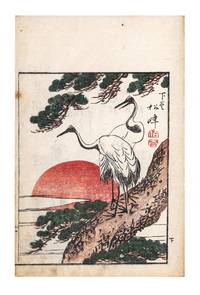
rif. 11581Title in Vol. 1 & frontis. in Vol. 2 printed in color. 55 double-page woodcut illus. 29.5; 29.5 folding leaves. Two vols. 8vo orig. semi-stiff wrappers title-slips new stitching. Osaka Edo & Kyoto: Yamatoya ShirÅsaburÅ 大和屋四郎三郎 et al. 1823. First edition of this beautifully illustrated guide to making ehon 画本 or picture books. It is rare especially outside Japan and no copy is found in WorldCat. The work opens onto early modern printing culture book distribution and the popular pleasures of reading and consumption. As its title suggests it is a handbook tebiki 手引ã for producing ehon 画本 or "picture books." Ehon covers any book in which illustration plays an important role from fine-art portfolios to illustrated fiction poetry collections travel guides and popular books such as kusazÅshi. Together with the rise of commerce and urban life and a popular fervor for pleasure reading ehon became one of the most influential forms of printed content. The illustrations are alive with humor. The subjects include cheeky scenes of everyday life "behind the scenes" bribery between merchants and politicians armies sojourning across the countryside and festivals. There are also fictional scenes from the classics such as the sage conversing with fish for wisdom along with depictions of nature the changing seasons and personified animals such as traveling frogs. Housewives blacksmiths and Edo contractors are shown at their crafts. Each page carries a short prose text some in the lyrical structure of tanka. The result is an invitation into the imaginative world of early modern Japan carefully portrayed to highlight its essence. The illustrators are of particular interest. The first volume was illustrated by Niwa TÅkei 1760-1822 a prolific Osaka-based painter whose artistic range extended from landscape and refined painting to comic and satirical drawings. He died in the winter of 1822 and his pupil Suga ShÅhÅ 1790-1851 completed the second volume. On the colophon leaf in the second volume we learn the name of the carver: JuryÅken 壽良軒. Very good copy. Unimportant mostly marginal worming carefully repaired. unknown
rif. 11581Title in Vol. 1 & frontis. in Vol. 2 printed in color. 55 double-page woodcut illus. 29.5; 29.5 folding leaves. Two vols. 8vo orig. semi-stiff wrappers title-slips new stitching. Osaka Edo & Kyoto: Yamatoya ShirÅsaburÅ 大和屋四郎三郎 et al. 1823. First edition of this beautifully illustrated guide to making ehon 画本 or picture books. It is rare especially outside Japan and no copy is found in WorldCat. The work opens onto early modern printing culture book distribution and the popular pleasures of reading and consumption. As its title suggests it is a handbook tebiki 手引ã for producing ehon 画本 or "picture books." Ehon covers any book in which illustration plays an important role from fine-art portfolios to illustrated fiction poetry collections travel guides and popular books such as kusazÅshi. Together with the rise of commerce and urban life and a popular fervor for pleasure reading ehon became one of the most influential forms of printed content. The illustrations are alive with humor. The subjects include cheeky scenes of everyday life "behind the scenes" bribery between merchants and politicians armies sojourning across the countryside and festivals. There are also fictional scenes from the classics such as the sage conversing with fish for wisdom along with depictions of nature the changing seasons and personified animals such as traveling frogs. Housewives blacksmiths and Edo contractors are shown at their crafts. Each page carries a short prose text some in the lyrical structure of tanka. The result is an invitation into the imaginative world of early modern Japan carefully portrayed to highlight its essence. The illustrators are of particular interest. The first volume was illustrated by Niwa TÅkei 1760-1822 a prolific Osaka-based painter whose artistic range extended from landscape and refined painting to comic and satirical drawings. He died in the winter of 1822 and his pupil Suga ShÅhÅ 1790-1851 completed the second volume. On the colophon leaf in the second volume we learn the name of the carver: JuryÅken 壽良軒. Very good copy. Unimportant mostly marginal worming carefully repaired. unknown books
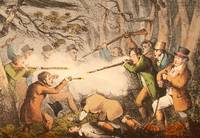
rif. 06228London: Printed by W. Lewis. for Thomas McLean 1822. First and only edition of a rare and valuable magazine" Schwerdt ALKEN Henry and BARENGER James illustrators. The Sporting Repository containing Horse-Racing Hunting Coursing Shooting Archery Trotting and Tandem Matches Cocking Pedestrianism and Pugilism. anecdotes on sporting subjects interspersed with essays tales and a great variety of miscellaneous articles. London: Printed by W. Lewis. for Thomas McLean 15 January-15 June 1822. First and only edition. Octavo 9 1/8 x 5 3/4 inches; 233 x 146 mm. viii 1-80; 81-176; 177-268; 269-356; 357-448; 449-540 pp. Hand-colored aquatint frontispiece and eighteen hand-colored aquatint plates after H. Alken and J. Barenger engraved by G. and T. Hunt. All plates with tissue guards. Handsomely bound by Rivière & Son ca. 1920. Full red morocco covers decoratively ruled in gilt spine with five raised bands elaborately tooled and lettered in gilt gilt board edges & turn-ins dark green silk liners and endleaves all edges gilt. A spectacular example the hand-colored plates bright and fresh. Loosely inserted at end are the original front and rear wrappers for part II "15th of February 1822". This publication stands out for its vivid illustrations some of the finest sporting aquatints of the period and for its documentation of early 19th-century British sporting culture. Though it was planned as a continuing series only six monthly parts were published making complete sets rare. Published in six monthly parts from January to June this is the "First and only edition of a rare and valuable magazine." Schwerdt. The Sporting Repository contains anecdotes and illustrations on many sporting subjects including 'Horse Racing Hunting Coursing Shooting Archery Trotting and Tandem Matches Cocking Pedestrianism and Pugilism'. This 'rare and valuable magazine' is an unashamed celebration of popular sports and a mine of interesting information. Mellon/Podeschi A13. Schwerdt II p. 212. Tooley 467. London: Printed by W. Lewis... for Thomas McLean, 1822 unknown
rif. 06228London: Printed by W. Lewis. for Thomas McLean 1822. First and only edition of a rare and valuable magazine" Schwerdt ALKEN Henry and BARENGER James illustrators. The Sporting Repository containing Horse-Racing Hunting Coursing Shooting Archery Trotting and Tandem Matches Cocking Pedestrianism and Pugilism. anecdotes on sporting subjects interspersed with essays tales and a great variety of miscellaneous articles. London: Printed by W. Lewis. for Thomas McLean 15 January-15 June 1822. First and only edition. Octavo 9 1/8 x 5 3/4 inches; 233 x 146 mm. viii 1-80; 81-176; 177-268; 269-356; 357-448; 449-540 pp. Hand-colored aquatint frontispiece and eighteen hand-colored aquatint plates after H. Alken and J. Barenger engraved by G. and T. Hunt. All plates with tissue guards. Handsomely bound by Rivière & Son ca. 1920. Full red morocco covers decoratively ruled in gilt spine with five raised bands elaborately tooled and lettered in gilt gilt board edges & turn-ins dark green silk liners and endleaves all edges gilt. A spectacular example the hand-colored plates bright and fresh. Loosely inserted at end are the original front and rear wrappers for part II "15th of February 1822". This publication stands out for its vivid illustrations some of the finest sporting aquatints of the period and for its documentation of early 19th-century British sporting culture. Though it was planned as a continuing series only six monthly parts were published making complete sets rare. Published in six monthly parts from January to June this is the "First and only edition of a rare and valuable magazine." Schwerdt. The Sporting Repository contains anecdotes and illustrations on many sporting subjects including 'Horse Racing Hunting Coursing Shooting Archery Trotting and Tandem Matches Cocking Pedestrianism and Pugilism'. This 'rare and valuable magazine' is an unashamed celebration of popular sports and a mine of interesting information. Mellon/Podeschi A13. Schwerdt II p. 212. Tooley 467. London: Printed by W. Lewis... for Thomas McLean, 1822 unknown books
1821rif. 003813London: R. Ackermann 1821. First edition. Contemporary Full Morocco. Very Good. 4to. 34 by 29 cm. vi 2 286 pp. Hand-colored title vignette and 48 hand-colored engraved plates. The plates capture the poetic beauty of the legendary lake region exquisitely. TEG. Moderate rubbing to contemporary red morocco along edges faint dampstain markings and a few other scuffs and other indicia of wear but still a very handsome binding. Dampstaining to the edges of the endpapers. Foxing of a few early leaves as well as the final ones. Faint dampstaining affecting the margins of perhaps a dozen plates and also visible in the fore-edge when the pages are fanned. However most leaves are clean and the plates themselves come off generally as quite fresh and vibrant. R. Ackermann unknown
1821rif. 003813London: R. Ackermann 1821. First edition. Contemporary Full Morocco. Very Good. 4to. 34 by 29 cm. vi 2 286 pp. Hand-colored title vignette and 48 hand-colored engraved plates. The plates capture the poetic beauty of the legendary lake region exquisitely. TEG. Moderate rubbing to contemporary red morocco along edges faint dampstain markings and a few other scuffs and other indicia of wear but still a very handsome binding. Dampstaining to the edges of the endpapers. Foxing of a few early leaves as well as the final ones. Faint dampstaining affecting the margins of perhaps a dozen plates and also visible in the fore-edge when the pages are fanned. However most leaves are clean and the plates themselves come off generally as quite fresh and vibrant. R. Ackermann unknown books
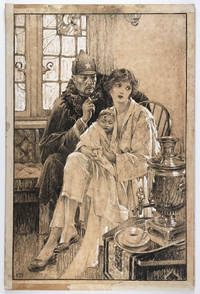
rif. 5233New York 1920s. 6 illustrations in ink wash and gouache 39 x 37.5 cm to 41 x 62.5 cm plus margins; 3 signed "Von"; 1 signed "Harold von Schmidt"; 1 signed "C.P.C."; 1 signed "John W. Thomason Jr." Some ms. production notes captions etc. on versos and rectos some indicating the pages and sections of the serialized novel to which the illustrations relate. 1 small reproduction of a larger illus. pasted on its recto 7.5 x 10.5 cm. Six original illustrations for Liberty magazine's serialized publication of the novel The Red Napoleon 1929 an early fictional account of a full-scale Soviet invasion and attempted conquest of the world. The acclaimed war correspondent journalist and novelist Floyd Gibbons 1887-1939 first published The Red Napoleon in Liberty magazine which commissioned Harold von Schmidt 1893-1982 among others to illustrate the serialized publication. The first installment appeared in Liberty on 6 April 1929. In The Red Napoleon the Red Army attempts to usher in a world of racial equality and usurp the supremacy of the white race. Novelist John Gardner 1933-1982 has described The Red Napoleon as an "ironic satire of capitalist America's greed and foolhardy racism": What Gibbons is saying from behind the fortress-wall of his trash-writer gimmicks is serious and convincing: white superiority on this planet is finished and worse if we refuse to meet the Third World halfway-refuse to shuck off the racial prejudice that has been a standard feature of our character from the beginning-we face virtual extermination . Gibbons found himself in a curious position .Everything he believed most profoundly-and believed to be a matter of life and death-would be anathema to his readers. Not only would the vast majority of his readership find his visionary slogan ridiculous-"We recognize but one race-the HUMAN RACE"-they would find it grossly evil. Gibbons' novel centers on Karakhan of Kazan-the 'Red Napoleon'-who serves as chief military commander of the USSR under Stalin until the dictator is assassinated in 1932. In turn Karakhan becomes the new Soviet leader and uses his military influence to take control of the country-and then proceeds to attempt to conquer the world. Karakhan espouses a policy of "Conquer and Breed." Believing the antidote to Caucasian hegemony to be miscegenation Karakhan marries and has a child with an American radical leftist. Gibbons writes on p. 1: "Karakhan's defiant pride in his coloured skin struggling against an instinctive inferiority complex originating from impacts with white dominance fired him with the ambition to fuse all races-white yellow black brown and red-into one human race the only one he acknowledged." Before the novel's dramatic climax in which Karakhan's army is defeated by American forces the Red Army ravages Europe-slaying Mussolini preempting Hitler's rise bringing Winston Churchill and Britain to their knees etc.-and conquers Australia where he massacres six million whites. The most remarkable of the six illustrations offered here initialed at the lower left "C.P.C." depicts a domestic scene showing Karakhan smoking a cigarette and gazing at his white wife who holds their mixed-race offspring in her arms. A caption appears on the verso-"He's gone completely crazy on the idea of having children with white women." The most notable illustration by von Schmidt features a menacing Soviet perhaps Karakhan again wearing an ushanka hat and fur with binoculars hanging around his neck. This too has a caption on the verso: "Short cut black hair that fitted his head like a skull cap. His thin body high shoulders yellow face close cropped head." Two other illustrations show the Soviet Army marching past a pagoda in Peking and through a Mexican village. In the latter a slain Mexican lies in the streets amidst the Red Army and vanquished local Mexicans. Vultures perch and hover above and in the background a Soviet flag hangs from a building. This particular illustration is by John W. Thomason Jr. 1893-1944 an author and illustrator of several books and magazine stories who served as a lieutenant colonel in the U.S. Marine Corps. At the novel's end the narrator-a journalist who resembles Gibbons himself- interviews the imprisoned Red Napoleon after the Red Army's defeat. Karakhan defends his policy of intermixing the world's races to the journalist claiming it must be the way of the future-which has become true in the novel: white people now face a thoroughly miscegenated world. Karakhan is punished by being sent to exile not in Siberia but Bermuda. Von Schmidt's illustrations also appeared in magazines such as Collier's Weekly Cosmopolitan and Saturday Evening Post; he would also contribute sixty illustrations for a deluxe edition of Willa Cather's Death Comes for the Archbishop. A striking group of illustrations for the serial publication of Red Napoleon. REFERENCES: Gallicchio Marc. The African American Encounter with Japan and China Chapel Hill North Carolina: University of North Carolina Press 2000 Chapter 2; Gibbons Floyd. The Red Napoleon New York: Grosset & Dunlap 1929; Harold von Schmidt at illustrationhistory.org. CONDITION: Moderate damp-staining along edges of 2 of the less appealing illustrations; the 4 other illustrations very good with minor wear. [New York, 1920s.] unknown
rif. 5233New York 1920s. 6 illustrations in ink wash and gouache 39 x 37.5 cm to 41 x 62.5 cm plus margins; 3 signed "Von"; 1 signed "Harold von Schmidt"; 1 signed "C.P.C."; 1 signed "John W. Thomason Jr." Some ms. production notes captions etc. on versos and rectos some indicating the pages and sections of the serialized novel to which the illustrations relate. 1 small reproduction of a larger illus. pasted on its recto 7.5 x 10.5 cm. Six original illustrations for Liberty magazine's serialized publication of the novel The Red Napoleon 1929 an early fictional account of a full-scale Soviet invasion and attempted conquest of the world. The acclaimed war correspondent journalist and novelist Floyd Gibbons 1887-1939 first published The Red Napoleon in Liberty magazine which commissioned Harold von Schmidt 1893-1982 among others to illustrate the serialized publication. The first installment appeared in Liberty on 6 April 1929. In The Red Napoleon the Red Army attempts to usher in a world of racial equality and usurp the supremacy of the white race. Novelist John Gardner 1933-1982 has described The Red Napoleon as an "ironic satire of capitalist America's greed and foolhardy racism": What Gibbons is saying from behind the fortress-wall of his trash-writer gimmicks is serious and convincing: white superiority on this planet is finished and worse if we refuse to meet the Third World halfway-refuse to shuck off the racial prejudice that has been a standard feature of our character from the beginning-we face virtual extermination . Gibbons found himself in a curious position .Everything he believed most profoundly-and believed to be a matter of life and death-would be anathema to his readers. Not only would the vast majority of his readership find his visionary slogan ridiculous-"We recognize but one race-the HUMAN RACE"-they would find it grossly evil. Gibbons' novel centers on Karakhan of Kazan-the 'Red Napoleon'-who serves as chief military commander of the USSR under Stalin until the dictator is assassinated in 1932. In turn Karakhan becomes the new Soviet leader and uses his military influence to take control of the country-and then proceeds to attempt to conquer the world. Karakhan espouses a policy of "Conquer and Breed." Believing the antidote to Caucasian hegemony to be miscegenation Karakhan marries and has a child with an American radical leftist. Gibbons writes on p. 1: "Karakhan's defiant pride in his coloured skin struggling against an instinctive inferiority complex originating from impacts with white dominance fired him with the ambition to fuse all races-white yellow black brown and red-into one human race the only one he acknowledged." Before the novel's dramatic climax in which Karakhan's army is defeated by American forces the Red Army ravages Europe-slaying Mussolini preempting Hitler's rise bringing Winston Churchill and Britain to their knees etc.-and conquers Australia where he massacres six million whites. The most remarkable of the six illustrations offered here initialed at the lower left "C.P.C." depicts a domestic scene showing Karakhan smoking a cigarette and gazing at his white wife who holds their mixed-race offspring in her arms. A caption appears on the verso-"He's gone completely crazy on the idea of having children with white women." The most notable illustration by von Schmidt features a menacing Soviet perhaps Karakhan again wearing an ushanka hat and fur with binoculars hanging around his neck. This too has a caption on the verso: "Short cut black hair that fitted his head like a skull cap. His thin body high shoulders yellow face close cropped head." Two other illustrations show the Soviet Army marching past a pagoda in Peking and through a Mexican village. In the latter a slain Mexican lies in the streets amidst the Red Army and vanquished local Mexicans. Vultures perch and hover above and in the background a Soviet flag hangs from a building. This particular illustration is by John W. Thomason Jr. 1893-1944 an author and illustrator of several books and magazine stories who served as a lieutenant colonel in the U.S. Marine Corps. At the novel's end the narrator-a journalist who resembles Gibbons himself- interviews the imprisoned Red Napoleon after the Red Army's defeat. Karakhan defends his policy of intermixing the world's races to the journalist claiming it must be the way of the future-which has become true in the novel: white people now face a thoroughly miscegenated world. Karakhan is punished by being sent to exile not in Siberia but Bermuda. Von Schmidt's illustrations also appeared in magazines such as Collier's Weekly Cosmopolitan and Saturday Evening Post; he would also contribute sixty illustrations for a deluxe edition of Willa Cather's Death Comes for the Archbishop. A striking group of illustrations for the serial publication of Red Napoleon. REFERENCES: Gallicchio Marc. The African American Encounter with Japan and China Chapel Hill North Carolina: University of North Carolina Press 2000 Chapter 2; Gibbons Floyd. The Red Napoleon New York: Grosset & Dunlap 1929; Harold von Schmidt at illustrationhistory.org. CONDITION: Moderate damp-staining along edges of 2 of the less appealing illustrations; the 4 other illustrations very good with minor wear. [New York, 1920s.] unknown books
rif. 75101Boson MA and New York NY: The C.T. Brainard Publishing Co. 1909. Literature LEATHER-BOUND ILLUSTRATED SET Edition De Luxe. Complete in 15 volumes. Octavo 20 x 13 x 56cm. Each volume with between three and seven black and white illustrated plates including a frontispiece by various illustrators. An out-of-series copy from an edition of 1000 numbered copies. Recently bound in blue half morocco with raised bands gilt titles to twin red labels and matching cloth over boards. Top edges gilt and others lightly trimmed. A crisp clean set in an attractive new leather binding. Boson, MA, and New York, NY: The C.T. Brainard Publishing Co., 1909 unknown
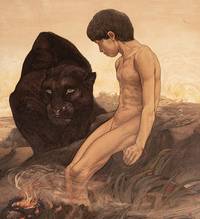
rif. 06188London: Macmillan & Co. Limited 1903. Beauty That Hath Terror in It" The Detmold Brothers' Sublime and Unsettling Vision of The Jungle Book The Magnificent Original 1903 Folio Portfolio with Sixteen Superb Color Plates KIPLING Rudyard. DETMOLD Maurice & Edward J. illustrators. Sixteen Illustrations of Subjects from Kipling's "Jungle Book" by Messrs. Maurice & Edward Detmold. London: Macmillan & Co. Limited 1903. First edition. Reportedly limited to 500 copies for England and America. Folio 21 3/8 x 15 1/2 inches; 543 x 394 mm. Title-page contents leaf and sixteen magnificent color plates tipped onto white boards within gray window mounts each accompanied by a protective cover sheet bearing the title and a short extract from Kipling's text. Title-page and list of illustrations expertly repaired at folds; second plate description with short marginal tear; some light foxing to text leaves and mounts only. The plates themselves are remarkably clean fresh and beautifully preserved. Original publisher's green cloth portfolio front cover decoratively stamped and lettered in gilt retaining one of the two original green silk ties. An excellent example of one of the most magnificent and celebrated achievements of Edwardian book illustration exceptionally scarce complete with all sixteen plates. Published in 1903 when the extraordinary twin brothers Maurice and Edward Julius Detmold were just twenty years old this monumental portfolio represents the culmination of their artistic collaboration and one of the finest visual interpretations of Rudyard Kipling's The Jungle Book ever produced. The sixteen superb compositions reveal an astonishing maturity of conception and execution. Combining meticulous natural history observation with an intensely personal decorative imagination the Detmolds created a world at once beautiful mysterious and faintly menacing in which the distinction between the natural and the supernatural seems perpetually uncertain. Animals are rendered with extraordinary anatomical precision their musculature fur scales and movement observed with almost scientific exactitude. Yet these are far more than zoological studies. Wolves possess an almost monumental dignity; panthers move with a sinister effortless grace; serpents coil with hypnotic inevitability; and the great tiger Shere Khan emerges as an embodiment of majestic and terrifying power. The brothers' remarkable understanding of animal character is matched by their sensitivity to atmosphere and composition. Their creatures appear not merely as participants in Kipling's narratives but as independent beings endowed with intelligence memory and an almost human consciousness. Particularly striking are the representations of Mowgli whose slender youthful figure is repeatedly contrasted with the formidable creatures surrounding him. His vulnerability is balanced by a quiet assurance suggesting his extraordinary position between the human and animal worlds. The Detmolds avoid the sentimentality often associated with illustrations of childhood instead emphasizing Mowgli's intimate identification with the jungle and its inhabitants. In the celebrated scenes depicting Bagheera Baloo Akela and the Monkey People the artists achieve an extraordinary balance between narrative drama and decorative design. The Monkey People particularly in their ruined architectural surroundings are among the most unsettling creations in the series their restless gestures and grotesque attitudes suggesting a strange parody of human society. Equally remarkable is the brothers' use of color. Their sumptuous yet carefully controlled palette of burnished browns smoky grays subdued greens and golden ochres lends the compositions an almost dreamlike quality. Subtle gradations of tone together with intricate patterns of foliage fur and stone produce a richness and unity of design seldom equaled in contemporary illustration. The original large-format plates possess a depth delicacy and painterly quality that cannot be fully appreciated in the considerably reduced reproductions of the later book edition of 1908. Presented individually within their original window mounts they have the presence and visual authority of original watercolors. Indeed so successful were these images as independent works of art that many portfolios were subsequently broken up their individual plates removed for framing. The survival of a complete portfolio particularly one retaining its original publisher's cloth case and with the plates in such fresh condition is consequently especially desirable. The contemporary critical reception was enthusiastic. Reviewing the London exhibition of the original paintings the Manchester Guardian of November 5 1903 declared that the brothers: "are able to prevent their work from ever sinking to the level of mere illustration". The reviewer particularly admired the depiction of the Monkey People in the Cold Lairs describing it as: "full of character subtle observation and invention". Of the representation of Bagheera in Mowgli and the Red Flower the reviewer memorably observed that it possessed: "something of that beauty which hath terror in it". The same review praised the convincing and engaging portrayals of Baloo Nag Kaa and Akela recognizing in the Detmolds' work an extraordinary fusion of imaginative invention and naturalistic observation. A report published in the New York Times on December 5 1903 stated that the edition was strictly limited to 500 copies for England and America emphasizing the exclusivity of this magnificent production from the outset. The portfolio is particularly significant in the history of the Detmold brothers' careers. Born in 1883 Maurice and Edward developed their exceptional artistic talents together displaying an early and remarkable aptitude for the representation of birds animals and the natural world. Their close collaboration produced some of the most distinctive illustrated publications of the opening years of the twentieth century. Tragically Maurice took his own life in 1908 bringing their artistic partnership to a premature end. Edward continued to enjoy a distinguished career as an illustrator but the works produced jointly by the brothers retain a unique place in the history of British illustration. As Richard Dalby observed the paintings were admired for their realistic detail and decorative arrangement while Diana Johnson identified the extraordinary tension between their scientific naturalism and ornamental imagination a combination capable of producing images both fanciful and profoundly disturbing. A masterpiece of the Golden Age of Illustration this spectacular portfolio stands among the finest achievements of the Detmold brothers and one of the most beautiful and psychologically compelling interpretations of Kipling's immortal jungle stories. Complete examples of the original 1903 folio portfolio are increasingly difficult to obtain and the present copy with all sixteen plates clean and fresh and preserved in its original gilt-decorated publisher's portfolio is an especially attractive survival. London: Macmillan & Co., Limited, 1903 unknown
rif. 06188London: Macmillan & Co. Limited 1903. Beauty That Hath Terror in It" The Detmold Brothers' Sublime and Unsettling Vision of The Jungle Book The Magnificent Original 1903 Folio Portfolio with Sixteen Superb Color Plates KIPLING Rudyard. DETMOLD Maurice & Edward J. illustrators. Sixteen Illustrations of Subjects from Kipling's "Jungle Book" by Messrs. Maurice & Edward Detmold. London: Macmillan & Co. Limited 1903. First edition. Reportedly limited to 500 copies for England and America. Folio 21 3/8 x 15 1/2 inches; 543 x 394 mm. Title-page contents leaf and sixteen magnificent color plates tipped onto white boards within gray window mounts each accompanied by a protective cover sheet bearing the title and a short extract from Kipling's text. Title-page and list of illustrations expertly repaired at folds; second plate description with short marginal tear; some light foxing to text leaves and mounts only. The plates themselves are remarkably clean fresh and beautifully preserved. Original publisher's green cloth portfolio front cover decoratively stamped and lettered in gilt retaining one of the two original green silk ties. An excellent example of one of the most magnificent and celebrated achievements of Edwardian book illustration exceptionally scarce complete with all sixteen plates. Published in 1903 when the extraordinary twin brothers Maurice and Edward Julius Detmold were just twenty years old this monumental portfolio represents the culmination of their artistic collaboration and one of the finest visual interpretations of Rudyard Kipling's The Jungle Book ever produced. The sixteen superb compositions reveal an astonishing maturity of conception and execution. Combining meticulous natural history observation with an intensely personal decorative imagination the Detmolds created a world at once beautiful mysterious and faintly menacing in which the distinction between the natural and the supernatural seems perpetually uncertain. Animals are rendered with extraordinary anatomical precision their musculature fur scales and movement observed with almost scientific exactitude. Yet these are far more than zoological studies. Wolves possess an almost monumental dignity; panthers move with a sinister effortless grace; serpents coil with hypnotic inevitability; and the great tiger Shere Khan emerges as an embodiment of majestic and terrifying power. The brothers' remarkable understanding of animal character is matched by their sensitivity to atmosphere and composition. Their creatures appear not merely as participants in Kipling's narratives but as independent beings endowed with intelligence memory and an almost human consciousness. Particularly striking are the representations of Mowgli whose slender youthful figure is repeatedly contrasted with the formidable creatures surrounding him. His vulnerability is balanced by a quiet assurance suggesting his extraordinary position between the human and animal worlds. The Detmolds avoid the sentimentality often associated with illustrations of childhood instead emphasizing Mowgli's intimate identification with the jungle and its inhabitants. In the celebrated scenes depicting Bagheera Baloo Akela and the Monkey People the artists achieve an extraordinary balance between narrative drama and decorative design. The Monkey People particularly in their ruined architectural surroundings are among the most unsettling creations in the series their restless gestures and grotesque attitudes suggesting a strange parody of human society. Equally remarkable is the brothers' use of color. Their sumptuous yet carefully controlled palette of burnished browns smoky grays subdued greens and golden ochres lends the compositions an almost dreamlike quality. Subtle gradations of tone together with intricate patterns of foliage fur and stone produce a richness and unity of design seldom equaled in contemporary illustration. The original large-format plates possess a depth delicacy and painterly quality that cannot be fully appreciated in the considerably reduced reproductions of the later book edition of 1908. Presented individually within their original window mounts they have the presence and visual authority of original watercolors. Indeed so successful were these images as independent works of art that many portfolios were subsequently broken up their individual plates removed for framing. The survival of a complete portfolio particularly one retaining its original publisher's cloth case and with the plates in such fresh condition is consequently especially desirable. The contemporary critical reception was enthusiastic. Reviewing the London exhibition of the original paintings the Manchester Guardian of November 5 1903 declared that the brothers: "are able to prevent their work from ever sinking to the level of mere illustration". The reviewer particularly admired the depiction of the Monkey People in the Cold Lairs describing it as: "full of character subtle observation and invention". Of the representation of Bagheera in Mowgli and the Red Flower the reviewer memorably observed that it possessed: "something of that beauty which hath terror in it". The same review praised the convincing and engaging portrayals of Baloo Nag Kaa and Akela recognizing in the Detmolds' work an extraordinary fusion of imaginative invention and naturalistic observation. A report published in the New York Times on December 5 1903 stated that the edition was strictly limited to 500 copies for England and America emphasizing the exclusivity of this magnificent production from the outset. The portfolio is particularly significant in the history of the Detmold brothers' careers. Born in 1883 Maurice and Edward developed their exceptional artistic talents together displaying an early and remarkable aptitude for the representation of birds animals and the natural world. Their close collaboration produced some of the most distinctive illustrated publications of the opening years of the twentieth century. Tragically Maurice took his own life in 1908 bringing their artistic partnership to a premature end. Edward continued to enjoy a distinguished career as an illustrator but the works produced jointly by the brothers retain a unique place in the history of British illustration. As Richard Dalby observed the paintings were admired for their realistic detail and decorative arrangement while Diana Johnson identified the extraordinary tension between their scientific naturalism and ornamental imagination a combination capable of producing images both fanciful and profoundly disturbing. A masterpiece of the Golden Age of Illustration this spectacular portfolio stands among the finest achievements of the Detmold brothers and one of the most beautiful and psychologically compelling interpretations of Kipling's immortal jungle stories. Complete examples of the original 1903 folio portfolio are increasingly difficult to obtain and the present copy with all sixteen plates clean and fresh and preserved in its original gilt-decorated publisher's portfolio is an especially attractive survival. London: Macmillan & Co., Limited, 1903 unknown books
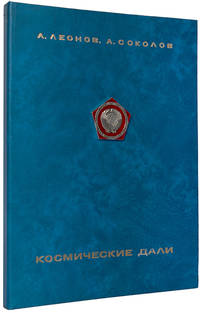
rif. 114998Moscow Izobrazitel'noe iskusstvo 1972. . First edition presentation copy signed by A. Sokolov on the verso of the upper portfolio board folio 38 x 28.5 cm; complete with 34 plates of which 16 are double page each with descriptive text on the verso 36pp. of text by Denisov and Alimov in a separate booklet also with an introduction by Yuriy Gagarin; housed together in the original blue leatherette portfolio enamel and metal USSR medallion to upper cover and title in silver a very good copy. Inscribed presentation copy of the first edition. Presentation copy of the first edition inscribed by the space fantasy artist Andrei Sokolov to Fuad Borisovich Yakubovskiy Soviet minister for 'special construction projects'. A striking portfolio of Soviet space art with thirty four plates depicting imaginary spacewalks satellite constructions curious spacecraft dreamy constellations and unexplored planets and moons. One of the artists A. Leonov was the pioneering cosmonaut who made the first spacewalk exiting the capsule during the Voskhod 2 mission. Art however was his first love and he was the first person to sketch earth from space. He often collaborated with his close friend Andrei Sokolov who unlike Leonov did not have first hand experience of space and instead chose to paint a more fantastical picture. The album was published to mark the 15th anniversary of the launch of Sputnik and is a glorious example of ambitious propaganda. It was clearly designed to make an impact with the elaborate portfolio case and wonderful illustrations which are often highlighted with silver. The inclusion of real life space missions alongside imagined realities of the future is an assertion of the potential for Soviet cosmonauts. Moscow, Izobrazitel'noe iskusstvo, 1972. hardcover
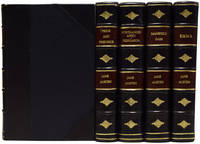
rif. 68272London: Macmillan and Co. 1895-1897. Classic English Literature FIRST EDITIONS THUS each being the first edition illustrated by either Brock or Thomson. Complete in five volumes. Octavo 20 x 14 x 18cm. With an introduction by Austin Dobson to each volume profusely illustrated throughout by Charles Brock for Pride and Prejudice and Hugh Thomson for the all the other titles. Recently bound in navy half calf with raised bands gilt titles to burgundy labels further gilt tooling to spines and matching cloth over boards. All edges untrimmed. Nice clean copies gently toned throughout. Presented in attractive new leather bindings. Book Collector No.271 'The Great Illustrators'. London: Macmillan and Co., 1895-1897 unknown
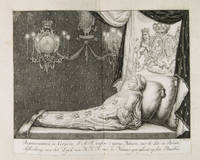
1759rif. 18779The Hague 1759. Large folio ca. 50 x 36 cm. Pierre Gosse junior 19th-century half green morocco a red morocco label on the spine with the title in French lettered in gold marbled endpapers. With 20 engravings each mounted on a double-leaf of heavy paper the text is printed in Dutch and French with a separate title page for each language the engraved coat of arms of Princess Anna on each and 4 decorated woodcut initials. 2 parts in 1 volume. 4 4; 4 27 pp. First edition of two works with illustrations and descriptions of the funeral ceremonies for Princess Anna of Hannover 1709-1759 who was then regent for her son William V Stadtholder of the Dutch Republic. The first work shows the ceremonial mourning chamber with Princess Anna on her death bed. The plates were drawn by Pieter de Swart 1709-1772 one of the most important Dutch architects of the 18th century and engraved by Simon Fokke 1712-1784. The second work shows the funeral procession which took place in Delft on the 23rd of February in 1759 with detailed illustrations of all the heralds riflemen guards etc. that took part in the ceremony. The plates for this work were drawn by artist Paulus Constantijn la Fargue 1729-1782 and also engraved by Fokke. The creators apparently suspected that counterfeit editions of the work might appear as the text at the end of the first work states that only copies signed by the bookseller would be considered real. The present copy is signed.Princess Anna of Hannover duchess of Brunswick-Luneburg was the eldest daughter of George II August later King of England as George II and Wilhelmina Charlotte of Brandenburg-Ansbach. In 1734 she married the Dutch Willem Karel Hendrik Friso 1711-1751 Prince of Orange and Stadtholder of Friesland. When in 1747 her husband became Stadtholder of the Dutch Republic as Willem IV the couple moved from Leeuwarden to The Hague and Anna became highly involved in politics. After the death of Willem IV in 1751 she became regent for her three-year old son the later Stadtholder Willem V. In this position she played a prominent part in the political life of the Republic defending the position of the House of Orange against the republicans.The edges and corners of the boards are somewhat scuffed the boards are slightly rubbed the spine is somewhat discoloured. Otherwise a beautiful copy on heavy large paper with the plates in their original fresh impressions.l Ad 1: Landwehr Splendid ceremonies 233; Lipperheide 2675; Muller 4095; STCN 23024453X 7 copies; Vinet 756; Ad 2: Landwehr Splendid ceremonies 234; Lipperheide 2676; Muller 4097; STCN 230244394 7 copies; Vinet 756bis. ABE CAT Costumes & Uniforms hardcover
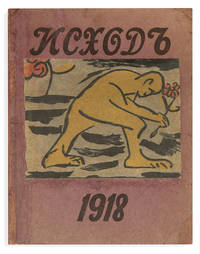
rif. 117139Moscow & St Petersburg but printed in Penza lzd. Khudozhestvennyi Klub 1918. . First only edition 8vo 23 x 17.5 cm; lithographed title 6 linocuts of which 4 are in colour ownership inscription in pencil to p1; original purple printed wrappers with mounted illustration by Usenko reapirs to spine covers faded else a very good copy. The first collection of poems from the Imagists printed in a tiny edition in the Penza provincial printing house. 'Exodus' refers to leaving Penza where Mariengof lived as a student. In the spring of 1918 the poet's father died from a stray bullet during the rebellion of the Czech legionnaires. After this tragic event Mariengof left Penza forever and moved to Moscow where he organised a group of four poet friends: Esenin Mariengof Shershenevich and Ivnev which became the backbone of a new literary movement. Mariengof later said 'Imagism was born in the city of Penza on Kazanskaya Street'. The collection of poetry also includes the notable first appearance of Osip Mandel'shtam's Dekabrist' from 1917 a striking anomaly it would be first published officially in Tristia in 1922. Not much is known about the artist Vitaliy Usenko but his illustrations are incredibly striking. Moscow & St Petersburg (but printed in Penza), lzd. Khudozhestvennyi Klub, 1918. unknown
1933rif. 14334VOGEL MEYNIAL 1933 1 Croquis de route et notes de voyage. Paris, Vogel - Meynial, s.d. (1934), in-folio sous chemise à rabats.
1912rif. ST17640-391New York: Dodge Publishing Company 1912. 265 x 195 mm. 10 1/4 x 8". Title page and 52 unnumbered leaves printed on recto only. Translated by Edward FitzGerald. EXCELLENT TEAL CRUSHED MOROCCO GILT BY THE HARCOURT BINDERY stamp-signed on verso of front free endpaper covers framed by multiple plain and dotted rules enclosing a twining grapevine central panel with palmette and floral cornerpieces raised bands spine compartments densely gilt LOVELY CITRON MOROCCO DOUBLURES EACH with large oval medallion at center CONTAINING ONE OF THE COLOR ILLUSTRATIONS BY HANSCOM & CUMMINGS enclosed by a graceful gilt frame corners with intricate gilt vines bearing clusters of onlaid burgundy morocco grapes fawn-colored moiré silk endleaves top edge gilt other edges untrimmed joints expertly repaired. In an early original blue cloth dust jacket. With 26 of 28 two having been used for the doublures memorably intriguing tipped-on color plates by Adelaide Hanscom and Blanche Cummings all with tissue guards and the text with Orientalist decorations those on the title and opening pages hand-colored and highlighted with gilt. Paas 1513. Spine evenly darkened title page with small tears at inner margin lower corner of one plate torn at tip image unaffected other trivial imperfections but still quite an attractive copy--clean fresh and bright the leaves with vast margins and the heavily-gilt binding lustrous. This is an especially appealing copy of a ground-breaking illustrated edition of the Rubaiyat in an elaborate binding with splendid doublures created by a prominent American workshop using images from two of the color plates in the work. One of the early women pioneers in the field San Francisco photographer Adelaide Hanscom 1875-1931 began working on photographs to illustrate the Rubaiyat in 1903 and called on members of the Bay Area's bohemian literary and artistic community to serve as models among them "Poet of the Sierras" Joaquin Miller the white-bearded sage in our illustrations Charles Sterling George Wharton James and Charles Keeler. Hanscom was already making a name for herself as a portrait photographer and as a member of the Pictorialism movement defined by Britannica as "an approach to photography that emphasizes beauty of subject matter tonality and composition rather than the documentation of reality." Those characteristics are on prominent display in her Rubaiyat images first published as sepia-toned photogravures in 1905. This work caused a sensation and won Hanscom international attention including a silver medal at the Liverpool Exposition in England. Perhaps more meaningful to Hanscom was the notice of the great Alfred Stieglitz who made her an Associate Member of his Photo-Secession and included two of her prints in an exhibition at the Little Galleries of the Photo-Secession later known as "219" in New York. The San Francisco earthquake of 1906 destroyed the studio of Hanscom and her partner Cumming including all the negatives of the Rubaiyat plates. The photographs copyrighted by Dodge Publishing were all that remained. The Getty Center which owns a copy of this work suggests that Hanscom and Cumming created the plates here by hand-coloring the photographs and the title of our edition implies those "Life Studies" were then photographed for this work. The memorable binding is by Boston's Harcourt Bindery founded in 1900 to provide hand bookbinding services for the publications of the burgeoning number of private presses created by the Arts & Crafts Movement in New England. The binders took two of the color plates from the work--the frontispiece and the final image from the 1905 edition--to create centerpieces for the doublures adding a gilt and onlaid grape arbor that evokes imagery from the poem. The Harcourt Bindery remains the largest bindery in the United States exclusively devoted to fine bookbinding by hand. Dodge Publishing Company unknown books
rif. 70010London: Collins 1974. Ornithology SIGNED PRESENTATION COPY. Fourth printing. Octavo 20 x 14cm pp.256. With colour plate illustrations and line drawings. Publisher's mid-blue cloth titled and decorated in gilt to spine cartographic endpapers. With author's inscription to the title page; To Dick Sargent / James Bond. With occasional pencil and ink annotations by Sargent together with a note confirming the signed book was presented to him by Bond's colleague Lisa Salmon. A near fine copy without wrapper. The acclaimed work by the ornithologist James Bond whose name was famously appropriated for spy fiction's most celebrated hero. A rare signature in full as here the author usually signing as 'Jim Bond'. The recipient Dick Sargent was president and CEO of the Chubb Institute A dedicated conservationist he served as a trustee on the board of The Land Conservancy of New Jersey. Lisa Salmon founded the Rocklands Bird Sanctuary near Montego Bay in 1958. Laid in is a tri-fold checklist compiled by Salmon identifying birds to be observed at Rockland Feeding Station. Later part of the collection of Ian Fleming bibliographer Jon Gilbert. Gilbert page 616. London: Collins, 1974 unknown
1817rif. 007975London: Henry Colburn 1817. First edition. Three Quarters Morocco. Marbled pastedown on boards. Near Fine. 4to. 30.5 by 27 cm. xviii 2 368 pp. 28 hand-colored aquatint plates of which one is a half-title page another is a double paged and folding panorama plate of The Battle of Waterloo; plus two folding maps. The plate count given in the book's plate description is 30 and this includes the maps. Tooley 336. Abbey Life 372. Cohn Cruikshank 580. Missing as typical View of Brussels but with "Flight of Bonaparte". Rouse was responsible for almost all of the plates with Cruikshank the artist for the large folding plate depicting the Battle of Waterloo and the frontis plate which contains portraits of the leading generals. Rouse though had a hand in the printing of these as well. Condition: Rubbing along the joints on the cover with a touch of rawness in the very upper reach of the front hinge but overall a highly attractive three quarter red morocco binding with raised bands gilt lettering and ruled and dotted decoration on the spine. Scattered light soiling within and the typical quotient of offsetting but mostly clean. The Cruikshank Waterloo plate has smudgy margins but a good amount of this can be removed with a simple eraser if one wishes to make the effort -- we did test this. The large folding map has fold tears with one irregularly bordered tear. The whole map we would note is present. Henry Colburn unknown
1817rif. 007975London: Henry Colburn 1817. First edition. Three Quarters Morocco. Marbled pastedown on boards. Near Fine. 4to. 30.5 by 27 cm. xviii 2 368 pp. 28 hand-colored aquatint plates of which one is a half-title page another is a double paged and folding panorama plate of The Battle of Waterloo; plus two folding maps. The plate count given in the book's plate description is 30 and this includes the maps. Tooley 336. Abbey Life 372. Cohn Cruikshank 580. Missing as typical View of Brussels but with "Flight of Bonaparte". Rouse was responsible for almost all of the plates with Cruikshank the artist for the large folding plate depicting the Battle of Waterloo and the frontis plate which contains portraits of the leading generals. Rouse though had a hand in the printing of these as well. Condition: Rubbing along the joints on the cover with a touch of rawness in the very upper reach of the front hinge but overall a highly attractive three quarter red morocco binding with raised bands gilt lettering and ruled and dotted decoration on the spine. Scattered light soiling within and the typical quotient of offsetting but mostly clean. The Cruikshank Waterloo plate has smudgy margins but a good amount of this can be removed with a simple eraser if one wishes to make the effort -- we did test this. The large folding map has fold tears with one irregularly bordered tear. The whole map we would note is present. Henry Colburn unknown books
1945rif. 38405Angers: Editions Jacques-Petit 1945. WITH TWO IMPRESSIONS IN FIRST AND SECOND STATES OF ONE OF KIYOSHI HASEGAWA'S MOST IMPORTANT PRINTS. Etched half-title 16 pp. plus 12 loose engravings. A monograph on engraving followed by short biographies of each of the six artists accompanied by a suite of large engravings by Cami Cottet Decaris Jeannisson Hasegawa and Lemagny. From a total edition of 320 copies all printed on fine Marais wove paper this is ONE OF ONLY 60 SETS WITH THE ENGRAVINGS IN TWO STATES: THE FIRST STATE ON RIVES WOVE PAPER SIGNED IN PENCIL AND THE SECOND STATE ON MARAIS WOVE PAPER. Hasegawa's engraving "Anemones et fleurs de champs dans un verre a facettes" Kyoto 368 also known as "Bouquet sur fond de dentelle" is considered one of his masterpieces. Folio 38 x 28 cm. Loose as issued in the original folding case. Folding case lightly worn and spotted. CONTENTS FINE AND BRIGHT. ALL OF THE PRINTS IN BRILLIANT CONDITION. Editions Jacques-Petit unknown