2 198 résultats
1839Paris, chez Furne & Cie Gosselin éditeurs, 1839. 30 volumes reliure en percaline bleu marine, dos lisse à titres dorés, chaque volume comporte une vignette gravée en page de titre et deux planches hors-texte excepté un volume avec 3 planches (portrait de l’auteur). 6 volumes ont une auréole décroissante en coin des feuillets ; tome 25 : 13 derniers feuillets “grignotés” en coin supérieur sans manque de texte ; rousseurs éparses. L’espion - Les pilotes - Lionel Lincoln - Le dernier des Mohicans - les pionniers- La prairie - Corsaire rouge - Les puritains - L’écumeur de mer - Mercedes de Castille - Lac Ontario - Eve Effingham - Le paquebot - Les monikins (avec deux amusantes gravures de singes humanisés) - Bourreau de Berne - L’Heidenmauer - Le Bravo - Tueur de daims - Deux amiraux - Le feu follet - A bord et à terre - Lucie Hardinge - Wyandotté - Satanstoe - Porte chaîne - Ravesnenet - Les lions de mer - Le cratère - Moeurs du jour.
1969Pierre de Tartas, 1969. 3 volumes grand in/4 reliure éditeur plein cuir sous étui, dos lisse à décor doré, plats portant des ferrures ouvragées, dorés sur tête, 24 illustrations de Hans Erni, Yves Tremois et Michel Ciry, reprint d’un texte original paru en 1585 chez Gabriel Buon avec bandeaux, lettrines historiées et toutes ses illustrations. Exemplaire numéroté sur grand vélin crème. Bel exemplaire frais. Ambroise Paré, né vers 1510 au Bourg-Hersent, près de Laval mort le 20 décembre 1590 à Paris, chirurgien et anatomiste français. Ambroise Paré est le chirurgien des champs de bataille, le père de la chirurgie moderne. Il est l'inventeur de nombreux instruments. L’usage nouveau des armes à feu conduit à de nouvelles plaies que l’on cautérise au fer rouge ou à l’huile bouillante au risque de tuer le blessé. Il met au point la ligature des artères, qu'il substitue à la cautérisation, dans les amputations.
Edition d’art H. Piazza, Paris (1950). 3 volumes in/8 reliure (14 x 20 cm) sous étui cartonné, demi-chagrin à coins rouge, dos à nerfs à titres dorés, couvertures conservées, 63 illustrations de P. E. Bécat, volume 1 : 211 p. - vol.2 : 217 p. - vol. 3 : 189 p. Exemplaires numérotés sur vélin chiffon de renage. Monod 10121.
1960Imprimerie Nationale, éditions Lidis, 1960-62. 7 volumes in/4 (28 x 23 cm) reliure plein maroquin bordeaux, plat à décor doré et à froid, doré sur tête, illustrations : 52 lithographies originales de W. Spitzer. Monod 7697. Très bon état hormis des dos insolés (bordeaux vire à l'orangé). Exemplaire numéroté (883) sur vélin d'Arches pur chiffon filigrané André Malraux.
1846Paris J. Hetzel 1846, in/4 reliure éditeur, percaline romantique, plat illustré, coiffes et coins émoussés. 80 planches de Gavarni et un frontispice. Revues, corigées et nouvellement classées par l'Auteur. Avec des notices en tête de chaque série : (Les enfants terribles - Traductions en langue vulgaire - Les Lorettes - Les actrices) par Théophile Gauthier & Laurant-Jan. Vicaire III, 953.
1913réf. 38527Caen / Cherbourg: Imprimerie Charles Valin / Librairie Bissonnier 1913. FIRST EDITION of the complete songs and poems of Alfred Rossel 1841-1926 the main figure of the Norman cultural revival of the late 19th and early 20th centuries a second edition was published several years after the author's death. Many of the texts are in Cotentinais the Norman patois he did so much to promote. Many are accompanied by printed music. VIII 263 pp 10 hors-texte plates two photographic portraits four original etchings and four phototypes of drawings. From a total edition of 700 numbered copies this is ONE OF ONLY FIVE 5 COPIES ON IMPERIAL JAPANESE PAPER SIGNED BY ROSSEL ON THE JUSTIFICATION PAGE. 4to. Original wraps. Uncut. Tiny traces of wear to wraps internally FINE AND BRIGHT. Not in WorldCat or the Bibliothèque Nationale. Copies on Japon impériale like this one are obviously of the greatest rarity. Imprimerie Charles Valin / Librairie Bissonnier paperback
1955Editions Variété, 1955. In-8 ((24 x 18 cm) en feuilles sous couverture rempliée et étui cartonné, illustrations de A. Collot: 13 hors-texte et un frontispice, tirées et mis en couleur par Louis Duval, 136 pages. Exemplaire numéroté (n°582), en bon état.
1874Paris, Garnier, 1874. Fort volume in/4 en plein maroquin vert tilleul, dos à nerfs à titre doré, monogramme doré sur le plat supérieur, 7 planches (dessins de Staal) dont le frontispice, 719 p. Coiffes et coins légèrement épidermés. Dos insolé.
1979Gibert Jeune, Librairie d’Amateurs, Paris, 1979. in/4, reliure éditeur, couverture en couleurs, 150 pages, illustrations in et hors-texte en couleur de Dubout.
réf. 201203923Paris, Fayard, 1963 ; grand in-8, 109 pp., broché, couverture illustr. Broché reliure salis (bruni).
réf. 200917769Paris, Fayard, 1963 ; grand in-8, 109 pp., broché, couverture illustr.
1896réf. GITh531Paris Léon Chailley 1896. Petit in-8 4 feuillets non chiffrés 10-195pp 1 feuillet non chiffré catalogue le tout monté sur onglets. Demi chagrin grenat, dos à 4 nerfs orné de cadres de quadruple filets dorés, plats de beau papier flammé rouge, tête dorée, non rogné, plats de la couverture illustrée en couleurs conservés, reliure ancienne. Abondante illustration en couleurs dans le texte, à pleine page et sur double page par Petit Bob. tache ronde au centre du feuillet de catalogue et du verso du 2e plat de la couverture, coupure sans manque sur les plats de la couverture. Bel exemplaire malgré ces défauts, complet, dans une reliure fraîche et décorative. L'humour de Gyp et la fausse naïveté de Petit Bob.
1912Paris, LéonChailley éditeur, s.d. (fin 19è). In/12 reliure demi-basane brune, dos à nerfs, très nombreuses illustrations en couleur de Petit Bob dont certaines à page double, 195 p. Sibylle Aimée Marie Antoinette Gabrielle Riquetti de Mirabeau, par son mariage comtesse de Martel, en littérature Gyp, romancière française née au château de Coétsal près de Plumergat (Bretagne) en 1849 et morte en 1932.
réf. E4A180327001yLondon: T Nelson and sons 1888. Hardcover. Very Good. 9x6x1. A very nice copy. Text in clean/unmarked condition. Owners name on flyleaf. Cover shows wear. London: T Nelson and sons, 1888 hardcover
1951réf. GITc265L'Amitié par le Livre A.P.L.L 1951. Petit in-8 broché couverture illustrée 207pp. Illustrations dans le texte par Tilmans. Non coupé, bel exemplaire.
1976réf. 70077New York, A Studio Book. The Viking Press, 1976, in-4, Cartonnage éditeur, 296 pages. Bon état.
1910réf. 3818London: S.W. Partridge & Co. Lrd 1910. First edition. Original red cloth over color pictorial front board and advertisement on rear board advertisements on endpapers. Corners and board edges a little worn. Large quarto 10 3/16 x 7 11/16 inches; 259 x 195 mm. Pictorial title-page printed in blue 92 unnumbered pages and six full page color plates. Numerous other mono-color and black & white illustrations throughout the text including six by Louis Wain. Ink inscription on verso of color frontispiece dated Xmas 1910. A good copy of a very scarce book in fact the first time that we have ever seen this title. The Louis Wain illustrations in this delicate book include the following: How Pride Betrays. three 0ne-third page printed in brown When the Cook's Away. full-page printed in blue Tubbing the Kitties. one-third page printed in green "You Naughty Kitties!" full-page printed in green. S.W. Partridge & Co., Lrd unknown
1910réf. 3818London: S.W. Partridge & Co. Lrd 1910. First edition. Original red cloth over color pictorial front board and advertisement on rear board advertisements on endpapers. Corners and board edges a little worn. Large quarto 10 3/16 x 7 11/16 inches; 259 x 195 mm. Pictorial title-page printed in blue 92 unnumbered pages and six full page color plates. Numerous other mono-color and black & white illustrations throughout the text including six by Louis Wain. Ink inscription on verso of color frontispiece dated Xmas 1910. A good copy of a very scarce book in fact the first time that we have ever seen this title. The Louis Wain illustrations in this delicate book include the following: How Pride Betrays. three 0ne-third page printed in brown When the Cook's Away. full-page printed in blue Tubbing the Kitties. one-third page printed in green "You Naughty Kitties!" full-page printed in green. S.W. Partridge & Co., Lrd unknown books
1945réf. FLAHIVE-2404Duke University Press Durham 1945 First printing. A near-fine copy without a jacket. A clean unmarked copy. Features William Styron's very first stories in print "Autumn" and "The Long Dark Road." Selections from William Styron Frances Gray Patton Frances Wright Lorenz Eitner Ovid Williams Pierce Harold Grier McCurdy Archie Robertson R.P. Harriss Newman Ivey White Julian Lee Rayford Richard Austin Smith Ralph Nash H.P. Koenig and others. Fiction-S. 1st Edition. Hardcover. Near Fine/No Jacket. Duke University Press, Durham hardcover
réf. 13537Philadelphia: Sunshine Publishing Company 189-. Hardcover. Good or better. No author is given and most illustrations are unsigned no list is given in the book. I believe it was published in the very in the late 1900's as an incription inside suggest it was given in 1895. Oversize color illustrated covers general wear to cover edges top edge of front cover with partial loss of color illustration. The "Admission" page which precedes the title page has some finger soiling other pages lightly soiled one page with more text is unmarked. Gift inscription; "Christmas 95 / George Freeman Day / fro / Miss Brown." The in inscription is not from 1995 so the book was given and published around the year 1895. It appears another edition of this book was published same content/ around the same time with color illustrations the book cover shows Santa Claus in color. Profusely illustrated in b/w and duotone. Questions welcome. Images can be made upon request. Sunshine Publishing Company hardcover
1926réf. GITj702Sans lieu A la Sphère 1926. In-8 carré 2 feuillets non chiffrés 1-57pp 1 feuillet blanc, 1 feuillet non chiffré (achevé d'imprimer et justificatif de tirage). Demi chagrin gris-bleu, dos lisse, beau papier ocellé gris-rose pâle-brun sur les plats, non rogné, dos et plats de la couverture conservés, reliure postérieure. Orné de 5 illustrations hors texte par Othon Coubine, gravées à la pointe d'argent. Tiré à 516 exemplaires, celui-ci 1 des 450 numérotés sur Annam (n°165). 1re édition illustrée de ce recueil de poèmes. Bel exemplaire très frais, reliure postérieure de bonne qualité, en bel état.
1960Desclée de Brouwer, s.d. (vers 1960). Cartonnage petit in-4 (25 x 20 cm), dessins de Etienne Morel), 29 p. Adaptation française des "nursery rhymes" traditionnels. Traces de stylo sur la couverture, sinon, bon état. Francine Cockenpot (1918-2001) C’est notamment elle qui a écrit la musique de la célébrissime "Colchiques dans les prés" (paroles de Jacqueline Debatte, sous le pseudonyme de Jacqueline Claude), un succès populaire dès 1945.
1935réf. GITg804München Waldorff-Astoria sans date vers 1935. In-4 broché couverture illustrée 48pp sur 24 feuillets non chiffrés. Titre en bleu et doré, pages encadrées d'une frise en noir, bandeaux en tête de chapitre, 4 belles illustrations à pleine page en noir et 287 belles vignettes en couleurs contrecollées et légendées, accompagnées en regard d'un texte explicatif en allemand, impression gothique. Couverture poussiéreuse avec manque de papier sur le dos et 1 angle du 1er plat, petit manque au bas d'un feuillet et en haut d'un autre. Intérieur frais, bien complet du texte, des illustrations et des 287 vignettes en couleurs.
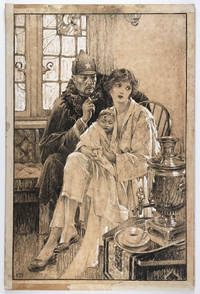
réf. 5233New York 1920s. 6 illustrations in ink wash and gouache 39 x 37.5 cm to 41 x 62.5 cm plus margins; 3 signed "Von"; 1 signed "Harold von Schmidt"; 1 signed "C.P.C."; 1 signed "John W. Thomason Jr." Some ms. production notes captions etc. on versos and rectos some indicating the pages and sections of the serialized novel to which the illustrations relate. 1 small reproduction of a larger illus. pasted on its recto 7.5 x 10.5 cm. Six original illustrations for Liberty magazine's serialized publication of the novel The Red Napoleon 1929 an early fictional account of a full-scale Soviet invasion and attempted conquest of the world. The acclaimed war correspondent journalist and novelist Floyd Gibbons 1887-1939 first published The Red Napoleon in Liberty magazine which commissioned Harold von Schmidt 1893-1982 among others to illustrate the serialized publication. The first installment appeared in Liberty on 6 April 1929. In The Red Napoleon the Red Army attempts to usher in a world of racial equality and usurp the supremacy of the white race. Novelist John Gardner 1933-1982 has described The Red Napoleon as an "ironic satire of capitalist America's greed and foolhardy racism": What Gibbons is saying from behind the fortress-wall of his trash-writer gimmicks is serious and convincing: white superiority on this planet is finished and worse if we refuse to meet the Third World halfway-refuse to shuck off the racial prejudice that has been a standard feature of our character from the beginning-we face virtual extermination . Gibbons found himself in a curious position .Everything he believed most profoundly-and believed to be a matter of life and death-would be anathema to his readers. Not only would the vast majority of his readership find his visionary slogan ridiculous-"We recognize but one race-the HUMAN RACE"-they would find it grossly evil. Gibbons' novel centers on Karakhan of Kazan-the 'Red Napoleon'-who serves as chief military commander of the USSR under Stalin until the dictator is assassinated in 1932. In turn Karakhan becomes the new Soviet leader and uses his military influence to take control of the country-and then proceeds to attempt to conquer the world. Karakhan espouses a policy of "Conquer and Breed." Believing the antidote to Caucasian hegemony to be miscegenation Karakhan marries and has a child with an American radical leftist. Gibbons writes on p. 1: "Karakhan's defiant pride in his coloured skin struggling against an instinctive inferiority complex originating from impacts with white dominance fired him with the ambition to fuse all races-white yellow black brown and red-into one human race the only one he acknowledged." Before the novel's dramatic climax in which Karakhan's army is defeated by American forces the Red Army ravages Europe-slaying Mussolini preempting Hitler's rise bringing Winston Churchill and Britain to their knees etc.-and conquers Australia where he massacres six million whites. The most remarkable of the six illustrations offered here initialed at the lower left "C.P.C." depicts a domestic scene showing Karakhan smoking a cigarette and gazing at his white wife who holds their mixed-race offspring in her arms. A caption appears on the verso-"He's gone completely crazy on the idea of having children with white women." The most notable illustration by von Schmidt features a menacing Soviet perhaps Karakhan again wearing an ushanka hat and fur with binoculars hanging around his neck. This too has a caption on the verso: "Short cut black hair that fitted his head like a skull cap. His thin body high shoulders yellow face close cropped head." Two other illustrations show the Soviet Army marching past a pagoda in Peking and through a Mexican village. In the latter a slain Mexican lies in the streets amidst the Red Army and vanquished local Mexicans. Vultures perch and hover above and in the background a Soviet flag hangs from a building. This particular illustration is by John W. Thomason Jr. 1893-1944 an author and illustrator of several books and magazine stories who served as a lieutenant colonel in the U.S. Marine Corps. At the novel's end the narrator-a journalist who resembles Gibbons himself- interviews the imprisoned Red Napoleon after the Red Army's defeat. Karakhan defends his policy of intermixing the world's races to the journalist claiming it must be the way of the future-which has become true in the novel: white people now face a thoroughly miscegenated world. Karakhan is punished by being sent to exile not in Siberia but Bermuda. Von Schmidt's illustrations also appeared in magazines such as Collier's Weekly Cosmopolitan and Saturday Evening Post; he would also contribute sixty illustrations for a deluxe edition of Willa Cather's Death Comes for the Archbishop. A striking group of illustrations for the serial publication of Red Napoleon. REFERENCES: Gallicchio Marc. The African American Encounter with Japan and China Chapel Hill North Carolina: University of North Carolina Press 2000 Chapter 2; Gibbons Floyd. The Red Napoleon New York: Grosset & Dunlap 1929; Harold von Schmidt at illustrationhistory.org. CONDITION: Moderate damp-staining along edges of 2 of the less appealing illustrations; the 4 other illustrations very good with minor wear. [New York, 1920s.] unknown
réf. 5233New York 1920s. 6 illustrations in ink wash and gouache 39 x 37.5 cm to 41 x 62.5 cm plus margins; 3 signed "Von"; 1 signed "Harold von Schmidt"; 1 signed "C.P.C."; 1 signed "John W. Thomason Jr." Some ms. production notes captions etc. on versos and rectos some indicating the pages and sections of the serialized novel to which the illustrations relate. 1 small reproduction of a larger illus. pasted on its recto 7.5 x 10.5 cm. Six original illustrations for Liberty magazine's serialized publication of the novel The Red Napoleon 1929 an early fictional account of a full-scale Soviet invasion and attempted conquest of the world. The acclaimed war correspondent journalist and novelist Floyd Gibbons 1887-1939 first published The Red Napoleon in Liberty magazine which commissioned Harold von Schmidt 1893-1982 among others to illustrate the serialized publication. The first installment appeared in Liberty on 6 April 1929. In The Red Napoleon the Red Army attempts to usher in a world of racial equality and usurp the supremacy of the white race. Novelist John Gardner 1933-1982 has described The Red Napoleon as an "ironic satire of capitalist America's greed and foolhardy racism": What Gibbons is saying from behind the fortress-wall of his trash-writer gimmicks is serious and convincing: white superiority on this planet is finished and worse if we refuse to meet the Third World halfway-refuse to shuck off the racial prejudice that has been a standard feature of our character from the beginning-we face virtual extermination . Gibbons found himself in a curious position .Everything he believed most profoundly-and believed to be a matter of life and death-would be anathema to his readers. Not only would the vast majority of his readership find his visionary slogan ridiculous-"We recognize but one race-the HUMAN RACE"-they would find it grossly evil. Gibbons' novel centers on Karakhan of Kazan-the 'Red Napoleon'-who serves as chief military commander of the USSR under Stalin until the dictator is assassinated in 1932. In turn Karakhan becomes the new Soviet leader and uses his military influence to take control of the country-and then proceeds to attempt to conquer the world. Karakhan espouses a policy of "Conquer and Breed." Believing the antidote to Caucasian hegemony to be miscegenation Karakhan marries and has a child with an American radical leftist. Gibbons writes on p. 1: "Karakhan's defiant pride in his coloured skin struggling against an instinctive inferiority complex originating from impacts with white dominance fired him with the ambition to fuse all races-white yellow black brown and red-into one human race the only one he acknowledged." Before the novel's dramatic climax in which Karakhan's army is defeated by American forces the Red Army ravages Europe-slaying Mussolini preempting Hitler's rise bringing Winston Churchill and Britain to their knees etc.-and conquers Australia where he massacres six million whites. The most remarkable of the six illustrations offered here initialed at the lower left "C.P.C." depicts a domestic scene showing Karakhan smoking a cigarette and gazing at his white wife who holds their mixed-race offspring in her arms. A caption appears on the verso-"He's gone completely crazy on the idea of having children with white women." The most notable illustration by von Schmidt features a menacing Soviet perhaps Karakhan again wearing an ushanka hat and fur with binoculars hanging around his neck. This too has a caption on the verso: "Short cut black hair that fitted his head like a skull cap. His thin body high shoulders yellow face close cropped head." Two other illustrations show the Soviet Army marching past a pagoda in Peking and through a Mexican village. In the latter a slain Mexican lies in the streets amidst the Red Army and vanquished local Mexicans. Vultures perch and hover above and in the background a Soviet flag hangs from a building. This particular illustration is by John W. Thomason Jr. 1893-1944 an author and illustrator of several books and magazine stories who served as a lieutenant colonel in the U.S. Marine Corps. At the novel's end the narrator-a journalist who resembles Gibbons himself- interviews the imprisoned Red Napoleon after the Red Army's defeat. Karakhan defends his policy of intermixing the world's races to the journalist claiming it must be the way of the future-which has become true in the novel: white people now face a thoroughly miscegenated world. Karakhan is punished by being sent to exile not in Siberia but Bermuda. Von Schmidt's illustrations also appeared in magazines such as Collier's Weekly Cosmopolitan and Saturday Evening Post; he would also contribute sixty illustrations for a deluxe edition of Willa Cather's Death Comes for the Archbishop. A striking group of illustrations for the serial publication of Red Napoleon. REFERENCES: Gallicchio Marc. The African American Encounter with Japan and China Chapel Hill North Carolina: University of North Carolina Press 2000 Chapter 2; Gibbons Floyd. The Red Napoleon New York: Grosset & Dunlap 1929; Harold von Schmidt at illustrationhistory.org. CONDITION: Moderate damp-staining along edges of 2 of the less appealing illustrations; the 4 other illustrations very good with minor wear. [New York, 1920s.] unknown books