HALM, PETER ; VON VOLKMANN, HANS RICHARD; Maximilian von Fichard; KAMPMANN, GUSTAV (Illustrators).Biblio.com

2 194 résultats
réf. 16-2566Berlin: Genossenschaft PAN 1898. Folio. Original wraps with original graphics by HALM PETER ; VON VOLKMANN HANS RICHARD; Maximilian von Fichard; KAMPMANN GUSTAV . Söhn HDO: 52903-1 2 3 4.Edited by Richard Graul and Caesar Flaischlen et al.PAN the important German 21 volume art nouveau periodical 1895-1900 is a deluxe fin de siècle periodical with plates illustrations color initials vignettes and tail-pieces representing a multitude of processes of modern picture reproduction including original lithographs etchings and woodcuts. Berlin: Genossenschaft PAN, 1898. paperback
réf. 16-2565Berlin: Genossenschaft PAN 1898. Folio. Original wraps with original graphics by KRÜGER 2 ALBERT ; OLDE HANS ; LEISTIKOW WALTER ; VOLZ WILHELM. Söhn HDO: 52902-1 2 34 5 lacking the Behrens Edited by Richard Graul and Caesar Flaischlen et al.PAN the important German 21 volume art nouveau periodical 1895-1900 is a deluxe fin de siècle periodical with plates illustrations color initials vignettes and tail-pieces representing a multitude of processes of modern picture reproduction including original lithographs etchings and woodcuts. Berlin: Genossenschaft PAN, 1898. paperback
réf. 16-2564Berlin: Genossenschaft PAN 1898. Folio. Original wraps with original graphics by PeTITJEAN HIPPOLYTE & Theo Van Rysselberge.Söhn HDO: 52901- 34 lacking the other 4 prints Edited by Richard Graul and Caesar Flaischlen et al.PAN the important German 21 volume art nouveau periodical 1895-1900 is a deluxe fin de siècle periodical with plates illustrations color initials vignettes and tail-pieces representing a multitude of processes of modern picture reproduction including original lithographs etchings and woodcuts. Berlin: Genossenschaft PAN, 1898. paperback
réf. 16-2570Berlin: Genossenschaft PAN 1899-1900. Folio. Original wraps with original graphics by KAMPMANN GUSTAV KALCKREUTH LEOPOLD. Söhn HDO: 53003-1 2. Edited by Richard Graul and Caesar Flaischlen et al.PAN the important German 21 volume art nouveau periodical 1895-1900 is a deluxe fin de siècle periodical with plates illustrations color initials vignettes and tail-pieces representing a multitude of processes of modern picture reproduction including original lithographs etchings and woodcuts. Berlin: Genossenschaft PAN, 1899-1900. paperback
réf. 16-2568Berlin: Genossenschaft PAN 1899. Folio. Original wraps with original graphics by Meyer- Basel Carl; Wenban Sion; VELDHEER JACOB GERARD. Söhn HDO: 53001-1 2 4. lacking the Kollwitz. Edited by Richard Graul and Caesar Flaischlen et al.PAN the important German 21 volume art nouveau periodical 1895-1900 is a deluxe fin de siècle periodical with plates illustrations color initials vignettes and tail-pieces representing a multitude of processes of modern picture reproduction including original lithographs etchings and woodcuts. Berlin: Genossenschaft PAN, 1899. paperback
réf. 16-2569Berlin: Genossenschaft PAN 1899. Folio. Original wraps with original graphics by MORDANT DANIEL; ORLIK EMIL ; MÜLLER RICHARD . Söhn HDO: 53002-1 2 3. Edited by Richard Graul and Caesar Flaischlen et al.PAN the important German 21 volume art nouveau periodical 1895-1900 is a deluxe fin de siècle periodical with plates illustrations color initials vignettes and tail-pieces representing a multitude of processes of modern picture reproduction including original lithographs etchings and woodcuts. Berlin: Genossenschaft PAN, 1899. paperback
réf. 16-2553Berlin: Genossenschaft PAN 1895. Folio. Original wraps a little defective with original graphics by NAAGER FRANZ; ECKMANN OTTO KLOTZ ERNST; STAUFFER BERN KARL.Söhn HDO: 52603-1 2 3 4 5 lacking the Toulouse-LautrecEdited by Richard Graul and Caesar Flaischlen.PAN the important German 21 volume art nouveau periodical 1895-1900 is a deluxe fin de siècle periodical with plates illustrations color initials vignettes and tail-pieces representing a multitude of processes of modern picture reproduction including original lithographs etchings and woodcuts. Berlin: Genossenschaft PAN, 1895 paperback
réf. 16-2555Berlin: Genossenschaft PAN 1895. Original wraps with graphics by Ubbelohde Otto & Otto Gampert. Reproduced is A POSTER BY MAbel Dearmer.Söhn HDO: 52605- 1 2 Edited by Richard Graul and Caesar Flaischlen.PAN the important German 21 volume art nouveau periodical 1895-1900 is a deluxe fin de siècle periodical with plates illustrations color initials vignettes and tail-pieces representing a multitude of processes of modern picture reproduction including original lithographs etchings and woodcuts. Berlin: Genossenschaft PAN, 1895 paperback
réf. 16-2552Berlin: Genossenschaft PAN 1895. Folio.Original wraps a little defective with original graphics by Wenban S.L. GEYGER ERNST MORITZ KLINGER MAX THOMA HANS ECKMANN OTTO Söhn HDO: 52602-1 3 4 5 6 lacking the ZornEdited by Otto Julius Bierbaum and Julius Meier-Graefe.PAN the important German 21 volume art nouveau periodical 1895-1900 is the deluxe fin de siècle periodical with plates illustrations color initials vignettes and tail-pieces representing a multitude of processes of modern picture reproduction including original lithographs etchings and woodcuts. Berlin: Genossenschaft PAN, 1895 paperback
réf. 16-2562Berlin: Genossenschaft PAN 1897. Folio. Original wraps with original graphics by DENIS MAURICE; ORLIK EMIL 4; Ubbelohde Otto; lacking the Nicholson and rodinSöhn HDO: 52803- 1 2 3 5 6 7.Edited by Richard Graul and Caesar Flaischlen et al.PAN the important German 21 volume art nouveau periodical 1895-1900 is a deluxe fin de siècle periodical with plates illustrations color initials vignettes and tail-pieces representing a multitude of processes of modern picture reproduction including original lithographs etchings and woodcuts. Berlin: Genossenschaft PAN, 1897 paperback
réf. 16-2560Berlin: Genossenschaft PAN 1897. Folio. Original wraps with original graphics by LEISTIKOW WALTER ; Hofmann Ludwig von; KRÜGER ALBERT; LÉVEILLÉ ANDRÉ . Söhn HDO: 52801- 1 2 3 4.Edited by Richard Graul and Caesar Flaischlen et al.PAN the important German 21 volume art nouveau periodical 1895-1900 is a deluxe fin de siècle periodical with plates illustrations color initials vignettes and tail-pieces representing a multitude of processes of modern picture reproduction including original lithographs etchings and woodcuts. Berlin: Genossenschaft PAN, 1897. paperback
1967réf. 106401NY:: Atheneum. Very Good. 1967. Hardcover. Front free endpaper has been removed else very good in oblong illustrated boards with brown cloth along the spine. No dust jacket. . Atheneum, hardcover books
1912réf. 14102Paris 1912 1 Frontispice de Serge de SOLOMKO. Couverture de GIRARDCLOS. Paris, Aux dépens de l'auteur, 1912, in-8, broché, couverture rempliée et illustrée, 110 pages.
1880réf. 1395279London: DSeeley Jackson and Halliday 1880. Hardcover. Quarto 56 pages. In Fair condition. Spine is brown with gold print. Boards in brown cloth with gold print mitred edges. Wear to spine caps and corners lightly cocked spine. Text block has gilt edges. Cracked hinges tanning to endpapers name in ink on front endpaper faint foxing from engraving ink transfer light age-toning to paper. Illustrated: frontispiece and b&w engravings. Oversized books. Additional postage necessary for expedited/international orders. Economy International shipping unavailable due to size/weight restrictions. For international/expedited customers please inquire for rates. NOTE: Shelved in the Back Area Oversized Folios. 1395279. FP New Rockville Stock. DSeeley, Jackson, and Halliday hardcover books
1880réf. 1395279London: DSeeley Jackson and Halliday 1880. Hardcover. Quarto 56 pages. In Fair condition. Spine is brown with gold print. Boards in brown cloth with gold print mitred edges. Wear to spine caps and corners lightly cocked spine. Text block has gilt edges. Cracked hinges tanning to endpapers name in ink on front endpaper faint foxing from engraving ink transfer light age-toning to paper. Illustrated: frontispiece and b&w engravings. Oversized books. Additional postage necessary for expedited/international orders. Economy International shipping unavailable due to size/weight restrictions. For international/expedited customers please inquire for rates. NOTE: Shelved in the Back Area Oversized Folios. 1395279. FP New Rockville Stock. DSeeley, Jackson, and Halliday hardcover
réf. ORD-5518Carte postale polonaise. Naklad. Schillera S. M. P. Kr. Série 23. Nasladown. wzbronione. Vers 1900. Carte postale (90 x 137mm), caricature.
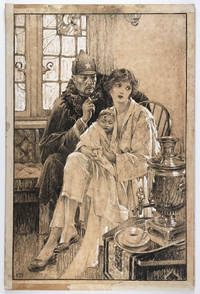
réf. 5233New York 1920s. 6 illustrations in ink wash and gouache 39 x 37.5 cm to 41 x 62.5 cm plus margins; 3 signed "Von"; 1 signed "Harold von Schmidt"; 1 signed "C.P.C."; 1 signed "John W. Thomason Jr." Some ms. production notes captions etc. on versos and rectos some indicating the pages and sections of the serialized novel to which the illustrations relate. 1 small reproduction of a larger illus. pasted on its recto 7.5 x 10.5 cm. Six original illustrations for Liberty magazine's serialized publication of the novel The Red Napoleon 1929 an early fictional account of a full-scale Soviet invasion and attempted conquest of the world. The acclaimed war correspondent journalist and novelist Floyd Gibbons 1887-1939 first published The Red Napoleon in Liberty magazine which commissioned Harold von Schmidt 1893-1982 among others to illustrate the serialized publication. The first installment appeared in Liberty on 6 April 1929. In The Red Napoleon the Red Army attempts to usher in a world of racial equality and usurp the supremacy of the white race. Novelist John Gardner 1933-1982 has described The Red Napoleon as an "ironic satire of capitalist America's greed and foolhardy racism": What Gibbons is saying from behind the fortress-wall of his trash-writer gimmicks is serious and convincing: white superiority on this planet is finished and worse if we refuse to meet the Third World halfway-refuse to shuck off the racial prejudice that has been a standard feature of our character from the beginning-we face virtual extermination . Gibbons found himself in a curious position .Everything he believed most profoundly-and believed to be a matter of life and death-would be anathema to his readers. Not only would the vast majority of his readership find his visionary slogan ridiculous-"We recognize but one race-the HUMAN RACE"-they would find it grossly evil. Gibbons' novel centers on Karakhan of Kazan-the 'Red Napoleon'-who serves as chief military commander of the USSR under Stalin until the dictator is assassinated in 1932. In turn Karakhan becomes the new Soviet leader and uses his military influence to take control of the country-and then proceeds to attempt to conquer the world. Karakhan espouses a policy of "Conquer and Breed." Believing the antidote to Caucasian hegemony to be miscegenation Karakhan marries and has a child with an American radical leftist. Gibbons writes on p. 1: "Karakhan's defiant pride in his coloured skin struggling against an instinctive inferiority complex originating from impacts with white dominance fired him with the ambition to fuse all races-white yellow black brown and red-into one human race the only one he acknowledged." Before the novel's dramatic climax in which Karakhan's army is defeated by American forces the Red Army ravages Europe-slaying Mussolini preempting Hitler's rise bringing Winston Churchill and Britain to their knees etc.-and conquers Australia where he massacres six million whites. The most remarkable of the six illustrations offered here initialed at the lower left "C.P.C." depicts a domestic scene showing Karakhan smoking a cigarette and gazing at his white wife who holds their mixed-race offspring in her arms. A caption appears on the verso-"He's gone completely crazy on the idea of having children with white women." The most notable illustration by von Schmidt features a menacing Soviet perhaps Karakhan again wearing an ushanka hat and fur with binoculars hanging around his neck. This too has a caption on the verso: "Short cut black hair that fitted his head like a skull cap. His thin body high shoulders yellow face close cropped head." Two other illustrations show the Soviet Army marching past a pagoda in Peking and through a Mexican village. In the latter a slain Mexican lies in the streets amidst the Red Army and vanquished local Mexicans. Vultures perch and hover above and in the background a Soviet flag hangs from a building. This particular illustration is by John W. Thomason Jr. 1893-1944 an author and illustrator of several books and magazine stories who served as a lieutenant colonel in the U.S. Marine Corps. At the novel's end the narrator-a journalist who resembles Gibbons himself- interviews the imprisoned Red Napoleon after the Red Army's defeat. Karakhan defends his policy of intermixing the world's races to the journalist claiming it must be the way of the future-which has become true in the novel: white people now face a thoroughly miscegenated world. Karakhan is punished by being sent to exile not in Siberia but Bermuda. Von Schmidt's illustrations also appeared in magazines such as Collier's Weekly Cosmopolitan and Saturday Evening Post; he would also contribute sixty illustrations for a deluxe edition of Willa Cather's Death Comes for the Archbishop. A striking group of illustrations for the serial publication of Red Napoleon. REFERENCES: Gallicchio Marc. The African American Encounter with Japan and China Chapel Hill North Carolina: University of North Carolina Press 2000 Chapter 2; Gibbons Floyd. The Red Napoleon New York: Grosset & Dunlap 1929; Harold von Schmidt at illustrationhistory.org. CONDITION: Moderate damp-staining along edges of 2 of the less appealing illustrations; the 4 other illustrations very good with minor wear. [New York, 1920s.] unknown books
réf. 5233New York 1920s. 6 illustrations in ink wash and gouache 39 x 37.5 cm to 41 x 62.5 cm plus margins; 3 signed "Von"; 1 signed "Harold von Schmidt"; 1 signed "C.P.C."; 1 signed "John W. Thomason Jr." Some ms. production notes captions etc. on versos and rectos some indicating the pages and sections of the serialized novel to which the illustrations relate. 1 small reproduction of a larger illus. pasted on its recto 7.5 x 10.5 cm. Six original illustrations for Liberty magazine's serialized publication of the novel The Red Napoleon 1929 an early fictional account of a full-scale Soviet invasion and attempted conquest of the world. The acclaimed war correspondent journalist and novelist Floyd Gibbons 1887-1939 first published The Red Napoleon in Liberty magazine which commissioned Harold von Schmidt 1893-1982 among others to illustrate the serialized publication. The first installment appeared in Liberty on 6 April 1929. In The Red Napoleon the Red Army attempts to usher in a world of racial equality and usurp the supremacy of the white race. Novelist John Gardner 1933-1982 has described The Red Napoleon as an "ironic satire of capitalist America's greed and foolhardy racism": What Gibbons is saying from behind the fortress-wall of his trash-writer gimmicks is serious and convincing: white superiority on this planet is finished and worse if we refuse to meet the Third World halfway-refuse to shuck off the racial prejudice that has been a standard feature of our character from the beginning-we face virtual extermination . Gibbons found himself in a curious position .Everything he believed most profoundly-and believed to be a matter of life and death-would be anathema to his readers. Not only would the vast majority of his readership find his visionary slogan ridiculous-"We recognize but one race-the HUMAN RACE"-they would find it grossly evil. Gibbons' novel centers on Karakhan of Kazan-the 'Red Napoleon'-who serves as chief military commander of the USSR under Stalin until the dictator is assassinated in 1932. In turn Karakhan becomes the new Soviet leader and uses his military influence to take control of the country-and then proceeds to attempt to conquer the world. Karakhan espouses a policy of "Conquer and Breed." Believing the antidote to Caucasian hegemony to be miscegenation Karakhan marries and has a child with an American radical leftist. Gibbons writes on p. 1: "Karakhan's defiant pride in his coloured skin struggling against an instinctive inferiority complex originating from impacts with white dominance fired him with the ambition to fuse all races-white yellow black brown and red-into one human race the only one he acknowledged." Before the novel's dramatic climax in which Karakhan's army is defeated by American forces the Red Army ravages Europe-slaying Mussolini preempting Hitler's rise bringing Winston Churchill and Britain to their knees etc.-and conquers Australia where he massacres six million whites. The most remarkable of the six illustrations offered here initialed at the lower left "C.P.C." depicts a domestic scene showing Karakhan smoking a cigarette and gazing at his white wife who holds their mixed-race offspring in her arms. A caption appears on the verso-"He's gone completely crazy on the idea of having children with white women." The most notable illustration by von Schmidt features a menacing Soviet perhaps Karakhan again wearing an ushanka hat and fur with binoculars hanging around his neck. This too has a caption on the verso: "Short cut black hair that fitted his head like a skull cap. His thin body high shoulders yellow face close cropped head." Two other illustrations show the Soviet Army marching past a pagoda in Peking and through a Mexican village. In the latter a slain Mexican lies in the streets amidst the Red Army and vanquished local Mexicans. Vultures perch and hover above and in the background a Soviet flag hangs from a building. This particular illustration is by John W. Thomason Jr. 1893-1944 an author and illustrator of several books and magazine stories who served as a lieutenant colonel in the U.S. Marine Corps. At the novel's end the narrator-a journalist who resembles Gibbons himself- interviews the imprisoned Red Napoleon after the Red Army's defeat. Karakhan defends his policy of intermixing the world's races to the journalist claiming it must be the way of the future-which has become true in the novel: white people now face a thoroughly miscegenated world. Karakhan is punished by being sent to exile not in Siberia but Bermuda. Von Schmidt's illustrations also appeared in magazines such as Collier's Weekly Cosmopolitan and Saturday Evening Post; he would also contribute sixty illustrations for a deluxe edition of Willa Cather's Death Comes for the Archbishop. A striking group of illustrations for the serial publication of Red Napoleon. REFERENCES: Gallicchio Marc. The African American Encounter with Japan and China Chapel Hill North Carolina: University of North Carolina Press 2000 Chapter 2; Gibbons Floyd. The Red Napoleon New York: Grosset & Dunlap 1929; Harold von Schmidt at illustrationhistory.org. CONDITION: Moderate damp-staining along edges of 2 of the less appealing illustrations; the 4 other illustrations very good with minor wear. [New York, 1920s.] unknown
1935réf. GITg804München Waldorff-Astoria sans date vers 1935. In-4 broché couverture illustrée 48pp sur 24 feuillets non chiffrés. Titre en bleu et doré, pages encadrées d'une frise en noir, bandeaux en tête de chapitre, 4 belles illustrations à pleine page en noir et 287 belles vignettes en couleurs contrecollées et légendées, accompagnées en regard d'un texte explicatif en allemand, impression gothique. Couverture poussiéreuse avec manque de papier sur le dos et 1 angle du 1er plat, petit manque au bas d'un feuillet et en haut d'un autre. Intérieur frais, bien complet du texte, des illustrations et des 287 vignettes en couleurs.
1960Desclée de Brouwer, s.d. (vers 1960). Cartonnage petit in-4 (25 x 20 cm), dessins de Etienne Morel), 29 p. Adaptation française des "nursery rhymes" traditionnels. Traces de stylo sur la couverture, sinon, bon état. Francine Cockenpot (1918-2001) C’est notamment elle qui a écrit la musique de la célébrissime "Colchiques dans les prés" (paroles de Jacqueline Debatte, sous le pseudonyme de Jacqueline Claude), un succès populaire dès 1945.
1926réf. GITj702Sans lieu A la Sphère 1926. In-8 carré 2 feuillets non chiffrés 1-57pp 1 feuillet blanc, 1 feuillet non chiffré (achevé d'imprimer et justificatif de tirage). Demi chagrin gris-bleu, dos lisse, beau papier ocellé gris-rose pâle-brun sur les plats, non rogné, dos et plats de la couverture conservés, reliure postérieure. Orné de 5 illustrations hors texte par Othon Coubine, gravées à la pointe d'argent. Tiré à 516 exemplaires, celui-ci 1 des 450 numérotés sur Annam (n°165). 1re édition illustrée de ce recueil de poèmes. Bel exemplaire très frais, reliure postérieure de bonne qualité, en bel état.
réf. 13537Philadelphia: Sunshine Publishing Company 189-. Hardcover. Good or better. No author is given and most illustrations are unsigned no list is given in the book. I believe it was published in the very in the late 1900's as an incription inside suggest it was given in 1895. Oversize color illustrated covers general wear to cover edges top edge of front cover with partial loss of color illustration. The "Admission" page which precedes the title page has some finger soiling other pages lightly soiled one page with more text is unmarked. Gift inscription; "Christmas 95 / George Freeman Day / fro / Miss Brown." The in inscription is not from 1995 so the book was given and published around the year 1895. It appears another edition of this book was published same content/ around the same time with color illustrations the book cover shows Santa Claus in color. Profusely illustrated in b/w and duotone. Questions welcome. Images can be made upon request. Sunshine Publishing Company hardcover
1945réf. FLAHIVE-2404Duke University Press Durham 1945 First printing. A near-fine copy without a jacket. A clean unmarked copy. Features William Styron's very first stories in print "Autumn" and "The Long Dark Road." Selections from William Styron Frances Gray Patton Frances Wright Lorenz Eitner Ovid Williams Pierce Harold Grier McCurdy Archie Robertson R.P. Harriss Newman Ivey White Julian Lee Rayford Richard Austin Smith Ralph Nash H.P. Koenig and others. Fiction-S. 1st Edition. Hardcover. Near Fine/No Jacket. Duke University Press, Durham hardcover
1976réf. 70077New York, A Studio Book. The Viking Press, 1976, in-4, Cartonnage éditeur, 296 pages. Bon état.
1910réf. 3818London: S.W. Partridge & Co. Lrd 1910. First edition. Original red cloth over color pictorial front board and advertisement on rear board advertisements on endpapers. Corners and board edges a little worn. Large quarto 10 3/16 x 7 11/16 inches; 259 x 195 mm. Pictorial title-page printed in blue 92 unnumbered pages and six full page color plates. Numerous other mono-color and black & white illustrations throughout the text including six by Louis Wain. Ink inscription on verso of color frontispiece dated Xmas 1910. A good copy of a very scarce book in fact the first time that we have ever seen this title. The Louis Wain illustrations in this delicate book include the following: How Pride Betrays. three 0ne-third page printed in brown When the Cook's Away. full-page printed in blue Tubbing the Kitties. one-third page printed in green "You Naughty Kitties!" full-page printed in green. S.W. Partridge & Co., Lrd unknown books