2,211 results
1904ref. 88203MLuther Minter 1904. Hardcover. Good. Blue cloth cover with illustrations and lettering in black and red. Unmarked with the exception of a red-ink soil stain on the front flyleaf. Pages yellowed with age and foxing on edges. No dust jacket. Cover has some wear and bumping along edges and spine. Cover is disolored around edges and spine. Creasing on some pages. Luther Minter hardcover
1947Editions de la Maison Française, 1947. Grand in/4 en feuilles, couverture rempliée et illustrée sous étui et chemise cartonnés, illustrations de Decaris : 12 burins originaux hors-texte, 227 p. Monod 11226. Exemplaire numéroté sur pur chiffon corvol. Excellent état de l'exemplaire. Albert Decaris Marius-Hippolyte : 1901 - 1988, peintre, décorateur et graveur français. Il a beaucoup travaillé à l'aquarelle et au lavis d'encre, souvent pour préparer ses gravures, et a gravé de très nombreux timbres-poste. Formé aux arts graphiques à l’École Estienne, Albert Decaris est placé dans l’atelier de gravure d’Antoine Dezarrois. Reçu à l'École des Beaux-Arts de Paris, atelier Cormon, il obtient le premier prix de Rome de gravure en 1919 pour une œuvre titrée Ève avant le péché. Il a Albert Besnard comme directeur de la Villa Médicis de 1924 à 1926. Il est considéré comme l'un des grands dessinateurs et graveurs de timbres-poste, avec environ de 500 à 600 timbres réalisés, dont 174 pour la France métropolitaine.
ref. 33858Les éditions des Moulins d'Auvergne, 1945. Grand in/8 en feuilles, couverture rempliée et illustrée sous étui et chemise cartonnés façon feutrine, 259 pages Lithographies de d'André Galland. Exemplaire numéroté avec une suite en couleurs des lithographies.
1898ref. 11386Paris, Alfred Magnier, 1898. 2 volumes in-8 de [4]-170-[4] et [4]-144-[6] pages, demi-maroquin vert à coins, dos ornés de roulettes, encadrements, date et titre dorés, filets dorés sur les plats, têtes dorées, couvertures et dos conservés. Ex-libris Frédéric Barbey. La reliure est signée Stroobants.
1945ref. GITa356Clermont-Ferrand Editions des Moulins d'Auvergne 1945. In-8 en feuilles couverture illustrée rempliée sous chemise et étui cartonnés 258pp. Orné de 30 têtes de chapitres ou illustrations dans le texte et 21 lithographies hors texte d'André Galland, le tout en couleurs. Usure sur les bordures de l'étui, livre en parfait état, bien complet des suites.
1979ref. GITg353Paris Editions Dominique Leroy 1979. In-8 broché couverture illustrée 253pp 1 feuillet non chiffré table. Orné de 16 illustrations par Carlo hors texte dont le frontispice. Exemplaire en bon état dans l'ensemble, bien complet de son texte et des illustrations. Réédition d'un célèbre roman des années 1920-1930.
1978ref. 1380552Novato: Presidio Press 1978. Hardcover. Quarto 576 pages. In Good condition with a Very Good dust jacket. Spine is white with black print. Dust jacket in mylar. Taped to interior pastedowns.Price unclipped: "$45.00". Boards in blue cloth with gold print. Light wear to spine caps and corners. Text block has owner name stamp on front flyleaf. Illustrated: b&w photographs. Inscribed in ink by the author on the front flyleaf. Oversized books. Additional postage necessary for expedited/international orders. Economy International shipping unavailable due to size/weight restrictions. For international/expedited customers please inquire for rates. NOTE: Shelved in Netdesk office Case #1. 1380552. FP New Rockville Stock. Presidio Press hardcover
1978ref. 1380552Novato: Presidio Press 1978. Hardcover. Quarto 576 pages. In Good condition with a Very Good dust jacket. Spine is white with black print. Dust jacket in mylar. Taped to interior pastedowns.Price unclipped: "$45.00". Boards in blue cloth with gold print. Light wear to spine caps and corners. Text block has owner name stamp on front flyleaf. Illustrated: b&w photographs. Inscribed in ink by the author on the front flyleaf. Oversized books. Additional postage necessary for expedited/international orders. Economy International shipping unavailable due to size/weight restrictions. For international/expedited customers please inquire for rates. NOTE: Shelved in Netdesk office Case #1. 1380552. FP New Rockville Stock. Presidio Press hardcover books
1891ref. 85548Keppler & Schwarzmann New York 1891. Hardcover. Used - Very Good. Puck Keppler & Schwarzmann New York 1891. iv232 pages no advertisements. Engravings. 7 x 5.5" gold stamped green cloth spine green stamped white boards; top edge trimmed. Bibliography of American Literature 1913. Sept. 2 1890 autograph letter on Puck stationery inserted: 'As there is no published portrait of me I am unable to accede to request'. Cover edges rubbed toned bit shaken VG. Keppler & Schwarzmann, New York hardcover
2003Omnibus 2003, in/8 broché, fort volume de 1734 pages. Texte choisis et présentés par Francis Lacassin.
1934Editions Didier & Richard, collection “Cités, paysages”, Grenoble, s.d. vers 1934, In/4 broché, couverture imprimée, 31 eau fortes de Drevet J. dont un frontispice, 139 pages. Exemplaire de luxe numéroté à la main (V / XXX) sur BFK des Rives. Le papier est en excellent état sans rousseur ni oxydation. Bel exemplaire.
ref. 200509880Lausanne, Chez Franck Lüthi, imprimeur, 1966 ; in-12, 242 pp., broché, couverture illustr. Avec une dédicace - rare - illustré par Peynet.
1928ref. GITj697Paris chez Emile-Paul Frères 1928. In-4 2 feuillets non chiffrés (faux-titre, titre) 1-277pp 1 feuillet non chiffré (achevé d'imprimer et justificatif de tirage). Demi chagrin bleu nuit, dos à nerfs, filets dorés en tête, en queue et soulignant la pièce de titre rouge, plats de papier maroquiné rouge, non rogné, dos et plats de la couverture conservés, reliure de l'époque. illustrations de Edy Legrand: titre-frontispice, 8 têtes de chapitre, 8 hors texte. Tiré à 225 exemplaires, celui-ci 1 des 200 numérotés sur papier de Hollande (n°25), après 25 Japon Impérial. Bel exemplaire très frais et bien relié. Carteret V page 92.
ref. 201405026Paris, Editions Aubier Montagne, 1985 ; in-8, 118 pp., br. BROCHÉ en bon état.
1979ref. 100017London:: Octopus Books Limited. Very Good. 1979. Hardcover. 0706410289 . All pop-ups are intact and in good working order. Second impression thus. Very good in glossy illustrated boards. No dust jacket as issued. . Octopus Books Limited, hardcover books
1945Duc Dèje, Paris, s.d. (vers 1945). In/4 reliure éditeur demi-toile, cartonnage éditeur illustré, 24 p. en couleurs. Petites usures sur les coins et bords des plats, traces de manipulations sur les bords inférieurs des feuillets. André Galland né en 1886 et mort en 1965. Dès 1904, il illustre des livres pour la jeunesse, notamment pour les éditions Offenstadt. Avant 1914, il réalise des fascicules de romans populaires et des illustrations, grâce à Charles Clérice qui ayant besoin d’un aide le prend à ses côtés. Il succède à René Giffey pour la bande dessinée L’espiègle Lili dans la revue Fillette, en 1916. Il participera à la création des personnages Ninette et Clolo, avec Joseph Valle. Il contribue également à deux autres revues pour enfants, L'Épatant et L'Intrépide. Lorsque les progrès de la photographie retirèrent aux dessinateurs-reporters leur gagne-pain, il resta l'un des derniers à concurrencer victorieusement l'appareil, notamment dans les colonnes de L'Illustration. Après la guerre il conserva, par goût plus que par nécessité, le reportage judiciaire. Il se passionnait pour les grands procès et crayonna des centaines de croquis d'audience. Certains de ces "clichés" passaient à la une du Parisien. Il travailla aussi pour d'autres journaux, comme illustrateur ou dessinateur, tels que Le Dimanche Illustré, Les Belles Images, Le Petit Journal, Le Journal, Le Matin ou encore Le Charivari.
ref. 9953reliure éditeur - 14x20.5 - 155 pp - 1981 - IDEAL BIBLIOTHEQUE - éditions HACHETTE - ilustrations de PAUL DURAND
ref. 9954reliure éditeur - 14x20.5 - 155 pp - 1981 - IDEAL BIBLIOTHEQUE - éditions HACHETTE - ilustrations de PAUL DURAND
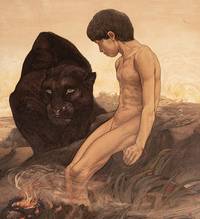
ref. 06188London: Macmillan & Co. Limited 1903. Beauty That Hath Terror in It" The Detmold Brothers' Sublime and Unsettling Vision of The Jungle Book The Magnificent Original 1903 Folio Portfolio with Sixteen Superb Color Plates KIPLING Rudyard. DETMOLD Maurice & Edward J. illustrators. Sixteen Illustrations of Subjects from Kipling's "Jungle Book" by Messrs. Maurice & Edward Detmold. London: Macmillan & Co. Limited 1903. First edition. Reportedly limited to 500 copies for England and America. Folio 21 3/8 x 15 1/2 inches; 543 x 394 mm. Title-page contents leaf and sixteen magnificent color plates tipped onto white boards within gray window mounts each accompanied by a protective cover sheet bearing the title and a short extract from Kipling's text. Title-page and list of illustrations expertly repaired at folds; second plate description with short marginal tear; some light foxing to text leaves and mounts only. The plates themselves are remarkably clean fresh and beautifully preserved. Original publisher's green cloth portfolio front cover decoratively stamped and lettered in gilt retaining one of the two original green silk ties. An excellent example of one of the most magnificent and celebrated achievements of Edwardian book illustration exceptionally scarce complete with all sixteen plates. Published in 1903 when the extraordinary twin brothers Maurice and Edward Julius Detmold were just twenty years old this monumental portfolio represents the culmination of their artistic collaboration and one of the finest visual interpretations of Rudyard Kipling's The Jungle Book ever produced. The sixteen superb compositions reveal an astonishing maturity of conception and execution. Combining meticulous natural history observation with an intensely personal decorative imagination the Detmolds created a world at once beautiful mysterious and faintly menacing in which the distinction between the natural and the supernatural seems perpetually uncertain. Animals are rendered with extraordinary anatomical precision their musculature fur scales and movement observed with almost scientific exactitude. Yet these are far more than zoological studies. Wolves possess an almost monumental dignity; panthers move with a sinister effortless grace; serpents coil with hypnotic inevitability; and the great tiger Shere Khan emerges as an embodiment of majestic and terrifying power. The brothers' remarkable understanding of animal character is matched by their sensitivity to atmosphere and composition. Their creatures appear not merely as participants in Kipling's narratives but as independent beings endowed with intelligence memory and an almost human consciousness. Particularly striking are the representations of Mowgli whose slender youthful figure is repeatedly contrasted with the formidable creatures surrounding him. His vulnerability is balanced by a quiet assurance suggesting his extraordinary position between the human and animal worlds. The Detmolds avoid the sentimentality often associated with illustrations of childhood instead emphasizing Mowgli's intimate identification with the jungle and its inhabitants. In the celebrated scenes depicting Bagheera Baloo Akela and the Monkey People the artists achieve an extraordinary balance between narrative drama and decorative design. The Monkey People particularly in their ruined architectural surroundings are among the most unsettling creations in the series their restless gestures and grotesque attitudes suggesting a strange parody of human society. Equally remarkable is the brothers' use of color. Their sumptuous yet carefully controlled palette of burnished browns smoky grays subdued greens and golden ochres lends the compositions an almost dreamlike quality. Subtle gradations of tone together with intricate patterns of foliage fur and stone produce a richness and unity of design seldom equaled in contemporary illustration. The original large-format plates possess a depth delicacy and painterly quality that cannot be fully appreciated in the considerably reduced reproductions of the later book edition of 1908. Presented individually within their original window mounts they have the presence and visual authority of original watercolors. Indeed so successful were these images as independent works of art that many portfolios were subsequently broken up their individual plates removed for framing. The survival of a complete portfolio particularly one retaining its original publisher's cloth case and with the plates in such fresh condition is consequently especially desirable. The contemporary critical reception was enthusiastic. Reviewing the London exhibition of the original paintings the Manchester Guardian of November 5 1903 declared that the brothers: "are able to prevent their work from ever sinking to the level of mere illustration". The reviewer particularly admired the depiction of the Monkey People in the Cold Lairs describing it as: "full of character subtle observation and invention". Of the representation of Bagheera in Mowgli and the Red Flower the reviewer memorably observed that it possessed: "something of that beauty which hath terror in it". The same review praised the convincing and engaging portrayals of Baloo Nag Kaa and Akela recognizing in the Detmolds' work an extraordinary fusion of imaginative invention and naturalistic observation. A report published in the New York Times on December 5 1903 stated that the edition was strictly limited to 500 copies for England and America emphasizing the exclusivity of this magnificent production from the outset. The portfolio is particularly significant in the history of the Detmold brothers' careers. Born in 1883 Maurice and Edward developed their exceptional artistic talents together displaying an early and remarkable aptitude for the representation of birds animals and the natural world. Their close collaboration produced some of the most distinctive illustrated publications of the opening years of the twentieth century. Tragically Maurice took his own life in 1908 bringing their artistic partnership to a premature end. Edward continued to enjoy a distinguished career as an illustrator but the works produced jointly by the brothers retain a unique place in the history of British illustration. As Richard Dalby observed the paintings were admired for their realistic detail and decorative arrangement while Diana Johnson identified the extraordinary tension between their scientific naturalism and ornamental imagination a combination capable of producing images both fanciful and profoundly disturbing. A masterpiece of the Golden Age of Illustration this spectacular portfolio stands among the finest achievements of the Detmold brothers and one of the most beautiful and psychologically compelling interpretations of Kipling's immortal jungle stories. Complete examples of the original 1903 folio portfolio are increasingly difficult to obtain and the present copy with all sixteen plates clean and fresh and preserved in its original gilt-decorated publisher's portfolio is an especially attractive survival. London: Macmillan & Co., Limited, 1903 unknown
ref. 06188London: Macmillan & Co. Limited 1903. Beauty That Hath Terror in It" The Detmold Brothers' Sublime and Unsettling Vision of The Jungle Book The Magnificent Original 1903 Folio Portfolio with Sixteen Superb Color Plates KIPLING Rudyard. DETMOLD Maurice & Edward J. illustrators. Sixteen Illustrations of Subjects from Kipling's "Jungle Book" by Messrs. Maurice & Edward Detmold. London: Macmillan & Co. Limited 1903. First edition. Reportedly limited to 500 copies for England and America. Folio 21 3/8 x 15 1/2 inches; 543 x 394 mm. Title-page contents leaf and sixteen magnificent color plates tipped onto white boards within gray window mounts each accompanied by a protective cover sheet bearing the title and a short extract from Kipling's text. Title-page and list of illustrations expertly repaired at folds; second plate description with short marginal tear; some light foxing to text leaves and mounts only. The plates themselves are remarkably clean fresh and beautifully preserved. Original publisher's green cloth portfolio front cover decoratively stamped and lettered in gilt retaining one of the two original green silk ties. An excellent example of one of the most magnificent and celebrated achievements of Edwardian book illustration exceptionally scarce complete with all sixteen plates. Published in 1903 when the extraordinary twin brothers Maurice and Edward Julius Detmold were just twenty years old this monumental portfolio represents the culmination of their artistic collaboration and one of the finest visual interpretations of Rudyard Kipling's The Jungle Book ever produced. The sixteen superb compositions reveal an astonishing maturity of conception and execution. Combining meticulous natural history observation with an intensely personal decorative imagination the Detmolds created a world at once beautiful mysterious and faintly menacing in which the distinction between the natural and the supernatural seems perpetually uncertain. Animals are rendered with extraordinary anatomical precision their musculature fur scales and movement observed with almost scientific exactitude. Yet these are far more than zoological studies. Wolves possess an almost monumental dignity; panthers move with a sinister effortless grace; serpents coil with hypnotic inevitability; and the great tiger Shere Khan emerges as an embodiment of majestic and terrifying power. The brothers' remarkable understanding of animal character is matched by their sensitivity to atmosphere and composition. Their creatures appear not merely as participants in Kipling's narratives but as independent beings endowed with intelligence memory and an almost human consciousness. Particularly striking are the representations of Mowgli whose slender youthful figure is repeatedly contrasted with the formidable creatures surrounding him. His vulnerability is balanced by a quiet assurance suggesting his extraordinary position between the human and animal worlds. The Detmolds avoid the sentimentality often associated with illustrations of childhood instead emphasizing Mowgli's intimate identification with the jungle and its inhabitants. In the celebrated scenes depicting Bagheera Baloo Akela and the Monkey People the artists achieve an extraordinary balance between narrative drama and decorative design. The Monkey People particularly in their ruined architectural surroundings are among the most unsettling creations in the series their restless gestures and grotesque attitudes suggesting a strange parody of human society. Equally remarkable is the brothers' use of color. Their sumptuous yet carefully controlled palette of burnished browns smoky grays subdued greens and golden ochres lends the compositions an almost dreamlike quality. Subtle gradations of tone together with intricate patterns of foliage fur and stone produce a richness and unity of design seldom equaled in contemporary illustration. The original large-format plates possess a depth delicacy and painterly quality that cannot be fully appreciated in the considerably reduced reproductions of the later book edition of 1908. Presented individually within their original window mounts they have the presence and visual authority of original watercolors. Indeed so successful were these images as independent works of art that many portfolios were subsequently broken up their individual plates removed for framing. The survival of a complete portfolio particularly one retaining its original publisher's cloth case and with the plates in such fresh condition is consequently especially desirable. The contemporary critical reception was enthusiastic. Reviewing the London exhibition of the original paintings the Manchester Guardian of November 5 1903 declared that the brothers: "are able to prevent their work from ever sinking to the level of mere illustration". The reviewer particularly admired the depiction of the Monkey People in the Cold Lairs describing it as: "full of character subtle observation and invention". Of the representation of Bagheera in Mowgli and the Red Flower the reviewer memorably observed that it possessed: "something of that beauty which hath terror in it". The same review praised the convincing and engaging portrayals of Baloo Nag Kaa and Akela recognizing in the Detmolds' work an extraordinary fusion of imaginative invention and naturalistic observation. A report published in the New York Times on December 5 1903 stated that the edition was strictly limited to 500 copies for England and America emphasizing the exclusivity of this magnificent production from the outset. The portfolio is particularly significant in the history of the Detmold brothers' careers. Born in 1883 Maurice and Edward developed their exceptional artistic talents together displaying an early and remarkable aptitude for the representation of birds animals and the natural world. Their close collaboration produced some of the most distinctive illustrated publications of the opening years of the twentieth century. Tragically Maurice took his own life in 1908 bringing their artistic partnership to a premature end. Edward continued to enjoy a distinguished career as an illustrator but the works produced jointly by the brothers retain a unique place in the history of British illustration. As Richard Dalby observed the paintings were admired for their realistic detail and decorative arrangement while Diana Johnson identified the extraordinary tension between their scientific naturalism and ornamental imagination a combination capable of producing images both fanciful and profoundly disturbing. A masterpiece of the Golden Age of Illustration this spectacular portfolio stands among the finest achievements of the Detmold brothers and one of the most beautiful and psychologically compelling interpretations of Kipling's immortal jungle stories. Complete examples of the original 1903 folio portfolio are increasingly difficult to obtain and the present copy with all sixteen plates clean and fresh and preserved in its original gilt-decorated publisher's portfolio is an especially attractive survival. London: Macmillan & Co., Limited, 1903 unknown books
1935ref. 277439Budapest: George Vajna 1935. Limited. hardcover. near fine. Translated by Frances Shires. Ten original colored etchings by Lidia Farkas and Zoltan Poharnok. Thin 8vo unpaged bound in linen with an embroidered decoration. Budapest: Dr. George Vajna & Co. n.d. ca.1935. Limited Edition. Number 103 of 250 copies signed by both artists. The etchings are printed by hand-press and are hand-colored. Small damp-stain on the upper corner of the binding otherwise a fine copy of this exquisite and quite rare book printed in Hungary. George Vajna unknown
1935ref. 277439Budapest: George Vajna 1935. Limited. hardcover. near fine. Translated by Frances Shires. Ten original colored etchings by Lidia Farkas and Zoltan Poharnok. Thin 8vo unpaged bound in linen with an embroidered decoration. Budapest: Dr. George Vajna & Co. n.d. ca.1935. Limited Edition. Number 103 of 250 copies signed by both artists. The etchings are printed by hand-press and are hand-colored. Small damp-stain on the upper corner of the binding otherwise a fine copy of this exquisite and quite rare book printed in Hungary. George Vajna unknown books
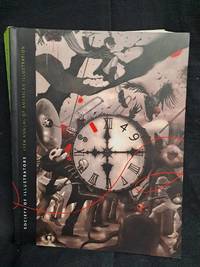
ref. 475401Collins Design. Paperback. Fair. This is a collection of contemporary illustrations selected by the oldest and most prestigious jury from the Society of Illustrators. The winners are catagorized under editorial book advertising and institution. Collins Design paperback
2016ref. 1852806229Society of Illustrators 2016. Paperback. Good. Former library book; Pages can have notes/highlighting. Spine may show signs of wear. ~ ThriftBooks: Read More Spend Less.Ex-Library copy with typical library marks and stamps. Shelf and handling wear to cover and binding with general signs of previous use. Covers show shelf wear and creasing. Sticker residue on bottom of spine strip. Binding is sound; no writing or other markings. Secure packaging for safe delivery.Dust jacket quality is not guaranteed. Society of Illustrators paperback
ref. Z1-Q-003-03172Collins Design / Society of Illustrators. Used - Good. Ships from UK in 48 hours or less usually same day. Your purchase helps support Sri Lankan Children's Charity 'The Rainbow Centre'. Ex-library so some stamps and wear but in good overall condition. 100% money back guarantee. We are a world class secondhand bookstore based in Hertfordshire United Kingdom and specialize in high quality textbooks across an enormous variety of subjects. We aim to provide a vast range of textbooks rare and collectible books at a great price. Our donations to The Rainbow Centre have helped provide an education and a safe haven to hundreds of children who live in appalling conditions. We provide a 100% money back guarantee and are dedicated to providing our customers with the highest standards of service in the bookselling industry. Collins Design / Society of Illustrators unknown