4291 risultati
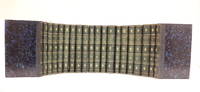
1842rif. 73008Furne Dubochet Hetzel & Paulin puis Alexandre Houssiaux | Paris 1842-1855 | 14.50 x 22 cm | 20 volumes reliés
1840rif. 77055Léon Curmer | Paris 1840-1842 | 18 x 26.50 cm | 11 volumes reliés
rif. 04944Paris: Chez Aubert et Cie 1839. Daumier's Greatest Comic Masterpiece The Exceptionally Rare Original Hand-Colored Quarto Edition One Hundred and One Magnificent Hand-Colored Lithographs DAUMIER Honoré. PHILIPON Charles. Les Cent et Un Robert-Macaire composés et dessinés par M. H. Daumier. Paris: Aubert et Cie 1839. First quarto edition. Original hand-colored issue. Two quarto volumes 10 3/8 x 8 inches; 264 x 203 mm. With 101 magnificent hand-colored lithographed plates all heightened with gum arabic. Contemporary red chagrin over silk paper-covered boards elaborately blocked in gilt all edges gilt. A few text leaves toned occasional scattered foxing largely confined to margins but an unusually attractive copy. The original contemporary hand-coloring remains exceptionally bright and fresh throughout. Few creations in the history of nineteenth-century illustration proved more influential than Robert Macaire. Originally a theatrical rogue invented by Frédérick Lemaître for the melodrama L'Auberge des Adrets the character was transformed by Charles Philipon and Honoré Daumier into the very personification of modern society's corruption speculation opportunism and commercial fraud. Unable to attack King Louis-Philippe directly after the tightening of censorship Philipon and Daumier turned their attention from politics to society itself. Robert Macaire became the perfect vehicle through which they could ridicule bankers lawyers stockbrokers politicians journalists industrialists doctors inventors philanthropists publishers and virtually every profession created by the rapidly expanding bourgeois economy. No enterprise was too respectable to escape his schemes no victim too sophisticated to become his dupe. The result was one of the supreme achievements of French social satire. First issued individually in Le Charivari and later collected in the celebrated Caricaturana the series enjoyed immense contemporary popularity. So great was the demand that Aubert published this reduced quarto edition in 1839 in an edition of approximately six hundred sets. While the lithographs are reductions of Daumier's original folio compositions they preserve the extraordinary vitality of his draftsmanship and remain among the most entertaining illustrated books of the nineteenth century. As Gordon N. Ray observed: "Les Robert-Macaire remains Daumier's best-known series." He further noted that although these reduced lithographs are generally less accomplished than the original folio issues they are "not often found colored." That observation greatly understates the rarity of copies retaining their original contemporary hand-coloring. The present example is distinguished not only by its completeness but by the remarkable freshness of its coloring whose delicate palette and gum arabic highlights considerably enhance the visual brilliance of every plate. More than simply comic entertainment Les Cent et Un Robert-Macaire constitutes one of the great illustrated chronicles of the July Monarchy. Daumier and Philipon expose an age intoxicated by speculation finance political ambition and commercial enterprise yet their satire remains astonishingly modern. Robert Macaire is not merely a nineteenth-century swindler; he is the eternal confidence man continually reinventing himself to exploit every new opportunity offered by society. Few illustrated books better demonstrate Daumier's extraordinary gifts as both artist and storyteller. Across one hundred and one brilliantly conceived scenes Robert Macaire appears in every imaginable disguise - stock promoter publisher lawyer inventor politician philanthropist physician military entrepreneur newspaper editor art dealer and countless others - each episode exposing another facet of bourgeois hypocrisy with inexhaustible invention and comic brilliance. Beautiful original hand-colored examples of this celebrated work are among the most desirable of all nineteenth-century French illustrated books and are encountered only rarely on the market. Paris: Chez Aubert et Cie, , 1839 unknown
1842rif. 73008Paris: FurneDubochetHetzel & Paulinpuis Alexandre Houssiaux 1842. Fine. Furne Dubochet Hetzel & Paulin puis Alexandre Houssiaux Paris 1842-1855 14.50 x 22 cm 20 volumes reliés Honoré de BALZAC & Honoré DAUMIER & Charles Constant Albert Nicolas d'Arnoux de Limoges Saint-Saëns dit BERTALL & Paul GAVARNI & Tony JOHANNOT & Célestin NANTEUIL uvres complètes de H. de Balzac Complete Works Furne Dubochet Hetzel Paulin puis Alexandre Houssiaux Paris 1842-1855 14.5 x 22 cm 20 volumes in contemporary half shagreen First collective edition sold as the Works comprising as well as numerous texts published for the first time a new version of the Human Comedy reviewed and revised by Balzac. This is also the first illustrated edition. Contemporary half blue shagreen over marbled paper boards spines slightly sunned in five compartments with thin raised bands decorated with gilt dots and compartments with triple blind-ruled frames gilt fleurons to centre marbled endpapers and pastedowns. A little foxing in some volumes a very small stain to page 119 of volume 4 another to page 321 of volume 8 a tear to half-title of volume 9 a small damp stain to corner of pages 449 and following of volume 10 stain to pp. 173-74 of volume 14 stains to pages 303 to 307 of vol. 16. The full set of 152 hors-texte plates by the best artists of the age including Bertall Daumier Gavarni Johannot Nanteuil as well as illustrations to text. Four rejected plates have been added bringing the number of plates in this copy to 156. There are so many reasons for emphasising the interest of this edition one of the most important in French literature. Having had a turbulent existence and confused and having been several times republished in a great number of copies it is very rare in its first form and in this first version even rarer in a contemporary uniform binding than with a modern binding and the wrappers preserved cf Clouzot. A very good and rare copy in a contemporary uniform binding ca 1855 with all the plates called for by Clouzot and four additional ones. FurneDubochetHetzel & Paulinpuis Alexandre Houssiaux hardcover
1840rif. 77055Paris: Léon Curmer 1840. Fine. Léon Curmer Paris 1840-1842 18 x 26.50 cm 11 volumes reliés Les Français peints par eux-mêmes. Encyclopédie morale du dix-neuvième siècle Le Prisme with Les Anglais peints par eux-mêmes The French painted by themselves The English painted by themselves Léon Curmer Paris 1840-1842 18 x 265 cm 11 volumes in half morocco First edition one of the grand papier deluxe copies with two states of the illustrations for the 8 volumes of Les Français peints par eux-mêmes: one in black on tinted paper and one enhanced by hand using the so-called coloris gommé technique with watercolour and varnish on white paper. Les Anglais peints par eux-mêmes includes the engravings in black. No deluxe copies in colour have been made for this rare set of Les Français. Bound in half brown morocco spine in five compartments enhanced with stipple engraving and double gilt panels richly decorated with gilt floral motifs framing a mosaic medallion of green morocco with a gilt rose stamped in the center cartouches at the top decorated with a gilt garland framing the place and publication date some light minor rubbing on some compartments gilt fillets on the marbled paper boards comb-patterned endpapers top edges gilt. Elegant late nineteenth century bindings signed Durvand-Thiret. Complete with all engravings along with added engravings i.e. 930 engravings including 415 in colour. Title pages dated 1841 for all volumes of Les Français except for volume 5 of Les Parisiens and volume 3 of La Province dated 1842. Les Français peints par eux-mêmes has 415 engravings in black including that of Napoleon on horseback instead of the 405 announced and 415 in colour including a double page map of France in volume III of the Province. The English volume illustrated by Kenny Meadous is complete with 100 plates in black. This unique set contains in total almost a thousand black and coloured engravings and more than 1500 in-text illustrations. Famous gallery of woodcut portraits depicting the social classes of the 19th century by the greatest artists of the time: Gavarni Daumier Delacroix Grandville Johannot Bellangé Charlet Daubigny etc. The portraits are all accompanied by original texts from the most famous Romantic authors including: Balzac Nodier Gautier Nerval Gozlan Janin Karr etc. Scarce foxing affecting mainly the Prism and the Anglais. The texts and illustrations of the book paint a lively picture of inhabitants and their trade in metropolitan France and its colonies. It sets the tone for panoramic literature a new genre coined by Walter Benjamin in Charles Baudelaire. A lyric poet at the height of capitalism. In addition to these portraits of the Français the contribution of a whole areopagus of great and small authors and illustrators S. Le Men La 'littérature panoramique' dans la genèse de la Comédie Humaine: Balzac et Les Français peints par eux-mêmes L'Année balzacienne 2002/1 No. 3 CAIRN includes some of the most renowned authors and cartoonists of the time each of whom made an original creation for the project. This protean fresco was directed by editor Léon Curmer already known for the publishing success of Paul et Virginie between 1836 and 1838. Curmer is represented here by an article L'éditeur in volume IV written by Elias Regnault. The latter takes example in Louis-Sebastien Mercier's Tableau de Paris published in 1781 whose vision is even further extended by the representation of French provinces in Les Français. Thanks to Curmer the work finds an even deeper meaning: the editor has widened his frame and instead of letting a few fleeting portraits get lost in the immense daily whirlwind that engulfs all things he has sought to bring together the most salient physiognomies of that time. S. Le Men Ibid. Curmer selected the authors and illustrators closest to the ones they depict: It is therefore a question of calling upon authors and illustrators who are wel Léon Curmer hardcover
rif. 04944Paris: Chez Aubert et Cie 1839. An Exceptionally Rare Original Hand-Colored Copy DAUMIER Honoré illustrator. PHILIPON Charles. Les Cent et Un Robert-Macaire composés et dessinés par M. H. Daumier sur les Idées et les Légendes de M. Ch. Philipon réduits et lithographiés par MM; Texte par MM. Maurice Alhoy et Louis Huart. Paris: Chez Aubert et Cie 1839. First Quarto Edition Hand Colored Issue. Two quarto volumes bound in one. 10 3/8 x 8 inches; 264 x 203 mm. viii 200 1 1 blank 4 advertisements ; viii 202 1 1 blank 4 advertisements pp. With 101 magnificent hand-colored lithographed plates heightened with gum Arabic. A few text leaves with toning some light scattered foxing which generally only affects the blank plate margins still a very good copy of the excessively rare hand-colored issue. Contemporary red chagrin over silk paper boards stamped in gilt. Smooth spines decoratively tooled and lettered in gilt all edges gilt. Front pastedowns with the engraved bookplate of "AM". "Les Robert-Macaire remains Daumier's best-known series.Baudelaire chose it along with Histoire ancienne for specific discussion in his essay on French caricaturists and Carteret accorded it a place in his bibliography. Its contemporary popularity was immense. As an album it was published by Aubert in an edition of 2500 copies a far larger number than for any other series. Yet so persistent was the demand that 600 two-volume sets of reduced copies called Les cent-et-un Robert-Macaire were published in 1839.When politics became a forbidden topic in Le charivari where Caricaturana Les Robert-Macaire first appeared Daumier and Philipon turned to social satire. If they could not attack Louis Philippe directly they could at least show the kind of society that flourished under his gross and venal regime. Taking the flamboyant and florid swindler Macaire from the character that Frédérick Lemaître had created in a hack melodrama called L'Auberge des adrets they showed him and his inseparable companion the dejected and meager Bertrand ranging through all kinds of commercial enterprise in the stock market in the banks in the courts and in dozens of other public settings never failing to find eager dupes. Macaire is equally persuasive in the encounters of private life where no situation finds him at a loss for an appropriate flower of sentiment.Though Daumier's designs are superb in themselves particularly in the variety of supple and telling poses.that he conceives for Macaire and Bertrand they would be incomplete without the unfailing wit and point of Philipon's captions" Ray The Art of the French Illustrated Book pp. 234-236. "These reduced and for the most part reversed copies of Daumier's lithographs apparently drawn by Menut Alophe are greatly inferior to the originals. Unlike Caricaturana the series is not often found colored" Ray The Art of the French Illustrated Book p. 236. Carteret III p.187. Ray The Art of the French Illustrated Book 162. Vicaire III cols. 31-32 under Alhoy and V cols. 572-573 under Philipon. Paris: Chez Aubert et Cie, , 1839 unknown books
rif. 05957Paris: Chez Aubert et Cie Éditeurs du Musée pour Rire 1839. An Exceptionally Rare Hand-Colored Copy DAUMIER Honoré illustrator. Les Cent et un Robert-Macaire composés et dessinés par M. H. Daumier sur les idées et les légendes de M. Ch. Philipon réduits et lithographiés par MM. ; texte par MM Maurice Alhoy et Louis Huart. Paris: Chez Aubert et Cie Éditeurs du Musée pour Rire 1840 and 1839. First Printing of 101 lithographed plates after Honoré Daumier reduced from the plates published in the Charivari in 1836-1838. Two quarto volumes 10 1/4 x 8 inches; 260 x 203 mm. 8 200 4 publisher's advertisements; 8 204 4 publisher's advertisements pp. With 101 fine hand-colored lithographed plates heightened with gum arabic. Contemporary half dark purple polished calf decoratively ruled in gilt over brown diaper-grain cloth boards. Smooth spines decoratively tooled and lettered horizontally in gilt. Marbled edges. Joints expertly and almost invisibly restored. Some occasional light foxing and browning small light damp-stain in the upper blank margin of a few leaves in each volume. Volume I with small portion 5/8 x 1/4 inch of lower blank corner of second leaf of No. 4 torn away small piece torn from upper blank margin 1/4 x 1/2 inch of first leaf of No. 50. Volume II with a short tear 1/2 inch neatly repaired in the lower gutter of both leaves of No. 53. An excellent copy with superb hand coloring. "Les Robert-Macaire remains Daumier's best-known series.Baudelaire chose it along with Histoire ancienne for specific discussion in his essay on French caricaturists and Carteret accorded it a place in his bibliography. Its contemporary popularity was immense. As an album it was published by Aubert in an edition of 2500 copies a far larger number than for any other series. Yet so persistent was the demand that 600 two-volume sets of reduced copies called Les cent-et-un Robert-Macaire were published in 1839.When politics became a forbidden topic in Le charivari where Caricaturana Les Robert-Macaire first appeared Daumier and Philipon turned to social satire. If they could not attack Louis Philippe directly they could at least show the kind of society that flourished under his gross and venal regime. Taking the flamboyant and florid swindler Macaire from the character that Frédérick Lemaître had created in a hack melodrama called L'Auberge des adrets they showed him and his inseparable companion the dejected and meager Bertrand ranging through all kinds of commercial enterprise in the stock market in the banks in the courts and in dozens of other public settings never failing to find eager dupes. Macaire is equally persuasive in the encounters of private life where no situation finds him at a loss for an appropriate flower of sentiment.Though Daumier's designs are superb in themselves particularly in the variety of supple and telling poses.that he conceives for Macaire and Bertrand they would be incomplete without the unfailing wit and point of Philipon's captions" Ray The Art of the French Illustrated Book pp. 234-236. "These reduced and for the most part reversed copies of Daumier's lithographs apparently drawn by Menut Alophe are greatly inferior to the originals. Unlike Caricaturana the series is not often found colored" Ray The Art of the French Illustrated Book p. 236. Carteret III 187; Ray The Art of the French Illustrated Book 162; Vicaire III cols. 31-32 under Alhoy and V cols. 572-573 under Philipon. Paris: Chez Aubert et Cie, Éditeurs du Musée pour Rire, 1839 unknown
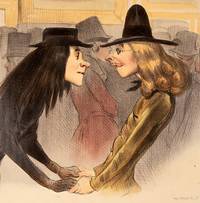
rif. 05964Paris: Chez Aubert 1839. With 150 Hand-Colored Lithographs including Forty-Five by Honoré Daumier and Forty-Two by Gavarni DAUMIER Honoré Gavarni and others illustrators. ALHOY Maurice Louis Huart and Charles Philipon editors. Le Musée pour rire. Dessins par tous les caricaturistes de Paris; Texte par MM. Maurice Alhoy Louis Huart et Ch. Philipon. Paris: Chez Aubert Editeur des Cent-et-Un Robert-Macaire 1839-1840. Three quarto volumes 10 3/16 x 7 15/16 inches; 259 x 202 mm. 2 half-title 2 title 200 2 "Table" 4 publisher's advertisements; 2 half-title 2 title 200 2 "Table; 2 half-title 2 title 200 2 "Table 4 publisher's advertisements pp. With 150 numbered hand-colored lithographs heightened with gum arabic by Honoré Daumier forty-five Gavarni forty-two Frédéric Bouchot twenty-two Victor Adam ten Platier seven Benjamin i.e. Benjamin Roubaud four Bourdet three Pruche three Platel two Grandville two Edme-Jean Pigal two Alophe Menut two Charles Vernier two Charles-Joseph Traviès one and others. Early twentieth-century half red scored calf ruled in gilt over marbled boards by Adolphe Cuzin stamp-signed in gilt at foot of spine. Smooth spines decoratively tooled and lettered in gilt all edges gilt marbled endpapers. Expert and almost invisible minor restoration to corners and spine extremities. Occasional light foxing and/or browning. A wonderful copy. "The house of Aubert was ingenious in marketing its products. Its lithographs.were published one by one in periodicals like Le charivari and together in suites by the same artist without letterpress. Still a third form of publication was in albums made up of lithographs by several artists with accompanying texts. These collections most commonly took the form of volumes with the generic title Paris comique which consisted of twenty colored lithographs accompanied by quite unrelated texts. Aubert remarked that the resulting hodgepodge had 'a plan that is easy to follow for it consists in not having any' and in fact this was indeed a frugal procedure for reusing old texts and already published plates. The interest of the various volumes of Paris comique resides entirely in the lithographs they happen to contain. It can be considerable however since Daumier and Gavarni are the predominant artists. Le musée pour rire represents a more considerable effort on the part of Aubert. To accompany 150 lithographs including forty-five by Daumier among them twenty-seven from Croquis d'expressions and eight from La galerie physionomique and forty-two by Gavarni new commentaries were commissioned on each plate all except two by Alhoy and Huart. Daumier's lithographs were trimmed slightly and their captions were relettered. The designs of the other artists were provided with decorative frames. The whole was then published in three handsome volumes and in copies with expert contemporary coloring like this one Le musée pour rire is among the freshest and most attractive of romantic illustrated books" Ray The Art of the French Illustrated Book. Le Musée pour Rire "contained 150 lithographs by Daumier Gavarni Bouchot Traviès etc. These are re-impressions some of them in mirror image which had previously already been used for publication in Le Charivari. Most prints of the series 'Croquis d'expressions' are contained in the book. The name of the series is missing and the texts were printed in a different type than in the original Charivari version. We do not consider these prints original lithographies but rather prints 'after Daumier'" The Daumier Register at http://www.daumier-register.org. Ray The Art of the French Illustrated Book 164. Paris: Chez Aubert, 1839 unknown
rif. 51-2812Paris: Charles Philipon 1832-1833. A complete run of the first 211 issues each with an original lithograph. 2 volumes. Also included is the specimen issue no. 56 torn but all parts present.31 x 24 cm. Original red boards in poor condition. A few of the prints are torn without loss. Includes all the issues between December 1 1832 and June 30 1833. These early issues are printed on rag paper not the later wood pulp. Contains all 19 lithographs by Daumier: Delteil nos. 136-154. All prints with the "Timbre Royal" stamp. Paris: Charles Philipon, 1832-1833. hardcover
1823rif. B6599Honore Daumier incl. Chez Aubert and Cie; mostly 18230-1860's. Plates in very good condition; mostly crisp and clean; some minor reinforcements and tear repairs mainly marginal. Binding: Contemporary marbled boards; rebacked expertly saving the contemporary spine; flat spine with gilt lettered title on two and four; marbled endpapers. Marbled endpaper pasted to contemporary free endpaper. Notes: Honoré-Victorin Daumier 1808 – 1879 was a French printmaker caricaturist painter and sculptor whose many works offer commentary on social and political life of 19th century France. ‘Daumier produced more than 4000 lithographs 1000 wood engravings 1000 drawings . . perhaps best known for his caricatures of political figures and satires on the behavior of his countrymen. ‘During the reign of Louis Philippe Charles Philipon launched the comic journal 'La Caricature'. Daumier joined its staff which included such powerful artists as Devéria Raffet and Grandville and started upon his pictorial campaign of satire targeting the foibles of the bourgeoisie the corruption of the law and the incompetence of a blundering government. His caricature of the king as Gargantua led to Daumier's imprisonment for six months at Ste Pelagie in 1832. Soon after the publication of 'La Caricature' was discontinued but Philipon provided a new field for Daumier's activity when he founded the 'Le Charivari'. ‘Daumier produced his social caricatures for 'Le Charivari' in which he held bourgeois society up to ridicule in the figure of Robert Macaire hero of a popular melodrama. In another series 'L'histoire ancienne' he took aim at the constraining pseudo-classicism of the art of the period. In 1848 Daumier embarked again on his political campaign still in the service of 'Le Charivari' which he left in 1863 and rejoined in 1864. ‘Around the mid-1840s Daumier started publishing his famous caricatures depicting members of the legal profession known as 'Les Gens de Justice' a scathing satire about judges defendants attorneys and corrupt greedy lawyers in general. A number of extremely rare albums appeared on white paper covering 39 different legal themes of which 37 had previously been published in the 'Charivari'. It is said that Daumier's own experience as an employee in a bailiff's office during his youth may have influenced his rather negative attitude towards the legal profession. ‘In 1834 he produced the lithograph 'Rue Transnonain 15 April 1834' depicting the massacre in the rue transnoin which was part of the April 1834 riots in Paris. It was designed for the subscription publication 'L’Association Mensuelle'. The profits were to promote freedom of the press and defrayed legal costs of a lawsuit against the satirical politically progressive journal 'Le Charivari' to which Daumier contributed regularly. The police discovered the print hanging in the window of printseller Ernest Jean Aubert in the Galerie Véro-Dodat passageway in 1st arrondissement and subsequently tracked down and confiscated as many of the prints they could find along with the original lithographic stone on which the image was drawn. Existing prints of Rue Transnonain are survivors of this effort. The present collection is from series published in the Charivari: ACTUALITES CARICATURES DU JOUR. Celebrites de la Caricature CES BONS PARISIENS CROQUIS AQUATIQUES CROQUIS D’EXPRESSONS EN CHINE HISTOIRE ANCIENNE. La Caricature LA PECHE. LES BAIGNEURS. LES BANQUETEURS. LES BAS-BLEUS. LES BEAUX JOURS DE LA VIE. LES BONS BOURGEOIS LES PAPAS LES PHILANTROPES DU JOUR. LOCATAIRES ET PROPRIETAIRES. MOEURS CONJUGALES. PASTORALES. SILHOUETTES. TOUT CE QU’ON VOUDRA. Size: folio 350x258mm; plates Illustration: Illustrated with Charivari’s publication title ‘Les Bohemiens’; and a collection of onehundred 100 leaves with lithographs by Honore Daumier most signed within the plate in black 73 or contemporary hand-colour 27; plates from various series listed below of varying sizes printed in the publication ‘Le Charivari’. Two plates are repeated 52 & 63 and 45 & 65 respectively. Provenance: The thirty-seventh 37th bound plate has a marginal round ink stamp: Transation: Titles and captions Pages: Ll: bl. title 100 engraved leaves bl. Category: Book Caricatures; Book Europe France; Book Plate Books Colour; Honore Daumier, incl. Chez Aubert and Cie; hardcover
rif. 04953Paris: Léopold Pannier et Cie. 1841. An Exceptionally Rare Daumier Album Seven Series Complete Containing Fifty Humorous Lithographs DAUMIER Honoré illustrator. Variétés Drolatiques. Vulgarités. - Les Musiciens de Paris. - Proverbes de famille. - Proverbes et Maximes. - La Peche. - La Journée du Celibataire. - Les Saltimbanques. 50 Planches. Paris: Léopold Pannier et Cie. 1841. Vulgarités. 10 plates DR 905-914 Les Musiciens de Paris. 6 plates DR 919-924 Proverbes de famille. 2 plates DR 797-798 Proverbes et Maximes. 12 plates DR 803-814 La Peche. 7 plates DR 815-821 La Journée du Celibataire. 12 plates DR 607-618 Les Saltimbanques. 1 plate DR 620 Total 50 plates complete. "Pannier published a separate album with the title "Variétés Drolatiques" par Daumier Paris 1 vol. in-4° demi chagr. It contains the following complete seriessur blanc bringing the total of prints to 50:Vulgarités Musiciens de Paris Proverbes de Famille Proverbes et Maximes La Pêche Journée du Célibataire und Les Saltimbanques." This album can be considered rare." Daumier Register. OCLC locates just three of the plates from Proverbes Maximes. Nos. 6 9 and 11 all at Washington University OR USA. We located just one copy at auction - sold between October 1898 and July 1899!!! The only plate that appears in the Armand Hammer Daumier collection is the second plate of La Peche p.67 Bound together with: Exceedingly Rare Daumier Histoire Ancienne Complete with Fifty Superb Lithographs DAUMIER Honoré. illustrator. PHILIPON Charles. Histoire Ancienne. Paris: Chez Aubert 1841-1843. Folio 13 3/16 x 10 inches; 335 x 254 mm. Fifty superb lithograph plates. Some intermittent mainly marginal foxing. Together 100 fine lithograph plates containing two of Daumier's rarest suites both complete. Contemporary quarter dark brown morocco over marbled boards spine with four raised bands ruled in blind and lettered in gilt marbled end-papers. A near fine and complete example of two of Honoré Daumier's finest and rarest works. There is only one copy of Histoire Ancienne located in libraries and institutions worldwide The Bibliotheque Nationale de France. "This series of 50 lithos on characters in ancient history and mythology appeared between 1841 and 1843. Daumier's irreverent satirizing of the sacred characters in Greek and Roman mythology contributed to the Romantic attack upon the Classical school in the continuing battle waged in the theater literature and the arts. Philipon's contrived poems as captions to the series contain many veiled allusions to Louis-Philippe and individuals in his reign." Plate no. 22. "Le Baptême D'Achille." The baptism of Achilles; As one tempers a weapon of war Thetis wishing to make a hero of her brat dipped him in the Styx as soon as he saw the light which proves that a bath is good for all purposes. - On the Influence of Baths poem by Mr. Vigier. Deltail # 946. Plate no. 46. "La Mère des Gracques." The mother of the Gracchi: One day when a gay lady was shamelessly praising her jewels which were worth a few cents this Roman mother showing her two young sons the hope of the country said "Behold my only jewels!" - Plutarch. Deltail # 970. This well-known story provided Daumier the chance to portray two typical Frenchwomen with typical unruly children. Deltail # 970. Plate no. 47. "Pygmalion." O triumph of the arts! What was your amazement great sculptor when you saw your marble come to life and in a chaste and gentle manner slowly bow down to ask you for a pinch of snuff. - Count Siméon. Deltail # 971. Charles F. Ramus editor. Daumier 120 Great Lithographs Histoire Ancienne is a series consisting of 50 numbered lithographs DR. 925-974 which appeared in the Charivari between December 1841 and January 1843. Between December 1841 and January 1843 Honoré Daumier in the Charivari published a series devoted to ancient history: fifty plates to antique themes seventeen of which illustrating the Iliad the Odyssey and Telemachus of Fenelon. "Alone without scientific mission Daumier traveled Greece drawing where a beautiful feeling attached him crying where a touching tradition was waiting. Drawing day and night he finally found the original Greek sense." says the satirical newspaper. The cartoonist wants to infuse "life movement privacy anything that lacked" the Greek hero petrified by ancient sculpture. Some illustrations comic relief reminiscent of Greek tombstones Daumier modernized by the effects of perspective or shortcuts. For each board a comment from a few to a "translation" of Homer crazy "light poetry" underline the ironic look worn by Daumier on antiquity. "A quarrel between painters of the classic and romantic schools had fully flared up. Delacroix asked the "loaded" question: "Qui me délivrera des Grecs et des Romains" Who redeems us from the Greeks and Romans. Daumier succeeded to answer it his own way by showing historic personalities such as Hercules Pygmalion or Agamemnon in absurd situations. It was his method to put history into perspective. In December 1841 the Charivari announced the arrival of this series as follows: "We have sent Monsieur Daumier to Greece alone and without any scientific support. He worked day and night to reveal the Greek soul of the past. Daumier brings antiquity back to us". The lithographs of the series "Histoire Ancienne" were published between 1841 and 1843. Daumier was far ahead of his time when he started as one of the first to show how relative the importance of Greek and Roman Mythology can be in a modern world. The admirers of ancient history especially in Arts however were not dissipated easily. It would take another 15 years until Baudelaire in literature and Offenbach in music de-mystified the "old Greeks" and removed the centuries old dust from them." The Daumier Registry Deltail. Catalogue raisonné de l'oeuvre lithographées de Honoré Daumier 925-974; Beraldi Les Graveurs du XIX siècle V p. 126; Ramus p. 126. Paris: Léopold Pannier et Cie., 1841 unknown books
rif. 04953Paris: Léopold Pannier et Cie. 1841. One Hundred Masterpieces by Honoré Daumier Two Exceptionally Rare Complete Albums Bound Together One Hundred Superb Lithographs Satirizing Parisian Life and the Classical World DAUMIER Honoré illustrator. Variétés Drolatiques. Paris: Léopold Pannier et Cie. 1841. First collected edition. Folio 13 3/16 x 10 inches; 335 x 254 mm. Publisher Léopold Pannier gathered together seven of Daumier's finest humorous series into a single album comprising fifty lithographs: Vulgarités 10 plates complete Les Musiciens de Paris 6 plates complete Proverbes de Famille 2 plates complete Proverbes et Maximes 12 plates complete La Pêche 7 plates complete La Journée du Célibataire 12 plates complete Les Saltimbanques 1 plate as issued in the album A total of fifty lithographs. As noted by the Daumier Register: "Pannier published a separate album with the title Variétés Drolatiques. containing seven complete series. bringing the total number of prints to fifty. This album can be considered rare." Far scarcer than the individual lithographs themselves this publisher's album represents one of the earliest attempts to preserve Daumier's celebrated caricatures in collected form. The seven suites encompass every aspect of Parisian life - from domestic quarrels and bachelorhood to musicians fishermen itinerant entertainers and the comic absurdities of bourgeois society. Together they provide an extraordinary survey of Daumier's mature genius during the early years of the July Monarchy. Institutionally the album is exceptionally elusive. OCLC records only three individual plates from Proverbes et Maximes in public collections while we have located only a single complete copy appearing at auction sold between October 1898 and July 1899. Even the celebrated Armand Hammer Collection includes only a single plate from La Pêche. Bound with Histoire Ancienne Daumier's Brilliant Satire on Classical Antiquity DAUMIER Honoré illustrator. PHILIPON Charles. Histoire Ancienne. Paris: Chez Aubert 1841-1843. Complete with fifty lithographed plates. Together the two works comprise one hundred superb lithographs. Contemporary quarter dark brown morocco over marbled boards spine with four raised bands ruled in blind and lettered in gilt marbled endpapers. A near fine complete example. One of Daumier's most original and intellectually ambitious achievements Histoire Ancienne transforms the heroes and gods of Greece and Rome into recognizably nineteenth-century Parisians. Achilles Ulysses Hercules Jupiter and countless other classical figures are stripped of their heroic grandeur and recast as vain bourgeois comic bureaucrats quarrelsome husbands and pretentious social climbers. Published between 1841 and 1843 the series formed part of the Romantic assault upon academic Classicism then dominating French art and literature. Charles Philipon's witty accompanying texts contain numerous veiled political references to the reign of King Louis-Philippe making the series not merely humorous but a sophisticated exercise in social and political satire. Among the finest plates are: Le Baptême d'Achille in which the infant Achilles is plunged into the Styx with comic domestic realism rather than epic grandeur. La Mère des Gracques perhaps the best-known image in the series where the famous Roman matron proudly presents her boisterous children as her "only jewels" allowing Daumier to transform an episode from Plutarch into a scene from contemporary Parisian family life. Complete copies are extraordinarily uncommon. We have located only a single institutional example worldwide at the Bibliothèque nationale de France. Bound together these two remarkable albums contain one hundred original lithographs spanning every facet of Daumier's genius - from the comic theater of everyday Parisian existence to his devastating reinterpretation of the ancient world. Few nineteenth-century caricature albums combine such artistic brilliance historical importance and genuine rarity. An exceptional opportunity to acquire two of the master's most elusive and complete lithographic series in a handsome contemporary binding. Paris: Léopold Pannier et Cie., 1841 unknown
rif. 06343Paris: Chez Aubert 1844. One of Daumier's most Iconic Albums from the early 1840s Published at the height of Parisian Tourism and Bourgeois Curiosity Twenty Magnificent Hand Colored Lithographs DAUMIER Honoré de. Les Étrangers à Paris. Paris: Chez Aubert 1844. First edition. Folio 13 1/8 x 9 7/8 inches; 333 x 251 mm. Complete with twenty magnificent hand-colored lithographs heightened with gum arabic drawn and lithographed by Honoré Daumier printed on strong wove paper. Publisher's dark blue ribbed cloth covers bordered in blind upper cover decoratively lettered in gilt. Smooth spine original pale yellow endleaves. Sixteen-page Aubert publisher's catalogue at rear moderately foxed. Plates crisp and luminous colors vibrant and unfaded gum arabic highlights glossy and intact; with just a few faint marginal fox spots. A fine fresh and very scarce complete copy of this celebrated satirical album caricaturing foreign tourists and provincials adrift in mid-nineteenth-century Paris. Rarely found with the hand-coloring so vivid and the publisher's binding so well preserved. Les Étrangers à Paris stands as one of Daumier's most iconic albums from the early 1840s published by Aubert at the height of Parisian tourism and bourgeois curiosity. It forms a satirical ethnography of the provincial rural and foreign types who in increasing numbers descended upon the capital with wonder - and were swiftly disillusioned or ridiculed. These lithographs were originally issued separately in the Charivari and then collected by Aubert for publication in this folio edition. The rarity of complete hand-colored examples especially in such crisp condition with the original Aubert publisher's cloth binding and catalogue cannot be overstated. Two of the lithographs nos. 3 & 14 are featured in Daumier 120 Great Lithographs edited by Charles F. Ramus nos. 48 & 49. 1. L'arivée 2. L'Indispensable visite chez le tailleur du Palais-Royal 3. Ce qu'on appèle diner au restaurant 4. Quelques lègères emplèttes 5. Un obligeant cicerone 6. Une émotion au jardin des plantes 7. Une lègère queue a la porte du Palais de L'Industrie 8. Un èpisode de l'Exposition 9. Ce qu'on appelle les sèductions de Paris 10. La visite a L'Hotel des Invalides 11. Une Llègère promenade en omnibus 12. Un diner a prix fixe 13. Un bal champètre de Paris 14. Grandes eaux à Versailles! 15. Les Étrangers dévisagés par eux memes 16. Le portrait au daguéréotype 17. Les magasins de plus en plus monstres 18. Le chapeau qu'on rapporte de Paris 19. Voi-tu cet imbècile qui ne s'appercoit pas que son tonneau fuit. 20. Le départ Carteret IV p.130 "rare et recherché"; L'Archtambault Catalogue de l'œuvre lithographié de Daumier p. 238; Ray The Art of the French Illustrated Book 162; Vicaire III 190. Paris: Chez Aubert, 1844 unknown
rif. 2998Album romantique de 205x260 mm, relie en basane maroquinee verte portant en super- libros sur le premier plat « Album ». Il se compose de feuillets de papier fort bleu montes sur onglets. Sur le verso de la premiere page, une table des matieres manuscrite.Les dessins au nombre de 39 sont colles a pleine page et certains d’entre eux sont decoupes, amputant une partie du dessin, ou sommairement replies en haut ou en bas. Certains dessins decoupes dans leur partie inferieure laissent deviner des ecritures au crayon qui ont ete otees. Un seul dessin, celui d’Anthony Thouret comporte une legende manuscrite.Le papier utilise est un papier fin, hativement decoupe. La plupart des dessins ont ete plies en deux ou en quatre. Certains semblent avoir ete mis sous enveloppe , certains ont ete dechires en tout ou partie puis recolles avec une bande en papier.
rif. 05441Paris: Chez Aubert 1838. Daumier's Masterpiece of French Social Satire The Complete Les Robert Macaire - One Hundred Magnificently Hand-Colored Lithographs Heightened with Gum Arabic An Extraordinary Copy in the Original Publisher's Blue Cloth with an Additional Plate from the Exceedingly Rare Second Series DAUMIER Honoré 1808-1879 illustrator and PHILIPON Charles 1800-1862. Les Robert Macaire Caricaturana. Paris: Chez Aubert August 1836-November 1838. First edition. Folio 13 3/16 x 10 3/8 inches; 338 x 263 mm. One hundred original hand-colored lithographed plates all heightened with gum arabic together with one additional hand-colored plate from the exceptionally scarce second series. The complete suite of one hundred plates from the first series is present. A remarkable bibliographical curiosity: In this copy plate 96 À tous les cœurs bien nés que la patrie est chère!! Daumier Register 451 published October 28 1838 was originally replaced by a plate from the second series Robert Macaire 2e Série No. 7: Nouveautés philanthropiques Daumier Register 872 published April 4 1841. The plate number has been altered in old ink to read "96" apparently at or before the time of binding although the circumstances of the substitution cannot be established with certainty. An original hand-colored impression of the correct plate 96 DR 451 has subsequently been supplied and inserted immediately following plate 95 thereby restoring the complete first series while preserving the unusual second-series plate in its original bound position. The first plate bound a little tightly at the upper margin just touching the image. Plate 13 DR 366 with a small expertly repaired marginal tear extending approximately 1 1/2 inches and just touching the image; plate 46 DR 401 with a small expert repair approximately 5/8 inch to the inner blank margin; plates 11 DR 364 31 DR 385 and 48 DR 403 each with a tiny repaired marginal tear approximately 5/16 inch. A few plates very slightly toned; plate 34 DR 388 with some light foxing. Overall the plates are remarkably fresh with exceptionally vivid hand-coloring. Original publisher's diaper-grain blue cloth covers ruled in blind front cover decoratively lettered in gilt "Robert-Macaire." Plain endpapers. Expertly recased with inner hinges repaired. An early bookseller's catalogue description dated April 1942 affixed to the front free endpaper making no reference to the substituted plate. Traces of old tape residue on the front and rear endpapers. An excellent and unusually desirable example retaining the exceptionally scarce original publisher's binding and displaying the superb quality of the contemporary hand-coloring throughout. The Great Masterpiece of Daumier's Social Satire: Among the many achievements of Honoré Daumier few have exercised so enduring an influence upon the history of caricature as Les Robert Macaire. First published in the pages of Le Charivari between 1836 and 1838 this extraordinary series of one hundred lithographs constitutes one of the most penetrating inventive and entertaining portrayals of nineteenth-century French society. The series arose from the increasingly restrictive political climate of Louis-Philippe's July Monarchy. Following the September Laws of 1835 which severely curtailed political caricature Daumier and his publisher and collaborator Charles Philipon redirected their formidable satirical talents toward the absurdities pretensions and moral corruption of contemporary bourgeois life. Their vehicle was Robert Macaire the flamboyant confidence trickster made famous by the actor Frédérick Lemaître in the melodrama L'Auberge des Adrets. In Daumier's hands Macaire became something altogether more significant: the embodiment of a society in which speculation self-interest hypocrisy and dishonesty appeared to flourish in virtually every profession. Accompanied by his long-suffering accomplice Bertrand Macaire appears in an astonishing succession of disguises and occupations: banker lawyer physician businessman journalist financier entrepreneur philanthropist and opportunist of every conceivable description. No institution escapes scrutiny. The law courts the stock exchange the medical profession commercial speculation fashionable society marriage religion and charitable enterprise all provide opportunities for Macaire's inexhaustible ingenuity in separating the gullible from their money. Daumier's genius lies not merely in the grotesque exaggeration of his figures but in his extraordinary understanding of human character. Macaire's expansive gestures magnificent self-assurance and perpetual air of injured respectability are rendered with such brilliance that the character becomes at once ludicrous recognizable and disturbingly convincing. The accompanying captions largely devised by Philipon are an essential part of the achievement. Their wit irony and perfectly judged dialogue transform each lithograph into a miniature theatrical performance. Together artist and writer created a sustained comic portrait of an entire social order one whose relevance has scarcely diminished in the intervening two centuries. The original album was published by Aubert in a reported edition of 2500 copies a considerably larger printing than was customary for contemporary lithographic series. However the overwhelming majority were issued with the plates uncolored and complete copies with contemporary hand-coloring are particularly desirable. The present example is distinguished by the brilliance and freshness of its coloring enhanced throughout by the application of gum arabic which lends a characteristic luminosity and richness to selected details. The original publisher's blue cloth binding is another feature of exceptional importance. Most surviving copies have been rebound and examples retaining their original publisher's cloth are seldom encountered. This is only the second such copy we have handled. The present copy possesses the additional distinction of containing a plate from the exceedingly scarce second series of Robert Macaire issued between 1840 and 1842. This later continuation comprised twenty lithographs Daumier Register 866-885 and individual impressions are themselves difficult to obtain. The presence of Nouveautés philanthropiques DR 872 incorporated into the original sequence and renumbered in contemporary ink is an intriguing survival. Whether introduced by the publisher or by an early owner it provides unusual evidence of the manner in which these lithographic albums could be assembled and altered. With the correct original plate 96 now supplied the album preserves the complete first series while retaining this additional and exceptionally uncommon impression. The bibliographical importance of Les Robert Macaire has long been recognized. Charles Baudelaire singled out the series for discussion in his essay on French caricaturists while Philip Hofer Gordon N. Ray and other historians of illustrated books have acknowledged its central position in the development of modern graphic satire. Gordon Ray described it as Daumier's best-known work and noted the extraordinary contemporary popularity that led to the publication of 6000 copies of the smaller-format two-volume Les Cent-et-Un Robert Macaire beginning in 1839. Despite this popularity complete copies of the original folio series are uncommon and those combining contemporary hand-coloring exceptional condition and the publisher's original binding are rarer still. A magnificent survival of one of the most celebrated achievements in the history of European caricature combining artistic brilliance bibliographical rarity and an unusually interesting publishing history. References: Daumier Register 354-373 375-455 first series; 872 additional plate from second series. Ray The Art of the French Illustrated Book 161. Beraldi Les Graveurs du XIXe Siècle V p. 124. Paris: Chez Aubert, 1838 unknown
rif. 51-1018Paris: Aubert & Cie. 1845-1848. A suite of 38 lithographs on wove paper without verso text. Delteil 1337-1374. Images: 9 1/2 by 7 1/2 in. 24.1 by 19.1 cm. Uniformly framed. This collection includes the 37 published ones in the series and the unpublished one Delteil 1362 no. 26. From the collection of the celebrated Wall Street attorney Robert S. Pirie. The illustration shows the lithographs on the staircase in situ at his Greenwich Village townhouse. Pirie was a member of the family who owned the famous namesake Chicago department store chain and was educated at Harvard. He was also the foremost collector of 17th Century English literature. Paris: Aubert & Cie. 1845-1848. unknown