3906 risultati
rif. 55136Eduard Hallberger Stuttgart circ 1900 Folio Hb. Red Decorative Cloth Gilt. Spine Detached with Loss. Boards Detached. Some Page Creases Prelims. Internally clean. With 103 illustrations. pp798. For photograph see manorhousebooks.co.uk. Very Heavy and will require extra postage Eduard Hallberger, Stuttgart circ 1900 hardcover
rif. 0520364511.Ghardcover. Good. Access codes and supplements are not guaranteed with used items. May be an ex-library book. hardcover
1878rif. 27480Kbhvn., 1878. 4to. Samt. hshirtbd. Lettere brugsspor. VIII,517 pp. Rigt tekstillustr. og med plancher af Gustave Doré, ialt 170 illustrationer i træsnit.
1878rif. 27480Kbhvn. 1878. 4to. Samt. hshirtbd. Lettere brugsspor. VIII517 pp. Rigt tekstillustr. og med plancher af Gustave Doré ialt 170 illustrationer i træsnit. unknown
rif. 45761848-nnew. unknown
rif. DADAX0691620784Princeton University Press 2015-03-08. paperback. New. 4.88x1.09x8.00. Buy with confidence. Excellent Customer Service & Return policy. Princeton University Press paperback
rif. 184996551X.Gpaperback. Good. Access codes and supplements are not guaranteed with used items. May be an ex-library book. paperback
rif. B9780199240616Paperback / softback. New. Dore traces the debates that ensue on corporate governance on worker rights on supplier relations on cartels and anti-trust on pensions and welfare. He also analyses actual changes in economic behaviour. These accounts of the battle for the national soul in Japan and Germany contribute to the 'diversity of capitalism' debate. paperback
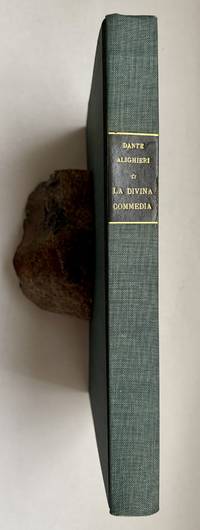
rif. 103436Milano: Casa Editrice Sonzogno no date given. Hardcover. In VG condition; pages are clean and binding tight; foxing to edges and age-toning overall; several of the first pages had large tears now repaired with blank paper; the final page of the index was missing the lower half now repaired with blank paper. Gustave Dore. Quarto in green cloth board with black and gilt spine title; marbled endpapers; plates; 676p. Appears to be a custom binding with original wrappers bound in. In Italian. Gustave Dore's iconic illustrations accompany this classic of Italian literature. Each page of text has commentary below. "La Divina Commedia illustrata da Gustavo Dore e dichiarate con note tratte dai migliori commenti per cura di Eugenio Camerini" --Title Page. Heavy items. Additional shipping fees may be needed. Please inquire. Casa Editrice Sonzogno hardcover
1997rif. C000034416Amsterdam: Athenaeum-Polak & Van Gennep 1997. Hardcover. Fine/fine. Complete in Two Volumes. Hardcover. Black cloth. 8vo. 1206pp. Illustrations by Gustave Dore. Text in Dutch. Fine in Fine dustjackets. Gift inscription on flyleaf of first volume. In lightly soiled original slipcase. Athenaeum-Polak & Van Gennep hardcover
1976rif. mon0000079182The Viking Press 1976-01-01. Hardcover. Acceptable. 2.1983 in x 26.2800 in x 21.2838 in. Ex-library book usual markings. Hardback with dust cover. Main wear on the Dust Cover. Well read copy with some spine wear but still useable colouring of page edges due to age. The Viking Press hardcover
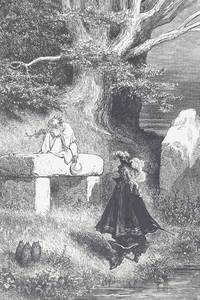
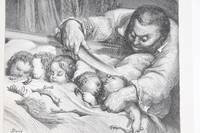
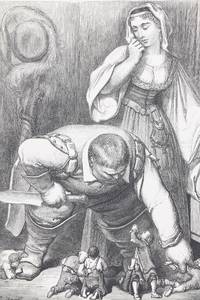
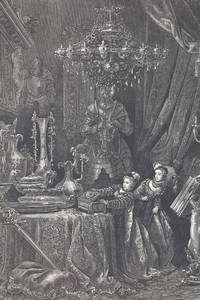
1862rif. 79664Paris: Hetzel 1862. Fine. Hetzel Paris 1862 29.90 x 42.10 cm une feuille Original wood engraving signed in the plate by the artist and engraver. Composition created by Gustave Doré and engraved by Boetzel on China paper and mounted on Holland laid paper at the request of publisher Hetzel to illustrate his folio edition of Perrault's Contes in 1862. Occasional light worming in margins not affecting the engraving. These illustrations for the Contes are considered the most successful of this text: Gustave Doré offers an unprecedented dramatic vision. With him everything contributes to the dramatization of the tale from the theatrical staging of the composition to the smallest details that generate terrifying realism through the technique known as ""tinted wood."" He uses India ink or gouache previously diluted as required by the ""wash"" technique. For Perrault's tales the eleven best engravers of the period were employed to engrave with the burin the forty wooden plates: Pannemaker Pisan Pierdon Maurand Boetzel Brevière Hébert Deschamps Dumont Delduc and Fagnon. Gustave Doré's work in illustrating the Contes is paramount; he does not reduce engraving to its ornamental function but transforms it into a true object of narration. These illustrations are Doré's most famous works and immediately received enthusiastic reviews notably that of Sainte-Beuve in Les Nouveaux lundis December 23 1861: ""A Perrault like there never was until now and like there will never be again. . I can only say that these drawings seem very beautiful to me richly and opulently turned that they have a grandiose character that renews the aspect of these humble tales and restores to them their first marvel prior to Perrault himself."" Hetzel unknown
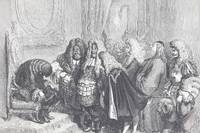
1862rif. 79649Paris: Hetzel 1862. Fine. Hetzel Paris 1862 29.90 x 42.10 cm une feuille Original wood engraving signed in the plate by the artist and engraver. Composition created by Gustave Doré and engraved by Emile Deschamps on China paper and mounted on Holland laid paper at the request of publisher Hetzel to illustrate his folio edition of Perrault's Contes in 1862. Occasional light foxing in margins not affecting the engraving. These illustrations of the Contes are considered the most successful of this text: Gustave Doré offers an unprecedented dramatic vision. With him everything contributes to the dramatization of the tale from the theatrical staging of the tableau to the smallest details that generate terrifying realism through the technique known as ""tinted wood"". He uses India ink or gouache previously diluted as required by the ""wash"" technique. For Perrault's tales the eleven best engravers of the period were enlisted to engrave with burin the forty wooden plates: Pannemaker Pisan Pierdon Maurand Boetzel Brevière Hébert Deschamps Dumont Delduc and Fagnon. Gustave Doré's work in illustrating the Contes is paramount; he does not reduce engraving to its ornamental function but transforms it into a true narrative object. These illustrations are Doré's most famous works and immediately received enthusiastic reviews notably that of Sainte-Beuve in Les Nouveaux lundis December 23 1861: ""Un Perrault comme il n'y en eut jamais jusqu'ici et comme il ne s'en verra plus. . Je ne puis que dire que ces dessins me semblent fort beaux d'un tour riche et opulent qu'ils ont un caractère grandiose qui renouvelle l'aspect de ces humbles contes et leur rend de leur premier merveilleux antérieur à Perrault même."" ""A Perrault like none there has ever been until now and like none will ever be seen again. . I can only say that these drawings seem very beautiful to me of a rich and opulent style that they have a grandiose character that renews the aspect of these humble tales and restores to them their first wonder prior to Perrault himself."" Hetzel unknown
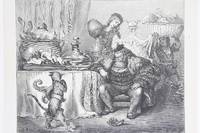
1862rif. 79647Paris: Hetzel 1862. Fine. Hetzel Paris 1862 29.90 x 42.10 cm une feuille Original wood engraving signed in the plate by the artist and engraver. Composition created by Gustave Doré and engraved by François Pannemaker on China paper and mounted on Holland laid paper at the request of publisher Hetzel to illustrate his folio edition of Perrault's Contes in 1862. Very faint marginal dampstain not affecting the drawing and foxing in upper margin not affecting the engraving. These illustrations of the Contes are considered the most successful of this text: Gustave Doré offers an unprecedented dramatic vision. With him everything contributes to the dramatization of the tale from the theatrical staging of the tableau to the smallest details that generate terrifying realism through the technique known as ""tinted wood"". He uses India ink or gouache previously diluted as required by the ""wash"" technique. For Perrault's tales the eleven best engravers of the period were enlisted to engrave with burin the forty wooden plates: Pannemaker Pisan Pierdon Maurand Boetzel Brevière Hébert Deschamps Dumont Delduc and Fagnon. Gustave Doré's work in illustrating the Contes is paramount; he does not reduce engraving to its ornamental function but transforms it into a true narrative object. These illustrations are Doré's most famous works and immediately received enthusiastic reviews notably that of Sainte-Beuve in Les Nouveaux lundis December 23 1861: ""Un Perrault comme il n'y en eut jamais jusqu'ici et comme il ne s'en verra plus. . Je ne puis que dire que ces dessins me semblent fort beaux d'un tour riche et opulent qu'ils ont un caractère grandiose qui renouvelle l'aspect de ces humbles contes et leur rend de leur premier merveilleux antérieur à Perrault même."" ""A Perrault like none there has ever been until now and like none will ever be seen again. . I can only say that these drawings seem very beautiful to me of a rich and opulent style that they have a grandiose character that renews the aspect of these humble tales and restores to them their first wonder prior to Perrault himself."" Hetzel unknown
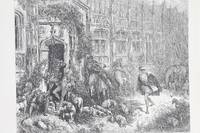
1862rif. 79644Paris: Hetzel 1862. Fine. Hetzel Paris 1862 29.90 x 42.10 cm une feuille Original wood engraving signed in the plate by the artist and engraver. Composition created by Gustave Doré and engraved by François Pannemaker on China paper and mounted on Dutch laid paper at the request of publisher Hetzel to illustrate his folio edition of Perrault's Contes in 1862. A faint marginal dampstain not affecting the design as well as some spotting in the margins. These illustrations of the Contes are considered the most successful of this text: Gustave Doré offers an unprecedented dramatic vision. With him everything contributes to the dramatization of the tale from the theatrical staging of the tableau to the smallest details that generate terrifying realism thanks to the technique known as ""tinted wood."" He uses India ink or gouache previously diluted as required by the ""wash"" technique. For Perrault's tales the eleven best engravers of the time were called upon to engrave with burin the forty wooden plates: Pannemaker Pisan Pierdon Maurand Boetzel Brevière Hébert Deschamps Dumont Delduc and Fagnon. Gustave Doré's work in illustrating the Contes is paramount; he does not reduce engraving to its ornamental function but transforms it into a true narrative object. These illustrations are Doré's most famous works and immediately received enthusiastic criticism notably that of Sainte-Beuve in Les Nouveaux lundis December 23 1861: ""Un Perrault comme il n'y en eut jamais jusqu'ici et comme il ne s'en verra plus. . Je ne puis que dire que ces dessins me semblent fort beaux d'un tour riche et opulent qu'ils ont un caractère grandiose qui renouvelle l'aspect de ces humbles contes et leur rend de leur premier merveilleux antérieur à Perrault même."" ""A Perrault as there never was before and as there will never be again. . I can only say that these drawings seem very beautiful to me rich and opulent in character that they have a grandiose quality that renews the aspect of these humble tales and restores to them their original wonder that preceded Perrault himself."" Hetzel unknown
1862rif. 79662Paris: Hetzel 1862. Fine. Hetzel Paris 1862 29.90 x 42.10 cm une feuille Original wood engraving signed in the plate by the artist and engraver. Composition by Gustave Doré and engraved by François Pannemaker on China paper and laid down on Dutch laid paper at the request of publisher Hetzel to illustrate his folio edition of Perrault's Contes in 1862. Rare worming to margins not affecting the engraving and crease to lower left corner of margin. These illustrations of the Contes are considered the most successful for this text: Gustave Doré offers an unprecedented dramatic vision. With him everything contributes to the dramatization of the tale from the theatrical staging of the tableau to the smallest details that generate terrifying realism thanks to the technique known as ""tinted wood."" He uses India ink or gouache previously diluted as required by the ""wash"" technique. For Perrault's tales the eleven best engravers of the period were employed to engrave with burin the forty wood plates: Pannemaker Pisan Pierdon Maurand Boetzel Brevière Hébert Deschamps Dumont Delduc and Fagnon. Gustave Doré's work in illustrating the Contes is paramount; he does not reduce engraving to its ornamental function but transforms it into a true object of narration. These illustrations are Doré's most famous works and immediately received enthusiastic criticism notably that of Sainte-Beuve in Les Nouveaux lundis December 23 1861: ""Un Perrault comme il n'y en eut jamais jusqu'ici et comme il ne s'en verra plus. . Je ne puis que dire que ces dessins me semblent fort beaux d'un tour riche et opulent qu'ils ont un caractère grandiose qui renouvelle l'aspect de ces humbles contes et leur rend de leur premier merveilleux antérieur à Perrault même."" ""A Perrault such as there never was until now and such as will never be seen again. . I can only say that these drawings seem very beautiful to me of a rich and opulent turn that they have a grandiose character that renews the aspect of these humble tales and restores to them their first marvelous quality prior to Perrault himself."" Hetzel unknown
1862rif. 79660Paris: Hetzel 1862. Fine. Hetzel Paris 1862 29.90 x 42.10 cm une feuille Original wood engraving signed in the plate by the artist and engraver. Composition created by Gustave Doré and engraved by François Pannemaker on China paper and mounted on Holland laid paper at the request of publisher Hetzel to illustrate his folio edition of Perrault's Tales in 1862. Some soiling and foxing in the margins not affecting the engraving. These illustrations of the Tales are considered the most successful of this text: Gustave Doré offers an unprecedented dramatic vision. With him everything contributes to the dramatization of the tale from the theatrical staging of the tableau to the smallest details that generate terrifying realism through the technique known as ""tinted wood."" He uses India ink or gouache previously diluted as required by the ""wash"" technique. For Perrault's tales the eleven best engravers of the time contributed to engrave with burin the forty wooden plates: Pannemaker Pisan Pierdon Maurand Boetzel Brevière Hébert Deschamps Dumont Delduc and Fagnon. Gustave Doré's work in illustrating the Tales is essential; he does not reduce engraving to its ornamental function but transforms it into a true narrative object. These illustrations are Doré's most famous works and immediately received enthusiastic criticism notably that of Sainte-Beuve in Les Nouveaux lundis December 23 1861: ""Un Perrault comme il n'y en eut jamais jusqu'ici et comme il ne s'en verra plus. . Je ne puis que dire que ces dessins me semblent fort beaux d'un tour riche et opulent qu'ils ont un caractère grandiose qui renouvelle l'aspect de ces humbles contes et leur rend de leur premier merveilleux antérieur à Perrault même."" ""A Perrault such as there never was until now and such as will never be seen again. . I can only say that these drawings seem very beautiful to me of a rich and opulent style that they have a grandiose character which renews the aspect of these humble tales and restores to them their first marvelous quality anterior to Perrault himself."" Hetzel unknown
1862rif. 79650Paris: Hetzel 1862. Fine. Hetzel Paris 1862 29.90 x 42.10 cm une feuille Original wood engraving signed in the plate by the artist and engraver. Composition created by Gustave Doré and engraved by François Pannemaker on China paper and mounted on Holland laid paper at the request of publisher Hetzel to illustrate his folio edition of Perrault's Contes in 1862. Light lack to lower right corner of margin not affecting the engraving. These illustrations of the Contes are considered the most successful of this text: Gustave Doré offers an unprecedented dramatic vision. With him everything contributes to the dramatization of the tale from the theatrical staging of the tableau to the smallest details that generate terrifying realism thanks to the technique known as ""tinted wood"". He uses India ink or gouache previously diluted as required by the ""wash"" technique. For Perrault's tales the eleven best engravers of the period were enlisted to engrave with burin the forty wooden plates: Pannemaker Pisan Pierdon Maurand Boetzel Brevière Hébert Deschamps Dumont Delduc and Fagnon. Gustave Doré's work in illustrating the Contes is paramount; he does not reduce engraving to its ornamental function but transforms it into a true object of narration. These illustrations are Doré's most famous works and immediately received enthusiastic reviews notably that of Sainte-Beuve in Les Nouveaux lundis December 23 1861: ""Un Perrault comme il n'y en eut jamais jusqu'ici et comme il ne s'en verra plus. . Je ne puis que dire que ces dessins me semblent fort beaux d'un tour riche et opulent qu'ils ont un caractère grandiose qui renouvelle l'aspect de ces humbles contes et leur rend de leur premier merveilleux antérieur à Perrault même."" ""A Perrault such as there never was before and as will never be seen again. . I can only say that these drawings seem very beautiful to me of a rich and opulent character that they have a grandiose quality that renews the aspect of these humble tales and restores to them their original wonder that predates Perrault himself."" Hetzel unknown
1862rif. 79643Paris: Hetzel 1862. Fine. Hetzel Paris 1862 29.90 x 42.10 cm une feuille Original wood engraving signed in the plate by the artist and engraver. Composition created by Gustave Doré and engraved by Georges Perrichon on China paper and mounted on Dutch laid paper at the request of publisher Hetzel to illustrate his folio edition of Perrault's Contes in 1862. A faint marginal dampstain not affecting the design. These illustrations of the Contes are considered the most successful of this text: Gustave Doré offers an unprecedented dramatic vision. With him everything contributes to the dramatization of the tale from the theatrical staging of the tableau to the smallest details that generate terrifying realism thanks to the technique known as ""tinted wood."" He uses India ink or gouache previously diluted as required by the ""wash"" technique. For Perrault's tales the eleven best engravers of the time were called upon to engrave with burin the forty wooden plates: Pannemaker Pisan Pierdon Maurand Boetzel Brevière Hébert Deschamps Dumont Delduc and Fagnon. Gustave Doré's work in illustrating the Contes is paramount; he does not reduce engraving to its ornamental function but transforms it into a true narrative object. These illustrations are Doré's most famous works and immediately received enthusiastic criticism notably that of Sainte-Beuve in Les Nouveaux lundis December 23 1861: ""Un Perrault comme il n'y en eut jamais jusqu'ici et comme il ne s'en verra plus. . Je ne puis que dire que ces dessins me semblent fort beaux d'un tour riche et opulent qu'ils ont un caractère grandiose qui renouvelle l'aspect de ces humbles contes et leur rend de leur premier merveilleux antérieur à Perrault même."" ""A Perrault as there never was before and as there will never be again. . I can only say that these drawings seem very beautiful to me rich and opulent in character that they have a grandiose quality that renews the aspect of these humble tales and restores to them their original wonder that preceded Perrault himself."" Hetzel unknown
1862rif. 79671Paris: Hetzel 1862. Fine. Hetzel Paris 1862 29.90 x 42.10 cm une feuille Original wood engraving signed on the plate by the artist and engraver. Composition created by Gustave Doré and engraved on China paper and mounted on laid Holland paper at the request of publisher Hetzel to illustrate his folio edition of Perrault's Contes in 1862. Small fold to lower right corner not affecting the engraving and occasional light worming to margin. These illustrations of the Contes are considered the most successful of this text: Gustave Doré presents an unprecedented dramatic vision. With him everything contributes to the dramatization of the tale from the theatrical staging of the scene to the smallest details that generate terrifying realism through the technique known as ""tinted wood"". He uses India ink or gouache previously diluted as required by the ""wash"" technique. For Perrault's tales the eleven best engravers of the time were employed to engrave with burin the forty wooden plates: Pannemaker Pisan Pierdon Maurand Boetzel Brevière Hébert Deschamps Dumont Delduc and Fagnon. Gustave Doré's work in illustrating the Contes is paramount; he does not reduce engraving to its ornamental function but transforms it into a true object of narration. These illustrations are Doré's most famous works and immediately received enthusiastic criticism notably that of Sainte-Beuve in Les Nouveaux lundis December 23 1861: ""Un Perrault comme il n'y en eut jamais jusqu'ici et comme il ne s'en verra plus. . Je ne puis que dire que ces dessins me semblent fort beaux d'un tour riche et opulent qu'ils ont un caractère grandiose qui renouvelle l'aspect de ces humbles contes et leur rend de leur premier merveilleux antérieur à Perrault même."" ""A Perrault like there never was before and as will never be seen again. . I can only say that these drawings seem very beautiful to me of a rich and opulent turn that they have a grandiose character that renews the aspect of these humble tales and restores to them their original marvelous quality that existed before Perrault himself."" Hetzel unknown
1862rif. 79645Paris: Hetzel 1862. Fine. Hetzel Paris 1862 29.90 x 42.10 cm une feuille Original wood engraving signed in the plate by the artist and engraver. Composition created by Gustave Doré and engraved on China paper and mounted on Dutch laid paper at the request of publisher Hetzel to illustrate his folio edition of Perrault's Contes in 1862. A light marginal dampstain not affecting the design as well as some foxing in the margin. These illustrations of the Contes are considered the most successful of this text: Gustave Doré offers an unprecedented dramatic vision. With him everything contributes to the dramatization of the tale from the theatrical staging of the tableau to the smallest details that generate terrifying realism through the technique known as ""tinted wood."" He uses India ink or gouache previously diluted as required by the ""wash"" technique. For Perrault's tales the eleven best engravers of the time were enlisted to engrave the forty wood plates with the burin: Pannemaker Pisan Pierdon Maurand Boetzel Brevière Hébert Deschamps Dumont Delduc and Fagnon. Gustave Doré's work in illustrating the Contes is essential; he does not reduce engraving to its ornamental function but transforms it into a true object of narration. These illustrations are Doré's most famous works and immediately received enthusiastic reviews notably that of Sainte-Beuve in Les Nouveaux lundis December 23 1861: ""Un Perrault comme il n'y en eut jamais jusqu'ici et comme il ne s'en verra plus. . Je ne puis que dire que ces dessins me semblent fort beaux d'un tour riche et opulent qu'ils ont un caractère grandiose qui renouvelle l'aspect de ces humbles contes et leur rend de leur premier merveilleux antérieur à Perrault même."" ""A Perrault the likes of which has never existed until now and the likes of which will never be seen again. . I can only say that these drawings seem very beautiful to me of a rich and opulent style that they have a grandiose character that renews the aspect of these humble tales and restores to them their first marvelous quality that preceded Perrault himself."" Hetzel unknown
1862rif. 79668Paris: Hetzel 1862. Fine. Hetzel Paris 1862 29.90 x 42.10 cm une feuille Original wood engraving signed in the plate by the artist and engraver. Composition executed by Gustave Doré and engraved by Hébert on China paper and mounted on Holland laid paper at the request of publisher Hetzel to illustrate his folio edition of Perrault's Contes in 1862. Fold in the lower left corner and very rare and pale worming. These illustrations of the Contes are considered the most successful of this text: Gustave Doré offers an unprecedented dramatic vision. With him everything contributes to the dramatization of the tale from the theatrical staging of the tableau to the smallest details that generate terrifying realism through the technique known as ""tinted wood."" He uses India ink or gouache previously diluted as required by the ""wash"" technique. For Perrault's tales the eleven best engravers of the period were enlisted to engrave with burin the forty wooden plates: Pannemaker Pisan Pierdon Maurand Boetzel Brevière Hébert Deschamps Dumont Delduc and Fagnon. Gustave Doré's work in illustrating the Contes is paramount; he does not reduce engraving to its ornamental function but transforms it into a true object of narration. These illustrations are Doré's most famous works and immediately received enthusiastic reviews notably that of Sainte-Beuve in Les Nouveaux lundis December 23 1861: ""Un Perrault comme il n'y en eut jamais jusqu'ici et comme il ne s'en verra plus. . Je ne puis que dire que ces dessins me semblent fort beaux d'un tour riche et opulent qu'ils ont un caractère grandiose qui renouvelle l'aspect de ces humbles contes et leur rend de leur premier merveilleux antérieur à Perrault même."" ""A Perrault such as there never was before and such as will never be seen again. . I can only say that these drawings seem very beautiful to me richly and opulently executed that they have a grandiose character that renews the aspect of these humble tales and restores to them their original wonder that predates Perrault himself."" Hetzel unknown
1862rif. 79640Paris: Hetzel 1862. Fine. Hetzel Paris 1862 29.90 x 42.10 cm une feuille Original wood engraving signed on the plate by the artist and engraver. Composition created by Gustave Doré and engraved by Héliodore Pisan on China paper and mounted on Dutch laid paper at the request of publisher Hetzel to illustrate his folio edition of Perrault's Contes in 1862. A pale marginal dampstain not touching the image as well as a small tear without loss and not affecting the engraving at the bottom and wormhole in the lower margin. These illustrations for the Contes are considered the most successful for this text: Gustave Doré offers an unprecedented dramatic vision. With him everything contributes to the dramatization of the tale from the theatrical staging of the tableau to the smallest details that generate terrifying realism through the technique known as ""tinted wood."" He uses India ink or gouache previously diluted as required by the ""wash"" technique. For Perrault's tales the eleven best engravers of the period were enlisted to engrave with burin the forty wooden plates: Pannemaker Pisan Pierdon Maurand Boetzel Brevière Hébert Deschamps Dumont Delduc and Fagnon. Gustave Doré's work in illustrating the Contes is essential; he does not reduce engraving to its ornamental function but transforms it into a true object of narration. These illustrations are Doré's most famous works and immediately received enthusiastic reviews notably that of Sainte-Beuve in Les Nouveaux lundis December 23 1861: ""Un Perrault comme il n'y en eut jamais jusqu'ici et comme il ne s'en verra plus. . Je ne puis que dire que ces dessins me semblent fort beaux d'un tour riche et opulent qu'ils ont un caractère grandiose qui renouvelle l'aspect de ces humbles contes et leur rend de leur premier merveilleux antérieur à Perrault même."" ""A Perrault like there never was before and as there will never be again. . I can only say that these drawings seem very beautiful to me of a rich and opulent style that they have a grandiose character that renews the aspect of these humble tales and restores to them their original wonder that preceded even Perrault."" Hetzel unknown
1862rif. 79673Paris: Hetzel 1862. Fine. Hetzel Paris 1862 29.90 x 42.10 cm une feuille Original wood engraving signed in the plate by the artist and the engraver. Composition created by Gustave Doré and engraved by Héliodore Pisan on China paper and mounted on Dutch laid paper at the request of publisher Hetzel to illustrate his folio edition of Perrault's Contes in 1862. Two scratches in the margin a small tear in the upper margin without loss and very rare worming not touching the engraving. These illustrations of the Contes are considered the most successful of this text: Gustave Doré offers an unprecedented dramatic vision. With him everything contributes to the dramatization of the tale from the theatrical staging of the scene to the smallest details that generate terrifying realism through the technique known as ""tinted wood"". He uses India ink or gouache previously diluted as required by the ""wash"" technique. For Perrault's tales the eleven best engravers of the time were enlisted to engrave with burin the forty wooden plates: Pannemaker Pisan Pierdon Maurand Boetzel Brevière Hébert Deschamps Dumont Delduc and Fagnon. Gustave Doré's work in illustrating the Contes is paramount; he does not reduce engraving to its ornamental function but transforms it into a true narrative object. These illustrations are Doré's most famous works and immediately received enthusiastic reviews notably that of Sainte-Beuve in Les Nouveaux lundis December 23 1861: ""Un Perrault comme il n'y en eut jamais jusqu'ici et comme il ne s'en verra plus. . Je ne puis que dire que ces dessins me semblent fort beaux d'un tour riche et opulent qu'ils ont un caractère grandiose qui renouvelle l'aspect de ces humbles contes et leur rend de leur premier merveilleux antérieur à Perrault même."" ""A Perrault like none before and like none to come. . I can only say that these drawings seem very beautiful to me richly and opulently executed having a grandiose character that renews the aspect of these humble tales and restores their original wonder that predates even Perrault."" Hetzel unknown
1862rif. 79655Paris: Hetzel 1862. Fine. Hetzel Paris 1862 29.90 x 42.10 cm une feuille Original wood engraving signed in the plate by the artist and engraver. Composition created by Gustave Doré and engraved by Jean Delduc on China paper and mounted on Holland laid paper at the request of publisher Hetzel to illustrate his folio edition of Perrault's Tales in 1862. Very rare foxing in the margin not affecting the design. These illustrations of the Tales are considered the most successful of this text: Gustave Doré offers an unprecedented dramatic vision. With him everything contributes to the dramatization of the tale from the theatrical staging of the scene to the smallest details that generate terrifying realism thanks to the technique called ""tinted wood"". He uses India ink or gouache previously diluted as the ""wash"" technique requires. For Perrault's tales the eleven best engravers of the time were called upon to engrave with burin the forty wooden plates: Pannemaker Pisan Pierdon Maurand Boetzel Brevière Hébert Deschamps Dumont Delduc and Fagnon. Gustave Doré's work in illustrating the Tales is essential; he does not reduce engraving to its ornamental function but transforms it into a true object of narration. These illustrations are Doré's most famous works and immediately received enthusiastic criticism notably that of Sainte-Beuve in Les Nouveaux lundis December 23 1861: ""Un Perrault comme il n'y en eut jamais jusqu'ici et comme il ne s'en verra plus. . Je ne puis que dire que ces dessins me semblent fort beaux d'un tour riche et opulent qu'ils ont un caractère grandiose qui renouvelle l'aspect de ces humbles contes et leur rend de leur premier merveilleux antérieur à Perrault même."" ""A Perrault like there never was until now and like there will never be again. . I can only say that these drawings seem very beautiful to me of a rich and opulent style that they have a grandiose character which renews the aspect of these humble tales and restores to them their first marvelous quality anterior to Perrault himself."" Hetzel unknown