( Beaux-Arts ) - Raymond Savignac.Livre Rare Book

253 résultats
1998réf. 26216Editions Cahiers du Temps 1998. In-8 broché de 72 pages au format 17 x 21 cm. Couverture et illustrations en hors texte par Raymond Savignac. Dos carré. Infimes frottis aux coins. Intérieur frais. Catalogue réalisé pour l'exposition Savignac, qui eut lieu à Trouville du 13 juin au 27 septembre 1998. Liste des oeuvres de la collection " Savignac ". Superbe état général. Edition originale enrichie d'une belle dédicace pleine page de Raymond Savignac.
réf. L7955Musée de l'Affiche, 1978. In-8 br. à l'italienne. Premier plat illustré par Savignac. Catalogue de la Première exposition au Musée de l'affiche. Divers textes, 150 reproductions d'affiches en couleurs et en noir & blanc. Catalogue réalisé par Alain Weill. E.O.
réf. 200902652Paris, Fayard, 2009 ; in-8, 534 pp., broché, couverture illustr.
1945réf. 63523Saint-Maurice-d'Ételan soit disant Paris: Pierre Bettencourtfaussement Gallimard 1945. Fine. Pierre Bettencourt faussement Gallimard Saint-Maurice-d'Ételan soit disant Paris 1945 en réalité circa 1947 16 x 25.50 cm broché WHITE Lilian pseud. for BETTENCOURT Pierre illustration by SAVIGNAC Raymond Midi à 14h Here for Ever Gallimard Pierre Bettencourt Paris Saint-Maurice d'Etelan 1945 16 x 255 cm original wrappers First edition of 200 copies printed on Arches paper. The book is illustrated with 3 original compositions in color by Savignac. A deception by Pierre Bettencourt the work is supposedly illustrated by Jean Hugo and translated by Jean-Paul Sartre the statement of publisher author translator illustrator and printing is false. The spine and cover lightly and marginally sunned a little stain on the foot of the first cover the interior is in a good condition. $ 380 [ Pierre Bettencourt](faussement) Gallimard unknown
1945réf. 63523[ Pierre Bettencourt] (faussement) Gallimard | [Saint-Maurice-d'Ételan] (soit disant) Paris 1945 (en réalité circa 1947) | 16 x 25.50 cm | broché
in-8°, 282 pp., index, broche, couv. Bel exemplaire. [HA-1]
réf. 13611Le Nouveau Commerce, Paris, 1986.
réf. 5001AFFRONTEMENT N° 13, Paris, octobre 1960. In-12, plaquette agrafée.
réf. 10928N° 64 (Printemps 1986). André Dalmas, Rose Ausländer, Jean-Paul Savignac, Jean-Loup Trassard, Henry Raynal, Wilhelm von Humbolt, etc. Exemplaire du tirage de base sur bouffant. Pages non coupées. Très bon état.
1828réf. 12733Paris, librairie de Gide Fils, s. d. [1828]. 4 fascicules in-12. Cartonnage blanc, titre gravé orné d'un encadrement historié en couleurs illustré de jeux, instruments de musique et guirlande de fleurs. Ils sont présentés dans une boite à compartiments cartonnée de papier vert, gravure rehaussée en couleurs contrecollée sur le couvercle, avec un listel de papier gaufré doré en encadrement. 22,5 x 17,5 x 2 cm.
réf. 64359P., Plon, 1956, in 12 broché, 181 pages, non coupé ; couverture illustrée de SAVIGNAC.
1985réf. 872461985 Paris, Editions Loris Talmart, 1985, in 12 broché, 64 pages ; couvetrure illustrée.
in-12, 229 pp., index, broche, couv. Bel exemplaire. [NV-23]
2001réf. ABE-1618747183276104 PAGES-21 CM X 24 CM-COLLECTION DUTAILLY-SAVIGNAC A TROUVILLE-(PRART5)
1965réf. R260108091"LUTECE / ""LE JURY"". 1965. In-12. Broché. Etat d'usage, Couv. légèrement passée, Dos fané, Intérieur frais. Non paginé, environ 180 pages. Premier plat illustré en couleurs.. . . . Classification Dewey : 843.0872-Le roman policier"
réf. 500291189Le Jury Sans date.
1962réf. RO20132269LES EDITIONS DE LUTECE. 1962. In-12. Broché. Etat d'usage, Couv. défraîchie, Coiffe en pied abîmée, Intérieur frais. Non paginé, environ 70 pages.. . . . Classification Dewey : 843.0872-Le roman policier
1966réf. 4000180731966 1966.
1857réf. FER-C153Limoges Librairie des bons livres 1857 In4 - Trés belle reliure romantique avec décors floraux aux plats et au dos - Ors bien présents - toutes tranches dorées - belle gouttière - 207 pages - 4 gravures hors texte protégées par des serpentes - rousseurs éparses sans gravité - traces de colle d'une étiquette arrachée sur la première garde .
1857réf. FER-C153Limoges Librairie des bons livres 1857 In4 - Trés belle reliure romantique avec décors floraux aux plats et au dos - Ors bien présents - toutes tranches dorées - belle gouttière - 207 pages - 4 gravures hors texte protégées par des serpentes - rousseurs éparses sans gravité - traces de colle d'une étiquette arrachée sur la première garde .
1920réf. 100045935Eugène ardant et cie 1920 in12. 1920. Cartonné. 10 gravures
réf. R150077851FLAMMARION .. 1995.. In-12. Broché. Bon état, Couv. convenable, Dos satisfaisant, Intérieur frais. 63 pages. 1ère et 4 ème de couverture illustrées en couleurs. Page de titre illustrée en couleurs. Nombreuses illustrations en couleurs, dans le texte et hors texte.. . . . Classification Dewey : 840-Littératures des langues romanes. Littérature française
1945réf. 93CpParis Les éditions de la Nouvelle France 1945 In8 - cartonnage de l'éditeur - 224 pages - illustrations de Savignac
1945réf. 93CpParis Les éditions de la Nouvelle France 1945 In8 - cartonnage de l'éditeur - 224 pages - illustrations de Savignac
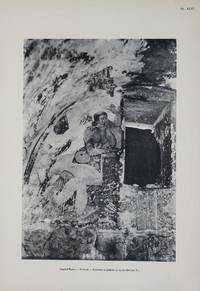
1922réf. NL-02453Jaussen & Savignac's iconic plate atlas of Islamic desert architecture. Antoine Jaussen and Raphaël Savignac were French Dominican scholars whose early 20th-century expeditions to northern Arabia significantly contributed to the establishment of archaeological and epigraphic studies of the region. Working under the auspices of the École Biblique in Jerusalem they combined rigorous fieldwork with detailed documentation producing extensive photographic records architectural surveys and numerous transcriptions of ancient inscriptions. Their multi-volume Mission archéologique en Arabie 19091922 remains a landmark publication in the history of Middle Eastern archaeology offering some of the earliest systematic studies of Nabataean sites and early Islamic monuments. The work continues to serve as a vital reference for historians archaeologists and art historians alike. The atlas volume for Les châteaux arabes Neatline is pleased to present the atlas from the third volume of Mission archéologique en Arabie 1922. This is devoted entirely to the famed Umayyad "desert castles" of northern Arabia presentday Jordan and was published by Paul Geuthner of Paris in two parts: a text volume and the present atlas. The text volume 134 pages contains 21 illustrations mostly photographs while the atlas volume comprises 58 loose plates. These plates contain detailed site and building plans cross-sections and elevations as well as photographic views of interiors exteriors and decorative elements including fountains columns and carved motifs. The atlas plates from Les châteaux arabes include the earliest published photographs of Qusayr 'Amra Qasr Tûba and Qasr al-Kharana sites previously known only from rough sketches Saba Farès-Drappeau Revue des mondes musulmans et de la Méditerranée 89-90: 325-30.Of the three the most famous is undoubtedly Qusayr 'Amra: a small 8thcentury "pleasure palace" with a domed audience hall and an attached ceremonial bathhouse. Qusayr 'Amra is an exceptionally well-preserved Umayyad desert castle notable for the elaborate painted frescoes that decorate the walls and ceilings of the reception hall and hammam. Jaussen and Savignac's plates capture these unique interior spaces long before later restorations and damages changed them considerably. The atlas generally provides new measured plans alongside extensive pictorial documentation for these critical sites. The authors explain in the associated text volume that they found earlier descriptions of al-Kharana and Qasr Tûba to be faulty and unreliable and thus have ventured to re-describe them in their entirety. The atlas plates remain a valuable archive for these monuments which in many cases have suffered from later renovations or alterations. Context is Everything The French archaeological mission in Arabia Mission archéologique en Arabie III was the culmination of a series of French scholarly expeditions organized by the Dominican scholars of the École Biblique in Jerusalem and sponsored by the Société des Fouilles Archéologiques and the French Institute of Oriental Archaeology IFAO. The surveys were part of the École Biblique's program to document antiquities in the Hijaz and Transjordan which was an ambitious and pioneering endeavor in Middle Eastern archaeology at the time. Jaussen and Savignac conducted fieldwork in the Arabian Peninsula in 1907 1909 and 1910 compiling some of the first systematic maps site plans and inscription indices from North Arabia. It was in effect the first truly archaeological survey of the region. The first two volumes 1909 and 1914 reported on Mada'in Slih Hegra and al-'Ul focusing on Nabataean inscriptions and classical-period sites. A supplemental ethnographic appendix published alongside Volume II records the customs of the Bedouin observed during those trips. The third volume originally intended for simultaneous publication was delayed by World War I. When it was finally issued in 1922 it completed the series by documenting the early Islamic palaces qusur encountered by Jaussen and Savignac on their expeditions. The importance of early documentation The so-called Desert Castles al-qusr al-arabiyya are a network of palaces and fortresses built by the Umayyad caliphs in the late 7th and 8th centuries CE primarily in eastern Jordan and southern Syria. They combine classical Roman Byzantine and Persian influences with early Islamic art. Their purposes varied significantly with palaces like Qusayr 'Amra serving mostly representational functions Qasr al-Kharana functioning more as a caliphal hunting lodge in the desert and forts like Qasr Hallabat serving more defensive purposes. After the Umayyad dynasty was toppled in 750 CE most qusr were abandoned and fell into ruin. In many cases only fragments of walls mosaics or inscriptions survive today. Early 20th-century records are consequently critical. Jaussen and Savignac's 1922 publication preserves details that might otherwise have been lost. It is widely acknowledged that Qusayr 'Amra's interior frescoes of hunting scenes musicians and zodiac motifs are among the finest examples of early Islamic "secular" art. The plates of the 1922 volume capture these decorations decades before modern conservation began. Concluding remarks Mission archéologique en Arabie III represents the final installment of a groundbreaking French scholarly mission dedicated to the desert architecture of the first Islamic dynasty. The five-volume corpus to which it belongs was an unprecedented accomplishment at the time. Few Western scholars had explored these remote landscapes since Charles Doughty 1876 or Alois Musil 190107. By using modern photography and careful surveying techniques Jaussen and Savignac not only brought these remote places to European audiences but also set new scientific standards for the documentation of cultural heritage. The atlas volume of Les châteaux arabes provides an irreplaceable visual baseline for anyone interested in how early Muslim elites shaped and used the desert. Cartographers: Antoine-Joseph "Antonin" Jaussen 18711962 and Antoine-Raphaël Savignac 18741951 were French Dominican friars of the École Biblique in Jerusalem. Jaussen born in Ardèche in 1871 became a pioneer in Arabian ethnography and early Islamic archaeology. He mastered Arabic and became fascinated by Bedouin culture and in 1907 he wrote "Coutumes des Arabes au pays de Moab." Savignac four years younger was renowned as a Semitic epigrapher and an experienced photographer. Both were trained under Père Marie-Joseph Lagrange at the Jerusalem school and had been colleagues since 1893. Jaussen and Savignac jointly led the French expeditions to Northern Arabia in 1907 1909 and 1910. With Ottoman permission they journeyed to Mada'in Slih Hegra Tayma Al-'Ul and beyond. On these desert treks Jaussen kept detailed diaries and studied the local tribes while Savignac documented the monuments and archaeology they came across with large-format photography. The result was the five-volume Mission archéologique en Arabie published between 1909 and 1922. Condition Description Wear along spine.