1 916 résultats
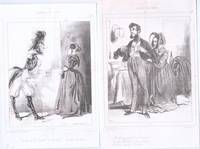
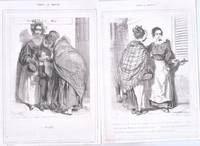
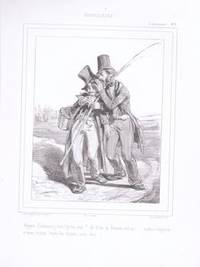
réf. 76-1903Paris: Le Charivari 1839. Lithographs. 28.5 x 20 cm sheet. Text in French on verso. Good a few light specks of foxing and water stain on one sheet.Literature: Armelhault & Bocher 934; 328; 1975; 1166. Paris: Le Charivari, 1839. unknown
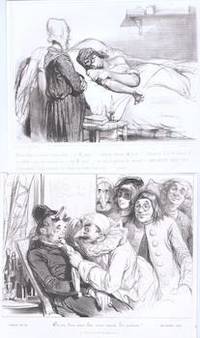
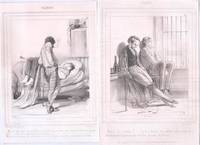
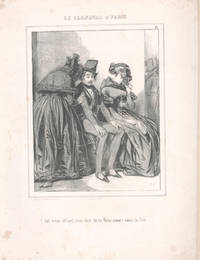
réf. 76-1893Paris: Le Charivari 1840-1841. Lithographs. 28.5 x 20 cm sheet. Text in French on verso. Very Good light foxing on some sheets.Literature: Armelhault & Bocher 916; 922; 932; 933. Paris: Le Charivari, 1840-1841. unknown
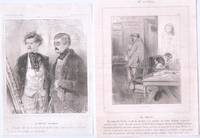
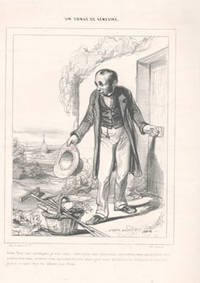
réf. 76-1904Paris: Le Charivari 1839-1841. Lithographs. 28.5 x 20 cm sheet. Text in French on verso. Very Good.Literature: Armelhault & Bocher 304; 328; 1166; 1726. Paris: Le Charivari 1839-1841. unknown
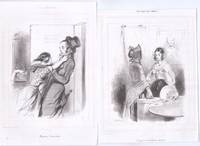
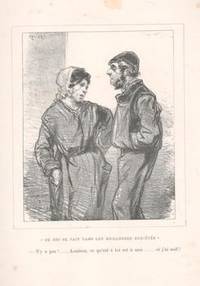
réf. 76-1905Paris: Le Charivari 1839-1848. Lithographs. 28.5 x 20 cm sheet. Text in French on verso. Good several sheets with light specks of foxing.Literature: Armelhault & Bocher 970; 1078; 1089; 1166; 482; 873; 2262. Paris: Le Charivari 1839-1848. unknown
réf. 76-1898Paris: Le Charivari 1842. Lithographs. 28.5 x 20 cm sheet. Text in French on verso. Very Good.Literature: Armelhault & Bocher 1182; 1184; 1190. Paris: Le Charivari, 1842. unknown
réf. 76-1892Paris: Le Charivari 1839. Lithographs. 28.5 x 20 cm sheet. Text in French on verso. Very Good.Literature: Armelhault & Bocher 907; 910; 913. Paris: Le Charivari, 1839. unknown
réf. 76-1895Paris: Le Charivari 1841. Lithographs. 28.5 x 20 cm sheet. Text in French on verso. Very Good light foxing on some sheets.Literature: Armelhault & Bocher 444; 447; 448. Paris: Le Charivari, 1841. unknown
réf. 76-0893Paris: Le Charivari circa 1853. Lithograph. 32 x 24 cm sheet. Good light specks of foxing throughout. [Paris: Le Charivari, circa 1853]. unknown
réf. 76-0914Paris: Le Charivari 1853. Lithograph. 37.5 x 27 cm sheet. Good light specks of foxing throughout. [Paris: Le Charivari, 1853]. unknown
réf. 76-0895Paris: Le Charivari 1847. Lithograph. 29 x 22 cm sheet. Good light specks of foxing throughout sheet mounted to a stiff board. [Paris: Le Charivari, 1847]. unknown
réf. 76-0897Paris: Le Charivari 1853. Lithograph. 38 x 27 cm sheet. Good light specks of foxing throughout. [Paris: Le Charivari, 1853]. unknown
réf. 76-0894Paris: Le Charivari 1847. Lithograph. 29 x 22 cm sheet. Good light specks of foxing throughout sheet mounted to a stiff board. [Paris: Le Charivari, 1847]. unknown
réf. 71-8976Paris: Chez Aubert circa 1847. Lithograph. 33 x 25 cm sheet. Good minor surface soiling light specks of foxing throughout. Paris: Chez Aubert, circa 1847. unknown
réf. 71-9205Paris: Paulin et le chevalier circa 1840. Lithograph. 42.5 x 29.5 cm sheet. Very Good age toning along sheet edges minor surface soiling in the margins. Paris: [Paulin et le chevalier], circa 1840. unknown
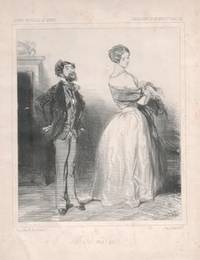
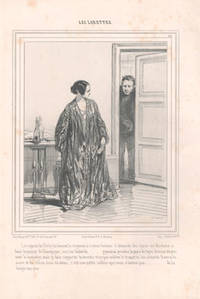
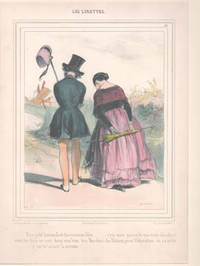
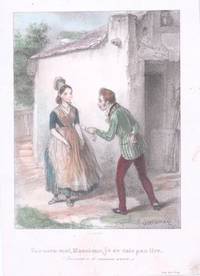
réf. 16-6133Paris: Chez Bauger Chez Aubert 1841. Lithograph sur blanc. 33.3 x 23.5 cm. Plate no. XIII from the series: "Les Lorettes." Armelhault and Bocher no. 775. Les Lorettes described by scholars:MLA citation: Murphy Libby and Greggor Mattson. A la Recherche des Femmes Perdues. Oberlin College 2016.Prostitution was a common social phenomenon that was practiced by women regardless of class but the type of prostitute varied depending on the status of the men involved. The social standing of prostitutes often shifted throughout their lifetimes but their roles generally remained within four basic levels of prostitution. This exhibit focuses on these four important types of prostitutes imagined and mythologized in various media of the time. The lorette the aspiring courtesan was the prostitute of mystery elusive and secretive often evading the government’s health regulations. The grisette was a prostitute from a working-class background often found inhabiting the apartments of young Parisian students. The fille publique or streetwalker was from the lowest class of prostitute and often attracted the poorest customers. Walking the street alone or in groups la fille publique was most vulnerable to police repression. And finally women in “maisons closes” or brothels catered to men of different social classes. The most luxurious brothels attracted middle class men with their continuous business. These women though varying in status participated in a form of sexual commerce that was common in French society in the 19th century. Paris: Chez Bauger, Chez Aubert, 1841 unknown
réf. 16-6135Paris: Chez Bauger Chez Aubert 1841. Lithograph sur blanc. 33.3 x 23.5 cm. Plate no. XI from the series: "Les Lorettes." Armelhault and Bocher no. 773. Les Lorettes described by scholars:MLA citation: Murphy Libby and Greggor Mattson. A la Recherche des Femmes Perdues. Oberlin College 2016.Prostitution was a common social phenomenon that was practiced by women regardless of class but the type of prostitute varied depending on the status of the men involved. The social standing of prostitutes often shifted throughout their lifetimes but their roles generally remained within four basic levels of prostitution. This exhibit focuses on these four important types of prostitutes imagined and mythologized in various media of the time. The lorette the aspiring courtesan was the prostitute of mystery elusive and secretive often evading the government’s health regulations. The grisette was a prostitute from a working-class background often found inhabiting the apartments of young Parisian students. The fille publique or streetwalker was from the lowest class of prostitute and often attracted the poorest customers. Walking the street alone or in groups la fille publique was most vulnerable to police repression. And finally women in “maisons closes” or brothels catered to men of different social classes. The most luxurious brothels attracted middle class men with their continuous business. These women though varying in status participated in a form of sexual commerce that was common in French society in the 19th century. Paris: Chez Bauger, Chez Aubert, 1841 unknown
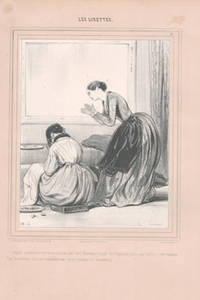
réf. 16-6136Paris: Chez Bauger Chez Aubert 1841. Lithograph sur blanc. Contemporary handcolored. 33.3 x 23.5 cm. Plate no. XXXVI from the series: "Les Lorettes." Armelhault and Bocher no. 798. Les Lorettes described by scholars:MLA citation: Murphy Libby and Greggor Mattson. A la Recherche des Femmes Perdues. Oberlin College 2016.Prostitution was a common social phenomenon that was practiced by women regardless of class but the type of prostitute varied depending on the status of the men involved. The social standing of prostitutes often shifted throughout their lifetimes but their roles generally remained within four basic levels of prostitution. This exhibit focuses on these four important types of prostitutes imagined and mythologized in various media of the time. The lorette the aspiring courtesan was the prostitute of mystery elusive and secretive often evading the government’s health regulations. The grisette was a prostitute from a working-class background often found inhabiting the apartments of young Parisian students. The fille publique or streetwalker was from the lowest class of prostitute and often attracted the poorest customers. Walking the street alone or in groups la fille publique was most vulnerable to police repression. And finally women in “maisons closes” or brothels catered to men of different social classes. The most luxurious brothels attracted middle class men with their continuous business. These women though varying in status participated in a form of sexual commerce that was common in French society in the 19th century. Paris: Chez Bauger, Chez Aubert, 1841 unknown
réf. 16-6134Paris: Chez Bauger Chez Aubert 1841. Lithograph sur blanc; contemporary handcolored. 33.3 x 23.5 cm. Plate no. XII from the series: "Les Lorettes." Armelhault and Bocher no. 774. Les Lorettes described by scholars:MLA citation: Murphy Libby and Greggor Mattson. A la Recherche des Femmes Perdues. Oberlin College 2016.Prostitution was a common social phenomenon that was practiced by women regardless of class but the type of prostitute varied depending on the status of the men involved. The social standing of prostitutes often shifted throughout their lifetimes but their roles generally remained within four basic levels of prostitution. This exhibit focuses on these four important types of prostitutes imagined and mythologized in various media of the time. The lorette the aspiring courtesan was the prostitute of mystery elusive and secretive often evading the government’s health regulations. The grisette was a prostitute from a working-class background often found inhabiting the apartments of young Parisian students. The fille publique or streetwalker was from the lowest class of prostitute and often attracted the poorest customers. Walking the street alone or in groups la fille publique was most vulnerable to police repression. And finally women in “maisons closes” or brothels catered to men of different social classes. The most luxurious brothels attracted middle class men with their continuous business. These women though varying in status participated in a form of sexual commerce that was common in French society in the 19th century. Paris: Chez Bauger, Chez Aubert, 1841 unknown
réf. 16-6138Paris: Aubert. 1843 . Lithograph sur blanc. 33.3 x 24.5 cm. Armelhault and Bocher no. 242 second state of 3. . Paris: Aubert. 1843 unknown
réf. 16-6137Paris: Chez Bauger 1842. Lithograph sur blanc. 33.3 x 24.5 cm. Armelhault and Bocher no. 247. Paris: Chez Bauger, 1842 unknown
réf. 71-9718Paris: Leon Curmer 1843. Lithograph. 23 x 17.5 cm sheet. Very Good minor surface rubs light specks of foxing. Paris: Leon Curmer, 1843. unknown
réf. 71-9758Paris: La Caricature circa 1841. Lithograph. 24.5 x 36 cm sheet. Signed in the stone. Very Good light specks of foxing in the margins vertical center fold. Paris: [La Caricature], circa 1841. unknown
réf. 71-9719Paris: French Publisher circa 1695. Engraving. 30 x 20 cm sheet. Text in Latin. Very Good minor surface rubs light specks of foxing lacking upper left sheet corner. [Paris: French Publisher, circa 1695]. unknown
réf. 71-6686Paris: Bauger et Cie. circa 1842. Lithograph. 34 x 25 cm sheet. Very Good minor surface soiling in margins.Provenance: ancienne galerie Vandevoorde 22 rue Vignon Paris. Paris: Bauger et Cie., circa 1842. unknown
réf. 71-6676Paris: Frey circa 1860. Hand-colored lithograph. 18.5 x 13.5 cm sheet. Very Good minor surface rubs and soiling in the margins.Provenance: ancienne galerie Vandevoorde 22 rue Vignon Paris. Paris: [Frey, circa 1860]. unknown