Simeon ZahlBiblio.com

2919 resultados
ref. 38648094-nnew. unknown
ref. 331964226X.Ghardcover. Good. Access codes and supplements are not guaranteed with used items. May be an ex-library book. hardcover
ref. 968230573X.Ghardcover. Good. Access codes and supplements are not guaranteed with used items. May be an ex-library book. hardcover
ref. 38722939-nnew. unknown
2026ref. __1399826670Jessica Kingsley Publishers 2026. Trade Paperback. New. illustrated ed edition. 432 pages. 8.27x1.02x11.57 inches. Jessica Kingsley Publishers paperback
1798ref. 004071London: W.I. And I. Richardson 1798. 5 2-28pp. Modern half calf and marbled paper over boards author title and date in gilt to spine. Spine very slightly faded. Slightly cropped to fore-edge margin with loss of some of the contemporary marginalia occasional underlining title lightly browned one or two spots of foxing. The third 'improved' edition. Goldsmiths 17370; ESTC T37345 showing eleven locations worldwide. Third Edition. Hardback. Good. 8vo. Pamphlet. W.I. And I. Richardson hardcover
ref. 1552601-nnew. unknown
ref. 1552601like new. unknown
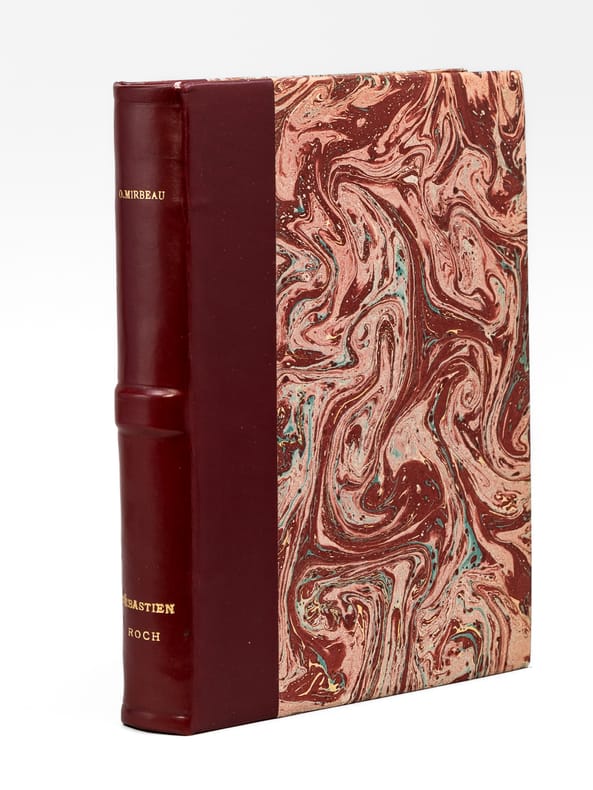
1927ref. 7396CBBraine-le-Comte (Belgique) und Paris, Maison-mère des pères des Sacrés-coeurs de Picpus, 1927. 8°. 207 S. Mit Textillustrationen. Halblederband der Zeit (Orig.-Umschläge miteingebunden).
ref. 2705689567.Gpaperback. Good. Access codes and supplements are not guaranteed with used items. May be an ex-library book. paperback
ref. 3631906161.Ghardcover. Good. Access codes and supplements are not guaranteed with used items. May be an ex-library book. hardcover
ref. ria9780367450427_inpPaperback. New. New Book; Fast Shipping from UK; Not signed; Not First Edition; This book describes the sojourn time distribution for its usefulness in analyzing the distribution of the supremum of the sample function of the process. It is concerned with the distribution of the supremum of a continuous parameter st paperback
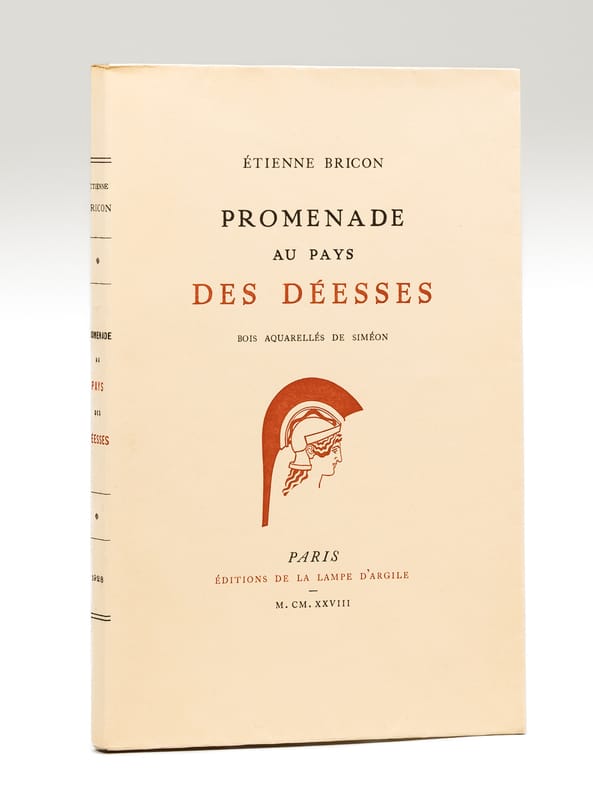
1928ref. 69925Bois aquarellés de Siméon, un des 25 exemplaires sur Japon Impérial avec une suite sur chine des bois gravés, numérotés de 11 à 35 (n° 30), avec une page autographe de la Comtesse de Noailles et 23 bois aquarellés de Siméon, Editions de la Lampe d'Argile, Georges Servant, Paris, 1928, 119 pp.
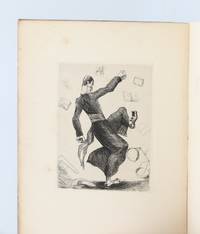
1925ref. 85649Paris: Editions Mornay 1925. Fine. Editions Mornay Paris 1925 15.50 x 20.50 cm broché Edition illustrated with original woodcuts by Fernand Siméon one of 895 numbered copies on Rives paper. Light foxing to endpapers otherwise a handsome copy. Editions Mornay unknown
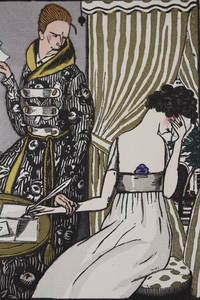
1920ref. 54711Paris: Lucien Vogel éditeur 1920. Fine. Lucien Vogel éditeur Paris Février 1920 18 x 24 cm une feuille Original color print heightened with gold printed on vergé paper signed in the plate. An original print used to illustrate the Gazette du bon ton one of the most attractive and influential 20th century fashion magazines featuring the talents of French artists and other contributors from the burgeoning Art Deco movement. A celebrated fashion magazine established in 1912 by Lucien Vogel La Gazette du bon ton appeared until 1925 with a hiatus from 1915 to 1920 due to the war the editor-in-chief having been called up for service. It consisted of 69 issues printed in only 2000 copies each and notably illustrated with 573 color plates and 148 sketches of the models of the great designers. Right from the start this sumptuous publication was aimed at bibliophiles and fashionable society Françoise Tétart-Vittu La Gazette du bon ton in Dictionnaire de la mode 2016 and was printed on fine vergé paper using a type cut specially for the magazine by Georges Peignot known as Cochin later used in 1946 by Christian Dior. The prints were made using stencils heightened in colors some highlighted in gold or palladium. The story began in 1912 when Lucien Vogel a man of the world involved in fashion he had already been part of the fashion magazine Femina decided with his wife Cosette de Brunhoff the sister of Jean creator of Babar to set up the Gazette du bon ton subtitled at the time: Art fashion frivolities. Georges Charensol noted the reasoning of the editor-in-chief: In 1910 he observed there was no really artistic fashion magazine nothing representative of the spirit of the time. My dream was therefore to make a luxury magazine with truly modern artists I was assured of success because when it comes to fashion no country on earth can compete with France. Un grand éditeur dart. Lucien Vogel in Les Nouvelles littéraires no. 133 May 1925. The magazine was immediately successful not only in France but also in the United States and Latin America. At first Vogel put together a team of seven artists: André-Édouard Marty and Pierre Brissaud followed by Georges Lepape and Dammicourt as well as eventually his friends from school and the School of Fine Arts like George Barbier Bernard Boutet de Monvel and Charles Martin. Other talented people soon came flocking to join the team: Guy Arnoux Léon Bakst Benito Boutet de Monvel Umberto Brunelleschi Chas Laborde Jean-Gabriel Domergue Raoul Dufy Édouard Halouze Alexandre Iacovleff Jean Émile Laboureur Charles Loupot Chalres Martin Maggie Salcedo. These artist mostly unknown when Lucien Vogel sought them out later became emblematic and sought-after artistic figures. It was also they who worked on the advertising drawings for the Gazette. The plates put the spotlight on and celebrate dresses by seven designers of the age: Lanvin Doeuillet Paquin Poiret Worth Vionnet and Doucet. The designers provided exclusive models for each issue. Nonetheless some of the illustrations are not based on real models but simply on the illustrators conception of the fashion of the day. The Gazette du bon ton was an important step in the history of fashion. Combining aesthetic demands with the physical whole it brought together for the first time the great talents of the artistic literary and fashion worlds; and imposed through this alchemy a completely new image of women: slender independent and daring which was shared by the new generation of designers including Coco Chanel Jean Patou Marcel Rochas and so on Taken over in 1920 by Condé Montrose Nast the Gazette du bon ton was an important influence on the new layout and aesthetics of that little dying paper that Nast had bought a few years earlier: Vogue. Lucien Vogel éditeur unknown
1921ref. 54839Paris: Lucien Vogel éditeur 1921. Fine. Lucien Vogel éditeur Paris 1921 18 x 24 cm une feuille Original color print heightened with gold printed on vergé paper signed in plate. An original print used to illustrate the Gazette du bon ton one of the most attractive and influential 20th century fashion magazines featuring the talents of French artists and other contributors from the burgeoning Art Deco movement. A celebrated fashion magazine established in 1912 by Lucien Vogel La Gazette du bon ton appeared until 1925 with a hiatus from 1915 to 1920 due to the war the editor-in-chief having been called up for service. It consisted of 69 issues printed in only 2000 copies each and notably illustrated with 573 color plates and 148 sketches of the models of the great designers. Right from the start this sumptuous publication was aimed at bibliophiles and fashionable society Françoise Tétart-Vittu La Gazette du bon ton in Dictionnaire de la mode 2016 and was printed on fine vergé paper using a type cut specially for the magazine by Georges Peignot known as Cochin later used in 1946 by Christian Dior. The prints were made using stencils heightened in colors some highlighted in gold or palladium. The story began in 1912 when Lucien Vogel a man of the world involved in fashion he had already been part of the fashion magazine Femina decided with his wife Cosette de Brunhoff the sister of Jean creator of Babar to set up the Gazette du bon ton subtitled at the time: Art fashion frivolities. Georges Charensol noted the reasoning of the editor-in-chief: In 1910 he observed there was no really artistic fashion magazine nothing representative of the spirit of the time. My dream was therefore to make a luxury magazine with truly modern artists I was assured of success because when it comes to fashion no country on earth can compete with France. Un grand éditeur dart. Lucien Vogel in Les Nouvelles littéraires no. 133 May 1925. The magazine was immediately successful not only in France but also in the United States and Latin America. At first Vogel put together a team of seven artists: André-Édouard Marty and Pierre Brissaud followed by Georges Lepape and Dammicourt as well as eventually his friends from school and the School of Fine Arts like George Barbier Bernard Boutet de Monvel and Charles Martin. Other talented people soon came flocking to join the team: Guy Arnoux Léon Bakst Benito Boutet de Monvel Umberto Brunelleschi Chas Laborde Jean-Gabriel Domergue Raoul Dufy Édouard Halouze Alexandre Iacovleff Jean Émile Laboureur Charles Loupot Chalres Martin Maggie Salcedo. These artist mostly unknown when Lucien Vogel sought them out later became emblematic and sought-after artistic figures. It was also they who worked on the advertising drawings for the Gazette. The plates put the spotlight on and celebrate dresses by seven designers of the age: Lanvin Doeuillet Paquin Poiret Worth Vionnet and Doucet. The designers provided exclusive models for each issue. Nonetheless some of the illustrations are not based on real models but simply on the illustrators conception of the fashion of the day. The Gazette du bon ton was an important step in the history of fashion. Combining aesthetic demands with the physical whole it brought together for the first time the great talents of the artistic literary and fashion worlds; and imposed through this alchemy a completely new image of women: slender independent and daring which was shared by the new generation of designers including Coco Chanel Jean Patou Marcel Rochas and so on Taken over in 1920 by Condé Montrose Nast the Gazette du bon ton was an important influence on the new layout and aesthetics of that little dying paper that Nast had bought a few years earlier: Vogue. Lucien Vogel éditeur unknown
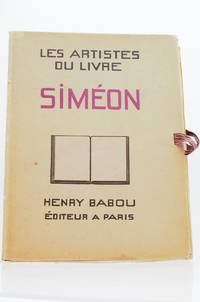
1930ref. 75475Paris: Henri Babou 1930. Fine. Henri Babou Paris 1930 20.50 x 26.50 cm en feuilles sous chemise à lacets First edition one of 50 numbered copies on Japon ours unjustified deluxe copy. Fine copy spine and boards of the chemise marginally sunned and spotted. Letter-preface by Jean-Jacques Brousson. Photographic portrait of Fernand Siméon by Laure Albin Guillot. Work illustrated with a frontispiece black illustrations in the text as well as 15 hors-texte plates in black and colors extracted from works illustrated by the artist. Our copy lacks the original drawing by Fernand Siméon which should appear in the deluxe copies. Henri Babou hardcover
1926ref. 70966Illustré par Fernand Siméon, exemplaire sur vélin de Rives numéroté, 1 vol. in-8 reliure demi-basane marron, dos à un nerf, couverture conservée, collection « Les Beaux Livres », Chez A. & G. Mornay, Libraires, Paris, 1926, 401 pp.
ref. 1649081073.Ghardcover. Good. Access codes and supplements are not guaranteed with used items. May be an ex-library book. hardcover
2013ref. Gyan-9789333014038Isha Books 2013. Paperback. New. 21.59 x 13.34 x 6.783 cm. English Isha Books paperback
2013ref. Gyan-9789333014038Isha Books 2013. Paperback. New. 21.59 x 13.34 x 6.783 cm. English Isha Books paperback
2002ref. Q-9768167289Ian Randle Publishers 2002-10-01. Paperback. New. In shrink wrap. Looks like an interesting title! Ian Randle Publishers paperback
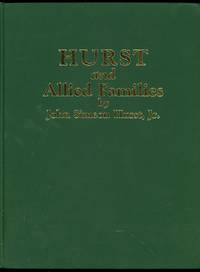
1984ref. 260807012H.R. Hurst 1984. Hardcover. Very Good. 0x0x0. Hardback. No dust jacket. No marks and no writings. H.R. Hurst hardcover
1892ref. 535904H.W. Blake January 1892. Hardcover. Good - Cash/No Jacket. Oversize: 11' x 8' x 4' - Red textured hardboards dark red linen corners and backstrip; gold lettering on spine. Mostly clean mild rubbing. P/O name stamp and name on second cover page. Pages are foxing. Several pages have water stains. Gold gilt page ends. Unmarked pages. Stock photos may not look exactly like the book. H.W. Blake hardcover
ref. 2705683976.Gpaperback. Good. Access codes and supplements are not guaranteed with used items. May be an ex-library book. paperback