2 252 résultats
1928réf. 35954Sous étui cartonné avec pièce de titre avec nom d'auteur en lettres dorées. Couverture rempliée marbrée. Dos éclairci. Intérieur bien frais. Avec fac-similé d'une page manuscrite et corrigée de l'auteur, un portrait de l'auteur par L. Madrassi et des eaux-fortes originales et bois de SIMEON. Non rogné.
2014réf. LFA-126739479Un ouvrage de 381 pages, format 155 x 240 mm, illustré, broché couverture couleurs, publié en 2014, Editions Flammarion, bon état
2014réf. 118540Flammarion, 2014, gr. in-8°, 378 pp, 16 pl. de photos en noir et en couleurs, un tableau généalogique, une carte, chronologie, biblio, broché, couv. illustrée, bon état
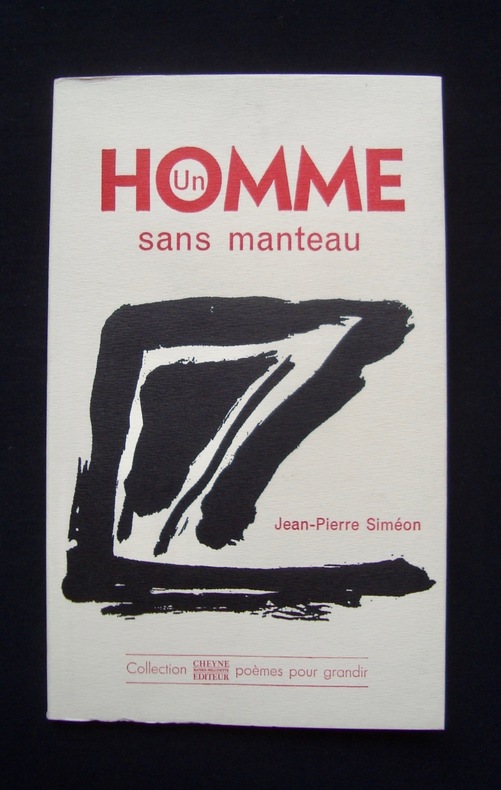
1995réf. 634Le Chambon-sur-Lignon, Cheyne éditeur, 1995 Couverture noire, jaquette orange, 16 pages, gravure de Martine Mellinette en frontispice.
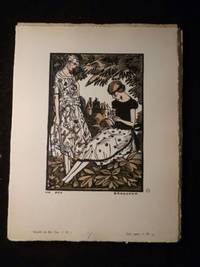
1920réf. 39039Lucien Vogel éditeur | Paris 1920 | 19.50 x 25 cm | une feuille
réf. 15169Chambon-sur-Lignon : Cheyne (Manier-Mellinette) Editeur, Collection "Poèmes pour grandir" 2000 (deuxième édition) - in-8 broché sous couverture illustrée à rabats, 44 pages illustrées de hors texte en couleurs par Martine Mellinette - très bon état - tirage à 2000 exemplaires sur Centaure ivoire -
réf. 15811Small 8vo. Fine hmorocco richly gilt back. Flammarion Vaillant. Uncut. No 704 of 1100 "sur velin de Rives" a total of 1180 copies. Many fine coloured woodcuts by Siméon. unknown
1920réf. 54773Paris: Lucien Vogel éditeur 1920. Fine. Lucien Vogel éditeur Paris Juin 1920 18 x 24 cm une feuille Original color print printed on vergé paper non signed. An original print used to illustrate the Gazette du bon ton one of the most attractive and influential 20th century fashion magazines featuring the talents of French artists and other contributors from the burgeoning Art Deco movement. A celebrated fashion magazine established in 1912 by Lucien Vogel La Gazette du bon ton appeared until 1925 with a hiatus from 1915 to 1920 due to the war the editor-in-chief having been called up for service. It consisted of 69 issues printed in only 2000 copies each and notably illustrated with 573 color plates and 148 sketches of the models of the great designers. Right from the start this sumptuous publication was aimed at bibliophiles and fashionable society Françoise Tétart-Vittu La Gazette du bon ton in Dictionnaire de la mode 2016 and was printed on fine vergé paper using a type cut specially for the magazine by Georges Peignot known as Cochin later used in 1946 by Christian Dior. The prints were made using stencils heightened in colors some highlighted in gold or palladium. The story began in 1912 when Lucien Vogel a man of the world involved in fashion he had already been part of the fashion magazine Femina decided with his wife Cosette de Brunhoff the sister of Jean creator of Babar to set up the Gazette du bon ton subtitled at the time: Art fashion frivolities. Georges Charensol noted the reasoning of the editor-in-chief: In 1910 he observed there was no really artistic fashion magazine nothing representative of the spirit of the time. My dream was therefore to make a luxury magazine with truly modern artists I was assured of success because when it comes to fashion no country on earth can compete with France. Un grand éditeur dart. Lucien Vogel in Les Nouvelles littéraires no. 133 May 1925. The magazine was immediately successful not only in France but also in the United States and Latin America. At first Vogel put together a team of seven artists: André-Édouard Marty and Pierre Brissaud followed by Georges Lepape and Dammicourt as well as eventually his friends from school and the School of Fine Arts like George Barbier Bernard Boutet de Monvel and Charles Martin. Other talented people soon came flocking to join the team: Guy Arnoux Léon Bakst Benito Boutet de Monvel Umberto Brunelleschi Chas Laborde Jean-Gabriel Domergue Raoul Dufy Édouard Halouze Alexandre Iacovleff Jean Émile Laboureur Charles Loupot Chalres Martin Maggie Salcedo. These artist mostly unknown when Lucien Vogel sought them out later became emblematic and sought-after artistic figures. It was also they who worked on the advertising drawings for the Gazette. The plates put the spotlight on and celebrate dresses by seven designers of the age: Lanvin Doeuillet Paquin Poiret Worth Vionnet and Doucet. The designers provided exclusive models for each issue. Nonetheless some of the illustrations are not based on real models but simply on the illustrators conception of the fashion of the day. The Gazette du bon ton was an important step in the history of fashion. Combining aesthetic demands with the physical whole it brought together for the first time the great talents of the artistic literary and fashion worlds; and imposed through this alchemy a completely new image of women: slender independent and daring which was shared by the new generation of designers including Coco Chanel Jean Patou Marcel Rochas and so on Taken over in 1920 by Condé Montrose Nast the Gazette du bon ton was an important influence on the new layout and aesthetics of that little dying paper that Nast had bought a few years earlier: Vogue. Lucien Vogel éditeur unknown
1920réf. 39039Paris: Lucien Vogel éditeur 1920. Fine. Lucien Vogel éditeur Paris 1920 19.50 x 25 cm une feuille Original color print printed on vergé paper signed in the plate. An original print used to illustrate the Gazette du bon ton one of the most attractive and influential 20th century fashion magazines featuring the talents of French artists and other contributors from the burgeoning Art Deco movement. A celebrated fashion magazine established in 1912 by Lucien Vogel La Gazette du bon ton appeared until 1925 with a hiatus from 1915 to 1920 due to the war the editor-in-chief having been called up for service. It consisted of 69 issues printed in only 2000 copies each and notably illustrated with 573 color plates and 148 sketches of the models of the great designers. Right from the start this sumptuous publication was aimed at bibliophiles and fashionable society Françoise Tétart-Vittu La Gazette du bon ton in Dictionnaire de la mode 2016 and was printed on fine vergé paper using a type cut specially for the magazine by Georges Peignot known as Cochin later used in 1946 by Christian Dior. The prints were made using stencils heightened in colors some highlighted in gold or palladium. The story began in 1912 when Lucien Vogel a man of the world involved in fashion he had already been part of the fashion magazine Femina decided with his wife Cosette de Brunhoff the sister of Jean creator of Babar to set up the Gazette du bon ton subtitled at the time: Art fashion frivolities. Georges Charensol noted the reasoning of the editor-in-chief: In 1910 he observed there was no really artistic fashion magazine nothing representative of the spirit of the time. My dream was therefore to make a luxury magazine with truly modern artists I was assured of success because when it comes to fashion no country on earth can compete with France. Un grand éditeur dart. Lucien Vogel in Les Nouvelles littéraires no. 133 May 1925. The magazine was immediately successful not only in France but also in the United States and Latin America. At first Vogel put together a team of seven artists: André-Édouard Marty and Pierre Brissaud followed by Georges Lepape and Dammicourt as well as eventually his friends from school and the School of Fine Arts like George Barbier Bernard Boutet de Monvel and Charles Martin. Other talented people soon came flocking to join the team: Guy Arnoux Léon Bakst Benito Boutet de Monvel Umberto Brunelleschi Chas Laborde Jean-Gabriel Domergue Raoul Dufy Édouard Halouze Alexandre Iacovleff Jean Émile Laboureur Charles Loupot Chalres Martin Maggie Salcedo. These artist mostly unknown when Lucien Vogel sought them out later became emblematic and sought-after artistic figures. It was also they who worked on the advertising drawings for the Gazette. The plates put the spotlight on and celebrate dresses by seven designers of the age: Lanvin Doeuillet Paquin Poiret Worth Vionnet and Doucet. The designers provided exclusive models for each issue. Nonetheless some of the illustrations are not based on real models but simply on the illustrators conception of the fashion of the day. The Gazette du bon ton was an important step in the history of fashion. Combining aesthetic demands with the physical whole it brought together for the first time the great talents of the artistic literary and fashion worlds; and imposed through this alchemy a completely new image of women: slender independent and daring which was shared by the new generation of designers including Coco Chanel Jean Patou Marcel Rochas and so on Taken over in 1920 by Condé Montrose Nast the Gazette du bon ton was an important influence on the new layout and aesthetics of that little dying paper that Nast had bought a few years earlier: Vogue. Lucien Vogel éditeur unknown
réf. 61420579World Scientific Publishing Company Incorporated . Hardback. Used. pp. xv 127 World Scientific Publishing Company, Incorporated hardcover
réf. 14714Paris, Cercle du Livre Précieux, 1961. In-8, en feuilles, couverture rempliée, sous chemise et étui. (chemise et étui neufs refaits à l'identique).
réf. 22420Paris, Cercle du Livre Précieux, 1961. In-8, en feuilles, couverture rempliée, sous chemise et étui de l'éditeur.
Paris, Cercle du Livre Précieux, 1961. In-8, en feuilles, couverture rempliée, sous chemise et étui. (chemise et étui neufs refaits à l'identique). Les 12 gravures originales de Michel SIMEON ont été coloriées par Maurice Beaufumé. Edition limitée à 750 exemplaires numérotés sur vélin (n° 429). Apollinaire, Fleuret et Perceau, qui citent l'édition originale (1892), indiquent " roman licencieux qui nous donne l'apparence et les moeurs de Saint-Pierre de la Martinique peu avant la destruction de cette ville par l'éruption du Mont Pelé. Cet ouvrage est peut-être le seul où l'on ait recueilli des expressions créoles les plus libres. L'affabulation en est ingénieuse. "
Paris, Cercle du Livre Précieux, 1961. In-8, en feuilles, couverture rempliée, sous chemise et étui de l'éditeur. Les 12 gravures originales de Michel SIMEON ont été coloriées par Maurice Beaufumé et sont à part sous papier cristal. Edition limitée à 750 exemplaires numérotés sur vélin, celui-ci hors-commerce Apollinaire, Fleuret et Perceau, qui citent l'édition originale (1892), indiquent " roman licencieux qui nous donne l'apparence et les moeurs de Saint-Pierre de la Martinique peu avant la destruction de cette ville par l'éruption du Mont Pelé. Cet ouvrage est peut-être le seul où l'on ait recueilli des expressions créoles les plus libres. L'affabulation en est ingénieuse. " Bel exemplaire, état neuf.
2013réf. x-1447137213Springer 2013. Paperback. New. 320 pages. 9.02x5.98x0.73 inches. Springer paperback
réf. Z21453YLWLa Passe du Vent Broché très bon état .Contenu propre . 2008.134 pages . PHOTOS SUR DEMANDE
réf. albdf6ece335d3251f9Tver Publisher A.N.Kondratyev 2017 262 Please contact us for details on condition of available copies of the book.�SKUalbdf6ece335d3251f9. unknown
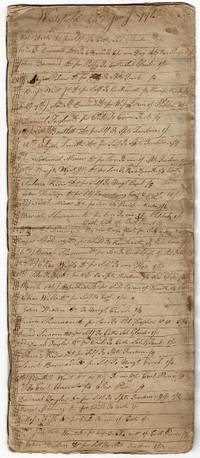
1805réf. 59752Waitsfield Vermont 1805. Narrow tall folio approx. 15½" x 6¾" 112 pp. in ink five separately sewn signatures; a few pages loose some pages darkened or chipped at edges; some entries faint. This account book is the record of the practice of either Stephen Pierce or Simeon Stoddard practicing in Waitsfield Vermont between 1795 and 1806. These were the second and third physicians to have settled and practiced in Waitsfield. Most likely it is the record of Pierce who is supposed to have settled in Waitsfield in 1795. The first physician in Waitsfield Moses Heaton remained there only between 1793 and 1796. Depending on the source Pierce was the third physician to practice in Waitsfield and/or the first to practice in Moretown a settlement to the northeast of Waitsfield. He farmed as well as doctored and his farm lay mostly in Moretown his office in Waitsfield. He was a respected and successful physician who served the community in other capacities: as selectman representative delegate to the Constitutional Convention of 1814 and Assistant Judge of the County Court. One source claims that he succeeded Judge Kinne December 1 1814 and served one year and that he was a justice of the peace in Waitsfield. He died either in 1854 after living in Waterbury and Berlin Vermont or he died in Barnard in 1864. See: History of the Town of Waitsfield Vermont 1782-1908 by Matt Bushnell Jones Boston 1909 p. 182. Simeon Stoddard on the other hand was born December 12 1761 either in Saybrook Connecticut or in Waitsfield. On August 19 1784 he married Abiah Thompson who had been born in 1763 in Waitsfield. Some sources state that he moved to Waitsfield from Saybrook in 1794. He served the southwestern area of Waitsfield and died in 1841. This account book records each date of visit the householder's name the relationship of patient to householder the medicine prescribed and its price and the cost of the doctor's visit. The doctor whether it be Stoddard or Pierce treated thirty to forty patients each month and as many as fifty-six in December of 1801. He charged as little as 4 pence and as much as 42 shillings 10 pence for his services. As a comparison the tax on an acre of land in Waitsfield was 2 pence an acre. The poll tax list of 1795 showed fifty voters so the doctor seems to have treated the members of nearly every family. The diseases treated are not stated in the entries made but he seems to have prescribed antimonium tartaricum in many instances and also digitalis. Waitsfield was founded by Col. Benjamin Wait or Waite and others who were granted a charter on February 25 1782. Wait had served under Gen. Jeffery Amherst in the French and Indian Wars and had fought in the Revolutionary War. Both Waitsfield and Moretown are now somewhat renowned as the areas around Mad River a popular ski resort. Mad River has been remarkable from the settling of the area as the source of numerous sudden destructive and deadly floods. The Green Mountains the northern extent of the Appalachians rise just to the west of the town. The doctor records having treated members of the Wait family including Benjamin's wife Martha d. April 3 1804 Ezra Thomas and Gilbert. The family names of the community are listed making this a good source for early settlement history and genealogical research. Among the householders who required the doctor's services are Smolly Skinner Taylor Spalding Hitchcock Parkhurst Carpenter the family had a tannery and potash works Heaton Burdick Johnson Rider Fuller Symonds McNight Chamberlain Atherton Lyon Butterfield Barnave Osgood Foster Hobson Robinson Brun Latimer and Sherman. Many of the names appear often. unknown
1805réf. 59752Waitsfield Vermont 1805. Narrow tall folio approx. 15½" x 6¾" 112 pp. in ink five separately sewn signatures; a few pages loose some pages darkened or chipped at edges; some entries faint. This account book is the record of the practice of either Stephen Pierce or Simeon Stoddard practicing in Waitsfield Vermont between 1795 and 1806. These were the second and third physicians to have settled and practiced in Waitsfield. Most likely it is the record of Pierce who is supposed to have settled in Waitsfield in 1795. The first physician in Waitsfield Moses Heaton remained there only between 1793 and 1796. Depending on the source Pierce was the third physician to practice in Waitsfield and/or the first to practice in Moretown a settlement to the northeast of Waitsfield. He farmed as well as doctored and his farm lay mostly in Moretown his office in Waitsfield. He was a respected and successful physician who served the community in other capacities: as selectman representative delegate to the Constitutional Convention of 1814 and Assistant Judge of the County Court. One source claims that he succeeded Judge Kinne December 1 1814 and served one year and that he was a justice of the peace in Waitsfield. He died either in 1854 after living in Waterbury and Berlin Vermont or he died in Barnard in 1864. See: History of the Town of Waitsfield Vermont 1782-1908 by Matt Bushnell Jones Boston 1909 p. 182. Simeon Stoddard on the other hand was born December 12 1761 either in Saybrook Connecticut or in Waitsfield. On August 19 1784 he married Abiah Thompson who had been born in 1763 in Waitsfield. Some sources state that he moved to Waitsfield from Saybrook in 1794. He served the southwestern area of Waitsfield and died in 1841. This account book records each date of visit the householder's name the relationship of patient to householder the medicine prescribed and its price and the cost of the doctor's visit. The doctor whether it be Stoddard or Pierce treated thirty to forty patients each month and as many as fifty-six in December of 1801. He charged as little as 4 pence and as much as 42 shillings 10 pence for his services. As a comparison the tax on an acre of land in Waitsfield was 2 pence an acre. The poll tax list of 1795 showed fifty voters so the doctor seems to have treated the members of nearly every family. The diseases treated are not stated in the entries made but he seems to have prescribed antimonium tartaricum in many instances and also digitalis. Waitsfield was founded by Col. Benjamin Wait or Waite and others who were granted a charter on February 25 1782. Wait had served under Gen. Jeffery Amherst in the French and Indian Wars and had fought in the Revolutionary War. Both Waitsfield and Moretown are now somewhat renowned as the areas around Mad River a popular ski resort. Mad River has been remarkable from the settling of the area as the source of numerous sudden destructive and deadly floods. The Green Mountains the northern extent of the Appalachians rise just to the west of the town. The doctor records having treated members of the Wait family including Benjamin's wife Martha d. April 3 1804 Ezra Thomas and Gilbert. The family names of the community are listed making this a good source for early settlement history and genealogical research. Among the householders who required the doctor's services are Smolly Skinner Taylor Spalding Hitchcock Parkhurst Carpenter the family had a tannery and potash works Heaton Burdick Johnson Rider Fuller Symonds McNight Chamberlain Atherton Lyon Butterfield Barnave Osgood Foster Hobson Robinson Brun Latimer and Sherman. Many of the names appear often. unknown books
réf. 6208344913.Gpaperback. Good. Access codes and supplements are not guaranteed with used items. May be an ex-library book. paperback
2021réf. 9788677819514Kreativni centar 2 2021. paperback. NEW. U ovoj knjizi objedinjeni su raznovrsni sadrzaji neophodni za temeljnu pripremu deteta za polazak u skolu. Radni listovi polaze od Opstih osnova predskolskog programa i obuhvataju vezbe iz matematike predmeta Svet oko nas grafomotoricke vezbe i vezbe povezane s pripremom za pocetno citanje i pisanje. Knjiga sadrzi 136 radnih listova 88 nalepnica i brojne ideje namenjene vaspitacima za dodatni rad s decom. Uzrast: 5-7 godina Kreativni centar 2 paperback
2001réf. 123533MD: Johns Hopkins 2001. Softcover. Fine. First edition. Fine in wrappers. Johns Hopkins unknown books
réf. 200712020Paris, Henri Jonquières & Cie éditeurs 21 rue visconti, 1925 ; in-8, 420 pp., broché, couverture illustr. Exemplaire sur papier de rive n°573 en très bon état - 11e vol de la collection les beaux romans.
1925réf. 172311925 Paris, Henri Jonquières, 1925, In huit, 420 pp, reliure en demi-chagrin marron, dos à quatre nerfs, tête dorée
1925réf. 18130Illustrations de F. Siméon. Exemplaire sur papier vélin teinté de Rives (N°981).Paris, Henri Jonquières & Cie. - 1925 - 420 pages. Collection Les Beaux Romans. Ex libris.Reliure demi chagrin bleu à coins. Dos à 5 nerfs aux titre et auteur dorés. Tête dorée sur témoins, non rogné. Couverture d'édition illustrée et dos conservés. Petits frottements aux nerfs et aux coiffes. Pas de rousseur. Bon état. Format in-8°(21x15).