JAPANESE ORNAMENTAL WOODBLOCK PRINTSBiblio.com

1 160 résultats
1900réf. 1421261900. JAPANESE ORNAMENTAL WOODBLOCK PRINTS. Bijutsu Kai. Collection of Pictures Regarding Colour Designs for Japanese Textiles Costumes. Five parts in one volume. Five folding plates and 18 full-page coloured woodblock prints per section for a total of 95 original illustrations. 8vo 232 x 160 mm. bound in Japanese accordion style with Japanese fold pages and silk-thread stitched spine in new linen cloth folding box with leather spine label. Kyoto: Geisodo ca. 1900. A superb set of this important compendium of early Japanese textile designs showing a great variety of patterns and scenes. The woodblock prints are often exceptional Japanese images very much in the wabi-sabi tradition. Not in Hillier The Art of the Japanese Book 1987. hardcover
1848réf. 2111902160200704Sculpture by Kisuke Oshima 1848. Soft Cover. Fine. Volume: 1 Sculpture by Kisuke Oshima paperback
1609réf. 18688Text in Latin. 2nd enhanced edition. Black straight-grain morocco leather over bevel-edge wood boards; gilt ruled frames on covers; brass clasps at fore edge; gilt title and rolls on spine; French Stormont pattern marbled end papers; two color print throughout; large font throughout; woodcut decorative drop-cap initials throughout. Clean covers and spine; front cover detached; light edge wear somewhat heavier at cover fore corners; brass clasps are intact and VG condition; rear cover spine and text block are tightly bound; lacking Title Page and 3 other prelim leaves ll. 7 8 1 and 4 interior leaves including 4 plates pp 56 250 264 314; ll. D4b Q5b R4b V5b; 53 intact full page copperplate engravings and 35 of 38 1/3 page engraved tailpiece vignettes range from Good but light to Fine though 1 plate has light ink attempt to cover angels privates p. 662; l. Tt1b; few light smudges interior otherwise very clean. Note that leaf 7 is lacking which has dedication or honors the pope; catchword at tail of l. 6b is 'PAV' indicating Pope Paul V 1605-1621 on missing leaf rather than Clement VIII 1592-1605 as in some copies. 23 x 17 cm; 696 pp. Antverpiae (Antwerp): Ex Officina Plantiniana, Apud Ioannem Moreti (Plantin-Moretus Press) hardcover
1960réf. 140946279New York: Tiber Press 1960. First Edition. Fine. First edition. Complete in four folio volumes each measuring 17½" x14¼". Each volume with three full-page color silkscreen prints and additional prints at title page and upper cover original cloth-backed illustrated boards. First Edition. No. 77 of 200 copies. Each volume signed by the poet and artist on the limitation page. A Fine set bright and sharp in publisher's thick acetate jackets housed in cloth slipcase with trivial shelf wear. A visionary collaboration between the leading lights of the New York School of poetry and four second generation abstract expressionist artists produced at the height of their creative collective powers. A heady encapsulation of the New York literary and visual avant garde at the dawning of the '60s. Tiber Press unknown
1960réf. 140940127New York: Tiber Press 1960. First Edition. Fine. Complete in four folio volumes each measuring 17½" x14¼". Each volume with three full-page color silkscreen prints and additional prints at title page and upper cover original cloth-backed illustrated boards. First Edition. No. 47 of 200 copies. Each volume signed by the poet and artist on the limitation page. A Fine set bright and sharp in publisher's thick acetate jackets housed in cloth slipcase with light shelf wear. A visionary collaboration between the leading lights of the New York School of poetry and four second generation abstract expressionist artists produced at the height of their creative collective powers. A heady encapsulation of the New York literary and visual avant garde at the dawning of the '60s. Tiber Press unknown
1630réf. ABC_49153Flanders and Paris: various publishers 1630. Several prints are tipped into a 19th-century elaborately gold- and blind-tooled brown morocco album a blind-tooled ornament in the centre of both boards with the crowned initials J.B. on the front surrounded by a double fillet frame with elaborate corner pieces gold-tooled board edges and turn-ins gilt edges white watered silk endpapers. The work is housed in a 19th-century marbled slipcase with a paper label with the name of Countess Julie Visart de Bocarmé mounted on the front. The remaining prints have been tipped onto a sheet of sturdy paper inserted into a clear plastic file folder which are loosely inserted into a 19th-century elaborately gold- and blind-tooled purple morocco album with the word "album" lettered in gold on the front surrounded by a blind-tooled Gothic style border and an elaborate gold-tooled border gilt edges black watered silk end papers. Oblong folio ca. 29 x 42.5 cm; sheet size ca. 12 x 9 to 35 x 23 cm. With 24 contemporary hand-coloured engravings of which some heightened with gold 1 contemporary hand-coloured woodcut illustration 1 chromolithographed print 7 watercolour drawings including 2 on vellum 3 silk embroidered prints in various sizes and 1 image made of paper ornaments glued onto black netting. Further with a folded alphabetical list of the Antwerp printers and engravers of devotional prints in a 19th-century hand tipped onto the first leaf of the album. 2 volumes. Remarkable collection of 37 devotional prints and drawings including fifteen printed on vellum and two "clad" prints. The majority of the prints and drawings were made in the 17th and 18th centuries but a small number of 19th-century examples are also included. The prints all depicting Catholic saints and scenes are decorated using a wide variety of techniques. Most are hand coloured and heightened with gold but several are clad in fabric embroidered cut out to resemble lace sometimes backed with coloured paper or metal foil to highlight the cut-outs and one was made by gluing paper ornaments onto black netting. The present collection which was owned and probably compiled by the Belgian Countess Julie Alexandrine Marie Josèphe Visart de Bocarmé 1823-1862 not only offers a fascinating sample of popular print culture in Flanders but also highlights the creativity of both the makers and users of these prints.Devotional prints served as visual aids to private devotion and could also be used by those unable to read. They were often bought and decorated by women. The present prints were mainly engraved by 17th- and 18th-century Flemish printmakers such as Cornelius de Boudt 1660-1738 Michiel Cabbaey 1660-1722 Guillaume Collaert ca. 1595-ca. 1651 Lodewijk Joseph Fruytiers 1713-1782 Jacob de Man ca. 1643-1719 and Theodoor van Merlen III 1661-1749. In contrast to most examples of this genre most of the present engravings are printed on vellum and beautifully coloured by a contemporary hand partly heightened in gold for the halos of the saints. The prints include biblical scenes showing Christ on the Cross Joseph Mary the Apostles and John the Baptist. The majority of the prints depict portraits of Catholic saints such as Anthony of Padua 1195-1231 Apollonia of Alexandria d. 249 Dorothea of Caesarea d. ca. 311 Francis of Assisi ca. 1181-1226 Francis Xavier 1506-1552 Helena of Constantinople ca. 246-330 Peter of Alcántara 1499-1562 and Rosalia of Palermo 1130-1166. A complete list of contents is available upon request.With the initials of Belgian Countess Julie Visart de Bocarmé stamped in gold on the front board and her manuscript ownerships label Julie Visart de Bocarmé Baronesse G.v.Z.v.N. mounted on the front of the slipcase. Further with the printed label of Cabasson Successeur de Terzuolo-Despilly Papetier du Roi Rue de la Chaussée dAntin No. 15 mounted on the verso of the first flyleaf of the brown album all prints and drawings have been tipped onto a white sheet of paper with a manuscript collection number at the top. The boards are slightly rubbed and scratched. The first few leaves of the purple album have been removed to make space for the collection. The prints and drawing show traces of use with some browning and occasional creasing soiling or foxing. The edges and corners of the slipcase are scuffed and the lower right corner of the paper label is torn off. Otherwise in good condition.l Cf. K. van den Bergh Bidprentjes in de Zuidelijke Nederlanden 1975; J.A.J.M. Verspaandonk Het hemels prentenboek. Devotie- en bidprentjes vanaf de 17e eeuw tot het begin van de 20e eeuw 1975. various publishers, hardcover
1939réf. SPENDERS007080Atelier 17 Paris & New York. March 1939. First edition. Octavo. Spender's poem ''Fall of a City'' and Louis Aragon's translation ''Chute d'une Cit�'' together with nine engravings loose within wrappers. The engravings were printed by Atelier 17 and Henri Hecht and include one with aquatint and roulette one with soft ground etching one drypoint and one etching. All are on Montval handmade paper with deckle-edges. Held within the original plain board chemise but lacking the slipcase which had a Hayter titling-piece pasted onto the front. Stanley Hayter founded Atelier 17 in Paris in 1927 and it continues to this day in Rue Didot albeit with the name changed to Atelier Contrepoint. This production was his contribution to the raising of funds to help children orphaned by the Spanish Civil War.101 numbered copies were printed for sale and 12 for the contributors. This copy is unnumbered and hors commerce marked ''h.c'' on the limitation page. Each copy including this one was signed by Spender and Aragon at their respective contribution and by each artist in the lower margin of the etched sheet.Fine in custom burgundy morocco box with ''FRATERNITY'' in gilt on the lid. Very scarce with all nine loose etchings as most sets have been broken up for piecemeal sale. Atelier 17, Paris & New York. March, unknown
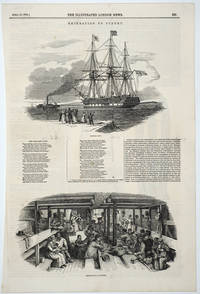
réf. 28182A valuable reference collection of images and articles that shaped perceptions of Australia to the wider world in the 19th century. This is a collection of over 800 woodcut illustrations and articles from the 19th century from the Illustrated London News The Graphic and The Illustrated Times & other less successful periodicals. The images of the ILN and Graphic are a comprehensive and systematic collection of Australian related images and articles from 1842 ILN and 1870 Graphic through the end of 1899. This collection was started in London in the late 1970s. It was our intention to create a comprehensive reference of every woodcut image of Australian interest in the two major British periodicals from their start date to 1900. We were living in North London not too far from Omniphil Limited a company based in Chesham Bucks. They were the preeminent dealers in woodcut images from British periodicals in the 1970s and 80s. We visited their premises repeatedly and sat and turned the pages of every single volume of their reference set noting the images related to Australia and purchasing a copy of those images. Another component of the collection is an assemblage of Australian images from lesser-known periodicals such as the Illustrated Times the Pictorial Times The Illustrated News of the World Gleason's Pictorial Drawing Room Companion Harper's Weekly Canadian Illustrated News and a few singletons from the Illustrated Family Paper l'Opinion Publique and the Australasian Sketcher. An important component of this collection is the associated Excel listing of the prints & text. These are indexed by year month & day image title print size associated text and folder number. The total collection is housed in nine A3 folders with fixed sleeves. Early years have 2 sheets per sleeve; later years are sometimes grouped together to fit into the available room in the album. The folders are approx. 12 ½" x 17" x 1". They were manufactured in England by Rexel Nyrex with the following label in the back inside cover "Rexel / Nyrex / PFV / A3 / 24 Made in Gt. Britain." The company still manufactures plastic products. We have not been able to ascertain if these are archival but the prints have been in the folders for at least 43 years and there has been no degradation. The only exception to the completeness of the collection is ship prints which were quite expensive at the time we assembled the collection. The collection is organized in three parts: Part I - The Illustrated London News 1842-1899; Part II - The Graphic 1870-1899; Part III - The Illustrated Times the Pictorial Times and other British & North American periodicals 1845-1883. Combined these original woodblock prints and articles are a valuable reference collection that shaped perceptions of Australia to the wider world in the 19th century a collection which would now be all but impossible to assemble. Part I Australian images from The Illustrated London News British periodical from its start in 1842 thru 1899. A comprehensive collection of Australian related images & articles from this groundbreaking periodical - the world's first illustrated weekly news magazine; the first periodical to employ special war correspondents and illustrators; the first to publish color supplements. The Australian material begins in the first publication on May 14 1842 and runs through the last article in the century in June 1899 and has approximately 467 images and 29 substantial articles. Australia is mentioned in the text of the first issue with an article "Sheep Farming in Australia" on p.15 about 4 column inches from the Inverness Courier. On the verso is an amusing illustration of a publicity stunt of the publishers. The founder Herbert Ingram paid hundreds of men to carry large sign boards in the streets reading "The Illustrated London News 30 Engravings Price 6D." The highly exaggerated drawing shows the sign bearers stretching as far as the eye can see on London footpaths. The caption reads "The 'Illustrated London News' Published Every Saturday. Thirty Engravings. Price Sixpence. The above engraving represents the public announcement of this paper on Friday last. Two hundred men paraded the streets of London to proclaim the advent of this important publication." Below the rule is printed "London: Printed by R. Palmer at the Office of Palmer & Clayton 10 Crane-court; and published by J. Clayton at 320 Strand. - Saturday May 14 1842." The first image of an Australian subject is in the December 23 1843 issue "New Government House Sydney" with text. The revenue stamp appears at the bottom left of the page. The discovery of gold in Australia is announced in a long article on the cover on Sept. 6 1851 entitled "Another El Dorado" in an article 15 column inches long. The last image is from June 1899 the Australian cricketeers in London- "The Australian Cricket Team / The Team up-river: leaving Boulter's Lock / The Test match at Lords Between England and Australia: Trumper and Hill at the Wickets". The ILN collection is housed in six A3 folders with fixed sleeves. Early years have 2 sheets per sleeve; later years are sometimes grouped together to fit into the available room in the album. Folder 1 - 1842-1852; 68 images & 12 articles Folder 2 - 1852-1854; 70 images & 13 articles Folder 3 - 1855-1861; 50 images & 1 article Folder 4 - 1862-1864; 55 images & 1 article Folder 5 - 1865-1884; 90 images & 2 articles Folder 6 - 1886-1899; 135 images Although Gale subscription service has a digitized resource titled the "Illustrated London News Historical Archive 1842-2003" this collection is invaluable as it is composed of the actual period woodblock prints and articles accessible in six A 3 folders. Part II Australian images from The Graphic British periodical from its start in 1869 thru 1899. Australian related images from The Graphic the British weekly illustrated newspaper first published on 4 Dec 1869 which was set up as a rival to the Illustrated London News. The Australian images begin in March 1870 and runs through 1899 approximately 242 images. There are 13 double page images 2 full weekly issues for the Sydney & Melbourne Exhibitions with the continuing supplements; 1 color Christmas issue; 74 full page and 39 half page illustrations. Highlights include images of bush and settlers' lives Tichborne case cricket Victorian gold the Kelly gang black trackers wool shipping ostriches a shearing dispute. The first Australian related image in The Graphic was published on the cover of the March 12th 1870 edition "Picnic in Australia To the Officers of the Flying Squadron." The last image for the 19th century is dated July 1899. The Graphic is housed in two folders are A3 approx. 12 ½" x 17" x 1". Part III Australian images from The Illustrated Times the Pictorial Times and other British periodicals as well as North American periodicals including Gleason's Pictorial Drawing Room Companion Harper's Weekly and others. London; New York; Boston; Canada: Various publishers 1845-1883. A collection of some of the scarcer woodcut images of Australian related images from various shorter-lived illustrated periodicals published in England and North America. These include The Pictorial Times The Illustrated Times The Illustrated News of the World Gleason's Pictorial Drawing Room Companion Harper's Weekly Canadian Illustrated News and a few singletons from the Illustrated Family Paper l'Opinion Publique and the Australasian Sketcher. These are scarcer publications than the market-dominating Illustrated London News & The Graphic. The collection starts in March 1870 and runs through 1899 approximately 107 images. Of particular interest is a series in the Illustrated Times entitled "England Versus Australia" illustrated by Florence Claxton. Claxton was an English artist who spent part of her adolescence in Sydney NSW in the 1850s. Throughout 1863 and early 1864 Miss Claxton drew imagined comparisons between the two environments not uniformly biased towards either country. In the first "Daughters Here" has a group of gentlewomen sitting in a lovely drawing room making lace playing piano or gazing in the mirror. "Sons There" shows the men doing the laundry mending and cooking. "Governesses Here" shows a gaggle of governesses seemingly subject to the whims of a butler; "Want of Governesses There" shows a home with the mother distraught the children causing absolute pandemonium & the father sitting and reading the paper. In another "Needlewomen Here" the seamstresses work themselves to exhaustion in a dark room with one light; "A Modiste There" shows a prosperous woman with many customers. We did not have access to a reference set for these smaller publications so these images are an assemblage not a comprehensive and consistent collection. The Pictorial Times. 1843-1848 Opened by Henry Vizetelly his brother and Andrew Spottiswoode. Eventually it was purchased by Ingram owner of the ILN and merged with The Lady's Newspaper. Unfortunately this newspaper did not date their issues but sometimes dates are to be found in text. The Illustrated Times. 1855-1862. A rival to the ILN edited by Henry Vizetelly who had left the ILN to open it. Vizetelly campaigned in the 1850s for the repeal of the Stamp Act. Its eventual repeal was a great boon allowing the new paper to be published at the low price of two pence. The Illustrated News of the World 1858-1864. This was published by John Tallis famed for his atlases with maps adorned with views. According to OCLC: 7091980 It started in Feb. 1858 and ceased in Aug. 1864 . Gleason's Pictorial Drawing-Room Companion was a 19th-century illustrated periodical published in Boston Massachusetts. The magazine was founded by Frederick Gleason in 1851. According to OCLC: 10261386 it ran from 1851 - 1854. The publication name was changed to Ballou's Pictorial Drawing-Room Companion in 1855 after managing editor Maturin Murray Ballou bought out the interest of Gleason. Unfortunately this newspaper did not date their issues but sometimes dates are to be found in text. Harper's Weekly A Journal of Civilization was an American political magazine based in New York City. Published by Harper & Brothers from 1857 until 1916 it featured foreign and domestic news fiction essays on many subjects and humor alongside illustrations. It carried extensive coverage of the American Civil War including many illustrations of events from the war. During its most influential period it was the forum of the political cartoonist Thomas Nast. This collection is housed in one A3 folder approx. 12 ½ x 17" x 1" with fixed sleeves. The prints & text are indexed by newspaper and thence by year month & day image title print size & associated text including some artists and folder number. A collection of primary source documents revealing the perceptions and attitudes towards Australia in the 19th century. hardcover
1790réf. ST19326Amsterdam: H. Keyzer H. Gartman en W. Vermandel 1790. 555 x 345 mm. 21 7/8 x 13 3/4". 2 p.l. 62 folding plates. Attractive late 19th or early 20th century retrospective polished brown calf by L. Guétant stamp-signed in gilt on tail of spine double gilt-ruled border floral cornerpieces raised bands spine panels with scrolling floral borders and central flower ornament gilt titling. With title vignette and 62 ENGRAVED FOLDING PLATES ALL WITH BEAUTIFUL HAND COLORING AND HIGHLIGHTED WITH GOLD depicting Bible scenes from the Old and New Testament 61 of which are by Jan Luyken. A Large Paper Copy. For earlier editions: Graesse IV p. 308; Brunet III 1245-46; Klaversma & Hannema 159-164. Light rubbing to joints and edges boards just a little marked trivial foxing and faint spots here and there but A REMARKABLY FINE COPY the binding lustrous and showing little wear the paper extremely bright and fresh the margins immense and the paint and gold unusually vibrant. The marvelous illustrations of Dutch engraver and poet Jan Luyken comprise this collection of "remarkable stories" from the Bible each depicted with panoramic grandeur and enhanced with a wide range of finely applied colors and gold. Luyken 1649-1712 had written and illustrated erotic poetry as a young man but later became a devout Pietist after reading the works of German mystic Jakob Böhme. He became a member of the Baptist Church in 1673 and thereafter devoted his talents to producing religious works. The vast scenes here are notable in their scale detail and animation. There are a number of battle scenes from the Old Testament as well as dramatic depictions of the plagues and a fascinating episode from the histories of Josephus depicting Herod's soldiers being lowered down the side of a cliff in large boxes suspended from chains in order to attack the thieves hiding in caverns on the cliffside. There is a majestic portrayal of the Queen of Sheba arriving at the court of Solomon a peaceful scene of Adam naming the beasts in the Garden of Eden and a festive celebration of the Feast of Tabernacles. New Testament scenes include a terrifying final judgment a blinding conversion of St. Paul and scenes from that Apostle's travels. The engravings have one common trait: they are heavily populated whether by men or beasts and one of Luyken's special gifts is to render every person in the crowd as an individual with his own concerns and reactions to the events at hand. The engravings while already greatly pleasing in black and white are even more stirring and memorable when seen in the full color and gold used here. Expansive tableaus are given greater definition and clarity and events such as Noah’s flood and the destruction of Sodom and Gomorrah are rendered even more successful in expressing the awesome powers of the Almighty. The illustrations are quite definitely Protestant in point of view: there are no depictions of the Virgin Mary not even a Nativity scene. Except for engravings of the Annunciation to the Shepherds and the Massacre of the Holy Innocents the illustrations focus on Jesus as an adult and on the work of his Apostles spreading the gospel. There were earlier editions containing Luyken's 62 large plates which originally appeared without text as here in 1708 and they appeared again with a text in Dutch in 1729 and in French in 1732. Copies of these editions appear with some regularity in the marketplace but are usually not colored and are often found incomplete or with other major condition issues. We can trace no record in RBH or OCLC of a copy of our 1790 edition and we can find nothing that compares with the quality of coloring and grand height attained by the monumental margins seen here. H. Keyzer, H. Gartman en W. Vermandel unknown
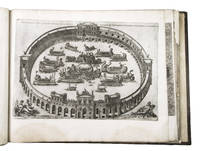
1550réf. ABC_49514Italy 1550. 17th-century gold-tooled brown calf sewn on 6 supports with the corresponding raised bands on the spine a red morocco title label on the spine with the title "Novissima urbis Romae descriptio" lettered in gold gold-tooled board edges. Large oblong folio ca. 59 x 42.3 cm. With 76 full-page engravings and 12 full-page etchings. Remarkable album with 77 beautiful examples of 16th-century Italian cartography all in very fine dark impressions. The collection includes plans of important Italian towns such as Rome Venice Genoa Naples Milan Florence Palermo Siena Bologna and Pisa as well as detailed views of individual buildings and monuments in Rome. They are engraved by several cartographers from the school of Antonio Lafreri 1512-1577 primarily Claudio Duchetti d. 1585 Matteo Florimi d. 1613 and Lafreri himself. Florimi's works are among the rarest of the Lafreri school map makers especially his Siena imprints of which several have here been included.In the middle of the 16th century Italy was the centre of map production and distribution in Europe. This industry primarily took place in Venice and Rome. The most notable of the publishers in Rome was Lafreri. His most important and most popular work is the Speculum Romanae magnificentiae a collection of plans an views of Rome's monuments; no two copies of the Speculum are the same. The present collection contains more than thirty plates from the Speculum. When Lafreri died his nephew Claudio Duchetti inherited the company. He continued to produce the Speculum plates but often made small adjustments and signed his own name at the bottom. Most of the Speculum plates in the present album are by Duchetti. After his death the copperplates were sold to other publishers such as Giovanni Orlandi before 1590-after 1640 who reissued them. The majority of the plates in the present album were printed by Orlandi in 1602.The album further contains 32 engraved city plans mostly of Italian towns although a few foreign cities are also included; one of the rarest is the view of Moscow which is also included here. The collection ends with a incomplete series of 11 etchings of landscapes and biblical scenes.A list of contents is available upon request.With the bookplate of Louis Routy de Charodon seigneur de Grésigny and Charodon 1710-1794 on the front pastedown and remnants of another bookplate above. The boards are somewhat scratched and stained the spine shows traces of use the edges of the boards have been professionally restored and the boards have been lengthened to fit the maps. The maps are slightly browned some are slightly foxed the first few maps have been mounted onto 17th-century leaves the longer maps are somewhat soiled on the fore edge three maps are restored at the fore edge and one at the bottom edge some maps have been cut slightly short. Otherwise in good condition.l Cf. Parshall P. "Antonio Lafreri's "Speculum Romanae magnificentiae"" in: Print Quarterly vol. 23 1 2006 pp. 3-28. hardcover