143 résultats
1786réf. 376505Venezia 1786. Ora la prima volta con le stampe pubblicate. Engraved title page with vignette. Engraved Title portrait and 24 leaves of plates XIII page of text. Frontispiece & 15 engraved plates. 1 vols. Folio. Quarter morocco and green boards. Binding showing signs of wear. Interior with light foxing but overall Near Fine. Bookplate of C. W. H. Sotheby. Ora la prima volta con le stampe pubblicate". Engraved title page with vignette. Engraved Title portrait and 24 leaves of plates XIII page of text. Frontispiece & 15 engraved plates. 1 vols. Folio. Including engravings after the works of great Venetian Renaissance painters Giorgione Titian Tintoretto Zelotti and Veronese. With Titian's frescoes for the exterior of the Fondaco dei Tedeschi in Venice which have since perished. Also with engravings after the great draftsman Parmigianino. Antonio Maria Zanetti is known as a printmaker for his contributions to the style of chiaroscuro woodcuts as well as for his career as an art dealer and collector. Girolamo Francesco Zanetti was a historian and philologist known for being the first to publish one of the oldest Venetian chronicles the Chronicon Altinate. OCLC 272605179. Provenance: Bookplate of C. W. H. Sotheby d.1887 of Ecton Hall Northampton England unknown books
2008réf. 165518New York: Sebastian Izzard LLC 2008. First Edition. Softcover. First Edition. Near Fine in perfect-bound wrappers. Sebastian Izzard LLC unknown books
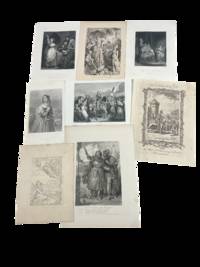
1700réf. 229131700. Cross-DressingWomen Military Joan of Arc engraving archive depicting the French military leader and martyr Jeanne d'Arc in iconic images of battle persecution and faith ca. 1770-1850s. The prints focus on Joan's leadership during the Hundred Years' War and on the gender-bending aspects of her identity and dress that contributed to her 1431 trial for heresy. Particular attention is given to her appearance in armor while directing troops or appearing before political authorities. These visual depictions emphasize Joan's adoption of male military clothing an attribute which has lead modern scholars of LGBTQ history to celebrate the saint as a queer and proto-transgender figure. Archive of eight engravings and proof impressions executed primarily in copperplate and steel engraving processes during the eighteenth and nineteenth centuries. The images depict several key episodes associated with Joan of Arc's historical narrative including portraits showing her wearing armor and holding a sword scenes of military command in which she appears mounted or directing troops and representations of her recognition by Charles VII and entry into the city of Orléans. A prison scene portrays Joan during captivity prior to her execution in 1431 emphasizing the moment when her continued cross-dressing became a major point of contention during her heresy trial. Several engravings were produced for historical publications and illustrated histories circulating in the eighteenth and nineteenth centuries including editions associated with François Guizot's History of France reflecting the renewed interest in Joan of Arc as a figure of national history. Archives includes: 1 Engraved for J. Sydney's History of England. The Maid of Orleans Receiving the Sword of St. Catherine. England c.1770-1820. A fine copper engraving framed within an elaborate Rococo border showing Joan receiving the sacred sword of St. Catherine an episode derived from medieval hagiography rather than strict historical documentation. Joan is mounted on horseback surrounded by armed men and clergy with a fortified tower rising behind her. The ornamental border and English publication context reveal the 18th-century Protestant fascination with Joan as a paradoxical figure: a warrior-prophetess both admired and viewed with suspicion. 2 Anonymous Artist. Va va fille de Dieu; délivre la France! Vision Scene. France c.1820-1850. A preparatory hand panciled engraving proof depicting Joan of Arc's divine revelation framed within penciled border guidelines. An angel descends from the clouds carrying a banner while pointing downward toward Joan who kneels in astonishment as cherubs hover above. The inscription "VA VA / FILLE DE DIEU / DELIVRE LA FRANCE!" anchors the scene as an allegory of Joan's heavenly mandate. 3 Henry Richter after. Joan of Arc Recognizes the King. London: The London Printing and Publishing Co. mid-19th century. A steel engraving portraying Joan's revelation of Charles VII at Chinon the pivotal moment when she identifies him despite his attempt at disguise. The richly detailed crowd scene and Gothic architectural setting emphasize both spectacle and legitimacy visualizing Joan as divinely guided rather than politically manipulated. 4 G. Greatbach engraver; after a painting by J. Opie R.A. Joan of Arc Declaring Her Mission. London: The London Printing and Publishing Co. Ltd. mid-19th century. Joan is shown making a dramatic gesture as she proclaims her mission before astounded soldiers and clergy. The engraving captures the tension between gender expectations and prophetic authority: Joan's outstretched arm determined expression and illuminated figure contrast with the skeptical figures behind her. 5 E. Scriven engraver. Joan D'Arc. London: H. Moore Sons & Co. mid-19th century.An engraving presenting a romanticized half-length portrait of Joan of Arc in armor holding a sword upright while gazing serenely into the distance. Behind her appear faint bystanders rendering her both an individual and an emblem of national deliverance. 6 Entry of Joan of Arc into Orléans. From Guizot's History of France. Paris/London c.1840s. A sweeping steel engraving of Joan riding triumphantly into Orléans accompanied by monks soldiers and citizens. The composition foregrounds her as a mounted military leader sword raised while crowds kneel and look upward in awe. Johannot's design visualizes Joan as a unifying national leader. 7 G. Stodart engraver; after H. E. Selous. Joan of Arc and Charles. London: Virtue & Co. mid-19th century.A dramatic steel engraving showing Joan standing beside Charles VII directing his attention toward the field of battle. The caption references their military collaboration. The interplay of armor banners and a stormy sky underscores Joan'smilitary might. 8 T. Brown engraver; after E. Corbould. Joan of Arc in Prison. London: The London Printing and Publishing Co. mid-19th century. A somber interior scene depicting Joan in captivity clasping her hands as guards and clergy surround her. Corbould emphasizes her steadfastness and the emotional gravity of her final days. Produced for an illustrated royal history King Henry the Sixth the image cast Joan as a martyr of conscience. In recent decades scholars in LGBTQ history and gender studies have increasingly examined Joan of Arc as a proto-queer icon who challenged traditional ideas of gender identity and expression. Medieval trial records document that Joan consistently wore male military clothing during her campaigns and continued to wear such clothing during imprisonment a choice that became a central accusation in the charges brought against her in 1431. Some historians and queer theorists have interpreted Joan's refusal to abandon male dress even under threat of execution as evidence of a personal gender identity that did not conform to contemporary expectations for women. Joan of Arc has been cited as an example in Medieval history of an individual navigating queer identity long before the modern understanding of terms like trans non-binary or genderfluid. Light toning and mild foxing to some edgewear and staining present to some margins. Prints are clear and paper crisp. Overall very good condition. A compelling and diverse archive of eight Joan of Arc engravings and artistic proofs representing two centuries of European historical illustration and devotional imagery. The collection captures Joan's transformation from medieval visionary to modern nationalist and feminist icon. unknown books
1827réf. 20738London: Printed by W. Nicol Cleveland Row; and sold by Payne and Foss.Colnaghi and Co. Pall Mall East 1827. First Edition Large Paper Copy. Frontispiece Portrait engraved by T. Woolnoth from a miniature by Branwhite; Four folding Plates of Monograms 7c. following the Contents leaf. vii i 536 4pp. 1 vols. Thick 4to 9-3/4 x 7-7/8/inches. Bound in 3/4 orange pebbled morocco t.e.g. marbled boards. Fine. First Edition Large Paper Copy. Frontispiece Portrait engraved by T. Woolnoth from a miniature by Branwhite; Four folding Plates of Monograms 7c. following the Contents leaf. vii i 536 4pp. 1 vols. Thick 4to 9-3/4 x 7-7/8/inches. Printed by W. Nicol, Cleveland Row; and sold by Payne and Foss...Colnaghi and Co., Pall Mall East unknown books
1847réf. 146851847. Firmin Didot. Three steel engravings published in L'Univers Pittoresque in 1847 depicting the Sultan of Lahij's palace a greeting between two Arab men and a saddled camel prepared for travel. The group belongs to the illustrated French literature through which nineteenth-century European readers encountered the Arabian Peninsula combining architectural views with scenes of customary greeting and travel. The Lahij image is especially useful for documenting how the residence of the sultanate near Aden was visually presented to European audiences before the major political changes that reshaped southern Arabia later in the century. Firmin Didot. Chateau Du Saltan d'Aden a Lahadj; Salut des Arabes; Chameau scelle pour le Voyage. Paris: Firmin Didot 1847. Three original steel engravings each approximately 5 x 8.2 inches. Chateau Du Saltan d'Aden a Lahadj shows the Sultan of Lahij's castle set within a cultivated and mountainous landscape with palm trees and surrounding countryside. Salut des Arabes depicts two Arab men greeting one another with a handshake. Chameau scelle pour le Voyage shows a saddled camel in a desert setting emphasizing the animal's role in overland travel. Comparable examples of these subjects are attributed to the engraver Lemaitre in the contemporary print market. The three prints preserve a French illustrated view of southern Arabia that moves between political architecture social custom and transportation. Their publication in 1847 places them within the period when Aden had already come under British control while neighboring Lahij retained its own sultanate giving the palace view a specific political geography distinct from the port colony itself. Some age-related toning and pinholes in the upper margins; the first engraving has remnants of a sticker at the upper right corner. The third engraving shows former staple marks and an approximately 4 cm loss along the upper edge not affecting the image. Overall very good condition. unknown books
1912réf. 20639Paris: Librairie Damascène Morgand Eduoard Rahir Succr 1912. First Edition #262 of350 copies signed. 1 vols. Thick 4to. Boiund in 3/4 green morocco marbled boards te.g. Some waterstaining bottom edge of last 100 pages minor else Very Nice. First Edition #262 of350 copies signed. 1 vols. Thick 4to. Librairie Damascène Morgand, Eduoard Rahir, Succr unknown books
1893réf. 40313Paris: Damascène Morgand 1893. First edition no. 571 of 550 copies on Papier Vergé of a Total Edition of 600. 675 pp. 1 vols. Thick 8vo. Bound in three quarter green morocco and marbled boards t.e.g. Fine. First edition no. 571 of 550 copies on Papier Vergé of a Total Edition of 600. 675 pp. 1 vols. Thick 8vo. Damascène Morgand unknown books
1862réf. 88917New York: Currier & Ives N.d. ca 1862. Original hand-colored lithograph. Small folio; sheet size 14-3/4" x 11-1/4"; printed area approximately 13" x 9". Background slightly darkened; more heavily toned at margins with old stains at extremities; image itself remains clean with coloring bright - about Very Good. A three-quarter length portrait of Winfield Scott at the very end of his career. Scott retired from his position as Commanding General of the Army in 1861. PETERS 19972. Currier & Ives unknown books
1843réf. 88170New York: Burton 1843. First Edition. Original steel engraving on heavy art paper; 13-1/2" x 11-1/4" plate; ca. 20" x 15" sheet. Marked "Proof" in type below title. Margins of sheet once folded for framing now unfolded; some soil mended tears and foxing to extremities much fainter within plate marks; printed area remains clean and unfaded; Very Good. A finely engraved bust portrait of Jackson; a portion of the image was later re-used for the famous "Black Jack" 2-cent postage stamp of 1863. Burton unknown books
réf. 88418Paris: Librairie Hachette n.d. Reprint originally published in 1869. Octavo 27cm; red cloth-covered boards with titling and decorations stamped in gilt and black on spine and front cover and decoration blind stamped to rear cover; gilt topstain; iv12-180pp; black-and-white illustrations to frontispiece and throughout. Text in French. Lightly spine-faded with light oxidation to spine titling small chips to gilt of front cover titling slight spine lean shelf-wear faint tanning to page margins and hinge starting at half-title page and pp.172-173; Good. Sequel to De la Terre à la Lune 1865 both written during Verne's prime and heavily altered with later translations and cuts. CLUTE & NICHOLLS p. 1277. 88418. Librairie Hachette unknown books
1929réf. 88417Paris: Librairie Hachette 1929. Reprint originally published in 1872. Octavo 27cm; red cloth-covered boards with titling and decorations stamped in gilt and black on spine and front cover and decoration blind stamped to rear cover; gilt topstain; iv12-2042pp; black-and-white vignettes to frontispiece and throughout. Text in French. La Grande Librairie sticker to lower rear pastedown. Lightly spine-faded with light oxidation to spine titling slight spine lean shelf-wear and faint tanning to page margins; Very Good. "From the 1870s on JV's work tended to repeat itself in gradually darkening hues though he never lost the sense of the fundamental usableness of science and technology a sense vital to 20-century sf science fiction where - as with JV - usableness tends to serve as its own justification" see Clute & Nicholls The Encycopedia of Science Fiction p.1277. CLUTE & NICHOLLS p. 1277. 88417. Librairie Hachette unknown books
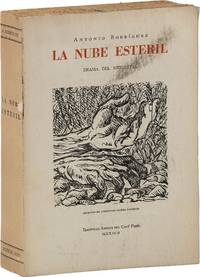
1952réf. 88790Mexico: Ediciones Amigos del Café París 1952. Softcover. Octavo 24cm; beige paper wrappers; upper and lower edges untrimmed; 317pp; black-and-white illustrations. Some pages of text unopened. Modest shelf-wear with soil to wrappers and edges of textblock and trace peeling to spine titling; Very Good. Fiction work examines social history of the Mezquital Valley region in Mexico. 88790. Ediciones Amigos del Café París unknown books
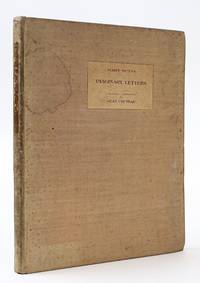
1926réf. 84817New York: The John Day Company 1926. First Edition. One of 3000 copies. Publisher's typed note regarding 25 copies with signed engravings laid in. Quarto 28cm; black cloth-covered boards with paper title label on spine; lower edge untrimmed; 54pp; eight wood engravings at frontispiece and throughout text. Previous owner's name inked to front endpaper. Shelf-soil to covers and interior with small nick to title label rubbing and peeling to spine ends and board edges with 3" crack to rear lower spine hinge; Good. In supplied slipcase with light shelf-wear and soil; Very Good. Cabell's collection is organized into four parts including Madoc in modern time on the moon and in the old time with Underwood's illustrations throughout. 84817. The John Day Company unknown books
1971réf. 9014570New York: Charles Scribner's Sons 1971. 1st. Hardcover. Fine condition / Near fine condition dust jacket. The dust jacket has minor wear to the extremities. Charles Scribner's Sons hardcover books
1829réf. 8060London: Jones 1829. Hardcover. Fine. Rebound in maroon cloth with black paper spine labels stamped in gilt. Fine condition. Minor foxing otherwise fine condition. 70 pages of text and 38 pages of steel engravings two illustrations per page in the first title. 52 pages of descriptive text and 40 pages of steel engravings two illustrations per page in the second title. Altogether 156 steel engravings on 78 pages. Jones hardcover books
1928réf. 1403491Paris: Edward W. Titus 1928. First Edition. Hardcover. Octavo 6 49 7 pages plus 5 illustrated plates. In Very Good minus condition. In brown cloth binding with red lettering on paper labels to front board and spine. Boards are moderately soiled most heavily on spine with faint stains on boards near the joints. Rubbing along board edges fore corners lightly bumped. Label on spine is heavily sunned and scuffed. Text block shows light wear and foxing to deckled edges. Also foxed sparsely throughout most prominently on endpapers. Stain in gutter of first free endpaper. Small pencil annotation on page 7 indicates a typo in the text. SH consignment. Shelved in Room A. Bill Bird was an American publisher best known for running the Three Mountains Press a small press that published many prominent modernists in the 1920s including Ezra Pound Ernest Hemingway James Joyce William Carlos Williams and Robert McAlmon with Ezra Pound serving as editor. Over a period of two and a half years he published 9 works. Concurrently he founded Consolidated Press Service and worked there as a journalist from 1920-1933 when he joined the New York Sun as chief foreign correspondent. Forced to flee France after the Nazi invasion he wrote articles warning of war. After WWII he moved to Tangier and was the editor of the Tangier Gazette. This title was among Bird's private collection having been carted by him from Paris where he stayed until 1940 to Spain Tangiers and finally back to Paris and by descent to the US. 1403491. Special Collections. Edward W. Titus hardcover books
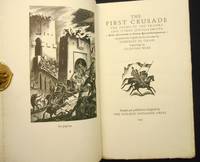
1945réf. 33330952Waltham Saint Lawrence: The Golden Cockerel Press 1945. Limited Edition. Hardcover. Very good. Webb Clifford. One of 500 copies folio size pp. The Golden Cockerel Press came together in autumn of 1920 at a time when post-World War I society was ushering in a renaissance of creative minds including another renaissance of the printing press as the artist's tool similar to that of William Morris and the arts and crafts printers of the previous century. The press worked with many notable artists including Eric Gill Blair Hughes-Stanton Robert Gibbings and the artist for this work Clifford Webb. Clifford Cyril Webb 1895-1972 studied art and is best known today for his wood engravings. He was a founder-member of the Society of Wood Engravers and "was a prominent figure in the group of engravers whobrought about the revival of wood engraving in the 1920s and benefited from the encouragement of Robert Gibbings and the Golden Cockerel Press" n.b. quote from Webb's entry in Horne "The Dictionary of 20th Century British Book Illustrators" p. 437. Per the bibliographical entry for this work "it is surprising that no complete translation of this unique eye-witness account of the First Crusade had ever been published in England before. What the pilgrims did in their fervour of blind fanaticism 'to the glory of God' makes astonishing reading!" ___DESCRIPTION: Bound by Sangorski & Sutcliffe in half vellum with orange buckram boards gilt vignette on the front board of crusaders on horseback by Clifford Webb top edge gilt frontis one of five full-page wood-engravings bound in throughout small title page wood-engraving also of crusaders on horseback wood-engraving of a cockerel holding a crusader pennant in its beak on p. 9; Poliphilus type on hand-made paper folio size 12 3/8" by 7 3/8" pagination: 1-4 5-92 1 colophon. ___CONDITION: A solid very good copy with clean boards the vellum smooth and without wear a strong square text block with solid hinges the interior is clean and bright and entirely free of prior owner markings; a small mark on the vellum on the back board light overall edgewear the corners bumped but not rubbed. ___CITATION: Cockalorum 168. ___POSTAGE: International customers please note that additional postage may apply as the standard does not always cover costs; please inquire for details. ___Swan's Fine Books is pleased to be a member of the ABAA ILAB and IOBA and we stand behind every book we sell. Please contact us with any questions you may have we are here to help. The Golden Cockerel Press hardcover books
réf. 24061405Santa Rosa: Nawakum Press 2010. Limited Edition. Hardcover. Fine. Cranmer Keith. One of 20 deluxe copies quarto size 32 pp. signed by Robert Bly with extra print signed by Cranmer in a clamshell box. An early publication by the Nawakum Press run by the inimitable David Pascoe whose name has become synonomous throughout the world of fine press publishing with meticulous craftsmanship and design often paired with original art work by contemporary artists. As is stated on their web site "While incorporating the very best from the fine press tradition the Press also chooses to stretch the boundaries of the modern day book." This work presents fifteen poems by Robert Elwood Bly 1926-2021 renowned poet and activist who won the National Book Award for Poetry in 1968 for his book "The Light Around the Body". Per the prospectus "It has been said that Bly has taken on many roles among them groundbreaking poet and remains one of the most hotly debated artists of the past half century The psychologist Robert Moore has said that 'when the cultural and intellectual history of our time is written Robert Bly will be recognized as the catalyst for a sweeping cultural revolution.' " Presented with two original wood engravings by Berkeley artist Keith Cranmer who began engraving by hand in 1975. He "works on paper with drawing gouache ink and painting.his main interest is representational figurative drawing with at times a surreal edge" n.b. quote from the web site of the American Society of Bookplate Collectors and Designers. This one of twenty deluxe copies with a separate engraving in a wallet numbered and signed by Cranmer the engraving and book in a clamshell box. ___DESCRIPTION: Quarter bound in foil stamped rich brown leather with burnt orange Cave Paper over boards paper label on the front board with a wood engraving of the Indigo Bunting patterned endpapers the frontispiece a two-colour wood engraving both this and the engraving on the front board printed letterpress directly from the blocks title page in brown and black poem numbers and titles in brown signed by Robert Bly in ink at the colophon; monotype Walbaum on Hahnemühle Biblio quarto size 10 3/4" by 6 3/8" 32 pages limited edition this no. 9 of 20 deluxe copies total edition 100. Enclosed in a paper chemise is an engraving of the Indigo Bunting also used for the cover signed and numbered in pencil by Keith Cranmer. Both contained in a clamshell box of Japanese brown book cloth leather spine label with gilt lettering inset. ___CONDITION: Volume fine with clean boards straight corners without rubbing a strong square text block with solid hinges the interior is clean and bright and entirely free of prior owner markings; as new directly from the Press. Separate print and chemise also fine clean and without wear; clamshell box fine also clean and without wear. Overall a stunning production. ___POSTAGE: International customers please note that additional postage may apply as the standard does not always cover costs; please inquire for details. ___Swan's Fine Books is pleased to be a member of the ABAA ILAB and IOBA and we stand behind every book we sell. Please contact us with any questions you may have we are here to help. Nawakum Press hardcover books
1985réf. 59810Great Barrington MA: Penmaen Busyhaus Publications 1985. Limited Edition "Out of Series" Print Set not numbered not in linen slipcase/box. Prints. Near Fine. Folio 39 cm Two suites of loose prints the suites are issued in two states. 13 prints printed on white paper 12 of which are signed; 13 prints printed on cream-colored paper 12 of which are signed. The images on the cream-colored paper are the same as the images on the white paper the only difference being the paper. The 13th print in each suite is by Lynd Ward which are not signed as he passed away in June of 1985 just before the project was completed. Does not contain the introduction by Leonard Baskin or the descriptive letterpress text. With signed self-portraits by the following artists: -Fred Becker 1913-2004. Born in Oakland California and active in St. Louis Missouri and New England. -Jack Coughlin b. 1932. Born in Greenwich Connecticut. He studied at the Rhode Island School of Design in Providence and the Art Students League of New York. He is most known for his portrait wood engravings etchings and lithographs of literary figures and musicians. Information obtained from Brier Hill Gallery Boston MA. -John DePol 1913-2004. A New York printmaker and wood engraver. His press was Endgrain Press. -Fritz Eichenberg 1901-1990. A German/American artist. Considered a master of wood engraving. Eichenberg's first big commissions came with Crime and Punishment and Gulliver's Travels for the Limited Editions Club. His images often depict suffering and poverty. His positions included director of Graphic Arts Center in Brooklyn and a teacher of Graphics at New York's Pratt Institute. Westmont Ridley-Tree Museum of Art -Raymond Gloeckler 1928-2022. Born in Portage Wisconsin. While still a student he taught art via a government program in rural schools. Later he was employed as a professor at UW-Madison between 1961-1993. "Gloeckler is known for his highly detailed caricatures and bold expressive satire and commentary. His prints and paintings comment on humanity's follies and foibles in a unique light-hearted style defying art world trends." - Gallery of Wisconsin Art -James Grashow b. 1942. An American sculptor and woodcut artist. "James Grashow was born in Brooklyn in 1942 and has been creating works that address themes of man nature and mortality since the 1960's" "The scale of his work ranges from large environmental installations through which the viewer traverses to the delicate and contained world of his houseplants where homes and buildings replace flowers and buds in intricately constructed bouquets." - The artist's website -Judith Jaidinger b. 1941. One of the two female artists represented here. Born in Chicago Illinois. "Judith Jaidinger's obsession with cutting began in her 1960s student days at the School of the Art Institute and is linked to her equally long frankly sensuous relationship with boxwood. She was introduced to both in an engraving class taught by British-born print-master Adrian Troy. "At the same time printing industry technology had moved on supplanting woodblock engravings with line drawings and photography. 'A dying art' Jaidinger says. It was also a seriously slumping industry. But in the 1960s in Chicago hub of an enormous catalog business there were still a few commercial wood-engraving establishments turning out the precise detailed images more typical of the previous century. One of them Sander Wood Engraving on Dearborn Street was where Professor Troy a committed modernist sent his students to buy the best material: rare English-grown boxwood blocks. "'He warned us' Jaidinger recalls 'If you go to Sander and buy your wood from them don't look at what those engravers are doing. I don't want you to be influenced by them.' "That made it irresistible." - Reader- Chicago's alternative nonprofit newsroom -Stefan Martin 1936-1994. Born in Elgin Illinois and a graduate of the Art Institute of Chicago. He was also active in Roosevelt New Jersey. His work is held in private museums and collections throughout the world including the Metropolitan Museum and the Smithsonian Institution. -Michael McCurdy 1942-2016. American author illustrator and publisher. Born in New York City. McCurdy served as an instructor at the School of the Museum of Fine Arts at Concord Academy and at the Book Arts Laboratory of the Wellesley College Library. He founded Penmaen Press 1968-1985. Information obtained from Brier Hill Gallery Boston MA. -Barry Moser b. 1940. The owner and operator of The Pennyroyal Press and the illustrator of over 250 books including Moby Dick The Divine Comedy and a highly regarded edition of The Bible. "Barry Moser is probably the most important book illustrator working in America today." - Nicholas Basbanes -Gillian Tyler b. 1935. Born in Baltimore Maryland. She is an illustrator that works primarily in children's books. -Herbert Ogdon Waters 1903-1996. Born in China. Waters came to the United States and studied at the Pennsylvania Museum School of Industrial Art in Philadelphia the Art Institute of Chicago and Harvard University. He was a public school art instructor under the auspices of the Works Progress Administration's Federal Arts Project. He later taught art at the University of New Hampshire at Durham and at the Holderness School in Plymouth New Hampshire. Information obtained from Brier Hill Gallery Boston MA. -Lynd Ward 1905-1985. The 13th print in each suite is by Lynd Ward which are not signed as he passed away in June of 1985 just before the project was completed. Originally issued in an edition of 250 boxed sets. Penmaen Busyhaus Publications unknown books
1859réf. 140940505Philadelphia: T.B. Peterson 1859. First American Edition. Very Good. First American edition first printing. Follows the original French and some multi-volume British editions with ghostwritten material tacked on. 580 2-12 1 pp. Publisher's brown pebbled cloth front stamped in blind gilt spine lettering yellow ad endpapers. A Very Good copy with cloth worn away along head and tail lettering a little oxidized and rubbed light sporadic foxing penciled name on first blank erased pencil on title page plates toned. The autobiography of the first private detective Eugene Francois Vidocq a former criminal and father of criminology. His exploits inspired Edgar Allan Poe to create detective fiction as a genre. T.B. Peterson unknown books
1931réf. 17082110London: Jonathan Cape Printed by Walter Lewis at the University Press Cambridge 1931. Limited Edition. Hardcover. Near fine. Gill Eric. No. 129 of 160 octavo size 206 pp. signed by Eric Gill. Clothing has long been an integral part of society and can be used to reflect diverse religious and cultural identities. In this essay Eric Gill 1882-1940 discusses the significance of clothes in society and argues for a more egalitarian approach to clothing; for example Gill advocates the suitability of men's clothing trousers for women as a way to liberate the sexes and create a more equal society. Gill provides wood engravings for the book illustrating his concepts and showcasing his masterful rendering of the technique; his illustrations have a slightly satirical slant while evoking the pathos of his arguments. ___DESCRIPTION: Quarter brown pigskin with marbled paper boards gilt rules and lettering on the spine top edge gilt fore- and bottom edges uncut illustrations include title page device "Woman Dancing" P712; "Art and Prudence" P714; "Clothes as Houses" P715; "Clothes as Workshops" P716; "Clothes as Churches and Town Halls" P717; "Clothes for Special Parts" P718; "The Tyranny of Tailors" P719; "Nature and Nakedness" P720; "Trousers" P21; and a tailpiece of "Trousers and Spats" P722; octavo 7.5" by 5.25" pagination: i-vii 1-2 3-196 197-198 1 colophon one of 160 copies this number 129 signed "Eric G" on the colophon. ___CONDITION: Volume is near fine with clean boards straight corners a strong square text block with solid hinges the interior is clean and bright and entirely free of prior owner markings; some slight rubbing to the bottom edges of the boards and to the corners a faint stain to the gutter of Contents page and very slight cracking to the gutter at pages 128 and 129 but hinges are still tight. ___CITATION: Gill 22. ___POSTAGE: International customers please note that additional postage may apply as the standard shipping charge does not always cover costs; please inquire for details. ___Swan's Fine Books is pleased to be a member of the ABAA ILAB and IOBA and we stand behind book we sell. Please contact us with any questions you may have we are here to help. Jonathan Cape [Printed by Walter Lewis at the University Press, Cambridge] hardcover books
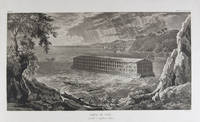
1833réf. 18856Milano: Fortunato Stella e Figli 1833. First Italian edition. Hardcover. f to vg. Oblong folio 12 6/8 x 18 1/2". 1 leaf Title 38 leaves Plates 1 leaf List of content. Original half morocco over burgundy paper covered boards. Gold lettering and tooling on spine. Rare first Italian edition of Paul-Louis-Bernard Drach's atlas volume of his "Sainte Bible de Vence" a series which was originally published in 27 volumes in Paris from 1827 to 1833. The striking 38 engraved plates featured in this atlas are composed of 13 maps by A. R. Fremin and 25 engravings signed by Falkeisen Angelini and Lanzani. The engraved plates have been laid down on beautiful hand-made paper and describe the following: 1. Map of the place of Eden Mesopotamy and Persian Gulf; 2. Noah's Arch construction; 3. Noah's Arch; 4. Map of the land divided among Noah's sons; 5. The Babel Tower; 6. Map of the Land of Canaan; 7. Map of Jews' Pilgrimage; 8. The Jerusalem Sahnedrin; 9. The Temple of Jerusalem plans and sections; 10. The Temple of Jerusalem square plan; 11. Map of ancient Jerusalem; 12. The Temple of Salomon; 13. The Temple's foundations; 14. The East Gate; 15. The Buildings of the Temple; 16. Musical Instruments of the Jews; 17. Hebrew Alphabet; 18. Jew's Vestments and worship's objects; 19. Two Menorah; 20. High Priest's vestments and Golden Menorah; 21. Moses' Tabernacle; 22. The Loaves of Proposition; 23. Plan and section of the Tabernacle; 24. The encampment of the Israelites; 25. Map of the Holy Land South; 26. Map of the Holy Land North; 27. Map of Syria; 28.Map of Israel under Salomon; 29. Plan of the House of the Forest of Lebanon; 30. The House of the Forest of Lebanon; 31. The Bronze Sea; 32. The Washings; 33. The Altars of the Holocausts; 34. Map of the Persian Empire; 35. Map of the Land of Canaan according to Ezechiel; 36. Map of Herod's Reign; 37. Zachary's Vision; 38. Map of the travels of Saint Peter and Saint Paul. The plates measure appr. 12 1/2 x 18 1/4" image size appr. : 9 1/2 x 14 6/8". Binding rubbed on covers and along edges. Head and tail of spine chipped. Previous owner's Ex-libris Calvin Bullock on inside of front cover. Minor and sporadic foxing along paper margin not affecting plates. Title and captions in Italian. Binding in overall fair interior in very good plates in near fine to fine condition. About the author: "David Paul Drach aka Paul-Louis-Bernard Drach after his conversion 1791-1865 was a Catholic convert from Judaism and librarian of the College of Propaganda in Rome. Drach received his early education from his father who was a rabbi. After spending some time in various Talmudic schools he became a teacher at Rappoltsweiler though only sixteen years of age. The love of the secular sciences brought him to Paris where he was welcomed by his coreligionists and became tutor in a wealthy Jewish family. His reputation as a teacher brought him Christian pupils; and this may have had some influence on his subsequent conversion; in fact he had always manifested some leaning toward Christianity. Drach had already begun the study of Greek and Latin so as to become acquainted with the Christian doctrines in their original sources. Struck by the accusation of some of the Fathers that the Jews had corrupted the Hebrew text he began a comparative study of the Hebrew and the Septuagint which study he continued in spite of the remonstrances of the president of the Central Consistory. Drach was received into the Catholic faith in 1823 together with his two daughters and his son Paul who afterward became a priest and a distinguished Biblical scholar. In 1827 Drach accepted the position of librarian of the Propaganda in Rome which position he held until the year of his death." From the Jewish Encyclopedia. Fortunato Stella e Figli hardcover books
1940réf. 2156New York N.Y. William Edwin Rudge 1940-1948. 4to. Vol.I-Vol. V. Number 1-4 of each year plus Vol. V Number 4. 1940-1948. Printed wrappers for each volume. 1st Edition. All in fine condition each year encased in a blue paper covered sleeve. Vol. I: 1940 Vol 1-4 A mutitude of articles on prints and books as well as numerous illustrations. Vol. II: 1942 #1-4 "Aristocracy in Prints" American engraver Vol. III: #1-4 1943 t. Vol. IV: 1946 #1-4Vol. V:1948 #4 only. On request I will provide a detailed list of articles included. The journal was founded by William Edwin Rudge to demonstrate "the far reaching importance of the graphic arts" including art prints commercial printing wallpaper etc. Contents were eclectic covering typography book making book printing fine prints as well as the trade journal aspects of printing candy bar wrappers.8 Initially the publication included original prints such as the frontispiece for Vol 1 #1 Jun 1940 a two color woodcut by Hans Alexander Mueller and Vol 1 #3 December 1940 a black and white wood engraving by Paul Landacre. By Volume 8 1953 the focus of the periodical had shifted to a trade journal. William Edwin Rudge books
1983réf. JC9382New York: Random House 1983. Second printing. Hardcover. Fine/Very Good. Cloth; dust jacket; 8vo; pp. 73 illustrated. A special edition published for the conservators of the New York Public Library. Book is fine. Dust jacket a little wrinkled along the edges with a few small closed tears here and there; spine and rear panel somewhat sunned. Random House hardcover books
2011réf. 38447London: The Folio Society 2011. Hardcover. Fine. Hardcover. Number 459 of 1250 numbered copies for sale to members of The Folio Society. There were also 25 lettered copies that were not for sale. This folio sized work was originally printed b Robert Gibbings at the Golden Cockerel Press in 1926-27 using the text from the Globe edition of 1898. This is an exquisite modern edition of this classic work by Chaucer that is beautifully illustrated with drawings by famed artist and illustrator Eric Gill. It is a facsimile edition after the original of 1898. Bound in black goatskin with gilt stamped illustrations and lettering on front cover and spine gilt edges accompanied with a companion book in black half leather over dark blue boards with black lettering on cream paper label on cover; housed in matching black cloth slipcase with gilt lettering on spine. Dark blue endpapers. Illustrated title page. With a companion volume that has a frontispiece photograph of Eric Gill by Howard Coster 1885-1959 a self-styled photographer of men taken in 1927. This facsimile edition was printed in 2011 by Memminger MedienCentrum for the Folio Society on Rigoletto Panna felt-marked paper and bound by G. Lachenmaier in full goatskin leather with Merida Indigo endleaves. The companion volume here Barry Windeatt's essay on Troilus and Criseyde was first published as an introduction to his translation of the poem published by the Clarendon Press in 1992. Reprinted by permission of Oxford University Press. The text of this edition follows that of the first edition with minor emendations. " from the imprint. Contains notes at rear. A beautiful production fine condition in a near fine solander box. 309 2; 48 pages. Measures 7.75 x 12.25 inches. PRI/101826. The Folio Society hardcover books