11 050 résultats
1960réf. 141447Tokyo: Shockiku Ofuna 1960. Draft script for the 1960 film. Text in Japanese. A young woman is hitchhiking when the driver who picks her up attempts to molest her. A young gangster comes to her aid and then leads her on a wild relationship through the Japanese underground towards the eventual destruction of both of them. White titled perfect-bound wrappers. Title page present. 40 leaves with last page of text numbered 40. Mechanical duplication. Pages Near Fine wrapper Near Fine bound with two staples. Godard Histoires du cinema. Shockiku Ofuna unknown books
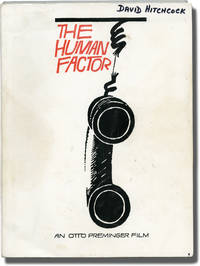
réf. 145780Beverly Hills CA: Metro-Goldwyn-Mayer MGM 1978. Draft script for the 1979 film. Illustrated front wrapper based on Saul Bass' poster design for the film. Copy belonging to uncredited crew member David Hitchcock with his name in manuscript ink on the front wrapper. Manuscript annotations throughout primarily indicating deleted scenes. Also included is a carbon typed letter signed by Otto Preminger dated 19th October 1979 to dubbing editor Peter Pennell terminating his employment at the conclusion of production. The final film directed by director Otto Preminger based on the 1978 novel by Graham Greene with screenplay written by Tom Stoppard about a low-level bureaucrat in the British Secret Service M16 who finds himself unknowingly used by the Soviets as he struggles with his love for his family and the ambiguity of his ethical responsibilities. Set and shot on location in UK and Kenya. White illustrated titled wrappers. Title page present dated 1978 with credits for screenwriter Tom Stoppard and novelist Graham Greene rubber stamped copy No. 146. 146 leaves with last page of text numbered 146. Xerographic duplication rectos only. Pages Fine wrapper Very Good plus bound internally with a silver prong binding. Metro-Goldwyn-Mayer [MGM] unknown
réf. 145780Beverly Hills CA: Metro-Goldwyn-Mayer MGM 1978. Draft script for the 1979 film. Illustrated front wrapper based on Saul Bass' poster design for the film. Copy belonging to uncredited crew member David Hitchcock with his name in manuscript ink on the front wrapper. Manuscript annotations throughout primarily indicating deleted scenes. Also included is a carbon typed letter signed by Otto Preminger dated 19th October 1979 to dubbing editor Peter Pennell terminating his employment at the conclusion of production. The final film directed by director Otto Preminger based on the 1978 novel by Graham Greene with screenplay written by Tom Stoppard about a low-level bureaucrat in the British Secret Service M16 who finds himself unknowingly used by the Soviets as he struggles with his love for his family and the ambiguity of his ethical responsibilities. Set and shot on location in UK and Kenya. White illustrated titled wrappers. Title page present dated 1978 with credits for screenwriter Tom Stoppard and novelist Graham Greene rubber stamped copy No. 146. 146 leaves with last page of text numbered 146. Xerographic duplication rectos only. Pages Fine wrapper Very Good plus bound internally with a silver prong binding. Metro-Goldwyn-Mayer [MGM] unknown books
1969réf. 141375New York: Two Faces / New Yorker Films 1969. Vintage poster for the 1969 film an experimental mix of documentary and fiction. Poster designed by Robert Frank. Director Robert Frank's first feature film in which he follows poet Peter Orlvosky and his mentally ill and mostly catatonic brother Julius as they move through the late 1960s Beat scene. When Julius wanders off he is replaced in the film by actor Joseph Chaikin. A meditation on the boundaries of reality and sanity featuring the screenwriting debut of Sam Shepard and the first feature film appearance of Christopher Walken. The film was released in a new restoration by Steidl in 2007 along with a book publication outlining the film. From the Steidl book: "Frank's feature debut was first screened in 1968 at the Venice Film Festival. Everything which had defined Frank's art up to that point turns up in this film - the look at America 'from the outside' the poetic libertinage of the Beats the marginal in a central role. It celebrates the return of the poetic essay as assemblage the affirmation of the underground as a wild cinematic analysis in the form of a collage and skillfully weaves together opposites plays counterfeits against the authentic pornography against poetry acting against being Beat cynicism against hippie romanticism monochrome against colored. The story contains bizarre twists and turns and appears to be a rather artless-film-within-a-film being shown at a rundown movie theater." 26.75 x 20.75 inches. Near Fine. In a custom frame. Two Faces / New Yorker Films unknown
1969réf. 141375New York: Two Faces / New Yorker Films 1969. Vintage poster for the 1969 film an experimental mix of documentary and fiction. Poster designed by Robert Frank. Director Robert Frank's first feature film in which he follows poet Peter Orlvosky and his mentally ill and mostly catatonic brother Julius as they move through the late 1960s Beat scene. When Julius wanders off he is replaced in the film by actor Joseph Chaikin. A meditation on the boundaries of reality and sanity featuring the screenwriting debut of Sam Shepard and the first feature film appearance of Christopher Walken. The film was released in a new restoration by Steidl in 2007 along with a book publication outlining the film. From the Steidl book: "Frank's feature debut was first screened in 1968 at the Venice Film Festival. Everything which had defined Frank's art up to that point turns up in this film - the look at America 'from the outside' the poetic libertinage of the Beats the marginal in a central role. It celebrates the return of the poetic essay as assemblage the affirmation of the underground as a wild cinematic analysis in the form of a collage and skillfully weaves together opposites plays counterfeits against the authentic pornography against poetry acting against being Beat cynicism against hippie romanticism monochrome against colored. The story contains bizarre twists and turns and appears to be a rather artless-film-within-a-film being shown at a rundown movie theater." 26.75 x 20.75 inches. Near Fine. In a custom frame. Two Faces / New Yorker Films unknown books
1957réf. 154183Hollywood: Howco Productions 1957. Draft script for the 1957 film. Copy belonging to actor Dick Miller with his manuscript pencil annotations throughout. Miller was apparently considered for the role of Stanley as many of Stanley's lines are marked with manuscript pencil and then struck through but was ultimately cast in the role of Ben. The gangster owner of a nightclub on a carnival pier is tormented by his love for the club's star who herself is in love with a local businessman with dreams of buying out the club. An early role for Miller who appeared in 14 films directed by legendary independent filmmaker Roger Corman between 1955 and 1961 and would continue to work with Corman throughout his career. Red titled wrappers. Title page present undated with credits for screenwriter Leo Lieberman. 72 leaves with last page of text numbered 71. Mimeograph duplication rectos only. Pages Near Fine wrapper Near Fine bound internally with three gold brads. Howco Productions unknown
1957réf. 154183Hollywood: Howco Productions 1957. Draft script for the 1957 film. Copy belonging to actor Dick Miller with his manuscript pencil annotations throughout. Miller was apparently considered for the role of Stanley as many of Stanley's lines are marked with manuscript pencil and then struck through but was ultimately cast in the role of Ben. The gangster owner of a nightclub on a carnival pier is tormented by his love for the club's star who herself is in love with a local businessman with dreams of buying out the club. An early role for Miller who appeared in 14 films directed by legendary independent filmmaker Roger Corman between 1955 and 1961 and would continue to work with Corman throughout his career. Red titled wrappers. Title page present undated with credits for screenwriter Leo Lieberman. 72 leaves with last page of text numbered 71. Mimeograph duplication rectos only. Pages Near Fine wrapper Near Fine bound internally with three gold brads. Howco Productions unknown books
1966réf. 141426Tokyo: Nikkatsu 1966. Draft script for the 1966 film. Text in Japanese. Based on a novel by Takashi Suzuki a repressed Catholic young man living in a boardinghouse is infatuated with the landlady's daughter and when he cannot express his feelings he turns to violence. He joins a gang and begins a fighting routine exploiting the weakness of classmates. Set in Okayama shot on location in Japan. Red titled perfect-bound wrappers. Title page present. 113 leaves with last page of text numbered 19. Mechanical duplication. Pages Near Fine wrapper Near Fine. Criterion Collection 269. Nikkatsu unknown
1966réf. 141426Tokyo: Nikkatsu 1966. Draft script for the 1966 film. Text in Japanese. Based on a novel by Takashi Suzuki a repressed Catholic young man living in a boardinghouse is infatuated with the landlady's daughter and when he cannot express his feelings he turns to violence. He joins a gang and begins a fighting routine exploiting the weakness of classmates. Set in Okayama shot on location in Japan. Red titled perfect-bound wrappers. Title page present. 113 leaves with last page of text numbered 19. Mechanical duplication. Pages Near Fine wrapper Near Fine. Criterion Collection 269. Nikkatsu unknown books
1959réf. 141461Tokyo: Nikkatsu 1959. Draft script for the 1959 film. Text in Japanese. Based on Sueko Yasumoto's novel and one of the first examples of media dealing with the plight of zainchi or ethnically Korean Japanese citizens and their identity and struggles. One man has always worked faithfully for the Toho Company and another man is working for an underworld boss trying to scam Toho. They find each other again when one begins trailing and investigating the other. White titled perfect-bound wrappers. Title page present. 177 leaves with last page of text numbered 16. Mechanical duplication. Pages Very Good plus wrapper Very Good plus bound with two staples. Nikkatsu unknown
1959réf. 141461Tokyo: Nikkatsu 1959. Draft script for the 1959 film. Text in Japanese. Based on Sueko Yasumoto's novel and one of the first examples of media dealing with the plight of zainchi or ethnically Korean Japanese citizens and their identity and struggles. One man has always worked faithfully for the Toho Company and another man is working for an underworld boss trying to scam Toho. They find each other again when one begins trailing and investigating the other. White titled perfect-bound wrappers. Title page present. 177 leaves with last page of text numbered 16. Mechanical duplication. Pages Very Good plus wrapper Very Good plus bound with two staples. Nikkatsu unknown books
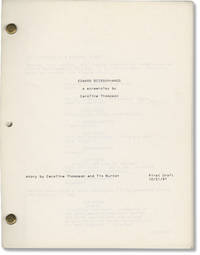
réf. 162755Los Angeles: Twentieth Century-Fox 1987. First Draft script for the 1990 film. Tim Burton's second "Modern Prometheus" film following his 1984 short "Frankenweenie" about a mad scientist who dies before he can complete his latest creation: a nearly complete human being. The creation is left with scissors for hands and doomed to live a life of solitude until a kindly mild-mannered Avon Lady welcomes him into her home. Often cited as the director's masterpiece released two years after his hilarious and creepy romp "Beetlejuice" 1988 one year after his beloved comic adaptation "Batman" 1989 and two years before his second and final contribution to the Dark Knight legend "Batman Returns" 1992. Self wrappers integral with title page dated October 21 1987. Noted as First Draft with credit for screenwriter Caroline Thompson. 117 leaves with last page of text numbered 116. Xerographic duplication circa late 1980s font rectos only. Pages about Fine wrapper Near Fine bound with two gold brads. Twentieth Century-Fox unknown
réf. 160028Los Angeles: Twentieth Century-Fox 1987. Revised First Draft script for the 1990 film. Tim Burton's second "Modern Prometheus" film following his 1984 short "Frankenweenie" about a mad scientist who dies before he can complete his latest creation: a nearly complete human being. The creation is left with scissors for hands and doomed to live a life of solitude until a kindly mild-mannered Avon lady welcomes him into her home. Often cited as the director's masterpiece released two years after his hilarious and creepy romp "Beetlejuice" 1988 one year after his beloved comic adaptation "Batman" 1989 and two years before his second and final contribution to the Dark Knight legend "Batman Returns" 1992. Mustard titled Twentieth Century-Fox wrappers undated. Title page present dated February 22 1990 noted as REVISED FIRST DRAFT with credit for screenwriter Caroline Thompson. 121 leaves with last page of text numbered 116. Xerographic duplication on blue stock rectos only with rainbow revision pages throughout dated between 4/27/90 and 6/27/90. Pages about Fine wrapper Near Fine bound with two gold brads. Twentieth Century-Fox unknown
réf. 162755Los Angeles: Twentieth Century-Fox 1987. First Draft script for the 1990 film. Tim Burton's second "Modern Prometheus" film following his 1984 short "Frankenweenie" about a mad scientist who dies before he can complete his latest creation: a nearly complete human being. The creation is left with scissors for hands and doomed to live a life of solitude until a kindly mild-mannered Avon Lady welcomes him into her home. Often cited as the director's masterpiece released two years after his hilarious and creepy romp "Beetlejuice" 1988 one year after his beloved comic adaptation "Batman" 1989 and two years before his second and final contribution to the Dark Knight legend "Batman Returns" 1992. Self wrappers integral with title page dated October 21 1987. Noted as First Draft with credit for screenwriter Caroline Thompson. 117 leaves with last page of text numbered 116. Xerographic duplication circa late 1980s font rectos only. Pages about Fine wrapper Near Fine bound with two gold brads. Twentieth Century-Fox unknown books
réf. 160028Los Angeles: Twentieth Century-Fox 1987. Revised First Draft script for the 1990 film. Tim Burton's second "Modern Prometheus" film following his 1984 short "Frankenweenie" about a mad scientist who dies before he can complete his latest creation: a nearly complete human being. The creation is left with scissors for hands and doomed to live a life of solitude until a kindly mild-mannered Avon lady welcomes him into her home. Often cited as the director's masterpiece released two years after his hilarious and creepy romp "Beetlejuice" 1988 one year after his beloved comic adaptation "Batman" 1989 and two years before his second and final contribution to the Dark Knight legend "Batman Returns" 1992. Mustard titled Twentieth Century-Fox wrappers undated. Title page present dated February 22 1990 noted as REVISED FIRST DRAFT with credit for screenwriter Caroline Thompson. 121 leaves with last page of text numbered 116. Xerographic duplication on blue stock rectos only with rainbow revision pages throughout dated between 4/27/90 and 6/27/90. Pages about Fine wrapper Near Fine bound with two gold brads. Twentieth Century-Fox unknown books
1969réf. 143218Tokyo: Gendai Eigasha 1969. Draft script for the 1969 film. Front wrapper notes a date of 1969 and credit as a Gendai Eigasha production. The second page is a elegaic introduction to the film story: "On the erotology and insurrection of sugi Sakae who wrote of dancing as flowers strangled and left in spring and It Noe who lived her entire life in confused beauty-we the youth and you and I in our degenerate joy which reaches an unbalanced complicity are talking." Based on the life of anarchist Sakae sugi and his relationship with three women.It is the first film in Yoshida's trilogy of Japanese radicalism followed by "Heroic Purgatory" 1970 and "Coup d'Etat" 1973. Considered to be one of the most representative films from the Japanese New Wave movement. Set in and shot on location in Japan. White titled wrappers dated 1969. Title page present. 86 leaves with last page of text numbered d-44. Mechanical duplication. Pages Near Fine wrapper Very Good plus with mild foxing on rear wrapper title on spine. Gendai Eigasha unknown
1969réf. 143218Tokyo: Gendai Eigasha 1969. Draft script for the 1969 film. Front wrapper notes a date of 1969 and credit as a Gendai Eigasha production. The second page is a elegaic introduction to the film story: "On the erotology and insurrection of sugi Sakae who wrote of dancing as flowers strangled and left in spring and It Noe who lived her entire life in confused beauty-we the youth and you and I in our degenerate joy which reaches an unbalanced complicity are talking." Based on the life of anarchist Sakae sugi and his relationship with three women.It is the first film in Yoshida's trilogy of Japanese radicalism followed by "Heroic Purgatory" 1970 and "Coup d'Etat" 1973. Considered to be one of the most representative films from the Japanese New Wave movement. Set in and shot on location in Japan. White titled wrappers dated 1969. Title page present. 86 leaves with last page of text numbered d-44. Mechanical duplication. Pages Near Fine wrapper Very Good plus with mild foxing on rear wrapper title on spine. Gendai Eigasha unknown books
réf. 152527N.p.: N.p. 1970. Dialogue transcript for the infamous unfinished film musical undated circa 1968. Copy belonging to Frank Zappa with a single annotation in Zappa's hand on the top of the first page. Full provenance available. A transcript detailing multiple takes of ten scenes shot by Zappa for his long-planned but never finished experimental film. Transcript primarily addresses scenes featuring Don Preston and Phyllis Smith Altenhaus but also contains dialogue intended to be spoken by Carl Zappa Billy Mundi Aynsley Dunbar Jimmy Carl Black and Zappa himself. Originally innovated in 1967 by Zappa featuring his then-band the Mothers of Invention the film would morph in various ways over the course of the next decade but would ultimately never come to fruition due to a lack of financing. In 1969 the Mothers of Invention released the acclaimed double album "Uncle Meat" an instrumental soundtrack to the unfinished film. Finally in 1987 a direct-to-video "making of" documentary of the uncompleted film was released. Transparent front wrapper with orange back wrapper and spine. 59 leaves with last page of text numbered 58. Mimeograph duplication rectos only. Pages with light stain on first leaf else Near Fine wrapper Very Good plus bound internally with three silver brads. N.p. unknown
réf. 152527N.p.: N.p. 1970. Dialogue transcript for the infamous unfinished film musical undated circa 1968. Copy belonging to Frank Zappa with a single annotation in Zappa's hand on the top of the first page. Full provenance available. A transcript detailing multiple takes of ten scenes shot by Zappa for his long-planned but never finished experimental film. Transcript primarily addresses scenes featuring Don Preston and Phyllis Smith Altenhaus but also contains dialogue intended to be spoken by Carl Zappa Billy Mundi Aynsley Dunbar Jimmy Carl Black and Zappa himself. Originally innovated in 1967 by Zappa featuring his then-band the Mothers of Invention the film would morph in various ways over the course of the next decade but would ultimately never come to fruition due to a lack of financing. In 1969 the Mothers of Invention released the acclaimed double album "Uncle Meat" an instrumental soundtrack to the unfinished film. Finally in 1987 a direct-to-video "making of" documentary of the uncompleted film was released. Transparent front wrapper with orange back wrapper and spine. 59 leaves with last page of text numbered 58. Mimeograph duplication rectos only. Pages with light stain on first leaf else Near Fine wrapper Very Good plus bound internally with three silver brads. N.p. unknown books
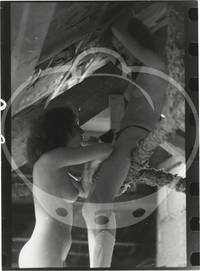
réf. 153250N.p.: N.p. 1975. Archive of 95 vintage borderless reference photographs essentially keybook photos demonstrating sequences from the 1975 French pornographic film. Included with the collection is a French pressbook for the film. Class barriers dissolve and invert in unusual and unexpected ways at the reading of an aristocratic patriarch's will. 9.5 x 7 inches. Near Fine. Bier 160. N.p. unknown
réf. 153250N.p.: N.p. 1975. Archive of 95 vintage borderless reference photographs essentially keybook photos demonstrating sequences from the 1975 French pornographic film. Included with the collection is a French pressbook for the film. Class barriers dissolve and invert in unusual and unexpected ways at the reading of an aristocratic patriarch's will. 9.5 x 7 inches. Near Fine. Bier 160. N.p. unknown books
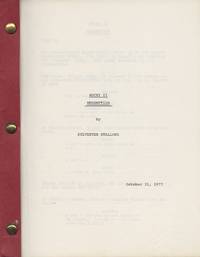
réf. 172179N.p.: N.p. 1977. Early Draft script for the 1979 film dated October 31 1977 two years before the film's release. Seen here under the working title "Rocky II: Redemption." Sequel to the 1976 box office hit. Rocky returns to fight world champion Apollo Creed hoping to regain his honor and prove his worth in a rematch. Shot on location in Philadelphia and Los Angeles. Red untitled wrappers. Title page present dated October 31 1977 with credit for Sylvester Stallone. 101 leaves with last page numbered 100. Xerographic duplication rectos only. Pages Fine wrapper about Fine bound internally with three gold brads. N.p. unknown
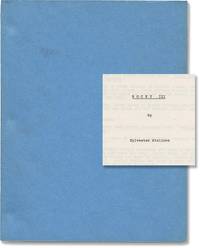
réf. 172180N.p.: N.p. 1980. Revised Draft script for the 1982 film dated September 12 1980 two years before the film's release. The third film in the massively successful Rocky series set five years after "Rocky II." Rocky loses both his heavyweight title and his trainer to competitor Clubber Lang and must start from scratch to regain his glory. Shot on location in Philadelphia and Los Angeles. Blue untitled wrappers. Title page present dated September 12 1980 with credit for Sylvester Stallone. 117 leaves with last page numbered 116. Xerographic duplication rectos only. Pages Fine wrapper Near Fine bound internally with three gold brads. N.p. unknown
réf. 172179N.p.: N.p. 1977. Early Draft script for the 1979 film dated October 31 1977 two years before the film's release. Seen here under the working title "Rocky II: Redemption." Sequel to the 1976 box office hit. Rocky returns to fight world champion Apollo Creed hoping to regain his honor and prove his worth in a rematch. Shot on location in Philadelphia and Los Angeles. Red untitled wrappers. Title page present dated October 31 1977 with credit for Sylvester Stallone. 101 leaves with last page numbered 100. Xerographic duplication rectos only. Pages Fine wrapper about Fine bound internally with three gold brads. N.p. unknown books
réf. 172180N.p.: N.p. 1980. Revised Draft script for the 1982 film dated September 12 1980 two years before the film's release. The third film in the massively successful Rocky series set five years after "Rocky II." Rocky loses both his heavyweight title and his trainer to competitor Clubber Lang and must start from scratch to regain his glory. Shot on location in Philadelphia and Los Angeles. Blue untitled wrappers. Title page present dated September 12 1980 with credit for Sylvester Stallone. 117 leaves with last page numbered 116. Xerographic duplication rectos only. Pages Fine wrapper Near Fine bound internally with three gold brads. N.p. unknown books