11 064 résultats
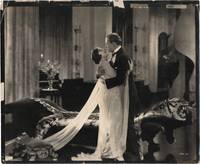
1924réf. 171399N.p.: N.p. 1924. Seven vintage reference photographs from the 1924 silent film. Five with "Country of Origin: USA" stamps on the versos. Based on Elinor Glyn's 1907 romance novel about the love affair between the married queen of a fictitious European country and a handsome young Englishman. Glyn's novel was previously adapted for film in 1914 starring Madlaine Traverse and George C. Pearce. Set in Switzerland. 10 x 8 inches. Very Good moderately edgeworn with light even toning overall. N.p. unknown books
1968réf. 158755New York: AVCO Embassy Pictures 1968. Revised Draft for the 1969 film. Script belonging to uncredited crew member with their name in manuscript ink in three places in the script. Additionally included with the script is a vintage reference photograph from the film showing cast and crew members on location. Based on the 1960 novel by Harold Robbins. A Mafia hit man is ready to retire but his employers not happy with this idea send a hit man out after him. Shot on location in New York City and Puerto Rico. Red titled wrappers. Title page present dated 9/27/68 with credits for novelist Harold Robbins screenwriter A.J. Russell and director Bernard L. Kowalski. PAGES leaves with last page of text numbered 121. Mimeograph duplication rectos only with pink yellow blue and green revision pages throughout dated variously between 10/15/68 and 11/5/68. Pages Near Fine wrapper Near Fine bound with two gold brads. Photograph: 10 x 8 inches. Near Fine. AVCO Embassy Pictures unknown
1968réf. 158755New York: AVCO Embassy Pictures 1968. Revised Draft for the 1969 film. Script belonging to uncredited crew member with their name in manuscript ink in three places in the script. Additionally included with the script is a vintage reference photograph from the film showing cast and crew members on location. Based on the 1960 novel by Harold Robbins. A Mafia hit man is ready to retire but his employers not happy with this idea send a hit man out after him. Shot on location in New York City and Puerto Rico. Red titled wrappers. Title page present dated 9/27/68 with credits for novelist Harold Robbins screenwriter A.J. Russell and director Bernard L. Kowalski. PAGES leaves with last page of text numbered 121. Mimeograph duplication rectos only with pink yellow blue and green revision pages throughout dated variously between 10/15/68 and 11/5/68. Pages Near Fine wrapper Near Fine bound with two gold brads. Photograph: 10 x 8 inches. Near Fine. AVCO Embassy Pictures unknown books
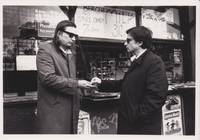
1990réf. 171004N.p.: N.p. 1990. Vintage reference photograph from the 1990 film showing Jean-Pierre Léaud paying director Aki Kaurismäki in a cameo role as a salesman sporting dark glasses. Annotations in manuscript ink and pencil on the verso. A depressed young man longs to commit suicide after losing his job but finds himself too afraid to go through with it-leading him to hire a killer to take him out. Shot on location throughout London. 7 x 5 inches. About Fine. N.p. unknown
1990réf. 171004N.p.: N.p. 1990. Vintage reference photograph from the 1990 film showing Jean-Pierre Léaud paying director Aki Kaurismäki in a cameo role as a salesman sporting dark glasses. Annotations in manuscript ink and pencil on the verso. A depressed young man longs to commit suicide after losing his job but finds himself too afraid to go through with it-leading him to hire a killer to take him out. Shot on location throughout London. 7 x 5 inches. About Fine. N.p. unknown books
1980réf. 149772Tokyo: Nikkatsu 1980. Three vintage borderless reference photographs from the 1980 Japanese pinku pink film. Also included with the set is a film program in Japanese. Housed in a studio envelope. Photographs 6 x 4.25 inches Near Fine. Film program is 28.25 x 6.75 inches one sheet folded four times Near Fine. Weisser and Weisser The Japanese Cinema Encyclopedia: The Sex Films p. 89. Nikkatsu unknown
1980réf. 149772Tokyo: Nikkatsu 1980. Three vintage borderless reference photographs from the 1980 Japanese pinku pink film. Also included with the set is a film program in Japanese. Housed in a studio envelope. Photographs 6 x 4.25 inches Near Fine. Film program is 28.25 x 6.75 inches one sheet folded four times Near Fine. Weisser and Weisser The Japanese Cinema Encyclopedia: The Sex Films p. 89. Nikkatsu unknown books
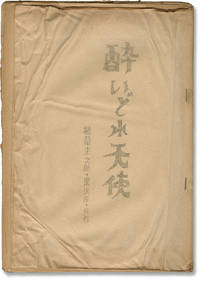
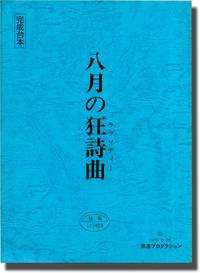
réf. 148810Tokyo: Toho 1970. Draft script for the 1970 Japanese film. With manuscript ink and pencil annotations to the rear wrapper and throughout the text. Included with the script is a mimeographed shooting schedule. Text and titles in Japanese. Annotations relate to the following: a names of the chosen cast members b set rehearsals and camera rehearsals c times for shooting e.g. Morning Afternoon Evening and Night phone numbers for production personnel d names of potential and/or hired camera assistants e names of potential and/or hired actors f indication of the production company chosen Toho Corporation as well as film stock and lens sizes to be used g additional notes regarding location of some settings h changes to dialogue and action and h some final post-production notes. Director Akira Kurosawa's first color film based on Shugoro Yamamoto's 1962 novel "Kisetsu no nai machi" A City Without Seasons. A series of vignettes about a slum in the suburbs of Tokyo and its impoverished inhabitants. Nominated for an Academy Award for Best Foreign Film. Set and shot on location in Tokyo. Script: White titled wrappers. Title page present. 90 leaves with last page of text numbered d-37. Mimeograph duplication printed on rectos and versos. Pages Very Good plus wrapper Very Good with perfect binding. Schedule: White titled wrappers. 13 leaves with last page numbered 23. Mimeograph duplication printed on rectos and versos. Pages Very Good plus wrapper Very Good with a faintly toned spine and very faint foxing to the fore-edge side-stapled with two staples. Detailed notes with translation of annotations noted above with accompanying images are provided with the script. Toho unknown
1948réf. 151633Tokyo: Toho Company 1948. Draft script for the 1948 Japanese film noir. Text and titles in Japanese. The first of sixteen film collaborations between director Akira Kurosawa and actor Toshiro Mifune. Kurosawa's seventh film saw him exploring the inter workings and motivations of the yakuza and machismo. Censorship was tight regarding the occupation forbidding criticism of Americans leading Kurosawa to slip in references to the US presence in Japan satirizing jazz "pan pan" girls unlicensed prostitutes catering to American soldiers and Western clothing and hairstyles. Set in the slums of postwar Japan. White titled wrappers. Approximately 40 leaves with last page of text numbered 79. Mimeograph duplication printed on rectos and versos. Pages Very Good plus wrapper Very Good plus covered in a protective plastic wrapping from when the script was used during filming side stapled. BFI 638. Criterion Collection 413. Grant Japan. Toho Company unknown
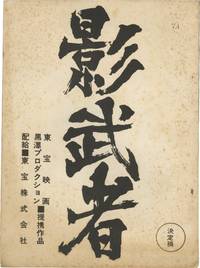
réf. 157439Yokohama Kanagawa: Kurosawa Production Co 1980. Draft script for the 1980 Japanese film. The story of a low-class criminal taught to be the decoy or kagemusha of a dying feudal lord based on the historical daimyo Takeda Shingen and depicting the 1575 Battle of Nagashino in the cinematic climax. When Toho Studios could not afford to complete the film George Lucas and Francis Ford Coppola convinced Twentieth Century Fox to cover the shortfall in exchange for international distribution rights recieving credits as executive producers on the finished film. Nominated for two Academy Awards including Best Foreign Language Film and winner of the Palme d'Or at the 1980 Cannes Film Festival. Set in Sengoku period shot on location in Iga Ueno Castle Himeji Castle Kumamoto Castle Yuhara Plain Hokkaido Japan. White perfect-bound wrappers. Rubber stamped copy No. 74 at the top right corner of the front wrapper. 166 leaves with last page of text numbered "146." Mimeograph duplication. Pages Near Fine with light toning wrapper Very Good with foxing overall and age toning to the page edges. Criterion Collection 267. Kurosawa Production Co unknown
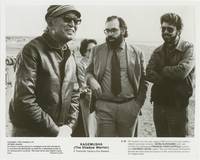
1980réf. 163675N.p.: Toho Company 1980. Three vintage photographs from the 1980 film two film still photographs and a photograph of director Akira Kurosawa on the set with executive producers Francis Ford Coppola and George Lucas. The story of a low-class criminal taught to be the decoy or kagemusha of a dying feudal lord based on the historical daimyo Takeda Shingen and depicting the 1575 Battle of Nagashino in the cinematic climax. When Toho Studios could not afford to complete the film Coppola and Lucas convinced Twentieth Century Fox to cover the shortfall in exchange for international distribution rights receiving credits as executive producers on the finished film. Nominated for two Academy Awards including Best Foreign Language Film and winner of the Palme d'Or at the 1980 Cannes Film Festival. Set in Sengoku period shot on location in Iga Ueno Castle Himeji Castle Kumamoto Castle Yuhara Plain Hokkaido Japan. 8 x 10 inches. Near Fine. Criterion Collection 267. Toho Company unknown
1992réf. 148720Tokyo: Dentsu Music and Entertainment 1992. Draft script for the 1993 film. Based on essays by Hyakken Uchida. Following World War II a retired professor finds late in life that his quality of life is greatly reduced in war-torn Tokyo. Denying despair he pursues writing and celebrates his birthday with a group of his adoring students. Yellow titled wrappers perfect-bound dated 1992.11.5. 107 leaves with last page of text numbered 197. Xerographic duplication printed on rectos and versos. Pages Fine wrapper Near Fine. Dentsu Music and Entertainment unknown
réf. 149056New York: Greenwich Film Productions 1985. Draft script for the 1985 film. With manuscript pencil annotations throughout. Text titles and annotations in Japanese. Based on Shakespeare's play "King Lear." An elderly warlord in medieval Japan divides his vast empire among his three sons. The power corrupts them and turns them on each other as well as their father. Nominated for four Academy Awards including Best Director for Kurosawa winning one. Set in medieval Japan shot on location in Kumamoto Shizuoka Himeji Oita Aichi Yamagata and Tokyo Japan. Bright blue titled wrappers. Title page present. 96 leaves with last page of text numbered 176. Xerographic duplication printed on rectos and versos. Pages Very Good plus wrapper Very Good plus with a lightly faded spine perfectly bound. Greenwich Film Productions unknown
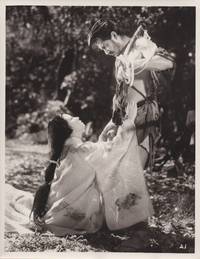
1950réf. 166097N.p.: N.p. 1950. Four vintage double weight satin-finish reference photographs from the 1950 Japanese film. Provenance labels and annotations in manuscript ink and pencil on the verso. Few foreign language films have made such a lasting impact on American audiences as director Akira Kurosawa's "Rashomon" a revolutionary cinematic work in terms of style and substance that challenged audiences about the nature of subjective experience. Winner of an honorary 1951 Academy Award for Most Outstanding Foreign Language Film Released in the United States and credited for being the reason the Academy created the "Best Foreign Film" category. Shot on location in Kyoto Nara and Tokyo Japan. 10 x 8 inches. Near Fine. Criterion Collection 138. Grant Japan. Ebert II. Vogel Film as a Subversive Art. N.p. unknown
réf. 143465Tokyo: Shochiku Films 1990. Draft script for the 1991 film dated May 28 1990 about a year before its release. A tale of three generations in a postwar Japanese family and their responses to the atomic bombing of Japan. When the film played at the Tokyo Film Festival critics of Japanese militarism said Kurosawa had ignored the historical facts leading up to the bomb. Kurosawa's response was simple: he wanted his film to say that war was between governments not people. Richard Gere plays one of the family's Asian-American cousins a decision falling somewhere between stunt casting and commentary. Set in Nagasaki and shot on location there. Blue titled wrappers dated 5.28.1990. Title page present. 166 leaves with last page of text numbered 150. Mechanical duplication. Pages Near Fine wrapper Near Fine. Rosenbaum 1000. Shochiku Films unknown
1949réf. 143058Tokyo: Film Art Association 1949. First Draft script for the 1949 Japanese film noir. Manuscript ink and pencil annotations from production on two leaves. Text in Japanese. Generally considered to be the greatest film noir made in Japan and hugely influential on American film noir of the 1950s and 1960s. White titled wrappers. 96 leaves with last page of text numbered 96. Mechanical duplication. Toning due to aging throughout wrapper split at spine with mild foxing otherwise Good condition. BFI 534. Criterion Collection 233. Grant Japan. Selby Japan. Spicer Japan Classic Noir. Film Art Association unknown
1992réf. 148720Tokyo: Dentsu Music and Entertainment 1992. Draft script for the 1993 film. Based on essays by Hyakken Uchida. Following World War II a retired professor finds late in life that his quality of life is greatly reduced in war-torn Tokyo. Denying despair he pursues writing and celebrates his birthday with a group of his adoring students. Yellow titled wrappers perfect-bound dated 1992.11.5. 107 leaves with last page of text numbered 197. Xerographic duplication printed on rectos and versos. Pages Fine wrapper Near Fine. Dentsu Music and Entertainment unknown books
1948réf. 151633Tokyo: Toho Company 1948. Draft script for the 1948 Japanese film noir. Text and titles in Japanese. The first of sixteen film collaborations between director Akira Kurosawa and actor Toshiro Mifune. Kurosawa's seventh film saw him exploring the inter workings and motivations of the yakuza and machismo. Censorship was tight regarding the occupation forbidding criticism of Americans leading Kurosawa to slip in references to the US presence in Japan satirizing jazz "pan pan" girls unlicensed prostitutes catering to American soldiers and Western clothing and hairstyles. Set in the slums of postwar Japan. White titled wrappers. Approximately 40 leaves with last page of text numbered 79. Mimeograph duplication printed on rectos and versos. Pages Very Good plus wrapper Very Good plus covered in a protective plastic wrapping from when the script was used during filming side stapled. BFI 638. Criterion Collection 413. Grant Japan. Toho Company unknown books
réf. 143465Tokyo: Shochiku Films 1990. Draft script for the 1991 film dated May 28 1990 about a year before its release. A tale of three generations in a postwar Japanese family and their responses to the atomic bombing of Japan. When the film played at the Tokyo Film Festival critics of Japanese militarism said Kurosawa had ignored the historical facts leading up to the bomb. Kurosawa's response was simple: he wanted his film to say that war was between governments not people. Richard Gere plays one of the family's Asian-American cousins a decision falling somewhere between stunt casting and commentary. Set in Nagasaki and shot on location there. Blue titled wrappers dated 5.28.1990. Title page present. 166 leaves with last page of text numbered 150. Mechanical duplication. Pages Near Fine wrapper Near Fine. Rosenbaum 1000. Shochiku Films unknown books
réf. 157439Yokohama Kanagawa: Kurosawa Production Co 1980. Draft script for the 1980 Japanese film. The story of a low-class criminal taught to be the decoy or kagemusha of a dying feudal lord based on the historical daimyo Takeda Shingen and depicting the 1575 Battle of Nagashino in the cinematic climax. When Toho Studios could not afford to complete the film George Lucas and Francis Ford Coppola convinced Twentieth Century Fox to cover the shortfall in exchange for international distribution rights recieving credits as executive producers on the finished film. Nominated for two Academy Awards including Best Foreign Language Film and winner of the Palme d'Or at the 1980 Cannes Film Festival. Set in Sengoku period shot on location in Iga Ueno Castle Himeji Castle Kumamoto Castle Yuhara Plain Hokkaido Japan. White perfect-bound wrappers. Rubber stamped copy No. 74 at the top right corner of the front wrapper. 166 leaves with last page of text numbered "146." Mimeograph duplication. Pages Near Fine with light toning wrapper Very Good with foxing overall and age toning to the page edges. Criterion Collection 267. Kurosawa Production Co unknown books
1949réf. 143058Tokyo: Film Art Association 1949. First Draft script for the 1949 Japanese film noir. Manuscript ink and pencil annotations from production on two leaves. Text in Japanese. Generally considered to be the greatest film noir made in Japan and hugely influential on American film noir of the 1950s and 1960s. White titled wrappers. 96 leaves with last page of text numbered 96. Mechanical duplication. Toning due to aging throughout wrapper split at spine with mild foxing otherwise Good condition. BFI 534. Criterion Collection 233. Grant Japan. Selby Japan. Spicer Japan Classic Noir. Film Art Association unknown books
1950réf. 166097N.p.: N.p. 1950. Four vintage double weight satin-finish reference photographs from the 1950 Japanese film. Provenance labels and annotations in manuscript ink and pencil on the verso. Few foreign language films have made such a lasting impact on American audiences as director Akira Kurosawa's "Rashomon" a revolutionary cinematic work in terms of style and substance that challenged audiences about the nature of subjective experience. Winner of an honorary 1951 Academy Award for Most Outstanding Foreign Language Film Released in the United States and credited for being the reason the Academy created the "Best Foreign Film" category. Shot on location in Kyoto Nara and Tokyo Japan. 10 x 8 inches. Near Fine. Criterion Collection 138. Grant Japan. Ebert II. Vogel Film as a Subversive Art. N.p. unknown books
réf. 148810Tokyo: Toho 1970. Draft script for the 1970 Japanese film. With manuscript ink and pencil annotations to the rear wrapper and throughout the text. Included with the script is a mimeographed shooting schedule. Text and titles in Japanese. Annotations relate to the following: a names of the chosen cast members b set rehearsals and camera rehearsals c times for shooting e.g. Morning Afternoon Evening and Night phone numbers for production personnel d names of potential and/or hired camera assistants e names of potential and/or hired actors f indication of the production company chosen Toho Corporation as well as film stock and lens sizes to be used g additional notes regarding location of some settings h changes to dialogue and action and h some final post-production notes. Director Akira Kurosawa's first color film based on Shugoro Yamamoto's 1962 novel "Kisetsu no nai machi" A City Without Seasons. A series of vignettes about a slum in the suburbs of Tokyo and its impoverished inhabitants. Nominated for an Academy Award for Best Foreign Film. Set and shot on location in Tokyo. Script: White titled wrappers. Title page present. 90 leaves with last page of text numbered d-37. Mimeograph duplication printed on rectos and versos. Pages Very Good plus wrapper Very Good with perfect binding. Schedule: White titled wrappers. 13 leaves with last page numbered 23. Mimeograph duplication printed on rectos and versos. Pages Very Good plus wrapper Very Good with a faintly toned spine and very faint foxing to the fore-edge side-stapled with two staples. Detailed notes with translation of annotations noted above with accompanying images are provided with the script. Toho unknown books
1980réf. 163675N.p.: Toho Company 1980. Three vintage photographs from the 1980 film two film still photographs and a photograph of director Akira Kurosawa on the set with executive producers Francis Ford Coppola and George Lucas. The story of a low-class criminal taught to be the decoy or kagemusha of a dying feudal lord based on the historical daimyo Takeda Shingen and depicting the 1575 Battle of Nagashino in the cinematic climax. When Toho Studios could not afford to complete the film Coppola and Lucas convinced Twentieth Century Fox to cover the shortfall in exchange for international distribution rights receiving credits as executive producers on the finished film. Nominated for two Academy Awards including Best Foreign Language Film and winner of the Palme d'Or at the 1980 Cannes Film Festival. Set in Sengoku period shot on location in Iga Ueno Castle Himeji Castle Kumamoto Castle Yuhara Plain Hokkaido Japan. 8 x 10 inches. Near Fine. Criterion Collection 267. Toho Company unknown books
réf. 149056New York: Greenwich Film Productions 1985. Draft script for the 1985 film. With manuscript pencil annotations throughout. Text titles and annotations in Japanese. Based on Shakespeare's play "King Lear." An elderly warlord in medieval Japan divides his vast empire among his three sons. The power corrupts them and turns them on each other as well as their father. Nominated for four Academy Awards including Best Director for Kurosawa winning one. Set in medieval Japan shot on location in Kumamoto Shizuoka Himeji Oita Aichi Yamagata and Tokyo Japan. Bright blue titled wrappers. Title page present. 96 leaves with last page of text numbered 176. Xerographic duplication printed on rectos and versos. Pages Very Good plus wrapper Very Good plus with a lightly faded spine perfectly bound. Greenwich Film Productions unknown books