Vittorio De Sisti (director, screenwriter); Ettore Mattia, Pino De Martino (screenwriters)Biblio.com

11 045 résultats
1969réf. 150478N.p.: N.p. 1969. Three vintage borderless reference photographs from the 1969 sexploitation film two black and white and one in color. One with the stamp of Studio 111 on the verso. Two 9.5 x 7 inches one 6.5 x 9.5 inches. Very Good plus one with light fading on the recto. N.p. unknown
1969réf. 150478N.p.: N.p. 1969. Three vintage borderless reference photographs from the 1969 sexploitation film two black and white and one in color. One with the stamp of Studio 111 on the verso. Two 9.5 x 7 inches one 6.5 x 9.5 inches. Very Good plus one with light fading on the recto. N.p. unknown books
1965réf. 166115London: Gibraltar Productions 1965. Revised Draft script for the 1966 British horror film copy belonging to Art Director George Provis with his name written in ink on the top of the front wrapper with manuscript pencil annotations and paste-ups of clippings of goldenrod revision pages throughout here under the working title "The Obi." Laid in is a rough pencil sketch of settings and a set. George Provis was a British Art Director and Production Designer who began his career working on quota quickies low budget features made to comply with Britain's Cinematograph Films Act of 1927 in the 1930s. After the Second World War Provis was appointed by British film producer Sydney Box to head the art department at Gainsborough Pictures and is credited on over 120 films. Based on the BBC-TV play "The Obi" by Jon Manchip White. At an interracial college in a small British town small glass bottles filled with graveyard dirt and feathers obis sent as Obeah voodoo curses to students and faculty precede a series of voodoo killings on campus. Re-released in 1973 as the television movie "Exorcism at Midnight" following the success of "The Exorcist" with new color sequences with an American cast which re-framed the original black and white film as a flashback. Tall tan untitled wrappers. Title page present dated 28.5.1965 noted as Revised Screenplay with credits for screenwriter Stanley Goulder and playwright Jon Manchip White. 104 leaves with last page of text numbered 101. Mimeograph duplication rectos only with undated goldenrod revision clippings and pages pasted in throughout. Pages Near Fine wrapper Near Fine bound with a black plastic comb-binding. Gibraltar Productions unknown
1965réf. 166115London: Gibraltar Productions 1965. Revised Draft script for the 1966 British horror film copy belonging to Art Director George Provis with his name written in ink on the top of the front wrapper with manuscript pencil annotations and paste-ups of clippings of goldenrod revision pages throughout here under the working title "The Obi." Laid in is a rough pencil sketch of settings and a set. George Provis was a British Art Director and Production Designer who began his career working on quota quickies low budget features made to comply with Britain's Cinematograph Films Act of 1927 in the 1930s. After the Second World War Provis was appointed by British film producer Sydney Box to head the art department at Gainsborough Pictures and is credited on over 120 films. Based on the BBC-TV play "The Obi" by Jon Manchip White. At an interracial college in a small British town small glass bottles filled with graveyard dirt and feathers obis sent as Obeah voodoo curses to students and faculty precede a series of voodoo killings on campus. Re-released in 1973 as the television movie "Exorcism at Midnight" following the success of "The Exorcist" with new color sequences with an American cast which re-framed the original black and white film as a flashback. Tall tan untitled wrappers. Title page present dated 28.5.1965 noted as Revised Screenplay with credits for screenwriter Stanley Goulder and playwright Jon Manchip White. 104 leaves with last page of text numbered 101. Mimeograph duplication rectos only with undated goldenrod revision clippings and pages pasted in throughout. Pages Near Fine wrapper Near Fine bound with a black plastic comb-binding. Gibraltar Productions unknown books
1991réf. 170749N.p.: N.p. 1991. Three vintage borderless reference photographs from the 1991 film. Annotations in manuscript ink on the versos noting the film's French title. Based on William S. Burroughs' 1959 novel. Poorly received upon release but today considered a cult film faithful to the spirit of the author's Beat classic if not the actual text. Set in Interzone and Annexia shot on location in Ontario. 9.5 x 6.5 inches. Near Fine to Fine. Criterion Collection 220. Rosenbaum 1000. N.p. unknown
1991réf. 170749N.p.: N.p. 1991. Three vintage borderless reference photographs from the 1991 film. Annotations in manuscript ink on the versos noting the film's French title. Based on William S. Burroughs' 1959 novel. Poorly received upon release but today considered a cult film faithful to the spirit of the author's Beat classic if not the actual text. Set in Interzone and Annexia shot on location in Ontario. 9.5 x 6.5 inches. Near Fine to Fine. Criterion Collection 220. Rosenbaum 1000. N.p. unknown books
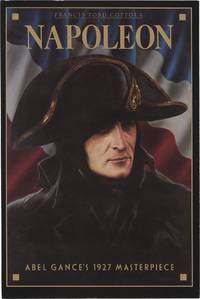
1980réf. 152548San Francisco: Zoetrope Studios 1980. Vintage program and invitation for Francis Ford Coppola's 1980 Los Angeles screening of the 1927 French silent film. Housed in a white envelope with Coppola's address on the return flap letterhead. One of the late masterpieces of the silent era following Napoleon's early life through his appointment as Commander in Chief of the Army. Notable for the many innovative and experimental techniques used by director Abel Gance uncommon in the silent era including location shooting fast cutting close up hand held and point of view shots multiple camera set ups in-camera movement and visual effects such as superimposition film tinting and split screen or mosaic shots. Most famously the film helped pioneer widescreen viewing as Gance created a technique later referred as Polyvision which required three projectors to run film shot from three different cameras simultaneously to achieve a 4:1 aspect ratio for the film's climatic battle sequence although seams between the screens would remain visible. After only showing at a handful of theaters the film was acquired by MGM and severely cut with only the middle section of the triptych retained the other two sections remaining largely unseen until Coppola's 1980 restoration debuted at Radio City Music Hall in New York on January 23 igniting public interest in Gance and bringing him much-belated recognition before his death eleven months later in November 1981. Program folded three times 7 x 10.5 inches. Near Fine. Invitation 6 x 9 inches Near Fine. Zoetrope Studios unknown
1980réf. 152548San Francisco: Zoetrope Studios 1980. Vintage program and invitation for Francis Ford Coppola's 1980 Los Angeles screening of the 1927 French silent film. Housed in a white envelope with Coppola's address on the return flap letterhead. One of the late masterpieces of the silent era following Napoleon's early life through his appointment as Commander in Chief of the Army. Notable for the many innovative and experimental techniques used by director Abel Gance uncommon in the silent era including location shooting fast cutting close up hand held and point of view shots multiple camera set ups in-camera movement and visual effects such as superimposition film tinting and split screen or mosaic shots. Most famously the film helped pioneer widescreen viewing as Gance created a technique later referred as Polyvision which required three projectors to run film shot from three different cameras simultaneously to achieve a 4:1 aspect ratio for the film's climatic battle sequence although seams between the screens would remain visible. After only showing at a handful of theaters the film was acquired by MGM and severely cut with only the middle section of the triptych retained the other two sections remaining largely unseen until Coppola's 1980 restoration debuted at Radio City Music Hall in New York on January 23 igniting public interest in Gance and bringing him much-belated recognition before his death eleven months later in November 1981. Program folded three times 7 x 10.5 inches. Near Fine. Invitation 6 x 9 inches Near Fine. Zoetrope Studios unknown books
1955réf. 150449N.p.: N.p. 1955. Two vintage reference photographs of director Sacha Guitry on the set of the 1955 film taken by photographer Edward Quinn. "Ed. Quinn" stamps on verso of both one with additional "Cinema Napoleon" stamp. Guitry's historical epic depicting the life of Napoleon from his early life in Corsica to his death at Saint Helena with Napoleon depicted by two actors Daniel Gelin as the young and Raymond Pellegrin as the old. Featuring notable cameos by Erich von Stroheim as Ludwig van Beethoven and Orson Welles as Napoleon's British jailor Sir Hudson Lowe. Shot on location throughout France. 7 x 9.75 inches. Light edgewear and light creasing at extremities else Near Fine. N.p. unknown
1955réf. 150449N.p.: N.p. 1955. Two vintage reference photographs of director Sacha Guitry on the set of the 1955 film taken by photographer Edward Quinn. "Ed. Quinn" stamps on verso of both one with additional "Cinema Napoleon" stamp. Guitry's historical epic depicting the life of Napoleon from his early life in Corsica to his death at Saint Helena with Napoleon depicted by two actors Daniel Gelin as the young and Raymond Pellegrin as the old. Featuring notable cameos by Erich von Stroheim as Ludwig van Beethoven and Orson Welles as Napoleon's British jailor Sir Hudson Lowe. Shot on location throughout France. 7 x 9.75 inches. Light edgewear and light creasing at extremities else Near Fine. N.p. unknown books
1975réf. 150321Burbank CA: American Broadcasting Company ABC 1975. Vintage borderless reference photograph of Robert Altman on the set of the 1975 film. Mimeo snipe on verso. Robert Altman's brilliant caustic view of American politics and culture seen through the microcosm of five days in the Nashville country and gospel music scene with 24 main characters and multiple storylines a tour-de-force and a key piece of New Hollywood Cinema. Winner of an Academy Award nominated for four more including Best Picture Best Director and Best Actress. Shot on location in Nashville Tennessee. 10 x 7 inches. Some brief toning to portions of recto else Near Fine. National Film Registry. Criterion Collection 683. Ebert I. Eureka 80. American Broadcasting Company [ABC] unknown
1975réf. 167892Hollywood: Paramount Pictures 1975. Vintage studio still photograph from the 1975 film showing actress Ronee Blakley as fragile beloved country superstar Barbara Jean. Director Robert Altman's brilliant caustic view of American politics and culture seen through the microcosm of five days in the Nashville country and gospel music scene with 24 main characters and multiple storylines. A tour-de-force and a touchstone of New Hollywood Cinema. Nominated for five Academy Awards including Best Supporting Actress for Blakley winning one. Shot on location in Nashville Tennessee. 8 x 10 inches. Very Good plus. National Film Registry. Criterion Collection 683. Ebert I. Eureka 80. Paramount Pictures unknown books
1975réf. 150321Burbank CA: American Broadcasting Company ABC 1975. Vintage borderless reference photograph of Robert Altman on the set of the 1975 film. Mimeo snipe on verso. Robert Altman's brilliant caustic view of American politics and culture seen through the microcosm of five days in the Nashville country and gospel music scene with 24 main characters and multiple storylines a tour-de-force and a key piece of New Hollywood Cinema. Winner of an Academy Award nominated for four more including Best Picture Best Director and Best Actress. Shot on location in Nashville Tennessee. 10 x 7 inches. Some brief toning to portions of recto else Near Fine. National Film Registry. Criterion Collection 683. Ebert I. Eureka 80. American Broadcasting Company [ABC] unknown books
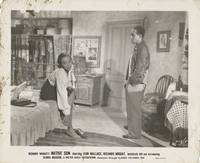
1951réf. 152756N.p.: Classic Pictures 1951. Three vintage studio still photographs from the 1951 film. In a move that placed him in a category with Mickey Spillane Richard Wright accepted an offer to star as the leading man in a film based on his own novel. Wright was cast after initial choice Canada Lee who had starred in Orson Welles' stage adaptation of the story was stuck in South African customs after shooting "Cry the Beloved Country" 1951. Set in Chicago and shot on location in Chicago and Argentina. One photograph 10 x 8.25 inches one photograph 9.5 x 8 inches and one photograph 9 x 8 inches. Good one with a pinhole to the center others moderately toned soiled and edgeworn. Classic Pictures unknown
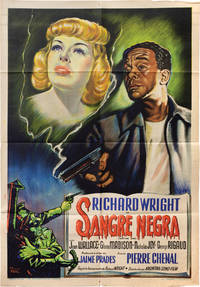
1950réf. 158441Buenos Aires: Industia Argentina 1950. Vintage one sheet poster for the Argentinean release of the 1951 film the film's country of origin and whose premiere preceded the US release by more than three months. Richard Wright accepted an offer to star as the leading man in the film adaptation of his own novel after initial choice Canada Lee was stuck in South African customs after shooting "Cry the Beloved Country" 1951. Lee had starred in Orson Welles' prior stage adaptation. Set in Chicago and shot on location in Chicago and Argentina. 29 x 43.25 inches folded as issued. With a few small closed tears and creases at the extremities else Near Fine. Bright and unfaded. Industia Argentina unknown
1950réf. 158441Buenos Aires: Industia Argentina 1950. Vintage one sheet poster for the Argentinean release of the 1951 film the film's country of origin and whose premiere preceded the US release by more than three months. Richard Wright accepted an offer to star as the leading man in the film adaptation of his own novel after initial choice Canada Lee was stuck in South African customs after shooting "Cry the Beloved Country" 1951. Lee had starred in Orson Welles' prior stage adaptation. Set in Chicago and shot on location in Chicago and Argentina. 29 x 43.25 inches folded as issued. With a few small closed tears and creases at the extremities else Near Fine. Bright and unfaded. Industia Argentina unknown books
1951réf. 152756N.p.: Classic Pictures 1951. Three vintage studio still photographs from the 1951 film. In a move that placed him in a category with Mickey Spillane Richard Wright accepted an offer to star as the leading man in a film based on his own novel. Wright was cast after initial choice Canada Lee who had starred in Orson Welles' stage adaptation of the story was stuck in South African customs after shooting "Cry the Beloved Country" 1951. Set in Chicago and shot on location in Chicago and Argentina. One photograph 10 x 8.25 inches one photograph 9.5 x 8 inches and one photograph 9 x 8 inches. Good one with a pinhole to the center others moderately toned soiled and edgeworn. Classic Pictures unknown books
1959réf. 139447Berlin: Deutsche Film Hansa 1959. Vintage borderless black-and-white press photograph of demure Maria Perschy on the set of the 1959 West German film. Copyright rubber stamp and annotations in manuscript pencil on the verso. The daughter Perschy of a traffic cop Erhardt falls in love with a race-car driver Schumann. Perschy made her first Hollywood film in 1962 in John Huston's "Freud." Shot on location in Germany. 6.25 x 8.25 inches. About Near Fine. Deutsche Film Hansa unknown
1959réf. 139447Berlin: Deutsche Film Hansa 1959. Vintage borderless black-and-white press photograph of demure Maria Perschy on the set of the 1959 West German film. Copyright rubber stamp and annotations in manuscript pencil on the verso. The daughter Perschy of a traffic cop Erhardt falls in love with a race-car driver Schumann. Perschy made her first Hollywood film in 1962 in John Huston's "Freud." Shot on location in Germany. 6.25 x 8.25 inches. About Near Fine. Deutsche Film Hansa unknown books
1994réf. 161134Burbank CA: Warner Brothers 1994. Three vintage studio still photographs from the set of the 1994 film: one showing Oliver Stone and Woody Harrelson consulting a screenplay between takes one showing Stone leaning on a railing with Robert Downey Jr. and the last showing Stone talking with Juliette Lewis. All three photographs credited to photographer Sidney Baldwin on the recto margins. After killing her abusive father a young woman sets off on a murderous road trip with her lover finding new victims at every stop. Their story piques the interest of an unscrupulous journalist who spins their crimes into heroism through his sensationalistic reporting. Shot on location in New Mexico Arizona and Statesville Correctional Center Illinois. 10 x 8 inches. Fine. Grant US. Spicer US Neo-Noir. Warner Brothers unknown
1994réf. 161134Burbank CA: Warner Brothers 1994. Three vintage studio still photographs from the set of the 1994 film: one showing Oliver Stone and Woody Harrelson consulting a screenplay between takes one showing Stone leaning on a railing with Robert Downey Jr. and the last showing Stone talking with Juliette Lewis. All three photographs credited to photographer Sidney Baldwin on the recto margins. After killing her abusive father a young woman sets off on a murderous road trip with her lover finding new victims at every stop. Their story piques the interest of an unscrupulous journalist who spins their crimes into heroism through his sensationalistic reporting. Shot on location in New Mexico Arizona and Statesville Correctional Center Illinois. 10 x 8 inches. Fine. Grant US. Spicer US Neo-Noir. Warner Brothers unknown books
1972réf. 137982N.p.: Self published 1972. Draft Agency script for an unproduced film. About a police officer in San Francisco his missing daughter and his troubled past. Green wrappers. Title page present dated 1972 noted as FIRST DRAFT SCREENPLAY and REGISTERED WRITER'S GUILD WEST with a credit for screenwriter Hattan and agent Bert Steinberger. Last leaf of text numbered 145. Xerographic duplication with photocopied punch holes. Pages and wrapper Near Fine bound with three gold brads. Self published unknown
1972réf. 137982N.p.: Self published 1972. Draft Agency script for an unproduced film. About a police officer in San Francisco his missing daughter and his troubled past. Green wrappers. Title page present dated 1972 noted as FIRST DRAFT SCREENPLAY and REGISTERED WRITER'S GUILD WEST with a credit for screenwriter Hattan and agent Bert Steinberger. Last leaf of text numbered 145. Xerographic duplication with photocopied punch holes. Pages and wrapper Near Fine bound with three gold brads. Self published unknown books
1978réf. 158057N.p.: N.p. 1978. Draft script for an unproduced film. Two-page budget analysis laid in with the script dated March 20 1978. Based on the 1975 off-Broadway play "Boy Meets Boy" a lighthearted musical comedy about a romance between two men in 1936 in an alternate reality where lesbian and gay relationships are as accepted as heterosexual ones in the 1930s. The play originally opened on September 17 1975 at the Actor's Playhouse in New York and starred David Gallegly Joe Barrett and Raymond Wood. White untitled wrappers. Title page present dated 1977 June 23 noted as FIRST DRAFT SCREENPLAY. 116 leaves with last page of text numbered 113. Xerographic duplication rectos only. Pages Near Fine wrapper Very Good plus with a black velo binding. N.p. unknown
1978réf. 158057N.p.: N.p. 1978. Draft script for an unproduced film. Two-page budget analysis laid in with the script dated March 20 1978. Based on the 1975 off-Broadway play "Boy Meets Boy" a lighthearted musical comedy about a romance between two men in 1936 in an alternate reality where lesbian and gay relationships are as accepted as heterosexual ones in the 1930s. The play originally opened on September 17 1975 at the Actor's Playhouse in New York and starred David Gallegly Joe Barrett and Raymond Wood. White untitled wrappers. Title page present dated 1977 June 23 noted as FIRST DRAFT SCREENPLAY. 116 leaves with last page of text numbered 113. Xerographic duplication rectos only. Pages Near Fine wrapper Very Good plus with a black velo binding. N.p. unknown books