3,277 results
1922ref. 158284Beverly Hills CA: Warner Brothers 1922. Set of three vintage hand-tinted lobby cards for the 1922 film. Based on F. Scott Fitzgerald's 1922 novel. A young husband and wife spend money with aplomb anticipating a large payout once the man's grandfather dies. When the patriarch passes away and they discover they have been left nothing in his will. Considered today to be a lost film. 14 x 11 inches. Very Good plus some with pinholes to the corners lightly and evenly toned. Warner Brothers unknown
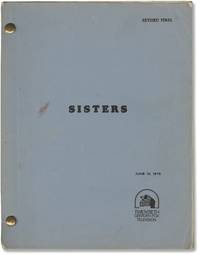
ref. 170959Los Angeles: Twentieth Century-Fox Television 1978. Draft script for the 1982 television movie seen here under the working title "Sisters" Originally aired on June 7 1982 on NBC. Rare. One of only two original feature-length original screenplays written by Maya Angelou the other being the 1972 television movie "Georgia Georgia". In a small town in North Carolina a young schoolteacher's life is upended with the arrival of her younger sisters who challenge her straitlaced ultra-moral attitude towards life. Filmed in 1979 but not aired until 1982. Set in North Carolina and shot on location in Montgomery and Opelika Alabama. Blue titled wrappers dated June 12 1978 and noted as REVISED FINAL on the front wrapper. Title page present dated June 12 1978 noted as REVISED FINAL with credit for screenwriter Maya Angelou. 122 leaves with last page of text numbered 116. Mimeograph duplication on eye-rest green stock rectos only. Pages Near Fine wrapper Very Good plus bound with two gold brads. Twentieth Century-Fox Television unknown
1963ref. 167069N.p.: N.p. 1963. First Draft script for the 1964 film. Based on Harry Kurnitz's 1961 American stage adaptation of Marcel Achard's 1960 French play "L'Idiote." One of the funniest films of the 1960s and the defining installment in the well-loved Pink Panther series. While "A Shot in the Dark" was ably preceded by "The Pink Panther" in 1963 it was the first film to feature the series' underrated maestro: Herbert Lom as Chief Inspector Dreyfus foil to Peter Sellers' Inspector Clouseau and the first to truly define the style of the side-splitting installments that would follow. The only script for this film we have ever handled. Fuchsia wrappers with a die-cut title window in the British style. Title page present dated 14th October 1963 noted as First Draft with credit for director Blake Edwards. 173 leaves with last page of text numbered 170. Mimeograph duplication on eye-rest green stock rectos only with several pink revision pages dated October 17 1963. Pages about Fine wrapper Near Fine bound internally with two silver brads with a worn title label affixed to the binding. N.p. unknown
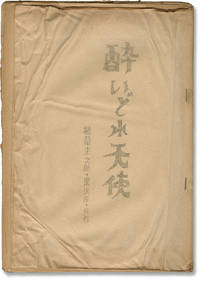
1959ref. 149872Tokyo: Shochiku 1959. Draft script for the 1959 Japanese film. Text and titles in Japanese. Angered by their parents' refusal to buy them a television set two young brothers decide to go on a silence strike against all adults leading to a number of comic misunderstandings in their tight-knit community. Set in a suburb of Tokyo. White titled wrappers. 16 leaves with last page of text numbered 31. Mimeograph duplication printed on rectos and versos. Pages Very Good plus wrapper Very Good lightly foxed with some wear to the binding with perfect binding. Rosenbaum 1000. Criterion Collection 84. Vogel Film as a Subversive Art. Shochiku unknown
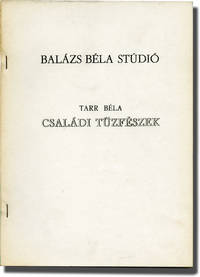
ref. 145506Budapest: Balsz Bela Studio 1977. Vintage post-production promotional script for the 1977 Hungarian film. Includes a prose narrative describing the film story reviews quotes and critical essays. Text in Hungarian. Easily the most rigidly philosophical promotional script ever issued with the narrative portion being essentially one long run-on sentence wherein Tarr describes his intentions for his first film. It would be 30 years before the rest of the world caught on to his genius and he would retire just 10 years after that. He passed away in 2026 at the age of 70. Off-white titled card wrappers saddle stapled. Title page present followed by a cast and credits list dated 1977. 56 leaves with last page of text numbered 54. Mimeograph front wrapper printed with offset duplication. Rectos only. Pages and wrapper about Near Fine with light toning at the edges of the wrappers. Balsz Bela Studio unknown
1924ref. 141664Berlin: Film-Kurier 1924. Vintage German programs for the two-part film series "Die Nibelungen" including one for "Die Nibelungen: Siegfried" and one for "Die Nibelungen: Kriemhild's Revenge" produced by German film magazine "Film-Kurier." Text in German. Based on the thirteenth century epic poem "Nibelungenlied." "Film-Kurier" was the first German film journal published daily beginning in 1919. The journal's classic era lasted until 1933 when its publisher Alfred Weiner had to flee Germany due to his Jewish origins. The issues from this era remain striking to this day because they were printed using a gravure reproduction process. Each day's issue would focus on a single film. 9 x 11.75 inches. Each program six pages folded loose leaves as issued. Very Good plus with a horizontal fold tiny pinholes to the corners and an occasional short closed tear. Masters of Cinema 46. Film-Kurier unknown
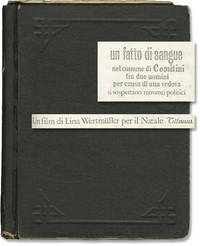
ref. 148341London: Lord Grade 1978. Draft script for the 1978 film here under the working title "Titoli di Testa." Copy belonging to script supervisor Franca Invernizzi with her extensive manuscript annotations on nearly every page and many page versos regarding camera shots takes timing and dialogue. Bound in after the script is an annotated list of scenes and several handwritten pages of Invernizzi's notes. Text in Italian. In 1920s Sicily a capitalist and a socialist vie for the affections of a grief-stricken woman whose husband was killed by a fascist mafioso. The follow-up to director Lina Wertmuller's Oscar-nominated 1976 film "Seven Beauties" and a lyrical formidable film in its own right. Set and shot on location in Sicily. Script: Black faux-leather untitled wrappers. Title page present with credits for director Lina Wertmuller. 326 leaves with last page of text numbered 301. Xerographic duplication rectos only with white undated revision pages throughout. Pages Very Good with some revision pages lightly worn and toned to the edges wrapper Very Good lightly edgeworn with several tape repairs to the spine with perfect binding. List of scenes: 10 leaves with last page numbered 10. Xerographic duplication rectos only. Pages Very Good plus with light edgewear. Lord Grade unknown
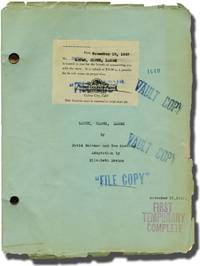
1927ref. 134524Beverly Hills CA: Metro-Goldwyn-Mayer MGM 1927. Shooting script for the 1928 film. Metro-Goldwyn-Mayer file copy with rubber stamps on the front wrapper indicating such. Carbon typescript with descriptive text and intertitles in black type. A few typeovers and annotations in manuscript pencil throughout. A rare example of a silent film screenplay. Based on the 1923 stage adaptation by David Belasco and Tom Cushing about professional clowns Tito Chaney and Simon Siegel who take in an abandoned child and name her Simonetta Young who was 15 at the time. When Simonetta is older she joins the circus and meets Count Luigi Ravelli Asther who becomes infatuated with her. Ravelli consults a doctor about his fits of uncontrollable laughter and there he meets Tito who has come to seek help for his fits of uncontrollable weeping. The two decide to help each other but soon find they are both vying for Simonetta's love. Nominated for an Academy Award in 1929 for Best Title Writing the only year for that category. Set in Italy shot on location in Elysian Park a suburb of Los Angeles California. Blue studio wrappers noted as FIRST TEMPORARY INCOMPLETE on the front wrapper rubber-stamped production No. 1640 and copy No. 5236 dated November 19 1927 with credits for playwrights Belasco and Cushing and screenwriter Meehan. 72 leaves carbon typescript on watermarked onionskin stock. Pages Near Fine wrapper Very Good now encapsulated in mylar bound with two gold brads. Blake 2001 US. Metro-Goldwyn-Mayer [MGM] unknown
1960ref. 143342Tokyo: Toho Company 1960. Draft script for the 1960 film. With the stamp of cast/crew member Takahashi Toshihiro to the page edges and manuscript ink annotations to the rear wrapper. Text and titles in Japanese. A film that bought depictions of modern life into Japanese films of the 1960s particularly with respect to the idea of the independent woman. A young widowed bar hostess finds herself torn between a conventional life and potential financial independence when she must decide to either remarry or open her own bar. Set in Tokyo's Ginza district shot on location in Tokyo. White titled wrappers noted as 2 on the front wrapper. Title page present. 94 leaves with last page of text numbered f-31. Mimeograph duplication printed on rectos and versos. Pages Near Fine wrapper Good with foxing wear to the binding and light soil overall. With perfect binding. BFI 694. Criterion Collection 377. Toho Company unknown
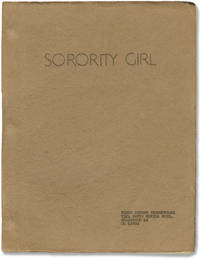
1957ref. 154176Hollywood: Roger Corman Productions 1957. Draft script for the 1957 film. Copy belonging to actor Dick Miller who had a sizable role in the film with his name to the title page and his manuscript pencil and ink annotations throughout. The finished film runs a little over an hour so the script at 127 pages was cut down substantially in the filming and editing process leaving a remarkable amount of content for study. An alienated wealthy coed at an all-girls boarding school inflicts increasing cruelties on the other students until her manipulation goes too far. An early role for Miller who appeared in 14 films directed by legendary independent filmmaker Roger Corman between 1955 and 1961 and would continue to work with Corman throughout his career. Brown titled wrappers. Title page present undated with credits for screenwriter Ed Waters. 128 leaves with last page of text numbered 127. Mimeograph duplication rectos only. Pages and wrapper Near Fine bound internally with three silver brads. Roger Corman Productions unknown
1958ref. 141439Tokyo: Nikkatsu 1958. Draft script for the 1958 film. Text in Japanese. The first film to be credited to Suzuki by his assumed name a man released from prison needs money and goes to retrieve diamonds sought after by fellow yakuza members. White titled perfect-bound wrappers. Title page present. 107 leaves with last page of text numbered 12. Mechanical duplication. Pages Very Good plus wrapper Very Good plus. Nikkatsu unknown
1958ref. 141434Tokyo: Nikkatsu 1958. Draft script for the 1958 film. Text in Japanese. Based on a novel by Shinju Fujiwara. Five people assemble ten years after the end of the Pacific War at a military station to uncover a stash of morphine worth a fortune now whcih was buried by the medical officer Mashimoto at the abdication of the Emperor. One of members of the group does not belong there. Orange titled perfect-bound wrappers. Title page present. 131 leaves with last page of text numbered 46. Mechanical duplication. Pages Near Fine wrapper Near Fine bound with two gold brads. Nikkatsu unknown
1958ref. 141432Tokyo: Nikkatsu 1958. Draft script for the 1958 film. Text in Japanese. Title based on a song popularized by the leading actor Frank Nagai. A comedy featuring a drugstore owner who begins an extramarital affair when his wife and child go on vacation. White illustrated titled perfect-bound wrappers. Title page present. 95 leaves with last page of text numbered 18. Mechanical duplication. Pages Near Fine wrapper Near Fine. Nikkatsu unknown
1948ref. 151633Tokyo: Toho Company 1948. Draft script for the 1948 Japanese film noir. Text and titles in Japanese. The first of sixteen film collaborations between director Akira Kurosawa and actor Toshiro Mifune. Kurosawa's seventh film saw him exploring the inter workings and motivations of the yakuza and machismo. Censorship was tight regarding the occupation forbidding criticism of Americans leading Kurosawa to slip in references to the US presence in Japan satirizing jazz "pan pan" girls unlicensed prostitutes catering to American soldiers and Western clothing and hairstyles. Set in the slums of postwar Japan. White titled wrappers. Approximately 40 leaves with last page of text numbered 79. Mimeograph duplication printed on rectos and versos. Pages Very Good plus wrapper Very Good plus covered in a protective plastic wrapping from when the script was used during filming side stapled. BFI 638. Criterion Collection 413. Grant Japan. Toho Company unknown
1963ref. 148710Tokyo: Kurosawa Production Co 1963. Draft script for the 1965 Japanese film preceding the release by nearly two years. Text and titles in Japanese. Based on Shugoro Yamamoto's short story collection "Akahige Shinryotan." Toshiro Mifune's final film with director Akira Kurosawa considered one of the director's masterpieces following a small-town doctor and his new intern a highly educated arrogant young man. Set in the Edo district of Koishikawa. White titled wrappers with a blue titled dust jacket. Title page present dated 1963. 65 leaves with last page of text numbered g-17. Mimeograph duplication rectos only. Pages Very Good plus wrapper Very Good plus with light foxing to the rear wrapper with perfect binding. Jacket is Very Good plus with light foxing to the fore-edges and rear panel. Kurosawa Production Co unknown
1967ref. 149909New York: Andy Warhol Film 1967. Vintage poster for the 1967 film. The film originally screened at the Hudson Theater in a 95-minute version although this cut is considered lost. A 109-minute version would screen in 1968 as the first film shown at the New Andy Warhol Garrick Theater renamed as such after Warhol recovered from being shot by Valerie Solanas. One of several sexploitation influenced films made by Warhol an episodic story of a biker who has no bike and is both eroticized by the camera and emasculated by various Warhol superstars throughout. 19 x 25 inches rolled. Near Fine with some light soil and an almost imperceptible professional repair to a tear at the top edge. Murphy The Black Hole of Cinema. Warholstars. Andy Warhol Film unknown
1967ref. 149869New York: Andy Warhol Film 1967. Vintage poster for the 1967 film. Two versions of the film were shot - one with an all nude all male cast that was never released publicly and one with both male and female actors wearing G-strings which was originally screened at the Hudson Theater in New York. A stylistic breakthrough in that the film entirely jettisons any pretense to plot dramatic action or sex found in Andy Warhol's previous sexploitation experiments instead featuring extended monologues by superstar Viva and conversations with others that touch on a variety of controversial topics. One of Warhol's most overtly political films also starring draft resister Andrew Duggan and the first pairing of Viva with Taylor Mead who would appear together in several more Warhol films. 19 x 25 inches rolled on archival linen with a small amount of professional restoration and repair. Near Fine with minor soil. Murphy The Black Hole of the Camera. Warholstars. Andy Warhol Film unknown
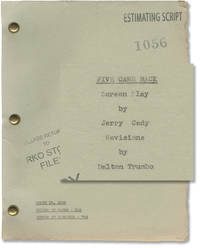
1939ref. 152589Culver City CA: RKO Radio Pictures 1939. Estimating script for the 1939 film. In his 1970 biography of Nathanael West Jay Martin notes: "On June 6 1938 West was hired for his 'established' salary of $350 a week by RKO Pictures-the first of five major studios to employ him-to make a screenplay from an original story by Richard Carroll. Putting everything else aside within a week he outlined his plans for treating the material. He fretted all weekend over whether the outline would be accepted knowing that he could be out of a job again on Monday. On late Monday afternoon he was persuaded to telephone the executive producer Lee Marcus who told him to go ahead at once to the screenplay. On July 20 West finished a first draft for what would be one of his most successful films. After eight weeks in all having polished his script West was released by RKO. At this point it appeared that West had a good chance to earn a single credit for this high budget B-quality movie but the studio called in a hack writer Jerry Cady to polish West's script. After Cady's work on it proved unsatisfactory Dalton Trumbo came in to do a revision before the film went into production. Trumbo eliminated most of the revisions made by Cady restored some of West's material and made still other alterations. By this time West had returned to New York and although his secretary demanded that he ask the guild to arbitrate the credits he appeared indifferent and nearly missed getting any screen credit at all." An aerial melodrama about nine passengers on a commercial flight from Los Angeles to Panama City who crash-land in the Amazon rainforest. The production helped launch the career of a then-unknown Lucille Ball and paved the way for later disaster epics of the 1970s as well as the popular television sitcom "Gilligan's Island." Set in Los Angeles and the Amazon rainforest. Green titled wrappers stamped ESTIMATING DRAFT on the front wrapper dated March 15 1939 with credits for screenwriters Jerry Cady and Dalton Trumbo. Title page integral with the first page of text. 133 leaves with last page of text numbered 133. Carbon typescript on yellow onionskin stock. Pages and wrapper Near Fine bound with three gold brads. RKO Radio Pictures unknown
1959ref. 139477Paris: Les Films du Carrosse 1959. Original French Grande poster for the 1959 film. Poster design by Boris Grinsson. Truffaut's auspicious debut winner of Best Director at Cannes nominated for the Palme d'Or and also nominated for a Best Original Screenplay Oscar the following year. 47 x 62 inches. Linen backed and rolled. Bright and Fine. Capitaine 207. Warren Vol. 1 p. 159. Les Films du Carrosse unknown
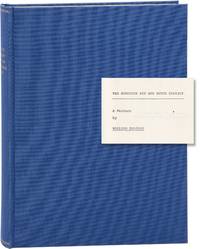
1969ref. 156803N.p.: N.p. 1969. Early Draft script for the classic 1969 Western film seen here under the working title "The Sundance Kid and Butch Cassidy." Bound in full blue cloth with the original wrappers bound in. A landmark of New Hollywood cinema and arguably the high spot as well as the beginning of an incredible streak of inventive cinematic achievements directed by George Roy Hill in the 1960s and 1970s including "Slaughterhouse-Five" 1972 "The Sting" 1973 and "Slap Shot" 1977. Loosely based on fact about two outlaws on the run from a lethal posse after a string of train robberies. They flee to Bolivia in search of a a better way to be thieves but ultimately meet their doom. Winner of four Academy Awards including Best Screenplay for William Goldman. Set in Wyoming and Bolivia and shot on location in New Mexico California Utah Colorado and Arizona in the US and in Morelos Guerrero and Sonora in Mexico. Blue untitled wrappers. Title page present undated with credits for screenwriter William Goldman. 177 leaves with last page of text numbered 175. Mimeograph duplication rectos only. Pages Near Fine wrapper Very Good plus. Housed in a custom red and blue quarter-leather clamshell box. National Film Registry. Hardy The Western. Pitts 586. N.p. unknown
1969ref. 144659New York: Jerome Hellman Productions 1969. Draft script for the 1969 film. Copy belonging to the film's still photographer Ron Munkasci with his name in red manuscript ink at the top right corner of the title page. Based on the 1965 novel by James Leo Herlihy about an unlikely friendship between a would-be gigolo and an ailing con artist. Cornerstone film of the New Hollywood cinema nominated for seven Academy Awards winning Best Adapted Screenplay Best Director and Best Picture. Set in New York City shot on location in Miami Manhattan and Big Spring Texas. Dark blue titled wrappers noted as DRAFT SCREENPLAY at the bottom right and with the logo for JEROME HELLMAN PRODUCTIONS at bottom center. Title page present with credits for screenwriter Waldo Salt novelist James Leo Herlihy producer Jerome Hellman and director John Schlesinger noted as "A JEROME HELLMAN-JOHN SCHLESINGER PRODUCTION." 122 leaves with last page of text numbered 121. Mimeograph duplication rectos only. Pages Near Fine with some offsetting to the title page due to a newspaper clipping still present laid in wrapper Very Good plus. National Film Registry. Jerome Hellman Productions unknown
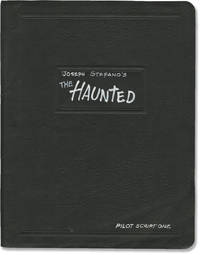
1964ref. 147167Los Angeles: Villa di Stefano Productions 1964. First Draft script for the 1964 television film originally aired on CBS. With actor Martin Landau's copied annotations throughout. Included are a set of synopses for proposed episodes a shooting schedule a distributor's announcement booklet and various other documents related to production. Also included is an original celluloid print of the film on a single reel in its original mailing case with cloth straps dated 2/18/65 addressed from director Joseph Stefano to Landau on the mailing label in manuscript black ink and INSCRIBED by Stefano to Landau at the top left corner of the case in the same ink: "To Martin / Whose splendid brilliance and warmth put the special spark in this bright fire / Your grateful and admiring friend / Joe Stefano." Fearful of being buried alive a woman installs a phone in the crypt in which she plans to be in case of emergencies. Months after her death the phone begins to ring presenting a new ghostly case for Landau's paranormal investigator. The film was intended to be the pilot for a new paranormal thriller series tentatively titled "The Haunted" as titled on the front wrapper but the series wasn't picked up and the pilot was released as a television movie after additional footage was shot. Black titled wrappers with credits for director-screenwriter Joseph Stefano noted as PILOT SCRIPT ONE. Title page present dated July 27 1964 noted as PILOT SCRIPT ONE with credits for director-screenwriter Joseph Stefano. 77 leaves with last page of text numbered 76. Early Xerox rectos only. Pages Near Fine wrapper Near Fine bound internally with three silver brads. Film reel and film stock are unexamined. Villa di Stefano Productions unknown
1966ref. 141453Tokyo: Toho Company 1966. Draft script for the 1966 film. Text in Japanese. A pornographer is keeping a low profile to keep out of the way of the mob while also is trying to keep the various people in his life happy including his stepdaughter stepson mistress and wife who believes her first husband was reincarnated as a carp. White titled perfect-bound wrappers. Title page present. 178 leaves with last page of text numbered 27. Mechanical duplication. Pages Near Fine wrapper Near Fine. Criterion Collection 207. Toho Company unknown
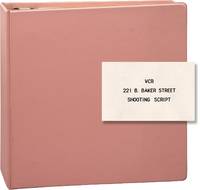
ref. 171865Los Angeles: Antler Productions 1987. Shooting Script for the 1987 hybrid VHS board game copy belonging to screenwriter Stephen Sustarsic with manuscript pencil and ink annotations of his name and an address on the title page. An internally duplicated copy with the majority of pages with copied punch holes with occasional manuscript pencil annotations checking characters or scenes. A unique and important example of video game construction from the heart of its era one that pulled Sherlockiana into its concept. Deluxe 304-page script housed in a large generic pink three-ring binder with ten-page dividers nine labeled for each of the game's ten mysteries. Each mystery includes a title page noting screenwriters and draft date a one or two page Short Rundown and a cast page followed by the segment's script. Three "Promo" segments are interspersed throughout the script to assist and instruct players through gameplay. Bound in following the script is a six-page Staff List two copies of a 15-page Shooting Schedule dated 8/3/87 and a 15-page Shooting Schedule dated 8/7/87. Laid in the binder's pockets are two copies of a four-page Shooting Schedule dated 8/9/87 and a copy of directions to "The Complex" in West Los Angeles. "221B Baker Street" was a popular board game developed by Jay Moriarty and produced by Antler Productions in 1975 in which players solve up to 75 mysteries with Sherlock Holmes and his associate Dr. Watson by using clues provided by visiting locations on the game board and using Scotland Yard Badges and Skeleton Keys cards to control opponents' access to locations. In 1987 on the centennial anniversary of Arthur Conan Doyle's first published Sherlock story Moriarty and Antler released two new adaptations of the board game: a video game produced by Datasoft and a VCR board game the latter featuring ten new mysteries and a videocassette of dramatized briefings and reenactments-represented by the script on offer here. VCR board games were a short-lived fad in the mid-to-late-1980s in which board games would include a VHS tape to be played at certain points in the game to act as a timer reveal clues or advance a plot. The concept was an attempt by the game developers to remain relevant by incorporating the latest technological innovations prior to the ascension of modern video game consoles. Screenwriter and producer Sustarsic is best known as an Emmy Award winning screenwriter for the 1988-1991 animated Disney series "The New Adventures of Winnie the Pooh" the 2004 Independent Comedy Horror film "Lucky" and the 2017 animated Disney XD series "Xiaolin Chronicles - Special Edition." Other screenwriting credits from Sustarsic's 35 year career in television and film include episodes for "The Jeffersons" 1981 "One Day at a Time" 1982 "Alice" 1985 "Newhart" 1989 "Alf" 1990 and "Dilbert" 2000 among many others. Front wrapper integral with first uncredited title page dated 1987 noted as SHOOTING SCRIPT. Second title page dated 1987 with credits for screenwriters Mark Chambers Jay Moriarty and Stephen Sustarsic. 304 leaves with last page of text numbered 13. Xerographic duplication rectos only. Pages Near Fine overall with first title page separated housed in a Near Fine generic pink three-ring binder. Staff List and Shooting Schedules saddle-stapled with a single staple to the top left corner. Near Fine. Antler Productions unknown
1968ref. 137925Beverly Hills CA: Metro-Goldwyn-Mayer MGM 1968. Archive including 20 vintage linen-backed production photographs a trade advertisement a film program and a souvenir booklet from the 1968 film "2001: A Space Odyssey." From the collection of NASA scientific consultant Frederick I. Ordway III with images prominently featuring Ordway production designer Harry Lange Arthur C. Clarke Stanley Kubrick and others. One photograph has Ordway's name written on the recto in silver marker. All photographs mounted on matte board as issued. Ordway and Clarke began working together on matters of science fact in 1951 and Clarke personally invited him to be the factual advisor on the film. Kubrick's sprawling science fiction epic traces the evolution of human intelligence under the influence of an unspecified alien force. Along with "Blade Runner" Kubrick's masterpiece forever altered the standard for visual and conceptual sophistication in science fiction and genre films. The pre-production for the film set standards as well as Kubrick hired one of the greatest science fiction authors of the 1960s Arthur C. Clarke to be his screenwriter and hired over 20 scientists like Ordway to consult on every detail of the film. The film's high degree of scientific accuracy coupled with bleeding-edge special effects and minimal use of dialogue make "2001" universally recognized as one of the most influential films ever made. The development of the film was kept strictly under wraps and behind-the-scenes material of any kind is rare. Winner of an Academy Award for Best Special Effects and nominated for three others including Best Director. Set in space shot on location in Scotland England Arizona and Utah. Photographs 8 x 10 inches mounted on 11 x 14 inch matte board. Trade advertisement 9 x 12 inches full-color creased. Souvenir booklet 7.25 x 16 inches full-color 12 leaves saddle stapled folded. Program 5.5 x 8.5 inches black and white saddle stapled single leaf. Very Good to Near Fine. Metro-Goldwyn-Mayer [MGM] unknown