8.898 Ergebnisse
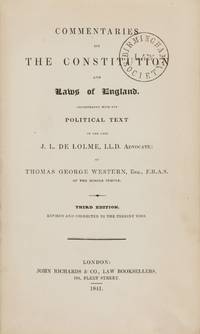
1841Best.-Nr. 863181841. Western Thomas George. Lolme Jean Louis de 1740-1846. Commentaries on the Constitution and Laws of England: Incorporated with the Political Text of the late J.L. de Lolme. London: J. Richards 1841. Third edition revised and corrected. Octavo. xvii 476 civ pp. Contemporary full calf faded gilt spine and lettering piece. Marbled endpapers and edges. External wear scuffing and minor soiling. Institutional copy with the gilt ownership inscription of the "Birmingham Law Society" to the front board and their gilt insignia to the rear board. Small bookseller's ticket "Wildy & Sons / London" to front pastedown. Property stamps to title page and page 399 contents otherwise clean and tight. A good sound copy. $250. First published in French in 1771 De Lolme's foundational text was a highly influential account of the English government praised by William Blackstone and the authors of The Federalist Papers. This 1841 edition by Western updates the classic text for the Victorian era integrating the monumental changes of the Reform Act of 1832 and the Catholic Emancipation Act of 1829. This copy's provenance links it directly to the nineteenth-century legal community via the Birmingham Law Society founded 1818 and London's historic legal book trade via Wildy & Sons operating out of Lincoln's Inn Archway since 1830. unknown books
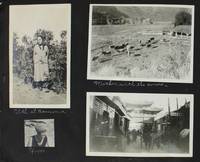
Best.-Nr. 80817A substantial archive of 779 original photographs documenting a young woman homesteader's life in North Dakota and Eastern Oregon beginning around 1910 through the 1940s. Photos are generally about 3" x 5" or the reverse a few smaller including some wallet-size images and several larger up to approximately 9" x 6". 102 are loose photos; the remainder are laid into four well-composed albums of varying dimensions as ennumerated below. About one third of album images are captioned though none are dated. Overall condition is Very Good with occasional rippling to images that have been pasted onto album leaves; occasional mild fading to the earliest photographs; five album images missing though very possibly present among loose photos. Idella Cook née McElrath was born in 1894 to a farming family in Dakota County Minnesota about twenty miles south of Minneapolis. The U.S. Census of 1910 shows the McElraths still residing in Orchard Lake Minnesota; but around that time the family appears to have emigrated to Plaza North Dakota in the sparsely-populated northwest corner of the state near the present-day Fort Berthold Indian Reservation. Idella remained in North Dakota until 1917 when she relocated to Klamath Falls Oregon possibly in the company of her future husband a druggist professional photographer and traveling salesman named Roy H. "Doc" Cook. The couple married in 1922. In Klamath Falls Idella learned photography and darkroom work presumably under the tutelage of Mr. Cook then in 1929 the couple opened a general store "Idella's" that operated continuously until 1947 and then until 1978 under new owners selling groceries curios photographs of local scenery and folk remedies. All of these phases of Idella Cook's life are captured in the current archive as is a one-year sojourn 1925-6 in Hawaii. However the bulk of material contained in two thick albums is devoted to the relatively brief interval - no more than six years - between the family's arrival in North Dakota and Idella's departure to Oregon in 1917. Idella's precise status in North Dakota is difficult to pinpoint. Her 1972 obituary in the Klamath Falls Herald and News states: ".as a young girl she staked out a claim on a homestead in North Dakota.17 miles from the nearest town" implying that she had emigrated to North Dakota on her own. However the photographs present here clearly show Idella in the presence of her family members including her younger sister Izetta born in 1904 and looking eight or nine years old in the earliest photos; another photo shows a stout man leading two draft horses captioned "Papa". A January 1913 notice in a Minot ND newspaper The Ward County Independent lists an "N.G. McElrath" almost certainly a transcription error for "U.G. McElrath" Idella's father as one of a group of about 200 settlers activating to carve a new county out of the the northeastern portion of the Bertholdt Reservation which had been opened to non-Indian settlement in 1910. So while it is clear that Idella's family settled in Plaza at some point between April 1910 and January 1913 it is not clear that Idella had yet ventured out as a homesteader. Assuming then that these photos date from the period 1911 to 1912 Idella would have been seventeen or eighteen years old - not precisely a "young girl;" also not old enough to claim a parcel under the Homestead Act but certainly old enough to strike out on her own. Not until 1917 when she is 21 do we find land office records in Idella's name - as the purchaser of four parcels totalling sixty acres near the now-defunct town of Sanish which was later inundated in the construction of Lake Sakakawea in 1953. Shortly after the purchase of those parcels Idella appears to have moved to Oregon. Idella's dependent status notwithstanding these are extraordinary photographs. The earliest images present a vivid picture of the windswept and desolate existence of the area's early settlers. The brand-new town of Plaza founded in 1908 is well represented looking rather like a 1950s cowboy movie set with horse-drawn carriages far outnumbering motorcars on the towns main street. Also represented in a number of photographs is the now-disappeared hamlet of Sanish a town which was inundated in the creation of Lake Sakakawea in 1953. Also lost in that event were many square miles of land sacred to the Mandan Hidatsa Arikara Nation whose members are also a constant presence in Cook's photographs; one important series of photographs captures a large Indian pow-wow likely held on the newly-established Fort Berthold Reservation around 1910. Though the albums are extensively captioned providing a wealth of information on the early settlement and demography of the region they are occasionally wanting for specifics of date and/or locale leaving much deductive work to be done to pinpoint locations and events. Of almost equivalent interest are the many photographs taken and developed by Idella after her move to Klamath Falls around 1917. These were still early days in eastern Oregon with many towns only coming into being in the 1890's and provide a wealth of grass roots historical detail that cannot be found outside primary source materials like this. unknown books
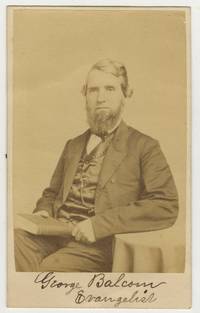
1866Best.-Nr. BK0132Philadelphia: F. Gutekunst 1866. Carte-de-visite photograph 3 ½ x 2 ¼ inches on larger mount with Gutekunst's 704 & 706 Arch Street imprint and two-cent U.S. revenue stamp for playing cards on verso. Contemporary identification beneath image "George Balcom / Evangelist. Fine condition. A portrait of George Farnham Balcom 1823-1879 the New York Baptist evangelist whose itinerant ministry eventually took him west to Kansas and Nevada. Balcom grew up in Oxford New York entered the Baptist ministry at about thirty and became known particularly for evangelistic work in both speaking and singing. He conducted meetings and helped organize churches in New York Pennsylvania Ohio and the western states. Balcom moved west in 1870 settling near Cawker City Kansas. Local accounts credit him with preaching among the earliest sermons in Osborne County and describe his continued work establishing churches on the frontier. His western career also included a brief period in federal service as special Indian agent at Nevada's Pyramid Lake Reservation in late 1871 making him the first Baptist preacher in the state.1 The revenue stamp dates the portrait closely to the Civil War-era federal tax on photographs while Balcom's handwritten identification as an "Evangelist" places the image squarely within the itinerant phase of his career. An well-documented portrait of a nineteenth-century Baptist revivalist whose ministry extended from rural New York to the developing communities of the American West. . F. Gutekunst unknown books
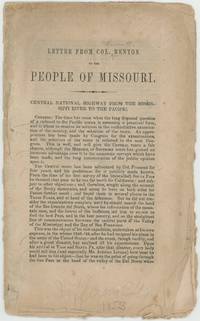
1853Best.-Nr. BK0172Washington D.C. 1853. 24 pp. measuring 6 ½ x 10 inches. Stitched and untrimmed. Good with considerable wear and chipping at the edges some soiling and early pencil notations. Thomas Hart Benton's argument for a central transcontinental route issued as Congress was moving toward the government surveys that would dominate the Pacific railroad question during the next several years. Benton had been promoting a government-backed "central national highway" since 1849 running west from Missouri toward California. Writing to his former Missouri constituents on March 4 1853 Benton argues that the accumulated western explorations had already demonstrated the practicality of a central route. He gives particular attention to the country approaching the Rocky Mountains and to the search for a usable pass near the headwaters of the Arkansas and Rio Grande drawing heavily on the western travels of his son-in-law John C. Frémont. The final eight pages form an appendix bringing together evidence for the route. They include Frémont's 1850 letter to the Philadelphia Railroad Convention and more notably a statement made to Benton by the veteran trader and guide Antoine Leroux. Leroux recounts his early years in the West his association with the fur-trading expeditions of Ashley and Henry and his long residence at Taos. Graff describes this as the probable first printing of Leroux's statement. A useful piece of western railroad literature with substantial Frémont and New Mexico content published on the eve of the federal Pacific railroad surveys. Howes B368; Graff 270; Wagner-Camp 221; Sabin 4186. . unknown books
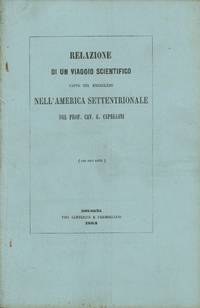
1864Best.-Nr. BK0206Bologna: Tipi Gamberini e Parmeggiani 1864. 44 pp. 8vo. Original printed blue wrappers. Text in Italian. Issued with a folding map in fine condition. Contemporary bibliographies confirm the 44-page collation and map. Very good with light soiling and minor wear to wrappers. The first published account of Giovanni Capellini's scientific journey through North America in 1863 with particularly good material on Nebraska and the Missouri River frontier during the Civil War. Capellini sailed from Liverpool in August stopped at Halifax and continued to Boston and Cambridge where Louis Agassiz and Jules Marcou assisted his preparations. He then traveled through Canada and the Midwest before reaching St. Joseph Missouri and moving north by steamboat into Nebraska. At St. Joseph he found the region troubled by guerrillas and the city under martial law; before leaving he had to obtain permission from the military command to purchase arms and ammunition. From there he traveled aboard the Denver to Omaha and explored from Council Bluffs northward through Florence De Soto Tekamah Decatur Blackbird and the country around Sioux City before returning through Omaha Bellevue and Nebraska City. Capellini spent time among the Omaha and Ponca at Blackbird recording village names population figures chiefs houses clothing schooling at the Presbyterian mission and objects he acquired. He met the Omaha leaders La Flèche and Ga-he-gu-zhi-ga and describes the pressure of white settlement on the tribes calling them people "for whom civilization means the same thing as death." He also relates the displacement of Winnebago people along the Missouri and gives an account of the steamer Alone's difficult journey toward the upper river including Fort Pierre Fort Berthold Fort Union encounters with Native groups and freight intended for the new Idaho and Washington gold fields. . Tipi Gamberini e Parmeggiani unknown books
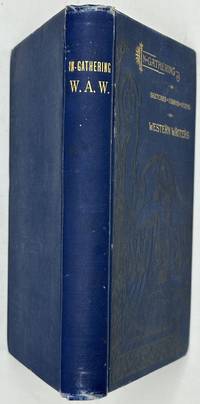
1892Best.-Nr. 69017Cincinnati Ohio: Jones Brothers 1892. First edition. 12mo. 300 pp. Cover title: "In-Gathering of Sketches Essays Poems by Western Writers." Cover design by Mrs. E.S.L. Thompson. Illustrated with eleven portraits. Original blue cloth front hinge cracked. BAL 2993 Cawein. BAL 16593 Riley. Includes portraits of James Whitcomb Riley and Lew Wallace. ".third authorized collection of addresses essays poems and reports by the Western Association of Writers." With other contributions by John Clark Ridpath David Starr Jordan Eugene Ware plus numerous others. Evidently a large number of women writers were members of the association including Mary E. Cardwell Birdie Blye Virginia C. Meredith Minetta Taylor etc. Very scarce. Jones Brothers unknown books
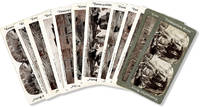
Best.-Nr. 62435N.p. n.d. ca 1910s: Cosmopolitan Series. Twelve lithoprint stereoviews on cardstock each 3-1/2" x 7". Very mild edge-rubbing occasional light soil on versos; Very Good to Near Fine. A selection of Western and Native American scenes from this anonymously-published series. Though not expensively produced and though printed images halftones rather than original photos this selection is unusual for being very well-preserved. Includes scenes in New Mexico Colorado Yellowstone Park Alaska Minnesota and Arizona along with a few unlocated western views - "Camping in the Wild West;" "A Real American Cowboy;" and three Native American views including "Chippewa Squaw Making Birch Canoe" "Chief Blackhaw Squaw and Papoose;" and "Mounted Sioux Indians Western Plains." For brief reference on the series see DARRAH p.120. Cosmopolitan Series unknown books
1836Best.-Nr. 49788Pittsburgh: William Allinder 1836. First Edition. Octavo 22.5cm.; removed; 22pp. Rather worn and somewhat soiled and toned remnants of original wrappers along spine margins; Good or better overall. The fourth and final report issued by the Society including letters from missionaries in western Africa the Ganges and among the Native American tribe the Wea. William Allinder unknown books
1965Best.-Nr. 26097Ibadan: Ministry of Information ca. 1965. First Edition. Oblong octavo 16.5x23.5cm.; original grey pictorial staplebound wrappers; unpaged; illus. A bit dust-soiled some wear from handling else Very Good and sound. Second volume in a series of three publications on progress in Western Nigeria. Ministry of Information unknown books
1966Best.-Nr. 24984Ibadan: Ministory of Information 1966. Revised Edition. Slim folio 27.5cm.; original white and blue pictorial wrappers; unpaged; chiefly plain photographic illus. About Fine. Ministory of Information unknown books
1926Best.-Nr. 14325Augusta GA: Commercial Printing Co 1926. 8vo. 32pp illus. Wraps. Very good. Promotional pamphlet. Commercial Printing Co unknown books
1965Best.-Nr. RWILNEW16efHelios 1965. Very Good. Wilby Basil editor. New Dimensions April/May 1965. Volume 3 Number 13. Western Mark; Ratazzi Peter. Cheltenham Gloucestershire UK: Helios 1965. 60pp. 8vo. Pale blue stapled wraps. Book condition: Very good with slightly yellowed spine and lightly bumped edges. Contains articles How to Read the Tarot Occult Experiences of a Witch The Shadow and more. Helios paperback books
1930Best.-Nr. 28350Baltimore: Western High School 1930. Soft Cover. Very Good. Soft Cover. 8vo. High school periodical. Pink side stapled paper wrappers with black title to front wrapper. Fading to edges. Interior is quite clean with illustrations throughout. 55 pages. BALT/060915. Western High School unknown books
1930Best.-Nr. 28351Baltimore: Western High School 1930. Soft Cover. Very Good. Soft Cover. 8vo. High school periodical. Pink side stapled paper wrappers with black title to front wrapper. Fading to edges. Interior is quite clean with illustrations throughout. 55 pages. BALT/060915. Western High School unknown books
1930Best.-Nr. 28349Baltimore: Western High School 1930. Soft Cover. Very Good. Soft Cover. 8vo. High school periodical. Pink side stapled paper wrappers with black title to front wrapper. Fading to edges. Interior is quite clean with illustrations throughout. 55 pages. BALT/060915. Western High School unknown books
1945Best.-Nr. 19315Baltimore: Western Highschool 1945. Paper Wrappers. Near Fine. Paper Wrappers. 4to. Red paper wrappers with black taped spine. Black title and illustration to the front wrapper. Small chip the bottom edge of back wrapper. A few pen and pencil marks inside. Name and address of previous owner written in pen on inside of back wrapper. Red spot on back of last page. 79 pages. Baltimore. BALT/072307. Western Highschool unknown books
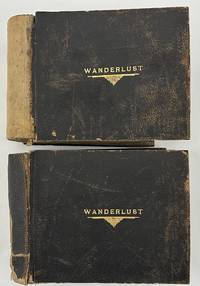
1923Best.-Nr. 5280Various locations in the American Southwest and West 1923. About very good. Two oblong folio photograph albums bound in brown pebbled leather each titled in gilt on front cover "WANDERLUST" containing a total of 266 full-page vernacular and professional photographs. First albums: 146 leaves illustrated with 128 full-page landscape photographs each around 6 x 8 inches or slightly larger and occasional manuscript or hand-fashioned sectional title pages and maps. Second volume: 148 leaves illustrated with 138 photographs and occasional manuscript or hand-fashioned sectional title pages. All contents mounted one per page to recto of each leaf. Spines perished but holding strong boards worn scuffed and soiled. Contents noticeably curled with minor to moderate dust-soiling throughout. A studio photograph of a young man is laid-in to the first album likely the compiler of the albums but sadly unidentified. An elaborately-produced pair of vernacular photograph albums documenting an epic cross-country train excursion in 1923 by a well-to-do but anonymous traveler from New York comprised of over 260 full-page photographs. The photographs are a mixture of silver gelatin images printing out paper prints handcolored photographs and a handful of cyanotypes. Most of the images appear to be taken by the traveler en route but some images may have been bought along the way. The images largely picture the landscape or architecture seen along the way with a healthy number of images showing the railroad and the railcars themselves with many images taken at train depots. The occasional manuscript sectional title pages denote the regions of travel as the compiler moved west to California and then eventually back east towards home. The first album begins with a manuscript title leaf quoting the text of Gerald Gould's poem "Wanderlust" supplemented by two small drawings and two thumbnail photographs. A map on the second leaf traces the voyage from New York down through the American South and Southwest to California and back to New York through Arizona Colorado and the Midwest. Thereafter the album is comprised mostly of full-page photographs grouped together by location with anywhere from a few to several images per section. The first section in the first album shows the first major stop on the trip -- Washington D.C. and Mount Vernon; this section contains photographs of the Capitol the Lincoln Monument other D.C. buildings and several on the grounds of George Washington's home at Mount Vernon. The album then includes sections featuring New Orleans six photographs; the route between New Orleans and El Paso five images including the train depot at Langtry Texas; El Paso five shots featuring the city and street views; Juarez Mexico eight shots mostly either street scenes or a bullfight; "Thru New Mexico and Arizona" four images; The Apache Trail in Arizona nineteen shots mostly desert landscapes but with some buildings along the trail; and onward through the Carriso Gorge seven photos to California beginning at Coronado Beach eight photographs. The remainder of the first album features California locations namely San Diego sixteen images mostly missions; Pasadena ten photos mostly featuring gardens; Catalina Island eight shots of the island scenery or the bay; Los Angeles eight views in Santa Monica Venice and Ocean Park; and ending with fourteen images featuring missions and other notable structures in Santa Barbara. The second volume picks up the excursion in Del Monte California featuring fifteen scenes in Carmel by the Sea and Monterey. The photographic journey of California then continues to Santa Cruz and the Big Trees five shots; San Francisco eleven views around the city and in the Japanese gardens; Mt. Tamalpais a dozen shots of elevated vistas big trees and forests; Yosemite National Park twenty park views; Mariposa Big Trees seven shots; and ends with the Glenwood Mission Inn in Riverside twenty-two images of the hotel grounds and other local scenery and missions around Riverside. The remainder of the album features photographs from the Grand Canyon in Arizona twenty-six images mostly landscapes but with a few featuring Native American ceremonies and Colorado Springs twenty landscapes and other views of the city surrounding desert Pikes Peak and so forth. Concerned mostly with scenery of the American South Southwest and West Coast the compiler did not see fit to record photographs of the remainder of his trip back home to New York. In addition to the information contained in the photographs here the elaborate materiality custom matching albums with matching gilt titles to the front board handcrafted sectional title pages the hand-drawn and traced map and the nature of the organization of the albums arranged in the order of travel from east to west and back east again speaks volumes about the importance the compiler placed on the trip. Substantially documented western travel albums are growing rare in the market and the present example is one of the most carefully-assembled examples we have ever seen. unknown books
1920Best.-Nr. 6535Various locations near San Diego 1920. Good. 48 leaves containing 344 photographs. Oblong octavo. Original black cloth gilt. Light wear to covers rubbed. Black paper leaves many loose or crumbling at edges. Many images captioned in white ink throughout. A fascinating vernacular photo album that contains nearly 350 well-executed images of agricultural California in the years before the Great Depression. The album depicts San Diego-area farmers of the 1920s and illustrates rural life of early ranchers in the surrounding areas of Escondido San Pasqual Valley Julian and Ramona. The compiler was a young woman whose family was working at or with the Linton Ranch in North San Diego County. The Ranch was locally famous as a pioneering livestock and homesteading hub where its managers oversaw tens of thousands of head of sheep horses and cattle across the regional valleys. The album mostly features vernacular photos of the compiler her relatives and friends next to their properties such as fields or ranches amidst livestock and engaged in various agricultural activities such as pitching hay casting a bovine handling mules harnessing animals etc. Several photos show them during leisure time hiking posing for photos and the like. Several show sporting events such as basketball or men in football kit. One odd image is captioned "China" and depicts a group of Chinese children; the image below it has street signs in English and Chinese and might be from a local Chinatown. About fifteen rare amateur photos show the newly-commissioned North Island Naval Air Station during or shortly after the end of World War I. The compiler apparently took the photos while visiting her friends in naval service. The images show aerial views of the North Island Battle ship Oregon sea planes and group portraits of UN Navy Sailors. The California series also includes photos of an Escondido dam Lake Wohlford Dam "basketball game at Ramona" Balboa Stadium and the Bishop's School in San Diego. Overall a very interesting and detailed series of vernacular photographs that depict agricultural life in Southern California prior to the transformational Dust Bowl period. unknown books
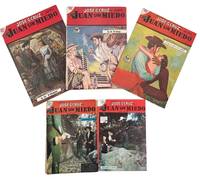
1964Best.-Nr. 235701964. José G. Cruz "Juan Sin Miedo" photo comic group from 1964 documenting the transformation of the Mexican western from a rural frontier setting into a mass market adventure which absorbed crime fiction and romance into photomontage storytelling. Juan Sin Miedo one of Cruz's most widely circulated characters appears here as a charro hero moving between ranches mining camps taverns criminal conspiracies romantic encounters and wilderness pursuits. In these issues the character is portrayed by actor Jesús Gómez whose photographic performances were combined with drawn layouts and captions producing a hybrid form between comic book film serial and fotonovela. Published during a period of rapid urbanization and expanding consumer media across Latin America the issues show Mexican popular culture negotiating rural identity and modern life through stories that place horses beside automobiles cowboys beside helicopters folk medicine beside commercial advertising and traditional notions of honor beside contemporary crime and technology. Juan Sin Miedo. Ediciones José G. Cruz. Mexico Bogotá and Caracas distribution circa 1964. Five issues. 1 Juan Sin Miedo. Año 2 No. 55. Bogotá: Editorial América S.A. por convenio con José G. Cruz circa 1964. Small format 5 x 7 inches approximately 31 pages. Cover shows Jesús Gómez as Juan Sin Miedo beside H. Palacios with Colombian and Venezuelan prices; interior advertises "Medicamentos Indígenas" and "Tamakuin El Vengador Errante." 2 Juan Sin Miedo. Año 2 No. 63. Bogotá: Editorial América S.A. por convenio con José G. Cruz circa 1964. Small format 5 x 7 inches approximately 33 pages. Cover caption reads "Juan Sin Miedo y Claudia" with interior advertising Casperín Capulina and Colombian distribution through Distribuidora Meridiano. 3 Juan Sin Miedo. No. 163. El Valle del Diablo. Mexico: Ediciones José G. Cruz August 31 1964. Large format 9.5 x 7 inches approximately 32 pages. Cover shows Juan holding a woman under the title "El Valle del Diablo"; interior includes the ownership inscription "Luis Enrique Garcia" and a story opening at the "Central de Estudios Mineros del Estado." 4 Juan Sin Miedo. No. 167. El Salvaje. Mexico: Ediciones José G. Cruz September 28 1964. Large format 9.5 x 7 inches approximately 31 pages. Cover shows a smoking charro beside a woman and horse; interior opens with "El Salvaje" and carries the same Luis Enrique Garcia inscription. 5 Juan Sin Miedo. No. 176. El Helicóptero. Mexico: Ediciones José G. Cruz November 30 1964. Large format 9.5 x 7 inches approximately 31 pages. Cover places the western hero inside a tavern scene; interior action sequences show helicopters gunfire coastal pursuit and a forced landing in the jungle. The archive show Cruz expanding the Mexican western beyond its nineteenth-century frontier setting. In El Valle del Diablo Juan's investigation begins at the "Central de Estudios Mineros del Estado" placing the charro hero within a landscape shaped by resource extraction and state development. El Helicóptero shifts the action into aerial pursuit radio communication jungle landings and international escape routes while El Salvaje juxtaposes ranch culture automobiles romance and crime. Throughout the group horseback riders revolvers and rural villages coexist with aircraft motor vehicles celebrity publicity campaigns and international distribution networks extending from Mexico to Colombia and Venezuela. Covers and interiors with edge wear toning small losses and handling; No. 63 in poor condition with cover unbound but remains fully legible. Overall good condition. A five issue record of José G. Cruz's photo comic western as a transnational Latin American form joining charro heroism popular modernity and serialized visual culture in 1964. unknown books
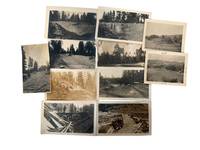
1920Best.-Nr. 235991920. Western logging and resource extraction photo archive circa 1925 to 1940 documenting the engineering labor and transportation systems that supported industrial development across the American West. The photographs record the transformation of forests and mountain landscapes into organized production sites through road construction surveying bridge building temporary camps and mechanized earthmoving. Their emphasis falls not on harvested timber alone but on the infrastructure that allowed western pine forests and mineral resources to be exploited on an industrial scale during the period when the Western Pine Association promoted standardized forestry practices and expanding commercial lumber production throughout the Pacific Coast states. Photo archive of 11 silver gelatin photographs approximately 3.5 x 4.5 inches Northern California Oregon and Arizona circa 1925 to 1940. The photographs show crews grading wide logging roads with early bulldozers and earthmoving equipment; surveyors laying out roadbeds with transits and leveling rods; timber bridges and heavy wooden structures under construction; logging camps with canvas bunkhouses and workers posed outside camp buildings; cultivated fields and company gardens established beside mountain camps; and forest clearings where wagons equipment and draft animals remain in use alongside mechanized machinery. Two photographs depict Arizona mining operations and retain contemporary manuscript captions on the versos. One reads "This is a view of the sluice box before it is quite done has a large or tall gin pole to be put up above hopper for pulleys to work on." Another identifies a camp and garden noting "This is a picture of the camp and garden and in the back ground can see the sluice box in the canyon." Several images appear to have been produced as documentation of western pine logging operations possibly in connection with the Western Pine Association or a related lumber concern. The archive belongs to the decades when western timber companies shifted from rail centered logging toward increasingly extensive truck roads crawler tractors and mechanized grading allowing commercial harvesting to penetrate previously inaccessible stands of ponderosa pine and mixed conifer forests in Northern California and Oregon. Founded in 1916 the Western Pine Association encouraged scientific forestry standardized lumber grading and modern logging methods as western pine became one of the nation's principal building materials during the interwar years and the approach to the Second World War. The Arizona views complement this narrative by documenting comparable engineering practices in western mining where sluice boxes temporary camps and improvised lifting systems illustrate the labor required before mechanized extraction reached full capacity. Particularly notable is the absence of hard hats and modern protective equipment reflecting industrial work before federal occupational safety regulations fundamentally altered logging and construction practices after the creation of OSHA in 1970. Light surface wear occasional corner rubbing and minor silvering; overall in very good condition. A concentrated visual record of the engineering labor and temporary infrastructure that made large scale timber and mineral extraction possible across the early twentieth century American West. unknown books
1925Best.-Nr. 1729801925. THE WESTERN SHADE CLOTH COMPANY. Color Harmony with Luxor Shades. 47 colour plates and 14 coloured sample sheets. Oblong folio 277 x 342 mm publisher's decorated cloth. Chicago: William Volker 1925. A fine copy of this rare elaborately produced work containing many plates with cut-outs. Not listed on OCLC. hardcover books
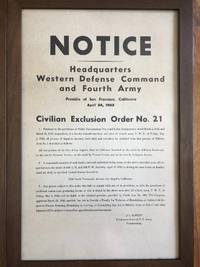
1942Best.-Nr. 222721942. Japanese InternmentWWII Framed original broadside issued April 24 1942 by the Western Defense Command enforcing Executive Order 9066 by the compulsory removal of Japanese Americans from a designated district of Los Angeles. The broadside directs "all persons of Japanese ancestry both alien and non-alien" to present themselves for relocation initiating their forced transfer to government custody. This document dates to the first phase of the federal mass incarceration program that uprooted more than 120000 Japanese Americans approximately two-thirds of whom were United States citizens. Civilian Exclusion Order No. 41 Large format broadside framed. Western Defense Command and Fourth Army. San Francisco: U.S. Army April 24 1942. The notice mandates that a "responsible member of each family and each individual living alone" report to a designated Civil Control Station between April 25 and April 26 1942 and warns that failure to comply would result in criminal penalties under Public Law No. 503 and possible immediate apprehension. The text specifies the geographic boundaries of the exclusion zone within Los Angeles and outlines the administrative procedure for removal including reporting instructions and compliance requirements. The exceptionally fast pace of mass incarceration is especially evident here as the poster issued April 24 commands representatives to report immediately over the following two days for instruction and mandates all Japanese and Japanese-Americans be vacated from the area by May 1 the following week. During this period immigrants and citizens alike were suddenly ripped from their homes schools and jobs forced to say good-bye to neighbors loved ones and pets and pack whatever belongings were permitted by the U.S. government for internment of an indeterminate length of time. Posted publicly in affected neighborhoods across California Oregon and Washington exclusion orders such as this were a key part of the first phase of Japanese American mass incarceration. They introduced military command into neighborhood-level enforcement and a suspension of civil liberties for the West Coast Japanese immigrant population. The order is dated less than five months after the attack on Pearl Harbor when the U.S. was rapidly expanding federal emergency powers on the home front parallel to increasing involvement in WWII abroad. Exhibiting some damage including folds creases pinholes and several small tears at edges with a some in the center many have been repaired with acid-free archival tape en verso. No loss to paper. Overall good condition. A rare and historically significant artifact of wartime racial profiling and a sobering reminder of the fragility of constitutional protections during times of crisis. unknown books
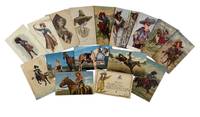
1890Best.-Nr. 212421890. Archive of postcards documenting the popular image of the American cowgirl in Western Americana and early twentieth-century mass visual culture. Working in Cultural / Representational Mode the material illustrates how women participating in rodeo performance equestrian spectacle and frontier-themed entertainment were presented to national audiences during a period when women's public roles remained heavily circumscribed by conventional gender expectations. The postcards emphasize physical skill horseback mobility and frontier self-sufficiency through repeated depictions of women handling lassos firearms and bucking horses. Collectively the archive offers insight into the commercialization of the American West and the circulation of gendered frontier mythology through inexpensive illustrated print media from the late nineteenth century through the postwar period. Collection consists of 16 postcards dating approximately from the 1890s through the 1950s including early colored lithographs chromolithographs and colored real photo postcards. Each measures approximately 3.5 x 5.25 inches. Images portray cowgirls mounted on horseback in a variety of staged action scenes including lasso throwing galloping bucking and trick riding performances. Many women wear fitted riding outfits cowboy hats bandoliers holsters and western boots while posed with rifles pistols whips or ropes against rugged frontier backdrops. Several postcards emphasize dramatic movement with horses shown rearing trotting or in mid-action poses. The repeated use of lassos and firearms visually aligns the women with iconography traditionally associated with male cowboys in Wild West shows rodeo advertising and popular Western entertainment. Some postcards retain handwritten inscriptions on the versos. The archive preserves a long-running commercial visual tradition in which the cowgirl functioned simultaneously as frontier worker entertainer and symbol of female independence within American popular culture. Particularly notable is the tension between conventional femininity and the rugged physicality emphasized throughout the imagery with the women consistently portrayed as active riders and performers rather than domestic figures. The postcards also document the persistence of Western mythology across changing photographic and print technologies during the first half of the twentieth century. Minor edgewear and scattered markings to some cards; overall very good condition. A visually cohesive grouping documenting representations of women in frontier and rodeo culture across more than five decades of American postcard production. unknown books
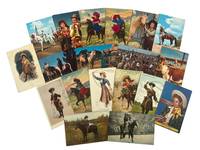
1890Best.-Nr. 212411890. Archive of illustrated and photographic postcards documenting the popular image of the American cowgirl in late nineteenth- and early twentieth-century Western visual culture. Working in Cultural / Representational Mode the material traces how women participating in rodeo equestrian performance and frontier-themed entertainment were presented to mass audiences during a period when gender conventions in the United States remained heavily tied to domestic ideals. The postcards illustrate popular fascination with female riders engaged in activities associated with masculine frontier labor and spectacle including trick riding roping horse handling and armed performance. The archive also provides insight into the commercialization of the American West through souvenir imagery touring exhibitions rodeos and romanticized frontier iconography circulated through postcard publishing during the first half of the twentieth century. Collection consists of 19 postcards dating from approximately the 1890s through the 1950s including primarily colored lithograph and chromolithograph postcards alongside several later colored real photo postcards. Most measure approximately 3.5 x 5.25 inches. Images depict cowgirls mounted on horseback using lassoes pistols and whips in staged action scenes including bucking galloping roping demonstrations and parade formations. Earlier cards portray women riders wearing skirts or dresses while mounted reflecting transitional equestrian fashions prior to the widespread normalization of riding trousers for women during the 1920s. One postcard depicts a "Grand Entry" scene featuring numerous mounted cowboys and cowgirls carrying national flags from various countries suggesting an international rodeo or exhibition setting. Another early color postcard shows a man and woman posed together on horseback in cowboy attire. A postcard postmarked 1951 depicts a cowgirl tending to her horse and bears the handwritten verso inscription: "How we long for you in Fort Worth horses and more horses cowgirls too" addressed to Alabama. Several additional cards contain handwritten correspondence and postal markings dated between 1906 and 1908. The archive documents the enduring cultural construction of the cowgirl as both frontier laborer and commercial entertainment figure during the height of Western Americana imagery in American popular culture. The postcards capture changing attitudes toward women's athleticism mobility and public performance while preserving highly stylized depictions disseminated through inexpensive mass-produced print media. Particularly notable is the tension visible between conventional feminine presentation and physically demanding equestrian activity especially in the earlier cards depicting women riding aggressively while still dressed in skirts and formal attire. Minor edgewear scattered markings and light handling wear to some cards; overall very good condition. A cohesive visual archive of cowgirl imagery and the gendered mythology of the American West across more than half a century of postcard production. unknown books
1892Best.-Nr. 216661892. Medical History Education Lasher Weston William. Medical notebook 1892 documents formal instruction in clinical medicine at the Western Pennsylvania Medical College and provides direct evidence of how diseases symptoms and treatments were taught to medical students in the late nineteenth century. The volume records lectures delivered by instructors including Professor Snively and Professor Lange preserving contemporaneous terminology diagnostic frameworks and therapeutic approaches during a period when bacteriology and modern clinical standardization were still developing. The notebook supports research into medical pedagogy diagnostic reasoning and the transmission of clinical knowledge in American medical schools prior to the full institutionalization of laboratory science and standardized curricula. Lasher Weston William. Medical notebook. Pittsburgh: Western Pennsylvania Medical College 1892. Handwritten manuscript volume containing dated lecture notes quizzes and clinical summaries. Entries begin January 4 1892 with "Practice of Medicine" addressing diseases of the larynx defining laryngitis as "an inflammation of the mucous membrane lining the larynx" with symptoms including hoarseness and whispering and noting severe cases in which "the disease may take the life in a few hours." Subsequent entries include a February 16 1892 quiz on diseases of the air passages and a March 1 1892 lecture on valvular disease describing "shortness of breath" "irregular pulse" and advanced conditions in which "the patient becomes water-logged" with emphasis on prophylaxis. Additional sections address clinical medicine topics including sclerosis hepatic disease and peritonitis the latter described as presenting with "abdominal pain & soreness progressively increasing" and acute cases "ushered in by a chill" with pain "burning or lancinating in character." The notebook is bound in marbled boards with cloth spine and contains manuscript ownership inscription identifying Lasher and his institutional affiliation. The notebook situates student medical training within a transitional period in American medicine when clinical observation and descriptive pathology remained central to instruction while emerging scientific frameworks were still unevenly adopted. Lasher's later career as a physician in Butler County Pennsylvania where he practiced for decades and treated patients in both clinical and domestic settings underscores the continuity between this instructional material and applied rural medical practice in the early twentieth century. Edge wear to boards with some loss and fading to spine; internal pages toned but legible with no significant text loss. Overall very good condition. A detailed primary record of medical education and clinical thought in the United States at the close of the nineteenth century. unknown books