8778 resultados
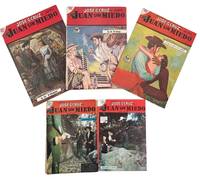
1964ref. 235701964. José G. Cruz "Juan Sin Miedo" photo comic group from 1964 documenting the transformation of the Mexican western from a rural frontier setting into a mass market adventure which absorbed crime fiction and romance into photomontage storytelling. Juan Sin Miedo one of Cruz's most widely circulated characters appears here as a charro hero moving between ranches mining camps taverns criminal conspiracies romantic encounters and wilderness pursuits. In these issues the character is portrayed by actor Jesús Gómez whose photographic performances were combined with drawn layouts and captions producing a hybrid form between comic book film serial and fotonovela. Published during a period of rapid urbanization and expanding consumer media across Latin America the issues show Mexican popular culture negotiating rural identity and modern life through stories that place horses beside automobiles cowboys beside helicopters folk medicine beside commercial advertising and traditional notions of honor beside contemporary crime and technology. Juan Sin Miedo. Ediciones José G. Cruz. Mexico Bogotá and Caracas distribution circa 1964. Five issues. 1 Juan Sin Miedo. Año 2 No. 55. Bogotá: Editorial América S.A. por convenio con José G. Cruz circa 1964. Small format 5 x 7 inches approximately 31 pages. Cover shows Jesús Gómez as Juan Sin Miedo beside H. Palacios with Colombian and Venezuelan prices; interior advertises "Medicamentos Indígenas" and "Tamakuin El Vengador Errante." 2 Juan Sin Miedo. Año 2 No. 63. Bogotá: Editorial América S.A. por convenio con José G. Cruz circa 1964. Small format 5 x 7 inches approximately 33 pages. Cover caption reads "Juan Sin Miedo y Claudia" with interior advertising Casperín Capulina and Colombian distribution through Distribuidora Meridiano. 3 Juan Sin Miedo. No. 163. El Valle del Diablo. Mexico: Ediciones José G. Cruz August 31 1964. Large format 9.5 x 7 inches approximately 32 pages. Cover shows Juan holding a woman under the title "El Valle del Diablo"; interior includes the ownership inscription "Luis Enrique Garcia" and a story opening at the "Central de Estudios Mineros del Estado." 4 Juan Sin Miedo. No. 167. El Salvaje. Mexico: Ediciones José G. Cruz September 28 1964. Large format 9.5 x 7 inches approximately 31 pages. Cover shows a smoking charro beside a woman and horse; interior opens with "El Salvaje" and carries the same Luis Enrique Garcia inscription. 5 Juan Sin Miedo. No. 176. El Helicóptero. Mexico: Ediciones José G. Cruz November 30 1964. Large format 9.5 x 7 inches approximately 31 pages. Cover places the western hero inside a tavern scene; interior action sequences show helicopters gunfire coastal pursuit and a forced landing in the jungle. The archive show Cruz expanding the Mexican western beyond its nineteenth-century frontier setting. In El Valle del Diablo Juan's investigation begins at the "Central de Estudios Mineros del Estado" placing the charro hero within a landscape shaped by resource extraction and state development. El Helicóptero shifts the action into aerial pursuit radio communication jungle landings and international escape routes while El Salvaje juxtaposes ranch culture automobiles romance and crime. Throughout the group horseback riders revolvers and rural villages coexist with aircraft motor vehicles celebrity publicity campaigns and international distribution networks extending from Mexico to Colombia and Venezuela. Covers and interiors with edge wear toning small losses and handling; No. 63 in poor condition with cover unbound but remains fully legible. Overall good condition. A five issue record of José G. Cruz's photo comic western as a transnational Latin American form joining charro heroism popular modernity and serialized visual culture in 1964. unknown books
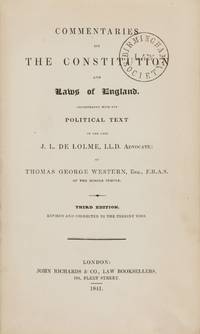
1841ref. 863181841. Western Thomas George. Lolme Jean Louis de 1740-1846. Commentaries on the Constitution and Laws of England: Incorporated with the Political Text of the late J.L. de Lolme. London: J. Richards 1841. Third edition revised and corrected. Octavo. xvii 476 civ pp. Contemporary full calf faded gilt spine and lettering piece. Marbled endpapers and edges. External wear scuffing and minor soiling. Institutional copy with the gilt ownership inscription of the "Birmingham Law Society" to the front board and their gilt insignia to the rear board. Small bookseller's ticket "Wildy & Sons / London" to front pastedown. Property stamps to title page and page 399 contents otherwise clean and tight. A good sound copy. $250. First published in French in 1771 De Lolme's foundational text was a highly influential account of the English government praised by William Blackstone and the authors of The Federalist Papers. This 1841 edition by Western updates the classic text for the Victorian era integrating the monumental changes of the Reform Act of 1832 and the Catholic Emancipation Act of 1829. This copy's provenance links it directly to the nineteenth-century legal community via the Birmingham Law Society founded 1818 and London's historic legal book trade via Wildy & Sons operating out of Lincoln's Inn Archway since 1830. unknown books
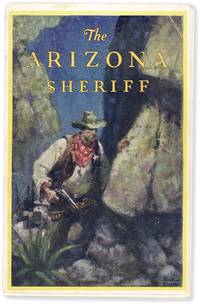
1925ref. 90208N.p. South Bend: Studebaker Corporation of America 1925 but 1926. 1926 reprint per rear wrapper slug. 16mo. Color printed thick-paper wrappers; 48pp; illus. Mild cover wear; child's pencil graffiti inside front cover; text clean tight and unmarked. A Very Good copy. A Studebaker "infomercial." The author Sheriff of Yavapai County presumably on commission for the manufacturer surveys his fellow lawmen throughout the state to report on the service records of their Studebaker police cruisers. The endorsements are presented in the form of Wild West lawman narratives well-illustrated with both b/w photographs and color vignette illustrations by Benton H. Clark. ADAMS SIX GUNS 1979 Noted as "scarce" but also as "A historically unimportant little pamphlet". Studebaker Corporation of America unknown books
ref. 80817A substantial archive of 779 original photographs documenting a young woman homesteader's life in North Dakota and Eastern Oregon beginning around 1910 through the 1940s. Photos are generally about 3" x 5" or the reverse a few smaller including some wallet-size images and several larger up to approximately 9" x 6". 102 are loose photos; the remainder are laid into four well-composed albums of varying dimensions as ennumerated below. About one third of album images are captioned though none are dated. Overall condition is Very Good with occasional rippling to images that have been pasted onto album leaves; occasional mild fading to the earliest photographs; five album images missing though very possibly present among loose photos. Idella Cook née McElrath was born in 1894 to a farming family in Dakota County Minnesota about twenty miles south of Minneapolis. The U.S. Census of 1910 shows the McElraths still residing in Orchard Lake Minnesota; but around that time the family appears to have emigrated to Plaza North Dakota in the sparsely-populated northwest corner of the state near the present-day Fort Berthold Indian Reservation. Idella remained in North Dakota until 1917 when she relocated to Klamath Falls Oregon possibly in the company of her future husband a druggist professional photographer and traveling salesman named Roy H. "Doc" Cook. The couple married in 1922. In Klamath Falls Idella learned photography and darkroom work presumably under the tutelage of Mr. Cook then in 1929 the couple opened a general store "Idella's" that operated continuously until 1947 and then until 1978 under new owners selling groceries curios photographs of local scenery and folk remedies. All of these phases of Idella Cook's life are captured in the current archive as is a one-year sojourn 1925-6 in Hawaii. However the bulk of material contained in two thick albums is devoted to the relatively brief interval - no more than six years - between the family's arrival in North Dakota and Idella's departure to Oregon in 1917. Idella's precise status in North Dakota is difficult to pinpoint. Her 1972 obituary in the Klamath Falls Herald and News states: ".as a young girl she staked out a claim on a homestead in North Dakota.17 miles from the nearest town" implying that she had emigrated to North Dakota on her own. However the photographs present here clearly show Idella in the presence of her family members including her younger sister Izetta born in 1904 and looking eight or nine years old in the earliest photos; another photo shows a stout man leading two draft horses captioned "Papa". A January 1913 notice in a Minot ND newspaper The Ward County Independent lists an "N.G. McElrath" almost certainly a transcription error for "U.G. McElrath" Idella's father as one of a group of about 200 settlers activating to carve a new county out of the the northeastern portion of the Bertholdt Reservation which had been opened to non-Indian settlement in 1910. So while it is clear that Idella's family settled in Plaza at some point between April 1910 and January 1913 it is not clear that Idella had yet ventured out as a homesteader. Assuming then that these photos date from the period 1911 to 1912 Idella would have been seventeen or eighteen years old - not precisely a "young girl;" also not old enough to claim a parcel under the Homestead Act but certainly old enough to strike out on her own. Not until 1917 when she is 21 do we find land office records in Idella's name - as the purchaser of four parcels totalling sixty acres near the now-defunct town of Sanish which was later inundated in the construction of Lake Sakakawea in 1953. Shortly after the purchase of those parcels Idella appears to have moved to Oregon. Idella's dependent status notwithstanding these are extraordinary photographs. The earliest images present a vivid picture of the windswept and desolate existence of the area's early settlers. The brand-new town of Plaza founded in 1908 is well represented looking rather like a 1950s cowboy movie set with horse-drawn carriages far outnumbering motorcars on the towns main street. Also represented in a number of photographs is the now-disappeared hamlet of Sanish a town which was inundated in the creation of Lake Sakakawea in 1953. Also lost in that event were many square miles of land sacred to the Mandan Hidatsa Arikara Nation whose members are also a constant presence in Cook's photographs; one important series of photographs captures a large Indian pow-wow likely held on the newly-established Fort Berthold Reservation around 1910. Though the albums are extensively captioned providing a wealth of information on the early settlement and demography of the region they are occasionally wanting for specifics of date and/or locale leaving much deductive work to be done to pinpoint locations and events. Of almost equivalent interest are the many photographs taken and developed by Idella after her move to Klamath Falls around 1917. These were still early days in eastern Oregon with many towns only coming into being in the 1890's and provide a wealth of grass roots historical detail that cannot be found outside primary source materials like this. unknown books
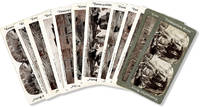
ref. 62435N.p. n.d. ca 1910s: Cosmopolitan Series. Twelve lithoprint stereoviews on cardstock each 3-1/2" x 7". Very mild edge-rubbing occasional light soil on versos; Very Good to Near Fine. A selection of Western and Native American scenes from this anonymously-published series. Though not expensively produced and though printed images halftones rather than original photos this selection is unusual for being very well-preserved. Includes scenes in New Mexico Colorado Yellowstone Park Alaska Minnesota and Arizona along with a few unlocated western views - "Camping in the Wild West;" "A Real American Cowboy;" and three Native American views including "Chippewa Squaw Making Birch Canoe" "Chief Blackhaw Squaw and Papoose;" and "Mounted Sioux Indians Western Plains." For brief reference on the series see DARRAH p.120. Cosmopolitan Series unknown books
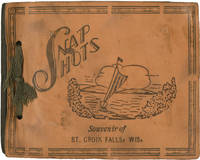
1940ref. 154291St. Croix Falls WI: N.p. 1940. Vintage string bound photograph album containing 31 black-and-white snapshot photographs including four hand-tinted in blue and yellow documenting a school costume day. Manuscript ink annotation to the inside front cover provides the date and album title: "Dress-Up-Day Pictures / April 5 1940". Many photographs with manuscript ink annotation captions to the bottom edges identifying the subjects. The outfits run the gamut: while some teens opted for simple cross-dressing costumes many were more creative dressing as cowboys hula girls hoboes married couples and the like. Notably unusual costumes include an ice box Life Magazine a beer barrel a telephone directory several rolls of Tums and a record player with a paper sign noting the record title as Rhapsody in Blue. A humorous assortment. Photographs generally 2.5 x 3.5 inches. Mounted on black cardboard album leaves rectos and versos. Near Fine. N.p. unknown books
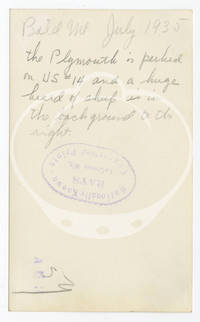
1935ref. 152267N.p.: N.p. 1935. Archive of 24 vernacular photographs documenting a 1935 summer road trip through the badlands of South Dakota Idaho and Wyoming. Each photograph with manuscript ink annotations identifying location to the margins and manuscript pencil annotations to the verso noting locations and dates along with the stamp of Rays photography studio in LaCrosse WI. Captured in the archive are various natural landmarks including Shoshone Canyon IXL Ranch and Bighorn Mountains in Wyoming Bald Mountain in Idaho and the Black Hills Badlands and Missouri River in South Dakota. Also included are a few photographs taken along US Route 14 one of the original US highways of 1926 an east-west route running 1398 miles. An alternately charming and chilling collection of Depression-era travel photography in the Midwest and Mountain West. 23 photographs 4.5 x 2.17 inches 1 photograph 3.5 x 2.75 inches. Generally Very Good plus some with light fading and age toning. N.p. unknown books
1836ref. 49788Pittsburgh: William Allinder 1836. First Edition. Octavo 22.5cm.; removed; 22pp. Rather worn and somewhat soiled and toned remnants of original wrappers along spine margins; Good or better overall. The fourth and final report issued by the Society including letters from missionaries in western Africa the Ganges and among the Native American tribe the Wea. William Allinder unknown books
1895ref. 143511895. BICYCLES. Western Wheel Works. Crescent Bicycles 1895. Chicago 1895. 15 1 p. Illus. Wrappers. Very good. "Advance catalogue." Illustrated trade catalogue of bicycles. unknown books
1895ref. 143521895. BICYCLES. Western Wheel Works. Crescent Bicycles 1895. Chicago 1895. 20 p. Illus. Wrappers. Very good. Illustrated trade catalogue of bicycles and bicycle parts. unknown books
1848ref. 3601848. PENNSYLVANIA. Western Pennsylvania Hospital. First Annual Report of the Managers . Together with the Act of Incorporation. Pittsburgh 1848. 16 p. Printed wrappers. Old library stamp on wrapper. Slight damp-staining. Much information on the process of setting up a hospital. unknown books
1891ref. 50232Chicago IL: Western Pearl Co 1891. Very Good. Chicago IL: Western Pearl Co. 1891. First Edition. Octavo; stapled self-wrappers; 31 1pp. Photographs and illustrations. Rubbing and mild smudging to wraps; binding sound; Very Good. Uncommon pamphlet bribing kids to work selling Western Prince Double Strength Baking Powder to get a brand new "free" bike. Includes testimonials and photographs of kids with their new bicycles and references state by state. 150 cans at 40 cents each did the trick. We find no copies in retail and two holdings in OCLC at Indiana and Brown. Western Pearl Co unknown books
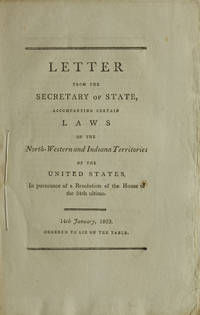
1802ref. 216710Washington D.C. 1802. First edition. 53 pp. 1 vols. 8vo. Sewn uncut. Fine. First edition. 53 pp. 1 vols. 8vo. Shaw and Shoemaker 3298 2 copies unknown books
ref. 44211Japan and Western Medicine. Oranda jin Geka ryoji no zu Dutch Surgery in Nagasaki. Original pen ink and watercolor drawing on light brown-toned silk with 4 vertical lines of Japanese characters in the upper left corner. Japan: late 18th or early 19th century. 483 x 363 mm. mounted as a scroll at a modern date on light grey silk backed with paper with a half-round hanging rail with braided ribbon attached at the top and a suspension bar at the foot measuring 914 x 443 mm. overall; preserved in a custom-made wooden box. A few tiny pinholes in upper corners of image but fine with the coloring fresh and bright. This striking image showing an amputation carried out by a Dutch surgeon in Japan was most likely painted in the late eighteenth or early nineteenth century during Japan's self-imposed period of national isolation. The hand-painted image is related but by no means identical to a Nagasaki woodblock print titled "Surgery by a Dutch Physician" one of many popular souvenir prints depicting scenes unique to Nagasaki which at the time was the sole point of contact between Japan and the outside world. See our reproduction of the print. It may be that our scroll is the original of the image; however it is also possible that both hand-painted and woodcut versions of the image were produced simultaneously. Western surgery came to Japan in the sixteenth and seventeenth centuries via the Portuguese who in 1543 became the first Europeans to make direct contact with Japan and the Dutch who became the only European nation allowed to trade with Japan after Japan's expulsion of the Portuguese in 1639. Surgeons attached to the Dutch East India Company established practices at the island of Dejima in Nagasaki Bay which led to the formation of several Japanese schools of surgery based on European methods. "This aspect of Western medicine known as K m -ry geka or 'Surgery of the Red-Haired' has had a profound effect on the development of surgical practice in Japan" Van Gulik p. 37. Van Gulik "Dutch surgery in Japan" in Red-Hair Medicine: Dutch-Japanese Medical Relations ed. Beukers et al. pp. 37-50. . unknown books
ref. 2852qsThe Marjorie Kinnan Rawlings Journal of Florida Literature 2009. Octavo paperbound stiff white illus. paper 143 pp. Quarter shaped tear to upper cover; otherwise Near-Fine. unknown books
ref. 2851qsThe Marjorie Kinnan Rawlings Journal of Florida Literature 2008. Octavo paperbound stiff white illus. paper 172 pp. Near-Fine. unknown books
ref. 2853qsThe Marjorie Kinnan Rawlings Journal of Florida Literature 2010. Octavo paperbound stiff white illus. paper 115 pp. Near-Fine. unknown books
1948ref. 90063scWestern Pennsylvania: A Friend of Pennsylvania 1948. Octavo stiff illus. stapled wrappers 32 pp. Near-Fine with slight age darkening to edges. Illustrated guide includes maps drawings of plants and wildlife of Western Pennsylvania. A Friend of Pennsylvania, 1948. unknown books
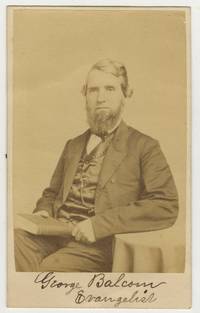
1866ref. BK0132Philadelphia: F. Gutekunst 1866. Carte-de-visite photograph 3 ½ x 2 ¼ inches on larger mount with Gutekunst's 704 & 706 Arch Street imprint and two-cent U.S. revenue stamp for playing cards on verso. Contemporary identification beneath image "George Balcom / Evangelist. Fine condition. A portrait of George Farnham Balcom 1823-1879 the New York Baptist evangelist whose itinerant ministry eventually took him west to Kansas and Nevada. Balcom grew up in Oxford New York entered the Baptist ministry at about thirty and became known particularly for evangelistic work in both speaking and singing. He conducted meetings and helped organize churches in New York Pennsylvania Ohio and the western states. Balcom moved west in 1870 settling near Cawker City Kansas. Local accounts credit him with preaching among the earliest sermons in Osborne County and describe his continued work establishing churches on the frontier. His western career also included a brief period in federal service as special Indian agent at Nevada's Pyramid Lake Reservation in late 1871 making him the first Baptist preacher in the state.1 The revenue stamp dates the portrait closely to the Civil War-era federal tax on photographs while Balcom's handwritten identification as an "Evangelist" places the image squarely within the itinerant phase of his career. An well-documented portrait of a nineteenth-century Baptist revivalist whose ministry extended from rural New York to the developing communities of the American West. . F. Gutekunst unknown books
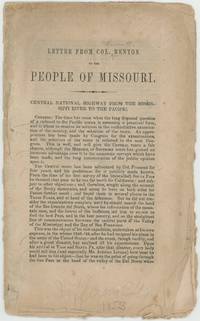
1853ref. BK0172Washington D.C. 1853. 24 pp. measuring 6 ½ x 10 inches. Stitched and untrimmed. Good with considerable wear and chipping at the edges some soiling and early pencil notations. Thomas Hart Benton's argument for a central transcontinental route issued as Congress was moving toward the government surveys that would dominate the Pacific railroad question during the next several years. Benton had been promoting a government-backed "central national highway" since 1849 running west from Missouri toward California. Writing to his former Missouri constituents on March 4 1853 Benton argues that the accumulated western explorations had already demonstrated the practicality of a central route. He gives particular attention to the country approaching the Rocky Mountains and to the search for a usable pass near the headwaters of the Arkansas and Rio Grande drawing heavily on the western travels of his son-in-law John C. Frémont. The final eight pages form an appendix bringing together evidence for the route. They include Frémont's 1850 letter to the Philadelphia Railroad Convention and more notably a statement made to Benton by the veteran trader and guide Antoine Leroux. Leroux recounts his early years in the West his association with the fur-trading expeditions of Ashley and Henry and his long residence at Taos. Graff describes this as the probable first printing of Leroux's statement. A useful piece of western railroad literature with substantial Frémont and New Mexico content published on the eve of the federal Pacific railroad surveys. Howes B368; Graff 270; Wagner-Camp 221; Sabin 4186. . unknown books
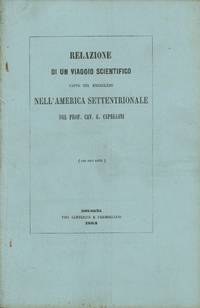
1864ref. BK0206Bologna: Tipi Gamberini e Parmeggiani 1864. 44 pp. 8vo. Original printed blue wrappers. Text in Italian. Issued with a folding map in fine condition. Contemporary bibliographies confirm the 44-page collation and map. Very good with light soiling and minor wear to wrappers. The first published account of Giovanni Capellini's scientific journey through North America in 1863 with particularly good material on Nebraska and the Missouri River frontier during the Civil War. Capellini sailed from Liverpool in August stopped at Halifax and continued to Boston and Cambridge where Louis Agassiz and Jules Marcou assisted his preparations. He then traveled through Canada and the Midwest before reaching St. Joseph Missouri and moving north by steamboat into Nebraska. At St. Joseph he found the region troubled by guerrillas and the city under martial law; before leaving he had to obtain permission from the military command to purchase arms and ammunition. From there he traveled aboard the Denver to Omaha and explored from Council Bluffs northward through Florence De Soto Tekamah Decatur Blackbird and the country around Sioux City before returning through Omaha Bellevue and Nebraska City. Capellini spent time among the Omaha and Ponca at Blackbird recording village names population figures chiefs houses clothing schooling at the Presbyterian mission and objects he acquired. He met the Omaha leaders La Flèche and Ga-he-gu-zhi-ga and describes the pressure of white settlement on the tribes calling them people "for whom civilization means the same thing as death." He also relates the displacement of Winnebago people along the Missouri and gives an account of the steamer Alone's difficult journey toward the upper river including Fort Pierre Fort Berthold Fort Union encounters with Native groups and freight intended for the new Idaho and Washington gold fields. . Tipi Gamberini e Parmeggiani unknown books
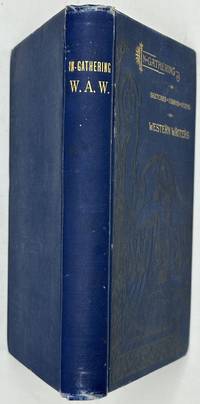
1892ref. 69017Cincinnati Ohio: Jones Brothers 1892. First edition. 12mo. 300 pp. Cover title: "In-Gathering of Sketches Essays Poems by Western Writers." Cover design by Mrs. E.S.L. Thompson. Illustrated with eleven portraits. Original blue cloth front hinge cracked. BAL 2993 Cawein. BAL 16593 Riley. Includes portraits of James Whitcomb Riley and Lew Wallace. ".third authorized collection of addresses essays poems and reports by the Western Association of Writers." With other contributions by John Clark Ridpath David Starr Jordan Eugene Ware plus numerous others. Evidently a large number of women writers were members of the association including Mary E. Cardwell Birdie Blye Virginia C. Meredith Minetta Taylor etc. Very scarce. Jones Brothers unknown books
1926ref. 14325Augusta GA: Commercial Printing Co 1926. 8vo. 32pp illus. Wraps. Very good. Promotional pamphlet. Commercial Printing Co unknown books
1965ref. RWILNEW16efHelios 1965. Very Good. Wilby Basil editor. New Dimensions April/May 1965. Volume 3 Number 13. Western Mark; Ratazzi Peter. Cheltenham Gloucestershire UK: Helios 1965. 60pp. 8vo. Pale blue stapled wraps. Book condition: Very good with slightly yellowed spine and lightly bumped edges. Contains articles How to Read the Tarot Occult Experiences of a Witch The Shadow and more. Helios paperback books
1930ref. 28350Baltimore: Western High School 1930. Soft Cover. Very Good. Soft Cover. 8vo. High school periodical. Pink side stapled paper wrappers with black title to front wrapper. Fading to edges. Interior is quite clean with illustrations throughout. 55 pages. BALT/060915. Western High School unknown books