Hinton, Harwood PAntiquariat.de

8 785 résultats
1977réf. 245604Published by Tuscon, University of Arizona Press, 1977. Broschiert
1977réf. 245605Published by Tuscon, University of Arizona Press, 1977. Broschiert
1977réf. 245606Published by Tuscon, University of Arizona Press, 1977. Broschiert
1976réf. 246112Published by Tuscon, University of Arizona Press, 1976.
1971réf. 245608Published by Tuscon, University of Arizona Press, 1971. Broschiert
1960réf. 99610Walter J. Black Publishers, Roslyn, New York, um 1960. 19,5 cm ; Leinen
1935102p. Penciled notations. 8vo. Original full cloth binding, gold lettered spine and front board. Hardbound. First Edition. Very good copy. A wonderful work in the history of modern philosphy and science. SCIENCE BOX 1
1982réf. 16844Oxford University Press, 1982. 250 Seiten 8°,OKart.
réf. 241805OUP Oxford, 2009 16,03 x 24,21 x 2,49 cm., 371 pp, Couverture rigide
réf. 51932257like new. unknown
2026réf. x-1009766708Cambridge University Press 2026. Hardcover. New. 80 pages. 6.00x0.25x9.00 inches. Cambridge University Press hardcover
18561st edition. Original peach colored printed wrappers, stitched, 88 pages. Singerman 1461. Cohen, prominent San Francisco lawyer, book collector, and leader of the Jewish community, was unjustly accused of embezzling funds which belonged to creditors of the firm of Adams & Co. , a banking house which had recently defaulted. The case involved transactions with the California Steam Navigation Company. In 1862 the case was dismissed and Cohen, who became chief counsel to the Central Pacific Railroad, was vindicated. His lawyer, Trenor W. Park, had moved from his native Vermont to California in 1852, where he was counsel to the Vigilance Committee and became involved with Fremont in the Mariposa Mine; Stanly was a North Carolina Congressman who had moved to San Francisco in the 1850's. II Harv. Law Cat. 644. Cowan 133. Greenwood 769. Rocq 8030. Cohen 13950. OCLC lists 16 copies worldwide. Wrappers and title page lightly foxed, Very Good Condition. (kh-5-61)
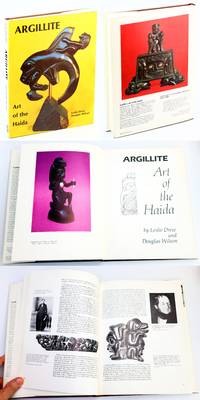
1980réf. 738j2908Canada: Hancock House Publishers Ltd. Fine in Very Good dust jacket. First Edition. Hardcover. "An ambitious yet thoroughly satisfying undertaking. This book. brings Haida carver and argillite carving out of their 'splendid isolation' and into the intellectual reach of all who would know Raven Eagle and the cool black slate that is their transformation." - Margaret Mitchell Camoson College. "This major project was researched and written by a master Haida argillite carver Douglas Wilson and journalist-historian Leslie Drew. Their photographs of more than 300 pieces reveal the progression of the art the consummate skill of the artists." - dust jacket. 313 semi-glossy pages profusely illustrated with black and white photography. Index bibliography footnotes chronology list of carvers past and present and list of museums with argillite holdings. Book very clean bright tight and unmarked with negligible wear. Light wear to complete dust jacket now in glossy new archival-grade protection. A lovely example.; 4to . 1980. 0888390378 . Hancock House Publishers Ltd. hardcover
réf. 13350réunion de 71 périodiques illustrés éditions ARTIMA Tourcoing. ARDANT -TIM L’AUDACE mensuel de 36 pages, récit complet, format 175x230mm. ARTIMA éditeur TOUCOING n°44 les pirates de Sangha octobre 1955. Dos renforcé. N°55 le monstre de la Brousse septembre 1956. N°72 Le lac maudit 1958. N°100 le solitaire aux herbes magique juin 1960. N°104 Trafic d’armes octobre 1960. OURAGAN mensuel de 36 pages, 230x175mm ARTIMA éditeur TOUCOING n°4 le cheval fantôme (une découpe au dernier plat) avril 1955 ; n°5 l’attaque de la caravane mai 1955. n°8 l’esprit du Brazos Août 1955 n°11 captif au roc f ‘enfer novembre 1955 ; n°26 cessez le feu février 1955 ; n°34 sur la route de Phoenix octobre 1957. HARDY Jack Sport mensuel de 36page format 230x175mm. n° 26 le diamant de Lady Bruce FULGOR mensuel de 36 pages, 230x175mm. n°3 la fiancée du Tsar juillet 1955 n°15 capitaine de bandits juillet 1956. RED CANYON mensuel de 36 pages, 230x175mm.n°7 l’homme sans passé septembre 1954 ; n°17 la caravane de l’espérance juillet 1955 (un manque angle inférieur droit du premier plat) n°21 la dernière balle novembre 1955 n°25 le lac San Carlos mars1956n° 35 Pacific sud janvier 1957 n°36 Pacific sud deuxième épisode février 1957 n°49 numéro spécial 68 pages ; L’homme du désert mars 1958. SIDERAL mensuel de 36 pages, 230x175mm. n°9 novembre 1958. N°14 n°25 mars 1960. TAROU fils de la jungle mensuel de 36 pages, 230x175mm. n°63 l’homme au masque de cire (2 exemplaires) n°69 les démons de la terre août 1959 TEMERAIRE mensuel de 36 pages, 230x175mm. n°3 la charge des képis blancs décembre 1958 (2 exemplaire) n°18 prisonniers des allemands mars 1960. N° 31 n° 35 n°37 TEMPEST mensuel de 36 pages, 230x175mm. n°11 MUMOKI le Sachem. Janvier 1956. VIGOR mensuel de 36 pages, 230x175mm. n°14 la preuve est faite février 1957 couverture fatiguée avec de petits manques. N°57 les délices de Capoue septembre 1958 n°59 les tireurs de la mort novembre 1958 n°82 la statue de la liberté n°94 ECLAIR mensuel de 36 pages, 230x175mm. n°3 le retour du gangster juillet 1957 (deux exemplaires) n° 6 un cas dangereux octobre 1957 n°7 coups de feu dans la montagne novembre 1957. n° 8 les jumeaux décembre 1957 DYNAMIC TONI CYCLONE mensuel de 36 pages, 230x175mm n°36 le diable de Guadalcanal octobre 1955 n° 46 numéro spécial vacances 8 récits complets, 68 pages ; juillet 1957 n°52 attaque à l’aube janvier 1957 n°56 commando dans la nui n° 89 moteur droit en feu n°97 un avion a été volé n°98 l’escadrille des cigognes n°100 chasse libre COSMOS Science fiction mensuel de 36 pages, 230x175mm n°22 les géants arrivent août 1958 n°23 planète en danger septembre 1958 n°24 géant building a disparu octobre 1958 n°25 colosse dans l’espace novembre 1958 n°26 les visiteurs de la quatrième dimension décembre 1958 n°27 Tempête dans l’espace janvier 1959. Numéros en reliure éditeur (légèrement maniée) les numéros sont en parfait état. COMMANDO mensuel de 36 pages, 230x175mm n°1 pousser des boutons octobre 1959 n°2 novembre 1959 n°3 décembre 1959 n°4 une cible mouvante janvier 1960 n°5 faucon rampant février 1960. SPOUTNIK Science fiction mensuel de 36 pages, 230x175mm n° 8 aqau cité sous marine juillet 1958 AVENTURES FILM mensuel de 36 pages, 230x175mm n°15 opération Neptune juin 1953 n°79 la piste interdite janvier 1959 ATOME KID Science fiction mensuel de 36 pages, 230x175mm n°5 le satellite ambulant mars 1957 n°31 le forteresse de l’espace mai 1959 AUDAX BILL TORNADE mensuel de 36 pages, 230x175mm n°23 la piste des loups septembre 1954 n°46 numéro spécial vacances 5 récits complets, 68 pages. N°53 Poney express diable noir AUDAX CHICO JUAREZ mensuel de 36 pages, 230x175mm n° 84 le secret du colporteur n°82 la statue indienne septembre 1959 AUDAX TEX BILL mensuel de 36 pages, 230x175mm n°86 La vengeance du bandit AVNTURES FICTION mensuel de 36 pages, 230x175mm n° 6 la guerre des gorilles contre la terre octobre 1958.n°17 le jour que la terre s’arrêta septembre 1959 AUDAX CHICO JUAREZ mensuel de 36 pages, 230x175mm n° 84 le secret du colporteur n°82 la statue indienne septembre 1959 AUDAX TEX BILL mensuel de 36 pages, 230x175mm n°86 La vengeance du bandit L'ensemble en bon état
1985réf. KFZZQ100264Asahi Newspaper Company 1985. Soft Cover. Fine. KFZZQ100264 Asahi Newspaper Company paperback
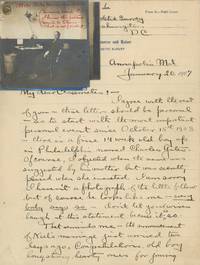
1940réf. List3440United States France and Germany 1940. Approximately 469 total items. Fifty-nine pieces of loose correspondence one with four photographs affixed. In large letter album approximately 199 pieces of written material: 118 pieces of incoming correspondence twenty-one drafts of outgoing correspondence and sixty other. 139 photographs: nine cabinet cards thirty-three smaller mounted or framed photos eleven CDVs or tintypes nineteen in small photo album sixty-six loose photographs and one real photo postcard. Eight pieces of loose miscellaneous written material totaling sixty-four pages; nine forms applications etc; forty-five clippings generally affixed to notebook pages; and ten pieces of unsorted ephemera. Written material generally dating from about 1891–1928. Photographic material and ephemera generally dating from about 1870s or earlier to 1943. Letter album with covers detached and damage to edges of paper very good plus; other material generally excellent. Overall very good to excellent. Charles Colt Yates 1868–1944 was born in Binghamton New York. He received a BS in Physics and an MS in Civil Engineering from the Case School of Applied Science now Case Western Reserve University before joining the US Coast and Geodetic Survey in 1892. Yates’ work with the USC&GS took him around the US and abroad; his work included observing the earth’s surface density in Hawaii; surveying Lake Pontchartrain the Alaska–Yukon border and the Aleutian Islands; surveying and ship-building in the Philippines and Hong Kong; and surveying the oyster bars in Maryland and Delaware. Offered here is a large collection of photographic and written material belonging to Yates. The photographs are almost entirely family shots. Subjects are generally identified verso by their initials and include Yates; his grandparents James Dennison Colt and Abigail Weber; his parents Walter Lloyd Yates and Charlotte Colt; and especially his brother Alonzo Colt Yates sister-in-law Elizabeth Deming and their children Evelyn and Lloyd Deming Yates. The written material relates to Yates’ work and includes incoming correspondence particularly work assignments sent by the Survey’s various superintendents; Yates’ drafts of outgoing correspondence; field expense forms—providing a look at the more quotidian activities of the Survey’s researchers—and departmental circulars; resumes and applications; notes and article drafts; and newspaper clippings. The latter generally relate to either the 1916 controversy around Woodrow Wilson’s scientific appointments particularly of E. Lester Jones or to the 1916 and 1928 Merchant Marine Acts. The merchant marine issue preoccupied Yates as several of his letters and articles concern the subject; other of his articles are an 1898 “Report on the Establishment of a Self Registering Tide Gauge at Morehead City N.C” and a 1914 report on oceanography. Early in his career Yates apparently wanted out of the Survey writing to several different people seeking a teaching position and explaining that his “desire to become a teacher and ultimately a professor is so great that I am willing to make a considerable sacrifice” in terms of pay July 16 1896. Of course there would have been upsides to leaving the Survey as working conditions at the time were far from ritzy; for instance fellow officer Alex S. Christie wrote of the employee at the Sandy Hook tidal station in New Jersey: “Where now located on the west side of this sand spit the observer is completely isolated and threatens to resign. He has no love for nature and no resources within himself. I could be very happy there.” July 26 1892 Similarly Superintendent William Ward Duffield attempted to convince Yates that the conditions on the Alaska-Yukon boundary survey were more tolerable than he might think: “It might pertinently be added here that the American Transportation and Trading Company has a number of stations on the Yukon and carries a large stock of goods including drugs etc. at points near the boundary. The country is better supplied with means of existence and communication than was supposed sometime ago.” February 29 1896 As references for a teaching position Yates offered his Case classmate and highly decorated electrical engineer Comfort Avery Adams then at Harvard and Case president Cady Staley. Yates corresponded occasionally with Staley including helping him with research by among other things giving him honest advice on the use of a theodolite: “From a personal experience: to approach a Vertical Circle without ever having seen one and having had it explained by a textbook is not only awkward but an embarrassing experience and perhaps even a disastrous experience when the proper approach of the level correction is reached.” February 24 1897 Another Case affiliate with whom Yates corresponded was Albert A. Michelson then at the University of Chicago. Michelson is best known for the 1887 Michelson-Morley experiment a test of the speed of light performed at Case with Edward W. Morley and the assistance of Comfort Adams then a student. Yates had sent Michelson an observation of some kind—though he did not save the draft of this outgoing letter—and Michelson responds with several pages of reasoning: “I scarcely think it likely that refraction is the cause of the color observed – but even if this were the case it would not help matters much. The angle subtended by the spectrum could certainly not be less than 10” if a consistent color could be appreciated . Nevertheless I would recommend that the color phenomenon be carefully observed and recorded – for it may throw light on other matters of importance – even tho not of immediate practical use.” March 8 1896 Yates also kept up with his Case classmates; several letter drafts in the archive are addressed “dear Classmates” and seem to be part of a semi-regular correspondence where the former classmates would update each other on their careers and lives though only Yates’ outgoing mail is represented. Yates writes a particularly interesting letter to his classmates describing his time in the Philippines and Hong Kong the surveying of which had become part of the USC&GS’s duties after the US assumed control of the territory: “I was just leaving for a surveying cruise along the south west coast of Samar Island the island General ‘Jakey’ Smith and brother officers made so famous by their approved ‘water cure’ and other ancient methods of obtaining information from the natives. We had an excellent Thanksgiving’s dinner in Jakey’s former residence the ‘bungalow’ at Tacloban and although many of his officers were still there I feel quite certain that water was not mentioned but their liquid method of obtaining information was probably even more effective. No doubt the natives of Samar are well subdued at least we judged so from the fact that when they saw any of our boats put off from the ship they immediately abandoned house and home to the old and crippled. Apparently Americans are to be trusted in reference to these two classes. Disappearing streaks of red skirts indicating retreating females were sometimes seen but our male ‘little brown brother’ was rarely discovered even on a run. This was quite a change from our previous experiences in other parts of the Philippines which had not received the benefit of the same intimate contact with our methods of civilization. In fact we were usually accompanied along the beach by a swarm of men women and children of all sizes and ages who though always polite and gentle were a nuisance sometimes through unintentionally getting in the way of our work.” October 15 1903 The “water cure” was a form of torture similar to waterboarding often used by American soldiers during the Philippine-American War. General Smith was infamous not for use of the “water cure” but for his orders during the Pacification of Samar to execute everyone over age ten and turn the island into a “howling wilderness”; during the campaign several thousand civilians were killed. Later Yates explained to his classmates that he had had a nervous breakdown while stationed in Asia following the death of his only child at five months old and was sent home January 20 1907. He was assigned to survey oyster fields for the Maryland Shell Fish Commission which he described as “surrounded by politicians as our work seems to be the political issue of the State”. In fact at this time Yates seems to have become more interested in politics especially the Merchant Marine acts mentioned earlier. He sent out his article titled “By-products and Relative Values of a Merchant Marine” to several potential publishers and also corresponded with Congressmen regarding the act including Jesse D. Price of Maryland Frank P. Woods of Iowa and Joshua W. Alexander of Missouri. He wrote to the latter who was the 1916 act’s sponsor: “If you succeed in passing the Bill you will deserve oceans of credit and even if you fail you will have gained the sincere admiration of those who have studied the subject and know the great aggregate of vested shipping interests both foreign and domestic which are fighting you so hard because they fear the results to their personal interest of the founding of a real American Marine which would be brought about by the passage of your Bill.” May 16 1916 Yates was also interested in the 1928 Act which concerned shipbuilding—having built ships for the Survey in Hong Kong and Wisconsin—and wrote an article that year giving suggestions for it. Otherwise the more recent contents of the archive are mainly ephemera of Yates’ brother diplomat Alonzo Colt Yates 1864–1950 including an ID card and passport. Overall a unique collection of an employee of the US government’s first and for a long time only scientific agency the archive provides a look at the agency’s activities at home and across the globe. It also provides some history of the early days of the Case School of Applied Science especially the activities of early alumni and faculty. unknown books
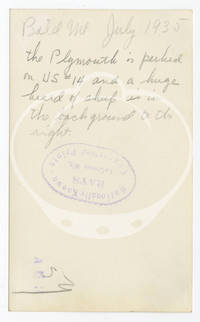
1935réf. 152267N.p.: N.p. 1935. Archive of 24 vernacular photographs documenting a 1935 summer road trip through the badlands of South Dakota Idaho and Wyoming. Each photograph with manuscript ink annotations identifying location to the margins and manuscript pencil annotations to the verso noting locations and dates along with the stamp of Rays photography studio in LaCrosse WI. Captured in the archive are various natural landmarks including Shoshone Canyon IXL Ranch and Bighorn Mountains in Wyoming Bald Mountain in Idaho and the Black Hills Badlands and Missouri River in South Dakota. Also included are a few photographs taken along US Route 14 one of the original US highways of 1926 an east-west route running 1398 miles. An alternately charming and chilling collection of Depression-era travel photography in the Midwest and Mountain West. 23 photographs 4.5 x 2.17 inches 1 photograph 3.5 x 2.75 inches. Generally Very Good plus some with light fading and age toning. N.p. unknown books
1940réf. List3440United States France and Germany 1940. Approximately 469 total items. Fifty-nine pieces of loose correspondence one with four photographs affixed. In large letter album approximately 199 pieces of written material: 118 pieces of incoming correspondence twenty-one drafts of outgoing correspondence and sixty other. 139 photographs: nine cabinet cards thirty-three smaller mounted or framed photos eleven CDVs or tintypes nineteen in small photo album sixty-six loose photographs and one real photo postcard. Eight pieces of loose miscellaneous written material totaling sixty-four pages; nine forms applications etc; forty-five clippings generally affixed to notebook pages; and ten pieces of unsorted ephemera. Written material generally dating from about 1891–1928. Photographic material and ephemera generally dating from about 1870s or earlier to 1943. Letter album with covers detached and damage to edges of paper very good plus; other material generally excellent. Overall very good to excellent. Charles Colt Yates 1868–1944 was born in Binghamton New York. He received a BS in Physics and an MS in Civil Engineering from the Case School of Applied Science now Case Western Reserve University before joining the US Coast and Geodetic Survey in 1892. Yates’ work with the USC&GS took him around the US and abroad; his work included observing the earth’s surface density in Hawaii; surveying Lake Pontchartrain the Alaska–Yukon border and the Aleutian Islands; surveying and ship-building in the Philippines and Hong Kong; and surveying the oyster bars in Maryland and Delaware. Offered here is a large collection of photographic and written material belonging to Yates. The photographs are almost entirely family shots. Subjects are generally identified verso by their initials and include Yates; his grandparents James Dennison Colt and Abigail Weber; his parents Walter Lloyd Yates and Charlotte Colt; and especially his brother Alonzo Colt Yates sister-in-law Elizabeth Deming and their children Evelyn and Lloyd Deming Yates. The written material relates to Yates’ work and includes incoming correspondence particularly work assignments sent by the Survey’s various superintendents; Yates’ drafts of outgoing correspondence; field expense forms—providing a look at the more quotidian activities of the Survey’s researchers—and departmental circulars; resumes and applications; notes and article drafts; and newspaper clippings. The latter generally relate to either the 1916 controversy around Woodrow Wilson’s scientific appointments particularly of E. Lester Jones or to the 1916 and 1928 Merchant Marine Acts. The merchant marine issue preoccupied Yates as several of his letters and articles concern the subject; other of his articles are an 1898 “Report on the Establishment of a Self Registering Tide Gauge at Morehead City N.C” and a 1914 report on oceanography. Early in his career Yates apparently wanted out of the Survey writing to several different people seeking a teaching position and explaining that his “desire to become a teacher and ultimately a professor is so great that I am willing to make a considerable sacrifice” in terms of pay July 16 1896. Of course there would have been upsides to leaving the Survey as working conditions at the time were far from ritzy; for instance fellow officer Alex S. Christie wrote of the employee at the Sandy Hook tidal station in New Jersey: “Where now located on the west side of this sand spit the observer is completely isolated and threatens to resign. He has no love for nature and no resources within himself. I could be very happy there.” July 26 1892 Similarly Superintendent William Ward Duffield attempted to convince Yates that the conditions on the Alaska-Yukon boundary survey were more tolerable than he might think: “It might pertinently be added here that the American Transportation and Trading Company has a number of stations on the Yukon and carries a large stock of goods including drugs etc. at points near the boundary. The country is better supplied with means of existence and communication than was supposed sometime ago.” February 29 1896 As references for a teaching position Yates offered his Case classmate and highly decorated electrical engineer Comfort Avery Adams then at Harvard and Case president Cady Staley. Yates corresponded occasionally with Staley including helping him with research by among other things giving him honest advice on the use of a theodolite: “From a personal experience: to approach a Vertical Circle without ever having seen one and having had it explained by a textbook is not only awkward but an embarrassing experience and perhaps even a disastrous experience when the proper approach of the level correction is reached.” February 24 1897 Another Case affiliate with whom Yates corresponded was Albert A. Michelson then at the University of Chicago. Michelson is best known for the 1887 Michelson-Morley experiment a test of the speed of light performed at Case with Edward W. Morley and the assistance of Comfort Adams then a student. Yates had sent Michelson an observation of some kind—though he did not save the draft of this outgoing letter—and Michelson responds with several pages of reasoning: “I scarcely think it likely that refraction is the cause of the color observed – but even if this were the case it would not help matters much. The angle subtended by the spectrum could certainly not be less than 10” if a consistent color could be appreciated . Nevertheless I would recommend that the color phenomenon be carefully observed and recorded – for it may throw light on other matters of importance – even tho not of immediate practical use.” March 8 1896 Yates also kept up with his Case classmates; several letter drafts in the archive are addressed “dear Classmates” and seem to be part of a semi-regular correspondence where the former classmates would update each other on their careers and lives though only Yates’ outgoing mail is represented. Yates writes a particularly interesting letter to his classmates describing his time in the Philippines and Hong Kong the surveying of which had become part of the USC&GS’s duties after the US assumed control of the territory: “I was just leaving for a surveying cruise along the south west coast of Samar Island the island General ‘Jakey’ Smith and brother officers made so famous by their approved ‘water cure’ and other ancient methods of obtaining information from the natives. We had an excellent Thanksgiving’s dinner in Jakey’s former residence the ‘bungalow’ at Tacloban and although many of his officers were still there I feel quite certain that water was not mentioned but their liquid method of obtaining information was probably even more effective. No doubt the natives of Samar are well subdued at least we judged so from the fact that when they saw any of our boats put off from the ship they immediately abandoned house and home to the old and crippled. Apparently Americans are to be trusted in reference to these two classes. Disappearing streaks of red skirts indicating retreating females were sometimes seen but our male ‘little brown brother’ was rarely discovered even on a run. This was quite a change from our previous experiences in other parts of the Philippines which had not received the benefit of the same intimate contact with our methods of civilization. In fact we were usually accompanied along the beach by a swarm of men women and children of all sizes and ages who though always polite and gentle were a nuisance sometimes through unintentionally getting in the way of our work.” October 15 1903 The “water cure” was a form of torture similar to waterboarding often used by American soldiers during the Philippine-American War. General Smith was infamous not for use of the “water cure” but for his orders during the Pacification of Samar to execute everyone over age ten and turn the island into a “howling wilderness”; during the campaign several thousand civilians were killed. Later Yates explained to his classmates that he had had a nervous breakdown while stationed in Asia following the death of his only child at five months old and was sent home January 20 1907. He was assigned to survey oyster fields for the Maryland Shell Fish Commission which he described as “surrounded by politicians as our work seems to be the political issue of the State”. In fact at this time Yates seems to have become more interested in politics especially the Merchant Marine acts mentioned earlier. He sent out his article titled “By-products and Relative Values of a Merchant Marine” to several potential publishers and also corresponded with Congressmen regarding the act including Jesse D. Price of Maryland Frank P. Woods of Iowa and Joshua W. Alexander of Missouri. He wrote to the latter who was the 1916 act’s sponsor: “If you succeed in passing the Bill you will deserve oceans of credit and even if you fail you will have gained the sincere admiration of those who have studied the subject and know the great aggregate of vested shipping interests both foreign and domestic which are fighting you so hard because they fear the results to their personal interest of the founding of a real American Marine which would be brought about by the passage of your Bill.” May 16 1916 Yates was also interested in the 1928 Act which concerned shipbuilding—having built ships for the Survey in Hong Kong and Wisconsin—and wrote an article that year giving suggestions for it. Otherwise the more recent contents of the archive are mainly ephemera of Yates’ brother diplomat Alonzo Colt Yates 1864–1950 including an ID card and passport. Overall a unique collection of an employee of the US government’s first and for a long time only scientific agency the archive provides a look at the agency’s activities at home and across the globe. It also provides some history of the early days of the Case School of Applied Science especially the activities of early alumni and faculty. unknown
1935réf. 152267N.p.: N.p. 1935. Archive of 24 vernacular photographs documenting a 1935 summer road trip through the badlands of South Dakota Idaho and Wyoming. Each photograph with manuscript ink annotations identifying location to the margins and manuscript pencil annotations to the verso noting locations and dates along with the stamp of Rays photography studio in LaCrosse WI. Captured in the archive are various natural landmarks including Shoshone Canyon IXL Ranch and Bighorn Mountains in Wyoming Bald Mountain in Idaho and the Black Hills Badlands and Missouri River in South Dakota. Also included are a few photographs taken along US Route 14 one of the original US highways of 1926 an east-west route running 1398 miles. An alternately charming and chilling collection of Depression-era travel photography in the Midwest and Mountain West. 23 photographs 4.5 x 2.17 inches 1 photograph 3.5 x 2.75 inches. Generally Very Good plus some with light fading and age toning. N.p. unknown
réf. 64515, Brepols, 2022 Paperback, xii + 180 pages, Size:216 x 280 mm, Illustrations:142 b/w, 4 col., 1 tables b/w., 2 maps b/w, Language: English. ISBN 9782503600185.
2006Mm 240x320 "Architects and Studies". As new - come nuovo. Volume in copertina rigida originale, 130 pagine profusamente illustrate, perlopiù a colori, nel testo in lingua inglese e francese - english-french texts. Spedizione in 24 ore dalla conferma dell'ordine.
1991Very Good English Paperback. Pbo. Oblong small 4to. (19 x 27 cm). In English and Turkish. [6], 92 p., 100 numerous b/w plts. First Edition. Architecture, form and geometry.= Mimarlik, form ve geometri. Contents; Introduction.; he basic forms of space geometry.; The pure or processed use of basic forms.; Deductions / diminutions in the processing of basic forms., Lateral decutions, Deductions from the top, Comprehensive deductions.; Additions in the processing of basic forms. Lateral additions, Additions onto the top, Combined additions.; The combined application of deductions and additions. Lateral applications, Top surface applications, Comprehensive applications.; Division of the basic forms. Division without deforming the basic form, The deformation of the basic form.; The integration of basic forms. Attaching, Linking, Interlocking.; Organizational approaches in the use of basic forms. Nodal organizations, Clustered organizations, Linear organizations, Enveloping organizations, Radial organizations, Branched organizations, Gridiron organizations.
2010New English Paperback. Pbo. Roy. 8vo. (24 x 16 cm). In English and Turkish. 104 p., b/w ills. Second Edition. Architecture, form and geometry.= Mimarlik, form ve geometri. Contents; Introduction.; he basic forms of space geometry.; The pure or processed use of basic forms.; Deductions / diminutions in the processing of basic forms., Lateral decutions, Deductions from the top, Comprehensive deductions.; Additions in the processing of basic forms. Lateral additions, Additions onto the top, Combined additions.; The combined application of deductions and additions. Lateral applications, Top surface applications, Comprehensive applications.; Division of the basic forms. Division without deforming the basic form, The deformation of the basic form.; The integration of basic forms. Attaching, Linking, Interlocking.; Organizational approaches in the use of basic forms. Nodal organizations, Clustered organizations, Linear organizations, Enveloping organizations, Radial organizations, Branched organizations, Gridiron organizations.
réf. 65458, Brepols, 2021 Paperback, xviii + 253 pages, Size:216 x 280 mm, Illustrations:90 b/w, Language: English. ISBN 9782503583969.
réf. 64890, Brepols, 2022 Paperback, 2 vols, xiv + 446 pages, Size:216 x 280 mm, Illustrations:371 b/w, 842 col., 15 tables b/w., 1 tables col., 3 maps color, Language: English. ISBN 9782503596662.