Eisenstein, Bernice & Robert Jan van Pelt & Michael Mitchell & Eric BeckRubin & Maia-Mari SutnikBiblio.com
578 resultados
2015ref. 111344Gallery. New. Hardcover. FREE UPGRADE to Courier/Priority Shipping Upon Request - IN STOCK AND IMMEDIATELY AVAILABLE FOR SHIPMENT - Flawless copy brand new pristine never opened - -- with a bonus offer-- . 2015. 0300207220 . Gallery hardcover
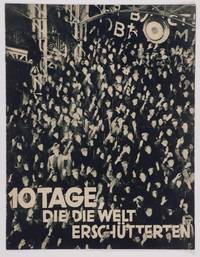
1928ref. 54894Berlin: Film-Kurier/ Prometheus-Film 1928. First edition. Softcover. vg- to near fine. Quarto 11 3/4 x 9". 8pp. Original photo-illustrated wraps with white lettering on cover protected by modern mylar. A scarce issue of Illustrierter Film-Kurier the of the photo-illustrated promotional supplement to the German weekly Film-Kurier issued to coincide with the Berlin premiere of the influential Soviet film "October: Ten Days That Shook The World" directed by Sergei Eisenstein and Grigori Aleksandrov. Profusely illustrated throughout with fine b/w photogravure images showing striking scenes from the film. Limited crew and studio credits on the interior front cover with text in German. The film which depicts the 1918 October Revolution had a screenplay by developed by Eisenstein and Alexandrow based on John Reed's book of the same title 1919. Through his work in the film Sergei Eisenstein was able to further develop and refine his technique and theory montage. The film was produced by Sovkino in Russian and distributed in Germany by Prometheus-Film having its German premiere in April of 1928. Wrappers with minor to light rubbing to extremities. Light folding creases. Library ink stamp at the top of the back cover. Wrappers in very good- interior in very good to near fine condition overall. Protected in modern mylar. Quite scarce. Alternate title: 10 Tage Die Die Welt Erschütterten. Film-Kurier/ Prometheus-Film unknown
ref. BN676685Arche Literatur Verlag AG. Vom Theater zum Film 'Film Form' 'Film Sense' Sammlung Horizont Vom Theater zum Film 'Film Form' 'Film Sense' Sammlung Horizont Pörtner Marlis und M Eisenstein Serge Arche Literatur Verlag AG unknown
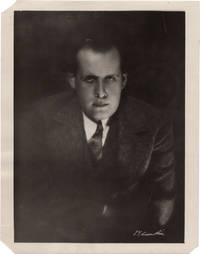
1928ref. 159783Beverly Hills CA: United Artists 1928. Vintage portrait photograph of Russian director Sergei Eisenstein circa 1928. Printed mimeo snipe affixed to the verso noting Eisenstein as having secured a contract with Joseph M. Schenck President of United Artists. United Artists stars Douglas Fairbanks and Mary Pickford traveled to Moscow after seeing Eisenstein's acclaimed 1925 film "Battleship Potemkin" in Berlin. Fairbanks offered the director a contract an invitation renewed a year later by Schenck. After visiting Hollywood the director would sign a contract with Paramount with several projects slated for production including adaptations of H.G. Wells' "War of the Worlds" and Theodore Dreiser's "An American Tragedy." Ultimately however no films would be made the result of public pressure against Eisenstein's Communist politics. On October 23 1930 by "mutual consent" Paramount and Eisenstein declared their contract null and void ending the director's short-lived career in American cinema. 8 x 10 inches. Very Good plus slightly creased with chips at three corners. United Artists unknown
ref. SKB-17767n.p.: Privately published by Larry Jordan 1959. Oblong 16mo. Sewn in brown paper covers. Frontis drawing by Sergei Eisenstein. Limited to 100 copies handprinted by Larry Jordan. Features 31 mounted gelatin silver print movie stills from Sergei Eisenstein's film "Ivan the Terrible." Jordan was among the preeminent underground filmmakers of the period and part of Berman's circle of artists and writers that included Bruce Conner Jess Robert Duncan Philip Lamantia and others. Eisenstein was the greatest Russian movie director and "Ivan the Terrible" was his last film. Cover reattached and a bit toned else fine 4" x 5". Rare. n.p.: Privately published by Larry Jordan, [1959]. unknown
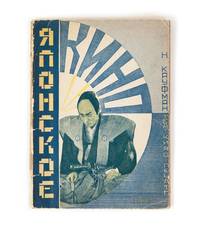
1929ref. F-40Russian constructivist advertising booklet with photomontage cover. There is an autograph on the title which by the nature of the handwriting can be identified as belonging to the famous director Sergei Eisenstein who wrote the afterword to the book. First edition of the book. The author is a film critic Naum Osipovich Kaufman. In the form of an afterword on 20 pages the article by Sergei Mikhailovich Eisenstein 1898-1948 "Behind the Scenes" is published. Contents: Preface "The Spectator" Ginza Street. Jin Tan. Asakusa. Cinema "Denki-Kan" Plot Historical films "Jidai-Geki". Adventurous films "Chambara". Modern films "Gendai-Geki" Production "Nikkatsu" and "Sociku" Eisenstein. Behind the scenes. Index of drawings: 20 illustrations including 16 full-page and 4 in the text in Eisenstein's article. Sergei Mikhailovich Eisenstein 1898 Riga- 1948 Moscow was a Soviet theater and film director artist screenwriter art theorist and teacher. Author of fundamental works on the theory of cinema. Thanks to the film "Battleship Potemkin" his name became synonymous with Soviet cinema. In 1958 as a result of a survey of film critics from 26 countries at the World Exhibition in Brussels "Battleship Potemkin" was recognized as "the best film of all time". Tea-Kino-Pechat paperback
ref. 13163Paris, Editions du Carrefour, 1929-1931. 8 volumes in-4, brochés (dos passés, petit manque à la couverture du vol. 4). / Eight 4to volumes, softcovers (sunned backs, one minute lack of paper on the cover of vol. 4).
ref. BN97435Proceedings of the Fourth International Conference on Numerical Methods in Geomechanics Edmonton Canada May 31 - June 4 1982. Proceedings of the Fourth International Conference on Numerical Methods in Geomechanics Edmonton Canada May 31 - June 4 1982. unknown
1995ref. BN126419Okt 18 1995. 1995. Softcover. Oeuvrespar S.M. Eisenstein Tome 2: La Non-indifférente nature Oeuvrespar S.M. Eisenstein Tome 2: La Non-indifférente nature Sergueï Eisenstein Okt 18 paperback
1992ref. BN129093Complexe 1992. 1992. Softcover. Cinematisme : peinture et cinema : textes inédits Editions Complètes Cinematisme : peinture et cinema : textes inédits Editions Complètes Eisenstein S.M. Complexe paperback
1844ref. 48885Berlin, G. Reimer, 1844. 4to. In contemporary half cloth. In ""Journal für die reine und angewandte Mathematik"", 27. band, Heft 1-4, 1844. Entire volume 27 offered. A small library stamp to lower part of p. 1 and a white label pasted on to upper part of spine. Light occassional brownspotting, otherwise fine and clean.
1844ref. 48885Berlin G. Reimer 1844. 4to. In contemporary half cloth. In "Journal für die reine und angewandte Mathematik" 27. band Heft 1-4 1844. Entire volume 27 offered. A small library stamp to lower part of p. 1 and a white label pasted on to upper part of spine. Light occassional brownspotting otherwise fine and clean. First printing of these influential papers by the German mathematics prodigy Eisenstein. Even though he died prematurely at the age of 29 he managed to prove Cubic reciprocity presented in the present papers biquadratic reciprocity Quartic reciprocity to be imprisoned by the Prussian army for revolutionary activities in Berlin and making Gauss state that: "There have been only three epoch-making mathematicians: Archimedes Newton and Eisenstein". Alexander von Humboldt then 83 accompanied Eisenstein's remains to the cemetery. The papers presented in the present issue is among his most prominent and made him famous throughout the mathematical world. James Driven to innovate P. 88. "The twenty-seventh the present and most extensive and twenty-eighth volumes of Crelle's Journal published in 1844 contained twenty-five contributions by Eisenstein. These testimonials to his almost unbelievable explosively dynamic productivity rocketed him to fame throughout the mathematical world. They dealt primarily with quadratic and cubic forms the reciprocity theorem for cubic residues fundamental theorems for quadratic and biquadratic residues cyclotomy and forms of the third degree plus some notes on elliptic and Abelian transcendentals. Gauss to whom he had sent some of his writings praised them very highly and looked forward with pleasure to an announced visit. In June 1844 carrying a glowing letter of recommendation from Humboldt Eisenstein went off to see Gauss. He stayed in Göttingen fourteen days. In the course of the visit he won the high respect of the "prince of mathematicians" whom he had revered all his life. The sojourn in Göttingen was important to Eisenstein for another reason: he became friends with Moritz A. Stern-the only lasting friendship he ever made. While the two were in continual correspondence on scientific matters even Stern proved unable to dispel the melancholy that increasingly held Eisenstein in its grip. Even the sensational recognition that came to him while he was still only a third-semester student failed to brighten Eisenstein's spirits more than fleetingly. In February 1845 at the instance of Ernst E. Kummer who was acting on a suggestion from Jacobi possibly inspired by Humboldt Eisenstein was awarded an honorary doctorate in philosophy by the School of Philosophy of the University of Breslau.Eisenstein soon became the subject of legend and the early literature about him is full of errors. His treatises were written at a time when only Gauss Cauchy and Dirichlet had any conception of what a completely rigorous mathematical proof was. Even a man like Jacobi often admitted that his own work sometimes lacked the necessary rigor and self-evidence of methods and proofs." DSB. hardcover
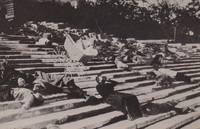
1925ref. 168469N.p.: N.p. 1925. Nine reference photographs from the 1925 Soviet silent film seven borderless and two bordered struck and issued by Cinémathèque Française circa 1936. All seven borderless photographs with the stamp of Archives Cinémathèque Française on the verso. A dramatization of a real-life mutiny which occurred on the Russian battleship Potemkin in 1905. The film's violence led to it being banned in West Germany and the UK until 1954 and even after that given an X rating until 1978. It was shown in a much-edited form in East Germany though the US premiere in December 1926 was shown unedited. A written introduction by Leon Trotsky at the beginning of the film was cut from later Soviet prints due to Trotsky running afoul of Stalin. The film's famous sequence showing a massacre by Tsarist soldiers of civilians on the Odessa Steps is considered the first example of a montage sequence in cinema. All photogaphs 5 x 3.5 inches. Generally Near Fine. BFI 1494. Godard Histoires du cinema. Rosenbaum 1000. N.p. unknown
2009ref. DADAX1594516596Routledge 2009-05-30. 1. hardcover. New. 6.25x1.00x9.00. Buy with confidence. Excellent Customer Service & Return policy. Routledge hardcover
1844ref. 45139Berlin, G. Reimer, 1844. 4to. In ""Journal für die reine und angewandte Mathematik, 28 Band, 1 Heft, 1844"". In the original printed wrappers, without backstrip. Fine and clean. [Eisenstein:] Pp. 28-35" Pp. 36-43 Pp. 44-48 Pp. 49-52" Pp. 53-67. [Entire issue: IV, 96, (2) pp. + 2 folded plates.].
1844ref. 45139Berlin G. Reimer 1844. 4to. In "Journal für die reine und angewandte Mathematik 28 Band 1 Heft 1844". In the original printed wrappers without backstrip. Fine and clean. Eisenstein: Pp. 28-35; Pp. 36-43; Pp. 44-48; Pp. 49-52; Pp. 53-67. Entire issue: IV 96 2 pp. 2 folded plates. First printing of six exceedingly influential papers by the German mathematics prodigy Eisenstein. Even though he died prematurely at the age of 29 he managed to prove biquadratic reciprocity Quartic reciprocity Presented in the present: "Lois de réciprocité" Cubic reciprocity Presented in the present: "Nachtrag zum cubischen Reciprocitätssatze." to be imprisoned by the Prussian army for revolutionary activities in Berlin and making Gauss state that: "There have been only three epoch-making mathematicians: Archimedes Newton and Eisenstein". Alexander von Humboldt then 83 accompanied Eisenstein's remains to the cemetery. The papers presented in the present issue is among his most prominent and made him famous throughout the mathematical world. James Driven to innovate P. 88. "The twenty-seventh and twenty-eighth volumes of Crelle's Journal published in 1844 contained twenty-five contributions by Eisenstein. These testimonials to his almost unbelievable explosively dynamic productivity rocketed him to fame throughout the mathematical world. They dealt primarily with quadratic and cubic forms the reciprocity theorem for cubic residues fundamental theorems for quadratic and biquadratic residues cyclotomy and forms of the third degree plus some notes on elliptic and Abelian transcendentals. Gauss to whom he had sent some of his writings praised them very highly and looked forward with pleasure to an announced visit. In June 1844 carrying a glowing letter of recommendation from Humboldt Eisenstein went off to see Gauss. He stayed in Göttingen fourteen days. In the course of the visit he won the high respect of the "prince of mathematicians" whom he had revered all his life. The sojourn in Göttingen was important to Eisenstein for another reason: he became friends with Moritz A. Stern-the only lasting friendship he ever made. While the two were in continual correspondence on scientific matters even Stern proved unable to dispel the melancholy that increasingly held Eisenstein in its grip. Even the sensational recognition that came to him while he was still only a third-semester student failed to brighten Eisenstein's spirits more than fleetingly. In February 1845 at the instance of Ernst E. Kummer who was acting on a suggestion from Jacobi possibly inspired by Humboldt Eisenstein was awarded an honorary doctorate in philosophy by the School of Philosophy of the University of Breslau.Eisenstein soon became the subject of legend and the early literature about him is full of errors. His treatises were written at a time when only Gauss Cauchy and Dirichlet had any conception of what a completely rigorous mathematical proof was. Even a man like Jacobi often admitted that his own work sometimes lacked the necessary rigor and self-evidence of methods and proofs." DSB unknown
ref. BN264615Klima Klima Charles Eisenstein unknown
ref. Bloomsbury-9781848134195Zed Books. Hardback. New. 224 pages Zed Books hardcover
ref. Bloomsbury-9781848134195Zed Books. Hardback. New. 224 pages Zed Books hardcover
1850ref. 47093Berlin, G. Reimer, 1850. 4to. Bound in later marbled wrappers, as extracted from ""Journal für die reine und angewandte Mathematik, 28 Band, 4. Heft, 1844"". Very fine and clean. Pp. 160-179" Pp. 224-274 Pp. 275-287 [Entire issue: 289-380 + 2 folded plates].
1850ref. 47093Berlin G. Reimer 1850. 4to. Bound in later marbled wrappers as extracted from "Journal für die reine und angewandte Mathematik 28 Band 4. Heft 1844". Very fine and clean. Pp. 160-179; Pp. 224-274; Pp. 275-287 Entire issue: 289-380 2 folded plates. First publication of lemniscate function and Eisenstein's Criterion one of the best known irreducibility criteria of polynomials. It is often seen referred to as the Schönemann-Eisenstein. Euler had introduced and studied the arc length of the lemniscate in the 18th century this work laying the ground work for the later development of elliptic functions. The lemniscate function expresses the parameter of the lemnicate in terms of its arc-length. It can be extended to complex values of the parameter and it then makes sense to ask for the points which divide the lemniscate into m equal parts where m is a Gaussian integer a complex number. Abel had shown that the determination of these points reduced to finding the roots of a certain polynomial equation. A crucial point in Eisenstein's extension of Abel's work described in the present papers was to prove that this polynomial is irreducible. Eisenstein developed his eponymous criterion to establish this although today it is most familiar when applied to the more elementary case of a polynomial with ordinary integer coefficients. unknown
1968ref. 3115550London: Dennis Dobson Ltd. Fine in Fine dust jacket. 1968. First Edition; First Printing. Hardcover. First British edition. SIGNED by Jay Leyda with comment on front end-paper. Mr. Leyda has initialed the front jacket flap noting the cover photo was taken by him. From the library of noted producer/director Fletcher Markle with his bookplate on front end-paper. Fine in fine dust jacket uncommon signed by Leyda. ; 5 3/4" x 7 3/4"; 220 pages . Dennis Dobson Ltd. hardcover
2026ref. x-1041332475Taylor & Francis Ltd 2026. Hardcover. New. 284 pages. 6.38x0.83x9.45 inches. Taylor & Francis Ltd hardcover
2012ref. x-0415625378Routledge 2012. Hardcover. New. 1st edition. 207 pages. 9.50x6.25x0.75 inches. Routledge hardcover
ref. ANAIS-0521220440Cambridge University Press. hardcover. Good. 9.5X6.5X1.5. Buy with confidence. Excellent Customer Service & Return policy. Cambridge University Press hardcover