578 risultati
1847rif. 9870504Reimer Berlino 1847. Mit Einer Figurentafel. This is an ex-library book and may have the usual library/used-book markings inside.This book has hardback covers. Clean from markings. In poor condition suitable as a reading copy. No dust jacket. Large quarter leather binding. Marbled boards scuffed and shelfworn. Leather backstrip and corners are faded. Some tears on backstrip. Foxing throughout. Please note the Image in this listing is a stock photo and may not match the covers of the actual item950grams ISBN: Reimer, Berlino hardcover
2026rif. x-1788921283Multilingual Matters 2026. Hardcover. New. 392 pages. 9.65x6.86x9.65 inches. Multilingual Matters hardcover

rif. 2527Organe central de l’Union internationale des écrivains révolutionnaire, Edition d’Etat, Moscou, Leningrad, 1931.
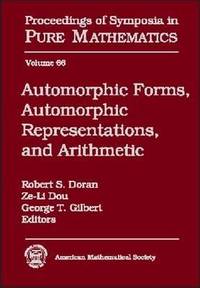
1999rif. __0821806599Amer Mathematical Society 1999. Hardcover. New. 608 pages. 10.25x7.00x1.75 inches. Amer Mathematical Society hardcover
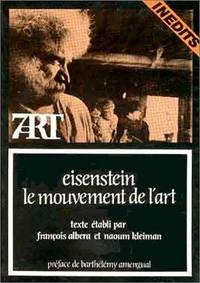
1986rif. BN172609CERF 1986. 1986. Softcover. Le Mouvement de l'art Le Mouvement de l'art Sergueï Eisenstein CERF paperback
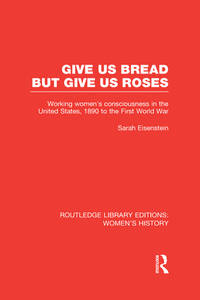
rif. 637424805Taylor & Francis Group . Hardback. New. pp. 216 1st Edition Taylor & Francis Group hardcover
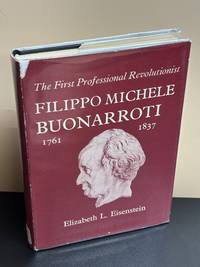
rif. 11550Cambridge MA: Harvard University Press 1959. First Edition. Hardcover 205 pages. Very Good/Good. Dust jacket clipped inside front panel with some edge wear fading and chipping but mostly in good condition in mylar protector. Text block clean. Binding is sound and tight minimal shelf wear text unmarked. Gilding on outer spine. Age wear and light soiling to text block. rare in this condition. Harvard University Press hardcover
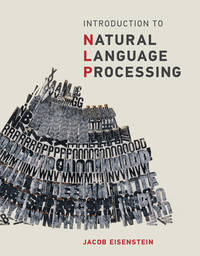
2019rif. Adhya-9780262042840MIT PRESS 2019. HB. New. MIT PRESS hardcover
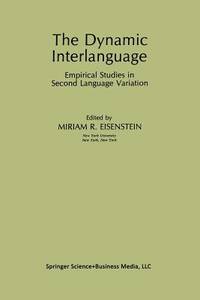
rif. 6509060Springer . Hardback. New. pp. 268 Springer hardcover
2013rif. x-1489909028Springer 2013. Paperback. New. reprint edition. 341 pages. 9.26x6.11x0.78 inches. Springer paperback
rif. 697852343Springer . Papeback. New. pp. 264 Springer unknown
1995rif. BN549963Essen : Verl. Die Blaue Eule 1995. 1995. Constantin Brunners Philosophie in ihrem Verhältnis zu Spinoza Kant und Hegel Brunner im Gespräch Band 2 Hrsg. von Jürgen Stenzel und Hans Goetz Constantin Brunners Philosophie in ihrem Verhältnis zu Spinoza Kant und Hegel Brunner im Gespräch Band 2 Hrsg. von Jürgen Stenzel und Hans Goetz Israel Eisenstein Essen : Verl. Die Blaue Eule unknown
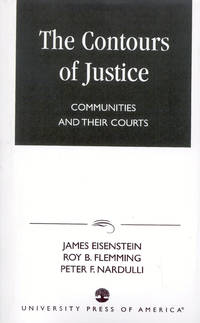
rif. Bloomsbury-9780761814061University Press of America. Paperback. New. 336 pages University Press of America paperback
1988rif. 006479Cambridge University Press 1988. 1st Edition 1st Printing. Hardcover. Very Good/Very Good. 428pp. DJ: Very Good w/ minute edge wears. The Book: Very Good w/ ex-owner's name Gerard Malanga poet & photographer date & place written on top of front flyleaf. Cambridge University Press hardcover
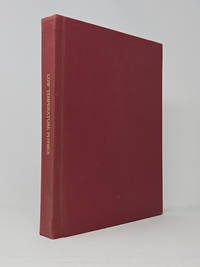
1950rif. 628488Madison Wisconsin: s.n. 1950. 241 numbered leaves appendices. 28 x 22 cm. Library style binding with red buckram covered boards and gilt lettering to spine mimeographed text printed on rectos of leaves. Very faint sunning and rubbing to spine. No other visible wear or damage to book. Binding firm. According to the preface written by Eisenstein these notes were prepared for the students in his course on theoretical aspects of low-temperature physics at the University of Wisconsin Madison. Eisenstein taught at UWM after receiving his Ph.D in physics from Harvard in 1948 and later went on to teach at Pennsylvania State University and then George Washington University. OCLC locates only two physical copies in holdings worldwide. Hard Cover. Very Good. s.n. Hardcover
rif. 64301307New York University Press NYU Press . Hardback. New. pp. 214 New York University Press NYU Press hardcover
1989rif. DADAX0306431742Springer 1989-09-30. 1989. hardcover. New. 6.40x1.17x9.38. Buy with confidence. Excellent Customer Service & Return policy. Springer hardcover
1846rif. 45142Berlin, G. Reimer, 1846. 4to. In ""Journal für die reine und angewandte Mathematik, 33 Band, 1. Heft, 1846"". In the original printed wrappers, without backstrip. Fine and clean. Last leaf with repair. [Eisenstein:] Pp. 59-70"" Pp. 71-88. [Entire issue: IV, 92, (2) + 2 plates.].
1844rif. 45140Berlin, G. Reimer, 1844. 4to. In ""Journal für die reine und angewandte Mathematik, 28 Band, 3. Heft, 1844"". In the original printed wrappers, without backstrip. Last leaf with repair. Fine and clean. [Eisenstein:] Pp. 223-245"" Pp. 246-247. [Entire issue: 193-288, (2), + two folded plates.]
1846rif. 45142Berlin G. Reimer 1846. 4to. In "Journal für die reine und angewandte Mathematik 33 Band 1. Heft 1846". In the original printed wrappers without backstrip. Fine and clean. Last leaf with repair. Eisenstein: Pp. 59-70; Pp. 71-88. Entire issue: IV 92 2 2 plates. First printing of two papers by Eisenstein one of them Beiträge zur Theorie. being the first of his 1846-47-period where he mainly occupied himself with the theory of elliptic functions.Even though the German mathematics prodigy Eisenstein's died prematurely at the age of 29 he managed to prove biquadratic reciprocity Quartic reciprocity Cubic reciprocity to be imprisoned by the Prussian army for revolutionary activities in Berlin and making Gauss state that: "There have been only three epoch-making mathematicians: Archimedes Newton and Eisenstein". Alexander von Humboldt then 83 accompanied Eisenstein's remains to the cemetery. The papers presented in the present issue is among his most prominent and made him famous throughout the mathematical world. James Driven to innovate P. 88. The issue also contain papers by famous contemporary mathematicians such as: C. G J. Jacobi A. Cayley Dirichlet and J. Steiner."Eisenstein soon became the subject of legend and the early literature about him is full of errors. His treatises were written at a time when only Gauss Cauchy and Dirichlet had any conception of what a completely rigorous mathematical proof was. Even a man like Jacobi often admitted that his own work sometimes lacked the necessary rigor and self-evidence of methods and proofs." DSB unknown
1844rif. 45140Berlin G. Reimer 1844. 4to. In "Journal für die reine und angewandte Mathematik 28 Band 3. Heft 1844". In the original printed wrappers without backstrip. Last leaf with repair. Fine and clean. Eisenstein: Pp. 223-245; Pp. 246-247. Entire issue: 193-288 2 two folded plates. First printing of two important papers by the German mathematics prodigy Eisenstein. Even though he died prematurely at the age of 29 he managed to prove biquadratic reciprocity Quartic reciprocity Cubic reciprocity to be imprisoned by the Prussian army for revolutionary activities in Berlin and making Gauss state that: "There have been only three epoch-making mathematicians: Archimedes Newton and Eisenstein". Alexander von Humboldt then 83 accompanied Eisenstein's remains to the cemetery. The papers presented in the present issue is among his most prominent and made him famous throughout the mathematical world. James Driven to innovate P. 88. "The twenty-seventh and twenty-eighth volumes of Crelle's Journal published in 1844 contained twenty-five contributions by Eisenstein. These testimonials to his almost unbelievable explosively dynamic productivity rocketed him to fame throughout the mathematical world. They dealt primarily with quadratic and cubic forms the reciprocity theorem for cubic residues fundamental theorems for quadratic and biquadratic residues cyclotomy and forms of the third degree plus some notes on elliptic and Abelian transcendentals. Gauss to whom he had sent some of his writings praised them very highly and looked forward with pleasure to an announced visit. In June 1844 carrying a glowing letter of recommendation from Humboldt Eisenstein went off to see Gauss. He stayed in Göttingen fourteen days. In the course of the visit he won the high respect of the "prince of mathematicians" whom he had revered all his life. The sojourn in Göttingen was important to Eisenstein for another reason: he became friends with Moritz A. Stern-the only lasting friendship he ever made. While the two were in continual correspondence on scientific matters even Stern proved unable to dispel the melancholy that increasingly held Eisenstein in its grip. Even the sensational recognition that came to him while he was still only a third-semester student failed to brighten Eisenstein's spirits more than fleetingly. In February 1845 at the instance of Ernst E. Kummer who was acting on a suggestion from Jacobi possibly inspired by Humboldt Eisenstein was awarded an honorary doctorate in philosophy by the School of Philosophy of the University of Breslau.Eisenstein soon became the subject of legend and the early literature about him is full of errors. His treatises were written at a time when only Gauss Cauchy and Dirichlet had any conception of what a completely rigorous mathematical proof was. Even a man like Jacobi often admitted that his own work sometimes lacked the necessary rigor and self-evidence of methods and proofs." DSB unknown