EISENSTEIN, G [GOTTHOLD].Biblio.com
EISENSTEIN, S MBiblio.com
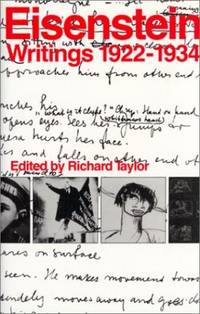
Selected Works: Writings 1922-34 v. 1
ref. GOR006583082Paperback. Very Good. paperback
World of Books Ltd · Reino Unido218,32 GBP≈ 260,75 €
826 resultados
1846ref. 45142Berlin G. Reimer 1846. 4to. In "Journal für die reine und angewandte Mathematik 33 Band 1. Heft 1846". In the original printed wrappers without backstrip. Fine and clean. Last leaf with repair. Eisenstein: Pp. 59-70; Pp. 71-88. Entire issue: IV 92 2 2 plates. First printing of two papers by Eisenstein one of them Beiträge zur Theorie. being the first of his 1846-47-period where he mainly occupied himself with the theory of elliptic functions.Even though the German mathematics prodigy Eisenstein's died prematurely at the age of 29 he managed to prove biquadratic reciprocity Quartic reciprocity Cubic reciprocity to be imprisoned by the Prussian army for revolutionary activities in Berlin and making Gauss state that: "There have been only three epoch-making mathematicians: Archimedes Newton and Eisenstein". Alexander von Humboldt then 83 accompanied Eisenstein's remains to the cemetery. The papers presented in the present issue is among his most prominent and made him famous throughout the mathematical world. James Driven to innovate P. 88. The issue also contain papers by famous contemporary mathematicians such as: C. G J. Jacobi A. Cayley Dirichlet and J. Steiner."Eisenstein soon became the subject of legend and the early literature about him is full of errors. His treatises were written at a time when only Gauss Cauchy and Dirichlet had any conception of what a completely rigorous mathematical proof was. Even a man like Jacobi often admitted that his own work sometimes lacked the necessary rigor and self-evidence of methods and proofs." DSB unknown
1844ref. 45141Berlin G. Reimer 1844. 4to. As extracted from "Journal für die reine und angewandte Mathematik 28 Band 4. Heft 1844". Without wrappers and backstrip. Fine and clean. Eisenstein: Pp. 289-374. Entire issue: 289-380 2 folded plates. First printing of German mathematics prodigy Eisenstein's paper on third degree equations with basis in a devided circle. Even though he died prematurely at the age of 29 he managed to prove biquadratic reciprocity Quartic reciprocity Cubic reciprocity to be imprisoned by the Prussian army for revolutionary activities in Berlin and making Gauss state that: "There have been only three epoch-making mathematicians: Archimedes Newton and Eisenstein". Alexander von Humboldt then 83 accompanied Eisenstein's remains to the cemetery. The papers presented in the present issue is among his most prominent and made him famous throughout the mathematical world. James Driven to innovate P. 88. "The twenty-seventh and twenty-eighth volumes of Crelle's Journal published in 1844 contained twenty-five contributions by Eisenstein. These testimonials to his almost unbelievable explosively dynamic productivity rocketed him to fame throughout the mathematical world. They dealt primarily with quadratic and cubic forms the reciprocity theorem for cubic residues fundamental theorems for quadratic and biquadratic residues cyclotomy and forms of the third degree plus some notes on elliptic and Abelian transcendentals. Gauss to whom he had sent some of his writings praised them very highly and looked forward with pleasure to an announced visit. In June 1844 carrying a glowing letter of recommendation from Humboldt Eisenstein went off to see Gauss. He stayed in Göttingen fourteen days. In the course of the visit he won the high respect of the "prince of mathematicians" whom he had revered all his life. The sojourn in Göttingen was important to Eisenstein for another reason: he became friends with Moritz A. Stern-the only lasting friendship he ever made. While the two were in continual correspondence on scientific matters even Stern proved unable to dispel the melancholy that increasingly held Eisenstein in its grip. Even the sensational recognition that came to him while he was still only a third-semester student failed to brighten Eisenstein's spirits more than fleetingly. In February 1845 at the instance of Ernst E. Kummer who was acting on a suggestion from Jacobi possibly inspired by Humboldt Eisenstein was awarded an honorary doctorate in philosophy by the School of Philosophy of the University of Breslau.Eisenstein soon became the subject of legend and the early literature about him is full of errors. His treatises were written at a time when only Gauss Cauchy and Dirichlet had any conception of what a completely rigorous mathematical proof was. Even a man like Jacobi often admitted that his own work sometimes lacked the necessary rigor and self-evidence of methods and proofs." DSB unknown
1844ref. 48885Berlin G. Reimer 1844. 4to. In contemporary half cloth. In "Journal für die reine und angewandte Mathematik" 27. band Heft 1-4 1844. Entire volume 27 offered. A small library stamp to lower part of p. 1 and a white label pasted on to upper part of spine. Light occassional brownspotting otherwise fine and clean. First printing of these influential papers by the German mathematics prodigy Eisenstein. Even though he died prematurely at the age of 29 he managed to prove Cubic reciprocity presented in the present papers biquadratic reciprocity Quartic reciprocity to be imprisoned by the Prussian army for revolutionary activities in Berlin and making Gauss state that: "There have been only three epoch-making mathematicians: Archimedes Newton and Eisenstein". Alexander von Humboldt then 83 accompanied Eisenstein's remains to the cemetery. The papers presented in the present issue is among his most prominent and made him famous throughout the mathematical world. James Driven to innovate P. 88. "The twenty-seventh the present and most extensive and twenty-eighth volumes of Crelle's Journal published in 1844 contained twenty-five contributions by Eisenstein. These testimonials to his almost unbelievable explosively dynamic productivity rocketed him to fame throughout the mathematical world. They dealt primarily with quadratic and cubic forms the reciprocity theorem for cubic residues fundamental theorems for quadratic and biquadratic residues cyclotomy and forms of the third degree plus some notes on elliptic and Abelian transcendentals. Gauss to whom he had sent some of his writings praised them very highly and looked forward with pleasure to an announced visit. In June 1844 carrying a glowing letter of recommendation from Humboldt Eisenstein went off to see Gauss. He stayed in Göttingen fourteen days. In the course of the visit he won the high respect of the "prince of mathematicians" whom he had revered all his life. The sojourn in Göttingen was important to Eisenstein for another reason: he became friends with Moritz A. Stern-the only lasting friendship he ever made. While the two were in continual correspondence on scientific matters even Stern proved unable to dispel the melancholy that increasingly held Eisenstein in its grip. Even the sensational recognition that came to him while he was still only a third-semester student failed to brighten Eisenstein's spirits more than fleetingly. In February 1845 at the instance of Ernst E. Kummer who was acting on a suggestion from Jacobi possibly inspired by Humboldt Eisenstein was awarded an honorary doctorate in philosophy by the School of Philosophy of the University of Breslau.Eisenstein soon became the subject of legend and the early literature about him is full of errors. His treatises were written at a time when only Gauss Cauchy and Dirichlet had any conception of what a completely rigorous mathematical proof was. Even a man like Jacobi often admitted that his own work sometimes lacked the necessary rigor and self-evidence of methods and proofs." DSB. hardcover
1850ref. 47093Berlin G. Reimer 1850. 4to. Bound in later marbled wrappers as extracted from "Journal für die reine und angewandte Mathematik 28 Band 4. Heft 1844". Very fine and clean. Pp. 160-179; Pp. 224-274; Pp. 275-287 Entire issue: 289-380 2 folded plates. First publication of lemniscate function and Eisenstein's Criterion one of the best known irreducibility criteria of polynomials. It is often seen referred to as the Schönemann-Eisenstein. Euler had introduced and studied the arc length of the lemniscate in the 18th century this work laying the ground work for the later development of elliptic functions. The lemniscate function expresses the parameter of the lemnicate in terms of its arc-length. It can be extended to complex values of the parameter and it then makes sense to ask for the points which divide the lemniscate into m equal parts where m is a Gaussian integer a complex number. Abel had shown that the determination of these points reduced to finding the roots of a certain polynomial equation. A crucial point in Eisenstein's extension of Abel's work described in the present papers was to prove that this polynomial is irreducible. Eisenstein developed his eponymous criterion to establish this although today it is most familiar when applied to the more elementary case of a polynomial with ordinary integer coefficients. unknown
1844ref. 45139Berlin G. Reimer 1844. 4to. In "Journal für die reine und angewandte Mathematik 28 Band 1 Heft 1844". In the original printed wrappers without backstrip. Fine and clean. Eisenstein: Pp. 28-35; Pp. 36-43; Pp. 44-48; Pp. 49-52; Pp. 53-67. Entire issue: IV 96 2 pp. 2 folded plates. First printing of six exceedingly influential papers by the German mathematics prodigy Eisenstein. Even though he died prematurely at the age of 29 he managed to prove biquadratic reciprocity Quartic reciprocity Presented in the present: "Lois de réciprocité" Cubic reciprocity Presented in the present: "Nachtrag zum cubischen Reciprocitätssatze." to be imprisoned by the Prussian army for revolutionary activities in Berlin and making Gauss state that: "There have been only three epoch-making mathematicians: Archimedes Newton and Eisenstein". Alexander von Humboldt then 83 accompanied Eisenstein's remains to the cemetery. The papers presented in the present issue is among his most prominent and made him famous throughout the mathematical world. James Driven to innovate P. 88. "The twenty-seventh and twenty-eighth volumes of Crelle's Journal published in 1844 contained twenty-five contributions by Eisenstein. These testimonials to his almost unbelievable explosively dynamic productivity rocketed him to fame throughout the mathematical world. They dealt primarily with quadratic and cubic forms the reciprocity theorem for cubic residues fundamental theorems for quadratic and biquadratic residues cyclotomy and forms of the third degree plus some notes on elliptic and Abelian transcendentals. Gauss to whom he had sent some of his writings praised them very highly and looked forward with pleasure to an announced visit. In June 1844 carrying a glowing letter of recommendation from Humboldt Eisenstein went off to see Gauss. He stayed in Göttingen fourteen days. In the course of the visit he won the high respect of the "prince of mathematicians" whom he had revered all his life. The sojourn in Göttingen was important to Eisenstein for another reason: he became friends with Moritz A. Stern-the only lasting friendship he ever made. While the two were in continual correspondence on scientific matters even Stern proved unable to dispel the melancholy that increasingly held Eisenstein in its grip. Even the sensational recognition that came to him while he was still only a third-semester student failed to brighten Eisenstein's spirits more than fleetingly. In February 1845 at the instance of Ernst E. Kummer who was acting on a suggestion from Jacobi possibly inspired by Humboldt Eisenstein was awarded an honorary doctorate in philosophy by the School of Philosophy of the University of Breslau.Eisenstein soon became the subject of legend and the early literature about him is full of errors. His treatises were written at a time when only Gauss Cauchy and Dirichlet had any conception of what a completely rigorous mathematical proof was. Even a man like Jacobi often admitted that his own work sometimes lacked the necessary rigor and self-evidence of methods and proofs." DSB unknown
ref. GOR006583082Paperback. Very Good. paperback
2004ref. DADAX1842773941Zed Books 2004-08-01. hardcover. New. 5.18x0.78x9.10. Buy with confidence. Excellent Customer Service & Return policy. Zed Books hardcover
2004ref. DADAX184277395XBloomsbury 2004-08-01. paperback. New. 5.50x0.55x8.50. Buy with confidence. Excellent Customer Service & Return policy. Bloomsbury paperback
ref. DADAX052107035XNew unknown
ref. DADAX0252062698New unknown
1988ref. DADAX04511567811988-11-01. mass_market. New. 7.00x1.00x5.00. Buy with confidence. Excellent Customer Service & Return policy. unknown
ref. DADAX087951924XNew unknown
1992ref. BN129093Complexe 1992. 1992. Softcover. Cinematisme : peinture et cinema : textes inédits Editions Complètes Cinematisme : peinture et cinema : textes inédits Editions Complètes Eisenstein S.M. Complexe paperback
1959ref. C72287London: Lawrence & Wishart 1959. First Edition. Hardback. Dust Jacket. Hardcover Hardcover. Very Good. First Edition. Hardback. Dust Jacket. Large 8vo. pp 207. Original publisher's grey cloth lettered black on the front cover. Ownership signature on the front endpaper of the novelist and filmmaker Iain M. Sinclair. Translated from the Russian by X. Danko. Copiously illustrated in black and white throughout. Very good in slightly used but complete very good dust jacket. Not price-clipped. Lawrence & Wishart, hardcover
1984ref. G0521258588I3N10Cambridge University Press 1984. Hardcover. Good. Former library book; Pages can have notes/highlighting. Spine may show signs of wear. ~ ThriftBooks: Read More Spend Less.Dust jacket quality is not guaranteed. Cambridge University Press hardcover
1968ref. 88914Philadelphia: Pilgrim Press 1968. First Edition. First printing. Quarto 38cm x 27cm. Folding box printed in colors housing the title volume and 34 offset-printed color posters loosely inserted as issued. Most measuring 14" x 10" or the reverse a few folded the largest opening to approximately 28" x 20". The included monograph bound in black cloth-covered boards titled in white on spine and front cover; 80pp; illus including complete catalogue of Sister Corita's prints produced from 1952 to 1967. Discreet professional repair to box hinge; slight external aging and soil; contents Fine. An uncommon complete copy of a work that's most often found missing one or two or three or four of the posters - which after all were intended to be hung on walls! Noted American Catholic artist-activist Mary Corita Kent 1918-1986 for many years Director of the Art Department at Immaculate Heart College is known for her bold and colorful graphic compositions which combined a Sixties pop-art sensibility with declarative often politically-charged texts. This portfolio gives an excellent cross-section of Sister Corita's work through the mid-1960s. The posters all reproducing original silkscreens by the artist are well-printed on heavy coated paper. The enclosed monograph in addition to a substantial autobiographical statement by the artist includes an illustrated catalogue raisonné of her graphic work from 1952 through 1967 229 works pictured. Pilgrim Press unknown
ref. ANAIS-0521219698Cambridge University Press. hardcover. Good. 9.5X6.5X1.5. Buy with confidence. Excellent Customer Service & Return policy. Cambridge University Press hardcover
ref. ANAIS-0521220440Cambridge University Press. hardcover. Good. 9.5X6.5X1.5. Buy with confidence. Excellent Customer Service & Return policy. Cambridge University Press hardcover
ref. ANAIS-0521299551Cambridge University Press. paperback. Good. 6x1.9x9.1. Buy with confidence. Excellent Customer Service & Return policy. Cambridge University Press paperback
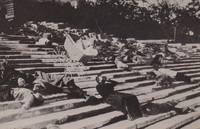
1925ref. 168469N.p.: N.p. 1925. Nine reference photographs from the 1925 Soviet silent film seven borderless and two bordered struck and issued by Cinémathèque Française circa 1936. All seven borderless photographs with the stamp of Archives Cinémathèque Française on the verso. A dramatization of a real-life mutiny which occurred on the Russian battleship Potemkin in 1905. The film's violence led to it being banned in West Germany and the UK until 1954 and even after that given an X rating until 1978. It was shown in a much-edited form in East Germany though the US premiere in December 1926 was shown unedited. A written introduction by Leon Trotsky at the beginning of the film was cut from later Soviet prints due to Trotsky running afoul of Stalin. The film's famous sequence showing a massacre by Tsarist soldiers of civilians on the Odessa Steps is considered the first example of a montage sequence in cinema. All photogaphs 5 x 3.5 inches. Generally Near Fine. BFI 1494. Godard Histoires du cinema. Rosenbaum 1000. N.p. unknown
ref. 654451612Walter de Gruyter Incorporated . Hardback. New. pp. 172 Walter de Gruyter, Incorporated hardcover
1979ref. 39823Cambridge University Press. Good with no dust jacket. Hardcover. Ex-library copy with usual stamps call numbers and pocket.; 794 pages . 1979. 0521220440 . Cambridge University Press hardcover
2007ref. 1-0977622207Panenthea Productions 2007. Paperback. New. 604 pages. 9.25x6.00x1.25 inches. Panenthea Productions paperback
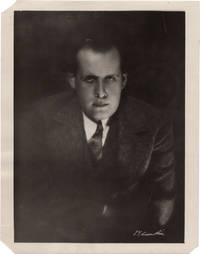
1928ref. 159783Beverly Hills CA: United Artists 1928. Vintage portrait photograph of Russian director Sergei Eisenstein circa 1928. Printed mimeo snipe affixed to the verso noting Eisenstein as having secured a contract with Joseph M. Schenck President of United Artists. United Artists stars Douglas Fairbanks and Mary Pickford traveled to Moscow after seeing Eisenstein's acclaimed 1925 film "Battleship Potemkin" in Berlin. Fairbanks offered the director a contract an invitation renewed a year later by Schenck. After visiting Hollywood the director would sign a contract with Paramount with several projects slated for production including adaptations of H.G. Wells' "War of the Worlds" and Theodore Dreiser's "An American Tragedy." Ultimately however no films would be made the result of public pressure against Eisenstein's Communist politics. On October 23 1930 by "mutual consent" Paramount and Eisenstein declared their contract null and void ending the director's short-lived career in American cinema. 8 x 10 inches. Very Good plus slightly creased with chips at three corners. United Artists unknown
ref. SONG0262042843MIT Press 2019-10-01. Illustrated. hardcover. Used: Good. 7.25x1.16x9.31. Buy with confidence. Excellent Customer Service & Return policy. MIT Press hardcover