151.881 risultati
1984rif. 2346218Brooklin Maine: WoodenBoat Publications 1984. First Edition. Large Softcover. Very Good. 8x0x11. First edition. Top edge faintly foxed ink name on front cover. 1984 Large Softcover. 112 pp. Detailed instructions and illustrations for fifty wooden construction boats including sailing craft powerboats and rowboats. Types includes skiffs catboats dinghies daysailers launches lapstrake canoes etc. WoodenBoat Publications paperback books
1970rif. 2335392New York: Arco Publishing Company Inc 1970. First Edition. Hard Cover. Near Fine/Very Good. 0x0x0. Signed by subject Jackie Stewart without inscription on half title page. Ink owner stamp on front endpaper K. Lassiter jacket lightly rubbed and toned. 1970 Hard Cover. 159 pp. Black-and-white photographs throughout. An illustrated profile of the incredibly successful and influential racecar driver known as 'the flying Scot.' In 1969 Stewart secured the Grand Prix title with three races still left in the season. Includes a complete statistical section with charts of all Jackie's Formula 1 races and racing victories. Arco Publishing Company, Inc hardcover books
1868rif. 2332262Chicago Illinois: Little Corporal Magazine 1868. Half-Leather. Good. First two pages cut with some remains still attached some pencil marks some pages soiled. 1868 Half-Leather. 66-96; 96; 96; 96; 28 pp. Five periodicals bound in half-leather with marbled boards: Little Corporal Magazine November 1868 Vol. 7 No. 5; January 1869 Vol. 8; No. 1; July 1869 Vol. 9; No. 1; January 1870 Vol. 10; No. 1; Appleton's Journal; Saturday January 1 1870 Vol. III No. 40. The Little Corporal was a monthly children's magazine published in Chicago Illinois from 1865 to 1875 and became the first children's periodical in the United States to gain a nation-wide readership. The magazine had a strong emphasis on patriotism and had the motto of "Fighting against Wrong and for the Good and the True and the Beautiful." It published works by popular writers of the day including Harriet Mann Miller writing as Olive Thorne Sarah Chauncey Woolsey writing as Susan Coolidge Josephine Pollard and Harry Castlemon. The periodical merged with St. Nicholas Magazine in 1875. Appletons' Journal was an American magazine of literature science and arts. Published by D. Appleton & Company and debuting on April 3 1869 its first editor was Edward L. Youmans followed by Robert Carter Oliver Bell Bunce and Charles Henry Jones. It was published weekly until June 26 1876 then monthly from July 1876 until its final issue December 1881. [Little Corporal Magazine] hardcover books
1979rif. 2324293New York: Forbes Magazine / James J. Dunn Publisher 1979. Unbound. Near Fine. Signed by author. Very faint wrinkle and slight toning to framed letter images pristine. 1979 Unbound. 21 1/2 x 20. Matted and framed with three images of items from the Forbes Magazine Collection of Faberge with presentation slips from the publisher presenting the recipient William J.P. Smith III of Data General Corporation with a complimentary subscription to Forbes. This was purchased directly from Bill Smith who worked as an advertising representative and explained that he received this invitation as a result of his professional relationship with Forbes Magazine. Dated May 4 1979 the full text of the letter reads: "Dear Bill: A selection of Faberge objects from the FORBES Magazine Collection is currently on loan to the Museum of Fine Arts in Boston. The exhibition marks the first public showing in this country of Faberge's masterpieces the Coronation Egg and the Lilies of the Valley Egg which have just been added to the collection. To help us celebrate this exciting event I am writing in the hope that you and Ann will be able to join Jim Dunn Kip Forbes Steve Nicoll Arnold Prives and me for dinner and a private viewing of the exhibition on Wednesday May 23rd. Cocktails and the viewing will begin at 6:00 P.M. Dinner will be served in the Asian Galleries at 7:30 P.M. Enter the museum at the Huntington Avenue entrance. Supervised parking will be available in the museum lot on Museum Road. Yours sincerely Malcolm S. Forbes." The second letter reads: "Dear Bill: Thank you so much for that fascinating data and we'll probably be making reference to it in FORBES. It was a pleasure to see you at the Faberge show in Boston - the only greater joy would be in seeing you put the advertising pages of FORBES to work on occasion for Data General! Cordially Malcolm S. Forbes Forbes Magazine / James J. Dunn, Publisher unknown books
1964rif. 124704American Heritage Publishing Co. Inc. Very Good. 1964. Hardcover. A Very Good edition with soiling to the surfaces of the boards and a few minor dents to the edges ; This book is a compilation of false reports and rumors that circulated around the time of the assassination of President John F. Kennedy. It is written in a journalistic style and is often filled with errors.; 8vo; 143 pages . American Heritage Publishing Co. , Inc. hardcover books
1988rif. 123811Menlo Park California: Lane Publishing Co. Near Fine. 1988. First Edition; First Printing. Hardcover. 0376038535 . A mildly soiled first Printing of the First Edition in Near Fine condition with some rubbing to the corners and edges; This book is a compilation of beautiful Western gardens that have been featured in Sunset magazine and Sunset Books. It covers a wide range of styles from formal to rustic and includes gardens in California Arizona Nevada and New Mexico.; 4to; 592 pages . Lane Publishing Co. hardcover books
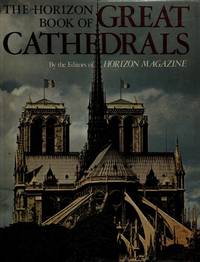
1983rif. 123250New York: American Heritage Publishing Co. Inc. /Bonanza Books. Fine in Near Fine dust jacket. 1983. First Edition; First Printing. Hardcover. 0517425858 . A Fine first Printing of the First Edition that has a previous owner's embossed stamping on the front flyleaf in a mildly generally worn Near Fine dust-jacket; This book is a compilation of great cathedrals around the world. It showcases the beauty history and architecture of each cathedral.; 4to; 384 pages . American Heritage Publishing Co. , Inc. /Bonanza Books hardcover books
1979rif. 57366New York: Charles Scribner's Sons. Fine in Fine dust jacket. 1979. 1/4 Cloth. 0684158175 . A Fine edition in a Fine dust-jacket ; Antique airplanes are some of the most interesting and unique aircraft ever created. This book takes readers on a journey through history showing them the planes that have made an impression on aviation. From the earliest aircraft to modern fighters and bombers this book is a must-read for anyone interested in aviation history.; B&W Photographs; 4to; 255 pages . Charles Scribner's Sons hardcover books
1939rif. 80648Budapest: Hungaria Magazine 1939. Paperback. Very Good. black & white photos 40p. Illustrated wrapper. 33cm. Lightly worn. "Published especially for the New-York World's Fair under the auspices of the Hungarian National Office for Tourism." statement inside front cover. Hungaria Magazine paperback books
1975rif. 162471New York: Charles Scribner's Son 1975. Hardcover. Very Good/Very Good. First edition. 272pp. Ex-library with a stamp on title page and evidence of pocket removal on rear fly very good in an about very good dust jacket with the flaps adhered to pastedown endpapers tears and stickers. Charles Scribner's Son hardcover books
1972rif. 103448Tokyo: The East Magazine 1972. hardcover. near fine/near fine. Prepared by the editorial staff of The East Magazine. Illustrated by Ban Kojin. 191 pages. 8vo boards d.w. Tokyo 1972. A near fine copy. The East Magazine unknown books
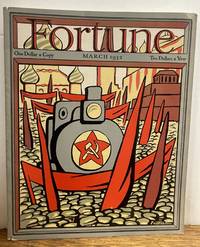
1932rif. 338134New York: Fortune 1932. near fine. Diego Rivera. Color and b/w illustrations featuring a cover designed by Diego Rivera. Folio colored pictorial wrappers. New York: Fortune 1932. Shallow channels neatly cut at extremities of spine from old library binding but otherwise a fine copy of this rare issue. Fortune unknown books
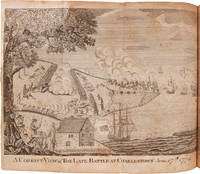
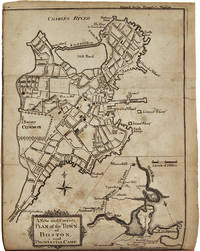
1775rif. 58141Philadelphia: Robert Aitken 1775. Thomas Paine's Real Job While Writing Common Sense with Highly Important Plates and Maps Including the View of the Battle of Bunker Hill A run of the first twelve issues and the 1775 supplement of The Pennsylvania Magazine. the only magazine issued in the American colonies for most of the crucial year of 1775. This is among the most important American Revolutionary-era publications for two primary reasons. First it was edited from February 1775 until May 1776 all but the first and the last two numbers by the famous radical Thomas Paine and his regular occupation at the time he wrote Common Sense was as its editor. Secondly it contains some of the most significant maps produced in America during the Revolution including battle plans that became prototypes for oft-reproduced illustrations. Only a small handful of similar maps were produced in America during the Revolution. Ristow describes three of the maps and plans numbers 8 9 and 10 below as "the earliest revolutionary war maps printed in America." The present collection contains the first twelve of the total nineteen issues of The Pennsylvania Magazine a complete run for the year 1775. This volume contains a view of surpassing importance "A Correct View of the Late Battle at Charleston June 17th 1775" depicting the Battle of Bunker's Hill. This view virtually never found with the magazine and of extraordinary rarity is arguably the most important American-produced visual image of the Revolutionary conflict after Revere's famous Boston Massacre plate. It is based on a drawing by Bernard Romans an engineer and mapmaker best known for his book on Florida who observed the conflict from Breed's Hill. The plate crudely but effectively engraved by Robert Aitken shows the American and British lines joined in conflict in the upper right part of the plate while in the right foreground Americans load a cannon near a blockhouse. Boston harbor is in the right foreground while the city in the upper right is bombarded by British naval vessels. Since the plate accompanied the September issue of the magazine it must have been made by early September 1775. Romans also issued the view on a larger scale with a slightly different title but almost identical in design. Whether it preceded or followed the Aitken version and even where it was produced is unclear. Deák quotes a New York newspaper advertisement of September 25 stating that the work would be available in ten days. Since we know Romans was publishing a book with engraved illustrations in New York at this time A Concise Natural History of East and West Florida with three engraved maps and six engraved plates it would be logical to think that the print was done in New York and postdated the Aitken print. But Fowble in describing the London reprint of the engraving in the Winterthur collection speculates that Romans and Aitken collaborated on the two versions and that Nicholas Brown of Philadelphia produced them. He cites a September 30 1775 Philadelphia newspaper ad offering both for sale as evidence. In the end priority cannot be determined but the larger version is so rare we can only locate the New York Public Library copy that it is a moot point. The Pennsylvania Magazine. was conceived and founded by the Revolutionary printer Robert Aitken best known for his work as a printer for the Continental Congress. Aitken launched the periodical himself but soon found it too much work and hired Paine as editor at £50 a year. Paine had only arrived in America a few months before in December 1774. He quickly became the major contributor as well as editor sometimes writing under the initials "A.B." and sometimes with no by-line. "These initials he affixed to descriptions of mechanical devices anecdotes Addisonian essays argumentative papers and poems in some variety.the most imaginative and literary of the pieces have never been reprinted. "Published on the eve of the American Revolution and edited by one of the leading Revolutionary publicists The Pennsylvania Magazine is of course of paramount political interest.in December the magazine published 'Reflections on the Duty of Princes' in which sovereigns are sharply warned against the exercise of arbitrary power. This is signed 'A.' and is followed by an oratorical passage 'On Liberty' signed 'Philo-Libertas.' Both are in the accents of Paine." - Mott. Mott also particularly mentions Paine's famous "Liberty Tree" article in July 1775 Phillis Wheatley's verses to Washington of April 1776 that issue not present in this volume and Paine's article on the abuse of texts in the supplementary number for 1775. Paine also contributed much that was not political and there are many articles on current events in that fast-moving period which may or may not come from his pen; however writing for this magazine often it was said under the influence of drink was Paine's primary work during this period and all told a substantial part of each issue sprang from his genius until his break with Aitken in May 1776. The magazine chronicles month by month Paine's sentiments before writing Common Sense which was published in mid-January 1776. Many of the important maps and illustrations in The Pennsylvania Magazine were engraved by the publisher Robert Aitken. The plates in the present volume are as follow: 1 "A New Electrical Machine" in the January 1775 issue. A detailed illustration of a European-invented device for studying electricity. 2 "Doctor Goldsmith" in the January 1775 issue. A portrait of Oliver Goldsmith. 3 "A New Threshing Instrument" in the February 1775 issue. 4 "General Wolfe. A new Song Engraved for the Pennsylvania Magazine" in the March 1775 issue. A folding plate of sheet music with lyrics on the death of General Wolfe in the French and Indian War. 5 "A New Invented Machine for Spinning of Wool or Cotton" in the April 1775 issue. A quite detailed illustration drawn and engraved by C. Tully the inventor of the machine. The plate is torn in the lower margin with a small bit of loss. 6 "Front View of a Frame House resembling Brick" in the April 1775 issue. A fine early American architectural illustration. 7 "Description of a new invented Machine for deepning sic and cleansing Docks &c." in the May 1775 issue. This folding plate itself has no caption but is thus described in the text. An early Philadelphia invention of a dredger. The plate is torn in the upper right corner with loss of about one-sixth of the image supplied in expert facsimile. 8 "A New Plan of Boston Harbour from an Actual Survey" in the June 1775 issue. A fine detailed folding map of Boston harbor showing Boston Dorchester Charlestown Roxbury and other towns fortifications and the several islands that dotted the harbor. WHEAT & BRUN 239. PHILLIPS MAPS p.166. JOLLY MAPS OF AMERICA IN PERIODICALS BEFORE 1800 266. 9 "A New and Correct Plan of the Town of Boston and Provincial Camp" in the July 1775 issue. A fine and important folding plan showing the British battery on Boston Common and the fortification of Boston neck. Many streets are named and wharves identified. NEBENZAHL 2. WHEAT & BRUN 238. PHILLIPS MAPS p.149. JOLLY MAPS OF AMERICA IN PERIODICALS BEFORE 1800 267. RISTOW p.41. 10 "Exact Plan of General Gage's Lines on Boston Neck in America" in the August 1775 issue. This folding map is another important American-engraved battle plan. The accompanying text states that by using the map "it will be easy to form a perfect idea of the manner in which the General hath blockaded the entrances into Boston." Guardhouses fortifications batteries and more are shown. NEBENZAHL 5. WHEAT & BRUN 237. RISTOW p.41. PHILLIPS MAPS p.149. JOLLY MAPS OF AMERICA IN PERIODICALS BEFORE 1800 268. 11 "A Correct View of the Late Battle at Charlestown June 17th 1775" in the September 1775 issue. Loss to far upper right corner affecting only foliage supplied in expert facsimile. A great folding view of the Battle of Bunker's Hill showing action on land and at sea with long lines of Americans and British facing off against each other and Charlestown and part of Boston in flames. See above for discussion. RISTOW p.41. DEÃK PICTURING AMERICA 143. 12 "A Map of the Present Seat of War on the Borders of Canada" in the October 1775 issue. Folding. The map shows the area from the St. Lawrence River and Montreal in the north down the length of Lake Champlain to Crown Point in the south. WHEAT & BRUN 89. PHILLIPS MAPS p.193. JOLLY MAPS OF AMERICA IN PERIODICALS BEFORE 1800 269. 13 "Plan of the Town & Fortifications of Montreal or Ville Marie in Canada" in the November 1775 issue. A very detailed map of Montreal showing buildings streets squares gardens etc. This folding plan has a fine inset "View of the Town &c. of Montreal." WHEAT & BRUN 91. PHILLIPS MAPS p.451. JOLLY MAPS OF AMERICA IN PERIODICALS BEFORE 1800 270. 14 "Description of a New Machine for enabling Persons to escape from the Windows of Houses on Fire" in the December 1775 issue. The plate has no caption but the description is taken from the text. An ingenious device involving a large basket and pulley system designed to help people escape from tall burning buildings. 15 "A Plan of Quebec Metropolis of Canada in North America" in the December 1775 issue. This detailed map is keyed to a table identifying seventeen important buildings citadels and batteries in the town. WHEAT & BRUN 90. PHILLIPS MAPS p.735. JOLLY MAPS OF AMERICA IN PERIODICALS BEFORE 1800 271. A lengthy run of The Pennsylvania Magazine. especially with the scarce illustrations and plans are virtually unknown in the marketplace. A major Thomas Paine piece and of great importance for his work and the American situation on the eve of the Revolution as well as for the graphics and maps bound in. Bound to style in three-quarter calf and marbled boards spine gilt leather label. Engraved vignette on the general titlepage as well as on each monthly titlepage. Upper margin of general titlepage and publisher's preface trimmed but with no loss of text. Upper right corner of two plates supplied in expert facsimile. Early ownership signature of "Mo. Horton" on the titlepage of the January issue. Much of the January issue stained in the foredge. Text and plates with some tanning and foxing. A very good set. MOTT AMERICAN MAGAZINES I pp.87-91. EVANS 14380. DEÃK PICTURING AMERICA 143. FOWBLE PRINTS AT WINTERTHUR 108. hardcover books
1775rif. 46863Philadelphia: Robert Aitken 1775. Thomas Paine's Real Job While Preparing for Common Sense with Highly Important Plates and Maps of the American Revolution: The Copy of a Famous Revolutionary Printer A run of the first twelve issues and the 1775 supplement of The Pennsylvania Magazine. the only magazine issued in the American colonies for most of the crucial year of 1775. This copy belonged to Revolutionary-era printer Francis Bailey of Philadelphia and Lancaster Pennsylvania. In the latter location Bailey was the printer of the first edition of the Articles of Confederation. The Pennsylvania Magazine is among the most important American Revolutionary-era publications for two primary reasons. First it was edited from February to July 1775 by the famous radical Thomas Paine and his regular occupation as he was developing Common Sense was as its editor. Secondly it contains some of the most significant maps produced in America during the Revolution including battle plans that became prototypes for oft-reproduced illustrations. Only a small handful of similar maps were produced in America during the Revolution. Ristow describes three of the maps and plans numbers 8 9 and 10 below as "the earliest revolutionary war maps printed in America." The present collection contains the first twelve of the total nineteen issues of The Pennsylvania Magazine a complete run for the year 1775. The Pennsylvania Magazine was conceived and founded by the Revolutionary printer Robert Aitken best known for his work as a printer for the Continental Congress. Aitken launched the periodical himself but soon found it too much work and hired Paine as editor at £50 a year. Paine had only arrived in America a few months before in December 1774. He quickly became the major contributor as well as editor sometimes writing under the initials "A.B." and sometimes with no by-line. "These initials he affixed to descriptions of mechanical devices anecdotes Addisonian essays argumentative papers and poems in some variety.the most imaginative and literary of the pieces have never been reprinted. "Published on the eve of the American Revolution and edited by one of the leading Revolutionary publicists The Pennsylvania Magazine is of course of paramount political interest.in December the magazine published 'Reflections on the Duty of Princes' in which sovereigns are sharply warned against the exercise of arbitrary power. This is signed 'A.' and is followed by an oratorical passage 'On Liberty' signed 'Philo-Libertas.' Both are in the accents of Paine." - Mott. Mott also particularly mentions Paine's famous "Liberty Tree" article in July 1775 Phillis Wheatley's verses to Washington of April 1776 and Paine's article on the abuse of texts in the supplementary number for 1775. Paine also contributed much that was not political and there are many articles on current events in that fast-moving period which may or may not come from his pen; however writing for this magazine often it was said under the influence of drink was Paine's primary work during this period and all told a substantial part of each issue sprang from his genius until his break with Aitken in July 1775. The magazine chronicles month by month Paine's sentiments before writing Common Sense which was published in mid-January 1776. Many of the important maps and illustrations in The Pennsylvania Magazine were engraved by the publisher Robert Aitken. The plates in the present volume are as follows: 1 "A New Electrical Machine" in the January 1775 issue. A detailed illustration of a European-invented device for studying electricity. 2 "Doctor Goldsmith" in the January 1775 issue. A portrait of Oliver Goldsmith. 3 "A New Threshing Instrument" in the February 1775 issue. 4 "General Wolfe. A new Song Engraved for the Pennsylvania Magazine" in the March 1775 issue. A folding plate of sheet music with lyrics on the death of Gen. Wolfe in the French and Indian War. 5 "A New Invented Machine for Spinning of Wool or Cotton" in the April 1775 issue. A quite detailed illustration drawn and engraved by C. Tully the inventor of the machine. The plate is torn in the lower margin with a small bit of loss. 6 "Front View of a Frame House resembling Brick" in the April 1775 issue. A fine early American architectural illustration. 7 "Description of a new invented Machine for deepning sic and cleansing Docks &c." in the May 1775 issue. This folding plate itself has no caption but is thus described in the text. An early Philadelphia invention of a dredger. The plate is torn in the upper right corner with loss of about one-sixth of the image supplied in expert facsimile. 8 "A New Plan of Boston Harbour from an Actual Survey" in the June 1775 issue. A fine detailed folding map of Boston harbor showing Boston Dorchester Charlestown Roxbury and other towns fortifications and the several islands that dotted the harbor. WHEAT & BRUN 239. PHILLIPS MAPS p.166. JOLLY MAPS OF AMERICA IN PERIODICALS BEFORE 1800 266. 9 "A New and Correct Plan of the Town of Boston and Provincial Camp" in the July 1775 issue. A fine and important folding plan showing the British battery on Boston Common and the fortification of Boston neck. Many streets are named and wharves identified. NEBENZAHL 2. WHEAT & BRUN 238. PHILLIPS MAPS p.149. JOLLY MAPS OF AMERICA IN PERIODICALS BEFORE 1800 267. RISTOW p.41. 10 "Exact Plan of General Gage's Lines on Boston Neck in America" in the August 1775 issue. This folding map is another important American-engraved battle plan. The accompanying text states that by using the map "it will be easy to form a perfect idea of the manner in which the General hath blockaded the entrances into Boston." Guardhouses fortifications batteries and more are shown. NEBENZAHL 5. WHEAT & BRUN 237. RISTOW p.41. PHILLIPS MAPS p.149. JOLLY MAPS OF AMERICA IN PERIODICALS BEFORE 1800 268. 11 "A Correct View of the Late Battle at Charlestown June 17th 1775" in the September 1775 issue. A view of the Battle of Bunker's Hill showing action on land and at sea and part of Boston in flames. Only the right half of the plate is present in this copy. RISTOW p.41. DEÃK PICTURING AMERICA 143. 12 "A Map of the Present Seat of War on the Borders of Canada" in the October 1775 issue. Folding map showing the area from the St. Lawrence River and Montreal in the north down the length of Lake Champlain to Crown Point in the south. WHEAT & BRUN 89. PHILLIPS MAPS p.193. JOLLY MAPS OF AMERICA IN PERIODICALS BEFORE 1800 269. 13 "Plan of the Town & Fortifications of Montreal or Ville Marie in Canada" in the November 1775 issue. A very detailed map of Montreal showing buildings streets squares gardens etc. This folding plan has a fine inset: "View of the Town &c. of Montreal." WHEAT & BRUN 91. PHILLIPS MAPS p.451. JOLLY MAPS OF AMERICA IN PERIODICALS BEFORE 1800 270. 14 "Description of a New Machine for enabling Persons to escape from the Windows of Houses on Fire" in the December 1775 issue. The plate has no caption and the description is taken from the text. An ingenious device involving a large basket and pulley system designed to help people escape from tall burning buildings. 15 "A Plan of Quebec Metropolis of Canada in North America" in the December 1775 issue. This detailed map is keyed to a table identifying seventeen important buildings citadels and batteries in the town. WHEAT & BRUN 90. PHILLIPS MAPS p.735. JOLLY MAPS OF AMERICA IN PERIODICALS BEFORE 1800 271. The provenance of this copy is of particular interest. The volume is blindstamped on the front and rear boards: "F. Bailey's." This is Francis Bailey who operated as a printer in Philadelphia until 1777 and then moved to Lancaster Pennsylvania. In the chaos that ensued after the English seized Philadelphia in the fall of 1777 and the Continental Congress retreated to York Pennsylvania Bailey became for a time the official printer to both the Congress and the government of Pennsylvania. As such he printed the first edition of the Articles of Confederation in Lancaster in November 1777 and a number of important Revolutionary decrees. Lengthy runs of The Pennsylvania Magazine especially with the scarce illustrations and plans are virtually unknown in the marketplace. A major Thomas Paine piece and of great importance for his work and the American situation on the eve of the Revolution as well as for the graphics and maps bound in. Contemporary calf rebacked preserving part of the original spine. Boards rubbed neatly repaired at corners "F. Bailey's" stamped in blind on each board. With the inscription in a neat contemporary hand "Ready money for clean Linen Rags By the Printer hereof" on the front flyleaf. Bookplate of the Library Company of Philadelphia with early discard stamp on front pastedown. Light foxing soiling and tanning to text. Half of the plan of Charlestown lacking. Overall almost very good. MOTT AMERICAN MAGAZINES I pp.87-91. EVANS 14380. DEÃK PICTURING AMERICA 143. FOWBLE PRINTS AT WINTERTHUR 108. hardcover books
1961rif. M7726no place:: 1961-1970. 1961. 15 volumes. 348 x 266 mm. 4to. 14 2; 20; 20; 16; 24; 12; 12; 15 1; 16; 16; 16; 16; 16; 16; 16 pp. Illus. Pictorial wrappers. Fine. This series reprints articles from Life magazine. Included here reprint numbers 7 Robert Frost Carl Sandburg; 12 China; age of the warlords; 13 China; rise of communism; 25 The origins of life; 28 The microbe enemy; 30 Control of the brain; 31 DNA; the secret of life; 35 Circuits of the senses; 36 Evolution; Darwin discovers nature's plan; 38 The nature of the atom; 44 The Russian Revolution; rise of the insurgents; 57 The human body; chemical balance; 71 Evolution; Galapagos key to Darwin's theories; 83 The law of Judaism; and 88 The human body; worlds within. 1961-1970. unknown books
1970rif. 2792New York: American Heritage 1970. Cloth. Very Good . Dust jacket frayed at crown and heel. American Heritage hardcover books
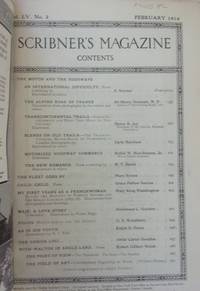
rif. 40253AUTOMOBILE MAGAZINE SCRIBNER'S MAGAZINE THE MOTOR AND THE HIGHWAYS. Vol. LV No. 2 February 1914. $95.00 New York: Charles SCribners Sons February 1914. 1-36 8vo. Colored illustrated wrappers. pages 137-274 and 36-84 pages. Charles SCribners and Sons published a monthly periodical starting in 1887 with ten issues per year. This was a special issue focused on the automobile and travel. The first 36 pages and the end pages from 37 to 84 are adverstisments on a variety of items but for this issue many in the back feature automobile related items. The center pages 137-274 are the articles mainly on the automobile. Articles of interest include: "The Alpine Road of France" "Transcontienental Trails" and "Motorized Highway Commerce." Filled with many half-tone photographs. Edges fingered. 40253. unknown books
rif. 40252AUTOMOBILE MAGAZINE THE RAMBLER MAGAZINE. Number Twenty-nine. Kenosha Wisconsin: Thomas B. Jeffrey & Co. 1906. 8vo. Illustrated wrappers. pages 726-750 6 pages. Early auto magazine which began publication in 1905 and came out monthly. This issue is complete. Articles of interest include "a Family Tour in a Rambler from Fresno City to Monterrey" and "Through Illinois in a Rambler." With many in-text half-tone photographs of the automobiles and travel. With six pages of auto based advertisements in back. unknown books
rif. 7434MICHELANGELO ARS. REVISTA DE ARTE. Ano 15 No. 66. HOMENAJE A MIGUEL ANGEL. Buenos Aires: Ars 1954. Folio. Wrappers. Unpaginated. First edition. This special issue of Ars contains twenty articles in Spanish on Michelangelo. Included is an article on Michelangelo's architecture by Roberto Papini. There are numerous illustrations some of which are tipped in. Very good. unknown books
1977rif. 140940299New York: Simulations Publications Inc 1977. First Edition. Fine/Very Good. First edition. vi 186 pp. Publisher's blue cloth lettered in silver brown endpapers. Fine in Very Good dust jacket with spine panel red lettering mostly gone wear at extremities rubbed. A rare history and explanation of wargaming published by the magazine Strategy & Tactics whose staff was billed as "the largest professional body of game designers and developers working in the field of commercial conflict simulation design. Simulations Publications, Inc unknown books
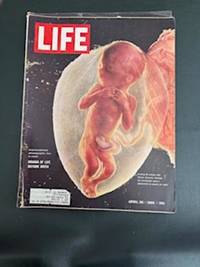
1965rif. 107150Folio sofecover illustrated 112 pp. Some wear to edges tear near bottom of spine on front cover normal aging; otherwise about very good. Incredible photos of human life before birth. Time Inc., books
1937rif. 107153Folio magazine softcover illustrated. Some spine and edgewear to covers a couple or corner folds and small tears; otherwise almost very good for this kind of item. Includes articles on the American Nazi party. Time Inc., books
1938rif. 107154Folio magazine softcover illustrated. Some spine and edgewear nick out of bottom corner of spine normal aging; otherwise in almost very good condition for this type of item. Includes article on Poland. Time Inc., books
1835rif. ZZ1543London:: Richard Taylor 1835. 1835. Small 4to. 50 ad. 1 pp. Half brown leather with corners and marbled paper sides; extremities worn front cover detached spine mostly missing pages still bound endpapers foxed and water-stained. Good. Richard Taylor, 1835. hardcover books
1922rif. ST20338-117Greenwich Connecticut: The Dial Publishing Company July 1922. 250 x 165 mm. 9 7/8 x 6 1/2". viii 120 ix-xvi pp. Original rose-colored printed paper wrappers. Housed in a custom russet linen chemise and matching slipcase with black morocco label on the spine. With eight black & white plates reproducing artworks by Henri Matisse Marc Chagall Boardman Robinson Preston Dickinson and August Gaul. Inexpensive paper slightly yellowed as no doubt in all copies wrapper fore edge a little worn but these imperfections very minor and overall a fine copy of a fragile item. Issued in the Modernist heyday of the magazine this is a very appealing copy of "The Dial" containing the first appearance of "The Fox" by D. H. Lawrence poems by Wallace Stevens and William Butler Yeats an essay by George Santayana book reviews by John Dos Passos and Malcolm Cowley T. S. Eliot's column "Letter from London" and artwork by Matisse and Chagall among others. Originally established in the 1840s as a Transcendentalist journal and revived in 1880s Chicago as a political magazine "The Dial" entered its third incarnation in 1920 when it was taken over by editor Scofield Thayer 1889-1982 with backing from Wells Fargo heir James Sibley Watson Jr. 1894-1982. The two young men both fans of the Modernist movement turned the modestly successful periodical into an influential avant-garde literary journal publishing the first U.S. appearance of Yeats' "Second Coming" and Eliot's "The Waste Land" and bringing a host of new voices--Djuna Barnes Mina Loy James Joyce Marcel Proust and William Carlos Williams among them--to American audiences. The magazine's run as a major Modernist journal continued for just 10 years with poet Marianne Moore taking over as editor in 1925 but its impact on American letters was long lasting. Authors whose early careers were promoted by "The Dial" became lions of 20th century literature familiar to every schoolchild in the U.S. Our very well-preserved issue comes from the collection of Laure-Anne Bosselaar b. 1943 and her husband Kurt Brown 1944-2013. Bosselaar is a Belgian-American poet translator and editor who has published numerous works of poetry in multiple languages including five collections of her own works. She has received various prizes and recognitions Pushcart Isabella Gardner Breadloaf and was named Poet Laureate of Santa Barbara in 2019. Sometimes publishing jointly with Bosselaar Brown was also a prolific poet and editor of anthologies as well as the founder and first director of the Aspen Writer's Conference playing a pivotal role in shaping its early vision and establishing Aspen as a literary center. The Dial Publishing Company unknown books