151 950 résultats
1960réf. 220051960. Art ARTS magazine was a leading voice of postwar art criticism blending rigorous analysis of modernist and avant-garde movements with global perspectives and early coverage of rising American and international artists. Archive of 7 Issues of ARTS Magazine. New York: The Art Digest Inc. 1960. Illustrated throughout with black-and-white and occasional color plates. Each 8.5" x 11". Approximately 64 pages each. The Art Digest ARTS magazine emerged as one of the most influential American art periodicals of the mid-20th century evolving from a digest of exhibition listings into a platform for serious criticism and scholarly debate. Renamed ARTS in the 1950s the magazine became a critical voice during the rise of Abstract Expressionism and the New York School publishing essays by leading art critics such as Hilton Kramer Sidney Geist and Annette Michelson. Throughout the 1960s ARTS played a key role in shaping discourse around both American and international modernism offering early attention to feminist surrealist and global art histories before ceasing publication in 1992. The archive features early writings by now-canonical critics and curators-Sidney Geist Alfred Werner Hilton Kramer Annette Michelson-and includes interviews exhibition reviews and in-depth artist studies. The issues also demonstrate a commitment to global modernism and multicultural inquiry with contributions by Asian American critic Vernon Young and discussions of Soviet Constructivism Indian sculpture and Latin American abstraction. Also notable is an early exhibition announcement for Chinese American watercolorist Dong Kingman at Wildenstein Galleries. The magazine's bold use of color covers and oversized headline typography-varying from magenta to cyan to goldenrod-gives it a strong graphic identity. 1 January 1960. Featured essays include "Brancusi Santificatus" by Sidney Geist a spiritually-tinged reading of Gideon-Welcker's monograph; "The Maurer Enigma" by James R. Mellow a study of American painter Alfred Maurer; and an interview with Gabriele Münter by Edouard Roditi reflecting on her time with Kandinsky and the Blue Rider group. Also includes Paris and Rome reports by Annette Michelson and John Lucas. 2 February 1960. Special David Smith number including Kramer's feature "The Sculpture of David Smith" and a photographic survey of Smith's politically charged "Medals for Dishonor" 1937-1940. Highlights his transition from social realism to formal abstraction and positions him as a bridge between American modernism and European influences. 3 March 1960. Lead essay by Annette Michelson "But Eros Sulks" critiques Surrealism's eroticism as manifested in Paris's International Exhibition of Fantastic Art. Also contains George Dennison's "Month in Review" and coverage of recent works by Elmer Bischoff and the figurative painters of San Francisco. 4 April 1960. Features Alfred Werner's "A Poet of the Absurd" a critical biography of Belgian symbolist James Ensor analyzing grotesque self-portraits and satire. Richly illustrated. Includes updates from New York galleries and an art auction digest. 5 May 1960. Includes Vernon Young's "Spanish Masters in Stockholm" an extended review of a traveling Spanish Baroque show featuring El Greco and Velázquez. Also includes "The Evergreen Retrospect" and "Constructing the Absolute" another installment by Kramer on suprematism and Malevich. 6 September 1960. Hilton Kramer's essay "The Erotic Style" explores Art Nouveau's sensual imagery in the context of a major retrospective. Also includes George Woodcock's "A Far but Familiar Country" discussing Indian sculpture and cultural translation. 7 October 1960. D.A. Jelsen's "Avant-Garde and Revolution" traces the postwar rehabilitation of Soviet Constructivism including 1921 Constructivist exhibitions. Additional coverage on Egon Schiele's influence and American Expressionism alongside a comparison of German and Austrian styles. Overall in very good condition with some light edge wear and minor handling creases; interiors bright and clean. A substantial and compelling record of 1960s art discourse and visual culture especially valuable for its early coverage of modernism's global currents and rare profiles of women and minority artists. unknown books
1969réf. 204711969. Fisher Elizabeth ed. Aphra: The Feminist Literary Magazine 1969 to 1974 documents second wave feminist literary culture through women's fiction poetry essays drama art criticism and editorial statements written against male control of literary and commercial media. The magazine's title honored Aphra Behn the seventeenth-century writer often identified as the first English woman to earn her living by writing and the University of Connecticut Archives notes that Aphra was published quarterly from 1969 to 1976 and took its name from Behn. The archive belongs to feminist print culture and women's literary history illustrating how women writers and artists used periodical publication to create recognition critique sexist cultural production and build a literary space responsive to women's experience. Aphra: The Feminist Literary Magazine. Pennsylvania and New York: Aphra 1969 to 1974. Eight issues. The archive contains eight digest-format issues each approximately 72 pages and measuring 6.75 x 8.5 inches with short fiction poetry art play excerpts essays criticism contributor notes and recurring feminist quotation or commentary features. The first issue's preamble states that the magazine sought to offer "work in which women can see themselves" giving readers "the identification and shock of recognition which art traditionally gives but which is clearly underexpressed" and another UConn Archives account quotes the magazine's mission statement as "Free women thinking doing being." Across the group contributors and subjects include Rosemary McDermott Eva Hesse Kimberley HMS Snow on Kate Chopin's The Awakening Erica Jong Joan Silber Susan Hall Dorothy Hage Lydia Ressner Renny Hartmann Susan Griffin Patricia Sloane Margaret Atwood Nelly Kaplan Beth Bird Dacia Maraini Josephine Herbst Anita Barrows Barbara Chesser Adrienne Rich Esther Newton Paula Webster Daphne Patai Cynthia D. Grant Lynne Sharon Schwartz Jane Augustine Crescent Dragonwagon and Isabel Bishop. 1 Fisher Elizabeth ed. Aphra: The Feminist Literary Magazine. Vol. 1 No. 1. Pennsylvania: Aphra 1969. First issue titled "Free Women: Thinking Doing Being" with short fiction poetry and a play excerpt establishing the periodical's editorial commitment to women's literary self-definition. 2 Fisher Elizabeth ed. Aphra: The Feminist Literary Magazine. Vol. 3 No. 1. Pennsylvania: Aphra 1971 to 1972. Winter issue with poems essays and short stories including Rosemary McDermott's "I am the Immaculate Conception" and sculpture by Eva Hesse; purple cover with "Om" and "Women." 3 Fisher Elizabeth ed. Aphra: The Feminist Literary Magazine. Vol. 3 No. 2. Pennsylvania: Aphra 1972. Spring issue with Kimberley HMS Snow on Kate Chopin's The Awakening stories by Erica Jong and Joan Silber and artwork by Susan Hall; brown cover with portraits of two women. 4 Fisher Elizabeth ed. Aphra: The Feminist Literary Magazine. Vol. 3 No. 3. Pennsylvania: Aphra 1972. Summer issue with an essay by Dorothy Hage short stories by Lydia Ressner Renny Hartmann and Susan Griffin and art by Patricia Sloane; pink cover with green women's faces. 5 Fisher Elizabeth ed. Aphra: The Feminist Literary Magazine. Vol. 3 No. 4. Pennsylvania: Aphra 1972. Fall issue with poetry by Margaret Atwood and Barbara Gravelle stories by Nelly Kaplan Margaret Robinson and Eleanor Hyde and a photo essay by Beth Bird; red cover with "Free Women The Mirror Breaks." 6 Fisher Elizabeth ed. Aphra: The Feminist Literary Magazine. Vol. 4 No. 1. Pennsylvania: Aphra 1972 to 1973. Winter issue themed "Fathers and Daughters" with a play by Dacia Maraini stories by Josephine Herbst and Margaret Lamb and poetry by Anita Barrows Barbara Chesser and Adrienne Rich. 7 Fisher Elizabeth ed. Aphra: The Feminist Literary Magazine. Vol. 4 No. 3. Pennsylvania: Aphra 1973. Summer issue themed "Matriarchy" with an essay by Esther Newton and Paula Webster and poems by Siv Cedering Fox Alexandra Grilikhes and Miriam Palmer; tan cover with red ancient Egyptian-style illustration. 8 Fisher Elizabeth ed. Aphra: The Feminist Literary Magazine. Vol. 5 No. 3. Pennsylvania: Aphra 1974. Issue themed "Free Women Friends and Lovers" with an essay by Daphne Patai stories by Cynthia D. Grant and Lynne Sharon Schwartz poetry by Jane Augustine and Crescent Dragonwagon and drawings by Isabel Bishop. Minor cover wear from age with tight bindings and clean readable contents; overall very good. Substantial feminist literary periodical archive documenting how second wave women writers and artists built a print forum for creative work criticism historical recovery and collective recognition. unknown books
1972réf. 207021972. Al-Djabha. Die Front. Heidelberg Germany: Komitee zur Unterstutzung Palastinas 1970-1974. A pro-Palestinian communist German publication. 5 issues. Measuring 8.25" x 12". Pages range from 40-52 each. Text in German. Staple bound white wrappers with black and red text a hammer sickle and firearm make the logo on the top left corner some have black and white photos on the cover. Black and white illustrations and photography throughout. Archive includes: May 1972 No. 1; November 1972 No. 2; 1972 No. 13; October 1973 No. 1; and 1974 No. 1. Some topics include the imperial impacts of oil the Israeli war budget an extensive discussion of "Black September" the Jordanian Civil War led by Yasser Arafat. Some staples are missing from a few issues. Some minor edgewear to each pages and text are clean. Overall very good condition. A scarce radical left publication. unknown books
1831réf. 196681831. African American "Negro Slavery": A Poem: An Original Article from the Catholic Magazine. London 1831. 4 pages of an original article separated from the volume. Measures 5.5" x 8.5". The article titled "Poetry" opens with an excerpt of speech made at a meeting for the Anti-Slavery Society by "Mr. Shiel". The speech reads in part "If the sceptic enquires of me why I feel sensation for the Trans-Atlantic Slave I answer him.'I am a man; and in every thing concerning man'.Can we then be afraid of combining in glorious energy for the relief of those who are in so sad of a condition". The featured poem "Negro Slavery" reveals the horrors in the lives of enslaved persons often utilizing irony to illuminate this topic. The unknown author opens the poem with a stark juxtaposition noting that the sun "flings o'er the world all the raptures of light--But oh! what of rapture of bliss or of peace Can it bring to the slave Do his agonies cease Nor darkness nor light can e'ere solace his pain". A true demonstration of empathy the poet urges the reader to comprehend the atrocities that plague the lives of enslaved persons. Pages are loose with pin size holes on left margin as they were removed from a larger volume. Very good condition overall. unknown books
1746réf. 180441746. Urban Sylvanus Edward Cave. The Gentleman's Magazine June 1746 records British political military scientific literary and commercial news during the War of the Austrian Succession including naval engagements involving Britain France and Spain and reports concerning North America. Founded by Edward Cave in 1731 and published under the editorial persona "Sylvanus Urban" The Gentleman's Magazine established an influential monthly format combining extracts from current publications with original correspondence poetry political reporting scientific discussion and registers of contemporary events. The June 1746 issue appeared while Britain was fighting France and Spain in a conflict extending across European Atlantic and colonial theaters. The Gentleman's Magazine. London: Edward Cave June 1746. Pages 280-332. 7 x 5 inches. Contents include accounts and commentary concerning British naval operations against France and Spain together with a list of ships captured from the French that includes vessels taken by captains from New York and Boston. Scientific material addresses contemporary experiments and writing on electricity associated with William Watson part of the periodical's early coverage of electrical research during the 1740s. The issue also contains news from North America poetry and opinion pieces a register of new publications a calendar of forthcoming trade fairs a summary of monthly events notices of births deaths and marriages preferments and commodity prices. The combination of wartime shipping intelligence colonial news scientific reporting publishing notices and economic data shows the range of information available to a London reader within a single monthly issue in 1746. Its lists of captured vessels and reports from North America preserve contemporary evidence of an Atlantic conflict in which commercial shipping and colonial ports were directly involved while the electricity material records the circulation of experimental science beyond learned societies and into the periodical press. Removed from a larger bound volume but presently tightly bound with clean pages. Overall very good condition. unknown books
1974réf. 199801974. Mexican-American Chicano Movement An important and empowering magazine illuminating Latinx history. Agenda: A Journal of Hispanic Issues. Washington DC: National Council of La Raza 1974. Pictorial wrappers with bold lettering. Measures 8.5" x 11". 27 pages total. Agenda Magazine was a bimonthly publication published by the Office of Public Information of the National Council of La Raza. Each issue centers upon central socioeconomic matters in the Latinx community including "Chicano Attitudes Toward Work" "Utilization of Chicano in the Labor Market" and "Strategies for Chicanos". Featured within the magazine are lengthy articles discussing issues impacting the Latinx community including discrimination lack of identity amidst Anglo-Saxon societal standards and Chicano economic development politics. Also highlighted are "Criteria needed to balance barrio economic seesaw". Several pages feature black and white images of various Latino citizens in the workforce. Bears a postage stamp from previous owner. This magazine is in very good condition. unknown books
1939réf. 200611939. Archive of Adventure magazine issues 1939-1941 documents the role of pulp publishing in shaping popular understandings of war military heroism and national identity in the years surrounding U.S. entry into World War II. Originally an adventure fiction periodical the magazine increasingly incorporated war-themed narratives as global conflict intensified presenting stories of combat espionage and military life to both civilian readers and servicemen. Contributions by authors including W. C. Tuttle Kenneth Perkins and others situate the publication within the broader pulp fiction network that disseminated narratives of American and Allied action. Cover lines such as "Attack on America!" "Murder in Martinique" and "They Can Be Licked!" demonstrate the framing of conflict through urgency and resolve while interior stories emphasized endurance strategy and battlefield experience. The October 1941 issue's depiction of paratroopers and the January 1940 cover illustrating armored combat reflect the growing prominence of mechanized and airborne warfare in public imagination prior to and during the early stages of U.S. involvement. Adventure. New York: Butterick Publishing Company 1939-1941. Archive of eight issues: April 1939; July 1939; January 1940; December 1940; February 1941; March 1941; October 1941; December 1941. Each issue approximately 128 pages in illustrated wrappers. Covers feature color illustrations emphasizing combat scenes including infantry engagement armored warfare and aerial operations with prominent headlines highlighting featured stories. Interior contents consist of short fiction often accompanied by illustrations depicting battlefield action and military environments. Issued during a transitional period between prewar uncertainty and active U.S. participation following December 1941 these magazines align with the expansion of mass media engagement with global conflict and the normalization of military themes in popular culture. The visual and narrative emphasis on combat resilience and tactical ingenuity contributed to a shared cultural vocabulary of war that circulated widely through inexpensive print. The later decline of pulp magazines following mid-twentieth-century shifts in publishing and content regulation underscores the historical specificity of these materials within wartime media ecosystems. Light wear with occasional chipping at spines and margins; interiors clean and complete; overall very good condition. unknown books
1939réf. 200621939. Adventure magazine issues 1939-1945. These pulp periodicals document the production and circulation of wartime fiction centered on American military action during World War II presenting narratives of combat endurance and national identity through short stories and illustrated covers designed for mass readership. Published both before and during the war the issues include contributions from writers such as W.C. Tuttle Jim Fjaalgard and Kenneth Perkins and feature recurring themes of battlefield survival imperial conflict and soldierly conduct. The combination of sensational cover art and interior war fiction provides direct evidence of how military experience and national messaging were translated into popular entertainment formats consumed by both civilians and servicemen. Six issues of Adventure magazine dated July 1939 October 1940 September 1943 September 1944 May 1945 and July 1945 each approximately 128 pages. Covers prominently feature illustrated combat scenes with titles such as "New Guinea Gold" "Slaves for Ethiopia" "War Horse" and "White Bird of Empire" foregrounding narratives tied to imperial theaters of war and Allied campaigns. The September 1943 issue titled "The Lagoon of Lost Command" depicts an American G.I. holding a Japanese soldier captive while other soldiers search nearby exemplifying the visual emphasis on confrontation and capture. Interior content consists of short fiction focused on American troops accompanied by black-and-white illustrations reinforcing scenes of combat and hardship. Additional visual and textual material includes recurring depictions of wounded soldiers continuing to fight battlefield encounters and narratives of endurance under fire. These issues were produced within a broader environment of wartime media that blended entertainment with depictions of military action contributing to the normalization of combat imagery within everyday reading material. Pulp magazines such as Adventure circulated widely during the war years offering readers accessible narratives of conflict that paralleled news reporting and official messaging while emphasizing individual acts of bravery and danger. The prominence of illustrated covers and dramatized storylines reflects the commercial strategies used to attract readers in a competitive print market shaped by wartime demand. Later regulatory shifts including the establishment of the Comics Code Authority curtailed violent and sensational imagery in related media contributing to the decline of pulp war publications in the postwar period. Minor chipping along spines and margins with light wear to edges; covers intact and interiors clean. Overall very good condition. unknown books
1937réf. 189081937. The Wide World: The Magazine for Men. Vol. lxxviii No. 476. February 1937. London England. Profusely illustrated magazine of short stories and articles. 80 pages of content and 24 pages of ads. 9.5" x 6.5" color wraps. Contains racist and colonial imagery and text. Cover story is "A Man-hunt in Jamaica" by J.H. Harvey Clark and the accompanying illustration shows an angry-looking Black man peering from the mouth of a cave a cocked gun in his hand. The majority of the art and writing in this magazine depict statuesque white men in conflict with African Ecuadorian Australian and Papuan Black men. One page contains a photo and an update on the hoaxer Louis de Rougemont who spun improbable tales of adventuring such as riding turtles and ruling over an indigenous population as a god. The photoportrait shows him in extreme old age. The magazine's wraps are detached from the textblock and edgeworn with a small chip at the heel. Otherwise in good condition. unknown books
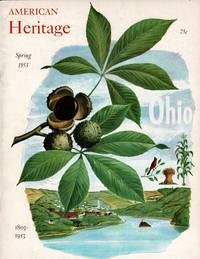
1953réf. 63177Burlington VT: Amrican Association for State and Local History Spring 1953. 11" x 8½" illustrated throughout much in color; near fine. Contributors include R. E. Banta Lucius BebeeLewis H. Beck and others. Fifteen or so articles celebrating the Buckeye State. Amrican Association for State and Local History, Spring unknown books
réf. 329581New York 1970. Illustrated wrappers with bump to bottom corner and along side some soiling else very good. Missing Section 2 all other sections are present and near fine. Aspen Magazine No. 8 often refrered to as "The Fluxus Issue" contains works by Dan Graham David Antin Terry Atkinson Michael Baldwin Philip Glass Jackson Mac Low La Monte Young Steve Reich Richard Serra Yvonne Rainer Jo Baer Dennis Oppenheim Robert Morris Robert Smithson and Edward Ruscha. unknown books
1910réf. 173311910. Flight. No. 63 No.11 Vol. II. March 12 1910 London UK. 197 pages. 8.5" x 12" inches. Early aviation weekly magazine that acted as the official organ of the Royal Aero Club of the United Kingdom. Contains multiple articles introducing and analyzing airplane models such as the Wright biplane Macfie British Aeroplane Avis Monoplane and more. This was clearly a highly inventive time in the aeronautical field with a multitude of companies producing these rudimentary single passenger planes for hobbyists such as the likely readership of this magazine. Advertisements for fledgling companies looking to break into the field are littered throughout the magazine. There is also a segment titled: Aviation News of the Week where stories of individual pilots are published regarding their mishaps or successes in the field of flight. The overall tone of this magazine has a quaintness to it with the Flight community being close-knit highly enthusiastic and a bit eccentric. This phenomenon has nonetheless been lost as aeronautics was regulated centralized and militarized as a result of the First World War. This piece is in good condition as wrappers are partially separated minorly chipped and have some stains on front though as a whole the piece is totally suitable for reading. unknown books
1913réf. 162611913. Petersen H. Frances. The Belief in Innate Rights 1913 challenges the legal and philosophical reasoning used by A. V. Dicey in arguments relevant to women's political rights grounding the case for equality in the relationship between law justice and rights existing independently of legislative recognition. Issued by the National Union of Women's Suffrage Societies as No. 58 in its pamphlet series and reprinted from the Law Magazine and Review Petersen takes up Dicey's assertion that belief in innate rights "was expelled from England by.Burke and.Bentham." Rather than accepting positive law as the final measure of right and wrong she examines the premise itself and asks what basis remains for judging an existing law unjust if rights possess no moral existence beyond what the law grants. The argument gave the NUWSS a jurisprudential defense of political equality alongside its constitutional campaign for women's enfranchisement. Contemporary NUWSS advertising lists Petersen's pamphlet among the organization's suffrage literature. Petersen H. Frances. The Belief in Innate Rights. London: National Union of Women's Suffrage Societies 1913. No. 58. Reprinted from the Law Magazine and Review. 12 pages. Paper wrappers string bound. 7¼ x 5 inches. Petersen subjects Dicey's rejection of innate rights to a sustained legal argument distinguishing rights from the sanctions by which governments enforce them and questioning whether legality alone can determine justice. Her argument culminates in the question "If there is no such thing as 'innate right' what meaning have the words justice and injustice" The underlying essay appeared in the August 1909 Law Magazine and Review where contemporary bibliographical notices identify it under Petersen's name and summarize her distinction between legal rights and underlying moral conceptions of right. The NUWSS pursued women's enfranchisement through constitutional political organization publishing and distributing arguments addressing the legal economic and philosophical objections raised against women voting. Petersen's essay addresses a fundamental problem within that debate: if existing law alone defines political rights exclusion from the franchise can be defended simply because the law already excludes women; an appeal to justice requires a standard by which existing law itself can be judged. The pamphlet therefore records the suffrage campaign engaging directly with contemporary jurisprudence rather than relying solely upon arguments about women's social position or political capacity. Thumb-soiling to front and rear wrappers with a light horizontal crease; overall good condition. A substantive NUWSS pamphlet preserving a woman writer's direct engagement with Dicey and the legal philosophy of rights during the British suffrage campaign. unknown books
1975réf. 318496New York: Life 1975. Bicentennial Issue Life Special Report. Illus. 92 4pp. Folio. Deluxe black cloth binding with the full issue with wappers in side. Fine from the library of Hedley Donovan Editor-in-Chief. Bicentennial Issue Life Special Report. Illus. 92 4pp. Folio. Life unknown books
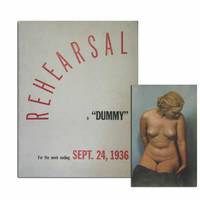
1936réf. 235319New York 1936. Illustrated with photos. 1 vols. Folio. Orig. wrappers; occasionally creased slightly dusty spine occasionally chipped or abraded. Internally clean. Illustrated with photos. 1 vols. Folio. This mock-up of LIFE magazine appeared one month before the first published issue of November 23 1936. It was circulated to potential advertisers to provide a model for the general form and content of the magazine. LIFE is referred to as "Time's Picture Magazine" as the title had not been decided upon yet. Incidentally this "dummy" is also notable for containing the first printed reproductions of Paul Outerbridge's color photography appearing four years before his groundbreaking Photographing in Color with two full page color photographs including one nude. unknown books
1837réf. 53662Washington D.C.: Langtree & O'Sullivan March 4 1837. Folio broadside approx. 14" x 8" double column text beneath a running head; stained and toned and with two paper repairs on the verso and several small chips in the left margin affecting a few words and letters. With promotional blurbs by Andrew Jackson and a reviewer for the Richmond Enquirer. Not in American Imprints. OCLC locates the Trinity Newberry Virginia and the AAS copies only. There was also a quarto bifolium version of the same. Langtree & O'Sullivan, March 4 unknown books
1939réf. 80648Budapest: Hungaria Magazine 1939. Paperback. Very Good. black & white photos 40p. Illustrated wrapper. 33cm. Lightly worn. "Published especially for the New-York World's Fair under the auspices of the Hungarian National Office for Tourism." statement inside front cover. Hungaria Magazine paperback books
1983réf. 18324London: A5 Albany Piccadilly 1983. 1 vols. 8vo and 4to. To her friend Isabel Leighton Bunker. Primarily concerning personal matters and opinions. The first responds to Mrs. Bunker's earlier letter congratulating her on her "brilliant son-in-law" hoping that Iran is not a powder keg and regretting that the Bunker's wouldn't be going to Europe for the summer. The second written while she is recovering from a leg injury "the cast is off and I'm left in bandages which replace it from toes to knee" and mentions a letter received "I went back to tears when I read the long and sorrowful letter sent me by Prince Ranier. The pain and anguish he feels is heartbreaking.I've alwas loved her but isn't it sad that I didn't know how much until she was gone After 30 years of close friendship sisterly this is a sad truth." And the last letter commences with business stating that she's fired her agent and was looking for another then describes how she snapped off four teeth biting on an English muffin and needed "pinning all together. 1 vols. 8vo and 4to. Fleur Cowles was the editor and publisher of the elaborate fashion magazine "Flair." Her husband Gardner Cowles was the editor of "Look." Isabel Leighton later Mrs. Arthur Hugh Bunker was a war correspondent playwright actress radio personality and author and very active with various social responsibilites. She was the author of "Where Away" and her short story "Fat Girl" was chosen for inclusion among the "100 Best Stories to Come of the War." Her theatrical successes include "Spring Again" and "Mercenary Mary" and as a war correspondent she covered both Asia and Europe with her articles appearing in most of the leading periodicals in the country. A5 Albany, Piccadilly unknown books
1980réf. 24036New York: The New Yorker Magazine 1980. 1 vols. Image 12 x 12-1/2 inches matted to 19 x 21 inches overall. 1 vols. Image 12 x 12-1/2 inches matted to 19 x 21 inches overall. From the collection of James H. Heineman. The New Yorker Magazine unknown books
réf. 24033New York: The New Yorker Magazine n.d. 1 vols. Each image 7 x 10 inches matted together to 37 x 16 inches overall. 1 vols. Each image 7 x 10 inches matted together to 37 x 16 inches overall. From the collection of James H. Heineman. The New Yorker Magazine unknown books
1940réf. 89451940. 1 vols. One full red calf corporate ledger titled "Yachting Incorporated"; one green cloth stock ledger with the remains of a Yachting label on the upper cover; two green cloth books of stock certificates each labeled "Yachting Incorporated Preferred Stock" and one such book labeled "Yachting Incorporated Common Stock"; a similar book of stock certificates of Kennedy Brothers Incorporated; two appointment books with tide tables for 1937 and 1938; and a brown expanding legal-size folder of documents. 1 vols. John C. Kennedy was successively treasurer then president of Yachting Inc. publishers of Yachting Magazine and retained this archive after the magazine changed hands in the late 1930s. Included in this material are the corporate records of the Kelmo Corporation into which Yachting Inc. was merged in 1924 it later separated and was re-merged in 1940 records of the Yachting Board of Directors' meetings primarily concerning financing and including the meeting agreeing to sell all the capital stock to Kennedy; the actual books of issued and unissued common and preferred stock certificates of Yachting Inc. a book of shares of common stock of Kennedy Brothers Incorporated transferring Yachting stock to the Kennedys; the original 1923 signed option agreement by which Yachting's owners transferred for $40000 the total outstanding stock common and preferred and the actual stock certificates themselves and the original agreement of Oswald Garrison Villard conferring for $15000 his title and interest in the magazine--name records and other assets; Yachting's corporate income tax returns for 1927 and 1933 and some later tax and real estate correspondence; a lengthy Price Waterhouse report concerning the history and financial condition of Yachting as of January 1924 and a less encouraging special balance sheet and P&L for 1933; a 1933 recapitulation of book sales; and balance sheets and stock certificates of related companies. Also included are two 4 x 7" black leatherette books "Tide Tables and Daily Log" for l937 and 1938 in which John C. Kennedy has recorded his daily activities from July 7 l937 thru December 31 1938. Of particular interest are the efforts made in the fall of 1937 to interest Roy E. Larsen of Time Inc. in the purchase of Yachting Magazine by Time--a proposition which Larsen declined. The entries for 1938 deal mostly with Kennedy's growing financial worries and the decline of his sister's and his own health: it comes as a shock to learn that the author of these almost unbearably poignant entries was only 50 years old. On June 28 Kennedy reports the transfer "which took away my last of Yachting after 15 yrs." In addition the archive contains the original certification of the familiar "Yachting" logo as a U.S. trade-mark registered June 3 1924; the original certificate registering the same in Canada dated January 20 1925; the unsigned carbon of a 1935 deposition by John C. Kennedy with accompanying schedule showing Yachting Inc.'s stock portfolio at the time of its sale in 1933 at a loss of $144000; the magazine's copy of a signed agreement to publish "The Model Yacht" by John O. Berg; a corrected draft of a document changing the corporate name of Yachting Inc. to Kelmo Corporation dated October 26 1939; 5 insurance policies with photostats of applications on the life of John C. Kennedy; his U.S. passport issued 1924; his autograph 2-pp enumeration of property to be divided among the heirs of his mother along with photographs and correspondence concerning her grave; and other papers including his agreement to lease from Jules S. Bache his 112-ft. diesel yacht "Colmena" for July and August 1931 for $13500--a unique souvenir of happier days. Altogether an archive of engrossing interest for the business and sporting historian alike. unknown books
1890réf. 17891N. P. 1890. 1 vols. 9 1/4 x 11 inch sheet. Marginal tears repaired with tape some soiling. 1 vols. 9 1/4 x 11 inch sheet. From the well-known collection of American Artists' letters manuscripts and rare printed items formed by Professor E. Maurice Bloch. unknown books
1995réf. 24142New York: The New Yorker Magazine 1995. 1 vols. Image 13 x 15 inches matted to 18 x 21 inches overall. 1 vols. Image 13 x 15 inches matted to 18 x 21 inches overall. From the collection of James H. Heineman. The New Yorker Magazine unknown books
réf. 24032New York: The New Yorker Magazine 1970. 1 vols. Image 14 x 20 inches matted and framed to 20 x 26 inches overall. 1 vols. Image 14 x 20 inches matted and framed to 20 x 26 inches overall. From the collection of James H. Heineman. Caption reads "And here goes the gun signalling the start of the season.". The New Yorker Magazine unknown books
1950réf. 24035New York: The New Yorker Magazine 1950. 1 vols. Image 12 x 8-1/2 inches matted to 20 x 16 inches overall. 1 vols. Image 12 x 8-1/2 inches matted to 20 x 16 inches overall. From the collection of James H. Heineman. The New Yorker Magazine unknown books