150 606 résultats
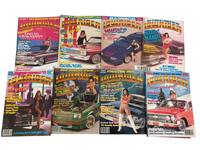
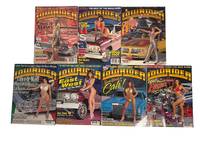
1996réf. 237541996. Lowrider culture during its national commercial expansion 1996 to 1998 documented through seven issues of Lowrider Magazine extending Chicano culture to beyond the car scene. Founded in San Jose in 1977 within the political and cultural environment of the Chicano movement Lowrider had by the late 1990s become a large automotive and lifestyle publication while continuing to invoke Aztlán La Raza Cinco de Mayo and Mexican American community identity. Lowrider Magazine. Vols. 18 and 20. California: Lowrider Publishing 1996 to 1998. Archive of 7 issues in color illustrated wrappers paginated throughout and extensively illustrated in color. 1 Lowrider Magazine. Vol. 18 No. 5. May 1996. Features include "40 Ghetto Eight" "Northern Exposure" "El Camino de Oro" "The Little Gent" "Hall of Fame" "Smile Now Cry Later" "Truck Stop" "The Riddle" "Euro Scene" "Green with Envy" "The Dragonslayer" and regional coverage from Los Angeles Central California Newton and Odessa. Departments include "La Raza on the Scene" "Arte" hydraulics sound advice and an events and advertisement index. 2 Lowrider Magazine. Vol. 18 No. 6. June 1996. Contents include "Deuces Wild" "Hidden Treasure" "Street Sweepers" "Vintage Burgundy '39" "Purple Passion" and "South of the Border" with reporting from San Diego Riverside Mesa and other regional scenes. Technical sections address car audio and installation while "La Raza on the Scene" "Arte" and the magazine's regular departments. 3 Lowrider Magazine. Vol. 18 No. 7. July 1996. Includes "The Punisher" "Legendary Acura" "Hall of Fame" "Gangster Madness" "Garfield's Dream" "Tangier's Dream" "Gangsta's Paradise" "The Future of Lowriding" and "G Manz Deuce" with reports from Chicago Riverside Corpus Christi Mission Hills and Wichita. "The Future of Lowriding" makes explicit the magazine's concern with the direction of the culture itself while the issue's geographic spread shows lowriding operating well beyond its California origins. 4 Lowrider Magazine. May 1998. Cinco de Mayo issue with the cover declaration "This is for La Raza!" alongside "Car Dancers" "Hittin' the Switches!" and technical coverage of horsepower car audio and new automotive products. 5 Lowrider Magazine. Vol. 20. July 1998. Features include "Life After Loco" "Platinum Bomb" "Street Sweepers" "Altitude Edition" "Down for Whatever" "Troka Loca" "The Wizards Dragon" "Euro Scene" and "Secret Lovers" with coverage from Tampa San Fernando Mesa Wichita and other cities. 6 Lowrider Magazine. Vol. 20. September 1998. Features include "Family Pride" "Dedicated II You" "Seven Till Now" "Euro Scene" "Bow Down" "Chico's Caddy" "Lord of Illusions" "Street Sweepers" "Mocha Frost" and "All Eyes on Me" with coverage from Oakland Greenville Milwaukee and other regional communities. 7 Lowrider Magazine. Vol. 20. December 1998. Contents range from "Project V" "Street Sweepers" "Tangerine Madness" "24 Karats" "Euro Scene" and "Ram Tough" to event coverage from Denver Dallas Portland Oklahoma City and other cities. A technical feature on a "100-POINT ENGINE" and a "HOW-TO: SECURITY SYSTEM" appear beside "Raza Report" hydraulics sound advice arte and an extensive advertisement index. By the late 1990s Lowrider Magazine had expanded far beyond its San Jose origins into a nationally circulated publication with a broad show circuit substantial advertising base and readership extending across the United States. Its growth helped carry the visual language terminology music fashion and automobile traditions of Chicano lowrider culture into mainstream popular culture giving practices rooted in Mexican American communities a national audience while preserving recurring references to La Raza Aztlán and barrio identity .Minor cover and interior wear; interiors primarily clean and well preserved. Overall very good condition. A seven issue record of Lowrider Magazine carrying Chicano lowrider culture into a national show circuit and aftermarket economy while retaining the language of La Raza Aztlán and Mexican American community identity from which the publication emerged. unknown books
1985réf. 237841985. Mexican crime journalism and the representation of homosexuality in Denuncia! comic archive of 6 issues 1970s to 1990 documenting the language through which a mass market weekly associated homosexual men with murder sexual transgression jealousy sadism and social danger during the first decade of the AIDS crisis. Published in Mexico City by 4 Editores Denuncia! combined lurid painted covers with illustrated crime narratives and editorials that presented individual cases as warnings about wider social conditions. Several issues here make homosexuality central to that formula: "Homosexuales muertos a puñaladas" converts the stabbing deaths of homosexual men into spectacle while other editorials explicitly place homosexual behavior beside bloodshed sexual violence and "sadismo." The issues appeared as Mexico's homosexual liberation movement was confronting both older forms of police and social repression and the new stigmatization produced by HIV/AIDS which scholarship has identified as reinforcing public associations between homosexuality pathology and deviance during the mid 1980s. Archive of six issues of Denuncia! Mexico City: 4 Editores 1970s to 1990 illustrated throughout with painted color covers and black and white comic style interior narratives. 1 Denuncia! Año 8 No. 410 June 10 1985. "Pandillas Infernales." The editorial condemns urban gangs as an expression of social disorder while the illustrated feature stages male violence through street confrontation and the language of delinquency. 2 Denuncia! Año 9 No. 469 July 28 1986. "Ambiciosa Traidora." Its editorial frames a woman's sexual and economic ambition as a moral problem while the cover story participates in the magazine's recurring treatment of sexuality betrayal and violence as interconnected forms of transgression. 3 Denuncia! Año 9 No. 475 September 8 1986. "Celos Asesinos." The editorial declares jealousy the cause of repeated tragedy and the illustrated story dramatizes intimate violence through the figure of the jealous woman. 4 Denuncia! "Homosexuales Muertos a Puñaladas." Año 2 No. 55 1970s. The issue places the murder of homosexual men at the center of its illustrated crime narrative the opening page reproducing a newspaper headline dominated by the word "HOMOSEXUALES." The framing identifies the victims first through sexual identity and then through the violence inflicted upon them preserving the vocabulary by which homosexuality itself could become part of the sensational content of a murder story. 5 Denuncia! "Amores Pervertidos." Año 2 No. 139 1970s. The editorial states that political literature has studied "numerosos hechos de sangre ejecutados por homosexuales" and describes violence and "sadismo" as characteristic of these crimes. Its illustrated opening labels the subject "AMORES PERVERTIDOS" converting same sex desire into a category of criminal and sexual abnormality rather than treating homosexuality as incidental to the case. 6 Denuncia! Año XIII No. 658 March 12 1990. "Sensualidad Maldita." The editorial warns that "Los seres débiles y enfermizos deben ser tratados con cuidado y sensibilidad" presenting emotional or sexual vulnerability through a language of sickness and instability. The issue extends the magazine's continuing mixture of sexuality danger moral judgment and violent consequence into the opening year of the 1990s. The six issues span a consequential period in the public history of homosexuality in Mexico. Organized homosexual liberation had become publicly visible by the late 1970s with Mexico City's first homosexual pride march held in 1979 and activist print networks circulating political arguments sexual health information international news and representations of homosexual life outside the categories supplied by mainstream media. By the middle of the following decade gay social and commercial spaces were increasingly visible in Mexico City and contemporary cultural listings advertised gay discos and travesti performances; one 1985 newspaper account described homosexuals as gaining new public spaces despite the persistence of sex based marginalization. HIV/AIDS simultaneously altered that trajectory. Scholarship on the Mexican movement identifies 1984 as the beginning of a period of diminished visibility in which the epidemic intensified the public association of homosexuality with illness and reinforced older ideas of sexual perversity and pathological nonconformity. Moderate wear to covers rubbing creasing edge and spine wear toning scattered staining small tears and losses and occasional markings or labels; bindings remain intact and interior text and illustrations generally legible. Overall good condition. Six issues documenting how Mexican popular crime publishing framed homosexuality through violence pathology moral judgment and sexual sensationalism during the same decade in which homosexual activists were constructing a competing public language of liberation community health and rights. unknown books
1993réf. 238171993. Lowrider culture during its early 1990s national expansion documented through eight issues of Lowrider Magazine from January through December 1993 as the publication connected Chicano cultural identity with a widening network of car clubs regional shows custom builders and automotive businesses. Founded in San Jose in 1977 within the political and cultural environment of the Chicano movement Lowrider retained explicitly community oriented departments such as "La Raza Report" and "Arte" while its 1993 pages carried reports from California New Mexico Texas Colorado Florida Hawaii and other regional scenes. The issues document lowriding as both a cultural practice and an increasingly elaborate technical and commercial field encompassing hydraulics custom paint engraving security systems audio equipment neon bicycles aftermarket wheels and organized show competition. Lowrider Magazine. Vol. 15. California 1993. Archive of 8 issues in color illustrated wrappers extensively illustrated throughout. 1 Lowrider Magazine. Vol. 15 No. 1. January 1993. Features include "New Mexico '62" "El Gato" "Zuki 2 Envy" "Low & Behold" "Lady Pleazer" and "Golden Dream" with "La Raza Report" "Lowrider of the Month" "Legends of Lowriding" "Arte" and event coverage among the regular departments. The issue reports on New Mexico and Arizona alongside California material presenting regional lowriding within a common editorial framework of cars clubs shows and Chicano community identity. 2 Lowrider Magazine. Vol. 15 No. 2. February 1993. Contents include "The Prophecy" "Victoria Crown" "Big G's Civic" "Northern Exposure" "Mile High Montes" "April's Dream" and "Seventy Eight Blues" with events from San Angelo Fort Lauderdale Ventura County Selma and Bakersfield. Technical coverage includes engraving while recurring departments include "La Raza Report" "Lowrider of the Month" hydraulics "Arte" "Readers' Forum" and "LRM on the Scene." 3 Lowrider Magazine. Vol. 15 No. 6. June 1993. Features "Lustful Dream" "Fourplay" "More Bounce" "Dean's Merc" "Too Tuff" and "Tickled Pink" the latter devoted to a sidecar equipped custom bicycle. Show reports extend from Florida and California's Central Valley to Cathedral City Huntington Park and Los Angeles while technical pieces on "Project '64 Part 2" and polyurethane bushings place body preparation and mechanical modification beside the magazine's coverage of clubs and events. 4 Lowrider Magazine. Vol. 15 No. 8. August 1993. Features include "Hard on the Boulevard" "Slam Dance" "Sunrise '55" "Lifestyles" "1 Bad Habit" "Hi $$$ Euros" "Steed Miata" and "El Bandido." Event reporting includes Fiesta de San Antonio East Los Angeles Northern California and Antioch while technical articles address sunroofs hydraulics and shaved door handles; the "Lifestyles" feature specifically identifies the Lifestyle Car Club of Los Angeles. 5 Lowrider Magazine. Vol. 15 No. 9. September 1993. Contents include "One Low '48" "Insane" "Flesh for Fantsy" "Street Tattoo" "Cadibike" "Big Island '66" "Beetle Juiced" and "Heavy Metal Impalas" alongside reports from Albuquerque Watsonville San Diego and a Cinco de Mayo event. Technical features on "Hydraulics '93" neon tubing and the continuing "Project '64" series document the specialized systems and decorative practices supporting custom construction while a San Diego event image identifies Amigos C.C. 6 Lowrider Magazine. Vol. 15 No. 10. October 1993. Features include "Suicide Revenge" "Nightstalker" "Showdown Suzuki" "Strictly Business" "Stylemaster" "Schwington" "Low N Behold" and "Caddy Cane." "Happenings" reports from Sacramento San Angelo and Fresno while technical articles cover dual hydraulic conversion engine detailing and mobile audio; the cover feature identifies Mario De Alba's customized Euro lowrider "Suicide Revenge." 7 Lowrider Magazine. Vol. 15 No. 11. November 1993. Features include "Optical Illusion" "Horse Power" "Blue Fantasy" "Chain Reaction" "Obsessive 1" "Epstein's Boys" and "Panty Puller" with reports from Denver Tulare Canada and Southern California. Technical coverage of hydraulic Euro struts security systems and air filter performance accompanies "La Raza Report" "Arte" and a feature on Daniel Ayala's custom bicycle "Suicide Blues." 8 Lowrider Magazine. Vol. 15. December 1993. Holiday issue with cover lines including "Cad's Best" "Washington Bush Out" "The Hot Rides" and "Dizzy Spell" alongside a feature on "62nd Dimension" identified on the cover as "Canada's '63 Pontiac." The issue continues the archive's geographic movement beyond California while retaining the combination of customized automobiles technical information models show reporting and club culture that structures the 1993 run. The eight issues record a publication functioning simultaneously as automotive magazine national directory of local scenes technical manual and Chicano cultural forum. Regional reporting repeatedly names clubs builders owners cities and organized events allowing the 1993 issues to trace lowriding through Albuquerque San Diego Denver San Angelo Florida Hawaii Northern and Southern California and Canada rather than presenting the culture as a single California phenomenon. The magazines also register how lowrider aesthetics moved across vehicle types from classic Impalas Cadillacs Monte Carlos and pickups to imports Euro styled customs bicycles and radically modified show vehicles. Moderate cover and edge wear including scattered creasing rubbing short edge tears and occasional markings; the January issue has owner's permanent marker ink on the interior of the front page as well as exhibits rippling; the September issue has a fragile front cover; the December issue has detached front and back covers. interiors generally clean and intact. Overall good condition. An eight issue record of Lowrider Magazine mapping Chicano lowrider culture across a national network of clubs shows builders technical practices and regional communities during 1993. unknown books
1979réf. 615770New York: Van Nostrand Reinhold Company 1979. Hardcover. Very Good/Very Good. First edition. 362pp. Fading on the board edges and some spotting on the page edges thus very good in a very good dust jackeyt with short tears creasing and toning. Van Nostrand Reinhold Company hardcover books
1955réf. 229751955. Ziff-Davis Publishing Company. Amazing Stories 1955-1957 documents mid-twentieth-century American science fiction as a cultural medium engaging Cold War anxieties technological ambition and shifting gender dynamics. Issued during the decade preceding the Sputnik launch these magazines situate speculative narratives within contemporary concerns over atomic power space exploration and scientific authority. The material supports research into popular culture science and technology studies and the ideological functions of mass-market fiction in shaping public interpretations of global conflict and modernization. Ziff-Davis Publishing Company. Amazing Stories. New York: Ziff-Davis Publishing Company 1955-1957. Four issues: Vol. 29 No. 3 May 1955; Vol. 30 No. 12 Dec. 1956; Vol. 31 No. 7 July 1957; Vol. 31 No. 8 Aug. 1957. Each issue is a color-illustrated pulp magazine containing fiction editorial content and advertisements. The May 1955 issue includes "The Chained Man" by P. F. Costello accompanied by imagery of an astronaut bound in chains on an alien terrain emphasizing confinement and vulnerability in space exploration. The December 1956 issue features "The Galaxy Master" by Malcolm Mead with cover imagery depicting a central male figure dominated by two women under the caption "Planets & Women Were His Pawns" combining themes of cosmic authority and gendered power. The July 1957 issue presents "A God Named Smith" by Henry Slesar with interior illustrations of a laboratory figure manipulating planetary matter addressing questions of scientific creation and control. The August 1957 issue includes "Monster on Stage 4" also by Slesar with cover art showing a large sea creature emerging near an urban skyline juxtaposing modern infrastructure with destructive force. Across the issues recurring visual and textual elements include astronauts laboratories urban environments monstrous figures and human subjects in states of peril alongside advertisements such as Science-Fiction Book Club promotions that situate the magazines within a broader commercial network of readership and distribution. These issues reflect how science fiction functioned as a cultural sphere for negotiating fears of technological overreach nuclear conflict and shifting social roles during the Cold War. The narratives and imagery demonstrate how mass-market publications translated abstract geopolitical tensions into accessible stories of domination survival and moral responsibility while also engaging evolving representations of gender and authority. Four issues; pulp format; color-illustrated covers; staple-bound. Edge wear creasing and surface rubbing consistent with mid-century pulp paper; interiors complete and legible. Overall condition: Good to Very Good. unknown books
1942réf. 230001942. Dell Publishing Company; Popular Publications. Five-Novels Monthly 1942 and Argosy 1943 document American wartime popular culture through mass-circulation pulp magazines that combined fiction illustration and advertising to construct narratives of masculinity heroism and global conflict during World War II. Produced in the immediate aftermath of U.S. entry into the war these publications situate combat national identity and civilian participation within accessible entertainment formats. The material supports research into wartime propaganda gender construction and the role of commercial print media in shaping public understanding of military conflict. Two pulp magazines each illustrated and printed on wartime paper stock. Dell Publishing Company. Five-Novels Monthly. New York: Dell Publishing Company Inc. July 1942; Popular Publications. Argosy. New York: Popular Publications Inc. March 1943. The July 1942 issue of Five-Novels Monthly features a cover scene of an armed man carrying an unconscious woman amid aerial bombardment with the United States Capitol visible in the background. Interior fiction includes aerial combat narratives and resistance scenarios with captions referencing American Volunteer Group pilots described as "blasting the men of Nippon from the sky" accompanied by visual depictions of damaged aircraft and combat engagement. Advertisements include a full-page "America Strikes Back!" War Almanac promoting military knowledge as a civic responsibility. The March 1943 issue of Argosy labeled "An Issue Dedicated to American Fighting Men" includes "Tigers in the Sky: A Novelette of the A.V.G." by Norbert Davis set in Kunming China and depicting pilots associated with CAMCO and the Flying Tigers. Illustrated scenes show aerial dogfights and attacks on Japanese bombers. Additional content includes adventure fiction and a full-page Kessler Blended Whiskey advertisement set in Cape Cod combining leisure imagery with wartime messaging. Across both issues recurring visual and textual elements include armed male figures combat aircraft explosions and stylized representations of enemy forces. Issued during peak U.S. mobilization these magazines demonstrate how commercial entertainment media incorporated wartime themes into narrative and advertising structures reinforcing associations between masculinity military service and national duty. The combination of fiction illustration and consumer advertising reveals how global conflict was integrated into everyday reading material and positioned as both moral imperative and narrative spectacle. Two issues; approximately 100 pages combined; large-format pulp magazines; illustrated covers and interiors. Edge wear spine stress toning creasing and small losses at extremities consistent with wartime paper; interiors legible with illustrations intact. Overall condition: Good. unknown books
1977réf. 606687New York: Ziff-Davis Publishing Company 1977. Hardcover. Good. 240pp. Topedges of pages lightly water wrinkled small sticker on front fly thus good only. Ziff-Davis Publishing Company hardcover books
1999réf. 223691999. Rap Pages 1999 a group of six consecutive issues of the Los Angeles hip hop magazine published during the commercial expansion of rap music and the growing national prominence of regional artists. Founded in 1991 and associated with editor Sheena Lester during its development Rap Pages distinguished itself through sustained coverage of West Coast hip hop while also reporting on East Coast Southern and emerging independent performers. The May through October 1999 issues feature Eminem during his commercial breakthrough Southern rap duo 8Ball and MJG Redman Missy Elliott GZA and other musicians whose recordings helped shape hip hop's national audience. The magazine's interviews artist profiles cover photography and music reporting document the relationship between regional rap scenes record-label promotion and the expanding commercial music industry at the close of the 1990s. Rap Pages. Los Angeles: Larry Flynt Publications May-October 1999. Six consecutive monthly issues comprising May June July August September and October. Original glossy pictorial wrappers illustrated throughout with artist portraits interviews music features and advertising. The June issue features Eminem on its cover under the headline "Reservoir Dawg" while July's coverage includes 8Ball and MJG and GZA. The August issue profiles Missy Elliott and Charli Baltimore extending the magazine's coverage to women performers working within the predominantly male rap industry. Other musicians appearing across the group include Nas Juvenile Slick Rick Black Moon DMX Snoop Dogg and Dr. Dre. The issues are as follows: 1 Rap Pages. Vol. 8 No. 5. Los Angeles: Larry Flynt Publications May 1999. Features Redman on the cover under the headline "The Doctor Is Insane" presenting the New Jersey rapper through the exaggerated humor associated with his recordings and stage persona. Additional coverage includes Scarface Naughty by Nature and Rap-A-Lot Records the Houston label instrumental in establishing Southern rap's national commercial presence. 2 Rap Pages. Vol. 8 No. 6. Los Angeles: Larry Flynt Publications June 1999. Features Eminem in a stark cover portrait under the headline "Reservoir Dawg" published shortly after the February release of The Slim Shady LP which brought him widespread commercial recognition. Additional contents include DMX Juvenile Nas Black Moon Mobb Deep and 8Ball and MJG documenting the simultaneous prominence of established East Coast performers and rising Southern artists. The issue appeared during Eminem's transition from underground battle rapper to major-label recording star. 3 Rap Pages. Vol. 8 No. 7. Los Angeles: Larry Flynt Publications July 1999. Features coverage of Memphis rap duo 8Ball and MJG and Wu-Tang Clan member GZA alongside reporting on Snoop Dogg and Dr. Dre's renewed association following Snoop's departure from Death Row Records and move to No Limit Records. The issue documents Southern rap's expanding national audience and the continuing influence of artists associated with the development of West Coast gangsta rap. 4 Rap Pages. Vol. 8 No. 8. Los Angeles: Larry Flynt Publications August 1999. Includes profiles of Missy Elliott and Charli Baltimore two women developing distinct positions within late-1990s commercial hip hop. Additional coverage includes Kool Keith Raekwon Snoop Dogg JT Money and Rahzel. The issue appeared during the release period of Elliott's second studio album Da Real World and records the prominence of women performers alongside established male recording artists. 5 Rap Pages. Vol. 8 No. 9. Los Angeles: Larry Flynt Publications September 1999. Features Mobb Deep the Queensbridge duo known for their stark accounts of urban life alongside Del the Funky Homosapien Terror Squad and Made Men. The issue places commercially established East Coast performers alongside independent and alternative rap artists documenting the varied musical approaches circulating within hip hop at the end of the decade. 6 Rap Pages. Los Angeles: Larry Flynt Publications October 1999. The final issue in this six-month sequence continuing the magazine's coverage of regional rap scenes contemporary recording artists and hip hop's expanding commercial audience. Published during the final months of Rap Pages' original run under Larry Flynt Publications the issue belongs to a period of changes in the magazine's ownership and publication history. Founded in Los Angeles Rap Pages developed its readership partly by providing extensive coverage of West Coast artists who received comparatively limited attention in East Coast-centered hip hop journalism. By 1999 its editorial scope included the expanding Southern rap industry major-label performers independent lyricists and musicians crossing into mainstream popular culture. Eminem's June cover is particularly notable for its proximity to the release of The Slim Shady LP while the coverage of 8Ball and MJG Missy Elliott and Rap-A-Lot Records records the commercial emergence of Southern hip hop during the same period. The magazine's original publisher suspended publication in October 1999 making these issues part of the closing months of its initial publication history. All six issues retain their original glossy covers complete pagination and intact spines. The Eminem issue shows abrasion affecting the lower cover text; otherwise light handling wear. Overall in very good condition. unknown books
1998réf. 224471998. Bizarre Magazine 1998-2001 a group of eight issues of the British counterculture periodical covering fetish subcultures alternative sexuality body modification underground music censorship and transgressive art during the late 1990s and early 2000s. Published by John Brown Publishing under the editorship of Fiona Jerome and David McComb during this period Bizarre combined investigative journalism provocative photography reader contributions and entertainment reporting covering subjects that received limited attention in mainstream British magazines. The seven issues from 1998 and one from 2001 document the magazine's treatment of sexual practices alternative fashion international underground scenes and controversies over obscenity and censorship. Its articles and imagery also record the commercial presentation of fetish aesthetics and other subcultural practices to a national readership. Bizarre Magazine. London: John Brown Publishing 1998-2001. Eight issues first editions comprising seven from 1998 and one from 2001. Perfect-bound in original color pictorial wrappers illustrated throughout in color and black-and-white. The covers employ stylized photography sexual imagery and sensational headlines including a topless woman draped with a live boa constrictor Tara O'Connor dressed in a latex dominatrix outfit and a goth model with a bleached buzz cut and facial piercings. Contents range from reporting on censorship the pornography industry and cosmetic surgery to profiles of punk performers fetish photography Japanese erotica and underground entertainment. Several issues incorporate reader-submitted material including amateur nude photography bondage imagery and personal accounts. The issues are as follows: 1 Bizarre Magazine. January/February 1998. "Banned!" Cover depicting a woman styled as one of the Droogs from Stanley Kubrick's A Clockwork Orange. Features a survey of international censorship concerning film literature and sexual expression alongside an illustrated exposé on alleged post-Soviet Russian black-market organ harvesting and reporting on the pornography industry. The issue addresses restrictions on controversial cultural material and the magazine's recurring interest in illicit markets and sensational subjects. 2 Bizarre Magazine. May 1998. "Tasty!" Includes "Porn Past Confessions" examining experiences within the adult entertainment industry and an article concerning the expanding cosmetic surgery industry and unsuccessful procedures. Contains the 16-page "Sealed Stranger Stuff" section featuring reader-submitted nude artwork and amateur bondage photography. This supplementary section documents reader participation in the magazine's presentation of fetish and erotic material. 3 Bizarre Magazine. July 1998. "Let's Rock!" Features "Top Ten Maddest Stage Performers" including punk performer GG Allin and Wendy O. Williams of the Plasmatics. Additional material includes interviews with heavy metal groupies profiles of shock-comedy performers and underground fire-breathers and a do-it-yourself body-piercing guide. The issue concentrates on extreme stage performance underground music and physical modification. 4 Bizarre Magazine. September 1998. "Kiss My Asp!" Cover photograph of a topless woman draped with a live boa constrictor. The principal feature "The Weirdest Sex Fetishes in the World-EVER!" surveys unconventional sexual practices through the magazine's characteristic combination of sensational reporting and provocative imagery. Also includes a profile of the French Foreign Legion. 5 Bizarre Magazine. October 1998. "Bollywood Babylon." Cover featuring a woman wearing South Asian adornments. Includes coverage of Indian cinema articles concerning Laotian "Opium Tribes" censorship in Indian television and notorious Mumbai criminal syndicates. The issue extends the magazine's international coverage through accounts of Asian popular culture illicit activities and restrictions on media. 6 Bizarre Magazine. November 1998. "Read Yourself Raw." A special issue examining aspects of Japanese underground culture including erotic publications and motorcycle gangs. Its coverage addresses Japanese sexual imagery and youth subcultures for a British readership extending the magazine's reporting beyond European and American alternative scenes. 7 Bizarre Magazine. December 1998. "Game On!" Cover featuring television game-show host Tara O'Connor wearing a dominatrix-style latex outfit. Contents include profiles of mercenaries reporting on "Russian Murder TV" and "The Drugs Do Work" an article concerning psychotropic substances and rave culture. Also contains a reader-submitted fetish photography section documenting the magazine's practice of incorporating amateur erotic imagery alongside its editorial features. 8 Bizarre Magazine. March 2001. "Punk Is Dead." Cover featuring a pale-skinned goth model with a bleached buzz cut and facial piercings. The issue includes a retrospective examination of punk's commercialization and its absorption into mainstream fashion and popular culture. Its cover styling draws on goth and punk aesthetics accompanying the discussion of underground styles increasingly adopted by commercial entertainment and fashion industries. Founded in 1997 Bizarre appeared during a period when fetish fashion body piercing industrial music rave culture and other underground practices were becoming increasingly prominent in British popular media. Its coverage of pornography censorship and unconventional sexuality appeared alongside commercial advertising and highly stylized photography documenting how underground practices were presented to a broader consumer audience. The reader-submitted erotic material is particularly notable for recording direct participation in the magazine's sexual and visual culture while the 2001 punk retrospective addresses the commercialization of an earlier countercultural movement. Light wear and rubbing to extremities; interior pages bright and complete. Sealed sections where present have been opened but remain intact. Overall in very good condition. unknown books
1976réf. 225451976. Civil Rights Periodical Archive of 2 Issues of Black Forum Magazine. Detroit: Motown Record Corporation 1976-1977. Two issues. Pictorial wrappers illustrated throughout in black and white. This small archive preserves two scarce issues of Black Forum the short-lived but culturally significant magazine published by Motown as part of its Black Forum label which sought to amplify African American political cultural and artistic voices during the height of the Black Power era. The magazine complemented the label's spoken word and documentary record releases by providing a printed forum for essays interviews poetry photography and coverage of political activism. The design reflects Motown's high production standards with bold cover photography striking typography and a mix of reportage and cultural commentary. Issues include; 1 Vol. 1 No. 1 Winter 1976-77 which features extensive coverage of contemporary civil rights debates including a piece on "The Real Meaning of Black Power" reflections on Pan-Africanism and profiles of emerging Black political leaders. Poetry and art by African American creators are interspersed with documentary photographs of marches and community events; and 2 Vol. 1. No. 2 January 1976 "Premiere issue" includes a major feature on the role of the Black Arts Movement in shaping political consciousness alongside interviews with musicians and activists and reviews of significant books and records. As one editorial declares "Black Forum is committed to the expression of our people's struggle.in our own words our own images our own voices." Light edge wear and handling; overall very good condition. Produced in Detroit at a time when Motown was at its commercial peak yet increasingly engaged with the Black liberation struggle Black Forum stands as a rare example of a major African American-owned corporation using its media reach to promote political engagement and cultural pride. Surviving issues are uncommon especially in runs and are of strong interest to scholars of African American history media and the intersections of art and activism in the early 1970s. unknown books
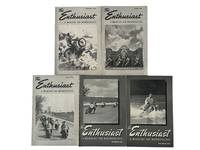
1950réf. 217641950. The Enthusiast a monthly publication produced by the Harley-Davidson Motor Company chronicling American motorcycle culture at mid-century. Milwaukee WI: Harley-Davidson Motor Co. February-November 1950. Archive of five issues each 23 pages and measuring 9" x 6". Each issue covers racing club news technical updates reader-submitted photographs and interestingly the emergence of women as motorcycle enthusiasts in an otherwise male dominated hobby. Includes February April May October and November 1950 issues. Printed by the George Banta Company. Originally founded in 1916 The Enthusiast is widely regarded as the longest continuously published motorcycle magazine in the United States. As the official mouthpiece of Harley-Davidson it functioned both as brand promotion and as a grassroots record of American motorcycling with emphasis on club activity national races and the patriotic connotation of riding Harley-Davidson machines in postwar America. These 1950 issues capture the post-WWII resurgence of motorcycling as both a recreational and competitive pursuit particularly among returning veterans and increasingly among women. Visually rich the covers feature dramatic photographic scenes: the February 1950 issue shows a rider mid-wheelie over rocky terrain on a 1949 Harley-Davidson 125 captioned "Cross-country on a 1949 Harley-Davidson 125"; the April cover depicts the Wroten Family of motorcyclists lined up at "Rose Park" titled "Hydra-Gliding with the Wroten Family." In May a parade of riders cruises down a tree-lined highway under the banner "Cruising Down the Highway." The November issue highlights a rider fording a stream in full gear the water splashing dramatically beneath his machine. Coverage of female riders is notably present in this period. The April 1950 issue introduces the Motorettes Motorcycle Club of Chattanooga Tennessee whose members appear in matching uniforms of white shirts dark skirts and caps. The caption names each woman: "Lou Riggsby Betty Hollingsworth Mary Joe Pate Fay Tate and Clara Voiles. Second row from left: Clara Manasco Mabel Huggins Alice Hollingsworth Shirley McPherson and Elizabeth Jones." In the same issue the "Fair Feminine Fans" column celebrates women riders like "Miss Virginia Lane of Florence Alabama" and "Miss Lorna Lamb of Chicago" the latter pictured on a Harley-Davidson 45 "heading into the mountain trails to her favorite fishing streams." One particularly revealing note appears in a section reporting on the Buccaneer Motorcycle Club's "Reliability Run" in Corpus Christi Texas. There "a girls' division" is highlighted: "Top honors went to Ollie Lee Houser. second Olliene Earls and Dolly Smothers third." A photograph shows the three women standing beside a flathead Harley-Davidson 45 with trophy in hand. The magazine's inclusion of competitive female riders "very attractive Motorettes" underscores the growing visibility of women in the motorcycle world. Also included is a full spread on the September 1950 Langhorne 100-mile National Speedway Championship won by Billy Huber on a Harley-Davidson: "He finished in 69 minutes 20.69 seconds a scant 27.24 seconds slower than the record set by Jim Chann in 1949." The spread includes detailed action shots and rider commentary reflecting The Enthusiast's deep engagement with the national racing circuit. Light wear to spines and corners with minor handling marks and creases. Interior pages uniformly clean and supple. Very good condition overall. A vivid and culturally significant group of early postwar issues of The Enthusiast reflecting the expanding role of women in motorcycling the popularity of Harley-Davidson racing and the brand's deeply embedded identity in American civic life-captured in documentary photographs riders' testimonials and grassroots club culture. unknown books
1968réf. 217411968. Moon Henry Lee ed. The Crisis: A Record of the Darker Races 1968-1970 documenting African American political thought civil rights advocacy and cultural production during a transitional period between the Civil Rights Movement and the rise of Black Power. Founded by W.E.B. Du Bois in 1910 The Crisis functioned as a central platform for civil rights advocacy and cultural commentary and these issues reflect its continued role under Henry Lee Moon during a period of ideological and generational shift. Moon Henry Lee ed. The Crisis: A Record of the Darker Races. Various issues. New York: NAACP 1968-1970. Archive of six issues including five Softcover issues each approximately 30-50 pages measuring 7.5 x 5.25 inches and one hardcover 60th anniversary issue approximately 75 pages. Issues included: 1 Vol. 75 No. 3 March 1968 featuring "Death on the Campus: The Orangeburg Story" by Warren Marr II on the police killing of students at South Carolina State College; 2 Vol. 75 No. 7 Aug.-Sept. 1968 including coverage of the NAACP convention and critiques of mass education; 3 Vol. 75 No. 10 December 1968 with poetry and commentary on racial representation in consumer culture; 4 Vol. 76 No. 1 January 1969 addressing self-defense legal cases and cultural figures; 5 Vol. 76 No. 9 November 1969 documenting campus protest and public health communication; 6 Vol. 77 No. 9 November 1970 a special 60th anniversary hardcover issue containing historical essays by Henry Lee Moon writings by W.E.B. Du Bois editorials by Roy Wilkins and literary contributions by Langston Hughes Arna Bontemps and Margaret Walker. Across issues content includes essays poetry reportage and institutional commentary. These issues span a critical moment in African American history marked by the aftermath of major civil rights legislation the rise of Black student activism and increasing engagement with questions of self-defense cultural identity and political strategy. Coverage of events such as the Orangeburg Massacre and campus protests situates the publication within ongoing struggles over state violence and educational access while literary and artistic contributions reflect continued investment in Black cultural production. The 60th anniversary issue underscores the publication's institutional legacy while revisiting earlier intellectual frameworks alongside contemporary concerns. Light wear and minor toning consistent with age; overall very good condition. A focused periodical grouping illustrating the evolution of NAACP discourse and African American intellectual life in the late 1960s. unknown books
1958réf. 220091958. Art ARTS magazine was a leading voice of postwar art criticism blending rigorous analysis of modernist and avant-garde movements with global perspectives and early coverage of rising American and international artists. Archive of 13 Issues of ARTS Magazine. New York: The Art Digest Inc. 1958-1959. Illustrated throughout with black-and-white and occasional color plates. Each 8.5" x 11". Approximately 64 pages each. ARTS magazine evolved from a digest of exhibition listings into one of the most influential critical journals of the mid-20th century. Arts became a central voice in the rise of Abstract Expressionism publishing pivotal essays by leading critics including Hilton Kramer Alfred Werner Annette Michelson and others. Throughout 1959 the magazine engaged with a sweeping range of subjects-interrogating surrealism Soviet Constructivism Indian sculpture feminist eroticism and postwar abstraction-while platforming now-canonical figures such as Joan Miró El Greco Pollock and Medardo Rosso. Also notable is Vernon Young's critical work on African American filmmaker and painter Herbert Brathwaite part of the magazine's attention to cross-disciplinary and multicultural voices. Visually striking with bold color covers in pink ochre chartreuse cyan and plum these issues represent a high point in American midcentury visual arts discourse. 1 October 1958. Includes Edouard Roditi's "Interview with Joan Miró" in which Miró reflects on the spiritual function of abstraction and his legacy within surrealism and Catalan identity. 2 November 1958. Highlights include "St. Louis Masterpieces" a profile of the City Art Museum's traveling exhibition and Kramer's "Toward an Art of Mystification" previously mentioned. 3 January 1959. Includes Alfred Werner's "Passion and the Nude" a critical overview of The Nude exhibition at the Pearl Galleries. Also features Hilton Kramer on contemporary art in Paris plus commentary on the evolving American art scene. 4 February 1959.Lead essay "Dada Hits West Germany" by John Anthony Thwaites offering rare photographic documentation of a groundbreaking Dada retrospective. Includes images of Duchamp's Bicycle Wheel and Ernst's collages. 5 March 1959. Features Hilton Kramer's "Age of Elegance" covering the Baltimore Museum's Rococo exhibition. The issue juxtaposes 18th-century French painting with American responses to its theatricality and sensuality. 6 April 1959. Examines European abstraction with the essay "School-of-Paris Internationals" alongside coverage of Jean-Paul Riopelle and Pierre Soulages. Includes dynamic color plates. 7 May 1959. Hilton Kramer's "Toward an Art of Mystification" analyzes Kandinsky's late abstraction framed through postwar retrospectives. Also includes a feature on Bauhaus graphic design. 8 June 1959. Issue not yet visually reviewed; presumed to contain additional Kramer or Michelson essays based on editorial trends. 9 July-August 1959 .Issue not yet visually reviewed; may include European summer exhibition coverage and seasonal reviews. 10 September 1959. Vernon Young's "Painter and Cinematographer" surveys the dual career of Herbert Brathwaite a Caribbean-American figure working at the intersection of experimental film and modernist painting. 11 October 1959. Hilton Kramer's "Critics of American Painting" interrogates the emerging canon through the "Great American Artists" series. Illustrated with Stuart Davis's 1940s abstraction. 12 November 1959. "Notes on Masson and Pollock" by William Rubin explores formal and psychic parallels between French Surrealism and American action painting. Strong monochrome reproductions of Pollock's Firewood and Masson's Pastoral. 13 December 1959. Hilton Kramer profiles Italian sculptor Medardo Rosso focusing on photographic perception and surface ambiguity in fin-de-siècle wax busts. Contains haunting full-page photograph. Overall in very good condition with light wear to extremities and occasional shallow creases. A significant assemblage from a watershed year in postwar criticism bringing together perspectives on European modernism American abstraction and international dialogues in art. unknown books
1961réf. 220101961. Art ARTS magazine was a leading voice of postwar art criticism blending rigorous analysis of modernist and avant-garde movements with global perspectives and early coverage of rising American and international artists. Archive of 9 Issues of ARTS Magazine. New York: The Art Digest Inc. 1961. Illustrated throughout with black-and-white and occasional color plates. Each 8.5" x 11". Approximately 64 pages per issue. ARTS magazine evolved from a review digest into a rigorous platform for art criticism and theory. As the postwar art world expanded ARTS became a critical voice in mid-century American and international modernism. Its pages featured early essays by major critics like Hilton Kramer Alfred Werner Sidney Geist Annette Michelson and Edouard Roditi covering movements from Abstract Expressionism to Surrealism Futurism and non-Western modernities. The publication's aesthetic was as bold as its editorial stance-its large headline typography and bright cover colors became instantly recognizable on newsstands and in university libraries. Archive of 9 Issues: 1 January 1961. Alfred Werner's "The Inward Life of Modigliani" explores the psychological dimensions of Modigliani's stylized nudes and portraits particularly in recent exhibitions in Boston and Los Angeles. 2 February 1961. Lead essay "Hartley and Modern Painting" by Hilton Kramer reevaluates Marsden Hartley's rugged abstraction as a foundational influence on American modernism. 3 March 1961. Edouard Roditi's "Interview with Max Ernst" a rare first-person account of the surrealist's philosophy and career. Robert Goldwater's "Reflections on the Rothko Exhibition" provides an early formal analysis of Mark Rothko's work with full-bleed illustrations. 4 April 1961. "An Essay on Ingres" takes a second look at the benefit show "Ingres in American Collections" at the Rosenberg Gallery prompting a reevaluation of the "Classicist" and reconsidering the academic painter's relevance to mid-century figuration. Also includes critique on Mexican Paintings and the Max Ernst exhibition. 5 May-June 1961. A special travel number featuring articles on Paris Italy Munich London and Vienna. In "Venice: Temporary Imports" by Creighton Gilbert Gilbert examines an exhibition of Renaissance loans at the Venice Biennale. Also features discussions of postwar Italian painting and Latin American sculpture. Annette Michelson's "Paris: La Grande Saison" surveys recent gallery trends in France establishing ARTS' critical role in reporting on European developments. 6 September 1961. "China as Spirit" by John Brzostoski explores natural elements within Chinese traditional painting and month in review national and international exhibitions from New York to Venice. 7 October 1961. Hilton Kramer's "Futurism Today" connects early 20th-century Italian futurism to contemporary political aesthetics. "Tribute to Panofsky" by Creighton Gilbert. Includes international exhibition coverage from Europe and Asia. 8 November 1961. K.A. Jelenski's "L'Art Informel and Nonconformity" offers a rare English-language critique of Polish and Eastern European abstraction under Cold War conditions. Illustrated with works by Jan Lebenstein and others. 9 December 1961. Includes Josephine Herbst's 8 page spread on the life and work of Vincent Van Gogh with many black and white and some color plates. Also includes updates from international festivals and New York galleries. Overall in very good condition with scattered edgewear some cover creases and toning; interiors clean and tightly bound. A vibrant insightful record of critical writing at the intersection of aesthetics geopolitics and modernist innovation. unknown books
1960réf. 220051960. Art ARTS magazine was a leading voice of postwar art criticism blending rigorous analysis of modernist and avant-garde movements with global perspectives and early coverage of rising American and international artists. Archive of 7 Issues of ARTS Magazine. New York: The Art Digest Inc. 1960. Illustrated throughout with black-and-white and occasional color plates. Each 8.5" x 11". Approximately 64 pages each. The Art Digest ARTS magazine emerged as one of the most influential American art periodicals of the mid-20th century evolving from a digest of exhibition listings into a platform for serious criticism and scholarly debate. Renamed ARTS in the 1950s the magazine became a critical voice during the rise of Abstract Expressionism and the New York School publishing essays by leading art critics such as Hilton Kramer Sidney Geist and Annette Michelson. Throughout the 1960s ARTS played a key role in shaping discourse around both American and international modernism offering early attention to feminist surrealist and global art histories before ceasing publication in 1992. The archive features early writings by now-canonical critics and curators-Sidney Geist Alfred Werner Hilton Kramer Annette Michelson-and includes interviews exhibition reviews and in-depth artist studies. The issues also demonstrate a commitment to global modernism and multicultural inquiry with contributions by Asian American critic Vernon Young and discussions of Soviet Constructivism Indian sculpture and Latin American abstraction. Also notable is an early exhibition announcement for Chinese American watercolorist Dong Kingman at Wildenstein Galleries. The magazine's bold use of color covers and oversized headline typography-varying from magenta to cyan to goldenrod-gives it a strong graphic identity. 1 January 1960. Featured essays include "Brancusi Santificatus" by Sidney Geist a spiritually-tinged reading of Gideon-Welcker's monograph; "The Maurer Enigma" by James R. Mellow a study of American painter Alfred Maurer; and an interview with Gabriele Münter by Edouard Roditi reflecting on her time with Kandinsky and the Blue Rider group. Also includes Paris and Rome reports by Annette Michelson and John Lucas. 2 February 1960. Special David Smith number including Kramer's feature "The Sculpture of David Smith" and a photographic survey of Smith's politically charged "Medals for Dishonor" 1937-1940. Highlights his transition from social realism to formal abstraction and positions him as a bridge between American modernism and European influences. 3 March 1960. Lead essay by Annette Michelson "But Eros Sulks" critiques Surrealism's eroticism as manifested in Paris's International Exhibition of Fantastic Art. Also contains George Dennison's "Month in Review" and coverage of recent works by Elmer Bischoff and the figurative painters of San Francisco. 4 April 1960. Features Alfred Werner's "A Poet of the Absurd" a critical biography of Belgian symbolist James Ensor analyzing grotesque self-portraits and satire. Richly illustrated. Includes updates from New York galleries and an art auction digest. 5 May 1960. Includes Vernon Young's "Spanish Masters in Stockholm" an extended review of a traveling Spanish Baroque show featuring El Greco and Velázquez. Also includes "The Evergreen Retrospect" and "Constructing the Absolute" another installment by Kramer on suprematism and Malevich. 6 September 1960. Hilton Kramer's essay "The Erotic Style" explores Art Nouveau's sensual imagery in the context of a major retrospective. Also includes George Woodcock's "A Far but Familiar Country" discussing Indian sculpture and cultural translation. 7 October 1960. D.A. Jelsen's "Avant-Garde and Revolution" traces the postwar rehabilitation of Soviet Constructivism including 1921 Constructivist exhibitions. Additional coverage on Egon Schiele's influence and American Expressionism alongside a comparison of German and Austrian styles. Overall in very good condition with some light edge wear and minor handling creases; interiors bright and clean. A substantial and compelling record of 1960s art discourse and visual culture especially valuable for its early coverage of modernism's global currents and rare profiles of women and minority artists. unknown books
1989réf. 594702Boston: Houghton Mifflin Company 1989. Softcover. Very Good. First simultaneous paperback edition. Introduction by Margaret Atwood. Trade paperback. xxiii 341pp. Soiled on topedges else very good. Contributions by Charles Baxter Madison Smartt Bell Robert Boswell Blanche McCrary Boyd Larry Brown Frederick Busch Michael Cunningham Rick DeMarinis Harriet Doerr Mavis Gallant Douglas Glover Barbara Gowdy Linda Hogan David Wong Louie Bharati Mukherjee Alice Munro Dale Ray Phillips Mark Richard Arthur Robinson and M.T. Sharif. Houghton Mifflin Company unknown books
1969réf. 204711969. Fisher Elizabeth ed. Aphra: The Feminist Literary Magazine 1969 to 1974 documents second wave feminist literary culture through women's fiction poetry essays drama art criticism and editorial statements written against male control of literary and commercial media. The magazine's title honored Aphra Behn the seventeenth-century writer often identified as the first English woman to earn her living by writing and the University of Connecticut Archives notes that Aphra was published quarterly from 1969 to 1976 and took its name from Behn. The archive belongs to feminist print culture and women's literary history illustrating how women writers and artists used periodical publication to create recognition critique sexist cultural production and build a literary space responsive to women's experience. Aphra: The Feminist Literary Magazine. Pennsylvania and New York: Aphra 1969 to 1974. Eight issues. The archive contains eight digest-format issues each approximately 72 pages and measuring 6.75 x 8.5 inches with short fiction poetry art play excerpts essays criticism contributor notes and recurring feminist quotation or commentary features. The first issue's preamble states that the magazine sought to offer "work in which women can see themselves" giving readers "the identification and shock of recognition which art traditionally gives but which is clearly underexpressed" and another UConn Archives account quotes the magazine's mission statement as "Free women thinking doing being." Across the group contributors and subjects include Rosemary McDermott Eva Hesse Kimberley HMS Snow on Kate Chopin's The Awakening Erica Jong Joan Silber Susan Hall Dorothy Hage Lydia Ressner Renny Hartmann Susan Griffin Patricia Sloane Margaret Atwood Nelly Kaplan Beth Bird Dacia Maraini Josephine Herbst Anita Barrows Barbara Chesser Adrienne Rich Esther Newton Paula Webster Daphne Patai Cynthia D. Grant Lynne Sharon Schwartz Jane Augustine Crescent Dragonwagon and Isabel Bishop. 1 Fisher Elizabeth ed. Aphra: The Feminist Literary Magazine. Vol. 1 No. 1. Pennsylvania: Aphra 1969. First issue titled "Free Women: Thinking Doing Being" with short fiction poetry and a play excerpt establishing the periodical's editorial commitment to women's literary self-definition. 2 Fisher Elizabeth ed. Aphra: The Feminist Literary Magazine. Vol. 3 No. 1. Pennsylvania: Aphra 1971 to 1972. Winter issue with poems essays and short stories including Rosemary McDermott's "I am the Immaculate Conception" and sculpture by Eva Hesse; purple cover with "Om" and "Women." 3 Fisher Elizabeth ed. Aphra: The Feminist Literary Magazine. Vol. 3 No. 2. Pennsylvania: Aphra 1972. Spring issue with Kimberley HMS Snow on Kate Chopin's The Awakening stories by Erica Jong and Joan Silber and artwork by Susan Hall; brown cover with portraits of two women. 4 Fisher Elizabeth ed. Aphra: The Feminist Literary Magazine. Vol. 3 No. 3. Pennsylvania: Aphra 1972. Summer issue with an essay by Dorothy Hage short stories by Lydia Ressner Renny Hartmann and Susan Griffin and art by Patricia Sloane; pink cover with green women's faces. 5 Fisher Elizabeth ed. Aphra: The Feminist Literary Magazine. Vol. 3 No. 4. Pennsylvania: Aphra 1972. Fall issue with poetry by Margaret Atwood and Barbara Gravelle stories by Nelly Kaplan Margaret Robinson and Eleanor Hyde and a photo essay by Beth Bird; red cover with "Free Women The Mirror Breaks." 6 Fisher Elizabeth ed. Aphra: The Feminist Literary Magazine. Vol. 4 No. 1. Pennsylvania: Aphra 1972 to 1973. Winter issue themed "Fathers and Daughters" with a play by Dacia Maraini stories by Josephine Herbst and Margaret Lamb and poetry by Anita Barrows Barbara Chesser and Adrienne Rich. 7 Fisher Elizabeth ed. Aphra: The Feminist Literary Magazine. Vol. 4 No. 3. Pennsylvania: Aphra 1973. Summer issue themed "Matriarchy" with an essay by Esther Newton and Paula Webster and poems by Siv Cedering Fox Alexandra Grilikhes and Miriam Palmer; tan cover with red ancient Egyptian-style illustration. 8 Fisher Elizabeth ed. Aphra: The Feminist Literary Magazine. Vol. 5 No. 3. Pennsylvania: Aphra 1974. Issue themed "Free Women Friends and Lovers" with an essay by Daphne Patai stories by Cynthia D. Grant and Lynne Sharon Schwartz poetry by Jane Augustine and Crescent Dragonwagon and drawings by Isabel Bishop. Minor cover wear from age with tight bindings and clean readable contents; overall very good. Substantial feminist literary periodical archive documenting how second wave women writers and artists built a print forum for creative work criticism historical recovery and collective recognition. unknown books
1977réf. 587132Columbia Missouri: Stephens College 1977. Softcover. Near Fine/Very Good. Spring 1977. Quarto. Illustrated with drawings and from photographs. Stapled glossy wrappers in a pictorial dust jacket. Wraps with a few tiny foxing spots stapled lightly oxidized near fine in a lightly foxed very good dust jacket with a bit of rubbing and edgewear and on small indentation along the topedge due to an old paperclip. With contributions by Susan Brown Sharon DeVaney Nancy Loeb Leslie Miller Lindsay Howe and many others. Uncommon OCLC locates no copies. Stephens College unknown books
1831réf. 196681831. African American "Negro Slavery": A Poem: An Original Article from the Catholic Magazine. London 1831. 4 pages of an original article separated from the volume. Measures 5.5" x 8.5". The article titled "Poetry" opens with an excerpt of speech made at a meeting for the Anti-Slavery Society by "Mr. Shiel". The speech reads in part "If the sceptic enquires of me why I feel sensation for the Trans-Atlantic Slave I answer him.'I am a man; and in every thing concerning man'.Can we then be afraid of combining in glorious energy for the relief of those who are in so sad of a condition". The featured poem "Negro Slavery" reveals the horrors in the lives of enslaved persons often utilizing irony to illuminate this topic. The unknown author opens the poem with a stark juxtaposition noting that the sun "flings o'er the world all the raptures of light--But oh! what of rapture of bliss or of peace Can it bring to the slave Do his agonies cease Nor darkness nor light can e'ere solace his pain". A true demonstration of empathy the poet urges the reader to comprehend the atrocities that plague the lives of enslaved persons. Pages are loose with pin size holes on left margin as they were removed from a larger volume. Very good condition overall. unknown books
1746réf. 180441746. Urban Sylvanus Edward Cave. The Gentleman's Magazine June 1746 records British political military scientific literary and commercial news during the War of the Austrian Succession including naval engagements involving Britain France and Spain and reports concerning North America. Founded by Edward Cave in 1731 and published under the editorial persona "Sylvanus Urban" The Gentleman's Magazine established an influential monthly format combining extracts from current publications with original correspondence poetry political reporting scientific discussion and registers of contemporary events. The June 1746 issue appeared while Britain was fighting France and Spain in a conflict extending across European Atlantic and colonial theaters. The Gentleman's Magazine. London: Edward Cave June 1746. Pages 280-332. 7 x 5 inches. Contents include accounts and commentary concerning British naval operations against France and Spain together with a list of ships captured from the French that includes vessels taken by captains from New York and Boston. Scientific material addresses contemporary experiments and writing on electricity associated with William Watson part of the periodical's early coverage of electrical research during the 1740s. The issue also contains news from North America poetry and opinion pieces a register of new publications a calendar of forthcoming trade fairs a summary of monthly events notices of births deaths and marriages preferments and commodity prices. The combination of wartime shipping intelligence colonial news scientific reporting publishing notices and economic data shows the range of information available to a London reader within a single monthly issue in 1746. Its lists of captured vessels and reports from North America preserve contemporary evidence of an Atlantic conflict in which commercial shipping and colonial ports were directly involved while the electricity material records the circulation of experimental science beyond learned societies and into the periodical press. Removed from a larger bound volume but presently tightly bound with clean pages. Overall very good condition. unknown books
1974réf. 199801974. Mexican-American Chicano Movement An important and empowering magazine illuminating Latinx history. Agenda: A Journal of Hispanic Issues. Washington DC: National Council of La Raza 1974. Pictorial wrappers with bold lettering. Measures 8.5" x 11". 27 pages total. Agenda Magazine was a bimonthly publication published by the Office of Public Information of the National Council of La Raza. Each issue centers upon central socioeconomic matters in the Latinx community including "Chicano Attitudes Toward Work" "Utilization of Chicano in the Labor Market" and "Strategies for Chicanos". Featured within the magazine are lengthy articles discussing issues impacting the Latinx community including discrimination lack of identity amidst Anglo-Saxon societal standards and Chicano economic development politics. Also highlighted are "Criteria needed to balance barrio economic seesaw". Several pages feature black and white images of various Latino citizens in the workforce. Bears a postage stamp from previous owner. This magazine is in very good condition. unknown books
1939réf. 200611939. Archive of Adventure magazine issues 1939-1941 documents the role of pulp publishing in shaping popular understandings of war military heroism and national identity in the years surrounding U.S. entry into World War II. Originally an adventure fiction periodical the magazine increasingly incorporated war-themed narratives as global conflict intensified presenting stories of combat espionage and military life to both civilian readers and servicemen. Contributions by authors including W. C. Tuttle Kenneth Perkins and others situate the publication within the broader pulp fiction network that disseminated narratives of American and Allied action. Cover lines such as "Attack on America!" "Murder in Martinique" and "They Can Be Licked!" demonstrate the framing of conflict through urgency and resolve while interior stories emphasized endurance strategy and battlefield experience. The October 1941 issue's depiction of paratroopers and the January 1940 cover illustrating armored combat reflect the growing prominence of mechanized and airborne warfare in public imagination prior to and during the early stages of U.S. involvement. Adventure. New York: Butterick Publishing Company 1939-1941. Archive of eight issues: April 1939; July 1939; January 1940; December 1940; February 1941; March 1941; October 1941; December 1941. Each issue approximately 128 pages in illustrated wrappers. Covers feature color illustrations emphasizing combat scenes including infantry engagement armored warfare and aerial operations with prominent headlines highlighting featured stories. Interior contents consist of short fiction often accompanied by illustrations depicting battlefield action and military environments. Issued during a transitional period between prewar uncertainty and active U.S. participation following December 1941 these magazines align with the expansion of mass media engagement with global conflict and the normalization of military themes in popular culture. The visual and narrative emphasis on combat resilience and tactical ingenuity contributed to a shared cultural vocabulary of war that circulated widely through inexpensive print. The later decline of pulp magazines following mid-twentieth-century shifts in publishing and content regulation underscores the historical specificity of these materials within wartime media ecosystems. Light wear with occasional chipping at spines and margins; interiors clean and complete; overall very good condition. unknown books
1939réf. 200621939. Adventure magazine issues 1939-1945. These pulp periodicals document the production and circulation of wartime fiction centered on American military action during World War II presenting narratives of combat endurance and national identity through short stories and illustrated covers designed for mass readership. Published both before and during the war the issues include contributions from writers such as W.C. Tuttle Jim Fjaalgard and Kenneth Perkins and feature recurring themes of battlefield survival imperial conflict and soldierly conduct. The combination of sensational cover art and interior war fiction provides direct evidence of how military experience and national messaging were translated into popular entertainment formats consumed by both civilians and servicemen. Six issues of Adventure magazine dated July 1939 October 1940 September 1943 September 1944 May 1945 and July 1945 each approximately 128 pages. Covers prominently feature illustrated combat scenes with titles such as "New Guinea Gold" "Slaves for Ethiopia" "War Horse" and "White Bird of Empire" foregrounding narratives tied to imperial theaters of war and Allied campaigns. The September 1943 issue titled "The Lagoon of Lost Command" depicts an American G.I. holding a Japanese soldier captive while other soldiers search nearby exemplifying the visual emphasis on confrontation and capture. Interior content consists of short fiction focused on American troops accompanied by black-and-white illustrations reinforcing scenes of combat and hardship. Additional visual and textual material includes recurring depictions of wounded soldiers continuing to fight battlefield encounters and narratives of endurance under fire. These issues were produced within a broader environment of wartime media that blended entertainment with depictions of military action contributing to the normalization of combat imagery within everyday reading material. Pulp magazines such as Adventure circulated widely during the war years offering readers accessible narratives of conflict that paralleled news reporting and official messaging while emphasizing individual acts of bravery and danger. The prominence of illustrated covers and dramatized storylines reflects the commercial strategies used to attract readers in a competitive print market shaped by wartime demand. Later regulatory shifts including the establishment of the Comics Code Authority curtailed violent and sensational imagery in related media contributing to the decline of pulp war publications in the postwar period. Minor chipping along spines and margins with light wear to edges; covers intact and interiors clean. Overall very good condition. unknown books
1937réf. 189081937. The Wide World: The Magazine for Men. Vol. lxxviii No. 476. February 1937. London England. Profusely illustrated magazine of short stories and articles. 80 pages of content and 24 pages of ads. 9.5" x 6.5" color wraps. Contains racist and colonial imagery and text. Cover story is "A Man-hunt in Jamaica" by J.H. Harvey Clark and the accompanying illustration shows an angry-looking Black man peering from the mouth of a cave a cocked gun in his hand. The majority of the art and writing in this magazine depict statuesque white men in conflict with African Ecuadorian Australian and Papuan Black men. One page contains a photo and an update on the hoaxer Louis de Rougemont who spun improbable tales of adventuring such as riding turtles and ruling over an indigenous population as a god. The photoportrait shows him in extreme old age. The magazine's wraps are detached from the textblock and edgeworn with a small chip at the heel. Otherwise in good condition. unknown books
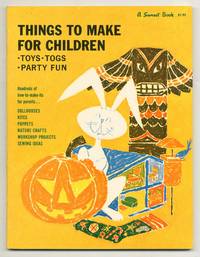
1973réf. 558660Menlo Park California: Lane Books 1973. Softcover. Near Fine. Later printing. Quarto. 95pp. Illustrated in black and white from photographs and drawings. Illustrated cardstock wrappers. Light foxing to the spine and a tiny nick to the foot of the spine else near fine. For those who might not know "togs" is a British slang term for clothes. Lane Books unknown books