MORRISON, R [REVEREND ROBERT].Biblio.com
6 209 résultats
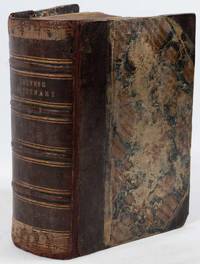
1865réf. 219705Shanghae sic & London.: London Mission Press and Trubner & Co. 1865. Two volumes in one: Volume I. ii Title i-x Advertisement Preface 762 pp including Index of Chinese characters pp 1-99 pagination duplicated for pp 224 & 239. Volume II. ii Title 724pp iv List of the Radicals of the Chinese Language. 22 x 15 cm contemporary half calf spine gilt between raised bands expertly rebacked mounting the original spine numerous annotations and underlinings in pencil a handful in ink at the head the final blanks with notes and translation age-toned and worn boards rubbed but a good complete copy of the scarce reprint. Provenance: With the early inked signature of "Hugh Wadell Newchwang 1869" the pioneering missionary whose work laid the foundation for the Irish Presbyterian Church's long-term presence in East Asia. In 1869 Waddell 1839–1901 landed at Newchwang now Yingkou where he established a mission station that included a church school and dispensary. His daughter was Helen Waddell poet scholar and theological novelist. Recent signature of A. Allan Shearer Wellington. Scarce reprint of the second part of Morrison's Dictionary first published between 1815 and 1823 with a notable provenance. The 1865 reprint was issued as a single volume combining the second part of the dictionary with an index of characters arranged according to the Kangxi radicals. "The Second Part of Morrison's Dictionary has been generally commended by experienced Sinologues as the most perfect and useful of the whole. The present is merely a reprint of it with such slight modifications as are mentioned at the close of the original preface." Preface Löwendahl 1334 . London Mission Press [and] Trubner & Co. hardcover
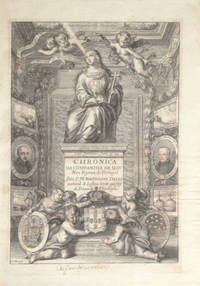
réf. 2307PG008E do Que Fizeram nas Conquistas deste Reyno os Religiosos que na mesma Provincia entràram nos anos em que viveo S. IGNACIO DE LOYOLA nosso Fundador. PELO P. M. BALTHAZAR TELLEZ da mesma Companhia natural da cidade de Lisboa & nella Lente de Prima de Theologia. PRIMEIRA PARTE. Na Qval Se Contem Os principios desta Provincia No tempo em que a fundou & governou O P. M. SIMAM RODRIGVES Com sua sancta vida & morte. EM LISBOA. Com todas as licenças necessarias. Por Paulo Craesbeeck. Anno do Senhor M.DC.XXXXV. 1645 SEGVNDA PARTE Na Qval Se Contem As Vidas de algûs Religiosos mais assinalados que na na mesma Provincia entràram nos anos em que viveo S. IGNACIO DE LOYOLA nosso Fundador. Com o Svmmario Das Vidas Dos Serenissimos Reys Dom Ioàm Terceyro & Dom Henrique Fundadores & insignes bemfeytores desta Provincia. Composta PELO P. M. BALTHAZAR TELLEZ da mesma Companhia natural da Cidade de Lisboa. EM LISBOA. Com todas as licenças necessarias. Por Pavlo Craesbeeck. Anno M.DC.XLVII. 1647 2 Volumes de 30x217 cm. Com xxiv 709 i. é 711; xvi 904 págs. Encadernações do século XIX inteiras de pele com rótulos vermelhos nervos ferros a ouro nas lombadas e ferros a seco nas pastas onde formam uma esquadria com motivos florais com um losango dentro da esquadria que por sua vez tem um rectângulo ao centro tudo formado por uns filetes simples com motivos florais além de outros nos quatro cantos. Ilustrado com belos frontispícios iguais gravados a buril sobre chapa de metal por Grégoire Huret. São em forma de moldura com uma figura feminina que representa a Companhia de Jesus ao centro sobre um alto pedestal onde estão escritos o título e o autor da obra escrevendo num livro e recebendo do alto um raio luminoso símbolo da inspiração divina. Nos dois lados estão seis quadros quatro com os atributos da Companhia de Jesus e os outros dois com os retratos de Santo Inácio de Loyola e do Padre Simão Rodrigues. Na base do pedestal está o escudo das armas reais de Portugal sustentado por várias figurinhas aladas que seguram também dois quadros ovais com temas alegóricos dos empreendimentos da Companhia. Tem numerosas citações bíblicas nos quadros no pedestal e em tarjas. Folhas de rosto a vermelho e preto emolduradas por esquadrias com dois filetes. No segundo volume o espaço entre os filetes está decorado com ornamentações a vermelho. Impressão nítida em caracteres redondos e alguns itálicos no prólogo nos títulos dos capítulos nas citações e no índice de citações bíblicas. Texto a duas colunas separadas por dois filetes e enquadradas por dois filetes que têm no espaço entre eles chamadas sobre os assuntos e os títulos das obras que são citadas. Ornamentado com cabeções decorados com motivos vegetalistas e com o trigrama sagrado característico da Companhia de Jesus iniciais ornamentadas e belos florões de remate no fim de cada livro da obra e de cada um dos três índices de cada volume. Exemplar com desgastes nas encadernações e pequenos furos de traça em especial nas lombadas com ex-libris impressos da Biblioteca de Bernardino Ribeiro de Carvalho com assinatura de posse coeva no pé dos frontispícios de Luís de Sousa Seixas e com os seguintes defeitos: no primeiro volume manchas e rasgões restaurados nas folhas preliminares nas páginas 1 e 2 com pequenos rasgões marginais nas páginas 3 a 90 e mancha no canto inferior de todas as folhas até ao fim. Dois pequenos furos de traça no pé de todas as folhas e pico de traça à cabeça das folhas desde o princípio até página 246 e desde a página 517 ao fim. No segundo volume com picos de traça - à cabeça das primeiras folhas até à página 12; na margem das folhas desde o início até à página 316; Na margem mas mais acima do anterior da página 77 a 150; no pé das folhas de página 127 a 312; à cabeça das páginas 469 ao fim do volume. Como é comum nos livros desta época tem erros de numeração das assinaturas e das páginas sem afectar a integridade do texto e da obra. Assim tem a numeração das páginas 663 e 664 repetida página 673 com o número 674 a assinatura K3 com a numeração A3 N2 com a numeração N3 e KKK2 em vez de KKK3. Rara 1.ª Edição e única publicada. Variante sem a ornamentação colocada entre os duplos filetes da folha de rosto do primeiro volume e com o mesmo frontispício nos dois volumes gravado por Huret. Obra-prima da prosa portuguesa e fonte muito importante para a história do século XVI em Portugal e nos seus domínios incluindo a Ãsia e o Brasil. Tem também importância para a história dos primórdios da Companhia de Jesus e para a história e sociologia do sentimento religioso. Inclui um grande conjunto de biografias dos mais notáveis membros da Companhia de Jesus e transcreve cartas e outros documentos de muitos deles assim como um conjunto de Bulas Apostólicas relativas à Companhia de Jesus. As folhas preliminares do primeiro volume contêm a dedicatória a D. João IV as licenças datadas de 10 de Agosto de 1642 a 27 de Setembro de 1645 com aprovações do Padre Provincial António de Sousa do Padre André Gomes Padre Paulo Gomes do padre António Botado do Doutor Frei Adrião Pedro. Segue-se o Prólogo e advertências necessárias ao leitor. A primeira parte três livros ocupas as primeiras 623 páginas com a 624 em branco. De páginas 625 a 634 o índice dos capítulos de 635 a 653 o índice das citações bíblicas e de 654 a 708 o índice de assuntos. As folhas preliminares do segundo volume incluem a dedicatória à Rainha D. Luísa de Gusmão o Prólogo a advertências ao leitor e as licenças datadas de 10 de Agosto de 1642 a 18 de Agosto de 1647. As aprovações são iguais às do primeiro volume que se referem a toda a obra acresce uma aprovação específica para este segundo volume de Frei Gaspar dos Reis e outra relativa ao livro sexto e último por Frei Inácio Galvão. Os livros quarto a sexto ocupam as páginas 1 a 787 a 788 está em branco. De páginas 789 a 802 o índice dos capítulos de 803 a 815 o índice das citações bíblicas a 816 em branco de 817 a 879 o índice de assuntos a 880 em branco de 881 a 903 a transcrição das bulas apostólicas e na 904 as erratas das duas partes. Baltazar Teles Lisboa 1596 - Lisboa 1675 jesuíta português. Ingressou na Companhia em 24 de Março de 1610. Foi professor nos colégios de Évora Coimbra Braga e Lisboa onde leccionou Retórica e Teologia Especulativa e Moral. Desempenhou as funções de reitor do Colégio de Santo Antão do Colégio de São Patrício e foi prepósito da Casa de S. Roque. Em 1642 tinha publicado: Summa Universae Philosophie cum quaestionibus theologicis Lisboa 1642 que foi muito lida nos colégios da Companhia e posteriormente publicou a História Geral da Etiópia a Alta Lisboa 1660. Grégoire Huret Lyon 1610 - Paris 1670 Trabalhou sempre pelo processo do buril em que foi exímio. Exerceu a profissão em Paris e entrou em 1663 para a Academia Real de Pintura e Escultura. São conhecidas pelo menos cerca de 83 gravuras da sua autoria uma delas sobre a conversão de S. Paulo existe no Museu Nacional de Arte Antiga em Lisboa. EN 2 Volumes. 30x21.7 cm. xxiv 709 i. e. 711; xvi 904 pp. 19th-century full leather bindings with red labels raised bands gilt tools on the spines and blind tools on the boards where they form a frame with floral motifs with a lozenge inside which in turn has a rectangle in the centre all formed by simple fillets with floral motifs as well as others in the four corners. Illustrated with beautiful burin-etched engraved frontispieces by Grégoire Huret. They depict a framed female figure representing the Society of Jesus in the centre on a high pedestal where the title and author of the work are engraved writing in a book and receiving a ray of light from above a symbol of divine inspiration. On either side are six paintings four with the attributes of the Society of Jesus and the other two with the portraits of St Ignatius of Loyola and Father Simon Rodrigues. At the base of the pedestal is the shield of the royal arms of Portugal supported by several winged figures who also hold two oval pictures with allegorical themes of the Company's endeavours. There are numerous biblical quotations in the paintings on the pedestal and on the cartouches. Title pages in red and black framed with two fillets. In the second volume the space between the fillets is decorated with red ornaments. Clear printing in round characters and some italics in the prologue chapter headings quotations and the index of biblical quotations. Text in two columns separated by two fillets and framed also by two fillets with headings on the subjects and the titles of the works cited in the space between them. Ornamented with headpieces decorated with plant motifs and the sacred trigram characteristic of the Society of Jesus decorated initials and beautiful finishing fleurons at the end of each book of the work and each of the three indexes of each volume. Copy showing signs of wear on the bindings and small moth holes especially on the spines with printed ex-libris from the Library of Bernardino Ribeiro de Carvalho with a coeval handwritten ownership title at the foot of the frontispieces by Luís de Sousa Seixas and with the following defects: in the first volume restored stains and tears on the preliminary leaves on pages 1 and 2 with small marginal tears on pages 3 to 90 and a stain on the bottom corner of all the leaves until the end. Two small moth holes at the foot of all the leaves and moth spots at the head of the leaves from the beginning to page 246 and from page 517 to the end. In the second volume with moth holes - at the head of the first leaves up to page 12; at the margin of the leaves from the beginning to page 316; at the margin but higher than the previous one from page 77 to 150; at the foot of the leaves from page 127 to 312; at the head from page 469 to the end of the volume. As is common in books from this period there are errors in the numbering signatures and pages without affecting the integrity of the text and the work. For example the numbering of pages 663 and 664 is repeated page 673 has the number 674 the signature K3 has the number A3 N2 has the number N3 and KKK2 instead of KKK3. Rare 1st Edition and the only one published. Variant without the ornamentation placed between the double fillets on the title page of the first volume and with the same frontispiece on both volumes engraved by Huret. A masterpiece of Portuguese prose and a very important source for the history of the 16th century in Portugal and its domains including Asia and Brazil. It is also important for the history of the beginnings of the Society of Jesus and for the history and sociology of religious belief. Includes a large number of biographies of the most notable members of the Society of Jesus and transcribes letters and other documents from many of them as well as a number of Apostolic Bulls relating to the Society of Jesus. The preliminary pages of the first volume contain the dedication to King João IV the licences dated from 10 August 1642 to 27 September 1645 with approvals from the Provincial Father António de Sousa Father André Gomes Father Paulo Gomes Father António Botado and Doctor Friar Adrião Pedro. This is followed by the Prologue and the necessary warnings to the reader. The first part of the three books takes up the first 623 pages with 624 blank. From pages 625 to 634 there is an index of chapters from 635 to 653 there is an index of biblical quotations and from 654 to 708 there is an index of subjects. The preliminary pages of the second volume include the dedication to Queen Luísa de Gusmão the Prologue with warnings to the reader and the licences dated from 10 August 1642 to 18 August 1647. The approvals are the same as those for the first volume which refer to the entire work plus a specific approval for this second volume by Friar Gaspar dos Reis and another for the sixth and final book by Friar Inácio Galvão. Books four to six occupy pages 1 to 787 while 788 is blank. Pages 789 to 802 contain the index of chapters pages 803 to 815 the index of biblical quotations page 816 is blank pages 817 to 879 the index of subjects page 880 is blank pages 881 to 903 the transcription of apostolic bulls and page 904 the errata of the two parts. Baltazar Teles Lisboa 1596 - Lisboa 1675 Portuguese Jesuit. He joined the Society on 24 March 1610. He was a professor at the colleges of Évora Coimbra Braga and Lisbon where he taught Rhetoric and Speculative and Moral Theology. He served as rector of the Colégio de Santo Antão the Colégio de São Patrício and was prepriest of the Casa de São Roque. In 1642 he had published: Summa Universae Philosophie cum quaestionibus theologicis Lisboa 1642 which was widely read in the Company's colleges and later published the História Geral da Etiópia a Alta Lisboa 1660. Grégoire Huret Lyon 1610 - Paris 1670. Always worked with a burin which he excelled at. He practised his profession in Paris and joined the Royal Academy of Painting and Sculpture in 1663. At least 83 engravings by him are known one of which on the conversion of St Paul is in the MNAA National Museum of Ancient Art in Lisbon. Referências/References: Iberian Books B29718 61603 Borba de Morais II 852. Ernesto Soares Hist. Grav I 340-341 n.º 1202. Ameal 2377. Azevedo e Samodães II 3337. Monteverde 5345. Condessa de Azambuja 2557. Nepomuceno 1826. Palha III 2516. Pinto de Matos 599-600. Inocêncio I 328-329. Barbosa Machado. I 458. M-10-C-61 hardcover
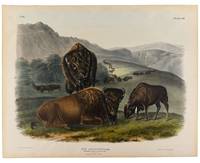
1849réf. 42915New York: John James Audubon 1849. First edition hand-colored lithograph by John T. Bowen of Philadelphia after John James Audubon. An iconic image of Western Americana from the folio first edition of Audubon's "Quadrupeds of North America" the greatest work of natural history illustration produced in America during the nineteenth century: "As long as our civilization lasts America will be in debt to this genius." Peterson This fine plate is from the folio edition of Audubon's The Viviparous Quadrupeds of North America which was produced entirely in the United States. The work was Audubon's last and by 1846 he had to hand over the drawing of the final fifty plates to his sons John Woodhouse and Victor Audubon. The production of the Quadrupeds was begun by Audubon and his sons at about the same time as the commercially-successful octavo edition of The Birds of America. Unlike the double-elephant folio the Quadrupeds was produced entirely in the United States. Reese notes that "By 1843 the Audubon family business was a well-oiled machine involving John James his two sons and various in-laws and friends. The octavo Birds was still in production when Bowen began to produce the plates for the folio edition of the Quadrupeds the largest successful color-plate book project of 19th-century America. It took the family five years to publish 150 plates in thirty parts. The massive project was a commercial success thanks to the close management of Victor. There were about three hundred subscribers." Reese Like Birds of America the Viviparous Quadrupeds was intended to be a comprehensive visual catalog of North America animalia with Audubon's focus here shifting from birds to four-legged land mammals. Accompanying each image was correlating didactic text written primarily by Bachman that informed the reader of the animal's habits diet habitat and gestational period. Totaling 150 prints the project was rushed to completion as Audubon's health declined. Emerging in the shadow of its acclaimed predecessor Birds of America the Viviparous Quadrupeds has not received the adequate attention nor recognition it so richly deserves. This image is of a family of American buffalo the most iconic animal indigenous to North America whose presence was integral for Native American life and whose near-extinction spurred on the conservation movement in the US. The buffalo is today the state animal of Kansas Oklahoma and Wyoming. Bennett p.5. Peterson Birds of America passim. Reese Stamped with a National Character 36. Sabin 2367. Wood p.209. John James Audubon unknown
1849réf. 42915New York: John James Audubon 1849. First edition hand-colored lithograph by John T. Bowen of Philadelphia after John James Audubon. An iconic image of Western Americana from the folio first edition of Audubon's "Quadrupeds of North America" the greatest work of natural history illustration produced in America during the nineteenth century: "As long as our civilization lasts America will be in debt to this genius." Peterson This fine plate is from the folio edition of Audubon's The Viviparous Quadrupeds of North America which was produced entirely in the United States. The work was Audubon's last and by 1846 he had to hand over the drawing of the final fifty plates to his sons John Woodhouse and Victor Audubon. The production of the Quadrupeds was begun by Audubon and his sons at about the same time as the commercially-successful octavo edition of The Birds of America. Unlike the double-elephant folio the Quadrupeds was produced entirely in the United States. Reese notes that "By 1843 the Audubon family business was a well-oiled machine involving John James his two sons and various in-laws and friends. The octavo Birds was still in production when Bowen began to produce the plates for the folio edition of the Quadrupeds the largest successful color-plate book project of 19th-century America. It took the family five years to publish 150 plates in thirty parts. The massive project was a commercial success thanks to the close management of Victor. There were about three hundred subscribers." Reese Like Birds of America the Viviparous Quadrupeds was intended to be a comprehensive visual catalog of North America animalia with Audubon's focus here shifting from birds to four-legged land mammals. Accompanying each image was correlating didactic text written primarily by Bachman that informed the reader of the animal's habits diet habitat and gestational period. Totaling 150 prints the project was rushed to completion as Audubon's health declined. Emerging in the shadow of its acclaimed predecessor Birds of America the Viviparous Quadrupeds has not received the adequate attention nor recognition it so richly deserves. This image is of a family of American buffalo the most iconic animal indigenous to North America whose presence was integral for Native American life and whose near-extinction spurred on the conservation movement in the US. The buffalo is today the state animal of Kansas Oklahoma and Wyoming. Bennett p.5. Peterson Birds of America passim. Reese Stamped with a National Character 36. Sabin 2367. Wood p.209. John James Audubon unknown books
1770réf. 0012203England: 18th Century Religious Sermons Early Typography Manuscript Christian. Very Good with no dust jacket. 1770. Hardcover. On offer is a beautiful hard-bound collection of sermons written by many prominent religious scholars of the time dating from late 18th century England and curated by the Reverend Dr. John Trusler 1735-1820. The book is a collection of sermons and homilies. They include homilies with such titles as On domestic Happiness The notice of the World a motive to virtue The Advantage of Public or Private Calamities On partaking of other men's Sins and more. The collection belonged to William Armstrong whose name appears on the front flyleaf. However our informal research has not found any additional information about him. From some notes made in the book this volume was used in 1770-1771. Curated by Rev John Trusler the sermons are printed with beautiful early typography intended to mimic manuscript font. This was a part of Truslers lucrative scheme in which he proposed printing sermons in script type to imitate handwriting and then sell them to clergymen who did not want to write their own sermons. Each sermon is credited to their original author at the end. Included sermons are credited to Baptist minister James Foster 1697-1753 British Unitarian minister William Enfield 1741-1797 Anglican clergyman Laurence Sterne Archbisop of Canterbury William Wake 1657-1737 and Bishop of Chichester Thomas Manningham 1651 -1722. A few sermons are listed as compiled and some are not credited but include additional notes and annotations from the collections curator Rev John Trusler. Trusler has signed his name in ink at the end of many of the sermons. This book is an example of Dr. Truslers early attempts at establishing a printing and bookselling business. In 1769 Trusler sent circulars to every parish in England and Ireland proposing to print in script type in imitation of handwriting about a hundred and fifty sermons at the price of one shilling each to save the clergy both study and the trouble of transcribing Wikipedia. This collection of sermons therefore seems to be an example of Truslers sermon curation peppered with his own additions and notes some in the form of small attached pages others in the form of full pages of manuscript notes. Before becoming a printer and bookseller Trusler took his holy orders and became a priest in 1759 rising through the ranks of British clergy work. He also worked as a lecturer eventually establishing an academic academy only to give it up when it was not lucrative and move on to medical school at Leyden University. While his name does not appear in their catalogue of graduates he did assume the title of doctor. In the end his most lucrative undertaking was his sermon sales and publishing business in which he published many books including his own memoir. This absolutely remarkable unique relic of 18th century British Christian history and early typography would be a sensational asset to any library and the sermons contained within provide an excellent window into the religious/moral thinking of the day as preached in Christian congregations in England Interesting to note one single annotated page of a sermon contained in this book in the same typescript sold for 1500 British pounds through Forum Auctions in September of 2021. The volume measures approximately 8.5 inches by 5.5 inches and contains 100 pages. The hard covers although stained are in good condition. The pages are all in excellent condition save for one page with some rips and tears. Both the typography and handwriting is not only clear but beautifully done. The title Sermons M. S is stamped on the spine. ; Manuscripts; 8vo 8" - 9" tall; 100 pages; Signed by Author . 18th Century Religious Sermons Early Typography Manuscript Christian hardcover
1484In-folio (mm 298 195). Carte [250], con la prima bianca; [52]. Collazione: a-G8 H10 i-U8 x10 A8 B12 C-I8; AA-DD8 EE FF10. Spazio delle iniziali vuoto con suggerimento di lettere. Carattero romani (R 94) su 55 righe. Copia con ampie ma leggere macchie di umidità alle pagine iniziali, alcune più marginali alla fine. Legatura in pelle coeva su tavole di legno, con motivi arabeschi impressi sui piatti, dorso con titolo manoscritto su carta; con difetti. Ex-dono del XVI secolo sulla pagina del titolo, alcune glosse dalla stessa mano nel testo.
1975DISPONIBILITÀ GARANTITA AL 99%; SPEDIZIONE ENTRO 12 ORE DALL'ORDINE. BUONE/OTTIME CONDIZIONI GENERALI, LIEVE BRUNITURA E LIEVI SEGNI DEL TEMPO. SENZA SOVRACCOPERTA. Cosa provano i neo-genitori? Come possono affrontare il nuovo ruolo con serenità e responsabilmente? Cosa devono preparare perché il bimbo appena nato si senta a suo agio? Come farlo crescere?... E ancora: come acquistare il corredo? Perché scegliere l'allattamento al seno? Come lavare e vestire il bambino? Come regolare gli orari? Cosa fare quando piange? Come preparare il biberon? Quando iniziare lo svezzamento?... A tutte queste domande e a molte altre ancora risponde in modo esaudiente e chiaro " Il bambino ". Nella guida pediatrica più consultata dai genitori di tutto il mondo, mille consigli affettuosi e competenti per affrontare con serenità la gravidanza e per comprendere meglio i problemi e i bisogni dei figli. Descrizione bibliografica Titolo: Il bambino. Come sicura e come si alleva Titolo originale: Baby and child care (Originally published in 1946 under title: The common sense book of baby and child care.) Autore: Benjamin McLane Spock Traduzione di: Alda Bencini Bariatti, Giovanna Rosselli Editore: Milano: Longanesi & C. (1968), stampa 1975 Edizione: Ventunesima, riveduta, aggiornata e ampliata sulle nuove ricerche psicologiche e scientifiche Lunghezza: 715 pagine; 23 cm; illustrato (47 illustrazioni nel testo) Peso: 1 Kg ISBN: 8830407704, 9788830407701 Collana: Volume 15 di La vostra via Soggetti: Pedagogia, Puericultura, Allevamento, Maternità, Nascita, Neonati, Bambini, Prime cure, Guide pratiche, Vecchi Manuali Classici, Madri, Mamme, Educazione e formazione, Figli, Libri vintage, Saggistica, Gravidanza, Allattamento, Svezzamento, Nanna, Sonno, Latte materno, Latte in polvere, Crescita, Coliche, Ruttino, Digestione, Omogenizzati, Pappa, Anni settanta, Genitori, Adozione, Separazione, Psicologia, Pronto soccorso, Malattie, Vaccini, Vaccinazioni, Asilo nido, Febbre, Infezioni, Sviluppo psichico, Alimentazione, Scuola, Apprendimento, Primi passi, Lattanti, Gioco, Problemi, Fantasia, Poppata, Vestiti, Diarrea, Stitichezza, Varicella, Morbillo, Allergie, Dentizione, Bagno, Ombelico, Igiene, Pianto, Tonsille, Padre, Paternità, Ruolo genitoriale, Relazioni familiari, Pediatra, Tettarella, Ciuccio, Pollice, Culla, Letto, Girello, Due anni, Tre anni, Cinque anni, Sterilizzare, Puerizia, Vitamine, Pedagogy, Childcare, Breeding, Maternity, Birth, Newborns, Children, First Cures, Practical Guides, Old Classical Manuals, Mothers, Education and Training, Children, Vintage Books, Essays, Pregnancy, Breastfeeding, Weaning, Sleeping, Milk powder, Growth, Colic, Burp, Digestion, Homogenized, Parents, Adoption, Separation, Psychology, First aid, Diseases, Vaccines, Vaccinations, Nursery, Fever, Infections, Psychic development, Nutrition, School, Learning, First steps, Breastfeeding, Game, Problems, Fantasy, Feeding, Clothes, Diarrhea, Constipation, Chickenpox, Measles, Teething, Bath, Navel, Hygiene, Crying, Tonsils, Father, Paternity, Parental role, Family relations Parole e frasi comuni adolescence adult amount appetite areola baby better boiled bottle bowel breast breast milk breast-fed breast-feeding cause cereal cold colic comfortable constipation cough crying develop diaper rash diarrhea diet disease doctor early eczema enuresis evaporated milk father fear feeding feel fever formula fruit germs girl gradually grow hard hospital hungry important infection intestinal irritable juice keep masturbation meals months mother mouth mumps nipple nose nursing parents play problem rash reason rubella Section skin sleep small child sterilized sucking sugar talk teacher teeth temperature tetanus thumb-sucking urine usually vegetables vitamin vomiting wake weeks whole grain whooping cough worry young
S. DE Caro a cura di
S. DE Caro a cura di