Reverend S Reynolds HoleBiblio.com
7.608 Ergebnisse
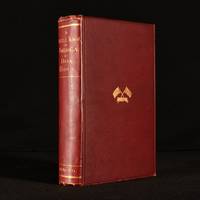
1895Best.-Nr. 835P6London: Edward Arnold 1895. First edition. Cloth. Very Good. 9" by 6". Not Stated. An association copy of Reverend Samuel Reynolds Hole's travel work on America a presentation copy from Holy to his longtime friend William Shepherd. First edition.Author's presentation copy. Loosely inserted is a signed photograph of S. Reynolds Hole signed to the caption of the photograph and inscribed to the reverse 'William Shepherd from his old friend S. Reynolds Hole Deanery Rochester May 31 1896'.Two letters from the author to William Shepherd loosely inserted in an envelope dated July 28 1893 and July 23 1896. The first letter discusses an old murder the second is a letter of thanks.Illustrated with a frontispiece and twenty-six illustrations both full paged and in text.Thirty-two pages of adverts to the rear.Collated complete. An extensive travel work by Samuel Hole touring America and Canada from New York to Toronto Chicago to the Rocky Mountains.Samuel Reynolds Hole was a notable horticulturist and Anglican priest. In the original publisher's cloth binding. Externally smart. Very light bumping and rubbing to the head and tail of the spine and to the extremities. Spine is lightly faded. A few minor marks to the boards and spine. Internally generally firmly bound. Pages are bright and clean. Very Good Edward Arnold hardcover
1995Best.-Nr. L3 box683 b1Fontes Franciscani. a cura di Enrico Menesto e Stefano Brufani e di Giuseppe Cremascoli Emore Paoli Luigi Pellegrini Stanislao Da Campagnola; Apparati di Giovanni M. Boccali. Copyright 1995 by <<Edizioni Porziuncola>> via Protomartiri francescani. 1a edizion: dicembre 1995. Green cloth hardcover 2581 pages. <<Edizioni Porziuncola>>, via Protomartiri francescani. hardcover
Best.-Nr. L3 box749 b3Poeti del Duecento Tomo 1 & 2 - Complete 2 Volumes La Letteratura Italiana Storia e Testi Volume 6. A cura di Gianfranco Contini. Riccardo Ricciardi Editore. Hardcover 958 pp Tomo 1 1010 pp Tomo 2. Riccardo Ricciardi Editore. hardcover
1965Best.-Nr. L3 box657 b4aEsposizioni Sopra la Comedia di Dante Tutte le Opere di Giovanni Boccaccio Volume Sesto Boccaccio VI. A cura di Giorgio Padoan. Arnoldo Mondadori Editore 1965. Leather bound 1110 pages. Arnoldo Mondadori Editore
1965Best.-Nr. L3 box657 b4Esposizioni Sopra la Comedia di Dante Tutte le Opere di Giovanni Boccaccio Volume Sesto Boccaccio VI. A cura di Giorgio Padoan. Arnoldo Mondadori Editore 1965. Leather bound 1110 pages. Arnoldo Mondadori Editore
1817Best.-Nr. 009305Glasgow: W. Sommerville A. Fullarton J. Blackie and Co. Booksellers 1817 Book. Illus. by R. Scott Engraver. Good Plus to Very Good. Full Leather. Reprint. 10 1/4 x 17 Inches. Original full reversed polished calf on boards. Front joint of Volume I is split for bottom 6 inches and Title of Volume II is split for bottom half of length at gutter. Volume I missing first free endpaper. Five raised bands each volume. Engravings and Atlas of Sacred Geography. Light surface wear to boards but no writing or foxing. Strikingly original. Volume I has 726 pp. Volume II has 672 pp. Total weight approx. 8 Kg. 17.5 lbs. Note: Since this set is on consignment our usual discount of 20% to the trade does not apply. W. Sommerville, A. Fullarton, J. Blackie, and Co. Booksellers hardcover
Best.-Nr. 83170Lyon, Imprimerie d'Aimé Vingtrinier, 1874, 1 volume de 250x325, demi chagrin à coins bleu foncé, dos à 5 nerfs portant titres dorés, nerfs soulignés de filets dorés, fers dorés aux entrenerfs, date et lieu en coiffe de queue, tranche de tête dorée, gardes marbrées, couvertures brochées conservées. Ex-libris sur le premier contreplat. Couverture état moyen, quelques rousseurs mais bon état pour le reste.
1872Best.-Nr. 0053711872 Lyon, Vingtrinier, 1872. Grand in-quarto (257 X 326 mm) demi-maroquin noir à coins, dos à nerfs, titre doré, pièce d’armes dorée en queue, tête dorée, plats de la couverture conservés (L. Pouillet) ; XII-715 pages. Rousseurs concentrées sur quelques pages, sinon très éparses dans le reste du corps d'ouvrage.
1799Best.-Nr. 78353In Verona: per Dionigi Ramanzini 1799. Quattro volumi in-folio cm. 325 pp. 8 275 1; 416; x 2 336 4; xviii 2 408 27 1. Marchio tipografico a ciascun frontespizio testate e capolettera xilografici. Solida ed elegante legatura di poco posteriore in piena pergamena rigida dorsi lisci con titoli in oro su doppi tasselli. Doppio ex libris nobiliare inciso. Particolarmente fresco genuino e ben conservato. Si tratta inoltre di un esemplare appartenente alla rara tiratura di testa stampato in carta grande. Edizione bella e leggiadramente impressa di molto migliorata dal Cesari rispetto all'originale del 1731 con l'aggiunta rispetto a quest'ultima della Vita di Tobia e di Tobiuzzo. Cfr. Gamba 1046. per Dionigi Ramanzini unknown
1795Best.-Nr. 16862A Paris : De l'Imprimerie de Didot le Jeune 1795. Cm. 33 pp. xxiv 265 3. Con due belle tavole fuori testo incise all'acquaforte Moreau le jeune. Solida leg. coeva in mezza pelle con punte dorso liscio con titoli su tassello e fregi in oro. Tagli gialli. Esemplare particolarmente fresco e marginoso impresso su carta forte. Edizione lussosamente impressa. Opera pubblicata in Francia nel 1763; si tratta della traduzione di un manoscritto latino trovato nel monastero di Montecassino. Il curatore dell'edizione si interroga a lungo di come un'opera così significativa non sia mai stata citata da Cicerone e da Plutarco e quindi non esita a pubblicarla. De l'Imprimerie de Didot le Jeune unknown
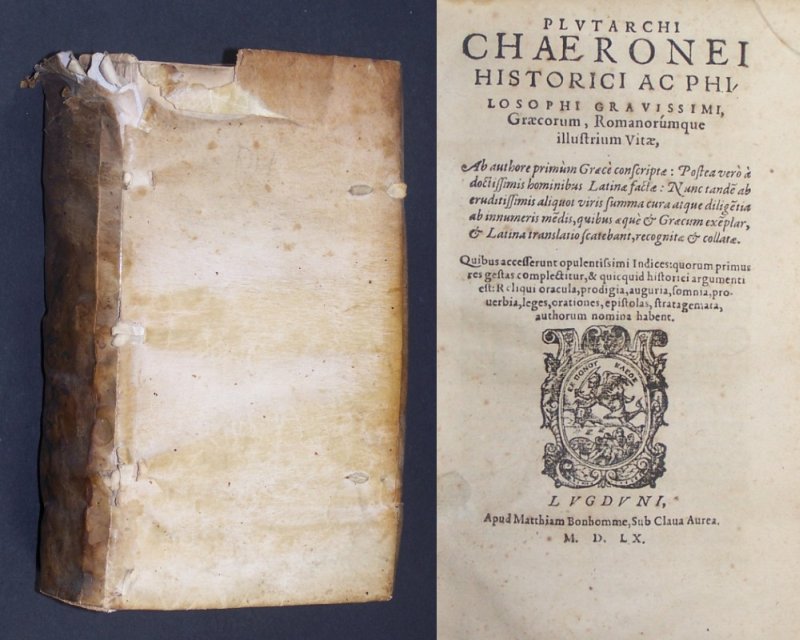
1560Best.-Nr. 5055046Lugduni, Apud Matthiam Bonhomme, Sub Claua Aurea [Lyon: Mathieu Bonhomme] 1560. 919 Seiten, (136) Seiten Index. Mit Druckermarke auf dem Titelblatt sowie holzgeschnittenem Kopfstück und zahlreichen Holzschnittinitialen. 8° (17,5 - 22,5 cm). Flexibler Pergamentumschlag der Zeit mit überstehenden, gefalzten Vorderkanten.
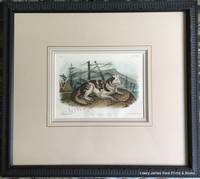
1849Best.-Nr. 7317New York:: V.G. Audubon 1849-54. First Royal Octavo Edition. Fine with original hand-coloring. A fine original hand-colored lithograph on paper. Royal Octavo 10.5 x 7 inches. Drawn from nature by John Audubon drawn on stone by William E. Hitchcock and lithographed printed and colored by JT Bowen Philadelphia. Accompanied by the original text written by the Reverend John Bachman DD. The Quadrupeds of North America; portrayals of 155 four-legged mammals native to North America depicted in their natural environment was a collaborative effort between the premier nineteenth century American Ornithologist Naturalist Artist and Frontiersman John James Audubon 1785-1851 his sons John Woodhouse Audubon and Victor Gifford Audubon and the naturalist Reverend John Bachman. The four men were unified in their desire to document and portray what they recognized as a dwindling resource; America's native animals amidst the natural beauty of the untouched American landscape. Their collective wisdom predicted the impending effects of Manifest Destiny- man's encroachment on the wilderness and natural landscape of North America- and as such was the impetus for the journey. To document and then portray America's native animals in the splendor and majesty of the uninhabited North American landscape the team traveled westward from Audubon's home in Mill Grove Pennsylvania up the Missouri River and through territory just previously explored by Lewis and Clark; from the Canadian border of the Northern Russian Territories- now Alaska- then southward to Mexico. Arduous and monumental the journey is recognized in the pathos of the compositions. However the true legacy of the work rests on John James Audubon's prolific vision and mastery of his subject and medium. Heretofore unseen The Quadrupeds of North American is a wildlife classic: an essential and timeless contribution to both Early American culture and the Art of American Wildlife Painting. The American Review a Whig journal heralded the national origin of the Quadrupeds: "We have at last have a Great National Work; originated and completed among us- authors artists and artisans of which are our own citizens the Bible of Nature!" John James Audubon in the West. New York: Henry H. Abrams 2000. Sabin 2368. Wood 208. Archivally matted & framed V.G. Audubon, unknown
1791Best.-Nr. 77089Bath:: Printed by R. Cruttwell 1791. First edition. contemporary tree calf; gilt spines; all edges marbled. Old ownership notations on blank leaves in two of the volumes; some scattered foxing restricted to several gatherings. The joints have been neatly and expertly reinforced and are generally attractive tight and sound. . 4to. Large folding map; forth engraved plates and one circular engraved text illustration. . Additional postage applicable for these large heavy volumes. Printed by R. Cruttwell, unknown
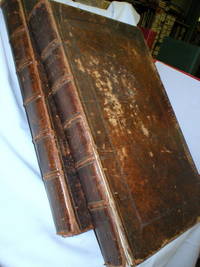
1727Best.-Nr. 48999Gray's-Inn: Printed for D. Browne fen. & jun. W. Mears F. Clay withoutTemple-bar Fletcher Gyles 1727. Book. Very Good. Hardcover. 2nd. Folio - over 12" - 15" tall. Full Tooled Leather Over Boards. Hinges Split And Tender."The English Works Of Sir Henry Spelman K. Published In His Life-Time: Together With His Posthumous Works Relating To The Laws And Antiquities Of England: And The Life Of The Author." By The Right Reverend Father In God Edmund Lord Bishop Of London. To Which Are Added Two More Treaties Of Sir Henry Spelman Never Before Printed: One Of The Admiral-Jurifdiction And The Officers Thereof: The Other Of Ancient Deeds And Charters. With A Compleat Index To The Whole. The Second Edition. London: Printed For D. Browne Fen. & Jun. W. Mears F. Clay Without Temple-Bar Fletcher Gyles In Holborn And T. Osborne In Gray's-Inn. M.Dcc.Xxvii. Tooled Leather Over Boards Raised Bands With 7 Compartments Raised And With Extra Gilt. On Spine With Title In Gilt. Folio. Evidence For Inclusion In Wythe's Library Wythe Referred To Spelman's Works In His Case Report For Field V. Harrison "Sir H. Spelman Somewhere Condemns The Common Lawyers Of His Own Time For The Small Acquaintance They Had With The Principles And Rationale Of Their Profession."6 Brown's Bibliography7 Includes The First 1723 Edition Of The English Works Of Sir Henry Spelman As The Work Intended By Wythe's Reference. He Bases The Selection Of This Title And Edition In Part On The Copy Thomas Jefferson Sold To The Library Of Congress In 1815.8 The Wolf Law Library Followed Brown's Suggestion And Purchased A Copy Of The Same Edition. Printed for D. Browne, fen. & jun. W. Mears, F. Clay, withoutTemple-bar, Fletcher Gyles Hardcover
1698Best.-Nr. GD013104BC10S3London: Ri. Chiswell 1698. London: Ri. Chiswell at the Rose and Crown in St. Paul's Church-Yard 1698 second edition corrected 8vo. 652 pages. Book bound in original brown blind stamped boards spine rebacked with 4 raised bands and black leather title author and date labels on spine. Small bookplate on verso of front board. Book overall very good condition. Second Edition Corrected. Hard Cover. Very Good/No Dust Jacket. 8vo - over 7¾" - 9¾" tall. London: Ri. Chiswell Hardcover
1791Best.-Nr. 80552London: Printed by R. Blamire 1791. First Edition. Hardcover. Quarto: 2 lx 137 1 blank pp. with 2 aquatint plates 1 folding. In a 19th century one-quarter brown calf over brown paper-covered boards with gilt-stamped titling. The bookplate of American politican and diplomat Harold Marsh Sewell 1860-1924 appears on the front flyleaf opposite another period bookplate. Some general shelfwear to the boards with a bit of scuffing along the extremities. Bitting 485; Cagle 1049; Crahan 446. Warner 1763-1857 was a prominent English antiquarian and divine. His Antiquitates Culinariae was one of the first works to examine the history of early English cookery at the forefront of a scholarly movement that developed over the last three decades of the 18th century. The book contains Warner's detailed introductory notes and "The Forme of Cury" copied from an ancient vellum roll thought to have been completed about 1390 by the master cooks of King Richard II. The folding plate "A Peacock Feast" which is present in this copy was reportedly removed from most copies owing to a copyright dispute. Printed by R. Blamire hardcover
1921Best.-Nr. 0012220Philadelphia Pennsylvania PA. Good with no dust jacket. 1921. Hardcover. On offer is the small yet interesting diary of Reverend Howard Dawson Hetrich sometimes Hetrick 1889-1953 SEE BIO NOTES AT END OF LISTING. At the time he kept this diary Hetrich was 32-years-old single living in Philadelphia working in sales and as a Pastor. He discusses his personal life only briefly. This diary is chock-full of short factual entries about his work life and religious occupation. At the back of the book he kept a detailed record of his earnings over the course of the year and even notes details like his income tax. His annual sales for 1921 to $8203. Some brief excerpts follow to give the flavour of the diary: No del. - on 27th St. $28.00 for orders. Only canvassed few hours. Letter to Mrs. . Very cold and clear Jan 19. To Newtons for dinner. To Sunday S school . Preached in church in PM. Many out to service. To Menchs in eve after supper. Prayed in homes. Heart touched Feb 6. To Camden to Baptize in Del. River. Six souls. Fixed up route. Good services. Pleasant clear and warm Mar 20. Sabbath. Practiced hymns around town until sun set Sister Katie gone in eve. Letter to Emco. Rain Nov 26. For a social historian this small diary gives a detailed look at how one young man earned a steady income and infused his life with his religious service in the heady days following WWI in America. BIO NOTES: Born in Schaefferstown Pennsylvania to Agnes Ream and Cyrus R Hetrich Howard Dawson Hetrich was baptised at St. Pauls United Church. He grew up and lived in Lebanon and Philadelphia PA. Hetrich served in the US Army as Pvt 1st Class in Company B 326 Field Signal Battalion. In 1926 Howard married Ardenia C. Ennis 1907-1976 and together they had three daughters: Mary 1928-2010 Ruth and Ardenia. Howard worked in sales and was also a Reverend who worked as a Pastor within the United Church. This small diary measures 4.75 inches by 3.0 inches. It contains 122 pages and is 100% complete. The cover and binding are loose but intact with some bumps and bruises due to age but overall good condition. The pages are also in good condition and the handwriting is legible though in a messy cursive scrawl. Overall G. ; Manuscripts; 32mo 4" - 5" tall; 122 pages; Signed by Author . hardcover
1645Best.-Nr. 6365Leyde, Adrianus Wyngaerden et Franciscus Moiardus, 1645 ; in-12 ; plein vélin ivoire rigide, titre manuscrit au dos (reliure de l'époque) ; (1) f. blanc, (22), 159, (15) pp. (index) ; (8), 254, (23) pp., (1 bl.), (2) ff. blancs.
1920Best.-Nr. 48630Bologna: Cesare Ratta s.d. 1920 ca. In-4 gr. 3 volumi brossura originale figurata piccoli strappi e piccole mancanze ai dorsi. L'opera è cosi' composta: - Volume 1° pp. 22 con una raccolta di 125 tavole di 30 artisti del Novecento Baglioni Bartolini Boglione Brugnoli Carbonati Casanova Croatto ecc. e commento di Raffaello Biordi precedute dalla riproduzione di 32 incisioni di 20 artisti dell'800 Bianchi Conconi Fattori Fontanesi Piccinni Rayper Signorini ecc e commento di Alfredo Petrucci.- Volume 2°: pp. 6 con la riproduzione di 160 incisioni di 45 artisti Bucci Casanova D'Achiardi Disertori Fagiuoli Ferro Fegarotti Forghieri Galetti Giorgi Gorni Graziosi Grondona Guaccimanni Lipinsky Mainini Maselli Mentessi ecc.- Volume 3°: pp. 6 con la riproduzione di 172 incisioni di 52 artisti Mauroner Mazzoni-Zarini Melis-Marini Papalia Passauro Petrucci Pietra Roeder Rossini Ulvi Liegi Vatteroni Vitalini Viviani Lega Soffici ecc.Ampio e preciso quadro della incisione italiana su rame e su zinco a morsura e a bulino con particolare riferimento ai moderni senza dimenticare alcuni maestri dell'Ottocento.Tiratura di 500 copie numerate. Solo una tavola nel 1° volume con lievi abrasioni altrimenti esemplare ben conservato. Cesare Ratta, unknown
1688Best.-Nr. 65860à Paris: Chez Landry 1688. Fine. Chez Landry à Paris 1688 10 x 16.50 cm relié First edition entirely engraved and illustrated with 49 captioned and numbered figures by Franz Ertinger. The first 12 illustrate the Confession of Faith followed by the Our Father the Commandments the capital sins. The text is printed on the verso of the leaves so as to have the engraving illustrating the text facing it. Not in Brunet. Contemporary full calf binding marbled and polished. Raised band spine with ornament. Havana morocco title label. One crack at head of upper joint. Minor lack at head cap. Restoration to upper joint at tail. One corner slightly bumped. Rubbing. Lacking the first marbled endpaper before the title. Good copy complete with the engraved approbation leaf. Catholic manual of faith. Ertinger was born in Colmar in 1640. He did his apprenticeship in Antwerp. He etched with a point as easy as it was soft and worked in Paris. Chez Landry unknown
1959Best.-Nr. mon0000061759Ricordi e C. 1959-01-15. Hardcover. Good. in x in x in. Ex-library book usual markings. Hardback with dust cover. Clean text sound binding. Ricordi e C. hardcover
Best.-Nr. 1205JC040OU DIALOGO Sobre a Filosofia Natural para instrucção de pessoas curiosas que não frequentárão as aulas. PELO P. THEODORO D ALMEIDA Da Congregação do Oratório de S. Fillipe Neri Socio da Real Sociedade de Londres e da de Biscaia. Quinta impressão muito mais correcta que as precedentes. LISBOA NA REGIA OFFICINA TYPOGRAFICA. ANNO M. DCC. LXXXVI 1784. Obra em 10 volumes. In 8º de 17x11 cm. Com xxxiv-368 iv-454 iv-396 iii-325 iv-414 iii-504 vi-478 iv-312 xvi-403 e xi-444-viii págs. Encadernações da época inteiras de pele cansadas e com falhas nas lombadas particularmente no tomo I. Exemplar apresenta picos de traça marginais. Ilustrados com o retrato do autor J. Silva fecit e 28 estampas desdobráveis no final dos tomos em extra-texto retrato e 5 estampas no 1º tomo 4 estampas no 2º tomo 4 estampas no 3º tomo 5 estampas no 4º tomo 5 estampas no 5º tomo e 5 estampas no 6º tomo. Conjunto editorial completo e homogéneo formando um conjunto com tomos da 5ª e da 6ª impressão igual ao conjunto existente na BNP na cota S.A. 27574 P. - S.A. 27583 P composto como segue: Tomos I 1786 e II 1788 da 5ª impressão; Tomos III 1803 IV 1803 e V 1819 da 6ª impressão; Tomo VI 1795 da 5ª impressão; Tomo VII 1805 da 6ª impressão; e Tomos VIII 1792 IX 1793 e X 1800 estes sem mencionarem a impressão a que pertencem. Inocêncio VII 301. Padre Teodoro de Almeida Presbítero da Congregação do Oratório de Lisboa Sócio fundador da Academia Real das Ciências de Lisboa Membro da Sociedade Real de Londres e da de Biscaia etc. Nasceu em Lisboa 1722. Aos treze anos de idade entrou na congregação do Oratório onde estudou o curso de humanidades a geometria e a física tendo nesta por mestre o P. João Baptista o primeiro que nesta Corte ditou a filosofia moderna ou experimental até então de todo ignorada. Repartindo a sua aplicação entre o estudo das ciências próprias do estado eclesiástico e o das naturais fez nestas notáveis progressos de sorte que aos 24 de idade foi nomeado substituto da cadeira de Filosofia na sua congregação e aos 29 já era mestre efectivo publicando por esse tempo o primeiro tomo da sua Recreação Filosófica. Não menos assíduo no ministério evangélico era ouvido com atenção e respeito no púlpito e buscado de muitas pessoas que o tomavam por seu director espiritual contando-se entre elas algumas senhoras da mais alta nobreza. Desconfianças bem ou mal fundadas lhe atraíram e á maior parte dos seus confrades na congregação o ódio do primeiro-ministro depois Marquez de Pombal pouco faltou para que os filhos de S. Filipe Neri sofressem uma proscrição total semelhante á dos Jesuítas apesar da rivalidade que reinava entre as duas corporações! Em 20 de Junho de 1760 foram por ordem do ministro desterrados da Corte alguns fidalgos e com eles os padres oratorianos Theodoro de Almeida João Baptista João Chevalier e Clemente Alexandrino. Mais tarde segundo se diz em Setembro de 1768 o P. Teodoro estando de residência na casa do Porto teve de refugiar-se em França e aí se demorou perto de dez anos empregando-se no ensino particular das Ciências físicas e matemáticas primeiro em Bayona e depois em Auch. Ainda que com a morte del-rei D. José e queda do ministro em Fevereiro de 1777 parece que devia cessar o seu desterro e serem-lhe abertas as portas da pátria contudo só voltou a ela em Março de 1778. Foi então residir para a casa de N. S. das Necessidades e retomou os seus antigos exercícios do magistério do púlpito e do confessionário tratando ao mesmo tempo de polir e aperfeiçoar as suas obras antigas e de publicar de novo outras que compusera prosseguindo nas mesmas ocupações até que sendo atacado de paralisia em 10 de Abril de 1804 passou para a eternidade a 18 do dito mês tendo vivido 82 anos. Para esta obra adoptou ele um sistema de ortografia regulado pela pronúncia tal pouco mais ou menos como o recomendára Verney no seu Verdadeiro Methodo dEstudar: porém note-se que não só deixou de segui-lo nas outras obras publicadas posteriormente mas até nos últimos tomos da sua própria Recreação isto é do VIII inclusivé em diante. Almeida respondeu largamente aos argumentos dos seus impugnadores dedicando a esse intento a tarde nona na segunda edição do tomo II e nas que a este se seguiram. Eis aqui o que a propósito desta obra e da sua composição diz um dos modernos biographos do P. Almeida: «Compôs os seis primeiros tomos da Recreação Filosófica levado do louvável impulso de utilizar aos que não possuíam princípios elementares e preferiu a forma de diálogos nos quais procurou ser claro adoptando um método fácil para as inteligências vulgares. Daqui nasceu que esta obra deficiente já no seu tempo foi pouco estimada dos entendidos na matéria censurando-se-lhe algumas opiniões singulares como por exemplo a substituição da teoria newtoniana da luz. Tacharam-na também quanto á forma dialogística de pouco peso nas objecções do filósofo peripatético que facilmente o pedagogo destruía incutindo a opinião própria. Contudo é inegável que este escrito com todos os seus defeitos concorreu muito para excitar á leitura de obras mais graves e para difundir notavelmente o gosto pelo estudo das ciências naturais então concentradas nas academias e fora do alcance dos curiosos. Foi um serviço do P. Almeida que é hoje reconhecido e por esta razão o apresentamos como facto principal da sua biografia literária. Dos quatro volumes que completam as Recreações nada diremos se não que a apologia da religião assunto dos dois últimos foi ditada por boas intenções.» Apesar disto e do mais que pode dizer-se a Recreação Filosófica é ainda uma obra popular entre nós. M-5-E-1 unknown
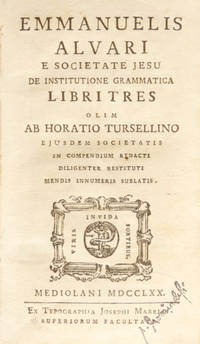
Best.-Nr. 2404PG016EMMANUELIS ALVARI E SOCIETATE JESU DE INSTITUTIONE GRAMMATICA LIBRI TRES Olim Ab Horatio Tursellino Ujusdem Societatis In Compendium Redacti Diligenter Restituti Mendis Innumeris Sublatis. MEDIOLANI MDCCLXX. 1770. Ex Typographia Josephi Marelli . Superiorum Facultati. In 12.º de 162x92 cm. Com iv 439 vii págs. Encadernação da época cartonada revestida com papel de fantasia. Ilustrada com o retrato do Padre Manuel Ãlvares em extratexto em frente da folha de rosto. Exemplar com carimbo oleográfico de posse de Moreira de Sá na folha de rosto com etiqueta de biblioteca no interior da encadernação com o número 2395. A primeira edição completa foi publicada em Lisboa em 1572 e depois sucederam-se por todo o mundo mais de 600 edições incluindo México China. Japão. A presente edição é uma das cerca de 100 edições que a obra conheceu em Itália sendo que esta foi publicada pelo humanista jesuíta Oratio Torsellini que foi o primeiro comentador da Gramática de Ãlvares em Itália. Manuel Ãlvares escreveu esta obra-prima por determinação do Geral Diego Lainez 151265 em 1564 mais tarde renovada pelo novo geral Francisco Borgia 1510-72 que ordenou que o livro fosse apresentado num prazo de seis meses pois era urgente a necessidade de estandardizar o ensino nos colégios jesuítas no entanto o autor levou mais três anos até completar a primeira parte que foi enviada para Roma em 1570 sendo publicada em Veneza em 1571. A gramática de Ãlvares foi adoptada na Ratio Studiorum dos Jesuítas e iniciou uma nova época no ensino do latim. Com um excelente equilíbrio entre a norma e o uso tornou real o conceito humanista de gramática e além de ser usada no original foi também traduzida para muitas línguas como alemão inglês croata espanhol flamengo francês italiano polaco português e chinês. Foi fundamental para o desenvolvimento da gramática do português e para a educação de muitos missionários que se tornaram grandes linguistas sendo pioneiros na descoberta e no estudo de línguas não europeias. Foi também a base dos primeiros letramentos ou seja transliterações de outros alfabetos para o alfabeto latino e de gramáticas de deiversas línguas de povos do Brasil China Ãndia e Japão onde foi publicada uma edição trilingue latim português Japonês em Amakusa no ano de 1594. É a obra mais editada escrita por um português e exerceu uma profunda e continuada influência em todo o mundo durante mais de 400 anos apesar da proibição de ser usada no ensino ter sido determinada pelo Marquês de Pombal em 1759 esta determinação foi desprezada em muitos países da Europa. A gramática é racional descritiva e sistematiza a globalidade das questões linguísticas de três áreas estando por isso dividida em três partes: De Etymologia que trata da etimologia e da morfologia; De Syntaxi trata da sintaxe e De Prosodia sobre a prosódia. Padre Manuel Ãlvares Ribeira Brava Madeira 1526 - Évora 1583 Foi um dos mais notáveis humanistas portugueses e um dos mais célebres autores didácticos de todo o mundo e de todos os tempos. De origens humildes segundo afirmou numa prédica no Colégio de Santo Antão: «sou filho de um pobre que me mandou a guardar uma vinha que trazia nos olhos era isto a tempo que estudava gramática». Recebeu as primeiras ordens sacras em 11 de Agosto de 1538 na Igreja da Ribeira Brava juntamente com o seu irmão professou na Companhia de Jesus no colégio de Coimbra em 4 de Junho de 1546. Foi professor nas escolas do Colégio de Santo Antão em Lisboa na Universidade de Coimbra Reitor em vários colégios e Prepósito na casa de S. Roque de Lisboa. É autor de outras obras como poesias em latim e uma oração em louvor de D. João III - Oratio de laudibus Regis Ioannis Tertii in Collegio Regio habita Calendis Octobris anno 1556; e um tratado de numismática De Ponderibus et Numeris. . Cuidou também de uma edição das Cartas dos Padres da Companhia que Andaram na Ãndia e Outras Partes do Oriente. Orazio Torsellini Roma 1545 - 1599 Jesuíta poeta e historiador italiano que escreveu sobre a história em geral sobre o cristianismo e gramática foi o primeiro comentador de Manuel Ãlvares em Itália. Exerceu as funções de professor de humanidades no Colégio de Roma da Companhia de Jesus dirigiu o Seminário Jesuíta de Roma e foi Reitor em Florença e no Loreto. É autor de uma biografia de São Francisco Xavier - De vita S. Francisci Xaverii libri sex 1596; de quem traduziu as cartas para latim de uma obra sobre o Santuário do Loreto - Lauretanae historiae libri quinque 1597; uma obra sobre gramática - De particulis latinae orationis ibid. 1598; de um resumo da História Universal - Epitome historiarum a mundo condito ad ann. 1598 Rome 1598. e de uma Oração fúnebre do Papa Gregório XIII. EN In duodecimo twelvemo. 16.2x9.2 cm. iv 439 vii pp. Contemporary binding cartonised and covered with fancy paper. Illustrated with a portrait of Father Manuel Ãlvares hors-texte on the title page. Copy with an oleographic ownership stamp from Moreira de Sá on the title page with a library shelf mark on front pastedown with the number 2395. The first edition was published in 1572 and more than 600 editions followed around the world including Mexico China. Japan. The present edition is one of around 100 editions of the work in Italy published by the Jesuit humanist Oratio Torsellini who was the first commentator on Alvares' Grammar in Italy. Manuel Ãlvares wrote this masterpiece by order of Superior General Diego Lainez 1512-65 in 1564 later renewed by the new Superior General Francisco Borgia 1510-72 who ordered the book to be presented within six months as there was an urgent need to standardise teaching in Jesuit colleges. However it took the author another three years to complete the first part which was sent to Rome in 1570 and published in Venice in 1571. Ãlvares' grammar was adopted in the Jesuits' Ratio Studiorum and started a new era in Latin teaching. With an excellent balance between the norm and usage it realised the humanist concept of grammar and as well as being used in the original it was also translated into many languages such as German English Croatian Spanish Flemish French Italian Polish Portuguese and Chinese. It was fundamental to the development of Portuguese grammar and to the education of many missionaries who became great linguists pioneering the discovery and study of non-European languages. It was also the basis of the first literatures i.e. transliterations from other alphabets into the Latin alphabet and grammars of various languages of peoples from Brazil China India and Japan where a trilingual edition Latin Portuguese Japanese was published in Amakusa in 1594. It is the most widely published work written by a Portuguese and has exerted a profound and continuing influence throughout the world for more than 400 years although the ban on its use in teaching was imposed by the Marquis of Pombal in 1759 but this decision was disregarded in many European countries. The grammar is rational descriptive and systematises all linguistic issues in three areas which is why it is divided into three parts: De Etymologia which deals with etymology and morphology; De Syntaxi which deals with syntax and De Prosodia on prosody. Father Manuel Ãlvares Ribeira Brava Madeira 1526 - Évora 1583. Received his first holy orders on 11 August 1538 professed in the Society of Jesus at the Coimbra college on 4 June 1546. He was Rector of several colleges and Prepost at the house of St Roque in Lisbon. He is the author of other works such as poetry in Latin and a prayer in praise of King John III - Oratio de laudibus Regis Ioannis Tertii in Collegio Regio habita Calendis Octobris anno 1556 Orazio Torsellini Rome 1545 - 1599. Italian Jesuit poet and historian who wrote about history in general Christianity and grammar was the first commentator on Manuel Ãlvares in Italy. He taught humanities at the Society of Jesus College in Rome directed the Jesuit Seminary in Rome and was Rector in Florence and Loreto. He is the author of a biography of St Francis Xavier - De vita S. Francisci Xaverii libri sex 1596; from whom translated the letters into Latin from a work on the Loreto Shrine - Lauretanae historiae libri quinque 1597; a work on grammar - De particulis latinae orationis ibid. 1598; a summary of Universal History - Epitome historiarum a mundo condito ad ann. 1598 Rome 1598. and a eulogy to Pope Gregory XIII. Referências/References: OPAC SBN - IT/ICCU/PARE/036609 Lopes Miranda Maria Margarida Manuel Ãlvares Conimbricenses.org Encyclopedia Mário Santiago de Carvalho Simone Guidi eds. 2019. Gonçalo Fernandes - De Institutione Grammatica Libri Tres de Manuel Ãlvares 1525-1583. Universidade de Trás-os-Montes e Alto Douro. João Pereira da Costa - Introdução In: P. Manuel Alvares - Gramatica Latina. Fac-símile da Edição de 1572. Junta Geral do Distrito Autónomo do Funchal. 1974. Inocêncio V 352 importância da obra em geral. Barbosa Machado III 179-172 para as edições até 1750. M-9-C-64 unknown
Best.-Nr. 28675NALLIERS de 1656 à 1672 un Livre de Compte ORIGINAL, manuscrit à l'encre brune de 22 pages, sur papier vergé ligné et filigrané : "écu couronné de duc avec 3 macles", format : 29 x 20 cm, LIVRE DE COMPTE DU CONSEIL DE FABRIQUE DE L'EGLISE SAINT-HILAIRE DE NALLIERS ET DES CONFRERIES DE SAINTE-CATHERINE A CHEVRETTE (PAR FRANCOYS LEBEUF) ET SAINT-NICOLAS A CHEVRETTE (PAR JOSEPH PIARD) de 1656 A 1672 , signature manuscrite in-fine de JACQUES DU TASTET CHANTRE DE LUCON ET JEAN POILLEAU CURE DE NALLIERS ET SIGNATURES DE 4 MEMBRES DE LA FABRIQUE,
1788Best.-Nr. 970F34Worcester: J. Tymbs; Mr. Smart; Mr. White; Mr. S. Hayes 1788. First edition. Leather. Very Good Indeed. 8.5" by 5.5". None. A signed example of the very scarce first edition of Rev. John Hawkins's theological work which reflects contemporary tensions between church doctrine and the rising tide of rational dissent. The very scarce first edition of this theological pamphlet from Reverend John Hawkins.Signed by Hawkins to the half title with 'from the author' to the head of the leaf. Leaf trimmed to fore edge resulting in the absence of the 'or' of 'author'. Hawkins offers a direct response to the Unitarian theologian Joseph Priestley"s criticisms of Trinitarian doctrine and the Church of England. Hawkins defends those who subscribe to the Thirty-Nine Articles particularly the doctrines of the Trinity and the divinity of Christ which Priestley had publicly rejected.ESTC No T103454Rebound in half calf with endpapers renewed.Retaining the half title.A signed example of this very scarce late 18th century theological work. Rebound in half calf with marbled paper covered boards and with endpapers renewed. Externally fine. Internally firmly bound. Signed by author to half title which is trimmed to fore edge resulting in the absence of the 'or' of 'Author'. Small tide mark to half title title page and following three leaves. Pages otherwise clean and bright. Very Good Indeed J. Tymbs; Mr. Smart; Mr. White; Mr. S. Hayes hardcover