Lorichius (Lorich), JodocusAntiquariat.de
7 633 résultats
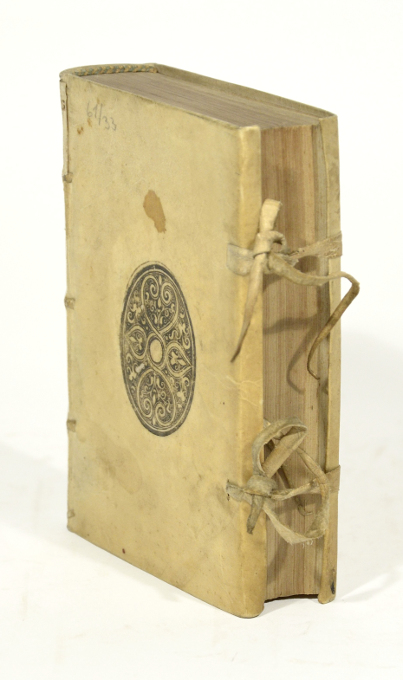
1587réf. 45116Ingolstadt, Wolfgang Eder (gedruckt von Adam Berg in München), 1587. 8°. Mit einigen Holzschn.-Vignetten u. -Initialen. 16 Bll., 578 S., 1 Bl., Pgmt. d. Zt. m. durchzogenen Bunden, gepr. Deckelvignette, handschriftl. Rückenschild u. intakten Schließbändern.
réf. 108401890-1900 ; 11 tomes reliés en 1 fort volume in-folio, demi-chagrin vert foncé, faux-nerfs et filets dorés, titre et dates dorés (reliure de l'époque) ; 50, 4, (1) f. blanc ; (4), 64 ; (4), 72 ; (4), 79 ; (4), 101, (1) f. blanc ; (4), 106, (1) f. blanc ; (4), 113, (1) f. blanc ; (4), 138, (1) f. blanc ; (1), 144 ; (6), 135, (1) f. blanc ; (6), 135 pp. Texte manuscrit lithographié.
réf. 11576In 4 plein cuir fauve raciné à nerfs, pice de titre cuir brun clair, caissons palmettes dorés. Portait gravé de l’auteur, en frontispice, titre illustré et gravé, épitre avec bandeau illustré et gravé, 8 pages, préface 6 pages, 6 pages de table historique et chronologique. Grande carte dépliante Civita Tullensis aujourd’hui diocèse de TOUL. 16 pages avertissement- 71pages- CXXIII Varia Regum et Principum Diplomata- 2 pages additions et fautes à corriger. Tranches rouges. A Toul chez Alexis Laurent imprimeur du Roi & de Mgr l’évêque. 1707. Seconde édition Pâle mouillure angle supérieur au frontispice, à la page de titre, ainsi qu’aux 4 premières pages de l’épitre, sans gravité, Sinon bel exemplaire de cet ouvrage rare, bien complet de sa grande carte dépliante.
réf. 2305PG009Conseguidas em Tres Campanhas Da Vida Morte & Bemaventurança da BEATA RITA DE CASSIA Viuva religiosa da Ordem dos Eremitas de N. Grande Padre Santo Agostinho acclamada commummente pela devoção dos povos ADVOGADA DOS IMPOSSIVEIS Com as noticias da grande veneração & culto em que he tida a Bemaventurada S. Rita Nas principaes Cidades Villas & lugares do Reyno de Portugal e das muytas mercès & maravilhas que os povos dellas atribuem à poderosa intercessão da mesma Santa. Author o Padre Mestre Fr. Joseph de S. Antonio Religioso da mesma Ordem & Commissario da Correa. Lisboa Occidental. Na Officina de Antonio Pedrozo Galram. Com todas as licenças necessarias. Anno de 1718. In 8.º de 206x152 cm. Com xvi 164 págs. Encadernação da época inteira de pele com nervos e ferros a ouro na lombada. Impressão em caracteres redondos e alguns itálicos na folha de rosto nas citações no texto e em alguns títulos ornamentada com cabeções constituídos por pequenas vinhetas iniciais decoradas e um florão de remate no fim da segunda parte. Exemplar com pertence manuscrito no pé da margem inferior da folha de rosto: «He do padre Joze Leite de Lemos e Castro». As folhas preliminares contêm o Prólogo ao Leitor as licenças com aprovações do Padre Mestre Frei João de Santo Agostinho Frei Miguel de Santa Maria Frei Teodósio da Cunha Padre Teodósio de Santa Marta Frei António Cruz e Pedro Ãlvares; e um conjunto de 16 epigramas em latim em louvor da santa. Muito rara. Inocêncio não menciona não consta dos principais catálogos de leilões e livreiros e a Porbase só regista um exemplar. Santa Rita de Cassia 1381-1457 religiosa italiana foi beatificada em 1627 e canonizada em 1900. Frei José de Santo António Lisboa - Lisboa 1737 Eremita Augustiniano; professou em 21 de Agosto de 1688. Foi Vigário Provincial e muito versado nas antiguidades da sua Ordem. Escreveu as três primeiras partes do Flos Sanctorum Augustiniano publicado em Lisboa entre 1723 e 1726 assim como outras obra de hagiografia. EN In octavo. 206x152 cm. xvi 164 pp. Contemporary full leather binding with raised bands and gilt tools on spine. Printing in round characters and some italics on the title page in quotations in the text and in some titles decorated with headpieces consisting of small vignettes decorated initials and a finishing fleuron at the end of the second part. Exemplar with handwritten ownership title at the foot of the lower margin of the title page: "He do padre Joze Leite de Lemos e Castro" Belongs to padre Joze . The preliminary leaves contain the Prologue to the Reader the licences with approvals from Padre Mestre Frei João de Santo Agostinho Frei Miguel de Santa Maria Frei Teodósio da Cunha Padre Teodósio de Santa Marta Frei António Cruz e Pedro Ãlvares; and a set of 16 epigrams in Latin in praise of the saint. Very rare. Inocêncio does not mention it it is not in the main auction and booksellers' catalogues and Porbase only records one copy. Saint Rita of Cassia 1381-1457 Italian nun was beatified in 1627 and canonised in 1900. Frei José de Santo António Lisbon - Lisbon 1737 Augustinian hermit; professed on 21 August 1688. He was Vicar Provincial and well versed in the antiquities of his Order. He wrote the first three parts of the Augustinian Flos Sanctorum published in Lisbon between 1723 and 1726 as well as other works of hagiography. Referências/References: Inocêncio IV 236. Barbosa Machado 822. M-6-E-15 hardcover
réf. 2606PG002em a festa que se fez a Sancto Antonio aos 14. de Septembro deste anno de 1642. Tendo se publicado as Cortes para o dia seguinte. EM COIMBRA. Com todas as Licenças necessarias. Na Impressam de Thome Carualho Impressor da Vniversidade Anno de 1658. De 20x15 cm. Com 57-83 i em br. págs. Encadernação recente do século XX inteira de percalina com gravações a ouro na pasta anterior. Ilustrado com na folha de rosto com o trigrama geralmente usado pela Companhia de Jesus encimado por querubim e concha rodeado por legenda latina e envolto por ornamentos arquitectónicos frutos e folhagem Texto disposto em duas colunas com paginação que indica o projecto de realização de uma coletânea de sermões de que não se conhecem hoje quaisquer exemplares e que poderá nunca ter sido publicada. Exemplar com leve acastanhamento próprio do papel alguma manchas e um pouco aparado à cabeça afectando a paginação e as referências nas margens. As primeiras 2 folhas incluindo a de rosto estão numeradas a tinta coeva de 1 a 4; com pequenas manchas de tinta e de humidade nos dois primeiros fólios. Muito importante para o estudo da divulgação dos sermões de Vieira para a fixação crítica do texto e para o estudo da oratória sagrada em Portugal. Edição muito rara e de uma variante tão rara que não foi identificada na pormenorizada Bibliografia do Padre António Vieira BNP 1999 que identifica três. Esta 4.º variante caracteriza-se entre muitas outras marcas pela disposição do texto na página 95 i. é 59 como por exemplo: coluna 2 linha 11: «ao lume da Igre-/ja»; linha 8: «celebra-/mos festa hoje. Necessario». Notável sermão que foi pregado no dia 14 de Setembro de 1642 em honra de Santo António na véspera da reunião das Cortes do Reino em Lisboa pois como artificiosamente disse o Padre António Vieira era como se o Santo fosse o procurador do Céu enviado às Cortes pois «como há dias que o ceo está pella Coroa de Portugal manda tambem seu Procurador o ceo ás Cortes do Reyno.». Desenvolvendo o tema escolhido Vieira expõe diversas considerações políticas sobre a responsabilidade dos procuradores dos seus deveres de justiça e de rectidão defende que devem ter sempre as virtudes de Santo António como modelo e especifica mesmo que ao determinarem aumentos de impostos necessários para a guerra devem ter o maior cuidado em que sejam obtidos pela persuasão e sejam repartidos por todos. p. 69. tema que é a questão principal do sermão. Texto do sermão começa ao alto página 95 i. é 59 e termina na página 83 com a expressão Laus Deo e tem mais uma página em branco. Texto em caracteres redondos com as citações em itálico. Referências bíblicas e bibliografia das obras citadas em itálico nas margens. PADRE ANTÓNIO VIEIRA Lisboa 1608 - Salvador Brasil 1697 considerado por muitos como o maior escritor português é autor de uma vasta obra em português latim e italiano sendo definido lapidarmente por Fernando Pessoa como o «Imperador da língua portuguesa». Ao mesmo tempo desenvolveu com brilhantismo visão e coragem atividades políticas e diplomáticas na defesa de Portugal durante a Guerra da Restauração tendo entrado em conflito aberto com a Inquisição que venceu com o apoio do Papa. Mais importante ainda foi a sua prolongada e dedicada atividade missionária em que se distinguiu pela defesa da liberdade dos índios e pela condenação da escravatura dentro dos moldes possíveis na sua época pelo que chegou a ser expulso pelos colonos que tratavam mal os escravos oriundos de Ãfrica e queriam escravizar os índios apesar das leis régias em contrário que obteve de D. João IV e de D. Pedro II. Vieira conseguiu conciliar um grande realismo político com uma crença arraigada no Sebastianismo começando por identificar D. João IV como o «Desejado» do mito Sebastianista que havia de ressuscitar. Apesar de Vieira dar grande valor e se ter dedicado prolongadamente às suas obras teológicas e proféticas foram os sermões que o consagraram como grande orador e escritor. A sua forte personalidade e capacidade oratória atraíam multidões para ouvi-lo pregar mas foi a possibilidade de rever e acompanhar a publicação dos sermões que os tornou obras literárias de grande valor e não apenas o frio registo das suas capacidades oratórias. Em 1614 Vieira foi para a Baía com a família e ingressou no Colégio da Companhia de Jesus onde segundo uma lenda superou inesperadas dificuldades de aprendizagem destacando-se pelas suas habilidades intelectuais e linguísticas o que lhe valeu em 1625 aos 17 anos a tarefa de redigir o relatório anual evento conhecido como o «Estalo de Vieira». Em 1623 iniciou o noviciado familiarizando-se com a cultura e a língua tupi e em 1625 fez os primeiros votos começando a ensinar retórica em Olinda. Ordenado sacerdote em 1634 tornou-se conhecido como orador realizando a sua primeira pregação oficial na Baía. Em 1641 acompanhou a Lisboa o filho do Vice-rei do Brasil iniciando uma fase como conselheiro político de D. João IV e missões diplomáticas na Europa. Em Roma reviu os seus sermões publicando o primeiro volume em 1679 e recebeu isenção da Inquisição. Regressou ao Brasil em 1681 onde se dedicou até à sua morte à revisão dos sermões e à redação da sua obra teológica «Clavis Prophetarum». EN 20 × 15 cm. 5783 pages i blank. Recently bound in the 20th century entirely in percaline with gold embossing on the front cover. Illustrated on the title page with the trigram commonly used by the Society of Jesus surmounted by a cherub and a conch shell surrounded by a Latin caption and encircled by architectural motifs fruit and foliage The text is laid out in two columns with pagination suggesting a planned collection of sermons of which no copies are known to exist today and which may never have been published. A copy with slight browning characteristic of the paper some stains and a little trimming at the top affecting the pagination and the references in the margins. The first two leaves including the title page are numbered in contemporary ink from 1 to 4; there are small ink and damp stains on the first two folios. Of great importance for the study of the dissemination of Vieiras sermons for the critical collation of the text and for the study of sacred oratory in Portugal. A very rare edition of a variant so rare that it was not identified in the detailed bibliography by Father António Vieira BNP 1999 which lists three such variants. This fourth variant is characterised amongst many other features by the layout of the text on page 95 i.e. 59 for example: column 2 line 11: «ao lume da Igre-/ja»; line 8: «celebra-/mos festa hoje. Necessario». A remarkable sermon preached on 14 September 1642 in honour of Saint Anthony on the eve of the meeting of the Cortes of the Kingdom in Lisbon; for as Father António Vieira artfully put it it was as though the Saint were Heavens procurator sent to the Cortes for just as Heaven has been with the Crown of Portugal for days now so too does Heaven send its procurator to the Cortes of the Kingdom. In developing his chosen theme Vieira sets out various political considerations regarding the responsibility of public prosecutors and their duties of justice and integrity; he argues that they must always embody the virtues of Saint Anthony as a model and even specifies that when determining tax increases necessary for the war they must take the utmost care to ensure that these are obtained through persuasion and shared equally amongst all. folio 7 r. a theme which forms the main focus of the sermon. The sermon text begins at the top of page 95 i.e. 59 and ends on page 83 with the phrase Laus Deo followed by a blank page. The text is set in round type with quotations in italics. Biblical references and a bibliography of the works cited are given in italics in the margins. FATHER ANTÓNIO VIEIRA Lisbon 1608 Salvador Brazil 1697 regarded by many as the greatest Portuguese writer is the author of a vast body of work in Portuguese Latin and Italian and was succinctly described by Fernando Pessoa as the Emperor of the Portuguese language. At the same time he pursued political and diplomatic activities with brilliance vision and courage in defence of Portugal during the War of Restoration coming into open conflict with the Inquisition which he overcame with the Popes support. Even more important was his long and dedicated missionary work during which he distinguished himself by defending the freedom of the indigenous peoples and condemning slavery as far as was possible in his time; for this he was eventually expelled by the colonists who mistreated slaves from Africa and sought to enslave the indigenous peoples despite royal decrees to the contrary which he had obtained from King João IV and King Pedro II. Vieira managed to reconcile a profound political realism with a deep-rooted belief in Sebastianism beginning by identifying King João IV as the Desired One of the Sebastianist myth who was destined to rise from the dead. Although Vieira placed great value on his theological and prophetic works and devoted himself to them at length it was his sermons that established him as a great orator and writer. His strong personality and oratorical skills drew crowds to hear him preach but it was the opportunity to revise and oversee the publication of his sermons that turned them into literary works of great value rather than merely a cold record of his oratorical abilities. In 1614 Vieira moved to Baía with his family and enrolled at the College of the Society of Jesus where according to legend he overcame unexpected learning difficulties and distinguished himself through his intellectual and linguistic abilities which earned him in 1625 at the age of 17 the task of drafting the annual report an event known as the Estalo de Vieira. In 1623 he began his novitiate familiarising himself with Tupi culture and language and in 1625 he took his first vows beginning to teach rhetoric in Olinda. Ordained as a priest in 1634 he became known as an orator delivering his first official sermon in Bahia. In 1641 he accompanied the son of the Viceroy of Brazil to Lisbon embarking on a period as a political adviser to King João IV and undertaking diplomatic missions in Europe. In Rome he revised his sermons publishing the first volume in 1679 and was granted exemption from the Inquisition. He returned to Brazil in 1681 where he devoted himself until his death to revising his sermons and writing his theological work Clavis Prophetarum. Referências/References: José Pedro Paiva - Padre António Vieira 1608-1697. Bibliografia 1080 a 1083. Arouca 222 Leite 1949 IX 205 42 Ãvila Perez 8011 26 páginas numeradas de 59 a 83 1 em br. Exposição Bibliográfica do Bi-Centenário 1897m na Biblioteca Nacional de Portugal p. 10 n.º 36 Inocêncio I 371 2688 SACO RS869-11 hardcover
réf. 1309JC012DEL PADRE ANTONIO VIEYRA DE LA COMPAÑIA DE IESVS. NVEVAMENTE ACRECENTADOS com dos Sermones del mismo Autor. Y DOS TABLAS VNA DE LOS LVGARES de la Sagrada Escritura y otra de los Assumptos y cosas Notables. Parte Primeira Parte Segunda. DEDICADOS AL MVY REVERENDO PADRE ALONSO DE Pantoja de la Sagrada Ilustre y Docta Religion de la Compañia de Iesus Procurador que fue por su Prouincia de nueuo Reyno de las Ãndias a la Congregacion General que se celebrò en la Corte Romana oy Rector meritissimo de su Religiosissimo Colegio de Quito y Calificador de la Santa Inquisicion. CON PRIVILEGIO DE CASTILLA Y ARAGON. En Madrid Por Ioseph Fernandez de Buendia Año 1664. Acosta de Lorenço Ibarra Mercader de libros. Obra com 2 partes em 1 volume. In 8º de 20x15 cm com viii 214 xviii 382 xxiv pags. Encadernação da época inteira de pele com ferros a ouro na lombada. Corte das folhas carminado da época. Exemplar com oxidação natural do papel e manchas marginais de humidade sem afectar a leitura do texto. Palau 1973 XXV pag. 465 ent. 364277 não refere a colação da Parte Segunda. M-4-C-21 unknown
réf. 1309JC028Della Compagnia di Giesù. Nella Solennità del B. STANISLAO. Vinheta da Companhia de Jesus. In Roma per il Lazzari Varese: 1675. Con licenza de" Superiori. In 8º de 17x11 cm com x 99 i 79 i págs. Encadernação da época em pergaminho flexível. Exemplar com falta de uma folha preliminar em branco antes da folha de rosto com pequeno restauro de papel à cabeça da folha de rosto que cobre uma assinatura de posse coeva com ex-libris oleográfico do Dr. José Bayolo na folha de rosto e com o número de registo 07892 também por carimbo oleográfico no pé da folha de rosto. As folhas preliminares contêm dedicatória a João III rei da Polónia donde era natural Santo Estalisnau Kostka por Giovanni Hernmani da Companhia de Jesus o imprimatur e uma última página em branco. Cada uma das partes tem uma folha inicial com o verso em branco com o título e o autor e as páginas finais de cada uma delas está em branco. Livro muito raro e importante para o estudo da personalidade e da obra do Padre António Vieira da vida religiosa e dos processos de canonização de membros da Companhia de Jesus. A presente obra coloca em evidência o prestígio internacional e as invulgares e excepcionais capacidades linguísticas do Padre António Vieira que além de ser um dos maiores escritores portugueses dominava o latim o italiano a ponto de escrever nestas línguas obras primas da literatura epistolar e paranética. O Padre António Vieira estava em Roma desde 1668 para obter revisão da sentença do Tribunal da Inquisição de Coimbra onde tinha estado detido desde 1665 a 1667 e que o tinha proibido de escrever ensinar e pregar. Contém dois sermões pregados em italiano em louvor de São Estanislau Kostka em 15 de Agosto de 1675 na Igreja de Santo André em Roma por Giovanni Paolo Oliva que era nesta data Superior Geral da Companhia de Jesus e pelo Padre António Vieira que já era um célebre pregador e diplomata ao serviço de D. João IV. Nesta data São Estanislau Kostka era beato desde 1605 e estas sumptuosas cerimónias faziam parte das acçções destinadas a conseguir a canonização que veria a ocorrer em 1726. S. Estalisnau Kostka Castelo de Rostków Czernice Borowe 20-10-1550 - Roma 15-10-1567 Santo da Companhia de Jesus que é um modelo para a juventude e para os estudantes e cuja festa se celebra a 15 de Agosto. Aos treze anos foi estudar para o Colégio dos Jesuítas em Viena onde teve o apoio do jesuíta português Padre Francisco António confessor da Inmperatriz. Com uma forte vocação religiosa desde a infância apesar da oposição do pai entrou na casa dos jesuítas em Diligen an der Donau na Alemanha onde foi recebido por S. Pedro Canísio posteriormente com dezassete anos foi para Roma estudar no Colégio Romano tendo falecido de doença ao fim de poucos meses. Foi beatificado em 1605 e canonizado em 31 de Dezembro de 1726 pelo Papa Bento XIII. Giovanni Paolo Oliva Génova 1600 - 1681 Padre Jesuíta que se celebrizou como Pregador Apostólico ao serviço de quatro papas foi o Décimo primeiro Superior Geral da Companhia de Jesus de 1654 a 1681. É autor de livros de sermões de cartas e de uma vasta obra em seis volumes sobre a Bíblia: In Selecta Scripturae Loca Ethicae Commentationes in Genesim. Padre António Vieira Lisboa 1608 - Baía Brasil 1697 Um dos maiores escritores portugueses o Imperador da Língua Portuguesa como disse Fernando Pessoa foi autor de uma vasta e grandiosa obra constituída por Sermões tratados teológicos e proféticos cartas tratados políticos e poesias. Foi igualmente uma personagem notável do século XVII tendo exercido funções diplomáticas e defendido os escravos e os índios contra os abusos e a escravatura. Durante a sua estadia em Roma tornou-se confessor da Rainha Cristina da Suécia pregou em muitas ocasiões numa delas perante o Colégio dos Cardeais. José Pedro Paiva. Bibliografia do Padre António Vieira. BNP. 1998. Nº 1319. Catalogo del Servizio Bibliotecario Nazionale. IT/ICCU/BVEE/050031. Inocêncio XXII 374 M-3-B-10 unknown
1676réf. 4401855London: R. Royston 1676. Preliminaries thumbed a bit foxed and a few scattered stains; binding scuffed and worn at extremities with some loss of the headband rear board stained. Folio with a frontispiece and double page 'Tree of Faith' plate trimmed and mounted on plain paper several other cuts in the text title-page printed in black and red; contemporary English crimson calf gilt unlettered spine with ornately gilt-decorated panels between raised bands. An attractive folio in contemporary English red calf binding. The second of several editions of this history of the early church illustrated with remarkable cuts depicting the apostles persecuted in all manner of ways it includes crucifixion immolation and the dreaded 'cauldron of boyling oyl'. Each apostle is awarded a separate chapter and is depicted both beatified and under duress. William Cave 1637-1713 was a minister and scholar of Church history who took his Doctor of Divinity at Cambridge before serving as vicar of Islington and later in London. He was chaplain to Charles II and Canon of Windsor. Cave's primary area of expertise was the early history of the Church and following the structure of Eusebius of Caesarea he weaves the lives of the apostles into a close narrative that illuminates arcane early theology for his reader successfully making the early history of the Church accessible to a wider audience: "what is significant about Cave's writings is that they follow the tradition of Christian bio-bibliography that in late antiquity and into the medieval period had such a long and rich history and which was revived in the Reformation. Cave's works provide valuable evidence for the interest in patristic scholarship at the end of the seventeenth century." ODB. . Provenance: Early signature of Elizabeth Wyndham; from the library of Chillingham Castle Northumberland spruiked today as "Britain's most haunted historic castle" with old label to the front endpaper; ownership inscription on title of "Cam. Tankerville 1727" Chillingham was the family seat of the Earls of Tankerville; from 1674 to 1931 the seven successive earls were all named Charles Bennet. R. Royston unknown
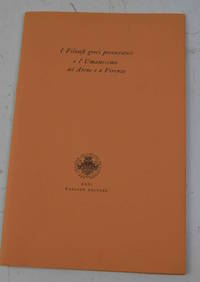
1991réf. 150818Alpignano: Tallone 1991-2006. Otto volumi di cm. 34 pp. 50/100 ciascuno. Brossura originale con protezione in velina. Ciascuno dei volumi entro camicia e cofanetto in cart. rigido. Esemplare in ottimo stato di conservazione. Raccolta completa di questa raccolta talloniana stampata in tiratura limitata di 250 esemplari. Il presente appartiene alla tiratura di soli 48 esemplari stampati su carta di Amalfi. Edizione che presenta il testo in ligua originale greca e nella traduzione italiana. Collezione così composta: 1. EMPEDOCLE "La natura". - 2. DIOGENE DI APOLLONIA "La natura". - 3. EMPEDOCLE "Il poema delle purificazioni". - 4. PARMENIDE DI ELEA "Il poema". - 5. MELISSO "La natura o l'essere". - 6. ZENONE D'ELEA "La natura". - 7. PITAGORA "I versi d'oro". - 8. ANASSAGORA "La natura". Si allega l'opuscolo stampato nel 2002 con la lunga presentazione all'opera di 24 pagine di Zanfiropulo. Tallone unknown
1754réf. 14359Florentiae: ex Typographio Imperiali 1754. Cm. 37 pp. xix 1 173 1. Frontespizio in rosso e nero una tavola fac-simile di scrittura antica fuori testo ed alcuni capolettera figurati. Perfetta legatura coeva in pergamena rigida con dorso a piccoli nervi. Tagli rossi. Smagliante esemplare marginoso a carte candide ed in perfetto stato di conservazione. Stampato su carta forte. Testo originale greco e latino a fronte. Edizione originale ed unica per questa raccolta di testi di medicina antica raccolti e presentati da Antonio Cocchi. Vi appaiono i due lunghi testi di Oribasio e Sorano da Efeso seguiti da alcune dissertazioni di minor mole. I due testi di ortopedia appaiono per la prima volta a stampa e provengono da manoscritti miracolosamente sopravvissuti. Dal punto di vista scientifico rivelano una sorprendente conoscenza della struttura anatomica soprattutto nella microcomposizione ossea. Cfr. Graesse II 134 e Brunet II 1687: "Trés-belle édition.". Welcome II a p. 363. ex Typographio Imperiali unknown
1922réf. 18075Berlin: Brandussche Verlagsbuchhandlung 1922. Cm. 34 pp. 262 2. Antiporta e frontespizio interamente decorati ed altri abbellimenti policromi nel testo anche in oro per opera di Marcus Behmer. Sontuosa legatura editoriale in pieno marocchino con dorso interamente decorato in oro piatti inquadrati da duplice filetto e con rosone centrale in rosso. Dentelles interne e taglio di testa dorato. Legatura di P.A. Demeter. Qualche spellatura superficiale alle cerniere ma bell'esemplare fresco ed in eccellente stato di conservazione; a carte candide. Edizione di soli 225 esemplari di cui il presente porta il numero 165. Brandussche Verlagsbuchhandlung unknown
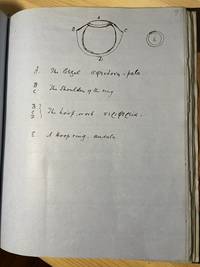
1872réf. 31740AB1872. Suffolk c.1872. 69 11 pages. Hardcover / Half Morocco with gilt lettering to spine. Very good condition. This unpublished Manuscript of an unfinished Work on the History of Finger - Rings by Reverend James Beck includes for example the following chapters: - History of Finger Rings Eqyptians as true inventors of the Finger Ring "according to Pliny the Greeks could not have known of them at the time of the Trojan Wars as no mention of them is made by Homer" - Beck dissects the meaning of Rings on certain fingers and explains why the "Ring Finger" was chosen as such: "By some this finger is called the digitus medicus or medicinalis but its more correct name is annularis Digitus anularis today known as Ring Finger" ".it was selected as annular finger because it was less employed than any of the others & it was protected by the middle & little finger hence as Atteus Capito says it was better suited for preserving a Ring. Aulus Gellius mentions that the anatomists had discovered a vein which extended from the Heart to the fourth finger of the left hand & that on this account it was selected as the ring finger." The Manuscript makes further cases for Rings worn on the other fingers on the hand. Includes sections on: - Signet Rings / Signet Rings with Crystals and Enamels / Rebus / Letters and Coronets / Signet Heraldic - Rings with angraved Cameos - Sergeant at Law - Rings The manuscript includes a larger section on Rings for Serjeants at Law - Rings of Investiture / Rings for Poet Laureates - Xtian Rings Christian Rings / Iconographic Rings - Rings for Prelates - Doctors of Divinity - Canons & Priests - Rings for Consegrated Virgins / Rings used as Reliquaries "The custom of putting Relics with Rings" - Rings as Gifts at Marriage of Servants / Ring Money - Ad Memoriam Ring etc. etc. - Finger Rings as Charms against Diseases "annali virtuosi" Beck lists here a story of a Charm - Ring against Epilepsy which was found at Kemp Weston in Somerset - Finger Rings as Talisman "Crapaudine - Talismanie" - Rings with merchant Marks Attractive quarto bound in half deep red morocco over cloth covered boards with gilt lettering. Blue endpapers and paper stock throughout; circular stamp of Assay Office Library Birmingham on flyleaf. A sequence of pasted letters about 10 pages in all precede the manuscript starting with a letter to Beck from Thomas Clifford Allbutt inventor of the Clinical Thermometer and co-founder with Sir William Osler of the History of Medicine Society from the Royal Archaeological Institute about works held in their library on finger rings; a book order form from W H Smith; and a brief note from the former Bishop of Glasgow Walter Trower. Becks manuscript has a typed title page and is dated circa 1872. His history of rings runs to 69 pages with an additional 11 pages of notes laid down on the blue paper stock. Beck proceeds from the ancient Egyptians through the classical world occasionally adding illustrations dealing with signet rings and rings of office such as the Serjeant of Law as well as the ring of the poets laureate. The final notes become increasingly fragmentary at the end. James Beck 1819/20-1886 was educated at Corpus Christi College Cambridge serving as Rector of Parham Sussex and subsequently of Bildeston Suffolk; in 1867 he married Caroline Jeannette Bignell Walter. This volumes has the feeling of a family memento probably bound up after Becks death to preserve his hard work on this fascinating subject. Source of Description: Dr.Christian White. hardcover
1841réf. 31857AB1841. Maynooth / Radanstown Meath / Cole Hill Longford etc. 1841-1854. Octavo. 181 pages Diary of William Handcock / 140 pages plus 4 pages of Index Diary of Robert Ball Handcock. Hardcover / Original 19th century half-leather with paper-covered boards. Very good condition with only minor signs of wear. Letters and Petitions and Addresses transcribed in this Manuscript - Diary of William Handcock include many Letters he wrote himself to authorities or Newspapers at the Time Letters he received as Rector of Clontarf Rector of Radanstown Meath and Rector of Kilnagross Diocese of Ross Friends Colleagues etc. but William Handcock also included transcriptions of Letters of contemporaries colleagues and people who had written to Newspapers or the Crown which he found interesting. Letters and Addresses include for example: 1. Address from the Roman Catholic Inhabitants of Clontarf to the Revd. William Handcock page 117 - 119 2. Letter to the Maynooth Grand Diocese of Meath - To the Reverend Samuel Magee - Rector of Rathmolyon Glebe Maynooth June 1848 / Page 107 - 110 3. Letter "To the Rent Charge - To the Landed Proprietors of Ireland - Maynooth Dec.15 / 1848" page 102 - 106 4. Letter from a Lady to Revd. W. Handcock on.the Right of Private Judgment in Matters of Religion - Clifton Vale April 12 - 1841 Page 73 - 77 and followed by the long answer of the Reverend William Hancock on Pages 77 - 86 And many more !!! Biographical Information on Reverend William Handcock 1795-1873 Rev. William Handcock was born on 22 December 1795 in Dublin Ireland. He was the son of Rev Robert Handcock D D and Jane Bryanton. William matriculated at Trinity College Dublin on 1 July 1811. William Handcock pensioner Mr Fea aged 15 son of Robert clericus born Dublin. William late Rector of Kilgariffe Diocese of Ross co. Cork; Leslie states: priest 1820 Dromore Vicar choral St Patrick's Cathedral 1819-21; Curate Ardee Armagh 1820 Prebend and Vicar Ballisodare Achonry 1821-9 exchanged with Charles Mulloy for Rector of Clontarf 1829-40; Rector Radanstown Meath 1840-52; Rector Kilnagross Ross 1852-8; resigned. Succeeded to his father's estate at Cole Hill co. Longford between 1820 and 1858. Rev William Handcock married Sarah Coddington on 6 January 1821. He owned an estate of just over 500 acres in the parish of Aughrim barony and county of Roscommon in the 1850s. In the 1870s Mrs Sarah Handcock of Ballyknockan House Ballypatrick county Tipperary owned 515 acres in county Roscommon. William died on 3 January 1873 aged 77. Source: Linley & Jim Hooper's family history: "The genealogy of George A A Hooper his wife Linley Maree McKenzie & her half sister Jennifer Anne Dunbar Daniels of Melbourne Australia" hardcover
Acquaforte misure: mm 91 x 123 Pittore e incisore italiano. Venne indirizzato allo studio del disegno dal padre Giovanni Andrea modesto pittore paesaggista, ben presto però Bartolomeo preferì studiare copiando le opere dei grandi maestri come Guido Reni e Giulio Romano presenti nelle chiese di Genova. Intorno al 1650 entrò nella bottega di Valerio Castello (Genova 1624 - 1659) principale esponente del barocco genovese. A differenza del maestro che si dedicò soprattutto all'affresco, Biscaino praticò soprattutto la pittura su tela e l'incisione. Si conoscono circa una quarantina di lastre per le quali sembra abbia tratto ispirazione dalle opere del maestro Giovanni Benedetto Castiglione, detto il Grechetto (Genova 1609 – Mantova 1664). In questa stampa vine rappresentato Dio Padre che scende dal cielo per benedire gli uomini. Viene raffigurato come un uomo anziano dalla barba lunga, con sguardo benevolo fissa un punto sulla sinistra della composizione. Egli è avvolto in una toga, rigonfia dal vento e riccamente panneggiata con giochi chiaroscurali che accentuano il movimento e danno dinamicità alla composizione. A precederlo c'è la colomba della pace, nell'angolo in basso a destra e in alto a sinistra sono descritti i volti di due putti. Lo sfondo è riempito mediante linee parallele disposte a raggiera che creano un'atmosfera solenne. Impressione eccellente. Ottimo stato di conservazione. Minimi margini oltre la battuta del rame, fatta eccezione del margine sinistro rifilato. Stato Unico. Bibliografia: T.I.B., 47/041.
1836réf. 002795Paris, Charles Gosselin et Furne, 1836
réf. 012482Révérend Père Augustin Colombel (1833-1905), missionnaire jésuite en Chine, père de l'astronomie moderne en Chine à qui on doit la construction de l'observatoire de Shanghai. L.A.S., Ousi [actuelle Shanghai ?], 17 avril 1872, 4p in-8. A sa soeur Marie-Thérèse Colombel (1839-1912), baronne Richerand : « Ma bien chère sour, Je reviens du nord de mon district où j'ai passé toutes les fêtes de Pâques, depuis deux mois je suis en course et je dois repartir après demain matin. Je te trouve toujours fidèle à ton affection pour moi et ta lettre du 6 février m'attendait ici. J'ai reçu aussi les journaux que vous m'envoyiez, l'album des ruines de Paris et la photographie de mgr Surat. Je vous remercie de vos attentions délicates. [....] Vous pensez bien que parmi mes chrétiens j'ai toute sorte de personnes, les riches exceptés toutefois. Ici plus que partout ailleurs la malédiction de l'Evangile pèse sur eux. Outre cette raison principale, on peut ajouter qu'ici plus que partout ailleurs cette classe tient d'autant plus à la terre qu'elle y jouit davantage. La grande majorité de ces pauvres gens cultive quelques arpents de terre. L'admirable fécondité du sol leur demande au plus quatre mois de travail et ils ont une récolte de riz qui leur donne la nourriture de la famille d'abord puis de quoi vendre assez pour pourvoir aux vêtements et aux autres besoins. Je n'ai qu'un catéchumène qui possède 200 arpents, il n'en cultive que 40 qui suffisent amplement pour ses besoins, mais le pauvre homme est trop simple, il se laisse gruger par tous ses parents et amis payens, il en est toujours à la misère. J'ai aussi parmi mes chrétiens deux anciens prêtres des idoles, l'un brûlait l'encens devant Fo et les autres dieux que la Chine a empruntés à l'Inde, il avait la tête rasée, c'est un Bonze. Il est maintenant cuisinier dans un thé tenu par des payens (comme qui dirait dans un café). L'autre faisait pousser sa queue et récitait les prières chinoises devant je ne sais quel héros du céleste empire, c'est un Fao sse (?). Comme j'avais refusé la communion au Fao sse qui n'était pas assez instruit et accordé cette faveur au Bonze qui dans sa simplicité savait et croyait le nécessaire. L'orgueil du Fao sse se réveilla et se traduisit en coup de poing sur la tête de son émule. C'était au moins un signe qu'il désirait le bienfait de la communion. Mais ce désir ne me paraissant pas assez surnaturel je lui donnais pourtant tous les torts. Parmi mes catéchumènes, j'ai aussi d'anciens rebelles, ils ont bien des meurtres à se reprocher, Dieu leur a pardonné, la justice chinoise ne s'en préoccupe pas, mais si jamais on établit les lois françaises en Chine et qu'il vienne un procureur de la république ou du Roi, je le prierais bien sincèrement de ne pas trop chercher à savoir le passé. Vous voyez combien nous avons besoin du secours de Dieu, priez beaucoup pour ces pauvres gens, pour que les payens ouvrent les yeux, j'espère que le Bon Dieu, à son heure, aura pitié d'eux. Ici comme en France on s'attend à de grands évènements. Prions pour que Dieu les tourne à sa gloire. Priez aussi pour moi, que vos prières m'accompagnent partout et nous aurons ainsi tous part à la même récompense. Adieu tout à tous et à chacun. Mon respect et mon affection toute entière, surtout à notre bien aimé père. Ton frère tout dévoué. Aug. M. Colombel s.j. » Magnifique témoignage sur le développement des missions en Chine et à Shanghai. Cette lettre a été publié avec quelques autres sur le blog du Bibliomane Moderne le 14 octobre 2021. Elles apportent un éclairage particulièrement intéressant sur le développement des missions jésuites en Chine et à Shanghai en particulier. [242]
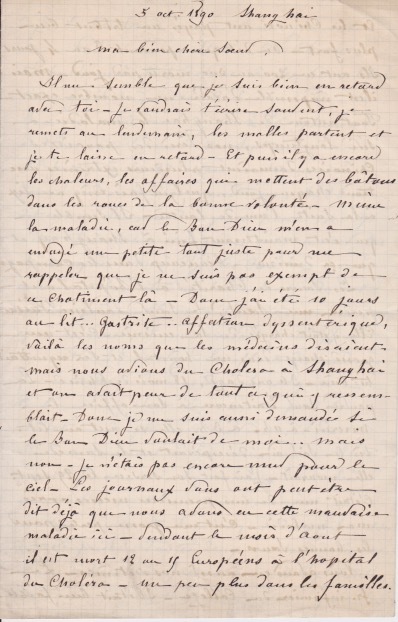
réf. 012489Révérend Père Augustin Colombel (1833-1905), missionnaire jésuite en Chine, père de l'astronomie moderne en Chine à qui on doit la construction de l'observatoire de Shanghai. L.A.S., Shanghai, 5 octobre 1890, 4p in-8. A sa soeur Marie-Thérèse Colombel (1839-1912), baronne Richerand : « Ma bien chère sour, Il me semble que je suis bien en retard avec toi. Je voudrais t'écrire souvent, je remets au lendemain, les malles partent et je te laisse en retard. Et puis, il y a encore les chaleurs, les affaires qui mettent des bâtons dans les roues de la bonne volonté. Même la maladie, car le Bon Dieu m'en a envoyé une petite tout juste pour me rappeler que je ne suis pas exempt de ce châtiment là. Donc j'ai été 10 jours au lit... gastrite... affection dysentérique, voilà les noms que les médecins disaient mais nous avions du choléra à Shanghai et on avait peur de tout ce qui y ressemblait. Donc je me suis demandé si le Bon Dieu voulait de moi... mais non. Je n'étais pas encore mur pour le ciel. Les journaux vous ont peut-être déjà dit que nous avons eu cette mauvaise maladie ici. Pendant le mois d'août, il est mort 12 ou 15 européens à l'hôpital du choléra. Un peu plus dans les familles. Et les chinois ont payé un tribut bien plus fort. On dit que pendant 3 ou 4 jours, ils ont eu 200 ou 300 morts par jour. Mais il est impossible d'avoir un nombre exact. Tout autour de Shanghai, la maladie a sévi longtemps, nos Pères des paroisses chinoises donnaient plusieurs extrêmes onctions chaque jours, quelques fois cinq ou six à la suite l'une de l'autre. Il semble que c'est maintenant fini à Shanghai et que ça diminue beaucoup dans les campagnes. Les sours de Charité à l'hôpital ont perdu une sour, la sour Pauline Faisais. Elle y était chargée de la cuisine - c'est une grosse charge dans un hôpital - et s'en acquittait très bien. 36 ans d'âge. 18 mois de Chine. La pauvre sour était en cure à son office le mercredi à 11h. A 3h elle se met au lit. Dès le soir on désespérait et le samedi elle mourait. J'ai fait son service le 29 sept. C'était une de mes premières messes après ma maladie. C'est une grosse perte pour les bonnes sours. Nous avons eu aussi nos victimes. Le fr. infirmier du collège. Il était bien faible déjà, le choléra a eu beau jeu sur lui. Puis un Père italien de 64 ans, très fort, mais tout dévoué à ses 4000 chrétiens qu'il saignait à 2 heures d'ici. Le Bon Père avait donné de 60 à 80 extrêmes onctions dans le mois de septembre. Il fut pris le 27 mais continua à donner des extrêmes onctions. Le 28, il dit encore la messe à grand peine, p[ar]c[e] q[ue] c'était dimanche et pour consommer les saintes espèces. Mais déjà les chrétiens qui connaissent bien cette maladie le regardaient comme perdu. Ils nous l'amenèrent aussitôt après la messe, il nous arrivait à 11hŸ et mourait à 4h malgré les efforts des médecins qui ont essayé des remèdes héroïques. Ce bon Père avait été chassé par la révolution de plusieurs provinces. Il était venu se consacrer à la mission. Il meurt les armes à la main. C'est là une belle mort de missionnaires. Chez la m. St Dominique, deux enfants ont été prises. Toutes deux en sont revenues. L'une d'elles (11 ans) était bien à l'extrémité, condamnée par le médecin. Je crois qu'elle doit la vie aux prières faites pour elle. On tenait beaucoup à ne pas la perdre pour la réputation de la maison. [...] Je vous embrasse tous bien fort. ton frère Augustin. » Belle lettre sur les difficultés des missions en Chine, le choléra, les nombreux morts, etc. Cette lettre a été publié avec quelques autres sur le blog du Bibliomane Moderne le 14 octobre 2021. Elles apportent un éclairage particulièrement intéressant sur le développement des missions jésuites en Chine et à Shanghai en particulier. [242]
2002réf. 1-0375815511Heinemann Young Books 2002. Hardcover. New. 4.75x6.25x0.50 inches. Heinemann Young Books hardcover
1915réf. CAT0127New York et al. 1915. Silver gelatin prints roughly 8 x 8 8 x 10 and 5 x 7 inches the last on a larger mount. Very Good. In 1914 Francis Red Fox James now presumed to be related to the Blackfoot tribe rode a horse across the country seeking states' approval for an American Indian national holiday. He delivered endorsements from 24 states to the federal government but a commemoration never materialized. The Washington Herald reported that James rode 4000 miles from a Crow reservation in Montana and was received by President Wilson to discuss the possibility of a "national Indian's Day" in October. Washington Herald 12/16/14 Although his mother was probably Blackfoot James claimed Native American heritage only as an adult. He changed his name by adding "Red" and later "Skiuhushu" to Francis Fox James. Two of the images in this collection contain familiar tropes of American Indian portraiture but the third offers an arresting image of James holding the American flag aloft as a kind of offering. This enigmatic gesture could be read as evidence of an optimistic belief in a mutual relationship between the US and American-Indian nations. It is also undoubtedly related to James' interest in legitimizing his Indian heritage as the founder of the Tepee Order a youth organization addressed mainly to white Protestant children. By 1920 the Order had evolved into an adult secret fraternal organization shrouded in mysticism. James was also associated with the Boy Scouts; he is credited with organizing the first All-Indian Boy Scout Troop in 1915. In The Search for an American Indian Identity 1970 Hazel Hertzberg writes that James "was deeply troubled by his degree of Indian 'blood.'" In addition to changing his name several times to seem more "Indian" he theorized that his Welsh ancestry was pre-Columbian using the Tepee Order to create a kind of third space a "pan-Indian society" that was neither Indian nor white. We find no other examples of these photographs though a US flag does appear on James' saddle in a photo documenting his White House visit. One picture signed by James with "Indian in Prayer "Great Spirit. / Red Fox James. Blackfeet." on recto and the following on verso: "A Gift / To my dear Friend / Eugene Beaton / c/o Burns Studio / Bucyrius sic Ohio. From Red Fox James / Blackfoot Tribe." Generally a very good collection with some fading to images but well preserved overall. unknown books
1847réf. 61025Padova: Tip. del Seminario 1847. Cm. 29 pp. 157 3 lii. Testo in rosso e nero con 3 tavole fuori testo e molti disegni nel testo. Solida ed elegante legatura coeva in mezza pelle dorso liscio con titoli e filetti in oro. Esemplare pulito marginoso ed in ottimo stato di conservazione. Un timbretto privato di possesso al frontespizio. Allegato un quadernetto manoscritto di pp. 16 di poco posteriore alla pubblicazione del volume in cui vengono riassunti i passi dell'opera riguardanti il Lago di Garda prevalentemente Peschiera e Salò. Edizione elegante e verosimilmente impressa in numero limitato di copie. Raro. Tip. del Seminario unknown
1843réf. 0001770Baltimore Maryland MD - at Sea Aboard the Charles 1843. On offer are two 2 super original manuscript relics of Christian outreach and missionary work handwritten by Reverend Walter Gunn one of the first missionaries to India addressed to Frederick Schott of Waterloo New York. Bio notes follow. The first is a one 1 page letter written by Gunn dated 1843 while in Baltimore. The second letter is written by Rev. Gunn while on the boat "The Charles" heading to India in 1844. He has been at sea for 138 days. This is a 3¼ page letter. Here are snippets: 1 "Baltimore May 24 1843 Dear Brother in the Lord I should like to write a long letter to you and enter into many particulars but I have but only a few moments to spare as Bro Selmser is soon to leave B. and I have a press of business on hand. Well how do you do. How is your family and how do your souls prosper. Is Christ precious are you actively engaged in his service. O my brother watch your heart your words and your actions and strive to live so that the flame of love may burn brightly in your heart to God. How pleasant it would be for me to enjoy the hospitalities of your table again to bow with you again around the family altar to walk to the house of God in company but instead of walking the street of Waterloo I shall soon be walking the deck of the vessel that bears me to the heathen land. But shall I ever forget you and the beloved brethren of W. No. Even now while going from house to house among the brethren in imagination the tears fall upon the paper and bedew these lines I write .Your brother in Christ Walter Gunn." 2 "Ship Charles Indian Ocean March 25th 1844 Dear Brother Shutt While penning these lines I am sailing up the Indian Ocean towards the shores of Hindustan. I have crossed the equator twice doubled the Cape of Good Hope and shall in a few weeks I trust reach my field of labor. But though I am separated from you by a distance of so many thousand miles I have not forgotten you no in imagination I often walk the streets of Waterloo visit the houses of the brethren and join in your acts of worship in the congregation. The different articles of apparel that I wear at this moment remind me of you and many others in W. While contemplating the interesting scenes that transpire in your place one year ago my eyes often fill with tears. Were not those precious and heavenly seasons when you and so many of your associates and friends took a stand on the Lord's side. Though I am now denied the privilege of witnessing such glorious displays of the power and grace of God in the conviction and conversion of sinners I do not on that account conclude that I am out of the path of duty. True it would be a pleasing task for the minister of Christ to be engaged daily in the work of directing the inquiring to the Savior and strengthening those who had just commenced running the Christian course. But that privilege at present is denied me. From no one for the last few months have I heard the inquiry "What must I do to be saved." Except the missionaries who are going with me to the heathen. I am surrounded by those who seem to think but little of their undying souls .You will undoubtedly wish to know how I feel now that I am so far away from kindred friends and natives land with but little prospect of ever seeing them again. To answer for the most part I feel cheerful contented and happy. Often have I seen the ocean all lashed into commotion the vessel at one moment raised upon the top of a mighty billow and the next plunged into the fearful chasm below; at such a moment it seemed as though we must all be engulfed beneath the troubled ocean but even then my mind has been calm and unruffled .Tell your sister Mrs. Bean that the pantaloons she made me became very spotted by the damp weather around the Cape of Good Hope but that the spots did not make them any the less comfortable. Tell Jackson that I hope and pray that he may become a minister. Tell Mrs. Mayer that my wife often speaks of her and the pleasant time that they spent together in Johnstown and Whitesboro. Tomorrow or next day we expect that our vessel will anchor in the harbor of Amherst in Burmah. One hundred and thirty eight days I have been tossed upon the billows of the ocean without setting my feet on land and many more anxious days will pass before I reach Guntur the field of my labor. Pray for me and my companion that we may be preserved from the temptations to which we are exposed and that we may be the faithful servants of Christ among the heathen. Yours in the bonds of Christian love Walter Gunn. Near the shores of Burmah April 3rd 1844." BIO NOTES: "The Rev. W. Gunn. The Missionary was a graduate of Union College N.Y. in 1841; studied theology at Gettysburg; was ordained by the Hartwick Synod in 1843 at Johnstown; appointed missionary to India in the same year; arrived at Guntur on June 18th 1844 and was a faithful and an indefatigable colleague of the Rev. Mr. Heyer until 1851 when after a period of seven years service in the cause of Jesus he departed this life at Guntur esteemed and loved by all who knew him. He is spoken of as a good man full of zeal for the Lord so much so that on one occasion in the Guntur bazaar he became so indignant at some idolatrous performances of the heathen that he lifted up his voice in great earnest against the idolaters who became exasperated at him and consequently proceeded to pelt him with stones. But he prudently withdrew from the enraged rabble only to return on subsequent occasions to continue publishing the message of salvation to them. His remains rest in the Guntur Cemetery until the day of the resurrection. He died while in Guntur in 1851 from Tuberculosis." "Reverend Adam Long went to India almost immediately after being ordained. The Lutheran mission to India was still in its early phases when Long arrived it have been started in the Andhra region by Rev. John Christian Frederick Heyer in 1842 who at 48 and widowed was an anomaly compared to other missionaries. He was joined by the Rev. and Mrs. Water Gunn another Gettysburg College and Seminary graduate in 1844 and by Rev. George Martz in 1849. There these men and Gunn's wife Lorena began the task of educating and converting Indians. In a country that is dominated by the polytheistic Hinduism and Mohammedanism this was not an easy task. Traveling from village to village these men and women counted their accomplishments by the individuals that they could convert and the schools and churches that they built. . Good. 8vo - over 7¾" - 9¾" tall. Manuscript. unknown
1972réf. 133104Austin TX: Pyramid Publishing Company 1972. First Edition. First Edition. SIGNED by Roky Erickson on the front flyleaf. With the original circular red "Autographed Copy" sticker affixed to the front board. A book of poems written by Erickson legendary singer and songwriter for the 13th Floor Elevators during his stay at the Rusk Hospital for the Criminally Insane in Rusk Texas. The only physical evidence of his creative endeavors made between electroconvulsive shock therapy treatments which included the formation of a band with fellow inmates called The Missing Links and reportedly writing nearly 100 songs. Working with his childhood friend George Kinney Erickson published this volume while still institutionalized. A collection of 45 poems nearly all of which are extremely positive and upbeat "Let's Have a Never-Ending Love Contest" "When You Get Delighted" and "Thank God for Civilization" are a few examples. Outside of anthologies perhaps the only volume of poetry ever published with the poems arranged in alphabetical order. Erickson would take a different turn upon his release forming a hard rock band called Roky Erickson and the Aliens writing almost exclusively about Satanism and riffing on classic horror films. Toward the end of the 1970s he again went into a long period of mental decline and has only recently begun to perform again. A rare title nearly impossible to find with a contemporary signature. A second collection titled "Openers II" containing Erickson's song lyrics essays and interviews was published 23 years later in 1995. Very Good plus in moderately soiled white cloth-covered boards a gilt peace/cross symbol design on the front board gilt spine titles and no dust jacket as issued. Pyramid Publishing Company unknown books
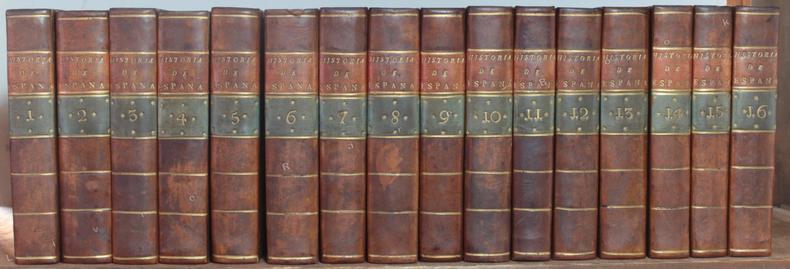
1751réf. 9755En Amberes, Marcos-Miguel Bousquet y Compania, 1751-1756. 16 volumes in-12, demi-veau brun à coins, dos lisses ornés de filets, étoiles et titre dorés, étiquettes de titre marron, de tomaison vertes, tranches jaunes. Rares rousseurs, papier parfois légèrement bruni.
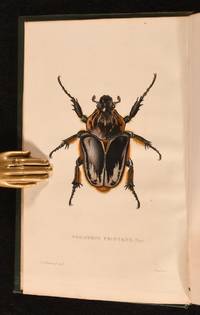
1837réf. 978K15London: Henry G. Bohn 1837-1838. First edition. Cloth. Very Good. 9" by 6". Reverend F. W. Hope. The first and second series of this scarce entomological work signed by the author and with lovely hand coloured plates. The first edition of both works. With a hand coloured frontispiece and three partially hand coloured plates to both works. Collated complete.With presentation inscriptions from the author to the front endpapers of both volumes presenting the work to the Natural History Society of Shrewsbury. Institutional copies with stamps and bookplates to preliminaries of both works. The Coleopterist's Manual is considered a foundational text on the study of beetles and details exotic and British beetle species with descriptions classifications and notes on habitat. Aimed at naturalists and collectors Hope"s work significantly advanced entomological studies and taxonomy reflecting the Victorian era"s growing interest in biodiversity and scientific discovery.A third volume was also published in 1840.A scarce signed pair of these important texts. In publisher's green cloth. Externally smart with library annotations to tail of both volumes. Slight bumping to extremities and loss to spine labels. Institutional labels and stamps to endpapers of both volumes. Internally firmly bound. Pages bright and clean with just marginal age toning and the odd spot and handling mark. Institutional stamp to reverse of volume one frontispiece. Very Good Henry G. Bohn hardcover
1796réf. 007817Philadelphia : Re-printed for Richard Lee by Dunning Hyer and Palmer - Printers 1796. First American Edition. Hardcover. This complete two-volume first U.S. edition of 1796 is bound in contemporary marble calf. The bindings feature gilt ruled spines with rectangular gilt-printed burgundy spine labels and circular gilt-printed black spine labels. Condition is good plus. The period bindings remain fully intact the boards still firmly connected. As might be expected the bindings show age and wear the boards and spines variously scuffed the corners worn through. The text blocks have a slight swell the boards a slight outward warp. The contents of both volumes are notably clean the endpapers browned the contents less so. Spotting is minimal appearing substantially confined to the endpapers and page edges. The same single clearly vintage owner name is inked to the upper right corner of each title page. This U.S. edition RE-PRINTED FOR RICHARD LEE in Philadelphia in 1796 by DUNNING HYER AND PALMER PRINTERS followed the British edition of 1795 J. Ridgeway London. This work was the product of the incarceration of the author - Reverend William Winterbotham 1763-1829. Winterbothams prosecution was a celebrated instance of overreaction by the authorities through nervousness in the wake of the French Revolution. The sixth of fifteen children Winterbotham left school after an argument with the schoolmaster and thereafter apprenticed to a silversmith. He eventually started in business for himself as a silver buckle-maker but illness forced a temporary return to his parents. His early dissolute life changed when he underwent conversion. In 1787 he began to preach and in 1789 became a Baptist. In this newly found zealous life he ran afoul of the politics of the day. In a sermon on 5 November 1792 on the double anniversary of the 1605 Gunpowder Plot and the revolution of 1688 Winterbotham made reference to the French Revolution and to contemporary abuses as he saw it of the contract between king and people. This aroused local feeling and a prosecution was talked of. In an attempt to put matters right he preached a sermon on 18 November but on 25 and 26 July 1793 he was tried at the Exeter assizes for both sermons and found guilty. The result was a significant fine and imprisonment most of which he spent at Newgate prison. It was in Newgate that Winterbotham wrote An Historical Geographical and Philosophical View of the Chinese Empire as well as An Historical Geographical Commercial and Philosophical View of the American United States. Upon release from Newgate in November 1797 Winterbotham returned to preaching. He was publicly ordained in 1801. He was frequently invited to preach around the country and in 1812 was one of the signatories to the formation of the Baptist Union. ODNB Re-printed for Richard Lee by Dunning, Hyer and Palmer - Printers hardcover