VIEIRA (Padre Antonio) e Manuel da CostaBiblio.com
7 608 résultats
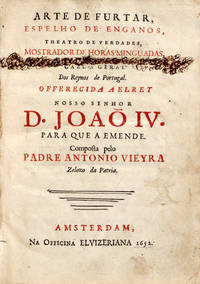
réf. 2004CS005Dos Reynos de Portugal. OFFERECIDA A EL REY D. JOAÕ IV. PARA QUE A EMENDE. Composta pelo PADRE ANTONIO VIEYRA Zelozo da Patria. AMSTERDAM aliás Lisboa Na Officina ELVIZERIANA 1652 aliás 1743-4. In 8º de 205x145 cm. Com xxiv 512 págs. aliás 508. Encadernação da época inteira de pele com nervos rótulo vermelho e ferros a ouro na lombada. Cortes de folhas carminados. Impressão em papel de linho muito alvo a folha de rosto impressa a preto e vermelho. Salto de numeração por erro tipográfico da página 192 para 197 em todos os exemplares do qual resulta a falta de duas linhas no final do capitulo XXI que se encontram manuscritas na época no presente exemplar: 'que se saiba ate onde se podem estender e aonde he bem que se encolhão.' Exemplar com assinatura de posse coeva rasurada na folha de rosto e leves picos de traça marginais. Raríssima primeira edição de uma obra clássica da literatura barroca portuguesa que embora descreva os vários tipos de furtos da época por meio de exemplos práticos é sobretudo um tratado de ética e moral para estadistas e governantes portugueses e espanhóis da época da Restauração da Independência de Portugal. Obra atribuída a Manuel da Costa entre outros foi escrita em 1652 e circulou manuscrita clandestinamente até que foi publicada nesta primeira edição sob o nome do P. António Vieira com local data de edição e nome do impressor falsos. Foi proibida pela Inquisição portuguesa e espanhola. A autoria desta primeira impressão é atribuída ao genovês João Batista Lerzo. P. António Vieira O «Imperador da Língua Portuguesa» como disse Fernando Pessoa. EN In octavo. 20.5x14.5 cm. xxiv 512 pp. i.e. 508. Contemporary full calf binding with raised bands red label and gilt tools on spine. Red edges. Printed in very white linen paper with the title page printed in red and black. There is a jump in the page order from page 192 to 197 in all copies resulting into the loss of two lines on chapter XXI that were handwritten at the time in this copy: 'que se saiba ate onde se podem estender e aonde he bem que se encolhão.' Copy with a scratched contemporary ownership signature on title page and small wormholes. A rare first edition of a classic of the Portuguese Baroque literature which although describing several types of burglary of that time with practical examples it is mainly a treatise of ethics and moral for Portuguese and Spanish statesmen and rulers at the time of the Restoration of the Independence of Portugal. Work was attributed to Manuel da Costa among others and was written in 1652 the manuscripts secretly circulating until this first edition was published with the name of P. António Vieira with false local edition date and name of the printer. It was forbidden by the Portuguese and Spanish Inquisition. This first print was probably made by the Genoese João Batista Lerzo. P. António Vieira The «Emperor of the Portuguese Language » according to Fernando Pessoa. Ref.: Inocêncio I 287. P. ANTONIO VIEIRA homem innegavelmente grande e um dos maiores ingenhos que Portugal ha produzido nasceu em Lisboa a 6 de Fevereiro de 1608 e foi baptisado na freguezia da Sé a 15 do dito mez. M. na cidade da Bahia de Todos os Sanctos então capital dos estados da America portugueza. Inocêncio I 307. A Arte de Furtar foi prohibida em Hespanha por édito da Inquisição de. de Janeiro de 1755 e ahi se declara ser falsamente attribuida ao P. Antonio Vieira. Passou depois para o corpo dos Indices Expurgatorios do mesmo Tribunal e ainda no ultimo impresso em Madrid 1790 a encontro a pag. 277 com a mencionada declaração. Excluida assim a idea de que a obra fosse de Vieira restava indagar a qual dos escriptores seus contemporaneos poderia attribuirse com maior verosimilhança. Alguns criticos tractando este ponto talvez com nimia prudencia não quizeram arriscar a respeito delle uma opinião decisiva. Segundo os autores destes estudos a Arte de Furtar tem sido atribuída aos seguintes literatos: P. António Vieira João Pinto Ríbeiro por Ferreira Gordo Diogo de Almeida por Alves Sinval Tomé Pinheiro da Veiga por Cunha Rivara Duarte Ribeiro de Macedo citado por Camilo C. Branco Alexandre de Gusmão por Teófilo Braga António de Sousa de Macedo por Solidónio Leite. Estas opiniões baseiam-se em conjecturas aceitáveis umas e outras refutáveis. BNP apenas regista um exemplar / BNP has just one registered copy. Ref. BNP: Bismut R. Arte de furtar A Cusati M.L. Problema di bibliogr. "Arte de furtar" A Inocêncio 1 306-308; 8 330; 22 433 2993 Santos M. Bibliogr. geral 3 7769 com pag. errada mas texto completo! Soares E. Hist. grav. 1 524 527 e 679 NOTAS: Autoria atribuída a Manuel da Costa António Vieira Tomé Pinheiro da Veiga António de Sousa de Macedo entre outros Pé de impr. forjado; segundo bibliogr. deve tratar-se de impr. de Lisboa eventualmente de João Baptista Lerzo datável entre 1743 e 1744 Ambos os retr. do Pe. A. Vieira insertos nos exemplares da BN foram publ. noutras obras; legendas dos retr. subscritas: G. F. L. Debrie sculp. 1745; Dominicus Pauner sculp. Bar Assin.: //8 //4 A-Z//8 Aa-Hh//8 Ii//6; 4a f. dos cad. Z e Ii assin. Z//6 e Ii//6 respectivamente Pag. errada salto da p. 192 para 197; Cap. XXI incompleto faltando 2 últimas l Rosto a negro e vermellho. M-9-D-34 hardcover
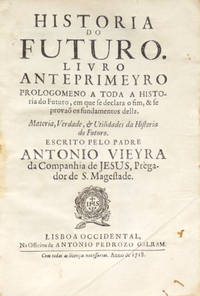
réf. 2412PG007LIVRO ANTEPRIMEYRO Prologomeno A Toda A Historia do Futuro em que se declara o fim & se provaõ os fundamentos della. Materia Verdade & Utilidades da Historia do Futuro. Eescrito Pelo Padre ANTONIO VIEYRA da Companhia de JESUS Prègador de S. Magestade. LISBOA OCCIDENTAL. Na Officina de ANTONIO PEDROZO GALRAM. Com todas as licenças necessárias. Anno de 1718. De 21x155 cm. com xxxvi 379 i em br. págs. Encadernação da época inteira de pergaminho flexível com o apelido do autor e o título escritos à pena na lombada. Exemplar com ex libris de António Cupertino de Miranda colado no interior da encadernação e com assinatura de posse em letra coeva de Arthur Alberto Ferreira de . na frente da folha de guarda anterior. Folhas preliminares sem numeração contêm censuras de Fr. José de Sousa e de P. Fr. António de Santo Elias pelo Santo Ofício de Fr. José Pereira de Lacerda pelo Desembargo do Paço e as licenças. De páginas 339 a 379 contém um índice das citações das sagradas escrituras e outro índice das coisas notáveis. Obra dividida em doze capítulos que trata da definição do espírito profético classifica as profecias em canónicas e não canónicas e demonstra que o Reino de Portugal desde a sua fundação fora um dos temas prediletos dos diversos profetas do antigo testamento entre os quais Isaías pode ser considerado como um «cronista dos descobrimentos de Portugal». É uma exaltação da pátria portuguesa escolhida entre todas as nações do Mundo para propagar a fé cristã predestinada a «descobrir o mundo ao mesmo mundo». Vieira dedicou uma parte muito importante do seu esforço às obras proféticas que considerava a parte mais importante da sua produção literária. Algumas das ideias expostas mereceram a desconfiança da Inquisição que deteve o P. António Viera durante largo tempo e que se viu obrigado a ir a Roma pedir uma intervenção do papa em sua defesa. Actualmente esta parte da obra Vieiriana que era pouco considerada pelos anteriores estudiosos tem sido cada vez mais valorizada. PADRE ANTÓNIO VIEIRA Lisboa 1608 - Salvador Brasil 1697 O maior escritor português autor de uma vasta obra em português latim e italiano sendo definido lapidarmente por Fernando Pessoa como o «Imperador da língua portuguesa». Ao mesmo tempo desenvolveu com brilhantismo visão e coragem actividades políticas e diplomáticas na defesa de Portugal durante a Guerra da Restauração tendo entrado em conflito aberto com a Inquisição que venceu com o apoio do Papa. Mais importante ainda foi a sua prolongada e dedicada actividade missionária em que se distinguiu pela defesa da liberdade dos índios e pela condenação da escravatura dentro dos moldes possíveis na sua época pelo que chegou a ser expulso pelos colonos que tratavam mal os escravos oriundos de Ãfrica e queriam escravizar os índios apesar das leis régias em contrário que obteve de D. João IV e de D. Pedro II. Vieira conseguiu conciliar um grande realismo político com uma crença arraigada no Sebastianismo começando por identificar D. João IV como o Desejado do mito Sebastianista que havia de ressuscitar. Apesar de Vieira dar grande valor e se ter dedicado prolongadamente às suas obras teológicas e proféticas foram os sermões que o consagraram como grande orador e escritor. A sua forte personalidade e capacidade oratória atraíam multidões para ouvi-lo pregar mas foi a possibilidade de se ter podido consagrar a rever e a acompanhar a publicação dos sermões que os tornou obras literárias de grande valor e não apenas o frio registo das suas capacidades oratórias. É também uma figura tutelar e fundadora da cultura brasileira país onde viveu e actuou com a maior coragem metade da sua vida e onde decidiu viver os seus últimos dias. Hoje a sua obra é muito influente e estudada no Brasil sendo oriundos desse país alguns dos maiores especialistas em Vieira tais como: Alcir Pécora Adma Muhana João Adolfo Hansen a par dos portugueses Margarida Viiera Mendes Arnaldo do Espírito Santo Ana Travassos Valdez e os referidos mais abaixo. Foi para a Baía com a família em 1614 onde Vieira frequentou o Colégio da Companhia de Jesus. Relativa a esta época chegou até aos nossos dias uma lenda que refere ter o jovem Vieira dificuldades da aprendizagem mas um certo dia repentinamente ultrapassou todas as suas dificuldades dando nas vistas pelas suas capacidades intelectuais e linguísticas tendo sido escolhido pera redigir o relatório anual em 1625 com apenas 17 anos sendo este facto conhecido como o «Estalo de Vieira». Em 5 de Maio de 1623 iniciou o noviciado na Companhia e durante ele passou algum tempo na Missão do Espírito Santo onde aprendeu a língua tupi e entrou em contacto com a cultura e a psicologia dos índios que haveria de defender durante toda a sua vida. Em 6 de Maio de 1625 proferiu os primeiros votos e logo a seguir como refirimos acima foi encarregado de redigir a carta ânua relativa aos anos de 1624 e 1625 e começou a ensinar retórica no Colégio de Olinda tendo sido ordenado sacerdote em 10 de Dezembro de 1634. Durante este período tornou-se notada a sua capacidade oratória e fez muitas pregações em casa da ordem em missões e fazendas tendo a primeira pregação oficial ocorrido no 4.º Domingo da Quaresma de 1634 na Igreja da Conceição da Baía. Em 27 de Fevereiro de 1641 acompanhou a Lisboa o filho do Marquês de Montalvão Vice-rei do Brasil começando um período de actividade política como conselheiro de D. João IV e diplomática missões em Paris e Haia de 1646 a 1648 Roma em 1650 e outra vez Roma de 1669 a 1675 onde tentou reactivar o processo de canonização do Beato Inácio de Azevedo e obter o apoio do Papa que lhe concedeu isenção perante a Inquisição Portuguesa pelo breve de 17 de Abril de 1675. Em Roma tinha começado a rever os seus sermões e o primeiro volume foi publicado em Lisboa em 1679. Em 27 de Janeiro de 1681 partiu para o Brasil tendo vivido até ao momento da sua morte perto da Baía ocupado na revisão dos seus sermões e em especial na redacção da sua obra de teologia e profética: Clavis Prophetarum. Ref: Padre António Vieira. Bibliografia. BNP. 1999. Nº 1187 Azevedo e Samodães 3516 II Volume página 743. Inocêncio I 291. M-9-D-46 unknown
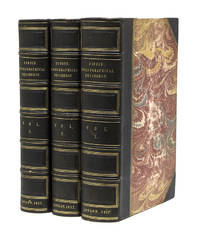
1817réf. 261849London: Printed for the author by W. Bulmer and Co. Shakespeare Press 1817. First edition with half-titles and errata. Hundreds of engravings and examples of type etc. some tinted in red and blue and slip of gold printing with directions to binder slip at vol. II p. 417. 3 vols. Imperial 8vo 9-3/4 x 6 inches. Bound in contemporary three quarters blue pebbled morocco spine gilt and marbled boards and edges. Fine small bump to some pages in Vol. I. Bookplate of The Right Hon. Charles Abbot prob. Charles Abbot 1st Baron Colchester in Vols II & III. First edition with half-titles and errata. Hundreds of engravings and examples of type etc. some tinted in red and blue and slip of gold printing with directions to binder slip at vol. II p. 417. 3 vols. Imperial 8vo 9-3/4 x 6 inches. Windle & Pippin A28; Jackson no.40; Hart no.186; Bigmore and Wyman pp. 169-70 Printed for the author by W. Bulmer and Co. Shakespeare Press unknown
1817réf. 261849London: Printed for the author by W. Bulmer and Co. Shakespeare Press 1817. First edition with half-titles and errata. Hundreds of engravings and examples of type etc. some tinted in red and blue and slip of gold printing with directions to binder slip at vol. II p. 417. 3 vols. Imperial 8vo 9-3/4 x 6 inches. Bound in contemporary three quarters blue pebbled morocco spine gilt and marbled boards and edges. Fine small bump to some pages in Vol. I. Bookplate of The Right Hon. Charles Abbot prob. Charles Abbot 1st Baron Colchester in Vols II & III. First edition with half-titles and errata. Hundreds of engravings and examples of type etc. some tinted in red and blue and slip of gold printing with directions to binder slip at vol. II p. 417. 3 vols. Imperial 8vo 9-3/4 x 6 inches. Windle & Pippin A28; Jackson no.40; Hart no.186; Bigmore and Wyman pp. 169-70 Printed for the author by W. Bulmer and Co. Shakespeare Press unknown books
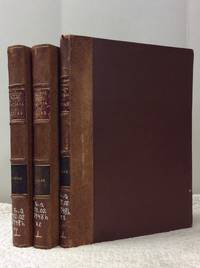
1880réf. 130343Mexico: J. M. Andrade 1880. First edition. 535p; 177p; 65p Complete set with the third volume being the complete atlas volume of 66 engraved plates. Ex-library: numbers painted on spines; bookplates; library stamps on endpapers - title pages - foredges. Bound with leather spines and cloth boards. Corners of covers worn; leather spine labels wearing off slightly. Pages of Vols. I-II are yellowed but otherwise unmarked and clean. Volume III shows evidence of water damage and many pages have a severe dark stain. Three pages have some loss to the margins but the images of the plates are completely intact. A history of Indians of the new world detailing their life and culture at the time of the Spanish Conquest. A classic and important study of Native American culture and offered here in a damaged but still useful example of the rare first edition. J. M. Andrade unknown
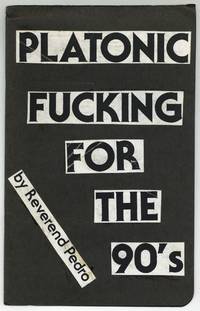
réf. 576745No place: The Author 1990. Softcover. First edition. Octavo. 8 leaves printed rectos only. Stapled black card wrappers with applied printed labels. Taped and stapled to rear wrapper is an unopened condom as issued. Inscribed by the author: "To my friend P.J. from Pedro. 38-E. 594-5058." The author is unknown to us. The slim volume came from the library of a noted African-American scholar and the rhymes are reminiscent of rap lyrics but alternatively there is some reason to believe it might be the work of Nuyorican poet and playwright Pedro Pietri. Rare. OCLC locates a single copy SUNY Buffalo. The Author unknown
réf. 576745No place: The Author 1990. Softcover. First edition. Octavo. 8 leaves printed rectos only. Stapled black card wrappers with applied printed labels. Taped and stapled to rear wrapper is an unopened condom as issued. Inscribed by the author: "To my friend P.J. from Pedro. 38-E. 594-5058." The author is unknown to us. The slim volume came from the library of a noted African-American scholar and the rhymes are reminiscent of rap lyrics but alternatively there is some reason to believe it might be the work of Nuyorican poet and playwright Pedro Pietri. Rare. OCLC locates a single copy SUNY Buffalo. The Author unknown books
1925réf. 17481New York: Macmillan Company. As New. Hardcover. FREE UPGRADE to Courier/Priority Shipping Upon Request - IN STOCK AND IMMEDIATELY AVAILABLE FOR SHIPMENT - AS NEW THE TEXT BLOCK IS PRISTINE CLEAN UNMARKED AND IN EXCELLENT CONDITION - -- with a bonus offer--; 017481 . 1925. Macmillan Company hardcover
1983réf. 60864Museum. As New. Paperback. FREE UPGRADE to Courier/Priority Shipping Upon Request – – IN STOCK AND IMMEDIATELY AVAILABLE FOR SHIPMENT - AS NEW THE TEXT BLOCK IS PRISTINE CLEAN UNMARKED AND IN EXCELLENT CONDITION - - Corresponds to ASIN B000IB6OXI. 48 pp. With 69 ills. 28 x 22 cm. -- with a bonus offer-- . 1983. Museum paperback
réf. Z1-Y-025-00051il Mulino. Used - Good. Ships from UK in 48 hours or less usually same day. Your purchase helps support Sri Lankan Children's Charity 'The Rainbow Centre'. Ex-library so some stamps and wear but in good overall condition. 100% money back guarantee. We are a world class secondhand bookstore based in Hertfordshire United Kingdom and specialize in high quality textbooks across an enormous variety of subjects. We aim to provide a vast range of textbooks rare and collectible books at a great price. Our donations to The Rainbow Centre have helped provide an education and a safe haven to hundreds of children who live in appalling conditions. We provide a 100% money back guarantee and are dedicated to providing our customers with the highest standards of service in the bookselling industry. il Mulino unknown
1954réf. 33673Bellinzona: Arti Grafiche Salvioni 1954. Cm. 54 pp. 4 11 tavole fuori testo. Bross. orig. Tracce d'uso alla cop. ed un piccolo alone marginale limitato al frontespizio. le 11 tavole sono in ottimo stato di conservazione. Rara pubblicazione edita in soli 72 esemplari numerati il presente porta il numero 21 ripetuto su tutte le tavole che sono anche firmate dall'artista. Arti Grafiche Salvioni unknown
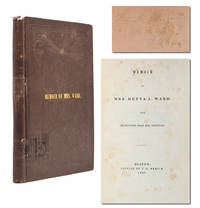
1843réf. 4025Berkeley: T.R. Marvin 1843. First edition. Very Good . Original publisher's cloth binding with gilt to front board. Minor loss of cloth to crown of spine. Faint residue of removed library label to spine and front board. Peach endpapers. Light scattered foxing as is typical of the period. Inscribed on the front endpaper by Ward's husband the compiler: "Reverend Mr. Ellingwood with the respects of J.W. Ward." Bookplate on the front pastedown reveals that the recipient Rev. Ellingwood went on to donate the volume to the Theological Seminary of Bangor Maine. A scarce and important example of a published American elegiac volume produced in this case by an eminent family to mourn the loss of an educated woman. Memoirs is unrecorded by OCLC and has never appeared at auction. In their marriage James Wilson Ward and Hetta Lord Hayes Ward united two prominent Northeastern families. A senator and Congregationalist minister James descended from the founders of Plymouth and had attended Andover and Amherst. Hetta the daughter of a judge and niece of a Dartmouth president was herself a graduate of Miss Grant's Seminary Academy. The present volume released "exclusively for private circulation among the friends of the deceased" is a testament to Hetta's value not as a daughter who married well or a wife who effectively managed a house but as a companion an intellectual and an individual. In this sense it deconstructs the period's expectations of separate spheres or hierarchy between sexes. With an opening letter by Susan Hayes Hetta's mother as well as a copy of the eulogy conducted by her husband the book reveals vast details about who Hetta was as a person. Both describe her as tender and affectionate; but time and again emphasis is placed on her mind. Though Hetta was skillful with a needle as a child according to her mother "her numberless questions interested and surprised me.She acquired a fondness for poetry.She became as much interested in the in the study of the exact sciences as in the works of imagination making herself acquainted with the higher branches of Mathematics Algebra Geometry etc." James similarly eulogizes his wife. What becomes clear is that he is grieving the loss of a companion and equal. "If we have found a friend of distinguished excellence and for years rejoiced with that friend in mutual interchange and warm affections it is natural when death intervenes and separates us from the dear object of our love to contemplate their virtues.First characteristic which I would notice which she possessed in an eminent degree is an ardent love of truth.She possessed great powers of abstraction.She saw with great clearness the point of an argument and was quick to distinguish between sophistry.She loved to trace the workings of the human mind." Not satisfied simply to have their own testaments to Hetta's extraordinary mind the compilers included to the last half of the book a collection of her own poetry and prose. A scarce work in a genre underappreciated in American literature and history. Such coterie publications of intimate mourning were uncommon for the time particularly for a woman. National Cyclopedia of American Biography 148. Very Good . T.R. Marvin unknown
1843réf. 4025Berkeley: T.R. Marvin 1843. First edition. Very Good . Original publisher's cloth binding with gilt to front board. Minor loss of cloth to crown of spine. Faint residue of removed library label to spine and front board. Peach endpapers. Light scattered foxing as is typical of the period. Inscribed on the front endpaper by Ward's husband the compiler: "Reverend Mr. Ellingwood with the respects of J.W. Ward." Bookplate on the front pastedown reveals that the recipient Rev. Ellingwood went on to donate the volume to the Theological Seminary of Bangor Maine. A scarce and important example of a published American elegiac volume produced in this case by an eminent family to mourn the loss of an educated woman. Memoirs is unrecorded by OCLC and has never appeared at auction. In their marriage James Wilson Ward and Hetta Lord Hayes Ward united two prominent Northeastern families. A senator and Congregationalist minister James descended from the founders of Plymouth and had attended Andover and Amherst. Hetta the daughter of a judge and niece of a Dartmouth president was herself a graduate of Miss Grant's Seminary Academy. The present volume released "exclusively for private circulation among the friends of the deceased" is a testament to Hetta's value not as a daughter who married well or a wife who effectively managed a house but as a companion an intellectual and an individual. In this sense it deconstructs the period's expectations of separate spheres or hierarchy between sexes. With an opening letter by Susan Hayes Hetta's mother as well as a copy of the eulogy conducted by her husband the book reveals vast details about who Hetta was as a person. Both describe her as tender and affectionate; but time and again emphasis is placed on her mind. Though Hetta was skillful with a needle as a child according to her mother "her numberless questions interested and surprised me.She acquired a fondness for poetry.She became as much interested in the in the study of the exact sciences as in the works of imagination making herself acquainted with the higher branches of Mathematics Algebra Geometry etc." James similarly eulogizes his wife. What becomes clear is that he is grieving the loss of a companion and equal. "If we have found a friend of distinguished excellence and for years rejoiced with that friend in mutual interchange and warm affections it is natural when death intervenes and separates us from the dear object of our love to contemplate their virtues.First characteristic which I would notice which she possessed in an eminent degree is an ardent love of truth.She possessed great powers of abstraction.She saw with great clearness the point of an argument and was quick to distinguish between sophistry.She loved to trace the workings of the human mind." Not satisfied simply to have their own testaments to Hetta's extraordinary mind the compilers included to the last half of the book a collection of her own poetry and prose. A scarce work in a genre underappreciated in American literature and history. Such coterie publications of intimate mourning were uncommon for the time particularly for a woman. National Cyclopedia of American Biography 148. Very Good . T.R. Marvin unknown books
1827réf. 12350London: Printed for Harding and Lepard Pall-Mall East; and G.B. Whittaker Ave-Maria-Lane 1827. Fourth Edition Greatly Enlarged and Corrected. 3/4 modern brown leather with gilt lettering and 5 raised bands to spine with 4 ornaments. Dark cloth over boards. Very Good. Imperial octavo oversized. Boards are 117/8" by 8 1/2" paper is 11"x 7 1/2" with wide margins. Lovely marbeled endpapers with 2 new blank preliminary leaves in both volumes. Original half-titles in both volumes. Plate and specimen leaf p. 166 present in vol. 1. Some foxing to first and last few original pages diminishing quickly a bit more noticeable on v 2. Light fingermarks on upper corners of some pages. vol. 1 xiii 562 p. vol. 2 579 p. w/ 1 p. corrigenda. Large paper copies limited to 250 Dibdin's Reminscences p. 213. Considered the best of the editions of this work adding the best of both Hebrew bibles and editions of the early church fathers. An attractive set. Printed for Harding and Lepard, Pall-Mall East; and G.B. Whittaker, Ave-Maria-Lane hardcover
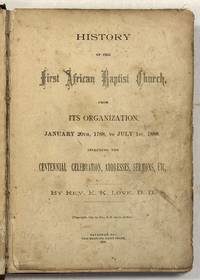
1888réf. 40926Savannah Ga.: The Morning News Print. 1888. 20 360 pp. Frontis illustration of the First African Baptist Church and another full-page illustration preceding the table of Contents. Well-used with contemporary ownership signatures of "Mr. Cornelious Adams 1819 Reynolds." Inner hinges cracked and some loosening from binding scattered foxing. Text portraits of the pastors. In original cloth binding some spotting and extremity wear. Gilt-lettered title stamped on front cover. Good. "The oldest colored Baptist church in America" it was organized in January 1788 at "Brampton's barn three miles west of Savannah by Rev. Abraham Marshall white and Jesse Peter colored." Its trials triumphs schisms relations with their Caucasian co-religionists and biographies of its ministers are chronicled here by the Church's black Pastor Reverend Love. FIRST EDITION. De Renne 868. Work 405. LCP Supp. 1320. Not in Blockson. The Morning News Print. unknown
1888réf. 40926Savannah Ga.: The Morning News Print. 1888. 20 360 pp. Frontis illustration of the First African Baptist Church and another full-page illustration preceding the table of Contents. Well-used with contemporary ownership signatures of "Mr. Cornelious Adams 1819 Reynolds." Inner hinges cracked and some loosening from binding scattered foxing. Text portraits of the pastors. In original cloth binding some spotting and extremity wear. Gilt-lettered title stamped on front cover. Good. "The oldest colored Baptist church in America" it was organized in January 1788 at "Brampton's barn three miles west of Savannah by Rev. Abraham Marshall white and Jesse Peter colored." Its trials triumphs schisms relations with their Caucasian co-religionists and biographies of its ministers are chronicled here by the Church's black Pastor Reverend Love. FIRST EDITION. De Renne 868. Work 405. LCP Supp. 1320. Not in Blockson. The Morning News Print. unknown books
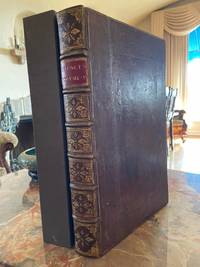
1747réf. 223First Edition 1747. Complete with 41 plates. Tall folio 11 by 17 inches contemporary full tan polished calf newly rebacked to style with elaborately gilt-decorated spine with seven compartments. Engraved frontispiece portrait by George Vertue after Isaac Whood 17 vignette tailpieces and 41 full-page engraved plates four double-page two of these folding by Boitard after Paderni and others. Covers & corners slightly rubbed. Internally there is a little intermittent light spotting but generally a clean and bright copy now housed in a custom slipcase made by The Heritage Bindery. Many years in the making this large and finely printed volume traces classical mythology in Roman art and literature. "Remains an agreeable book owing to the urbanity of its old-fashioned scholarship the justice of some incidental observations and its affluent stores of quotation; and as an intellectual if heterogeneous banquet may be compared with the Deipnosophists of Athenaeus. Gibbon speaks of its taste and learning" DNB. Samuel Johnson wrote of Spence: "His criticism was commonly just; what he thought he thought rightly and his remarks were recommended by coolness and candor" DNB. "A highly regarded work" Brunet. Published by London; R Dodsley 1st edition,, 1747. hardcover
2008Elephant Folio - over 15" - 23" tall "This book is dedicated to Richard Avedon, Ara Gallant and Giorgio di Sant'Angelo". Volume cartonato, legatura editoriale in tela nera, titoli in bianco al dorso e al piatto anteriore, custodia editoriale, 136 pagine profusamente illustrate in nero e colori con immagini applicate. Esemplare in ottime condizioni. Testo in inglese - english text - box edition. SPEDIZIONE IN 24 ORE DALLA CONFERMA DELL'ORDINE.
réf. 479864Chez L Auteur Chaldecoste - Mende - Saint-Mart 1889 Très fort in-12 ( 142 X 95 mm ) de 1040 pages, demi-veau fauve, dos à nerfs janséniste, couvertures imprimées et dos conservés. EDITION ORIGINALE. Malgré sa partialité, vraisemblablement l'ouvrage le plus documenté sur le sujet. L'Abbé POURCHER éditait lui même ses livres avec un matériel plus que sommaire beau témoignage de l'aventure éditoriale en province à la fin du XIXe siècle. Très bel exemplaire.
réf. 886987Chez L'Auteur Chaldecoste - Mende - Saint-Mart 1889 Très fort in-12 ( 142 X 95 mm ) de 1040 pages, broché sous couverture imprimée. EDITION ORIGINALE. Malgré sa partialité, vraisemblablement l'ouvrage le plus documenté sur le sujet. L'Abbé POURCHER éditait lui même ses livres avec un matériel plus que sommaire beau témoignage de l'aventure éditoriale en province à la fin du XIXe siècle. Très bel exemplaire, non coupé.
1937réf. 0001931CURTIS CORNERS SOUTH KINGSTOWN RHODE ISLAND RI. Good. 1937. On offer is a super original pre World War II 1937 to 1940 manuscript diary and scrapbook compiled and handwritten by the Reverend C.H. von Glahn of Curtis Corners South Kingstown Rhode Island. The book paints a very complete picture of the life and times of this honoured religious figure and beloved family man all the while with the back drop of international events and the impending War. The Reverend begins the large well filled 11 x 8 inch 300 page book noting the book was a Christmas Day gift from his grandson Jack which is plenty of motivation for him to keep up with his writings. His inspiration obviously works as the book will please any historian or collector of the history and background of Rhode Island at the time as the writings are given the further depth of being littered with clippings notes and photographs. The spine cap has gone missing but overall G.; Manuscript; 4to - over 9¾" - 12" tall; KEYWORDS: HISTORY OF CURTIS CORNERS REVEREND C.H. VON GLAHN SECOND BAPTIST CHURCH SOUTH KINGSTOWN RHODE ISLAND RELIGION BAPTIST PRE WORLD WAR II AMERICANARELIGIOUS STUDIES HANDWRITTEN MANUSCRIPT AUTOGRAPHED AUTHORS MANUSCRIPT DOCUMENT LETTER AUTOGRAPH KEEPSAKE WRITER HAND WRITTEN DOCUMENTS SIGNED LETTERS MANUSCRIPTS HISTORICAL HOLOGRAPH WRITERS AUTOGRAPHS PERSONAL MEMOIR MEMORIAL PERSONAL HISTORY ARCHIVE DIARY DIARIES antiquité contrat vélin document manuscrit papier Antike Brief Pergament Dokument Manuskript Papier oggetto d'antiquariato atto velina documento manoscritto carta antigüedad hecho vitela documento manuscrito Papel . unknown
1565In-folio, (8), 369pp, (1), legatura in pergamena coeva, titolo manoscritto al dorso; rilegato con Tractatus tres de balneis Patavinis e con Tractatus de modo componendi Medicinas, & de dosi earum, e Antidotarium. Medico di origine veneta morto nel 1460, esercitò a Padova anche come insegnante presso la locale e prestigiosa Università di medicina, dove dai documenti risulta professore dal 1422 al 1441. La sua opera Consilia, stampata nei primi decenni del secolo successivo, è molto conosciuta e apprezzata. Viene anche ricordato per l’attività di chirurgo ed esperto di anatomia: si dice che abbia eseguito personalmente quattordici dissezioni complete. Trattandosi di uno studioso quattrocentesco, i suoi interessi botanici sono strettamente legati alla sua attività di medico nella preparazione dei medicamenti che provenivano per la maggior parte dal mondo vegetale. Il prestigio dei Consilia durerà per alcuni secoli e molti saranno gli autori di medicina che attingeranno alle sue informazioni scientifiche e alla struttura del libro, organizzato sapientemente nella discussione di 305 casi clinici comprendenti tutta la materia medica conosciuta, chirurgia e anatomia comprese. In-folio, (8), 369pp, (1), contemporary vellum binding, handwritten title on the spine; bound with Tractatus tres de balneis Patavinis and with Tractatus de modo componendi Medicinas, & de dosi earum, and Antidotarium. Doctor of Venetian origin who died in 1460, he also practiced in Padua as a teacher at the local and prestigious University of Medicine, where the documents prove him as professor from 1422 to 1441. His work Consilia, printed in the first decades of the following century, is well known and appreciated. He is also remembered for his activity as a surgeon and anatomy expert: he is said to have personally performed fourteen complete dissections. Being a fifteenth-century scholar, his botanical interests are closely linked to his activity as a doctor in the preparation of medicines that mostly came from the plant world. The prestige of the Consilia will last for a few centuries and many medical authors will draw on its scientific information and on the structure of the book, expertly organized in the discussion of 305 clinical cases including all known materia medica, surgery and anatomy included.
1802réf. 000560Venezia: Dalle Stampe Di Giacomo Zannardi Con Regia Permissione & Privilegio 1802. 1st Edition Thus . Hardcover. Very Good/Not called for>. 8vo - over 7¾ - 9¾" tall. Complete set of this rare edition of this classic work on the Council of Trent which was held in three parts between 1545 to 1563. The Ecumenical council of the Roman Catholic Church was prompted by the Reformation. The Council of Trent was highly important for its sweeping decrees on self reform and for its dogmatic definitions that clarified virtually every doctrine contested by the Protestants. The Council was a key part of the Counter Reformation and played a vital role in revitalizing the Catholic Church.Fourteen volumes in seven all ltitle pages present Bound in 19th c half calf over buckram covered boards. No foxing present but there is some light toning throughout. Odd volumes of this edition turn up occasionally but a full set is rare. Volumes 1-1V published in 1802 Volumes V -X1V published in 1803. There is some scuffing and shelf wear to bindings otherwise firm. No stamps or otherwise to indicate that this set is Ex Libris Contact seller regarding shipping Dalle Stampe Di Giacomo Zannardi (Con Regia Permissione & Privilegio) hardcover
réf. 2305PG012Padroeyra da Cidade de Córdova. Escrita por DOM FRANCISCO Xavier do Rego Clerigo Regular. Offerecida À Excellentissima Senhora a Senhora D. VICTORIA de Tavora. Condessa de Unhaõ. Impressa por ordem de Sua Excellencia. Lisboa Occidental Na Officina da Musica. Anno 1721. Com todas as licenças necessarias. In 4.º de 203x151 cm. Com xliv 136 págs. Encadernação da época inteira de pele com rótulo nervos e ferros a ouro. Cortes das folhas carminados. Folha de rosto adornada com um pequeno florão com um anjo. A folha com a dedicatória está ilustrada com um belo cabeção gravado a buril com o brazão da Condessa de Unhão ladeado por anjos e ramagens. O texto em caracteres redondos de diversos tamanhos e alguns itálicos está ornamentado com cabeções decorativos uma inicial decorada e florões de remate. Exemplar com ex-líbris de Miguel Faria no interior da encadernação com assinatura de posse no anterrosto: De Pedro Doliolnz ilegível com guardas novas. As páginas preliminares contêm a dedicatória à Condessa de Unhão o Prólogo do autor as licenças com aprovações de Fr. António de S. Boaventura Frei Manuel da Esperança e Pedro Alvarez. Incluem também uma carta de D. José Barbosa dirigida ao Conde de Unhão contendo uma apreciação muito elogiosa desta obra; e um conjunto de sete poesias em louvor do autor e da obra. Muito rara já no tempo de Inocêncio e não consta dos principais catálogos de leilões e livreiros. A Porbase regista apenas um exemplar. D. Francisco Xavier do Rego dedicou a obra a D. Vitória de Távora 1685 - 1757 filha do 2.º Conde de S. Vicente pelo casamento com a condessa desse título D. Miguel Carlos de Távora neta do 2.º Conde de São João da Pesqueira e sobrinha do 1.º Marquês de Távora condessa de Unhão pelo casamento com o 4.º Conde de Unhão D. Rodrigo Xavier Teles de Meneses Castro da Silveira 1684-1759 que foi padrinho do autor. José Barbosa classifica e aprecia esta obra da seguinte maneira: «Panegírico histórico em que o autor seguindo as pisadas e tomando por modelo no estilo a Jacinto Freire na Vida de D. João de Castro deixou tudo tão suave tão claro e tão discretamente escrito que não tem que invejar às obras mais excelentes. Pondera com profundidade julga com agudeza e fala com majestade». Santa Vitória virgem e mártir portuguesa natural de Braga e o seu irmão S. Acísclo padeceram martírio no ano de 138 em Córdova e pertencem à hagiografia hispânica primitiva. São padroeiros da cidade de Córdova que celebra o seu orago no dia 17 de Novembro. Em diversas fontes verificam-se divergências sobre as datas e o segundo mártir que com ela morreu. Francisco Xavier do Rego Lisboa ca. 1692 - 1738 Era clérigo regular teatino da Ordem de S. Caetano foi autor das seguintes obras: Sermão da paixão de nosso senhor Jesus Christo. Lisboa na Offic. da Musica 1726; Sermão das sete dores de Nossa Senhora mesmo local e impressor 1727; Avisos importantes para a salvação praticados em alguns exercicios precisamente necessarios para uso de um verdadeiro christão. mesmo local e impressor 1727; com outras edições em 1739 e 1750; Corôa mystica do grande patriarcha Sancto Agostinho. illustrada com sentenças tiradas dos seus escriptos. Lisboa na Ofic. de Mathias Pereira da Silva 1720. EN In quarto. 20.3x15.1 cm. xliv 136 pp. Contemporary full leather binding with label raised bands and gilt tools on spine. Red edges. Title page adorned with a small angel fleuron. The page with the dedication is illustrated with a beautiful engraved headpiece with the coat of arms of the Countess of Unhão flanked by angels and tree branches. The text in round characters of various sizes and some italics is decorated with decorative headpiece a decorated initial and finishing fleurons. Copy with ex-libris from Miguel Faria on the front pastedown with handwritten ownership title on the half title page: From Pedro Doliolnz illegible. Recent endpapers. The preliminary pages contain the dedication to the Countess of Unhão the author"s Prologue the licences with approvals from Friar António de S. Boaventura Friar Manuel da Esperança and Pedro Alvarez. They also include a letter from D. José Barbosa addressed to the Count of Unhão containing a very complimentary appreciation of this work; and a set of seven poems in praise of the author and the work. Already very rare already in the time of Inocêncio and not in the main auction and booksellers catalogues. Porbase registers only one copy. D. Francisco Xavier do Rego dedicated the work to D. Vitória de Távora 1685 - 1757 daughter of the 2nd Count of S. Vicente by marriage to the countess of that title D. Miguel Carlos de Távora granddaughter of the 2nd Count of S. João da Pesqueira and niece of the 1st Marquis of Távora Countess of Unhão by marriage to the 4th Count of Unhão Rodrigo Xavier Teles de Meneses Castro da Silveira 1684-1759 who was the author"s godfather. José Barbosa appreciates this work and classifies it in the following way: 'Panegyrico historico in which the author following in the footsteps and taking as a model in style Jacinto Freire in the Life of D. João de Castro has left everything so smooth so clear and so discreetly written that it has nothing to envy to the most excellent works. He ponders with deepness judges with acuteness and speaks with majesty.' Saint Victoria a Portuguese virgin and martyr born in Braga and her brother St Acísclo suffered martyrdom in the year 138 in Córdoba and belong to the early Hispanic hagiography. They are patron saints of the city of Córdoba which celebrates its patron saint on 17 November. In various sources there are discrepancies about the dates and the second martyr who died with her. Francisco Xavier do Rego Lisbon ca. 1692 - 1738 a regular theatine cleric of the Order of St Caetano was the author of the following works: Sermão da paixão de nosso senhor Jesus Christo. Lisbon at Offic. da Musica 1726; Sermão das sete dores de Nossa Senhora same place and printer 1727; Avisos importantes para a salvação praticados em alguns exercicios precisamente necessarios para uso de um verdadeiro christão. same place and printer 1727; with other editions in 1739 and 1750; Corôa mystica do grande patriarcha Sancto Agostinho. illustrada com sentenças tiradas dos seus escriptos. Lisbon in the Off. of Mathias Pereira da Silva 1720. Referências/References: Oliveira Américo Lopes de - Dicionário de mulheres célebres. Porto: Lello 1981 p. 1362. Inocêncio III p. 94. M-6-E-05 hardcover
1845réf. 0001254ERZROOM ERZURUM TURKEY. Very Good with no dust jacket. 1845. Non-Book. On offer is an original manuscript extract handwritten dated Erzurum Turkey Mar. 3 1854 it is believed to be in the hand of Rev. Josiah Peabody 1807-1873. Peabody served under the American Board of Commissioners for Foreign Missions A. B. C. F. M. . He and his wife Mary Lawrence Herbert Peabody 1817-1899 lived in Turkey for his missionary work from 1941-1955 see BIO NOTES at the end of the listing. The writings are a superb relic of the times; what historians and collectors of Turkish-Russian relations era will recognize as pivotal being only mere months after Russia destroyed Turkey's fleet and this note reports the Turks' struggle to gain any advantage the handwriting describes: "As to the war everything is still dark. Immense efforts are made by the Turks in this region and hopes are entertained that they may be able to withstand the Russians especially as they have a number of European officers "The letter also includes content regarding some of the new officers the Sultan and further analysis of Turkey's chances against Russia. While unsigned this extract was found amongst the letters sent by his wife Mary L. H. Peabody to her brother Rev. Charles D. Herbert 1818- in Missouri. Timelines and genealogical records indicate that this letter extract can be confidently attributed to Josiah. Condition: Handwritten on 7.5 x 5.5 inch scrap of paper. Overall VG. BIO NOTES: Reverend Josiah Peabody 1807-1873 was born in Topsfield Mass. He graduated from Dartmouth College in 1936 and Andover Theological Seminary in 1840. In March 1841 he married Mary Lawrence Herbert 1817-1899 of Ellsworth Maine. About a month after their wedding Peabody and his bride sailed to Smyrna on route to Ezroum Turkey for his missionary work under the direction of A. B. C. F. M. He served in Turkey until his transfer to Constantinople in 1855. The Peabodys returned to the USA in 1860. They had three children that survived beyond infancy: Mary Charlotte Anne Lucy and Josiah Charles. Mary Lawrence Herbert 1817-1899 and Charles D. Herbert 1818-1893 were born to George Herbert 1778-1820 and Charlotte Tuttle 1782-1869. They were two of six children born to George and Charlotte. George Herbert was educated at Dartmouth and became a well-known lawyer in Ellsworth Maine sometimes referred to as the first lawyer in Ellsworth. Reverend Charles D. Herbert was the youngest son of the family. He graduated from Bowdoin College in 1841 and from Bangor Theological Seminary in 1843. Following a few years doing home missionary work "in the west" he became the pastor of the West Newbury Church in Mass. He married and had two sons George Herbert and Rev. C. E. Herbert. ; Manuscripts; 12mo - over 6¾" - 7¾" tall; 1 pages; ANATOLIA CITY OF KARIN MISSIONARY MISSIONARIES CHRISTIAN CHRISTIANITY OTTOMAN EMPIRE OUTREACH TURKEY ERZROOM ERZURUM TURKISH MIDDLE EAST THE LEVANT POLITICS Russia War HANDWRITTEN MANUSCRIPT DOCUMENT LETTER AUTOGRAPH DIARY JOURNAL LOG KEEPSAKE WRITER HAND WRITTEN DOCUMENTS SIGNED LETTERS MANUSCRIPTS HISTORICAL HOLOGRAPH WRITERS DIARIES JOURNALS LOGS AUTOGRAPHS PERSONAL MEMOIR MEMORIAL PERSONAL HISTORY TRAVEL 19TH CENTURY antiquité contrat vélin document manuscrit papier Antike Brief Pergament Dokument Manuskript Papier oggetto d'antiquariato atto velina documento manoscritto carta antigüedad hecho vitela documento manuscrito Papel . unknown