8 254 résultats
1974120p. + Photographs. Tall 8vo. Original pictorial wraps. Originally published in the Slovak language. PA PAMPH 20_15 BX7
1967réf. 10588Firenze: Sadea-Sansoni 1967. Sadea-Sansoni unknown
1976réf. 124071Ascoli Piceno: Gruppo Operativo Immanentista - Tipolitografia Cesari 1976. Brossura wrappers. Molto buono Very Good. Introduzione di Arturo Bovi. Con scritti di Mikhail Larionov kazimir S. Malevic Tristan Tzara et al. Numerose illustrazioni in nero. 8vo. pp. 326. Molto buono Very Good. . Gruppo Operativo Immanentista - Tipolitografia Cesari, unknown
1985réf. 009358Milano: Franco Maria Ricci 1985. Un volume in 4to quadrato 30x30 cm di 142 pagine su carta azzurrina con le illustrazioni a colori applicate delle vedute del Ducros. A cura di Pierre Chessex. Legatura editoriale FMR in seta nera con illustrazione Colosseo applicata in cofanetto rigido telato difetto a un angolo del cofanetto. Tiratura numerata su carta delle Cartiere Milano Fabriano. Raffinata opera tipografica. Franco Maria Ricci unknown
1904réf. 33953Paris: Imprimerie Nationale 1904. Cm. 33 pp. 10 xiv 1040. Legatura edit. in cart. rigido con titoli a stampa. Esemplare in perfetto stato di conservazione marginoso a fogli chiusi e stampato su carta particolarmente forte. Celebre ed esaustivo lavoro di catalogazione. Imprimerie Nationale unknown
2003Brossura commerciale, copertina illustrata con fotoritratto a colori dell'autore, linee da lettura al dorso, ingiallimento ai tagli, intensi aloni da umido ai preliminari e ai margini delle pagine ben leggibili con qualche becca da lettura, sporadiche sottolineature con evidenziatore giallo nel testo, piccola nota scritta a penna nell'ultima pagina. N. pag. 303. USATO
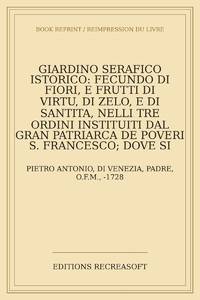
2026réf. LRB33001351Paris: Editions Recreasoft 2026 Lingua: Italiano. Circa 792 pagine. Italiano : Ristampa su richiesta. Edizione originale : 1710. Opera in italiano. Opera storica e agiografica dedicata all'ordine francescano composta in due volumi. L'autore un frate minore descrive l'origine lo sviluppo e lo stato della religione dei Minori con particolare attenzione agli eventi singolari gloriosi e grandi che vi avvennero. L'opera è arricchita da incisioni e xilografie tra cui ritratti di San Francesco d'Assisi e stemmi episcopali. Testo fondamentale per lo studio della storia francescana e della spiritualità cattolica del XVIII secolo. Immagini del libro non contrattuali English: Print-on-demand reprint. Original edition : 1710. Text in Italian. Historical and hagiographic work dedicated to the Franciscan order composed in two volumes. The author a Minorite friar describes the origin progress and state of the Minorite religion with particular attention to the singular glorious and great events that occurred within it. The work is enriched with engravings and woodcuts including portraits of St. Francis of Assisi and episcopal coats of arms. Essential text for the study of Franciscan history and Catholic spirituality in the 18th century. Book images are non-contractual. Editions Recreasoft. Softcover. New. Editions Recreasoft paperback
1980réf. 1CislAb0023Milan Italy/Milano Italia: Savelli Editori 1980. Book. Illus. by Giulio Romano Illustrator. Very Good. Soft Cover . Copyright 1980. 12mo or 12° Duodecimo: 6¾" x 7¾" tall. 141 pp. Solidly bound copy with moderate external wear crisp pages and clean text. Text in Italian. Relevant newspaper articles/Clippings included from previous owner. Savelli Editori Paperback
réf. DCM1550RELIE 1969 SOUS JAQUETTE PAPIER PHOTOS SUR DEMANDE
1966réf. 41865Verona: Stamperia Valdonega 1966. Stamperia Valdonega unknown
1966réf. 43551Verona: Valdonega 1966. Cm. 35 pp. 49 5. Con tavole f.t. di cui 4 a colori fra cui la celebre mappa anonima del Garda del 1380 ca. e 18 riproduzioni di iscrizioni latine trovate a Riva Toscolano ecc. Leg. edit. in cart. con titoli impressi. Ottima conservazione. Bell'edizione stampata con carattere Bembo su carta della Cartiera del Varone di Riva del Garda. Testo che contiene tra l'altro la celebre leggenda del carpione. Valdonega unknown
1974réf. 53327Arco: Valdonega 1974. Cm. 34 pp. 99 2. Con 9 tavole f.t. di cui una a colori Leg. orig. in cart. leggero con titoli a stampa. Ben conservato. Testo latino e traduzione italiana a fronte segue trad. in tedesco. Con un saggio di G.B. Pighi ove si cerca di dare una paternità al poema. Bella edizione uscita per i torchi della stamperia Valdonega. Valdonega unknown
1974réf. 46405Arco: Valdonega 1974. Cm. 34 pp. 99 2. Con 9 tavole f.t. di cui una a colori Leg. orig. in mezza pergamena con titoli in oro. Sguardie riproducenti antiche carte geografiche. Perfetto esemplare. Testo latino e traduzione italiana a fronte segue trad. in tedesco. Con un saggio di G.B. Pighi ove si cerca di dare una paternità al poema. Bella edizione uscita per i torchi della stamperia Valdonega. Prima tiratura in 400 esemplari numerati n. 123. Valdonega unknown
1969réf. 41014Firenze: La Nuova Italia 1969. La Nuova Italia unknown
2008réf. 123468Prato: Gli Ori - Armanda Gori Casa d'Arte 2008. Rilegato hardback. Ottimo Fine. Volume edito in occasione del decennale di attività Armanda Gori Casa d'Arte Prato 26 giugno - 26 settembre 2008. Numerose illustrazioni a colori dagli anni Sessanta agli anni Duemila. Bio-bibliografia. Testo in italiano e inglese di Valerio Dehò. 4to. pp. 238. Ottimo Fine. Prima edizione First Edition. Gli Ori - Armanda Gori Casa d'Arte, hardcover
1998in-8 (Cm 24 x 17), pp. 143, br. ed., ill. a col. e b.n. ne. testo. Due millimetrici difetti alla brossura. OTTIMO
réf. 9734La vie et les écrits de la collaboratrice de Gramsci, La Nuova Italia, Quaderni del Ponte, 1969, 300 p., broché, couverture très légèrement défraîchie, bon état général, langue italienne / Lingua italiana, la vita e gli scritti della collaboratrice di gramsci attraverso mezzo secolo di lotte operaie, La Nuova Italia, Quaderni del Ponte, 1969, 300 p., brossura editore, leggere tracce d'uso, condizioni buone.
1841réf. 24231841 bradel petit in-octavo, dos long décoré - titre frappé or -, plats décorés, illustrations : frontispice - sur la page de titre et hors-texte, très légères rousseurs, 287 pages, 1841 Tours Chez Mame et Compagnie Imprimeurs-Libraires,
1986réf. 2090502113717667Not Available 1986. Soft Cover. Fine. The book is in fine condition. Not Available paperback
2016réf. 225967Gottingen - Essens: Steidl - Museum Folkwang 2016. Brossura sovracoperta in acetato wrappers acetate dust jacket. Ottimo Fine. Testi di Tobia Bezzola e François Pinault. Con 204 illustrazioni a colori. Note sugli artisti e sulle opere. Tra gli artisti: Claude Cahun Urs Luthi Allan Sekula Cindy Sherman Roni Horn Nan Goldin LaToya Ruby Frazier Gilbert & George Boris Mikhailov John Coplans Bruce Naumna Maurizio Cattelan Arnulf Rainer et al. Cm 27x21. pp. 212. Ottimo Fine. . Dancing with Myself trae la sua ricca costellazione di opere dalla straordinaria collezione di François Pinault esplorando i ruoli principali che gli artisti contemporanei hanno svolto come protagonisti in carne e ossa nell'arte degli ultimi decenni. Il volume indaga artisti che percepiscono il proprio corpo e la propria identità come materia prima unica e malleabile in un modo che supera i confini dell'autoritratto tradizionale. Con figure cardine dell'arte del XX e del XXI secolo come Cindy Sherman Nan Goldin Bruce Nauman Alighiero Boetti Gilbert & George e Maurizio Cattelan la pubblicazione documenta una varietà di discipline esplorando la moltitudine di modi in cui gli artisti possono presentare in - o anzi diventare - l'arte. Steidl - Museum Folkwang, unknown
1922réf. 40913Milano: Bottega di Poesia 1922. Cm. 25 x 22 pp. 52. Con 4 tavole f.t. di Aldo Carpi protette da velina. Leg. edit. in cart. rigido. Minimi segni d'uso al dorso ma ottimo stato di conservazione. Edizione stampata su carta distinta in 750 esemplari ns. n. 683. Riproduzione del testo greco dei due papiri inglesi contenenti il codex con i detti di Gesù rinvenuti durante gli scavi di Oxyrhynchus. Bottega di Poesia unknown
1971Mm 160x215 Collana "Biblioteca di Storia dell'Arte" - Volume in copertina rigida rossa con titolo al piatto e al dorso, 399 pagine con 115 figure in nero su tavole comprese nel testo. Copia eccellente; spedizione in 24 ore dalla conferma dell'ordine.
réf. 2307PG006In Duas Partes Distributus. AUTHORE P. Francisco Pinheiro Lusitano Govveensi Societatis Jesu Doctore Theologo In Eborensi Academia Olim Primario Sacrae Theologiae professore atque ejusdem Academiae Cancellario. EBORAE Cum Superiorum permissu. Ex Typographia Academiae Anno Domini. M. DCC. LXXXI. 1681In fólio de 288x207 cm. Com xvi 618 xlviii págs. Encadernação da época inteira de pele com nervos e ferros a ouro.Exemplar com desgastes na encadernação em especial à cabeça da lombada com um pequeno furo de traça nas pastas com faltas superficiais de pele e nos cantos. Nota com o que custou este livro em 1724 e assinatura de posse de Inácio Monteiro de Faria; uma segunda assinatura de posse e um rubrica todas na frente da folha de guarda. Rubrica coeva no pé da folha de rosto; alguns sublinhados no texto e chamadas marginais em tinta coeva; pequena mancha à cabeça das primeiras folhas até página 150; mancha no canto inferior das primeiras páginas.Impressão com caracteres redondos e alguns itálicos no prólogo e no início de cada uma das partes. Texto ornamentado com cabeções com motivos vegetalistas e animalistas enquadrando o trigrama sagrado característico da Companhia de Jesus com iniciais decoradas e com um belo florão de remate cesto com flores no fim do índice de assuntos.As folhas preliminares contêm: extensa dedicatória do autor a Manuel de Faria Severim Prólogo do autor Licenças de 22 de Junho a 2 de Julho de 1651 da primeira edição com aprovações de Francisco Távora Provincial da Companhia de Jesus; Frei António Veloso e Frei Valério de São Raimundo e de 22 de Julho de 1678 a 24 de Setembro de 1682 com aprovação desta 2.ª edição por Gaspar de Lemos Galvão. Incluem também o índice dos títulos das partes da obra e das disputas em que estão divididas. As folhas finais contêm o índice de assuntos e duas páginas em branco.A 1.ª edição foi publicada em Coimbra pelo impressor Manuel Dias em 1655. Esta 2.ª Edição é bastante rara pois não consta dos principais catálogos de leilões e de livreiros. Existe uma variante em que os cabeções e iniciais são todos diferentes incluindo o florão de remate no final do índice.Obra muito importante para o estudo da história do direito em especial porque os contratos enfitêuticos mantiveram-se em uso em Portugal até cerca da segunda metade do século XX e no Brasil até 2003. Importante também para o estudo do instituto dos morgadios em Portugal.O autor trata com grande pormenor de dois tipos de contratos: 1.º - O Censo que podia ter pelo menos duas formas - censo consignativo e censo reservativo. No primeiro uma das partes entrega à outra uma determinada quantia em dinheiro ficando a segunda obrigada a pagar-lhe uma renda. O segundo consiste na cedência do domínio de um bem a uma parte ficando esta na obrigação de pagar uma pensão anual pelos rendimentos do bem cedido.2.º - A enfiteuse é um instituto jurídico oriundo do Direito Romano e consiste Segundo J. M. de Carvalho Santo a enfiteuse também dita de emprazamento e de aforamento designa o contrato pelo qual o proprietário de terreno alodial cede a outrem o direito de percepção de toda utilidade do mesmo terreno seja temporária ou perpetuamente com o encargo de lhe pagar uma pensão ou foro anual e a condição de conservar para si o domínio direto.Francisco Pinheiro Gouveia 1596 - Coimbra 1661. Ingressou na Companhia de Jesus no Colégio de Coimbra em 14 de Março de 1611. Estudou Filosofia no Colégio das Artes 1613-1617 Teologia no Colégio de Jesus 1619-1923 e doutorou-se em Teologia na Universidade de Évora em 21 de Julho de 1633. Foi professor de Teologia Especulativa e de Teologia Moral. Regeu Filosofia na Universidade de Évora 1626-1630 onde foi cancelário 1651. Em Coimbra foi Reitor do Colégio das Artes 1654-1657. Foi preso pela Inquisição de Évora por contestar a actuação dos Inquisidores na prisão do almotacé Roque Cortez tendo sido libertado em 1643.Foi professor de Teologia Escolástica durante dezasseis anos de Teologia Moral durante três anos. Reitor dos Colégios de Coimbra e Évora da Companhia. É autor das seguintes obras: Tractatus de Testamentis Tomus Primus Conimbricae; apud Josephum Ferreyra Universitatis Typographus 1681. Tomus Secundus 1684. Teve segunda edição em 1715. Existem diversos manuscritos com os textos que ensinava nas suas aulas e o manuscrito do Tractatus de Testamentis com data de 1645.EN In folio. 28.8x20.7 cm. xvi 618 xlviii pp. Contemporary full leather binding with raised bands and gilt tools on spine.Copy showing signs of wear on the binding especially at the head of the spine with a small moth hole on the folders with superficial flaws of leather and at the corners. A note with the cost of this book in 1724 and a handwritten ownership title by Inácio Monteiro de Faria; a second handwritten ownership title and a rubric all on the front flyleaf. Coeval rubric at the foot of the title page; some underlining in the text and marginal notes in coeval ink; small stain at the head of the first leaves up to page 150; stain at the bottom corner of the first pages.Printing with round characters and some italics in the prologue and at the beginning of each part. Text decorated with headpieces depicting plant and animal motifs framing the sacred trigram characteristic of the Society of Jesus with decorated initials and with a beautiful finishing fleuron a basket with flowers at the end of the subject index.The preliminary leaves contain: the author"s extensive dedication to Manuel de Faria Severim the author"s Prologue Licences from 22 June to 2 July 1651 of the first edition with approvals from Francisco Távora Provincial of the Society of Jesus; Friar António Veloso and Friar Valério de São Raimundo and from 22 July 1678 to 24 September 1682 with approval of this 2nd edition by Gaspar de Lemos Galvão. They also include an index of the titles of the parts of the work and the disputes into which they are divided. The final pages contain the subject index and two blank pages.The 1st edition was published in Coimbra by the printer Manuel Dias in 1655. This 2nd Edition is quite rare as it doesn"t appear in the main auction and bookseller catalogues. There is a variant in which the headpieces and initials are all different including the finishing fleuron at the end of the table of contents.Very important book for the study of the history of law especially as emphyteutical contracts remained in use in Portugal until around the second half of the 20th century and in Brazil until 2003. It is also important for studying the institute of morgadios Majorats in Portugal.The author deals in great detail with two types of contracts: 1st - The Census which could take at least two forms - consignative census and reservative census. In the former one of the parties gives the other a certain amount of money and the latter is obliged to pay rent. The second consists of one party transferring control of an asset to the other who is obliged to pay an annual pension for the income from the asset.2nd. - The emphyteusis is a legal institute that originated in Roman Law and consists according to J. M. de Carvalho Santo of an emphyteusis also known as an emprazamento or aforamento which is the contract by which the owner of allodial land assigns to another the right to perceive all the usefulness of the same land either temporarily or in perpetuity with the burden of paying an annual pension or rent and the condition of retaining the direct domain for himself.Francisco Pinheiro Gouveia 1596 - Coimbra 1661. Joined the Society of Jesus at the College of Coimbra on 14 March 1611. He studied philosophy at the College of Arts 1613-1617 theology at the College of Jesus 1619-1923 and obtained his doctorate in theology at the University of Évora on 21 July 1633. He was a professor of Speculative Theology and Moral Theology. He taught philosophy at the University of Évora 1626-1630 where he was cancellor 1651. In Coimbra he was Rector of the College of Arts 1654-1657. He was imprisoned by the Évora Inquisition for contesting the Inquisitors" actions in the imprisonment of the almotacé municipal officer Roque Cortez and was released in 1643.He taught scholastic theology for sixteen years and moral theology for three years. Rector of the Society"s Coimbra and Évora Colleges. He is the author of the following works: Tractatus de Testamentis Tomus Primus Conimbricae; apud Josephum Ferreyra Universitatis Typographus 1681 Tomus Secundus 1684 . It had a second edition in 1715. There are several manuscripts of the texts he taught in his classes and the manuscript of the Tractatus de Testamentis dated 1645.Referências/References:SBN IT/ICCU/BVEE/069045Iberian Books C19196 119071USTC n.º 5060700.Arouca n.º P173.Barbosa Machado II 223. M-6-C-19 hardcover
réf. 2309MA191In Duas Partes Distributus. AUTHORE P. Francisco Pinheiro Lusitano Govveensi Societatis Jesu Doctore Theologo In Eborensi Academia Olim Primario Sacrae Theologiae professore atque ejusdem Academiae Cancellario. EBORAE Cum Superiorum permissu. Ex Typographia Academiae Anno Domini. M. DCC. LXXXI. 1681In fólio de 288x207 cm. Com xvi 618 l ii em br. págs. Encadernação da época inteira de pele com nervos e ferros a ouro na lombada.Exemplar com desgaste em toda a encadernação em especial na coifa e nos cantos com perdas de pele com furos de traça perda do rótulo assim como extensas faltas superficiais de pele nas pastas. Manchas no interior das pastas folhas de guarda anterior com as seguintes anotações em letra coeva: arabesco seguido do número 1200 preço e o número 480 preço em 1804. Folha de rosto com assinatura de posse de Carvalho e rubrica em tinta coeva rasurada. Mancha no canto inferior das primeiras páginas e pequena mancha à cabeça desde a folha de rosto até página 150. Com alguns sublinhados no texto e notas marginais em letra coeva.Impressão com caracteres redondos e alguns itálicos no prólogo e no início de cada uma das partes. Texto ornamentado com cabeções com motivos vegetalistas e animalistas enquadrando o trigrama sagrado característico da Companhia de Jesus com iniciais decoradas e com um belo florão de remate cesto com flores no fim do índice de assuntos.As folhas preliminares contêm: extensa dedicatória do autor a Manuel de Faria Severim Prólogo do autor Licenças de 22 de Junho a 2 de Julho de 1651 da primeira edição com aprovações de Francisco Távora Provincial da Companhia de Jesus; Frei António Veloso e Frei Valério de São Raimundo e de 22 de Julho de 1678 a 24 de Setembro de 1682 com aprovação desta 2.ª edição por Gaspar de Lemos Galvão. Incluem também o índice dos títulos das partes da obra e das disputas em que estão divididas. As folhas finais contêm o índice de assuntos e duas páginas em branco.A 1.ª edição foi publicada em Coimbra pelo impressor Manuel Dias em 1655. Esta 2.ª Edição é bastante rara pois não consta dos principais catálogos de leilões e de livreiros. Existe uma variante em que os cabeções e iniciais são todos diferentes incluindo o florão de remate no final do índice.Obra muito importante para o estudo da história do direito em especial porque os contratos enfitêuticos mantiveram-se em uso em Portugal até cerca da segunda metade do século XX e no Brasil até 2003. Importante também para o estudo do instituto dos morgadios em Portugal.O autor trata com grande pormenor de dois tipos de contratos: 1.º - O Censo que podia ter pelo menos duas formas - censo consignativo e censo reservativo. No primeiro uma das partes entrega à outra uma determinada quantia em dinheiro ficando a segunda obrigada a pagar-lhe uma renda. O segundo consiste na cedência do domínio de um bem a uma parte ficando esta na obrigação de pagar uma pensão anual pelos rendimentos do bem cedido.2.º - A enfiteuse é um instituto jurídico oriundo do Direito Romano e consiste Segundo J. M. de Carvalho Santo a enfiteuse também dita de emprazamento e de aforamento designa o contrato pelo qual o proprietário de terreno alodial cede a outrem o direito de percepção de toda utilidade do mesmo terreno seja temporária ou perpetuamente com o encargo de lhe pagar uma pensão ou foro anual e a condição de conservar para si o domínio direto.Francisco Pinheiro Gouveia 1596 - Coimbra 1661. Ingressou na Companhia de Jesus no Colégio de Coimbra em 14 de Março de 1611. Estudou Filosofia no Colégio das Artes 1613-1617 Teologia no Colégio de Jesus 1619-1923 e doutorou-se em Teologia na Universidade de Évora em 21 de Julho de 1633. Foi professor de Teologia Especulativa e de Teologia Moral. Regeu Filosofia na Universidade de Évora 1626-1630 onde foi cancelário 1651. Em Coimbra foi Reitor do Colégio das Artes 1654-1657. Foi preso pela Inquisição de Évora por contestar a actuação dos Inquisidores na prisão do almotacé Roque Cortez tendo sido libertado em 1643.Foi professor de Teologia Escolástica durante dezasseis anos de Teologia Moral durante três anos. Reitor dos Colégios de Coimbra e Évora da Companhia. É autor das seguintes obras: Tractatus de Testamentis Tomus Primus Conimbricae; apud Josephum Ferreyra Universitatis Typographus 1681. Tomus Secundus 1684. Teve segunda edição em 1715. Existem diversos manuscritos com os textos que ensinava nas suas aulas e o manuscrito do Tractatus de Testamentis com data de 1645.EN In folio. 28.8x20.7 cm. xvi 618 xlviii pp. Contemporary full leather binding with raised bands and gilt tools on spine.Copy showing signs of wear on the binding especially at the head of the spine with a small moth hole on the folders with superficial flaws of leather and at the corners. A note with the cost of this book in 1724 and a handwritten ownership title by Inácio Monteiro de Faria; a second handwritten ownership title and a rubric all on the front flyleaf. Coeval rubric at the foot of the title page; some underlining in the text and marginal notes in coeval ink; small stain at the head of the first leaves up to page 150; stain at the bottom corner of the first pages.Printing with round characters and some italics in the prologue and at the beginning of each part. Text decorated with headpieces depicting plant and animal motifs framing the sacred trigram characteristic of the Society of Jesus with decorated initials and with a beautiful finishing fleuron a basket with flowers at the end of the subject index.The preliminary leaves contain: the author's extensive dedication to Manuel de Faria Severim the author's Prologue Licences from 22 June to 2 July 1651 of the first edition with approvals from Francisco Távora Provincial of the Society of Jesus; Friar António Veloso and Friar Valério de São Raimundo and from 22 July 1678 to 24 September 1682 with approval of this 2nd edition by Gaspar de Lemos Galvão. They also include an index of the titles of the parts of the work and the disputes into which they are divided. The final pages contain the subject index and two blank pages.The 1st edition was published in Coimbra by the printer Manuel Dias in 1655. This 2nd Edition is quite rare as it doesn't appear in the main auction and bookseller catalogues. There is a variant in which the headpieces and initials are all different including the finishing fleuron at the end of the table of contents.Very important book for the study of the history of law especially as emphyteutical contracts remained in use in Portugal until around the second half of the 20th century and in Brazil until 2003. It is also important for studying the institute of morgadios Majorats in Portugal.The author deals in great detail with two types of contracts: 1st - The Census which could take at least two forms - consignative census and reservative census. In the former one of the parties gives the other a certain amount of money and the latter is obliged to pay rent. The second consists of one party transferring control of an asset to the other who is obliged to pay an annual pension for the income from the asset.2nd. - The emphyteusis is a legal institute that originated in Roman Law and consists according to J. M. de Carvalho Santo of an emphyteusis also known as an emprazamento or aforamento which is the contract by which the owner of allodial land assigns to another the right to perceive all the usefulness of the same land either temporarily or in perpetuity with the burden of paying an annual pension or rent and the condition of retaining the direct domain for himself.Francisco Pinheiro Gouveia 1596 - Coimbra 1661. Joined the Society of Jesus at the College of Coimbra on 14 March 1611. He studied philosophy at the College of Arts 1613-1617 theology at the College of Jesus 1619-1923 and obtained his doctorate in theology at the University of Évora on 21 July 1633. He was a professor of Speculative Theology and Moral Theology. He taught philosophy at the University of Évora 1626-1630 where he was cancellor 1651. In Coimbra he was Rector of the College of Arts 1654-1657. He was imprisoned by the Évora Inquisition for contesting the Inquisitors' actions in the imprisonment of the almotacé municipal officer Roque Cortez and was released in 1643.He taught scholastic theology for sixteen years and moral theology for three years. Rector of the Society's Coimbra and Évora Colleges. He is the author of the following works: Tractatus de Testamentis Tomus Primus Conimbricae; apud Josephum Ferreyra Universitatis Typographus 1681 Tomus Secundus 1684 . It had a second edition in 1715. There are several manuscripts of the texts he taught in his classes and the manuscript of the Tractatus de Testamentis dated 1645.Referências/References:SBN IT/ICCU/BVEE/069045Iberian Books C19196 119071USTC n.º 5060700.Arouca n.º P173.Catálogo da Biblioteca da Ordem dos Advogados. I Lisboa 1956 p. 68.Barbosa Machado II 223. M-6-A-22 hardcover
réf. 1162765968.Gpaperback. Good. Access codes and supplements are not guaranteed with used items. May be an ex-library book. paperback