Wanner, Reverend MikeBiblio.com

7 669 résultats
réf. 1540749185.Gpaperback. Good. Access codes and supplements are not guaranteed with used items. May be an ex-library book. paperback
1893réf. 4446379344pp bound in a St. Edmund's College presentation binding 1/2 leather raised bands gilt all edges marbled flyleaves and paste-downs marbled St. Edmund's Prize bookplate on front paste-down awarded to a James Conroy for French illustrated frontispiece St' Edmund's College unmarked. Kegan Paul, Trench, Trubner & Co. Ltd. hardcover
1957réf. 431j2421USA: Self-Published. Very Good in Good dust jacket. 1957. First Edition. Hardcover. "Here is a vivid fascinating account of a missionary's life in the rugged northern frontier of Canada. Rev. Warder spent most of his time as an itinerant missionary bringing aid and spiritual comfort to the men women and children living in the most lonely and isolated parts of Northern Ontario as well as some of the more populated regions. His route included such remote places as Nicholson's Siding Dalton Mills Missanabic Franz Depew and Heron Bay. He often traveled many miles on snowshoes by boat train dogcart or automobile over makeshift roads. Here he chronicles some of his dangerous missions made so by blizzards train wrecks boat and car mishaps and an occasional frightening encounter wiht timber wovles. This 179 page hardcover book is clean bright tight and unmarked with trivial wear. The dust jacket bears average wear and is now in glossy new archival-grade protection. A quality example. ; 8vo . Self-Published hardcover
réf. 8776Printed by R. Cruttwell Bath and sold by G. G. and J. Robinson London. 1800. FIRST EDITION. 8vo. 8.7 x 5.5 inches. vi222pp 2pp author and publishers adverts. Illustrated with 2 full page sepia aquatints 12 line maps and 5 fine woodcut vignettes within the text. A very good copy in contemporary half brown calf. Spine with gilt thick and thin ruled and piped lines and oval centre pieces. Red morocco label gilt. Marbled paper on boards. Edges a bit rubbed and bumped and small amount of chipping to the edges of the label not affecting the lettering but generally a very good copy. Printed by R. Cruttwell, Bath, and sold by G. G. and J. Robinson, London. 1800 hardcover
2011ill., br. Questo libro fornisce tanti suggerimenti di esperienze espressive (o anche solo decorative) per bambini in età prescolare e scolare: con il colore, la carta, il cartone, la lana, le forme bi o tridimensionali... A seconda della fascia d'età (2-5 anni, 6-10 anni) vengono proposte, in ogni capitolo, numerose attività pratiche, spiegate passo per passo; sono indicati i materiali necessari, le modalità di realizzazione, le difficoltà. Nel libro, i 'grandi' troveranno anche preziosi consigli su come aiutare i piccoli 'artisti' a valorizzare i loro lavori.
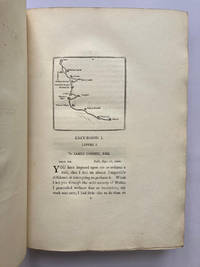
1801réf. 3865A scarce book of country excursions taking in some of the most striking landscapes and great houses within a day's journey of Bath. Three excursions are presented in the course of four letters with each excursion illustrated with a small part-page engraved map. The author describes in detail the landscapes cities and great houses along the way with plentiful information about the history of the towns gardens and architecture visited. Of particular note are Longleat Stourhead Fonthill and Wardour Castle. 'I am now to introduce you to one of the most splendid mansions in the kingdom Fonthill the seat of Mr. Beckford; where expence has reached its utmost limits in furniture and ornaments; where every room is a gold mine and every apartment a picture-gallery' p. 119. The description of Beckford's library is alas rather brief: 'The library is a large room filled with choice and expensive books; and decorated with appropriate paintings on the ceiling' p. 126. Warner also visits 'new' Wardour Castle - it was built in the 1770s - and gives a room by room commentary of the architecture furniture and paintings. Or particular interest is his description of the chapel: 'From this apartment we are carried into the western gallery of the chapel; a structure that displays superlative taste and magnificence. Crimson furniture and gilded ornaments produce an immediate striking coup d' œil; but when the decorations are examined individually the splendour and expence become more perceptible. Three immense pictures by Rubens cover the southern wall of the chapel; and one by this artist and another by Guido of the same majestic size are their opposite companions. The altar-piece is a Dead Christ by Cades. A large gallery is constructed at the western end superbly fitted up for Lord Arundel and his party; a second at the east end of the north side for the choir; and a third at the east end of the north side for the accommodation of visiters sic. Benches occupy the middle of the chapel for the reception of the domestics and such of the villagers as profess the Romish faith; for there is a Catholic seminary here the pupils of which punctually attend at morning and evening prayers. The eastern end of the chapel recedes into a semi-circular form through the windows of which light is admitted; but as these are placed high and consist of coloured glass the effect is extremely striking and solemn. The central window exhibits Angels and the awful Tetragrammaton from which is an emanation of glory. Brought forward from the eastern end sufficiently to allow the processions around it stands the Altar a most costly piece of workmanship fixed on a splendid sarcophagus of ebony; and constructed of porphyry agate and amber. A magnificent crucifix of silver surmounts the altar; and two censers of solid gold embossed with silver suspended over it pour through the chapel odiferous clouds of ever-burning frankincense. Every thing around indeed evinces that the Romish ritual is observed here with the utmost vigour and magnificence; and doubtless the celebration of its higher offices amid such seducing objects must act with infinite force upon the imagination. The effect produced by the externals of worship every man experiences who attends our Cathedral service which has not been stripped of so much of its lace as the common parochial ritual; how much then must this be increased when aided by exquisite examples of sculpture and painting; amid the strains of angelical music the glare of unnumbered lights and the Hallelujahs of numerous multitudes! The tamest fancy must be roused by such a scene and the coldest heart warmed into transport … It is but proper to add that the attendance of strangers at the service in Wardour chapel is considered as a compliment and every convenience provided for their accommodation' pp. 137-141. Richard Warner was an antiquary and an Anglican clergyman originally from the coastal town of Lymington in Hampshire. He became curate to Wililam Gilpin whose influence can be clearly seen in the present work dedicated to walking and the natural beauties of the west country. Warner obtained his first position in Bath in 1794 and remained there for some years writing a number of topographical works and a gothic novel Netley Abbey 1795 inspired by local ruins. He was a friend of Wordsworth who collected Warner's picturesque writings alongside those of Gilpin and who is known to have dined with him in Bath. In his lifetime Warner was mostly known for his controversial pacifist sermons and writings: it is thought that Blake was referring to Warner in the lines 'ask him if he is Bath or if he is Canterbury' in Jerusalem as claimed by David Erdman. Although this copy is in a later nineteenth century binding and was bound without the half-title a previous owner - possibly from the 1840s or 1850s perhaps contemporaneous with the binding and the newspaper cutting - has added an engraved portrait a Latin celebration of Bath an engraving of Farleigh Castle and a newspaper cutting referring to Paul Methuen of Corsham. OCLC lists BL University of Edinburgh the Natural History Museum and the Rubenianum in Antwerp only. Crutwell & G.G. and J. Robinson
réf. 57713Bath: R. Cruttwell 1800. 8vo. 20.5 x 12.5 cm. pp. vi 222. Full tree calf gilt ruled spine black morocco label with gilt lettering. 2 sepia aquatinted plates multiple ink vignettes in contents. Upper joint cracked spine rubbed label partly missing. 'Rev. Richard Warner 1763–1857 was an English clergyman and writer of a considerable number of topographical books based on his walks and his interest in antiquarianism. In August 1796 Warner went on holiday to Wales walking an average 26 miles a day and recorded his travels in letters that were later published. Their success led further books on other tours including the Scottish borders the western counties and another tour of Wales.' Wikipedia Bath: R. Cruttwell, 1800. unknown
1791réf. 80552London: Printed by R. Blamire 1791. First Edition. Hardcover. Quarto: 2 lx 137 1 blank pp. with 2 aquatint plates 1 folding. In a 19th century one-quarter brown calf over brown paper-covered boards with gilt-stamped titling. The bookplate of American politican and diplomat Harold Marsh Sewell 1860-1924 appears on the front flyleaf opposite another period bookplate. Some general shelfwear to the boards with a bit of scuffing along the extremities. Bitting 485; Cagle 1049; Crahan 446. Warner 1763-1857 was a prominent English antiquarian and divine. His Antiquitates Culinariae was one of the first works to examine the history of early English cookery at the forefront of a scholarly movement that developed over the last three decades of the 18th century. The book contains Warner's detailed introductory notes and "The Forme of Cury" copied from an ancient vellum roll thought to have been completed about 1390 by the master cooks of King Richard II. The folding plate "A Peacock Feast" which is present in this copy was reportedly removed from most copies owing to a copyright dispute. Printed by R. Blamire hardcover
1981réf. 246356United Kingdom: Prospect Books 1981. Book. Very Good. hardback. Limited Edition. hardback quarto 11 1/2" x 9 3/10" bound in brown quarter leather with deep green cloth boards lettered gilt to spine a very good facsimile copy of a work dating from 1791 issued in an edition limited to 400 copies of which this is numbered 72 the text is clean and free of markings inscriptions etc frontis lx 137pp. Prospect Books Hardcover
réf. 0000929Later edition for an 1872 edition see Amerine & Borg #3570; octavo paginated 2 329-350. Inserted chromolithograph plate. Light wear & soiling; vertical crease as if folded long ago for a coat or trouser pocket; withal Good & sound in the publisher's printed peach-colored wrappers. Published as Temperance Sermon No. 15. Methodist minister Warren 1831-1912 admits "What I know about alcohol by experience would make a very short chapter. It would by only one word. And that word would be 'nothing' 329." The color plate by lithographer A. Tolle depicts the stomach lining in various conditions from moderate drinker to post "long Debauch " with expected levels of decay for each. Scarce in trade & not widely held institutionally. OCLC locates one copy only of the 1872 edition at Ohio History Connection Library. An 1892 edition is found at New York Public Library only. New York: National Temperance Society and Publication House, 1878.
1919réf. 45031N. P. Most Likely Cleveland: Written by Reverend Orville Ernest Watson 1919-1941. 1919-1941. First & only edition. 8vo. Decorated cloth with leather corners two leather spine labels and raised bands 300 pp. with every entry dated and printed in ink. All 300 pages are full to completion as Reverend Watson recounts his dreams. The 300 page diary covers the years 1919 to 1941 and provides a unique and sometimes disturbing glimpse into his thoughts and mind. The dreams as described range from typical dreams that any person may have although a number are about his brother and others are horrific nightmares and the surrealistic. On July 4 1919 he vividly describes a nightmare; on July 23 1919 he recounts a horrible dream about a jealous husband; on March 29 1921 a political dream; on March 21 1923 a sea dream; on Feb. 4 1924 he visits his old home town in his dream; on January 22 1927 a dream that with his brother they visit a cemetery in Cincinnati; and much much more. Orville Ernest Watson was born in Westfield Center Ohio on December 1 1857 the son of Joseph Watson a physician and his wife Eliza or Ella Jane Mills. Orville's three siblings were Clarence Minnie and Jessie. The Watson family moved to Cardington Ohio before 1870 and Orville Watson graduated from Ohio Wesleyan University in 1882. After working as a businessman in Cardington he entered Kenyon College in Gambier Ohio as a theology student in 1889. Following his graduation in 1892 he moved to Cleveland Ohio where he was assistant rector for Trinity Episcopal Church. He eventually returned to Gambier Ohio where he died on May 17 1951. Bookplate of Orville Ernest Watson on front pastedown sheet leather corners lightly rubbed and covers lightly soiled else interior clean neat and solid. Overall a very good tight copy. Written by Reverend Orville Ernest Watson, 1919-1941. hardcover
réf. 1845191013.Gpaperback. Good. Access codes and supplements are not guaranteed with used items. May be an ex-library book. paperback
1775réf. 3730London: Printed for T.Lowndes 1775 1775. First edition. 4to. 265x210mm. pp. iv 764 10 index. Ten engraved plates frontispiece portrait of the author and a further nine. The verso of the second leaf of preliminaries is numbered vi. Some foxing in places but otherwise internally very good with the plates in excellent condition. Handsomely bound in slightly later red straight-grained morocco upper and lower covers decorated with two double fillet borders in gilt enclosing a continuous "drawer-handle" design in blind and framing a continuous swag and drop border in blind. Spine with five double raised bands decorated in gilt and blind and lettered in gilt to the second and fifth compartment. Edges of the boards decorated in gilt. Turn-ins decorated in gilt with a wavy dotted line and ears of wheat with a flower motif in the corners. All edges gilt. The binding is of a very high standard. It is unsigned but the tooling and overall design conforms to the work of the German emigré binders and we would tentatively attribute the binding to either Christian Kalthoeber or John Bohn and date it to the 1790s or the very early years of the 1800s. A previous owner has inscribed the verso of the front free endpaper "Bound by Edwards of Halifax ". This seems unlikely but it is possible given the subject matter of the book and the links between Edwards and the German emigré binders that this copy did pass through Edwards's hands. John Watson 1723-1783 was that perfect eighteenth-century combination of clergyman and antiquary. He was the curate of Halifax between 1750 and 1754 and retained links with the town throughout his life. Starting with Druidical remains and moving through Roman affairs Watson brings the reader up to the eighteenth century. He covers the history of Halifax and provides details of the main buildings in the town as well as exploring fascinating byways such as "Remarks on the Dialect of Halifax""Vocabulary of Uncommon Words used in Halifax" and "A Catalogue of Plants Growing in the Parish of Halifax". London: Printed for T.Lowndes 1775 hardcover
1915réf. 103208Washington D. C.: The University Literature Extension. Very Good. 1915. Hardcover. Dark cloth binding with gold gilt design and lettering. 1915. Very Good Plus condition. 692 pages. The University Literature Extension publishers. ; 8vo 8" - 9" tall; 692 pages . The University Literature Extension hardcover
2013br. Da alcuni anni la modalità di portare i bambini addosso è un fenomeno in crescita anche in Italia. Questo libro chiarisce che portare, oltre ad essere una pratica antica tutt'ora presente in molte parti del mondo, è una modalità rispettosa e adatta nella relazione tra genitori e bambini proprio nella realtà occidentale e risponde in modo sicuro alle molteplici domande pratiche di chi porta. Infine offre una valutazione oggettiva dei supporti ausiliari reperibili e delle tecniche più semplici per iniziare e continuare a portare. Prefazione di Chiaretta Busconi.
1968réf. 33941Los Angeles: The Ward Ritchie Press 1968. Limited First edition. Hardcover. vg. 1/500. Quarto. VII 1 39 1pp. Original gilt-stamped cloth with gold lettering on spine. Book housed in its original green cloth slipcase. Remarkable study of the editions dates authorship etc. of books and other writings on California. This work is illustrated with 10 b/w photographic reproductions. Slipcase binding and interior in overall very good condition. The Ward Ritchie Press hardcover books
1893réf. R52416Liège, Grandmont-Donders 1893 176pp., reliure cart. (plats marbrés, dos en toile avec titre doré), 21cm., cachet, qqs.rousseurs, bon état, R52416
2021br. "Mi sono imposta, come unica pratica, di recitare il Pater una volta ogni mattina [...]. Talora già le prime parole strappano il mio pensiero dal mio corpo per trasportarlo in un luogo fuori dallo spazio, dove non c'è prospettiva, né punto di vista. Lo spazio si apre". Così Simone Weil racconta a padre Perrin la sua esperienza della preghiera, una pratica essenziale ma anche problematica per la filosofa che aveva scelto di vivere la fede rimanendo sulla soglia della Chiesa. Scritto durante il soggiorno a Marsiglia, il breve testo che i curatori presentano in questo volume è un commento alla più importante delle preghiere cristiane e rappresenta un distillato purissimo della scrittura religiosa di Simone Weil. In parole semplici e forti, emerge un'idea di preghiera che è al tempo stesso un affidarsi a Dio e una messa alla prova, senza facili consolazioni, della propria anima.
1967réf. 127295Providence Rhode Island 1967. Softcover. Good. 25 one-sided pages. 28 cm. Staplebound paper covers. Chips to edges. Front cover loosening. paperback
réf. 144014351X.Ghardcover. Good. Access codes and supplements are not guaranteed with used items. May be an ex-library book. hardcover
2014brossura Allattare è il primo e più importante compito di un genitore: favorisce la crescita e lo sviluppo fisico ed emotivo del bambino ed è essenziale anche per il benessere di mamma e papà; se il bimbo non cresce bene infatti, i genitori possono diventare ansiosi e stressati. Questo libro: insegna a nutrire il proprio bambino in modo corretto rispettandone le esigenze nutrizionali; illustra come migliorare il legame affettivo con i genitori; affronta tutti gli aspetti tecnici dell'allattamento, al seno e con il biberon; spiega come gestire l'allattamento serenamente anche nelle situazioni più difficili, per esempio nel caso di gemelli e di bimbi nati pretermine, oppure mentre si è in viaggio o al lavoro; approfondisce le esperienze e le sensazioni spesso collegate all'allattamento, spiegando come rispondere alle pressioni o alle critiche che qualche volta si possono subire in seguito alle proprie scelte; insegna a rispondere alle varie esigenze del bambino e a interpretarne i segnali di fame; mostra come introdurre i primi cibi solidi e spiega quali sono le scelte più sane.
réf. 20984555like new. unknown
1896réf. 133883London: John Murray 1896. Hardbound. Good- a very presentable reading copy see further description of condition. Perforation stamps through many if not all plates cardpocket on rear free endpaper. Bound in very faded greenish blue cloth with red & gilt Tomoe-ko mark on the front board. 346 pp. with two folding maps at rear as well as. This particular copy is exlibrary. There is a blind stamp on the title-page and there are perforation stamps through both the maps at the rear. The first map of the Alps has a tear and a split on minor consequence through one of the folds. The cover corners are sharp but the outer hinges are splitting and weak and there is some loss at the top left of the spine. This copy will never win a beauty contest but it is a complete copy of this rare book. John Murray hardcover
1896réf. 133883London: John Murray 1896. Hardbound. Good- a very presentable reading copy see further description of condition. Perforation stamps through many if not all plates cardpocket on rear free endpaper. Bound in very faded greenish blue cloth with red & gilt Tomoe-ko mark on the front board. 346 pp. with two folding maps at rear as well as. This particular copy is exlibrary. There is a blind stamp on the title-page and there are perforation stamps through both the maps at the rear. The first map of the Alps has a tear and a split on minor consequence through one of the folds. The cover corners are sharp but the outer hinges are splitting and weak and there is some loss at the top left of the spine. This copy will never win a beauty contest but it is a complete copy of this rare book. John Murray hardcover books