7 773 résultats
1789réf. 12025In-folio de 6 pp., (1) f. blanc, cordon de soie verte d’assemblage, signature autographe de Brongier l’Ainé, secrétaire, contresigné Valentin du Plantier, lieutenant général au Bailliage de Bresse, siège Présidial de Bourg, sceau de cire rouge.
1674réf. 28686guérande 1674 un extrait de baptème, manuscrit à l'encre brune d'une page sur papier vergé ligné et filigrané, format : 19 cm x 24,5 cm, cachet fiscal en noir en haut de page à gauche : "Province de Bretagne - Petit Papier douze deniers la feuille", fait à Guérande, le 26 OCTOBRE 1674, signé : LETEXIER CHANOINE GARDATAIRE DES PAPIERS BAPTISMAUX DE L'EGLISE SAINT AUBIN DE GUERANDE,
1997réf. 90182Firenze : Leo S. Olschki editore 1997. broché. PICI MIRANDULAE Ioannis. - RASPANTI Antonino a cura di.Expositiones in Psalmos. Traduzione italiana di Antonio Raspanti e Giacomo Raspanti Centro Internazionale di Cultura Giovanni Pico della Mirandola Studi Pichiani 4. Firenze Leo S. Olschki editore1997 240x170mm 286 pagine edizione bilingue: italiano-latino in brossura. Ottimo stato. No hidden customs fees for orders shipped to the U.S.A with a value of up to 800 USD PDDP shipping we pay the VAT in advance Leo S. Olschki editore unknown
1994réf. DADAX0962904961Arrow Publications 1994-04-01. paperback. New. 5.59x0.16x8.43. Buy with confidence. Excellent Customer Service & Return policy. Arrow Publications paperback
1939in 8° legatura con due punti metallici,copertina a colori, pagg 48 con testo, elenco degli artisti, (Morandi, Bartolini Bianchi Bariviera, Biasi, Bucci Cambellotti,Ciarrocchi De bernardi, Maccari, Quilici Buzzacchi,Viviani,Zetti e molti altri. elenco di 229 opere, 80 artisti.16 ill.b.n.
réf. 1490854088.Ghardcover. Good. Access codes and supplements are not guaranteed with used items. May be an ex-library book. hardcover
1846réf. 461361846 Le Mans, Julien Lanier, Monnayer, 1846 - In-12- Reliure 1/2 toile verte - Frontispice (4)-621 pages - bon exemplaire - envoi rapide et soigné
réf. 10392avec la Réponse aux objections tirées des Sciences contre la Religion. Le Mans. Julien ,Lanier. 1851. Quatre volumes forts in-12 (18x12 cms) 696-675-692-730 pages. Demi-chagrin vert de l'époque, dos lisses ornés de triple filets dorés.
1820réf. R320077337MANAVIT AUGUSTIN. 1820. In-12. En feuillets. Bon état, Livré sans Couverture, Dos satisfaisant, Intérieur frais. 53 pages - Livré sans couverture.. . . . Classification Dewey : 270-Histoire et géographie de l'Eglise
réf. 96416Roma, Edizioni di Storia e Letteratura 1974, 250x170mm, XCII - 388pagine, in brossura. Buone condizioni.
réf. 90182Firenze, Leo S. Olschki editore 1997, 240x170mm, 286pagine, in brossura. Ottimo stato.
1867réf. 240683Chatel et cie 1867 368 pages in12. 1867. Relié. 368 pages. 2e édition
1963réf. 74587USA 1963. Cm. 28 pp. 1828. Con 12.025 illustrazioni nel testo e molte tavole f.t. a colori. Leg. edit. in tela illustrata. Ben conservato. Straordinario repertorio iconografico. hardcover
réf. 1803PG095SOBRE A MALICIA DO PECCADO VAIDADE do Mundo miserias da vida humana e quatro Novissimos do Homem. Com huma instrucçaõ breve do modo pratico com que os principiantes pódem exercitar a Oraçaõ mental; e resoluçaõ das principaes dúvidas que nella occorrem. Divididas em duas partes. ESCRITAS PELO PADRE MANOEL BERNARDES Da Congregaçaõ do Oratorio de nossa Senhora da Assumpção da Cidade de Lisboa. PARTE I. PARTE II Quinta impressaõ. LISBOA. NA REGIA OFFICINA TYPOGRAFICA. Anno M. DCC. LXXXIV - M. DCC. LXXXV 1784-85. Com licença da Real Meza Censoria e Privilegio Real. In 8º de 203x146 cm. com vi 648; 796 págs. Encadernação do Século XIX inteira de pele com ferros a ouro e rótulo vermelho na lombada. Corte das folhas levemente carminado. Impressão em belos caracteres redondos e itálicos adornada com cabeções iniciais decoradas e florões de remate sobre papel de linho muito alvo com grande sonoridade . Contém dedicatória «à Mãy Admiravel do Verbo Divino Maria Santissima» prólogo «Ao pio leitor». O 1º volume contém uma extensa introdução aos exercícios com um tratado breve de oração mental e três exercícios. O primeiro trata da consideração da gravesa do pecado e motivos para o aborrecer o segundo trata da consideração das miserias da vida humana e vaidade do mundo e o terceiro trata da consideração da Morte primeiro Novissimo do homem. O 2º volume contém os exercícios número 4 a 6 sobre o juízo Divino o Inferno e o Céu. As páginas finais de cada volume contêm o índice das meditações e o índice dos assuntos. Obra prima da literatura de espiritualidade e da prosa literária portuguesa que consiste em meditações sobre os quatro novíssimos do homem ou seja: a morte o juízo o inferno e o céu. As meditações têm como objectivo o aprofundamento da fé a aproximação a Deus e o equílibrio da personalidade de cada crente ao enfrentar os limites do homem. A 1ª edição foi publicada em 1686 a 2ª edição em 1706 a 3ª edição em 1731 a 4ª edição em 1758 posteriormente foram publicadas várias outras até aos nossos dias. Foi traduzida para francês. O P. Manuel Bernardes Lisboa 1644 - 1710 é um dos maiores escritores portugueses de todos os tempos e autor de obras extraordinárias pelo seu número e grande nível literário em que expõe elevados e complexos conceitos de teologia de forma simples clara e rigorosa. Ref.: Inocêncio V 374-375 e XVI 134. M-4-C-37 unknown
réf. 12755GRASSE, Imp. de Dufort ainé - 1807 - In-12 - couverture muette - 35, 12 PagesDRAGUIGNAN, Fabre, 1826 - In-12 - 8 pages
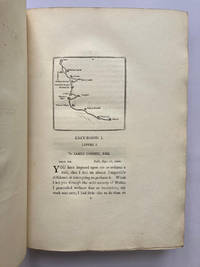
1801réf. 3865A scarce book of country excursions taking in some of the most striking landscapes and great houses within a day's journey of Bath. Three excursions are presented in the course of four letters with each excursion illustrated with a small part-page engraved map. The author describes in detail the landscapes cities and great houses along the way with plentiful information about the history of the towns gardens and architecture visited. Of particular note are Longleat Stourhead Fonthill and Wardour Castle. 'I am now to introduce you to one of the most splendid mansions in the kingdom Fonthill the seat of Mr. Beckford; where expence has reached its utmost limits in furniture and ornaments; where every room is a gold mine and every apartment a picture-gallery' p. 119. The description of Beckford's library is alas rather brief: 'The library is a large room filled with choice and expensive books; and decorated with appropriate paintings on the ceiling' p. 126. Warner also visits 'new' Wardour Castle - it was built in the 1770s - and gives a room by room commentary of the architecture furniture and paintings. Or particular interest is his description of the chapel: 'From this apartment we are carried into the western gallery of the chapel; a structure that displays superlative taste and magnificence. Crimson furniture and gilded ornaments produce an immediate striking coup d' œil; but when the decorations are examined individually the splendour and expence become more perceptible. Three immense pictures by Rubens cover the southern wall of the chapel; and one by this artist and another by Guido of the same majestic size are their opposite companions. The altar-piece is a Dead Christ by Cades. A large gallery is constructed at the western end superbly fitted up for Lord Arundel and his party; a second at the east end of the north side for the choir; and a third at the east end of the north side for the accommodation of visiters sic. Benches occupy the middle of the chapel for the reception of the domestics and such of the villagers as profess the Romish faith; for there is a Catholic seminary here the pupils of which punctually attend at morning and evening prayers. The eastern end of the chapel recedes into a semi-circular form through the windows of which light is admitted; but as these are placed high and consist of coloured glass the effect is extremely striking and solemn. The central window exhibits Angels and the awful Tetragrammaton from which is an emanation of glory. Brought forward from the eastern end sufficiently to allow the processions around it stands the Altar a most costly piece of workmanship fixed on a splendid sarcophagus of ebony; and constructed of porphyry agate and amber. A magnificent crucifix of silver surmounts the altar; and two censers of solid gold embossed with silver suspended over it pour through the chapel odiferous clouds of ever-burning frankincense. Every thing around indeed evinces that the Romish ritual is observed here with the utmost vigour and magnificence; and doubtless the celebration of its higher offices amid such seducing objects must act with infinite force upon the imagination. The effect produced by the externals of worship every man experiences who attends our Cathedral service which has not been stripped of so much of its lace as the common parochial ritual; how much then must this be increased when aided by exquisite examples of sculpture and painting; amid the strains of angelical music the glare of unnumbered lights and the Hallelujahs of numerous multitudes! The tamest fancy must be roused by such a scene and the coldest heart warmed into transport … It is but proper to add that the attendance of strangers at the service in Wardour chapel is considered as a compliment and every convenience provided for their accommodation' pp. 137-141. Richard Warner was an antiquary and an Anglican clergyman originally from the coastal town of Lymington in Hampshire. He became curate to Wililam Gilpin whose influence can be clearly seen in the present work dedicated to walking and the natural beauties of the west country. Warner obtained his first position in Bath in 1794 and remained there for some years writing a number of topographical works and a gothic novel Netley Abbey 1795 inspired by local ruins. He was a friend of Wordsworth who collected Warner's picturesque writings alongside those of Gilpin and who is known to have dined with him in Bath. In his lifetime Warner was mostly known for his controversial pacifist sermons and writings: it is thought that Blake was referring to Warner in the lines 'ask him if he is Bath or if he is Canterbury' in Jerusalem as claimed by David Erdman. Although this copy is in a later nineteenth century binding and was bound without the half-title a previous owner - possibly from the 1840s or 1850s perhaps contemporaneous with the binding and the newspaper cutting - has added an engraved portrait a Latin celebration of Bath an engraving of Farleigh Castle and a newspaper cutting referring to Paul Methuen of Corsham. OCLC lists BL University of Edinburgh the Natural History Museum and the Rubenianum in Antwerp only. Crutwell & G.G. and J. Robinson
1974149 pages. "Consists of extracts derived from readings for individuals, and topics of discussion are varied enough that everyone will find something of interest." - from page i. Prior owner's name atop front free endpaper else unmarked with moderate wear. A sound copy. Book
1901réf. 83155Saint-Dié, Typographie et Lithographie C. Cuny, 1901, in-8 (13,5x21cm), pleine toile rouge (usure), 161p. Edition originale. Reliure présentant des marques du temps. Intérieur frais. Ex-libris manuscrit sur la page de titre.
réf. 003841Ex-libris (109*69mm) pour indiquer le dos des livres du révérend (1848-1937) et sa femme au collège de Gettysburg (USA).
réf. ABE-86478215442 FEMMES A DROITE DE LA FONTAINE-MENTION MTIL EN BAS A DROITE-NON VOYAGEE (BCP3)
réf. 13977595Milan: Centro Studi Archeologia Africana, 2004 in-8, 163 pages, illustrations, bibliographie. Broché, étiquette de référencement, bon état. Texte français et italien.
2001réf. Q-1891024280D.A.P./Distributed Art Publishers Inc 2001-10-15. Hardcover. New. New. In shrink wrap. Looks like an interesting title! D.A.P./Distributed Art Publishers, Inc hardcover
réf. 0259750611.Gpaperback. Good. Access codes and supplements are not guaranteed with used items. May be an ex-library book. paperback
1530In-folio, (8), 291pp, (1), legatura in pergamena coeva, buono stato. Comprende anche il Canticum Moysi in exodo. Glosse in greco ai margini. In-folio, (8), 291pp, (1), contemporary vellum binding, good condition. It also includes the Canticum Moysi in exodo. Glossae in Greek at the margins.
1957réf. 2143483Torino, Milano, Padova u.a.: G. B. Paravia 1957. XV, (1), 136 Seiten. 8° (17,5-22,5 cm) illustrierte Orig.-Broschur. [Softcover / Paperback].