2550 resultados
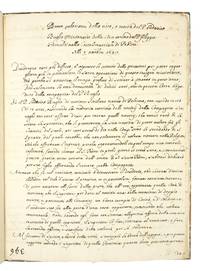
1884ref. R121123s.l. [Milano or Roma], s.n. [1884] [6] + 110 + [4bl.] pp., Manuscript of the contributions made on the occasion of the commemoration in Rome in 1884 of the 300th anniversary of the death of Carolus Borromeus S.J. (1538-1584), organised by the occasional Accademia di Poesia e di Musica. This Academy of Poetry and Music was composed of students from Roman seminaries and church colleges. For this event a leaflet of 18pp. was published : S. Carlo Borromeo modello proposto agli ecclesiastici nel terzo centenario dalla beata sua morte. Accademia di poesia e di music ache offrono al pubblico gli alunni de seminari e collegi di Roma il giorno 25 Novembre 1884 containing the program and some excerpts of the contributions. The manuscript here on offer is most probably the only existing copy containing the complete poems and songs, handwritten by the different contributors in different languages (Italian, French, Hebrew, Armenian, Polish, German, Portuguese, etc.) and making it an important document for Jesuite and Italian church history, very neat handwriting throughout, text and interior are clean and bright, bound in contemporary red cloth binding with gilt ornamentations, some stains on lower end of both covers, all edges gilt, marbled endpapers, ownership stamp on first page, [Content: PARTE I, Il Sacerdote di Dio : S. Carlo e I Seminari Prolusione Latina (pp.1-6, text in Latin), AGRESTI Michele, Cantata S. Carlo e la musica sacra (pp.7-8, text in Italian), I: MASIGI Paolo (Colleg. Urbano de Prop. Fide), LEletto del Signore Poesia Ebraica (pp.11-14, text in Hebrew), HAELTERMANN Benedetto (alunno del collegio belga), Fiammingo: Leletto del Signore (parafrasi della Poesia ebraica, pp.15-18, text in Dutch), II: HELLO Enrico (Alunno del Seminario Francese), Il Divoto di Maria Poesia Francese (pp.19-22, text in French), III: GASPAROLO Francesco (alunno del Sem. De SS. Ambrogio e Carlo), Il Pellegrino ai Santuari Canzone (pp.23-26, text in Italian), IV: CHAPMAN Giovanni (alunno del Collegio Inglese), LAmico dei Santi Poesia Inglese (pp.27-30, text in English), V: RYCHLAK Giuseppe (Alunno del Collegio Polacco), S. Carlo Campione della Fede Poesia Polacca (pp.31-34, text in Polish), VI: OFLYNN Cornelio (alunno del Collegio Irlandese), San Carlo Zelatore della casa di Dio Poesia Irlandese (pp.35-38, text in Irish), VII: PAPI Ettore (alunno dellAlmo Collegio Capranica), S. Carlo Mecenate delle lettere Ode Italiana (pp.39-41, text in Italian), VIII: BERGAMASCHI Pietro (alunno del Sem. de SS. Ambrogio e Carlo), S. Carolo Iuventutis Patri (pp.43-48), // PARTE II: Il Cardinale Arcivescovo : Cantata S. Carlo e la peste di Milano (pp.51-53, text in Italian), LANZONI Francesco (Alunno del Pont. Sem. Pio), Prolusione Italiana: S. Carlo e I Romani Pontefici (pp.57-62, text in Italian), I: TERSIBASCIAN Giorgio (Alunno del Collegio Armeno), LUmile esaltato Poesia Armena (pp.63-66, text in Armenian) & MACKENZIE Colino Cameron, LUmile esaltato parafrasi in versi asclepiadei (pp.67-70, text in Latin), II: TEDESCA Antonio (Alunno del Collegio Germanico-Ungarico), Carlo Borromeo Procuratore del Concilio di Trento Poesia Tedesca (pp.71-74, text in German), III: DE PAUL MORAES Evaristo (Alunno del Collegio Pio-Latino-Americano), Il Preside dei Sinodi Milanesi Poesia Portoghese (pp.75-78, text in Portuguese), IV: DRUMOFF Giovanni (alunno del Collegio Greco), Il Pastor Buono Poesia Greca (pp.79-81, text in Greek) & KANNA Eduardus (e collegio Stat. Foederatorum Americas Borealis), Bonus Pastor parafrasi ex graeca Esametri (pp.83-86, text in Latin), V: PTACEK Giuseppe (alunno del Collegio Boemo), S. Carlu Burrum Elemosiniere Poema Boema (pp.87-89, text in Czech?), VI: OSES Aurelio (alunno del Collegio Spagnuolo), Fondador de pias Instituciones Poesia Spagnuola (pp.91-94, text in Spanish), VII: RAVAGLIA Giovanni (alunno del Pontif. Sem. Pio), LEroe della Carita Terzine (pp.95-98, text in Italian), VIII: GIAMMARIA Oreste (alunno del Sem. Vaticano), Carolus Borromeus ecclesiasticae libertatis vindex (pp.99-102, text in Latin), IX: VALLI Adolfo (alunno del Pont. Sem. Romano), Il comprensore celeste Ottave (pp.103-105, text in Italian), // Cantata S. Carlo e Leone XIII (p.107), Indice (pp.109-110)], R121123
1533In-8°, 59pp, (1cb), prima edizione. Legatura in marocchino rosso alle armi di don Felipe Ramirez Nuñez de Guzmán Duca di Medina sui piatti in oro, entro cornice in oro. Titolo in oro al dorso (PRO. PONT; VAR.), nervature, tagli in oro. L’opera del teologo bresciano Lodovico Oriano è una risposta alle questioni e dubbi sollevati da Martin Lutero sulla liceità della potestà del romano pontefice, sul libero arbitrio, sulla giustificazione per fede e opere, cioè sui cardini su cui poggiava l’intero impianto teologico della Chiesa cattolica. Rilegato con Discussio decreti magni Concilii Lateranensis, et quarundam rationum annexarum, de potestate ecclesiæ in temporalibus; & incommoda diuersæ sententiæ, authore Guilhelmo Singletono, 135pp, stemma dei Gesuiti sul frontespizio, fregi, iniziali e finalino xilografici. L’opera di Leonardo Lessio (alias William Singleton) è stata spesso oggetto di contestazione per apparire come non ortodossa alla lezione biblica. In-8°, 59pp, (1cb), first edition. Binding in red morocco, gilt coat of arms of Don Felipe Ramirez Nuñez de Guzmán Duke of Medina on plates, within a gilt frame. Gilt title on spine (PRO. PONT; VAR.), bands, gilt edges. The work of the Brescian theologian Lodovico Oriano is a response to the questions and doubts raised by Martin Luther on the legitimacy of the power of the Roman pontiff, on free will, on justification by faith and works, that is the cornerstones on which was placed the entire theological structure of Catholic church. Bound with Discussio decreti magni Concilii Lateranensis, et quarundam rationum annexarum, de potestate ecclesiæ in temporalibus; & incommoda diuersæ sententiæ, authore Guilhelmo Singletono, 135pp, Jesuit coat of arms on the title page, wood engraved friezes, initials and tail. The work of Leonardo Lessio (alias William Singleton) has often been the subject of dispute for appearing as unorthodox to the biblical lesson.
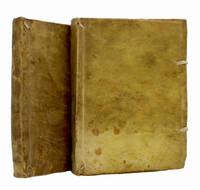
1772ref. 6489Lima: Oficina de la calle de San Jacinto 1772. First Edition Primera edición. Hardcover Tapa dura. 190x135mm. 7½x5¼". Lima Oficina de la calle de San Jacinto 1772-1773. 2 volúmenes. En 4º menor 190 x 135mm. -I: 54 2 207 i.e. 133 5 pp. 14 hojas de portadillas. -II: 158 306 i.e. 318 4 pp. 5 hojas de portadillas. Encuadernación en pergamino de época. Primera edición de los cuadernos de desamortización de los bienes de la Compañía de Jesús en Perú con motivo de su expulsión según las reglas que prescribe la Real Cédula dada en Madrid a 9 de julio de 1769. Los Jesuitas fueron expulsados de Perú así como de otras posesiones de España en América por orden de Carlos III en 1767. El libro también incluye las Constituciones de diferentes colegios peruanos que estaban bajo la supervisión de los jesuitas. Obra extraordinariamente rara de encontrar completa de sus dos volúmenes especialmente un ejemplar hermoso como el nuestro. Tiene en total 19 portadillas fuera de la paginación. En España sólo he encontrado completos 2 ejemplares institucionales Ministerio de Justicia y Biblioteca Nacional. Oficina de la calle de San Jacinto hardcover
1608In -8°, pp, 88, cartonato, tagli rossi. Sul verso del frontespizio altro titolo: “Lettera del padre Diego di Pantogia della Compagnia di Giesù al Padre Luigi di Guzman Provinciale nella Provincia di Toledo. Scritta in Pachino corte del Rè della Chiana a di 9 di Marzo, dell’anno 1602. Pubblicata originariamente in spagnolo nel 1605 questa lunga lettera, qui nella sua prima versione italiana, si distingue per la chiarezza argomentativa del testo, quasi giornalistica nel riportare dettagli della vita politica, economica, sociale e religiosa cinese. Il libro è valutato nodale anche come testimonianza circa i rapporti fra religione cattolica e Islam: “This is a very early source written by Christian on Muslims in China proper. The almost non-judgmental treatment of Islam is particularly interesting, although it must be noted that the text was written befor the Jesuit-Muslim conflicts fo the later part of the 16th century, so it must be possible to assume that relations at this time were fairly amicable. [...] The descriptions of Muslim life in China are fairly extensive in comparison with other texts of the early 17th century although, like its counterparts, the text focuses more on other religions such as Buddhism, Taoism, Confucianism and Judaism”. (Thomas Davies, John Chesworth, “Christian-Muslim Relations. A Bibliographical History”, 2012, vol. 11, p. 294. Diego de Pantoja o Diego Pantoja (Valdemoro 1571 – Macao 1618) era un gesuita e missionario portoghese in Cina, noto per aver accompagnato Matteo Ricci a Pechino, dove Diego avrebbe lavorato come astronomo, geografo e musicista. Nel 1617 fu processato come nemico degli astronomi cinesi (aveva apportato alcune correzioni al calendario) ed espulso dalla Cina. Published before in Spanish, this long letter, here in its first Italian edition, is valued as remarkable not only about early contacts between Christian Europe and China, but also about the relationship between Catholic religion and Muslim one: “This is a very early source written by Christian on Muslims in China proper. The almost non-judgmental treatment of Islam is particularly interesting, although it must be noted that the text was written befor the Jesuit-Muslim conflicts fo the later part of the 16th century, so it must be possible to assume that relations at this time were fairly amicable. [...] The descriptions of Muslim life in China are fairly extensive in comparison with other texts of the early 17th century although, like its counterparts, the text focuses more on other religions such as Buddhism, Taoism, Confucianism and Judaism”. (Thomas Davies, John Chesworth, “Christian-Muslim Relations. A Bibliographical History”, 2012, vol. 11, p. 294. Diego De Pantoja (1571-1618) was a portuguese jesuit and missionary in China, known for getting along Matteo Ricci to Beijing, where Diego was an astronomer, a geographer and a musician. He purpoused some changes to Chinese calendar, and in 1617 was prosecuted and banished from China.
ref. 95636aaf31x25 cm, 1) kl. ovales Reliquienmedaillon aus Silber mit Glasfenster und Beschriftung „Ex Oss: S. Franc: Bor:“, mit Zeugnis auf Papier, vorgedrucktes Formular mit gestochenem Bischofswappen, handschriftlich ausgefüllt u. unterschrieben, Medaillon und Zeugnis unter Glas mit ornamentaler Textilrahmung mit Stütze zum Aufstellen auf Rückseite, dazu zwei Klosterarbeiten in ähnlicher Textilrahmung: 2) Gouache-Miniatur von Johannes d. Täufer mit Stickerei, Goldborten sowie polychromen Glasperlen, Stoffblumen, Draht und Pailletten. 3) ovales Stoffmedaillon mit Glasperlen u. goldfarbenem Draht u. Pailletten auf Purpurgrund mit Goldbrokatverzierungen, guter Zustand, an den Ecken Textilrahmen teilw. etwas ausgefranst, es liegt auch ein Dossier mit einer kurzen Dokumentation zum Heiligen u. den Jesuiten bei (Ausdrucke u. Fotokopien),
1762ref. 15661Amsterdam, chez Ray, libraire, Iver, graveur, sur le Dam, 1762. Suite de 22 figures dont 1 titre gravé.Événemens mémorables, Déclaration du Roi. Arrêts du Parlement contre le Schisme. Les Sacremens administrés. Au Législateur Pacifique, 1755. Suite de 12 figures dont 1 titre gravé.Les deux suites reliées en 1 vol. in-4 (25 x 19 cm), demi-vélin souple, dos lisse, pièce de titre en maroquin rouge, tranches rouges (reliure de l'époque).
1673In-8°, 16 cc, pp. 327, più errata, c. di tav. ripiegata (Situs provinciarum imperii Sinici), occhietto, vignetta calcografica sul frontespizio, illustrazioni calcografiche. Rilegatura in pergamena con nervi e titolo al dorso. ROUGEMONT (Franciscus de), b. a Maastricht il 2 aprile 1624, d. a Chang-chu (Cina) il 4 novembre 1676. Nelle scuole dei gesuiti a Bruxelles e Anversa fece i suoi studi inferiori con risultati brillanti e nel1641entrò nella Compagnia di Gesù. All'assedio di Kortrijk nel 1646 si distinse, sebbene non fosse ancora un sacerdote, per il suo zelo nella cura dei soldati feriti. Nel 1654 ricevette la consacrazione del sacerdote e, quando padre Martino Martini, procuratore della missione cinese in Europa, venne a cercare missionari per questo lavoro, riuscì a convincere i suoi genitori a richiedere quella missione a favore del figlio dal Generale dell'Ordine. L'anno seguente partì da Amsterdam per Lisbona con il gesuita di Amsterdam Ignazio Hartoghvelt. Dopo un ritardo a Coimbra, lasciarono Lisbona il 30 marzo 1656 e arrivarono il 6 novembre a Coa. A piedi, continuò il suo viaggio lungo la costa di Malabar, Visschersen Transvancore, e poi attraversò il Siam, dove il suo compagno Hartoghvelt morì a Yoethia nel 1658. Nello stesso anno, de Rougemont raggiunse Macao, e nel 1659, raggiunse la corte imperiale, in Cina. I cristiani da lui formati sono stati riconosciuti per il loro zelo e conoscenza della religione. In seguito a una violenta persecuzione dei cristiani durante la minore età dell'imperatore Kang-hi i missionari furono portati prigionieri a Pechino, poi esiliati nel Canton e imprigionati nella chiesa per 6 anni. R. capì che questa persecuzione aveva la sua ragione principale nella nazionalità straniera dei missionari. Per togliere quest'arma dalle mani degli avversari, pensò di addestrare un clero nativo e pensò che consentire una liturgia della chiesa in lingua cinese avrebbe promosso questo piano. Nel 1667 inviò un dettagliato memorandum al generale dell'ordine Oliva (stampato in Analecta Bollandiana XXXIII (1914), 279-93). Solo nel 1671, quando l'imperatore Kang-hi fu convinto dell'innocenza dei missionari, questi tornarono alle loro congregazioni cristiane. Il Rougemont ha continuò il lavoro interrotto per altri 5 anni. Durante un viaggio verso l'isola di Tsong-ming, si ammalò a Tsang-chu e morì tra le braccia di Padre Couplet. I suoi fedeli cristiani vennero per raccogliere il corpo del loro padre spirituale e dopo due giorni di cammino lo seppellirono solennemente sul Monte Voxan fuori dalla città di Changsho. Egli aveva usato il tempo della sua disoccupazione forzata per compilare la sua Historia Tartaro-Sinica nova (Lovanii 1673), in cui racconta ampiamente la persecuzione subita. Il Rougemont ha dato un ottimo contributo alla conoscenza della letteratura cinese. Con i padri Intorcetta, Herdrich e Couplet, intraprese l'importante lavoro: Confucius Sinarum philosophus, messo in stampa nel 1687 per ordine di Luigi XIV a Parigi. In-8 °, 16 cc, pp. 327, plus errata, folded table (Situs provinciarum imperii Sinici), half-title, woodcut on the title page. ROUGEMONT (Franciscus de), b. in Maastricht on April 2, 1624, d. in Changchu (China) on November 4, 1676. In Jesuit schools in Brussels and Antwerp he made his lower studies with brilliant results and in 1641 he entered the Society of Jesus. At the siege of Kortrijk in 1646 he distinguished himself, even if he was not yet a priest, for his zeal in caring for wounded soldiers. In 1654 he received the priest's consecration and, when Father Martino Martini, procurator of the Chinese mission in Europe, came to look for missionaries for this job, he managed to convince his parents to carry out that mission in favor of his son by the General of the Order. The following year he left Amsterdam for Lisbon with the Jesuit of Amsterdam Ignazio Hartoghvelt. After a delay in Coimbra, they left Lisbon on 30 March 1656 and arrived on 6 November in Coa. On foot, he continued his journey along the coast of Malabar, Visschersen Transvancore, and then he crossed Siam, where his companion Hartoghvelt died in Yoethia in 1658. In the same year, Rougemont reached Macau, and in 1659, he reached the imperial court , in China. The Christians he trained were listed for their zeal and knowledge of religion. Following a violent persecution of Christians during the minor age of Emperor Kang-hi, the missionaries were taken prisoner to Beijing, then exiled to the Canton and imprisoned in the church for 6 years. R. understood that this persecution had its main reason in the foreign nationality of the missionaries. To remove this weapon from the hands of opponents, he thought of training a native clergy and thought that allowing a Chinese-language church liturgy would promote this plan. In 1667 he sent a detailed memorandum to the general of the order Oliva (printed in Analecta Bollandiana XXXIII (1914), 279-93). Only in 1671, when Emperor Kang-hi was convinced of the innocence of the missionaries, did they return to their Christian congregations. Rougemont continued the interrupted work for another 5 years. During a trip to Tsong-ming Island, a Tsang-chu fell ill and died in the arms of Father Couplet. His faithful Christians came to collect the body of their spiritual father and after two days of walking they saw him solemnly on Mount Voxan outside the city of Changsho. He had used the time of his forced unemployment to compile his Historia Tartaro-Sinica nova (Lovanii 1673), in which he widely recounts the persecution he endured. Rougemont made an excellent contribution to the knowledge of Chinese literature. With his fathers Intorcetta, Herdrich and Couplet, he undertook the important work: Confucius Sinarum philosophus, printed in 1687 by order of Louis XIV in Paris.
1602In -8°, pp. 100; cartonato, tagli rossi; marca dei Gesuiti al frontespizio, iniziale xilografica. Nicolas Pimenta (1546-1614) fu mandato a Goa nel 1596, in ruolo di sovrintendente delle Indie Orientali. Questo è il suo secondo resoconto, in cui dopo aver riferito sullo stato delle sue missioni, descrive un viaggio verso Nord - a tratti avventuroso - intrapreso inizialmente con 11 compagni: nel volume si dà conto di una delle prime missioni cristiane in Bengala. Nicolas Pimenta (1546-1614) was sent to Goa in 1596, as Eastern India supervisor. This is his second report, in which he tells about his travel to North (sometimes adventurous) giving also account of one of the first Christian missions to Bengal.
1585In -8°, pp. 188, (12); pergamena. Questa rara miscellanea comprende una serie di lettere scritte dai Gesuiti dal Giappone e da Goa: scrivono de Cespedes, Mexia, Fròis, Cabral, e Valignano. La lettera di quest’ultimo include il resoconto della morte di Rodolfo Acquaviva, che fu ucciso a Goa, dagli indigeni, nel 1583. La lettera di Valignano è una delle pochissime, in tutto cinque, lettere dei Gesuiti dall’India pubblicate fra il 1570 e il 1585. This rare collection includes letters written by Jesuits from India and Japan: the authors are de Cespedes, Mexia, Fròis, Cabral, e Valignano. The Valignano letter reports about the assassination, in Goa, of Rodolfo Acquaviva, killed by natives in 1583: it’s one of the five letter of Jesuits from India published between 1570 and 1585.
1601In -8°, pp. 109, (b), cartonato, tagli rossi. Prima edizione. Francesco Pasio (1551-1612) fu il primo provinciale gesuita in Giappone, residente a Nagasaki; il libro comprende anche una lettera del vice-provinciale Pedro Gomez (1533-1600), autore del “Compendium”, ovvero un trattato di cosmologia e teologia che sarebbe diventata la prima opera a introdurre la cultura occidentale in Giappone; segue un testo di Nicolò Longobardi (1559-1654), gesuita siciliano che in Cina fu il successore di Matteo Ricci (nominato varie volte in questo testo); la quarta e ultima lettera è un resoconto di una missione presso i territori islamici del Mogol (India, Pakistan, Afghanistan). Marca dei gesuiti al frontespizio e capilettera figurati. First edition. Pasio (1551-1612) was the first Jesuit Provincial in Japan: he resided in Nagasaki; the book includes also a letter of his deputy Pedro Gomez (1533-1600), author of the “Compendium”, a cosmology and theology treaty that had to become the first work to introduce western knowledge in Japan; then a text by Nicolò Longoboardi (1559-1654), a sicilian jesuit who replace, in China, Matteo Ricci (mentioned many times in this text); the fourth and last letter is the chronicle of a mission in Islamic areas of Mughal (India, Pakistan, Afghanistan). A Jesuit mark on title page and figurative initials. Pasio (1551-1612) was the first Jesuit Provincial in Japan: he resided in Nagasaki; the book includes also a letter of his deputy Pedro Gomez (1533-1600), author of the “Compendium”, a cosmology and theology treaty that had to become the first work to introduce western knowledge in Japan; then a text by Nicolò Longoboardi (1559-1654), a sicilian jesuit who replace, in China, Matteo Ricci (mentioned many times in this text); the fourth and last letter is the chronicle of a mission in Islamic areas of Mughal (India, Pakistan, Afghanistan). A Jesuit mark on title page and figurative initials.
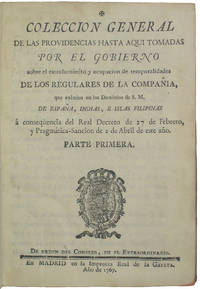
1784ref. 44155Madrid: En la Imprenta Real de la Gazeta 1784. First edition. Contemporary mottled calf compartments decorated in gilt red morocco spine label titled in gilt sewn in green silk ribbon marbled endpapers. A very good copy head band worn with a small chip and a tiny split at the joint owner's bookplate and booksellers engraved plate on front pastedown contents quite bright and clean. 104 91 135 144 4 74 pp. 4to. Five volumes bound in one. Parts 1 2 3 set in condensed type; parts 4 and 5 in expanded type. Royal decrees from Charles III and instructions decisions and regulations issued by the Consejo en el Extraordinario and its president the Conde de Aranda and others--concerning the expulsion of the Jesuits. "These collections contain the documents relative to the expulsion of the Jesuits from the Spanish dominions and the confiscation of their property including the names of the colleges and houses of the order the application of the confiscated property &c. A complete series consists of five parts which are rarely found together. Our collation is of parts I. to III. only" Sabin 14304. Part 4 p. 75-127 contains the papal brief "Dominus ac Redemptor" by Clement XIV in Latin and Spanish. Earlier versions containing parts or all of the first three sections are not all that uncommon but those containing all five parts remain relatively rare. Other than this copy only two others have appeared in the auction records of ABPC and RBH since 1953 the first at the John B. Stetson sale at Parke Bernet and the second at Bonhams in a modern binding and dampstained. Palau 56516. See Sabin 14304. Medina BHA: IV 4228. En la Imprenta Real de la Gazeta unknown
1784ref. 44155Madrid: En la Imprenta Real de la Gazeta 1784. First edition. Contemporary mottled calf compartments decorated in gilt red morocco spine label titled in gilt sewn in green silk ribbon marbled endpapers. A very good copy head band worn with a small chip and a tiny split at the joint owner's bookplate and booksellers engraved plate on front pastedown contents quite bright and clean. 104 91 135 144 4 74 pp. 4to. Five volumes bound in one. Parts 1 2 3 set in condensed type; parts 4 and 5 in expanded type. Royal decrees from Charles III and instructions decisions and regulations issued by the Consejo en el Extraordinario and its president the Conde de Aranda and others--concerning the expulsion of the Jesuits. "These collections contain the documents relative to the expulsion of the Jesuits from the Spanish dominions and the confiscation of their property including the names of the colleges and houses of the order the application of the confiscated property &c. A complete series consists of five parts which are rarely found together. Our collation is of parts I. to III. only" Sabin 14304. Part 4 p. 75-127 contains the papal brief "Dominus ac Redemptor" by Clement XIV in Latin and Spanish. Earlier versions containing parts or all of the first three sections are not all that uncommon but those containing all five parts remain relatively rare. Other than this copy only two others have appeared in the auction records of ABPC and RBH since 1953 the first at the John B. Stetson sale at Parke Bernet and the second at Bonhams in a modern binding and dampstained. Palau 56516. See Sabin 14304. Medina BHA: IV 4228. En la Imprenta Real de la Gazeta unknown books
1654Folio (320 x 215mm). (16) ll, including frontispiece, 618 pp, (14) ll. Engraved frontispiece, title in red and black with large engraved vignette, numerous engraved illustrations including large-format ones, and numerous woodcut illustrations, headpieces and initials, with final blank. Contemporary vellum, manuscript title on spine. Somewhat browned and with a small defect in the engraved title-page, but still in good condition, binding slightly bowed.
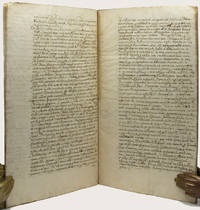
1760ref. 5489Genoa: 29 July 1760. Hardcover. Fine. Manuscript in Italian written in a neat cursive in brown/black ink on laid paper. With some minor foxing some folding lines the creases slightly flattened the bottom edge of the leaves is slightly frayed. Otherwise in very good condition. A harrowing eye-witness account by a Jesuit Father of the Province of Brazil describing the forced expulsion of the Jesuits from Brazil in 1760 the hardships they endured during their capture and the perilous journey from Brazil to Genoa via Lisbon. The author begins his narrative with the persecution suffered by the Jesuits in Brazil following the official suppression of the Order. The Jesuit colleges were thoroughly plundered property seized precious silver taken and church furnishings stripped away. They were ordered not to open the church doors or ring the bells although on three occasions the Blessed Sacrament was brought to the sick an act which deeply moved the local people. The Jesuits endured many sufferings during their captivity. They were confined under harsh conditions; guarded constantly by soldiers. Their living quarters were cramped and filthy so small that they could neither sit nor lie down comfortably. Many suffered from hunger thirst and illness and several lost their lives during this ordeal. On 16 March the journey by sea began. The voyage was nothing short of a cruel martyrdom: extreme hunger and sickness afflicted the Jesuit Fathers. One elderly and saintly Father Francesco Paolo died shortly after the journey began not from disease but from severe distress caused by lack of food and medicine. Another Father Giovanni de Matha suffered a dangerous hemorrhage and narrowly survived while many others fell ill. They arrived at the mouth of the Tagus River in Portugal on 6 June after which they were transferred under guard to a Genoese ship effectively imprisoned once again. They were forbidden from going ashore or even signaling their arrival. More Jesuit Fathers from Brazil joined them later in June many weakened and sick from the hardships endured. Tragically some who had been sent ahead to Portugal suffered such extreme famine and thirst that they resorted to drinking their own urine and several died without the comfort of the last rites which were denied by the ship's captain. The captains and executioners of the royal orders showed little compassion even as they witnessed the Jesuits' pale and dying condition. Throughout this entire ordeal a royal minister constantly monitored the Jesuits offering false hopes that they might remain in the kingdom if they renounced their order and left the Jesuit habit behind. Some succumbed to these pressures but most remained steadfast. The Jesuits also faced opposition from the Bishop of Rio de Janeiro who initially used them for missions but later prohibited their confessions and sermons accusing them falsely of heretical teachings. He even excommunicated those who encouraged perseverance in the Jesuit order. Despite all these hardships the siege imprisonment brutal sea voyage hunger disease and ecclesiastical persecution the Jesuits maintained their faith and dignity praying for peace and the restoration of their Society. In a long postscript the writer gives further news that he has received from Brazil. He describes the devotion despite the Suppression of the Brazilian indigenous novices and the bravery of the students many of whom accompanied other Jesuit fathers in a cramped ship for the long voyage to Europe. A number of students held back -reluctantly- realizing that their presence on the ship would only lead to further overcrowding and privation for the Jesuit fathers in particular those who were old and frail. With sorrow they wept on the shore as the ship weighed anchor and departed for the miserable voyage. The account closes on 29 July 1760 expressing a solemn hope that after so many disasters peace will return to the Jesuit order. 29 July hardcover
1760ref. 5489Genoa: 29 July 1760. Hardcover. Fine. Manuscript in Italian written in a neat cursive in brown/black ink on laid paper. With some minor foxing some folding lines the creases slightly flattened the bottom edge of the leaves is slightly frayed. Otherwise in very good condition. A harrowing eye-witness account by a Jesuit Father of the Province of Brazil describing the forced expulsion of the Jesuits from Brazil in 1760 the hardships they endured during their capture and the perilous journey from Brazil to Genoa via Lisbon. The author begins his narrative with the persecution suffered by the Jesuits in Brazil following the official suppression of the Order. The Jesuit colleges were thoroughly plundered property seized precious silver taken and church furnishings stripped away. They were ordered not to open the church doors or ring the bells although on three occasions the Blessed Sacrament was brought to the sick an act which deeply moved the local people. The Jesuits endured many sufferings during their captivity. They were confined under harsh conditions; guarded constantly by soldiers. Their living quarters were cramped and filthy so small that they could neither sit nor lie down comfortably. Many suffered from hunger thirst and illness and several lost their lives during this ordeal. On 16 March the journey by sea began. The voyage was nothing short of a cruel martyrdom: extreme hunger and sickness afflicted the Jesuit Fathers. One elderly and saintly Father Francesco Paolo died shortly after the journey began not from disease but from severe distress caused by lack of food and medicine. Another Father Giovanni de Matha suffered a dangerous hemorrhage and narrowly survived while many others fell ill. They arrived at the mouth of the Tagus River in Portugal on 6 June after which they were transferred under guard to a Genoese ship effectively imprisoned once again. They were forbidden from going ashore or even signaling their arrival. More Jesuit Fathers from Brazil joined them later in June many weakened and sick from the hardships endured. Tragically some who had been sent ahead to Portugal suffered such extreme famine and thirst that they resorted to drinking their own urine and several died without the comfort of the last rites which were denied by the ship's captain. The captains and executioners of the royal orders showed little compassion even as they witnessed the Jesuits' pale and dying condition. Throughout this entire ordeal a royal minister constantly monitored the Jesuits offering false hopes that they might remain in the kingdom if they renounced their order and left the Jesuit habit behind. Some succumbed to these pressures but most remained steadfast. The Jesuits also faced opposition from the Bishop of Rio de Janeiro who initially used them for missions but later prohibited their confessions and sermons accusing them falsely of heretical teachings. He even excommunicated those who encouraged perseverance in the Jesuit order. Despite all these hardships the siege imprisonment brutal sea voyage hunger disease and ecclesiastical persecution the Jesuits maintained their faith and dignity praying for peace and the restoration of their Society. In a long postscript the writer gives further news that he has received from Brazil. He describes the devotion despite the Suppression of the Brazilian indigenous novices and the bravery of the students many of whom accompanied other Jesuit fathers in a cramped ship for the long voyage to Europe. A number of students held back -reluctantly- realizing that their presence on the ship would only lead to further overcrowding and privation for the Jesuit fathers in particular those who were old and frail. With sorrow they wept on the shore as the ship weighed anchor and departed for the miserable voyage. The account closes on 29 July 1760 expressing a solemn hope that after so many disasters peace will return to the Jesuit order. 29 July hardcover books
1615In -4°, pp. 1 cb., (14), 646 (ma 648, la numerazione di 111-112 è ripetuta), (10), 2 ccb. Pergamena coeva con titolo manoscritto al dorso. Include il frontespizio inciso da Wolfgang Kilian, con i ritratti in piedi dei due autori ai lati di una riproduzione della mappa della Cina, e la pianta, ripiegata, del palazzo pechinese convertito a chiesa, con la tomba di Ricci. Presente anche l’ultima carta bianca, qui con appunti e un piccolo indice analitico, manoscritti. Prima edizione di uno dei primi resoconti di un occidentale sulla Cina, il libro di Ricci ebbe un impatto culturale enorme sul mondo europeo del XVII secolo, e fu abbondantemente ristampato e tradotto fin dall’anno successivo. Matteo Ricci, missionario in Cina fino all’anno della sua morte, nel 1610, lasciò un importante manoscritto che sarebbe stato redatto e pubblicato da Trigault, anche lui membro della spedizione. Frontespizio restaurato nella parte bassa. The first edition of the earliest modern description of China, made by an Occidental traveller: Ricci’s book had a big impact all over the Century and it was republished and translated many times since a year later his publication. Matteo Ricci, a jesuit missionary to China until his death, in 1610, left an important manuscript edited and published by Trigault, another member of the expedition. Title restored in his lower part.
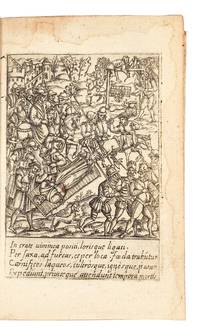
1583ref. 5484Macerata: Appresso Sebastiano Martellini con licenza de' superiori 1583. FIRST ITALIAN EDITION the second edition overall and the FIRST ILLUSTRATED EDITION. Hardcover. Fine. Bound in 19th c. ivory vellum hinges repaired at head and foot light soiling spine label fragmentary the boards ruled in gold the spine gold-tooled with repeating floral tools. Illustrated with six engraved plates of Catholic priests being abused apprehended tortured and executed described in detail below. With a woodcut title vignette of the Crucifixion a woodcut of the Pietà on leaf D7 verso printer's ornaments and woodcut initials. The text is type-ruled throughout. The text is in very good condition aside from damp-staining in gathering B and the six plates; the title page is soiled and has a small area of restoration at the upper corner as well as a clean tear mended and a little staining in the gutter. There is a light oil stain on leaf H6 and a marginal paper flaw on leaf N5. A translation with additional material of Allen's "A briefe historie of the glorious martyrdom of XII. reuerend priests executed vvithin these tvveluemonethes for confession and defence of the Catholike faith." Rheims: J. Foigny 1582. The English edition exists in only 2 copies British Library and Westminster Cathedral Library. This edition the first edition to include the six engraved illustrations is also rare. OCLC locates copies of the Macerata edition at 7 institutions in North America. see notes below for holdings. The central figure of Allen's martyrology is the Jesuit Edmund Campion 1540-1581 who at Allen's request and along with Robert Parsons led the first Mission to England. Campion and his companions were arrested on 17 July 1581. The present work recounts the arrest trial and eventual execution of Campion as well as the priests Ralph Sherwin Alexander Briant Thomas Ford John Shert Robert Johnson William Filby Luke Kirby Lawrence Richardson John Payne and Everard Hanse; as well as the Jesuit Thomas Cottam. Included in these accounts are the transcripts of Campion's final letter to the Jesuit General Claudio Aquaviva Ralph Sherwin's letter from the Tower and Alexander Briant's letter written while imprisoned to the Jesuit fathers in England requesting admission to the Society which was granted. Allen who continued to receive material up to the time of publication appended the martyrdoms of Cuthbert Maine John Nelson and Thomas Sherwood all of whom died in 1577 and 1578 to his account of the martyrs of 1581 and 1582. The translator of the present edition added an additional account not found in the English edition of the martyrdom of 4 English priests in 1583. The Engravings: The six engravings in this work first appeared in the first edition of Robert Parson's "De Persecutione Anglicana Libellus" published by the Jesuit College at Rome in 1582. Each of the six images is accompanied by a four-line explanation in hexameter verse. "The first plate depicts priests being apprehended in private houses and marched off to prison; the second in amplification shows various priests some still in their vestments being led away either on horseback or on foot but always securely bound two gentlewomen who had sheltered them being led to the same destination. In the third a priest is being scourged while tied to the back of a cart and below in the foreground an examination is in progress as preparations are made for torture. The fourth picture illustrates a racking with three other victims lined up to await their turn. In the fifth the priests are being dragged to execution on hurdles while the instruments of death are prepared; and the final plate represents the different stages of martyrdom from the hanging to the drawing quartering and burning of entrails."Anthony G. Petti in Recusant History April 1966 pp. 288-91 Edmund Campion: "Campion was arrested with his companions on 17 July 1581. Amid scenes of violent excitement Campion was derisively paraded through the streets of his native city bound hand and foot riding backwards with a paper stuck in his hat to denote the 'seditious Jesuit'. First thrown into Little Ease at the Tower he was carried privately to the house of his old patron the Earl of Leicester; there he encountered the queen herself and received earnest proffers of liberty and preferments would he but forsake his papistry. Hopton having tried in vain the same blandishments on Campion's return to the Tower the priest was then examined under torture and was reported to have betrayed those who had harboured him. Several arrests were made on the strength of the lie. He had asked for a public disputation. But when it came off in the Norman chapel of the Tower before the Dean of St. Paul's and other divines Campion had been denied opportunity to prepare his debate and had been severely racked. Thus weakened he stood through the four long conferences without chair table or notes and stood undefeated. Philip Howard Earl of Arundel who was looking on in the flush of worldly pride became thereby inspired to return to God's service. "The privy council at its wits' end over so purely spiritual a 'traitor' hatched a plot to impeach Campion's loyalty and called in the hirelings Eliot and Munday as accusers. A ridiculous trial ensued in Westminster Hall 20 Nov. 1581. Campion pleading not guilty was quite unable to hold up his often-wrenched right arm seeing which a fellow prisoner first kissing it raised it for him. He made a magnificent defence. But the sentence was death by hanging drawing and quartering: a sentence received by the martyrs with a joyful shout of 'Haec dies' and 'Te Deum'."Catholic Encyclopedia Cardinal William Allen: "On the accession of Elizabeth and the re-establishment of Protestantism William Allen was one of those who remained most staunch on the Catholic side and it is chiefly due to his labours that the Catholic religion was not entirely stamped out in England. Having resigned all his preferments he left the country in 1561 and sought a refuge in the university town of Louvain. The following year however we find him back in England devoting himself though not yet in priest's orders to evangelizing his native county. His success was such that it attracted notice and he had to flee for safety. For a while he made himself a missionary centre near Oxford where he had many acquaintances and later for a time he sought protection with the family of the Duke of Norfolk. In 1565 he was again forced to leave England this time as it turned out for good. He was ordained priest at Mechlin shortly afterwards. "Convinced that Protestant domination of England could only be temporary and that the whole future depended on there being a supply of trained clergy and controversialists ready to come into the country whenever Catholicity should be restored Allen founded the College at Douay since identified with his name. Douay was a new university founded by Pope Paul IV under the patronage of King Philip of Spain in whose dominions it then was for the special object of combating the errors of the Reformation; and what is still more to the purpose it was already under Oxford influences. The first chancellor Richard Smith was an Oxford man as were several of the most influential members of the university at the time when Allen began. It was his ambition to perpetuate Oxford influences and traditions and to make his new college practically a continuation of Catholic Oxford. "The means of support included besides Allen's private income and other voluntary donations a yearly pension of 200 ducats from the King of Spain and later on one of 100 gold crowns a month from the Pope. The number of students grew rapidly. Often more were received than the income warranted a course rendered necessary by the urgent state of Catholic affairs which Allen met in the spirit of faith; and in the long run means were never wanting. The names of Thomas Stapleton Richard Bristowe Gregory Martin Morgan Philips and others are still well known to English Catholics and are themselves a sufficient record of the ability of Allen's early companions and of the work done at the college. Allen had the power of instilling his spirit into his followers. They lived together without written rule but in perfect mutual harmony working for the common cause. From the Douay press came forth a constant stream of controversial and other Catholic literature which could not be printed in England on account of the Penal Laws. In this Allen himself took a prominent part. His writings are distinguished by extent of learning and theological acumen. One of the chief works undertaken in the early years of the college was the preparation of the well-known Douay Bible. The New Testament was published in 1582 when the college was at Rheims." "In 1575 Allen made a journey to Rome his second where he helped Pope Gregory XIII to found another college to send missionaries to England. For this purpose possession was obtained of the ancient English hospice in the city which was converted into a seminary. Returning to Douay Allen found a storm gathering against the English and in 1578 they were expelled from the town. The collegians took refuge at the University of Rheims where they were well received and continued their work as before Allen being soon afterwards elected canon of the Cathedral Chapter. In 1579 he paid his third visit to Rome being summoned thither in order that he might use his unique personal influence to adjust the dispute between the English and Welsh students at the new college there. It was during this visit that he was appointed a member of the Pontifical Commission for the revision of the Vulgate. Up to this point the career of Allen had won the universal admiration and gratitude of English Catholics for what he himself termed his 'scholastical attempts' to convert England. Such was not however the case with his political labors to secure the same end which may be said to have begun about this time and were far less successful. The famous Bull 'Regnans in excelsis' was issued by Pius V in 1570 deposing Queen Elizabeth and releasing her subjects from their allegiance but it did not take practical shape till seventeen years later when preparations were made for the invasion of England by the King of Spain. Allen was then once more in Rome whither he had been summoned by the Pope after a dangerous illness two years before. He never left the Eternal City again but he kept in constant communication with his countrymen in England. It had been due to his influence that the Society of Jesus to which he was greatly attached undertook to join in the work of the English mission; and now Allen and Father Parsons became joint leaders of the 'Spanish Party' among the English Catholics. "At the request of King Philip Allen was created cardinal in 1587 and held himself in readiness to go to England immediately should the invasion prove successful. In estimating the number of those who would be adherents to the scheme however Allen and Parsons were both at fault. The large majority of English Catholics generously forgetting the past sided with their own nation against the Spanish and the defeat of the Armada 1588 was a subject of rejoicing to them no less than to their Protestant fellow countrymen. Allen survived the defeat of the Armada six years. To the end of his life he remained fully convinced that the time was not far distant when England would be Catholic again. . He continued to reside at the English College Rome until his death 16 October 1594. He was buried in the chapel of the Holy Trinity adjoining the college." Catholic Encyclopedia. Appresso Sebastiano Martellini, con licenza de' superiori hardcover
1583ref. 5484Macerata: Appresso Sebastiano Martellini con licenza de' superiori 1583. FIRST ITALIAN EDITION the second edition overall and the FIRST ILLUSTRATED EDITION. Hardcover. Fine. Bound in 19th c. ivory vellum hinges repaired at head and foot light soiling spine label fragmentary the boards ruled in gold the spine gold-tooled with repeating floral tools. Illustrated with six engraved plates of Catholic priests being abused apprehended tortured and executed described in detail below. With a woodcut title vignette of the Crucifixion a woodcut of the Pietà on leaf D7 verso printer's ornaments and woodcut initials. The text is type-ruled throughout. The text is in very good condition aside from damp-staining in gathering B and the six plates; the title page is soiled and has a small area of restoration at the upper corner as well as a clean tear mended and a little staining in the gutter. There is a light oil stain on leaf H6 and a marginal paper flaw on leaf N5. A translation with additional material of Allen's "A briefe historie of the glorious martyrdom of XII. reuerend priests executed vvithin these tvveluemonethes for confession and defence of the Catholike faith." Rheims: J. Foigny 1582. The English edition exists in only 2 copies British Library and Westminster Cathedral Library. This edition the first edition to include the six engraved illustrations is also rare. OCLC locates copies of the Macerata edition at 7 institutions in North America. see notes below for holdings. The central figure of Allen's martyrology is the Jesuit Edmund Campion 1540-1581 who at Allen's request and along with Robert Parsons led the first Mission to England. Campion and his companions were arrested on 17 July 1581. The present work recounts the arrest trial and eventual execution of Campion as well as the priests Ralph Sherwin Alexander Briant Thomas Ford John Shert Robert Johnson William Filby Luke Kirby Lawrence Richardson John Payne and Everard Hanse; as well as the Jesuit Thomas Cottam. Included in these accounts are the transcripts of Campion's final letter to the Jesuit General Claudio Aquaviva Ralph Sherwin's letter from the Tower and Alexander Briant's letter written while imprisoned to the Jesuit fathers in England requesting admission to the Society which was granted. Allen who continued to receive material up to the time of publication appended the martyrdoms of Cuthbert Maine John Nelson and Thomas Sherwood all of whom died in 1577 and 1578 to his account of the martyrs of 1581 and 1582. The translator of the present edition added an additional account not found in the English edition of the martyrdom of 4 English priests in 1583. The Engravings: The six engravings in this work first appeared in the first edition of Robert Parson's "De Persecutione Anglicana Libellus" published by the Jesuit College at Rome in 1582. Each of the six images is accompanied by a four-line explanation in hexameter verse. "The first plate depicts priests being apprehended in private houses and marched off to prison; the second in amplification shows various priests some still in their vestments being led away either on horseback or on foot but always securely bound two gentlewomen who had sheltered them being led to the same destination. In the third a priest is being scourged while tied to the back of a cart and below in the foreground an examination is in progress as preparations are made for torture. The fourth picture illustrates a racking with three other victims lined up to await their turn. In the fifth the priests are being dragged to execution on hurdles while the instruments of death are prepared; and the final plate represents the different stages of martyrdom from the hanging to the drawing quartering and burning of entrails."Anthony G. Petti in Recusant History April 1966 pp. 288-91 Edmund Campion: "Campion was arrested with his companions on 17 July 1581. Amid scenes of violent excitement Campion was derisively paraded through the streets of his native city bound hand and foot riding backwards with a paper stuck in his hat to denote the 'seditious Jesuit'. First thrown into Little Ease at the Tower he was carried privately to the house of his old patron the Earl of Leicester; there he encountered the queen herself and received earnest proffers of liberty and preferments would he but forsake his papistry. Hopton having tried in vain the same blandishments on Campion's return to the Tower the priest was then examined under torture and was reported to have betrayed those who had harboured him. Several arrests were made on the strength of the lie. He had asked for a public disputation. But when it came off in the Norman chapel of the Tower before the Dean of St. Paul's and other divines Campion had been denied opportunity to prepare his debate and had been severely racked. Thus weakened he stood through the four long conferences without chair table or notes and stood undefeated. Philip Howard Earl of Arundel who was looking on in the flush of worldly pride became thereby inspired to return to God's service. "The privy council at its wits' end over so purely spiritual a 'traitor' hatched a plot to impeach Campion's loyalty and called in the hirelings Eliot and Munday as accusers. A ridiculous trial ensued in Westminster Hall 20 Nov. 1581. Campion pleading not guilty was quite unable to hold up his often-wrenched right arm seeing which a fellow prisoner first kissing it raised it for him. He made a magnificent defence. But the sentence was death by hanging drawing and quartering: a sentence received by the martyrs with a joyful shout of 'Haec dies' and 'Te Deum'."Catholic Encyclopedia Cardinal William Allen: "On the accession of Elizabeth and the re-establishment of Protestantism William Allen was one of those who remained most staunch on the Catholic side and it is chiefly due to his labours that the Catholic religion was not entirely stamped out in England. Having resigned all his preferments he left the country in 1561 and sought a refuge in the university town of Louvain. The following year however we find him back in England devoting himself though not yet in priest's orders to evangelizing his native county. His success was such that it attracted notice and he had to flee for safety. For a while he made himself a missionary centre near Oxford where he had many acquaintances and later for a time he sought protection with the family of the Duke of Norfolk. In 1565 he was again forced to leave England this time as it turned out for good. He was ordained priest at Mechlin shortly afterwards. "Convinced that Protestant domination of England could only be temporary and that the whole future depended on there being a supply of trained clergy and controversialists ready to come into the country whenever Catholicity should be restored Allen founded the College at Douay since identified with his name. Douay was a new university founded by Pope Paul IV under the patronage of King Philip of Spain in whose dominions it then was for the special object of combating the errors of the Reformation; and what is still more to the purpose it was already under Oxford influences. The first chancellor Richard Smith was an Oxford man as were several of the most influential members of the university at the time when Allen began. It was his ambition to perpetuate Oxford influences and traditions and to make his new college practically a continuation of Catholic Oxford. "The means of support included besides Allen's private income and other voluntary donations a yearly pension of 200 ducats from the King of Spain and later on one of 100 gold crowns a month from the Pope. The number of students grew rapidly. Often more were received than the income warranted a course rendered necessary by the urgent state of Catholic affairs which Allen met in the spirit of faith; and in the long run means were never wanting. The names of Thomas Stapleton Richard Bristowe Gregory Martin Morgan Philips and others are still well known to English Catholics and are themselves a sufficient record of the ability of Allen's early companions and of the work done at the college. Allen had the power of instilling his spirit into his followers. They lived together without written rule but in perfect mutual harmony working for the common cause. From the Douay press came forth a constant stream of controversial and other Catholic literature which could not be printed in England on account of the Penal Laws. In this Allen himself took a prominent part. His writings are distinguished by extent of learning and theological acumen. One of the chief works undertaken in the early years of the college was the preparation of the well-known Douay Bible. The New Testament was published in 1582 when the college was at Rheims." "In 1575 Allen made a journey to Rome his second where he helped Pope Gregory XIII to found another college to send missionaries to England. For this purpose possession was obtained of the ancient English hospice in the city which was converted into a seminary. Returning to Douay Allen found a storm gathering against the English and in 1578 they were expelled from the town. The collegians took refuge at the University of Rheims where they were well received and continued their work as before Allen being soon afterwards elected canon of the Cathedral Chapter. In 1579 he paid his third visit to Rome being summoned thither in order that he might use his unique personal influence to adjust the dispute between the English and Welsh students at the new college there. It was during this visit that he was appointed a member of the Pontifical Commission for the revision of the Vulgate. Up to this point the career of Allen had won the universal admiration and gratitude of English Catholics for what he himself termed his 'scholastical attempts' to convert England. Such was not however the case with his political labors to secure the same end which may be said to have begun about this time and were far less successful. The famous Bull 'Regnans in excelsis' was issued by Pius V in 1570 deposing Queen Elizabeth and releasing her subjects from their allegiance but it did not take practical shape till seventeen years later when preparations were made for the invasion of England by the King of Spain. Allen was then once more in Rome whither he had been summoned by the Pope after a dangerous illness two years before. He never left the Eternal City again but he kept in constant communication with his countrymen in England. It had been due to his influence that the Society of Jesus to which he was greatly attached undertook to join in the work of the English mission; and now Allen and Father Parsons became joint leaders of the 'Spanish Party' among the English Catholics. "At the request of King Philip Allen was created cardinal in 1587 and held himself in readiness to go to England immediately should the invasion prove successful. In estimating the number of those who would be adherents to the scheme however Allen and Parsons were both at fault. The large majority of English Catholics generously forgetting the past sided with their own nation against the Spanish and the defeat of the Armada 1588 was a subject of rejoicing to them no less than to their Protestant fellow countrymen. Allen survived the defeat of the Armada six years. To the end of his life he remained fully convinced that the time was not far distant when England would be Catholic again. . He continued to reside at the English College Rome until his death 16 October 1594. He was buried in the chapel of the Holy Trinity adjoining the college." Catholic Encyclopedia. Appresso Sebastiano Martellini, con licenza de' superiori hardcover books
1621ref. 34518Lisbon and Hangzhou China: Manuscripts ca.1623 and 1621. Very Rare A Similar Manuscript Exists in Brussels. We know of no others. The Latin text of both letters is written in a neat uniform cursive hand in brown. Folio leaves 33 x 20.5 cm The transcripts bound in 18th Century stiff blue wrappers the blank paste-downs and endpapers are late 18th century most likely the third quarter between 1745/1753 and 1776 since they contain a clear "lion/vryheit/pro patria" watermark with a crowned GR countermark which resembles Heawood 3148 3149 and 3154. The paper used for the manuscript contains a faint double-headed eagle watermark and it has been reinforced in the gutters. A very pleasing survival very well preserved edges slightly mellowed the wrappers show some signs of wear. VERY RARE MANUSCRIPT TRANSCRIPTS. Chrysostomus Johann Gall 1586-1643 was a German Jesuit and scholar. He left Ingolstadt Germany to teach astronomy mathematics and navigation in Lisbon fro 1620to 1627 before leaving to work in the Jesuit missions in India. The Colégio de Santo Antŕo benefitted from the arrival of many foreign mathematicians and other scholars as Lisbon serves as a gateway for all missionaries departing for Asia. The original letter by Gall was written in Lisbon September 1623 and concerns a newspaper style description of various events including details of the perseution of Christians in Japan particularly the execution of large numbers of the Christian community in Nagasaki in 1622. The second letter in the present work is especially interesting as the original was written by Johannes Terentius also known as Johannes Schreck an Deng Yuhan Hanpo 1576-1630. Terentius was a prominent Jesuit scholar specialized in natural science and mathematics. Before joining the Jesuits as a novice1611 he already enjoyed a grea reputation in Germany as a scholar. In 1621 Terentius left for China to join the Jesuit mission. The original letter by Terentius was written in Hangzhou China on 30 August 1621 to the rector of teh Jesuit College in Munich Jakob Keller 1568-1631. He discusses his journey to China which he started in 1618 his intentions to participate in the planned calendar reform in China and his impressions of the city of Hangzhou which he reached in 1621 Terentius wrote several works on european medicine mathematics and technology in Chinese and together with Johann Adam Schall von Bell and G. Roho introduced European tigonometry and European astronomical instruments to China. In 1629 he began to reform the calendar which J.A. Schall von Bell ocmpleted after Terentius' early death a year later. Backer & Sommervogel VII col. 1929-F Manuscripts unknown
1585ref. 4676ENTRY NO. 1 IN BOSCARO THE FIRST REFERENCE TO THE JAPANESE EMBASSY OF 1585 PRINTED ON THE TITLE-PAGE Venice I Gioliti 1585. Small 8vo 15.3 x 10 cm 103 pp. Bound in old vellum. Discrete former ownership stamp on title. Gutter margin of title reinforced; inconsequential toning otherwise excellent. Rare early edition of this Jesuit letter containing news of missions and activity in Japan from the year 1582 the only edition of 5 printed that year to contain a title-page advertising the famous Japanese embassy of 1584-86. Significantly the work also discusses the embassy the participants and their noble lineage and expresses the hope that the embassy will prove a convincing sign of the Jesuit's spectacular success in Japan p. 7. The present imprint of this edition comprises the first entry in Boscaro's bibliography of printed works related to the embassy. It thus stands at the head of nearly 50 works printed in 1585 alone to record and commemmorate an event that-in addition to providing a public relations coup for the Jesuits-became a watershed moment in cross-cultural exchange between the Orient and the West: "no Japanese emissaries to Europe either before or since aroused comparable interest or enthusiasm" Lach. In the annals of international relations between Europe and Japan in the 16th C it is particularly noteworthy "how the physical presence of the Japanese in Europe stimulated an unexpected number of typographical presentations" Boscaro of which this particular Gioliti edition with the titlepage advertising the embassy-Portata de Novo Dal Giapone Dai Signori Ambasciatori-is the very first. Boscaro notes that there were four other editions of Coehho's letter published in Italy in 1585 around the time the embassy arrived in Venice on June 25 including another by Gioliti but none of these uses the embassy as a way to market itself. The report itself is also a significant document of the embassy's genesis: Coelho composed it in February 1582 the month that the embassy of four Japanese Christian converts departed from Nagasaki. In it he describes the ongoing missionary activity across the country: e.g. in Hirado Amasuka Bungo and especially Funai Oita City the home of a thriving Jesuit college. Presumably the contents of this letter as the title suggests were "brought from Japan by the eminent ambassadors" as the latest news on the Jesuits current success in that faraway land. Though the embassy did not reach Lisbon until August 1584 it eventually was as Coelho had hoped a resounding success: from 1584-86 the four young Japanese nobles were the object of intense curiosity wherever they traveled and they were treated to lavish receptions in Lisbon Madrid Florence Rome Venice and other cities throughout Catholic Europe. Provenance: Alfred Hamy 1838-1904 French Jesuit historian and prolific author of books relating to the history of the members of the Company of Jesus. OCLC: Cornell NYPL HU and Newberry. Boscaro 1; Alt-Japan 812; Sommervogel II.1267; Cordier 78; Laures 169; Pagès 22; Lach I.2.690. Boscaro 1; Alt-Japan 812; Sommervogel II.1267; Cordier 78; Laures 169; Pagès 22; Lach I.2.690. I Gioliti
1585ref. 4676ENTRY NO. 1 IN BOSCARO THE FIRST REFERENCE TO THE JAPANESE EMBASSY OF 1585 PRINTED ON THE TITLE-PAGE Venice I Gioliti 1585. Small 8vo 15.3 x 10 cm 103 pp. Bound in old vellum. Discrete former ownership stamp on title. Gutter margin of title reinforced; inconsequential toning otherwise excellent. Rare early edition of this Jesuit letter containing news of missions and activity in Japan from the year 1582 the only edition of 5 printed that year to contain a title-page advertising the famous Japanese embassy of 1584-86. Significantly the work also discusses the embassy the participants and their noble lineage and expresses the hope that the embassy will prove a convincing sign of the Jesuit's spectacular success in Japan p. 7. The present imprint of this edition comprises the first entry in Boscaro's bibliography of printed works related to the embassy. It thus stands at the head of nearly 50 works printed in 1585 alone to record and commemmorate an event that-in addition to providing a public relations coup for the Jesuits-became a watershed moment in cross-cultural exchange between the Orient and the West: "no Japanese emissaries to Europe either before or since aroused comparable interest or enthusiasm" Lach. In the annals of international relations between Europe and Japan in the 16th C it is particularly noteworthy "how the physical presence of the Japanese in Europe stimulated an unexpected number of typographical presentations" Boscaro of which this particular Gioliti edition with the titlepage advertising the embassy-Portata de Novo Dal Giapone Dai Signori Ambasciatori-is the very first. Boscaro notes that there were four other editions of Coehho's letter published in Italy in 1585 around the time the embassy arrived in Venice on June 25 including another by Gioliti but none of these uses the embassy as a way to market itself. The report itself is also a significant document of the embassy's genesis: Coelho composed it in February 1582 the month that the embassy of four Japanese Christian converts departed from Nagasaki. In it he describes the ongoing missionary activity across the country: e.g. in Hirado Amasuka Bungo and especially Funai Oita City the home of a thriving Jesuit college. Presumably the contents of this letter as the title suggests were "brought from Japan by the eminent ambassadors" as the latest news on the Jesuits current success in that faraway land. Though the embassy did not reach Lisbon until August 1584 it eventually was as Coelho had hoped a resounding success: from 1584-86 the four young Japanese nobles were the object of intense curiosity wherever they traveled and they were treated to lavish receptions in Lisbon Madrid Florence Rome Venice and other cities throughout Catholic Europe. Provenance: Alfred Hamy 1838-1904 French Jesuit historian and prolific author of books relating to the history of the members of the Company of Jesus. OCLC: Cornell NYPL HU and Newberry. Boscaro 1; Alt-Japan 812; Sommervogel II.1267; Cordier 78; Laures 169; Pagès 22; Lach I.2.690. Boscaro 1; Alt-Japan 812; Sommervogel II.1267; Cordier 78; Laures 169; Pagès 22; Lach I.2.690. I Gioliti books
1649"Opera divisa in quattro volumi, rarissima a trovarsi completa: Libro primo, detto la Qualità delle comedie. Per dichiarare, quale sia la lecita a' buoni christiani, e quale la illecita; e per distinguere la modesta dalla oscena, secondo la dottrina di s. Tomaso, e d'altri theologi per sicurezza della coscienza. In-4°, XV, (6cc), 172pp (i.e. 272), legatura in pelle coeva, nervature e titolo al dorso in oro, Firenze, Bonardi 1655; Libro secondo, detto La solutione de' nodi. Per isciogliere molte difficoltà, e per risoluere molti casi di coscienza intorno alle comedie poco modeste; e per mostrare, che non è mai lecita la loro permissione ... Opera di un theologo religioso, stampata ad instanza del sig. Odomenigico Lelonotti da Fanano. Si aggiunge al fine vna Censura d'autori antichi, e moderni intorno a' compositori, compositioni, lettione, e recitamento di poca honestà. Et di più il Giuditio, che si può fare di quelle comedie, che si rappresentano tal'hora con titolo di honesta ricreatione da persone ascritte in vna osseruante congregatione. In-4°, (20cc), 158pp (i.e.258); 135pp+1, legatura in pelle coeva, nervature e titolo in oro al dorso, Firenze, Bonardi, 1649; Libro terzo, detto L’instanza, per supplicare a' signori superiori, che si moderi christianamente il theatro dall'oscenità, e da ogni altro eccesso nel recitare, secondo la dottrina di S. Tomaso, e d'altri theologi antichi e moderni. Opera d'vn religioso theologo, stampata per soddisfattione del sig. Odomenigico Lelonotti da Fanano. ... Vi sono due indici, vno de' capi, e punti, l'altro delle materie. In-4°, (16cc), 377pp, (16cc), legatura in pelle coeva, nervature e titolo in oro al dorso, Firenze Bonardi, 1652; Libro detto L'ammonitioni a' recitanti, per auuisare ogni christiano à moderarsi da gli eccessi nel recitare. Sono diuise in tre breui trattati, cioè il primo intorno à recitanti. Il secondo intorno al comico Beltrame, & al suo libro. Il terzo intorno à ciarlatani. Opera d'vn theologo religioso da Fanano, stampata ad istanza del sig. Odomenigico Lelonotti. Con aggiunta all'vltimo d'vn'Hipomnistico, ouero Discorso ammonitorio, diretto in forma di preghiera a' musici comedianti mercenarij, & ad ogn'altro musico aiutante al theatrale, e poco modesto recitamento. Con due indici, vno dell'ammonitioni, e l'altro delle cose notabili. In-4°, (16cc), 566pp, (2cc), legatura in pergamena con titolo manoscritto al dorso, Firenze, Bonardi 1652. Il gesuita Ottonelli (Odomenigico Lelonotti da Fanano) fu, insieme a Giovanni Paolo Oliva e Paolo Segneri, uno dei critici del teatro più celebri nelle fila della Compagnia di Gesù e in particolare la sua critica è importante per tracciare l’evoluzione del rapporto fra teatro professionale e religione (Zampelli, 2006). Sicuramente sono i libri di teatro, soprattutto Della Christiana moderatione del theatro, a raccontarci molto di Ottonelli. Dagli aneddoti autobiografici sepolti in queste pagine dense possiamo ricostruire l'attività di Ottonelli per i cinque anni cruciali che precedettero il suo arrivo a Firenze nel 1640. Dipingono un quadro sorprendente. Ottonelli si presenta non come un teologo o uno scrittore, ma come un uomo d'azione, un guerrigliero impegnato nella lotta contro il teatro e soprattutto contro il ruolo delle donne in esso. Ottonelli sapeva che in Inghilterra le attrici erano proibite (anche se occasionalmente sul palco apparivano donne di compagnie continentali e la regina e le sue dame si esibivano in maschere di corte). Ottonelli conosceva la pratica inglese e la raccomandava per l'Italia, anche se sapeva che gli attori italiani erano assolutamente contrari. Le donne erano essenziali per l'economia del teatro popolare, e Ottonelli spiega perché. Vendevano i biglietti e permettevano di dare un'occhiata al viso o al petto per qualche soldo. Durante le rappresentazioni vendevano merce: ""mercantie, profumeria, saponetti, moschardini, o simili coserelle"". Cantavano, eseguivano acrobazie e si scambiavano mance, una pratica redditizia. Le brave attrici portavano clienti sia alle commedie che ai giochi d'azzardo. I regali poi venivano inviati dietro le quinte. E’ l’opera di Ottonelli la più attenta cronaca della nascita del teatro italiano, una miniera di notizie e fatti che, anche se narrati con vis polemica, sono l’unico documento di prima mano del periodo d’oro delle compagnie teatrali italiane; addirittura egli si sofferma sulle figure minori dell’intrattenimento, come ciarlatani, musici ambulanti, venditori e imbonitori, vagabondi scaltri e giocolieri. A work which extremely rare to find complete. Jesuit Ottonelli (Odomenigico Lelonotti da Fanano) was, together with Giovanni Paolo Oliva and Paolo Segneri, one of the most famous theater critics in the ranks of the Society of Jesus and in particular his criticism is important for tracing the evolution of the relationship between theater professional and religion (Zampelli, 2006). In fact it is the books on theater, especially Della Christiana moderatione del theatro, that tell us much about Ottonelli. From the autobiographical anecdotes buried in these dense pages we can reconstruct Ottonelli’s activities for the five crucial years preceding his arrival in Florence in 1640. They paint a surprising picture. Ottonelli comes across not as a theologian or writer, but as a man of action, a guerrilla engaged in combat against the theater and especially against the role of women in it. Ottonelli knew that in England actresses were prohibited (though women from continental troupes occasionally appeared on stage and the Queen and her ladies performed in court masques). Ottonelli knew of the English practice and recommended it for Italy, though he knew that Italian actors were dead set against it. Women were essential to the economics of the popular theater, and Ottonelli explains why. They sold the tickets and threw in a glimpse of face or bosom for good measure. They peddled merchandise during performances: “mercantie, profumeria, saponetti, moschardini, o simili coserelle.” They sang, performed acrobatics, and passed a cup for tips, a lucrative practice. Good actresses brought in clients both to the plays and to games of chance. Gifts were sent backstage. Ottonelli's work is the most careful chronicle of the birth of the Italian theater, a mine of news and facts which, even if narrated with a polemic face, are the only first-hand document of the golden period of the Italian theater companies; he even dwells on the minor figures of entertainment, such as charlatans, traveling musicians, vendors and barkers, crafty vagrants and jugglers."
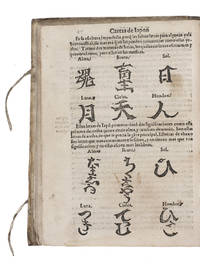
1575ref. 5741Alcalá der Henares Spain: Juan Iniguez de Lequerica 1575. Contemporary limp vellum with ties. 4to in 8s. With woodcut of the Crucifixion on verso of the colophon 2R4v woodcut Japanese characters in the text I8v and woodcut decorated initials throughout. First Spanish edition of 87 Portuguese letters by Jesuit missionaries in Japan very valuable for the history of the Jesuits in Japan India and other parts of Southeast Asia. The work was first published in Portuguese in Coimbra in 1570 and contains 10 additional important Jesuit letters which had never published before. Noteworthy are the woodcut Chinese and Japanese characters included in the text on leaf I8v. Cordier gives a list of these additional letters dating from 1567 to 1571. Other newly added were: the life of Francis Xavier Relacion de las cosas de la India by Manuel Acosta with remarks on in order of appearance Goa Cochin Daman Ceylon Comorin Bassein Ormuz Ethiopia Inambay and Manomotapa Malaca the Moluccas Ambonia Solor Macassar etc. and Breve relacion de la Isla y Reynos del Iapon.Lacking 2 leaves ¶7 and ¶8 from the preliminaries containing the "Indulgencias que nuestro Sancto Padre el Papa Pio. 4 ". With 18th-century manuscript annotations in brown ink on the recto of the first free flyleaf the title-page at the start of the text on fol. 1r the recto of the final leaf and in the margins throughout; the margins show only marks to highlight certain passages the other annotations are variations of the same owner's inscription most elaborate on the front flyleaf: "Ex icDn. Francesco et Paula Caveda Costo 15 . Mad. a 4 . Octobre 1786". The vellum of the binding is somewhat creased and stained water stained throughout the first and last few leaves are frayed and slightly damaged in the margins without affecting the text somewhat browned throughout. Otherwise in good condition.l Alt-Japan-Katalog 298; Cordier Japonica cols. 67-68; Iberian Books 54608; Laures 140; Palau 46311; Porbase 363133 1 copy; Salva 3282; Streit IV 1519 with a full list of all letters; USTC 337147. Juan Iniguez de Lequerica, hardcover
1683ref. 5517Rome: ca 1683. Hardcover. Fine. Bound in modern marbled papered boards with leather title label in gilt to the upper board. 17th c. manuscript in ink in a fine secretarial hand on laid paper with watermark of an anchor within circle. Fine condition leading edge untrimmed. A little light spotting on the first leaf very slim portion of leading edge of fourth leaf a little ragged and dust soiled. A report on the life death and funeral of the Sicilian Jesuit Ludovico Buglio 1606-1682 called Li Leisi Chinese: åˆ©é¡žæ€ a distinguished missionary and scientist at the Chinese imperial court in Peking during the late Ming and early Qing dynasties. It was written by Buglio's fellow Jesuit and friend Filippo Grimaldi Chinese: Min Ming'o 1638-1712 who arrived in China in 1671. Grimaldi was present at his confrère's funeral where he tells us that he partook of Manchu tea and wine offered to the mourners. This account which contains information not reported elsewhere remained in manuscript until the 20th century. In addition to our manuscript three other copies are known one of them in the Jesuit archives Rome: Fondo Gesuitico A.R.S.I. Archivum Romanum Societatis Iesu 722/4; another in the Vatican: A.S.V. Archivio Segreto Vaticano Miscellanei dei Gesuiti arm. VIII 58 ff. 16r-21v; and the third in the State Archives Rome: Archivio di Stato Roma Gesuiti Miscell. Pacco 5. Ludovico Buglio labored in China for forty-seven politically turbulent years. He established the first mission in Szechwan Sichuan Province where he carried out intensive evangelization despite opposition from local Buddhist and Daoist clergy built churches at Baoning Chongqing and Peking served as astronomer for the rebel Zhang Xianzhong who raised Buglio to the rank of mandarin and was instrumental in restoring the Imperial Observatory at Peking to Jesuit control. Buglio was imprisoned twice exiled once and narrowly escaped execution. An arrow wound inflicted by a Manchu warrior in 1647 never fully healed leaving Buglio in intense pain for the rest of his life. The wound ultimately proved fatal. In a letter transcribed in this manuscript addressed to Buglio's fellow Jesuits in Peking the Kangxi Emperor lamented Buglio's prolonged suffering and imminent death and announced that he would assist with the funeral expenses. The Emperor's letter is followed by Grimaldi's eyewitness account of the funeral which was overseen by imperial delegates who also participated in the traditional Chinese funeral honors. Renowned for his mastery of spoken and written Chinese Buglio wrote and published a large number of Chinese-language works a list of which is appended to this manuscript. Among the most important of these were "Yulan Xifang Yaoji" "Imperially Commissioned Essentials of the West" presented to the Kangxi Emperor around May 1669 and a translation of Aquinas' "Summa Theologica" titled "Chaoxing xueyao" "Compendium of the Science of the Supernatural". The author and his account: Grimaldi "was one of the most capable and courageous missionaries; he arrived in China during a time of persecution when with the exception of four Fathers remaining in Beijing the other missionaries had been rounded up and held prisoner in Canton twenty-five in total: fourteen Jesuits ten Dominicans and one Franciscan. Upon arriving in Macau the young Fr. Grimaldi secretly made his way into Canton in December 1669 to take the place of a missionary-Fr. Navarrete the Dominican superior-who had escaped from prison; his absence had it been discovered could have seriously jeopardized all the prisoners. In 1671 when the missionaries in Canton were released Fr. Grimaldi was summoned to Beijing to assist Fr. Verbiest and gave science lessons to Emperor Kangxi himself. In 1685 the Emperor sent him to Russia to negotiate with the Tsar regarding the passage of Chinese merchants and European missionaries through Russian territory; however he was unable to achieve this objective and after an absence of seven years he returned to Beijing where he died in 1712."Barbera Grimaldi was well-positioned to write this account of Buglio's life. He labored alongside Buglio for twelve years and it can be assumed that those things that Grimaldi did not witness personally were communicated to him by Buglio himself and other Jesuits chief among them Buglio's close companion Gabriel Magalhães who was with Buglio from the time of his work in Sichuan province through his time in Peking. This accounts for the level of detail that Grimaldi is able to present in his account such as in the story of the providential removal of the arrow that had become lodged in Buglio's body after he and Magalhães were mistaken for spies and shot by Manchu soldiers: "a piece of arrow so tenaciously lodged in his body that Father Magalhães was never able to draw it out either with his hands or with his teeth. Magalhães though he was gravely wounded in one arm strove to find in the wilderness something with which to draw the arrow out; and behold before his eyes there appeared a pair of pincers which seemed to have been brought by his guardian angel for that very need alone with which full of joy and wonder he gave thanks to divine providence and freed Father Buglio from that affliction." The Emperor's letter & Buglio's Funeral: While Buglio lay on his deathbed the Emperor having heard about Buglio's illness through Zhao Chang a member of the Imperial Bodyguard sent a letter to the Jesuits which Grimaldi gives in full. In appreciation for Buglio's years of service to his father and himself his dedication to Chinese language and culture and "because you are men from beyond the sea and Father Ludovico now lies dying in this city far from his own country without kinsfolk to assist him" the Emperor informs the Jesuits that he will arrange and pay for Buglio's funeral. With the letter comes a gift of "two hundred Foè that is two hundred gold scudi and ten pieces of silk as a token of the regard I have held for the father and of how greatly his loss grieves me." The funeral rites included an impressive procession: "The Emperor in every way wished the funeral conducted according to his own affection and not according to the modesty proper to our institute. Twenty soldiers were sent by the Emperor to clear the streets as far as the burial place. At the head of the procession walked a standard raised aloft on which was written in large characters the Father's name together with the many praises and honors the Emperor bestowed on him and a copy of the Emperor's own letter in praise of the deceased on yellow satin silk a color reserved to His Majesty alone. There followed Father Buglio's image above which were written two very large characters signifying that this imperial decree had been issued in memory of the great esteem in which the deceased had been held. In the place of highest honor was set the Holy Cross with the images of St. Michael and Our Lady amid many censers and incense and choirs of diverse musical instruments." "Then followed more than five hundred Christians clothed in mourning and finally gentlemen without number preceded by the court officials sent by the Emperor for this purpose. This whole procession having at last arrived at the place granted us by the late Emperor for the burial of the fathers the funeral was carried out - with great modesty on the part of the Christians and equal reverence on the part of the gentiles." Grimaldi closes his account explaining that while he would like to write more the letter courier is about to leave for Macau and so he must stop where he is. The list of Buglio's Chinese Works: Grimaldi applauds Buglio's remarkable success in mastering Chinese which allowed him to forge close relationships with the Chinese literati and the mandarins. "He accomplished much by writing.understanding very well how highly letters are prized in China and how gentle and how powerful a means the spreading of books is for instilling the holy law of Christ. From the very beginning of his arrival in China he lost no time in advancing himself in Chinese letters language and books and to this end he had all the walls of his room covered with Chinese characters." The manuscript closes with a list of 23 of Buglio's Chinese works including the aforementioned "Yulan Xifang Yaoji" and "Chaoxing xueyao" as well as translations of the Roman Missal 1670 Breviary 1674 and Ritual 1675. Other works some on scientific matters addressed to the Emperor include "Shizi shuo" "Discourse on Lions" 1678 written when the Portuguese gave the emperor an African lion based largely on Ulisse Aldrovandi's "Book of quadrupeds" Bologna 1645 and "Jincheng ying shuo" "Discourse on Falcons offered to the emperor" 1679 written at the emperor's request after he admired the illustrations in Aldrovandi's "Ornithology". This work was later excerpted with attribution into the imperial encyclopedia "Gujin tushu jicheng" 1728. See Lo Nardo P. Ludovico Buglio S.J. 1606-1682 in Intorcettiana Anno II - N. 3 gennaio-giugno 2020; Pfister Notices biographiques et bibliographiques sue les Jésuites de l'ancienne mission de Chine 1552-1773 tome I Chang-Hai 1932 pp. 372-376. ca hardcover
1683ref. 5517Rome: ca 1683. Hardcover. Fine. Bound in modern marbled papered boards with leather title label in gilt to the upper board. 17th c. manuscript in ink in a fine secretarial hand on laid paper with watermark of an anchor within circle. Fine condition leading edge untrimmed. A little light spotting on the first leaf very slim portion of leading edge of fourth leaf a little ragged and dust soiled. A report on the life death and funeral of the Sicilian Jesuit Ludovico Buglio 1606-1682 called Li Leisi Chinese: åˆ©é¡žæ€ a distinguished missionary and scientist at the Chinese imperial court in Peking during the late Ming and early Qing dynasties. It was written by Buglio's fellow Jesuit and friend Filippo Grimaldi Chinese: Min Ming'o 1638-1712 who arrived in China in 1671. Grimaldi was present at his confrère's funeral where he tells us that he partook of Manchu tea and wine offered to the mourners. This account which contains information not reported elsewhere remained in manuscript until the 20th century. In addition to our manuscript three other copies are known one of them in the Jesuit archives Rome: Fondo Gesuitico A.R.S.I. Archivum Romanum Societatis Iesu 722/4; another in the Vatican: A.S.V. Archivio Segreto Vaticano Miscellanei dei Gesuiti arm. VIII 58 ff. 16r-21v; and the third in the State Archives Rome: Archivio di Stato Roma Gesuiti Miscell. Pacco 5. Ludovico Buglio labored in China for forty-seven politically turbulent years. He established the first mission in Szechwan Sichuan Province where he carried out intensive evangelization despite opposition from local Buddhist and Daoist clergy built churches at Baoning Chongqing and Peking served as astronomer for the rebel Zhang Xianzhong who raised Buglio to the rank of mandarin and was instrumental in restoring the Imperial Observatory at Peking to Jesuit control. Buglio was imprisoned twice exiled once and narrowly escaped execution. An arrow wound inflicted by a Manchu warrior in 1647 never fully healed leaving Buglio in intense pain for the rest of his life. The wound ultimately proved fatal. In a letter transcribed in this manuscript addressed to Buglio's fellow Jesuits in Peking the Kangxi Emperor lamented Buglio's prolonged suffering and imminent death and announced that he would assist with the funeral expenses. The Emperor's letter is followed by Grimaldi's eyewitness account of the funeral which was overseen by imperial delegates who also participated in the traditional Chinese funeral honors. Renowned for his mastery of spoken and written Chinese Buglio wrote and published a large number of Chinese-language works a list of which is appended to this manuscript. Among the most important of these were "Yulan Xifang Yaoji" "Imperially Commissioned Essentials of the West" presented to the Kangxi Emperor around May 1669 and a translation of Aquinas' "Summa Theologica" titled "Chaoxing xueyao" "Compendium of the Science of the Supernatural". The author and his account: Grimaldi "was one of the most capable and courageous missionaries; he arrived in China during a time of persecution when with the exception of four Fathers remaining in Beijing the other missionaries had been rounded up and held prisoner in Canton twenty-five in total: fourteen Jesuits ten Dominicans and one Franciscan. Upon arriving in Macau the young Fr. Grimaldi secretly made his way into Canton in December 1669 to take the place of a missionary-Fr. Navarrete the Dominican superior-who had escaped from prison; his absence had it been discovered could have seriously jeopardized all the prisoners. In 1671 when the missionaries in Canton were released Fr. Grimaldi was summoned to Beijing to assist Fr. Verbiest and gave science lessons to Emperor Kangxi himself. In 1685 the Emperor sent him to Russia to negotiate with the Tsar regarding the passage of Chinese merchants and European missionaries through Russian territory; however he was unable to achieve this objective and after an absence of seven years he returned to Beijing where he died in 1712."Barbera Grimaldi was well-positioned to write this account of Buglio's life. He labored alongside Buglio for twelve years and it can be assumed that those things that Grimaldi did not witness personally were communicated to him by Buglio himself and other Jesuits chief among them Buglio's close companion Gabriel Magalhães who was with Buglio from the time of his work in Sichuan province through his time in Peking. This accounts for the level of detail that Grimaldi is able to present in his account such as in the story of the providential removal of the arrow that had become lodged in Buglio's body after he and Magalhães were mistaken for spies and shot by Manchu soldiers: "a piece of arrow so tenaciously lodged in his body that Father Magalhães was never able to draw it out either with his hands or with his teeth. Magalhães though he was gravely wounded in one arm strove to find in the wilderness something with which to draw the arrow out; and behold before his eyes there appeared a pair of pincers which seemed to have been brought by his guardian angel for that very need alone with which full of joy and wonder he gave thanks to divine providence and freed Father Buglio from that affliction." The Emperor's letter & Buglio's Funeral: While Buglio lay on his deathbed the Emperor having heard about Buglio's illness through Zhao Chang a member of the Imperial Bodyguard sent a letter to the Jesuits which Grimaldi gives in full. In appreciation for Buglio's years of service to his father and himself his dedication to Chinese language and culture and "because you are men from beyond the sea and Father Ludovico now lies dying in this city far from his own country without kinsfolk to assist him" the Emperor informs the Jesuits that he will arrange and pay for Buglio's funeral. With the letter comes a gift of "two hundred Foè that is two hundred gold scudi and ten pieces of silk as a token of the regard I have held for the father and of how greatly his loss grieves me." The funeral rites included an impressive procession: "The Emperor in every way wished the funeral conducted according to his own affection and not according to the modesty proper to our institute. Twenty soldiers were sent by the Emperor to clear the streets as far as the burial place. At the head of the procession walked a standard raised aloft on which was written in large characters the Father's name together with the many praises and honors the Emperor bestowed on him and a copy of the Emperor's own letter in praise of the deceased on yellow satin silk a color reserved to His Majesty alone. There followed Father Buglio's image above which were written two very large characters signifying that this imperial decree had been issued in memory of the great esteem in which the deceased had been held. In the place of highest honor was set the Holy Cross with the images of St. Michael and Our Lady amid many censers and incense and choirs of diverse musical instruments." "Then followed more than five hundred Christians clothed in mourning and finally gentlemen without number preceded by the court officials sent by the Emperor for this purpose. This whole procession having at last arrived at the place granted us by the late Emperor for the burial of the fathers the funeral was carried out - with great modesty on the part of the Christians and equal reverence on the part of the gentiles." Grimaldi closes his account explaining that while he would like to write more the letter courier is about to leave for Macau and so he must stop where he is. The list of Buglio's Chinese Works: Grimaldi applauds Buglio's remarkable success in mastering Chinese which allowed him to forge close relationships with the Chinese literati and the mandarins. "He accomplished much by writing.understanding very well how highly letters are prized in China and how gentle and how powerful a means the spreading of books is for instilling the holy law of Christ. From the very beginning of his arrival in China he lost no time in advancing himself in Chinese letters language and books and to this end he had all the walls of his room covered with Chinese characters." The manuscript closes with a list of 23 of Buglio's Chinese works including the aforementioned "Yulan Xifang Yaoji" and "Chaoxing xueyao" as well as translations of the Roman Missal 1670 Breviary 1674 and Ritual 1675. Other works some on scientific matters addressed to the Emperor include "Shizi shuo" "Discourse on Lions" 1678 written when the Portuguese gave the emperor an African lion based largely on Ulisse Aldrovandi's "Book of quadrupeds" Bologna 1645 and "Jincheng ying shuo" "Discourse on Falcons offered to the emperor" 1679 written at the emperor's request after he admired the illustrations in Aldrovandi's "Ornithology". This work was later excerpted with attribution into the imperial encyclopedia "Gujin tushu jicheng" 1728. See Lo Nardo P. Ludovico Buglio S.J. 1606-1682 in Intorcettiana Anno II - N. 3 gennaio-giugno 2020; Pfister Notices biographiques et bibliographiques sue les Jésuites de l'ancienne mission de Chine 1552-1773 tome I Chang-Hai 1932 pp. 372-376. ca hardcover books