48 résultats
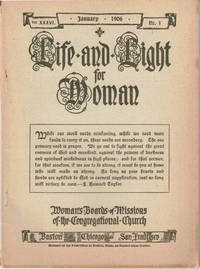
1906réf. 54893Boston: Woman's Boards of Missions 1906. Paperback. Good. Paperback. 1-48pp. Lightly sunned else a good paperback. Woman's Boards of Missions paperback books
réf. 137009New York: Board of Home Missions of the Presbyterian Church in the U.S.A. 191-. Pamphlet. Single sheet folded to make 4-panel brochure; very good but for penned numeral on front panel. Discusses reasons for return of European immigrants to Europe; laments that many immigrants are going back less than fully impressed "with the complete wholesomeness of our American civilization nor with the complete efficiency of the church of Christ as the spiritual and spiritualizing agency of that civilization." Predicts that many of them will return to the US later- "How shall that chance be used Board of Home Missions of the Presbyterian Church in the U.S.A. unknown books
1935réf. 70592New York: Foreign Missions Conference of North America 1935. Paperback. Fair. 23 viiip. Stapled mimeo. 28 cm. Chipped green front wrapper present but no similar back cover. Contents sound and clean. Fair. Foreign Missions Conference of North America paperback books
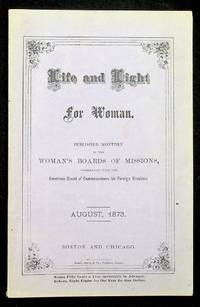
1873réf. 28708Boston and Chicago: Woman's Boards of Missions co-operating with the American Board of Commissioners for Foreign Missions 1873. First Edition. Wraps. Near Fine. First Edition. 225-256 pages. Publisher's faded purple printed wrappers string tied. A nice copy noting some cover creasing. Wraps. A monthly periodical with various articles from different parts of the world. In this issue in addition to regular business reports are articles from Turkey by Miss I. C. Baker The Weekly Pledge in Mardin and an extensive letter from Mrs. Coffing about "some of the difficulties met by her in her efforts to awaken an interest among the village people the education of girls.". Plus a memorial of Mrs. Louisa Fowler. pp 249-256 has a separate banner "Echoes from Life and Light" which in this issue appears to be about India. Articles include the Dying Brahmin and Worshipping Buddha. It has several woodcuts including the Dying Brahmin. Woman's Boards of Missions co-operating with the American Board of Commissioners for Foreign Missions unknown books
1832réf. 72648Boston: Crocker & Brewster 1832. Paperback. Good. Paperback. First Edition. 385-416pp 1 viii index. Outer printed wraps present. Contents printed on front and advertisements printed inside the front cover and both sides of the back cover. Paper untrimmed with light edge wear and toning. Interior contents clean. A good complete example. Crocker & Brewster paperback books
1832réf. 72649Boston: Crocker & Brewster 1832. Paperback. Good. Paperback. First Edition. 29-32pp; 349-384pp 1 viii index. Outer printed wraps present. Contents printed on front and advertisements inside the front cover and both side of the back cover. Paper untrimmed with light edge wear and toning. Interior contents clean. A good complete example. Crocker & Brewster paperback books
1845réf. 26066Boston: T. R. Marvin 1845. Paperback. Near Fine. 32p. Softcover in original wrapper. 24cm. Near Fine copy with splitting and loss along ends of narrow backstrip. The committee concluded that slave-holding Choctaws and Cherokees should be admitted to churches which were under the care of A.B.C.F.M. missionaries. T. R. Marvin paperback books
1913réf. 33231St Michaels: Franciscan Missions. Very Good. 1913. Paperback. German edition of The Franciscan Missions of the Southwest No. 1 1913. St Michael's Arizona. 48 pages of text plus advertising sections front and back in English . Original wrappers very good condition. NUC shows English edition only. . Franciscan Missions paperback books
1913réf. 2267Saint Michael's Az. 1913. Advertisements in English text of articles in German. Much on southwestern Indians especially the Navajos and Pueblos. Quarto. Pictorial wrappers. Small closed marginal tear in front wrapper and most leaves not affecting text some wear to spine. Very good. unknown books
1811réf. 57660Philadelphia: printed by Thomas and William Bradford no. 2 South Front Street 1811. 8vo pp. 52; partially unopened; original drab paper wrappers; dampstain in the top margin of the first 16 pages; otherwise very good. Includes extracts from journals and letters of perhaps a dozen missionaries reporting in from Kentucky Ohio Virginia Tennessee North Carolina and including one to the Wyandots around the shores of Lake Ontario. Similar titles were issued in 1812 and 1813. American Imprints 23735; Sabin 65183. printed by Thomas and William Bradford, no. 2, South Front Street unknown books
1940réf. List3839Rutherford New Jersey: Garrway Co 1940. Real photo postcard measuring approximately 3 ½ x 5 ½ inches. Photograph shows a priest celebrating Mass at an outdoor altar attached to a streamlined trailer chapel with several women kneeling or seated before it. Captioned in the negative: "Chapel Car 'The Crusader of the Divine Child' destined for China" and "Go ye into the whole world and preach the Gospel to every creature. St. Luke 16.15." Divided postcard back unused printed for the Franciscan Mission Crusade 812 N. Salina Street Syracuse New York with "Help the Missions" appeal and Proverbs 19:17 quotation. Some wear and toning; very good. A real photo postcard showing the Franciscan Mission Crusade's chapel car "The Crusader of the Divine Child" described here as destined for China. The image shows a mobile Catholic altar built into a trailer with a priest vested for Mass and a small outdoor congregation gathered before him. The verso identifies the card as a mission fundraising or promotional piece issued by the Franciscan Mission Crusade of Syracuse New York. Another cataloged example of this image identifies the scene as a Catholic mobile chapel at Hingan Fu Shensi China suggesting that the trailer may have reached the mission field rather than remaining only a fundraising image produced in the United States. The combination of American fundraising address named chapel car China destination and another cataloged example located at Hingan Fu gives the card a fuller paper trail than most missionary postcards of mobile chapels. American Catholic missionaries were active in China through the first half of the twentieth century but their work was largely disrupted after the Communist victory in 1949 when foreign missionaries were expelled and Catholic institutions were reorganized under state pressure. Garrway Co unknown books
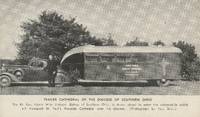
1941réf. List3861N.p.: photograph by Paul Briol 1941. Printed photographic postcard measuring approximately 3 ½ x 5 ½ inches. Image shows the Rt. Rev. Henry Wise Hobson Bishop of Southern Ohio standing beside an automobile pulling the "St. Paul's Wayside Cathedral" with caption printed below: "Trailer Cathedral of the Diocese of Southern Ohio / The Rt. Rev. Henry Wise Hobson Bishop of Southern Ohio is shown about to enter the automobile which will transport St. Paul's Wayside Cathedral over his diocese. A printed postcard showing Henry Wise Hobson with the mobile "Wayside Cathedral" of the Diocese of Southern Ohio. Hobson founded the Wayside Cathedral program in 1941 having a trailer built in Detroit to be pulled behind his automobile for ministry in rural and isolated areas. The Episcopal Church describes the program as a "church-on-wheels" and the caption here names it "St. Paul's Wayside Cathedral." The image is an example of mid-twentieth-century religious mobility: automobile trailer bishop and portable church combined into one publicity image. It also reflects Hobson's broader interest in church extension and communication. As Bishop of Southern Ohio from 1931 to 1959 he helped establish Forward Movement Publications the Episcopal devotional publishing program that became one of the denomination's most durable ventures. A good postcard on Episcopal rural outreach automobile missions and mobile religious architecture in the early 1940s. . photograph by Paul Briol unknown books
1905réf. 31253Honolulu: Mercantile Printing Co. Ltd. 1905. 86 2 blanks pp. Stitched in original printed wrappers. Scattered light foxing. Several blank margins have a wormhole. Good. Constitution By-Laws Officers Missions Members doings at the Annual Meeting Reports of various committees. Mercantile Printing Co., Ltd. unknown books
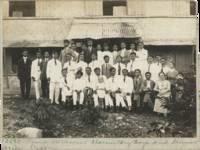
réf. List3148Vigan The Philippines early 20th century. Photograph measuring 5 x 6 ¾ inches mounted on heavy cardstock. Manuscript caption recto. Wear and some damage to edges; excellent. A photograph of a group of young Filipino men in suits with two white women and a child posing in front of a building. The caption reads “Grove Methodist Dormitory Boys and Missionaries Vigan”. The Methodist Episcopal Church began planning its missionary outreach to the Philippines shortly after the 1898 American victory in the Spanish Civil War when the Philippines became an American colony. The mission center in Vigan the capital of Ilocos Sur on the island of Luzon was opened in 1904 headed by Kansan Berndt O. Peterson.1 Missionaries opened schools—with the aim of both educating and Americanizing their students—and made Vigan the base for evangelizing around the region. According to the UMC’s history of their activities in Asia many Filipinos saw the church’s activities as an extension of American imperialism leading to Nicolás Zamora’s foundation of the Iglesia Evangelica Metodista en las Islas Filipinas in 1909. 1 Wade Crawford Barclay History of Methodist Missions Vol. 4 The Board of Missions and Church Extension of the Methodist Church 1949. unknown books
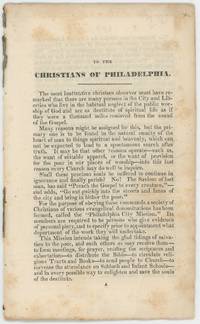
1831réf. BK0169Philadelphia: William F. Geddes 1831. 2 12 2 pp. Stitched pamphlet measuring 4 ¼ x 7 inches. Good plus with scattered foxing and soiling some wear to edges. An early appeal for organized missionary work among Philadelphia's urban poor issued upon the establishment of the Philadelphia City Mission in March 1831. The organization brought together Christians from several evangelical denominations to reach residents who rarely or never attended church. Its organizers acknowledged that poverty itself could prevent participation in religious life citing "the want of suitable apparel or the want of provision for the poor in our places of worship-into this last reason every Church may do well to inquire." The pamphlet begins by describing the large numbers of people living in Philadelphia and its surrounding districts who remained outside the ordinary reach of the churches: "The most inattentive christian observer must have remarked that there are many persons in the City and Liberties who live in the habitual neglect of the public worship of God and are as destitute of spiritual life as if they were a thousand miles removed from the sound of the Gospel." The Mission proposed to carry religious instruction directly into poorer neighborhoods through home visits prayer meetings the distribution of Bibles and tracts and efforts to increase attendance at Sabbath and infant schools. Its members were to be drawn from different evangelical denominations and required to demonstrate personal piety before undertaking missionary work. An interesting document of Philadelphia's early urban missionary movement particularly for its recognition of the economic and social barriers separating the city's poorer inhabitants from established religious institutions. . William F. Geddes unknown books
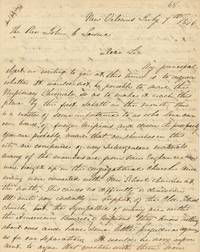
1846réf. List2863New Orleans Louisiana 1846. Single letter three 8 x 10 inch pages. Torn at folds some tears repaired with archival tape; hole at location of seal; otherwise very good to excellent. John Holt Rice 1818–1878 was the son of a Presbyterian minister and nephew of Archibald Alexander founding professor of the Princeton Theological Seminary from which Rice graduated in 1845. When he wrote this letter he was working as a city missionary to the poor in New Orleans. Rice would spend his career ministering around the southern United States before his death from yellow fever. His correspondent is John Cameron Lowrie 1808–1900 a Scottish immigrant fellow Princeton graduate and a missionary in Colonial India. When his health became too precarious to remain abroad Lowrie returned to serve with the Board of Foreign Missions. The subject of missions boards was part of the Old School-New School controversy and schism in the Presbyterian Church particularly over whether missionary work should be primary the Old School view or secondary the New School view to the Church’s work.1 Those holding the latter view were satisfied with the work of the American Board of Commissioners for Foreign Missions ABCFM which was not a specifically Presbyterian body. Those of the former view believing that the Church’s missionary board ought to be itself Presbyterian formed the Western Foreign Missionary Society. When the Church’s second schism occurred in 1837 the Western society was renamed the Board of Foreign Missions BFM and headquartered in New York City. In this letter Rev. Rice finds himself in the delicate position of being an Old School supporter of the BFM ministering to Congregationalists and New School-raised supporters of the ABCFM. He writes to Rev. Lowrie requesting that copies of the BFM’s monthly Missionary Chronicle be sent to him in a timely manner as this was “a matter of some importance to us who love our own board of foreign missions”: “You are probably aware that our churches in this city are composed of very heterogeneous materials many of the members are from New England and were brought up in the congregational church and many were connected with New School churches at the north. This causes no difficulty or division All unite very cordially in support of the Old School church but the sympathies of many are with the American Board of Missions. They know nothing about ours and have some little prejudice against us for our separation. It would be very impudent to argue that question with them now or attempt to convince them that our own board ought to be patronised by those connected with one of our churches rather than the American. But I feel certain that if they knew more of our operations they would take an interest in them.” Rice also notes that he is an editor for the New Orleans Protestant newspaper and suggests that Lowrie send “something now and then” to excite “missionary zeal”. Of interest to scholars of Presbyterian history especially the 19th-century Old School-New School schism. 1 Rev. Dr. Michael Parker “175 Years of Presbyterian World Mission” Presbyterian Historical Society archived November 1 2023 at https://web.archive.org/web/20231101183954/http://www.history.pcusa.org/history-online/topics-note/history-world-mission. unknown books
1877réf. 253071San Francisco: P.J. Thomas 1877. Plates some folding. 192pp. 1 vols. 8vo. Later black buckram spine gilt. Light soiling to front endpapers. Frontispiece with some repaired closed tears other paper breaks not repaired. Internally clean. About very good. Plates some folding. 192pp. 1 vols. 8vo. An illustrated account of the Catholic missions in California. The frontispiece shows St. Mary's College. Cowan notes that some copies were issued with a large map of San Francisco which is not present in this volume. Cowan p.166 P.J. Thomas unknown books
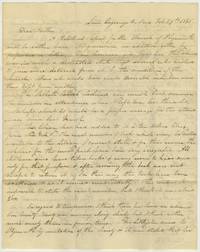
1848réf. List38119Lima LaGrange County Indiana 1848. Autograph letter signed "D. C. Meeker" to Rev. Charles Hall Secretary of the American Home Missionary Society New York City. 3 pp. on a folded 8 x 10 inch sheet. Near Fine. A letter from Rev. D. C. Meeker a Presbyterian home missionary in northern Indiana reporting to the American Home Missionary Society on the state of his church at Plymouth Indiana and on the recent temperance excitement caused by the itinerant lecturer Augustus Littlejohn. Meeker reports no conversions or additions to the Plymouth church but devotes much of the letter to Littlejohn's appearances in Plymouth and Lima. Littlejohn had drawn large pledge-signing crowds including some "hard drinkers" but Meeker doubted the durability of the excitement and sharply condemned him. In Lima where Littlejohn had also stirred a temporary temperance movement Meeker writes that the cause seemed "not only dead but also laid out & buried" and that Littlejohn's career if stopped would benefit "the cause of morality & religion." Full text follows. "Lima Lagrange Co. Ind. Feb. 29th 1848 Dear Brother "A Statistical Report for the church of Plymouth will be rather bare. No conversions no additions either by profession or letter. In regard to temperance I think there has been an advance. Our County Society was moving along slowly but I think rather more surely than in former times. Mr. Littlejohn came to Plymouth by invitation of the Society & it was stated that he obtained 400 subscribers. But this I do not think was true. There may have been 400 names on his list but many of them were in the Society before he came. We obtained many names however & some of them were those of hard drinkers. I would have but little hope of these were it not that they have united with the Sons of Temperance possibly they may there have such restraints thrown around them as will keep them sober. The excitement was still very great when I left Plymouth. Weekly meetings were held in P. & frequent meetings were appointed at various places a few miles out. What the result will be when the excitement wears off I can't tell but I hope for the best. "In this place there was a somewhat similar excitement raised by the same man but it has long since passed by & the subject of temperance seems to be not only dead but also laid out & buried. There is not perhaps more intemperance than in Plymouth but there is no society & the people are saying 'it is not time yet to form one' or 'if we do form one it will be like the rest short lived'. If Mr. Littlejohn's labors are followed everywhere by the same deadness to the matter of active efforts in the temperance cause as they have been here they are a curse to the country & so they are now considered by many intelligent or rather by most intelligent men here. If his career could be stopped while the cause of temperance would not in the main suffer the cause of morality & religion would be greatly benefitted. What I have heard here of the man & what I saw at Plymouth has given me a feeling of loathing toward him as a most unprincipled character. "Yours in the Gospel D. C. Meeker" A strong Indiana temperance letter especially for its contemporary criticism of Augustus Littlejohn's revival-style methods. Meeker's account is useful for showing both the short-term power of temperance lecturing in small Midwestern towns and the suspicion it could provoke among more settled clergy who saw pledge-signing excitement as unstable and morally dangerous when separated from church discipline and local organization. . unknown books
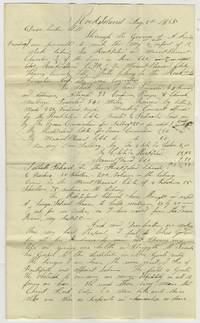
1845réf. BK0133Rock Island Illinois 1845. Autograph letter signed 2 pp. 7 ½ x 12 ¾ inches on a folded folio sheet with integral address panel addressed to Rev. B. M. Hill Corresponding Secretary of the American Baptist Home Mission Society Troy New York. Red Chicago August 5 postmark and manuscript postal rate. Folded for mailing with remnants of original seal; very good. A detailed report by Baptist missionary Daniel Dye on his work among the rapidly growing communities of western Illinois and Iowa sent to Benjamin M. Hill of the American Baptist Home Mission Society. Dye gives a granular account of thirteen weeks of missionary labor at Rock Island and Mount Pleasant in Henry County: forty sermons and addresses twenty-two conferences and prayer and church meetings 541 miles traveled 228 pastoral visits and visits to two schools. He also records the churches' contributions toward his salary and missionary work and describes Sabbath schools at Rock Island and Mount Pleasant with ten teachers forty pupils and libraries totaling 275 volumes. Dye had come to Rock Island in the wake of Baptist missionary Ezra Fisher who left the region in the spring of 1845 for Oregon. A later history of the First Baptist Church records Dye's pastorate as beginning July 19 1845 two weeks before this letter. The same history notes that the young congregation organized with seven members in 1837 purchased a brick schoolhouse in 1844 for use as its meeting place.1 Dye supplies a contemporary description of the building: "The Rock Island Church have bought and repaired a large School House to hold meetings in 28 x 40." The report closes with a broader assessment of Baptist missionary work throughout the upper Mississippi Valley. "The field is great" Dye writes "the obstacles to overcome are many; infidelity in all its forms are here." Davenport was without a settled minister Dubuque had been "destitute" since the departure of its pastor and "there are many Churches destitute in the Des Moines Association." He summarizes the appeal of these western congregations to their eastern brethren in a memorable phrase: "The long and loud cry is come over and help us." Dye stresses that the small congregations were already supporting the work as well as they could noting that two members at Mount Pleasant had each paid four dollars toward three months of occasional preaching although "they are not worth much over 1000 dollars each." Dye was preparing to return temporarily to New York to see a son from whom he had been separated for more than a year but the Rock Island congregation had already given him a unanimous call to return and settle among them. He hoped while east to attend Baptist associations and "wake them up more to the interest of the Great Valley." 1 The Past and Present of Rock Island County Ill. H. F. Kett & Co. 1877 168. . unknown books
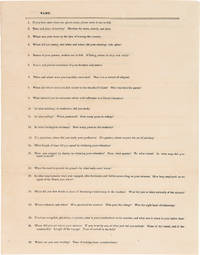
1830réf. 63884N.p.: American Board of Commissioners for Foreign Missions ca. 1830s. Original Questionnaire for Hawaiian Missionaries A questionnaire produced by the American Board of Commissioners for Foreign Missions ABCFM directed towards new missionaries to Hawaii. The Board was founded in 1810 by graduates from Williams College and sent its first missionaries to British India in 1812. Beginning in the 1820s the ABCFM sent twelve companies of missionaries to Hawaii many of whom became instrumental figures in the public life of the Islands in the 19th century. The questionnaire consists of two conjugate leaves: the first contains twenty-two questions and is directed at the missionary. The second leaf is headed "For Females" and contains fifteen questions. In addition to personal questions such as nativity and educational background missionaries are asked to provide information about when and where they were converted licensed and ordained when they "first decided in favor of becoming a missionary to the heathen" what their role was in the mission "if not an evangelist physician or printer" and details of their vessel and journey. The questionnaire for females asks mostly similar questions but omits those related to preaching and ministry in favor of questions about children and family. This form is addressed to "J.S. Emerson & Mrs. Emerson." John S. and Ursula Sophia Newell Emerson arrived in Hawaii in 1832 as members of the fifth company of missionaries sent by the American Board of Commissioners for Foreign Missions. John S. Emerson 1800-67 was born in Chester New Hampshire and graduated from Dartmouth College and Andover Theological Seminary. In 1831 he married Ursula Sophia Newell 1806-88 of Nelson New Hampshire the couple soon thereafter embarking for Hawaii. Except for an interval at the Mission Seminary at Lahainaluna Maui in the 1840s and a return visit to the United States in 1860-61 the couple spent the rest of their lives in Waialua Oahu. There they founded a Protestant Church and established schools - John instructing the boys and Ursula instructing the girls in not only academics but in singing sewing and other domestic work. A remarkable survival from the early days of Christian missionary activity in Hawaii. Old folds lower fold just beginning to split. Very good plus. unknown books
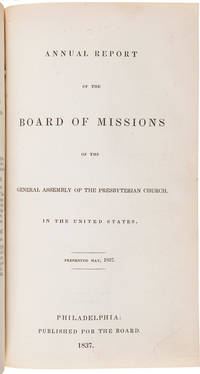
1829réf. 46567Philadelphia. 1829-1838. Significant Run of Missions Reports A run of ten annual reports for the Board of Missions of the General Assembly of the Presbyterian Church. Reports contain details on the missionary activities as well as a list of missionaries with much on American Indian missions during the 1830's. Ten pamphlets bound in one volume various paginations. Modern half calf and marbled boards leather label. Light toning and soiling. Contemporary manuscript notations on one report. Very good. hardcover books
1852réf. List2521London 1852. Five groups of documents measuring 13 x 8 inches various paginations see full description below. Fine condition. A scarce set of primary source documents relating to the protection of British territory in the Caribbean in particular along the Mosquito Coast during the period of varied interests in the area in the period following the Anglo-Spanish agreement on the slave trade. Consisting of a series of secretarial copies of reports delivered to Peter McQuhae Commodore of H.M.S. Imauam stationed in Jamaica these dispatches offer an overview of the issues confronting the British Navy in Jamaica during the period and in the Caribbean more broadly. Most of the documents refer to issues with Cuba the most interesting perhaps being a letter warning of an impending filibustering expedition against Cuba by a pro-slavery faction in the American South. The group consists of five groups of bound documents some bound out of order and likely bound later. Contents are as follows: 1. Addington A.M. Four Page Report Concerning Placing a Ship of War at Grey Town to Discourage Invasions on the Mosquito Coast March 13 1851. Henry Addington writes McQuhae to recommend stationing a warship at Grey Town: ".it would be sufficient that a Ship of War should from time to time look in grey Town without remaining there at any time long enough to endanger the health of the crew. to provide for the case which is possiblee tho' not at all likely that during the interval between the visits of a Ship of War some expedition of Nicaraguan or some of the North Americans returning from California might take advantage of the comparatively unprotected state of the lace to take possession of it and that the cruiser on its return to Grey Town might find the place so occupied Lord Palmerston concieves taht in such an event it would seem to be inconsistent with the Honor of this Country that a British Ship of War should acquiesce in such an aggression and it would be right that the intruder should be expelled if the Commander of the Ship of War should find as he probably would that he had the means of doing so without much difficulty and that in case he should repel the intruders and re-establish the authorities of the Mosquito Government demanding the liberation of any British or Mosquito subjects who might have been made Prisoners and holding hostages for their relief if they should have been removed up into the interior of the Country. It It is to be hoped however that all questions of dispute in regard to Grey Town will beoon be settled because Her Majesty's government has through Her Majesty's Minister at Washington proposed to the Government of the United States that an arrangement should be made by which the Sovereignty of Grey Town. should be transferred to the State of Costa Rica. Lord Palmerston desires me to add that there are at present at Washington a plenipotentiaries both from Nicaragua and Costa Rica for the purpose of conducting this negotiation." 2. Addington G.M. Single Page Letter in Secretarial Hand Warning of Incoming Ships to Cuba Carrying Enslaved Individuals January 24 1852. Addington writes to McQuhae about two incoming vessels carrying enslaved Africans passing on information received at Rio De janeiro by another British vessel: "I am directed by Earl GraH.M. Minister at Rio reporting that he had recieved information that two Slavers had sailed from Havana to. the coast of Africa. with the intention of returning with Cargoes of slaves which are to be landed at the Entrade de Cuchillo in Cuba." 3. Seymour G.F. et al. Four Reports Bound Together on Varied Subjects including the Case of the Creole British Fishing Rights in Spanish Waters off of Cuba and Porto Rico and the Case of a Detained British Vessel in Cuba 1852. A series of four reports addressed to McQuhae on various subject as follows: A. Report dated May 17 1852 from Seymour discussing the case of the Creole detained in 1851: ".enclosing copies of a letter from the Under Secretary of State for Foreign Affairs approving of the course I had pursued with regard to the Creole and of a despatch from the Earl of Malmesbury to Her Majesty's Minister at Madrid relative to the rights of British Subjects to fish on the coast of Cuba." B. Letter from Augustus Stafford Apriul 23 1852 discussing the Creole mostly discussing the enclosure of varied reports on the subjects but with little specific information. C. Addington A.M. April 21 1852 letter discussing the Creole case and the enclosure of documents. D. Earl of Malmesbury April 14 1852 letter discussing the Creole case in more detail: " The Right thus claimed rests on this universally admitted precept of international Law "dominium finitur ubi finitur armorum vis" which in modern practice has been construed to mean "about one marine league from the mainland" and H.M.'s Govt are clearly justified in demanding that the Spanish authorities shall be ordered not to meddle or interfere with British fishermen outside that three mile boundary." 4. Earl of Malmesbury et al. Series of Three Secretarial Copies of Reports Concerning Impending Filibuster Raids on Cuba Giving Instructions for Assisting Spanish Forces. A very interesting series of reports detailing the planned response to pending "Piratical Attacks" showing the extent to which British forces were prepared for an American filibuster attack on the island and the degree to which they intended on assisting the Spanish forces. As follows: A. Seymour G.F. Secretarial Copy of Letter Written on May 5 1852 from Cumberland at Bermuda relaying the transmission of a full report of instructions to the British forces regarding an impending filibuster raid: " I hereby enclose for your guidance. orders. relative to the assistance which is to be afforded by Her Majesty's Ships on the application of the Captain General of Cuba in the Transport of Troops in the event of a Piratical attack being again made on that island by which you will govern your conduct." B. Earl of Malmesbury. Secretarial Copy of a Letter Dated April 10 1862 discussing piratical attacks: ".that in the event of a Piratical Attach being made upon that island. HM's ships might assist in conveying troops to any poiunt of the Coast of Cuba at which the invading Party might effect a landing." C. Honley P. Secretarial Copy of an Undated Letter c. 1852 regarding piratical attacks: "Her Majesty's ships might assist in coveying Troops to any point off the Coast of Cubat at which the invading Party might effect a landing. you should be instructed until further ORders that if the Captain General of Cuba should require your assistance for the transport of troops in the manner pointed out in your abovementioned dispatch you should comply with that demand." 5. Crampton Sir John. Copy of a Letter in Secretarial Hand Relaying the Impending Danger of a Pro-Slavery Filibuster Mission from Florida May 17 1852. A fascinating letter relaying information received from M. Calderon de la Barca concerning an impending filibuster mission against Cuba led by a Dr. Wren part of an organization called "The Lone Star Association:" ".it would appear that the government of the United States has also received an intimation that something of the sort is on foot for the President informed M. Calderon that orders had already been sent to the U.S. Authorities at the different Ports of the Union to be prepared to take vigorous measures for the repression of any such attempts. an expedition is in fact meditated by certain parties in the South and that it is intended that it should leave some Port of Florida. The real object of this expedition however as as I am told not Cuba. but San Domingo for the purpose of acting as auxiliaries to the Dominicans against the Haytians. it is by no means impossible that its ultimate aim would be Cuba. the persons I am given to understand engaged in the expedition are a Dr. Wren who is president of a society called "The Lone Star State Association." The letter is worthy of further study - we find references to a Dr. Wren in newspaper articles from the period but were unable to pinpoint his identity or the history of his organization. An article from a Loudon Tennessee newspaper describes Dr. Wren as a "representative of New Orleans societies" and described a meeting in Loudon in 1852 trying to recruit for the overthrow of the Spanish colonial government of Cuba through an invasion. unknown books
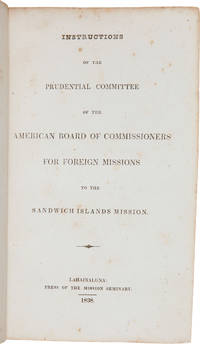
1838réf. 66226Lahainaluna: Press of the Mission Seminary 1838. Instructions for Missionaries Printed in Hawaii A collection of the original instructions issued to each of eight groups of Christian missionaries sent to Hawaii between 1819 and 1836 by the American Board of Commissioners for Foreign Missions ABCFM. It is a relatively early Lahainaluna imprint printed in an edition of 380 copies. "This work contains the Act of Incorporation of the ABCFM State of Massachusetts signed by Caleb Strong Governor and Alden Bradford Secretary of the Commonwealth 20 June 1812 together with the laws and regulations of the same body. Following this are the parting instructions given to each of the first eight companies of missionaries to the Hawaiian Islands…by Samuel Worcester Jeremiah Evarts David Greene B.B. Wisner and Rufus Anderson. A complete list of each company including the Hawaiians is found on pages 119-122.Rev. Clark's account of printing for the year ending February 28 1839 includes this work and shows a production cost of $30. The printed minutes of the 1839 General Meeting record 380 copies printed" - Forbes. The ABCFM was an interdenominational body composed primarily of New England Congregationalists and Presbyterians whose "attention.was called to the Hawaiian Islands by reports of traders and by the presence in New England of several native youth from these islands.The Protestant Christian community of New England became interested in these young Sandwich Islanders and in the possibility that they might become Christian messengers to their own people.The sending of missionaries to Hawaii followed as the next logical step" Kuykendall. This first group of missionaries sent by the ABCFM to Hawaii included two ordained ministers Hiram Bingham and Asa Thurston a physician two schoolmasters and catechists a printer a farmer; their wives and three Hawaiian youths who had been attending the Foreign Mission School in Cornwall Connecticut. In their set of instructions to this first group of missionaries the ABCFM said that it was God's ".gracious pleasure and his high command that his gospel should be preached to them the people of Hawaii; that they may be turned from darkness unto light – be baptized in the name of the Father and of the Son and of the Holy Ghost and taught to observe all things whatsoever he has commanded for their salvation and for his everlasting honor and praise." An important and uncommon text tracing the early history of the American Christian missionary movement and the ABCFM in Hawaii between 1819 and 1836 complete with the names of the missionaries sent by the ABCFM and the goals they were expected to achieve during their respective stays in Hawaii. Contemporary cloth-backed paper boards. Spine neatly repaired boards lightly soiled and rubbed. Light foxing some slight worming in gutter margin with minute loss to text. Very good. FORBES HAWAII 1086. Ralph S. Kuykendall The Hawaiian Kingdom Vol. 1 1778-1854: Foundation and Transformation Honolulu: Univ. of Hawaii Press pp.102-4. hardcover books