2,201 results
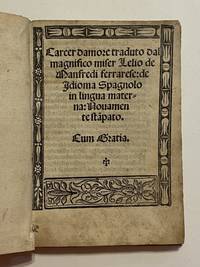
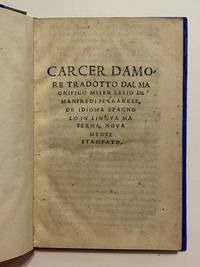
1525ref. 4542Venice: Gregorio di Gregorii 1525. Very good. Small 8vo 143 x 95 mm. 44 ff. Collation: A-E8 F4 COMPLETE title-page with light toning fols. A1-2 with unimportant wormholes in blank gutter margin. Very attractive late 19th- or early 20th-century blue embossed boards gray cloth spine. In excellent condition the paper crisp and fresh. ITALIAN POST-INCUNABLE EDITION OF THE CARCEL DE AMOR ONE OF THE MOST ENDURING OF ALL LATE MEDIEVAL ROMANCES. Written in Spanish in the late 15th century the work is a key example of the "star-crossed lovers" romance tradition. It combines allegory with chivalric narrative while its epistolary form intensifies the themes of distance miscommunication and emotional crisis. Widely popular it was quickly translated and circulated across Europe as is attested by this Italian translation published in Venice in 1525. The story continues to be celebrated for its emotional intensity and its refined articulation of courtly love. The romance was first translated into Italian by Lelio de Manfredi of Ferrara in 1514 and represents a moment when literature language and print culture intersected across political and cultural borders. For years the story was reshaped and redistributed in Renaissance Europe and contributed to a shared literary tradition. On the title-page of our edition we find only Manfredi's name and the dedicatee is Isabella d'Esta his former pupil. The translator has added his own closing epistle to the Carcel de Amor which praises Isabella; the author's name Diego de San Pedro is nowhere to be found. The Carcel de amor is told almost entirely through letters speeches and monologues rather than dialogue. It centers on Leriano a young nobleman in love with Laureola daughter of the King of Macedonia. His condition is figured as an allegorical "PRISON OF LOVE" and he communicates with her only through a mediator. A rival Persio sometimes Theseus/Perseus accuses Laureola of having an affair leading to her imprisonment. Leriano rescues her and kills his rival but Laureola ultimately rejects him in a letter. In despair he chooses to starve himself to death but not before delivering a speech in praise of women. CATALOGUER'S NOTE: Italian translations of the Carcel de Amor "Carcer Damore" are uncommon. We have located just three copies of ANY Italian language post-incunable edition at auction in the last century: 1518: sold at Ader Paris 2024 1521: sold at Sotheby's London 1970 1518: sold through Quaritch Catalogue 494 1934. EDIT16 CNCE 44982. See. Gregorio di Gregorii unknown books
1518ref. 4543Venice: Georgio de Rusconi 1518. Very good. Small 8vo 145 x 97 mm. 48 ff. Collation: A-F8 COMPLETE some soiling traces of damp in outer margins of D1-F8 for which SEE IMAGES. Old 18th-century vellum. In excellent unsophisticated condition. ITALIAN POST-INCUNABLE EDITION OF THE CARCEL DE AMOR THE MOST IMPORTANT SPANISH NOVEL OF COURTLY LOVE. Written in the late 15th century the work is a key example of the "star-crossed lovers" romance tradition. It combines allegory with chivalric narrative while its epistolary form intensifies the themes of miscommunication and emotional crisis. Widely popular it was quickly translated and circulated across Europe as is attested by this Italian translation published in Venice in 1518. The story continues to be celebrated for its emotional intensity and its refined articulation of courtly love. The romance was first translated from the Spanish into Italian by Lelio de Manfredi of Ferrara in 1514 and represents a moment when literature language and print culture intersected across political and cultural borders. For years the story was reshaped and redistributed in Renaissance Europe and contributed to a shared literary tradition. On the title-page of our edition we find only Manfredi's name and the dedicatee is Isabella d'Esta his former pupil. The translator has added his own closing epistle to the Carcel de Amor which praises Isabella; the author's name Diego de San Pedro is nowhere to be found. The Carcel de amor is told almost entirely through letters speeches and monologues rather than dialogue. It centers on Leriano a young nobleman in love with Laureola daughter of the King of Macedonia. His condition is figured as an allegorical "PRISON OF LOVE" and he communicates with her only through a mediator. A rival Persio sometimes Theseus/Perseus accuses Laureola of having an affair leading to her imprisonment. Leriano rescues her and kills his rival but Laureola ultimately rejects him in a letter. In despair he chooses to starve himself to death but not before delivering a speech in praise of women. CATALOGUER'S NOTE: Italian translations of the Carcel de Amor "Carcer Damore" are uncommon. We have located just three copies of ANY Italian language post-incunable edition at auction in the last century: 1518: sold at Ader Paris 2024 1521: sold at Sotheby's London 1970 1518: sold through Quaritch Catalogue 494 1934. EDIT16 CNCE 66997. Georgio de Rusconi unknown books
1518ref. 4543Venice: Georgio de Rusconi 1518. Very good. Small 8vo 145 x 97 mm. 48 ff. Collation: A-F8 COMPLETE some soiling traces of damp in outer margins of D1-F8 for which SEE IMAGES. Old 18th-century vellum. In excellent unsophisticated condition. ITALIAN POST-INCUNABLE EDITION OF THE CARCEL DE AMOR THE MOST IMPORTANT SPANISH NOVEL OF COURTLY LOVE. Written in the late 15th century the work is a key example of the "star-crossed lovers" romance tradition. It combines allegory with chivalric narrative while its epistolary form intensifies the themes of miscommunication and emotional crisis. Widely popular it was quickly translated and circulated across Europe as is attested by this Italian translation published in Venice in 1518. The story continues to be celebrated for its emotional intensity and its refined articulation of courtly love. The romance was first translated from the Spanish into Italian by Lelio de Manfredi of Ferrara in 1514 and represents a moment when literature language and print culture intersected across political and cultural borders. For years the story was reshaped and redistributed in Renaissance Europe and contributed to a shared literary tradition. On the title-page of our edition we find only Manfredi's name and the dedicatee is Isabella d'Esta his former pupil. The translator has added his own closing epistle to the Carcel de Amor which praises Isabella; the author's name Diego de San Pedro is nowhere to be found. The Carcel de amor is told almost entirely through letters speeches and monologues rather than dialogue. It centers on Leriano a young nobleman in love with Laureola daughter of the King of Macedonia. His condition is figured as an allegorical "PRISON OF LOVE" and he communicates with her only through a mediator. A rival Persio sometimes Theseus/Perseus accuses Laureola of having an affair leading to her imprisonment. Leriano rescues her and kills his rival but Laureola ultimately rejects him in a letter. In despair he chooses to starve himself to death but not before delivering a speech in praise of women. CATALOGUER'S NOTE: Italian translations of the Carcel de Amor "Carcer Damore" are uncommon. We have located just three copies of ANY Italian language post-incunable edition at auction in the last century: 1518: sold at Ader Paris 2024 1521: sold at Sotheby's London 1970 1518: sold through Quaritch Catalogue 494 1934. EDIT16 CNCE 66997. Georgio de Rusconi unknown
1525ref. 4542Venice: Gregorio di Gregorii 1525. Very good. Small 8vo 143 x 95 mm. 44 ff. Collation: A-E8 F4 COMPLETE title-page with light toning fols. A1-2 with unimportant wormholes in blank gutter margin. Very attractive late 19th- or early 20th-century blue embossed boards gray cloth spine. In excellent condition the paper crisp and fresh. ITALIAN POST-INCUNABLE EDITION OF THE CARCEL DE AMOR ONE OF THE MOST ENDURING OF ALL LATE MEDIEVAL ROMANCES. Written in Spanish in the late 15th century the work is a key example of the "star-crossed lovers" romance tradition. It combines allegory with chivalric narrative while its epistolary form intensifies the themes of distance miscommunication and emotional crisis. Widely popular it was quickly translated and circulated across Europe as is attested by this Italian translation published in Venice in 1525. The story continues to be celebrated for its emotional intensity and its refined articulation of courtly love. The romance was first translated into Italian by Lelio de Manfredi of Ferrara in 1514 and represents a moment when literature language and print culture intersected across political and cultural borders. For years the story was reshaped and redistributed in Renaissance Europe and contributed to a shared literary tradition. On the title-page of our edition we find only Manfredi's name and the dedicatee is Isabella d'Esta his former pupil. The translator has added his own closing epistle to the Carcel de Amor which praises Isabella; the author's name Diego de San Pedro is nowhere to be found. The Carcel de amor is told almost entirely through letters speeches and monologues rather than dialogue. It centers on Leriano a young nobleman in love with Laureola daughter of the King of Macedonia. His condition is figured as an allegorical "PRISON OF LOVE" and he communicates with her only through a mediator. A rival Persio sometimes Theseus/Perseus accuses Laureola of having an affair leading to her imprisonment. Leriano rescues her and kills his rival but Laureola ultimately rejects him in a letter. In despair he chooses to starve himself to death but not before delivering a speech in praise of women. CATALOGUER'S NOTE: Italian translations of the Carcel de Amor "Carcer Damore" are uncommon. We have located just three copies of ANY Italian language post-incunable edition at auction in the last century: 1518: sold at Ader Paris 2024 1521: sold at Sotheby's London 1970 1518: sold through Quaritch Catalogue 494 1934. EDIT16 CNCE 44982. See. Gregorio di Gregorii unknown
1912ref. 11608Yvert et Tellier, Amiens et Librairie Picard, Paris 1912 (Documents inedits sur l'Abbaye, le Comte et la Ville de Corbie). 2 Bl., 19 Seiten Text u. 22 meist doppelseitige Tafeln. Folio. In Halbleinen-Mappe. Gebräunt u. teils etwas stockfleckig. Mappe am Rücken etwas beschädigt.
1891ref. 19047Auxerre et Paris Au Secretariat De La société, Masson et Claudin 1891 Fort In-8 521 pp + 78 pp + CIX + 5 planches
ref. RO20207307FOUCHER. NON DATE. In-8. Broché. Bon état, Couv. convenable, Dos satisfaisant, Intérieur frais. 335 pages. . . . Classification Dewey : 372.7-Livre scolaire : mathématiques
ref. 500366942Sans date.
ref. 2268056341.Gpaperback. Good. Access codes and supplements are not guaranteed with used items. May be an ex-library book. paperback
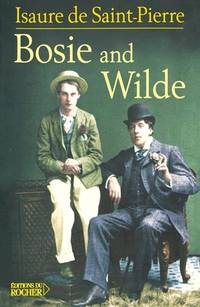
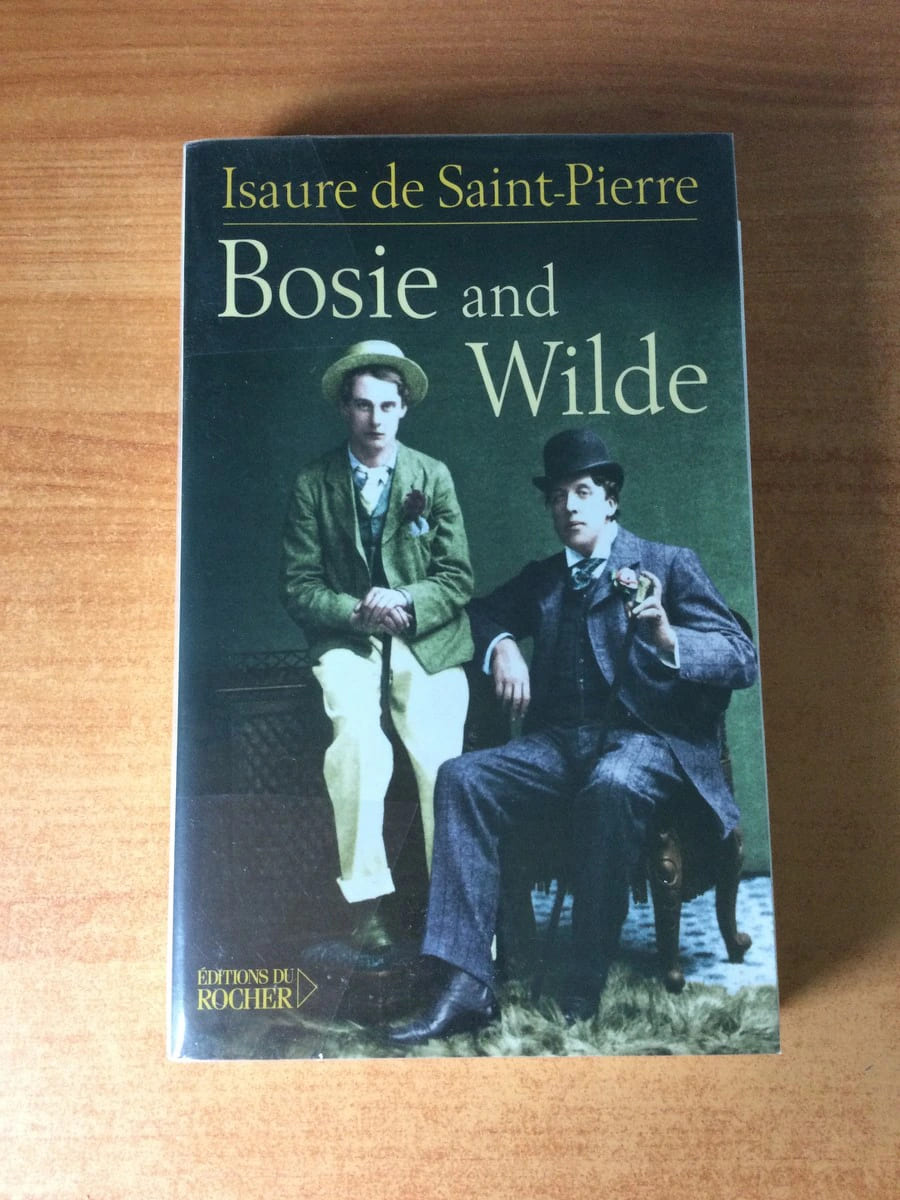
ref. 75855Editions du Rocher 2005 livre 24*15 273 pages
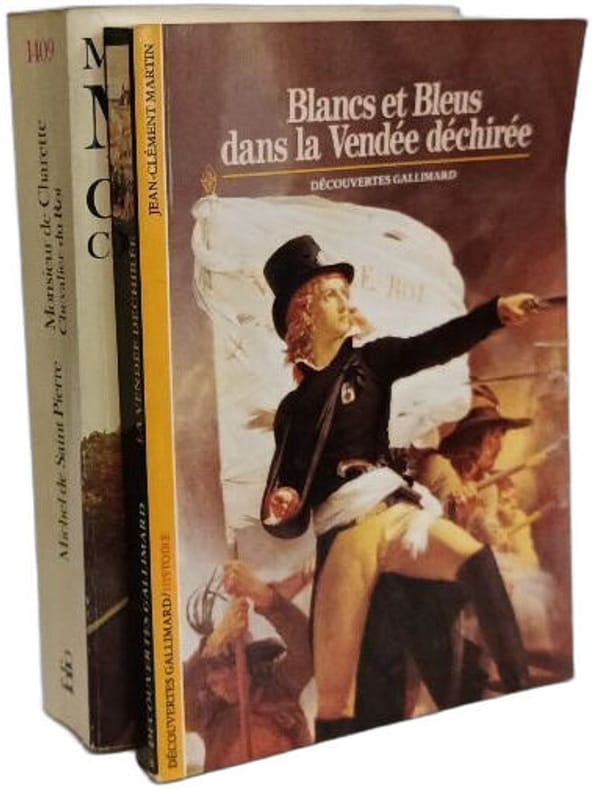
1986ref. 100149622Gallimard 1986 128 pages 12 4x1 2x17 6cm. 1986. mass_market. 2 volume(s). 128 pages.
1907ref. 2255London: J. M. Dent @ Co 1907. Second edition. Second edition. Arts and Crafts binding in full red-brown morocco with attractive linear gilt patterning and four clusters of leaf motifs on each cover gilt decorated spine. Binding is signed in rear dentelle "WNL." Fine. J. M. Dent @ Co unknown books
1907ref. 2255London: J. M. Dent @ Co 1907. Second edition. Second edition. Arts and Crafts binding in full red-brown morocco with attractive linear gilt patterning and four clusters of leaf motifs on each cover gilt decorated spine. Binding is signed in rear dentelle "WNL." Fine. J. M. Dent @ Co unknown
2019ref. BN586639Classiques Garnier 2019. 2019. Softcover. Bernardin de Saint-Pierre : Oeuvres complètes : Tome III : Oeuvres scientifiques : "Études de la nature" et textes périphériques Bernardin de Saint-Pierre : Oeuvres complètes : Tome III : Oeuvres scientifiques : "Études de la nature" et textes périphériques Jean-Michel Racault Colas Duflo Joël Castonguay-Belanger Jean-Michel Racault eds. Henri Bernardin de Saint-Pierre Classiques Garnier paperback
1955ref. 150609065Image Books Doubleday 1955-01-01. Mass Market Paperback. New. Image Books (Doubleday) paperback
ref. 69173P., Lecène, 1892, in 8° relié demi-percaline rouge à coins, dos lisse orné de caissons à froid, 237 pages ; des rousseurs éparses.
ref. 201010704Paris, Les editions de la table ronde , 1958 ; in-8, 264 pp., cartonnage de l'éditeur (avec son rodhoide et son bandeau). Très bon état.
ref. 17985P., Hachette (Collection "Les Grands Ecrivains Français"), 1891, in 12 broché, 189 pages ; non coupé ; des rousseurs ; portrait en frontispice.
ref. 53946P., Hachette (Collection "Les Grands Ecrivains Français"), 1891, in 12 broché, 189 pages ; quelques rousseurs ; cachets ; portrait en frontispice ; couverture fanée.
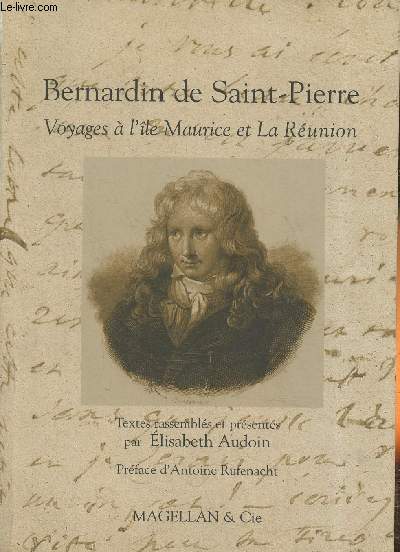
2004ref. RO30361959Magellan & cie. 2004. In-8. Broché. Bon état, Coins frottés, Dos satisfaisant, Intérieur acceptable. 143 pages. Couverture contrepliée. Nombreuses illustrations en couleurs et en noir et blanc, in et hors texte.. . . . Classification Dewey : 840-Littératures des langues romanes. Littérature française
2004ref. 52012004 Texte présentés et commentés pa Elisabeth Audoin, Paris, Editions Magellan & Cie, 2004, 1 Volume broché, 240 x 167 mm. 143 pp. Abondante Iconographie, dans et hors texte, Envoi autographe signé de l'Auteur en page de garde, Complet de sa bande de mise en vente. Bel exemplaire.
1979ref. 1571243688310GLN-390, Editions de la Table Ronde, 1979
ref. 31523Artheme Fayard, 1953. Format 13x18 cm, reliure pleine toile, 124 pages.Bon etat.
1958ref. 100051605La table ronde 1958 in8. 1958. Broché.