2 125 résultats
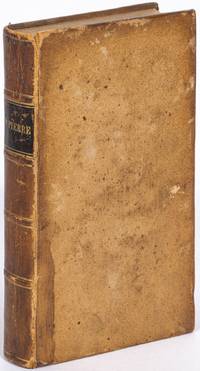
1828réf. 44998New-York: S. King 1828. Very good plus. Early Republic American edition of an altered version of Bernardin de Saint-Pierre's work featuring a happy ending not present in the original. This is the story of two French colonist children who grow up side-by-side and fall in love in Mauritius only to be torn apart by class expectations. PAUL AND VIRGINIA is punctuated by abolitionist themes which this version makes more explicit: rather than dying in a shipwreck as in the original work Virginia is rescued by a formerly enslaved man. OCLC located only two holdings of this edition the first published by S. King in New York. 12mo. 7.25'' x 4.25''. Modern half-calf binding with marbled boards. Hand-colored etched frontispiece. 32 pages followed by 18 modern blank leaves collated complete. Binding with a bit of edgewear to spine. Leaves with light scattered soil mild bleedthrough of colors to back of frontispiece. Sharp. S. King unknown books
1841réf. 549089Philadelphia: J.J. Woodward 1841. Hardcover. Good. American edition. Translated by Henry Hunter. Octavo. 398pp. illustrated with an engraved frontispiece and facing engraved title page. Contemporary bookseller’s blind-embossed stamp and near contemporary bookseller’s ink stamp each on front free endpaper. Contemporary speckled calf gilt spine with black leather spine label. The boards are sunned and rubbed at the edges lacking front fly leaf the conjugate pair of facing engraved plates is partly sprung a good or better copy with light scattered foxing. A scarce well-preserved copy. OCLC locates only three copies. J.J. Woodward hardcover books
1794réf. 17555Philadelphia: Printed and Sold by William Spotswood 1794. 12mo. Original leather-backed marbled paper over boards 1.5" wide horizontal piece missing from bottom front cover. 79pp. Rubberstamp and light pencil writing on front free endpaper. Scattered light fox light wear. Good. According to ESTC this is the second title of PAUL AND MARY Evans 27667 and Welch 11401. Printed and Sold by William Spotswood unknown books
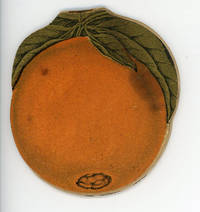
1907réf. 49287Los Angeles: San Pedro Los Angeles & Salt Lake Railroad 1907. 1907. First edition. 3 3/4" circular wrappers in the shape of an orange. A view book from the Salt Lake Route showing and describing destinations in Southern California to include San Bernardino and Arrowhead Mountain; Riverside Redlands the King of Bridges located west of Riverside Ontario Pomona Pasadena Los Angeles Long Beach San Pedro Island etc. Wrappers lightly soiled. In residue to top edge of first 20pp. Interior 20 pages loose from staple. San Pedro, Los Angeles & Salt Lake Railroad, 1907. unknown
1537réf. 4403Venice: Francesco Bindoni & Mapheo Pasini compagni 1537. 8vo 145 x 94 mm. 48 leaves. Italic types. Large title woodcut of the prison of love in flames 19 woodcut text illustrations printed from 13 blocks most showing two scenes; initial spaces with guide letters unrubricated. 19th-century green straight-grained morocco sides with double fillet border enclosing central gold-blocked arms of Gómez de la Cortina his gilt crowned ciphers in the corners gilt edges. Provenance: Joaquin Gómez de La Cortina 1st Marquis de Morante 1808-1868 supralibros & bookplate; with Quaritch their collation note at end; sold in 1996 to Kenneth Rapoport bookplate. Lelio Manfredi’s Italian translation of the Carcel de amor 1st ed. 1492 was among the most popular sentimental romances of its time. Many wept over the thwarted love of the noble Leriano and Laureola heir to the throne of Macedonia. Captive in an allegorical tower of love communicating with his beloved only through mediators the hero eventually renounces her in order to preserve her honor threatened by a rival’s false aspersions. There are duels and battles Leriano stops eating and finally dies after shredding and swallowing her letters. The tragedy touched a nerve and dozens of editions appeared in Spain as well as translations into Italian French English Catalan and in the 17th century German. Few remembered the true author whose name is omitted from most of these editions. One of several Castilian romances that were widely adapted and translated into other western European languages the Carcel de amor was the only one to appear first in print and to be consistently illustrated. It permeated the European reading public. The tale is told through letters and monologues rather than dialogue and much has been written about its hybrid forms and elaborate rhetoric “a reflection of vernacular humanism and a fictional tour de force of rhetorical precepts” Francomano p. 10 and about its literary sources and later influence or lack of it: While many scholars note its influence on the development of later European Renaissance fiction through its use of epistolary exchanges and of a narrative voice L’autore who acts as intermediary as well as its tragic ending and exploration of class differences between the lovers one commentator has called it “a dead-end in the history of literature” A. West: “In general the Prison of Love is a book of vestiges: of ways of believing that no longer obtain of customs that already were dying out of a manner of writing soon to be eclipsed by the realism of the picaresque novel.” The humanist Lelio Manfredi d. 1528 translated the work into Italian at the request of Isabella d’Este to whom the printed editions are dedicated the first appearing in Venice in 1514. Eight more editions of his translation are recorded by USTC all but one Venetian the last in 1546. This edition is the third of four recorded editions by the partners Fr. Bindoni & Maffeo Pasini who specialized in vernacular literature and devotional works. The title woodcut used in the Bindoni and Pasini editions is a close copy of woodcuts from earlier Venetian editions see for example an anonymously published Spanish edition from 1523 Sander 6729 not in USTC whose title is reproduced in the Heredia catalogue vol. 2 no. 2468. Its iconography dates to the earliest Spanish editions as does that of the small primitive text woodcuts which relate to the text and are based on the more elaborate cuts from the Spanish incunable editions cf. Deyermond. Blind copying was the order of the day: note the anachronism of a cheaply printed edition of the 1530s retaining blank initial spaces with guide letters to be filled by nonexistent rubricators or illuminators who by this late date would only have been hired to embellish costly imprints or luxury manuscripts. I locate two US holdings of this edition UCLA and Folger and six holdings of other editions of Manfredi’s translation. USTC 854438; EDIT-16 CNCE 66994; Sander 6732 note; Palau 293388; Brunet V 112. Not in Essling. Cf. Alan Deyermond “The Woodcuts of Diego de San Pedro's Cárcel de Amor 1492-1496” Bulletin hispanique 2002 104-2: 511-528; Emily Francomano The Prison of Love: Romance Translation and the Book in the Sixteenth Century Toronto 2018; Adrian West “On Translating Diego de San Pedro's The Prison of Love” Asymptote Oct. 2012 online. Francesco Bindoni & Mapheo Pasini, compagni unknown
réf. 600103Vintage photograph on photographer's mount ca. 1900. 5 1/2" x 8 1/2". F. Soft cover. paperback
1537réf. 4403Venice: Francesco Bindoni & Mapheo Pasini compagni 1537. 8vo 145 x 94 mm. 48 leaves. Italic types. Large title woodcut of the prison of love in flames 19 woodcut text illustrations printed from 13 blocks most showing two scenes; initial spaces with guide letters unrubricated. 19th-century green straight-grained morocco sides with double fillet border enclosing central gold-blocked arms of Gómez de la Cortina his gilt crowned ciphers in the corners gilt edges. Provenance: Joaquin Gómez de La Cortina 1st Marquis de Morante 1808-1868 supralibros & bookplate; with Quaritch their collation note at end; sold in 1996 to Kenneth Rapoport bookplate. Lelio Manfredi’s Italian translation of the Carcel de amor 1st ed. 1492 was among the most popular sentimental romances of its time. Many wept over the thwarted love of the noble Leriano and Laureola heir to the throne of Macedonia. Captive in an allegorical tower of love communicating with his beloved only through mediators the hero eventually renounces her in order to preserve her honor threatened by a rival’s false aspersions. There are duels and battles Leriano stops eating and finally dies after shredding and swallowing her letters. The tragedy touched a nerve and dozens of editions appeared in Spain as well as translations into Italian French English Catalan and in the 17th century German. Few remembered the true author whose name is omitted from most of these editions. One of several Castilian romances that were widely adapted and translated into other western European languages the Carcel de amor was the only one to appear first in print and to be consistently illustrated. It permeated the European reading public. The tale is told through letters and monologues rather than dialogue and much has been written about its hybrid forms and elaborate rhetoric “a reflection of vernacular humanism and a fictional tour de force of rhetorical precepts” Francomano p. 10 and about its literary sources and later influence or lack of it: While many scholars note its influence on the development of later European Renaissance fiction through its use of epistolary exchanges and of a narrative voice L’autore who acts as intermediary as well as its tragic ending and exploration of class differences between the lovers one commentator has called it “a dead-end in the history of literature” A. West: “In general the Prison of Love is a book of vestiges: of ways of believing that no longer obtain of customs that already were dying out of a manner of writing soon to be eclipsed by the realism of the picaresque novel.” The humanist Lelio Manfredi d. 1528 translated the work into Italian at the request of Isabella d’Este to whom the printed editions are dedicated the first appearing in Venice in 1514. Eight more editions of his translation are recorded by USTC all but one Venetian the last in 1546. This edition is the third of four recorded editions by the partners Fr. Bindoni & Maffeo Pasini who specialized in vernacular literature and devotional works. The title woodcut used in the Bindoni and Pasini editions is a close copy of woodcuts from earlier Venetian editions see for example an anonymously published Spanish edition from 1523 Sander 6729 not in USTC whose title is reproduced in the Heredia catalogue vol. 2 no. 2468. Its iconography dates to the earliest Spanish editions as does that of the small primitive text woodcuts which relate to the text and are based on the more elaborate cuts from the Spanish incunable editions cf. Deyermond. Blind copying was the order of the day: note the anachronism of a cheaply printed edition of the 1530s retaining blank initial spaces with guide letters to be filled by nonexistent rubricators or illuminators who by this late date would only have been hired to embellish costly imprints or luxury manuscripts. I locate two US holdings of this edition UCLA and Folger and six holdings of other editions of Manfredi’s translation. USTC 854438; EDIT-16 CNCE 66994; Sander 6732 note; Palau 293388; Brunet V 112. Not in Essling. Cf. Alan Deyermond “The Woodcuts of Diego de San Pedro's Cárcel de Amor 1492-1496” Bulletin hispanique 2002 104-2: 511-528; Emily Francomano The Prison of Love: Romance Translation and the Book in the Sixteenth Century Toronto 2018; Adrian West “On Translating Diego de San Pedro's The Prison of Love” Asymptote Oct. 2012 online. Francesco Bindoni & Mapheo Pasini, compagni unknown books
réf. 600103Vintage photograph on photographer's mount ca. 1900. 5 1/2" x 8 1/2". F. Soft cover. paperback books
1907Mm 300x405 Fascicolo in folio di pp. 8 con prima carta illustrate in bianco e nero, illustrazioni in nero nel testo. In buono stato. SPEDIZIONE IN 24 ORE DALLA CONFERMA DELL'ORDINE.
réf. feb23892Eminescu. Used. ; Romanian Edition of Tristan si Iseut - Manon Lescaut - Paul si Virginia Romanul de dragoste 1970; For more details please contact me Eminescu unknown
1981réf. R240154380Editions Garnier. 1981. In-8. Broché. Etat d'usage, Couv. légèrement pliée, Dos satisfaisant, Intérieur frais. 606 pages.. . . . Classification Dewey : 320-Science politique
réf. 96722-JB105Garnier 1981Réédition de 1712
1878réf. 47497Académie des Bibliophiles Demi-toile cirée Paris 1878 Ed. numérotée
réf. 0366459937.Ghardcover. Good. Access codes and supplements are not guaranteed with used items. May be an ex-library book. hardcover
réf. 036575868X.Gpaperback. Good. Access codes and supplements are not guaranteed with used items. May be an ex-library book. paperback
1985réf. BN447032Solesmes Abbaye Saint-pierre de solesmes 1985. 1985. Missel grégorien des dimanches et fêtes noté en chant grégorien par les moines de Solesmes Missel grégorien des dimanches et fêtes noté en chant grégorien par les moines de Solesmes Abbaye Saint-pierre de solesmes Hrsg. Solesmes, Abbaye, Saint-pierre de solesmes unknown
réf. 9788570601513-11-66489Imprensa Oficial. New. Imprensa Oficial unknown
réf. A9781087877938Hardback. New. hardcover
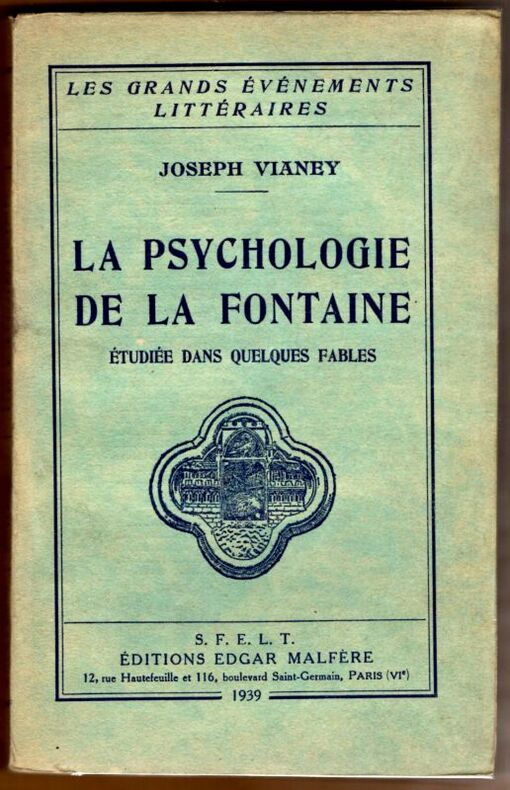
réf. 13307Société Française d'édition littéraire et technique, 1937 - In-12°, br, couverture sobre vert d'eau titrée en bleu encre d'écolier, 183 pages, bel exemplaire.
1998réf. 26150Actes sud - Motta 1998 In-4 30,5 x 30,5 cm. Reliure de l’éditeur cartonnée noire sous jaquette illustrée, 191 pp., Nombreuses photographies en noir. Traduit de l’Italien par Anne Bresson-Lucas. Exemplaire en très bon état.
1944réf. 474571944 Paris, J. Peyronnet & Cie (impr. de J. Peyronnet), 1944 - 1ère édition - Gr. in-8° (255 x 165) - Broché - Couv. illustrée - illustrations Nb PP H.T. - .291 pages - bon exemplaire - Réf. 47457
réf. 001469Editions Grolier Reliure Toile Jaune Montreal Collection à la découverte - 225 pages in -8 - nombreuses photos en N/B
1896réf. 111209Genève, Imprimerie P. Dubois 1896 In-8 22,5 x 15,5 cm. Broché, couverture beige, dos muet, titre en noir sur le premier plat, 68 pp., table des matières. Exemplaire en bon état d’un ouvrage peu courant.
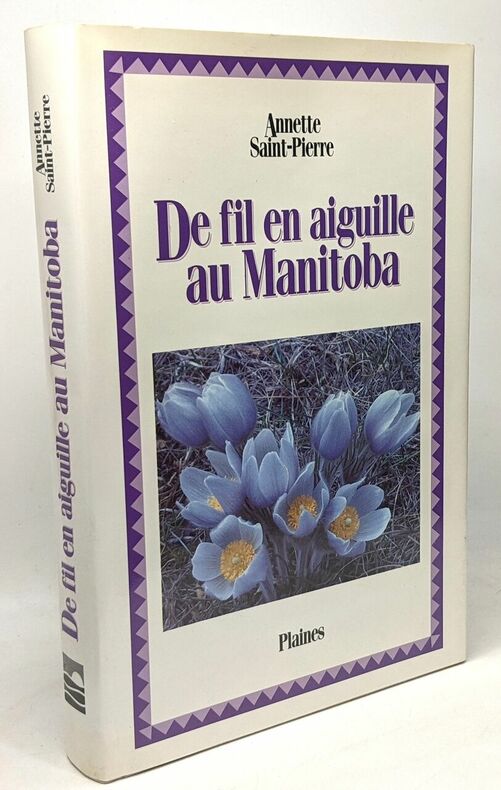
1995réf. 100079103Plaines 1995 16x23x3cm. 1995. Relié. illustrations en noir et blanc
réf. 5197XIXè siècle 21,2 x 15,1