Saul BellowBiblio.com

6,883 results
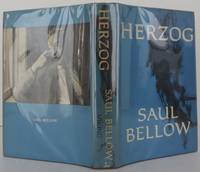
1964ref. 102188Viking Press 1964 First edition. Signed by author on full title page. Light blue top stain. Clipped jacket with light wear at edges. Five small closed tears less than 1/8" Clean interior with no toning. Blue cloth with embossed title on front cover silver gilt title on spine. This is the story of Moses Herzog a great sufferer joker mourner and charmer. Although his life steadily disintegrates around him - he has failed as a writer and teacher as a father and has lost the affection of his wife to his best friend - Herzog sees himself as a survivor both of his private disasters and those of the age. He writes unsent letters to friends and enemies colleagues and famous people revealing his wry perception of the world around him and the innermost secrets of his heart. 341 pages. Signed by Authors. 1st Edition. Hardcover. Near Fine/Very Good. Viking Press hardcover
1965ref. rb15018New York: Harper and Roe 1965. First Edition. Hardcover. Fine. Fine hardcover copy yellow cloth lettered in black. Unpaginated. Signed and inscribed by Steinberg. 12.25 x 9.25 inches. Harper and Roe hardcover
ref. 51-6008Paris: Galerie Maeght 1973. Folio. Original wraps. 28 x 28cm DLM édité en septembre 1973 pour l’exposition STEINBERG à la Galerie Maeght. Texte de Hubert Damish « Tables d’évidences ». 32 pages non reliées. 3 lithographies originales dont 2 en double page et 8 reproductions en noir. Tirage original. Epuisé en diffusion. Paris: Galerie Maeght, 1973. paperback
2016ref. __0198758324Oxford Univ Pr 2016. Hardcover. New. 2580 pages. 9.75x6.75x4.50 inches. Oxford Univ Pr hardcover
ref. Bloomsbury-9780810855373Scarecrow Press. Hardback. New. 496 pages Scarecrow Press hardcover
ref. Bloomsbury-9780810855373Scarecrow Press. Hardback. New. 496 pages Scarecrow Press hardcover
ref. Bloomsbury-9781442223493Rowman & Littlefield. Hardback. New. 504 pages Rowman & Littlefield hardcover
ref. Bloomsbury-9781442223493Rowman & Littlefield. Hardback. New. 504 pages Rowman & Littlefield hardcover
ref. Bloomsbury-9781350420694Bloomsbury Academic. Hardback. New. 424 pages Bloomsbury Academic hardcover
ref. Bloomsbury-9781350420694Bloomsbury Academic. Hardback. New. 424 pages Bloomsbury Academic hardcover
2009ref. SONG098189898XBrand: Greenway Communications 2009-10-01. First Edition. paperback. Used: Good. 8.75x0.25x11.75. Buy with confidence. Excellent Customer Service & Return policy. Brand: Greenway Communications paperback
ref. 75035like new. unknown
1959ref. 46888(No place), The Association for Symbolic Logic, 1959. 8vo. Wrappers blank with printed title on spine. Entire issue No. 1 of vol. 24, offered. Fine and clean.
1959ref. 48378(No place), The Association for Symbolic Logic, 1959. Lev8vo. Bound in red half cloth with gilt lettering to spine. In ""Journal of Symbolic Logic"", Volume 24. Barcode label pasted on to back board. Small library stamp to lower part of 6 pages. A very fine copy. Pp. (1) - 14. [Entire volume: VI, 374 pp.).
1959ref. 48378No place The Association for Symbolic Logic 1959. Lev8vo. Bound in red half cloth with gilt lettering to spine. In "Journal of Symbolic Logic" Volume 24. Barcode label pasted on to back board. Small library stamp to lower part of 6 pages. A very fine copy. Pp. 1 - 14. Entire volume: VI 374 pp. The seminal first printing of Kripke's debut article which provided the basis for his logic and for the model theory for modal logic in general. The work constitutes the very beginning of Kripke Semantics often called possible world semantics. Kripke's works in general are rare in fist editions. Many of them remain unpublished and are only known in privately circulated manuscripts.The American philosopher Saul A. Kripke born 1940 is an exceedingly important logician and philosopher of language and one of the most powerful and influential thinkers of analytic and Anglo-American philosophy. He is considered the greatest living philosopher and perhaps the greatest since Wittgenstein. In 2001 he was awarded the Schock Prize in Logic and Philosophy which is considered the philosopical equivalent of the Nobel Prize.Kripke who grew up in Omaha in a religious Jewish family was somewhat of a prodigy child. During grammar school he got intimately acquainted with and mastered to perfection algebra geometry and calculus and very early on he took up philosophy which later became his career. Still a teenager in high school he wrote a work that was to change the face of philosophical logic forever namely the groundbreaking paper "A Completeness Theorem for Modal Logic" which was printed a few years later in 1959 in the Journal of Symbolic Logic while he was in his first year at Harvard University. This seminal debut work proposed what later came to be known as Kripke models for modal logic. The story goes that the paper earned a letter from the department of mathematics urging Kripke to apply for a job there to which he is said to have written an answer explaining "My mother said that I should finish high school and go to college first."In 1962 he graduated from Harvard University where he remained until 1968 first as a member of the Harvard Society of Fellows and then as a lecturer. During these years he developed the logical theories founded in the "Completeness Theorem" further and made seminal contributions to the field of logic and semantics. Kripke Semantics is a formal semantics for non-classical logic systems that Kripke began developing in his teenage years first published something on in 1959 the present work and further developed in the 60'ies and. The development of Kripke Semantics was no less than a breakthrough in the making of non-classical logics of which no model theory existed before Kripke's. With this work Kripke laid the foundation for proving completeness theorems for modal logic and for identifying the weakest normal modal logic which is now named K after him. hardcover
1959ref. 46888No place The Association for Symbolic Logic 1959. 8vo. Wrappers blank with printed title on spine. Entire issue No. 1 of vol. 24 offered. Fine and clean. The seminal first printing of Kripke's debut article which provided the basis for his logic and for the model theory for modal logic in general. The work constitutes the very beginning of Kripke Semantics often called possible world semantics. Kripke's works in general are rare in fist editions. Many of them remain unpublished and are only known in privately circulated manuscripts.The American philosopher Saul A. Kripke born 1940 is an exceedingly important logician and philosopher of language and one of the most powerful and influential thinkers of analytic and Anglo-American philosophy. He is considered the greatest living philosopher and perhaps the greatest since Wittgenstein. In 2001 he was awarded the Schock Prize in Logic and Philosophy which is considered the philosopical equivalent of the Nobel Prize.Kripke who grew up in Omaha in a religious Jewish family was somewhat of a prodigy child. During grammar school he got intimately acquainted with and mastered to perfection algebra geometry and calculus and very early on he took up philosophy which later became his career. Still a teenager in high school he wrote a work that was to change the face of philosophical logic forever namely the groundbreaking paper "A Completeness Theorem for Modal Logic" which was printed a few years later in 1959 in the Journal of Symbolic Logic while he was in his first year at Harvard University. This seminal debut work proposed what later came to be known as Kripke models for modal logic. The story goes that the paper earned a letter from the department of mathematics urging Kripke to apply for a job there to which he is said to have written an answer explaining "My mother said that I should finish high school and go to college first."In 1962 he graduated from Harvard University where he remained until 1968 first as a member of the Harvard Society of Fellows and then as a lecturer. During these years he developed the logical theories founded in the "Completeness Theorem" further and made seminal contributions to the field of logic and semantics. Kripke Semantics is a formal semantics for non-classical logic systems that Kripke began developing in his teenage years first published something on in 1959 the present work and further developed in the 60'ies and. The development of Kripke Semantics was no less than a breakthrough in the making of non-classical logics of which no model theory existed before Kripke's. With this work Kripke laid the foundation for proving completeness theorems for modal logic and for identifying the weakest normal modal logic which is now named K after him. unknown
1964ref. 2308210New York: Viking 1964. First. hardcover. Fine/Fine. A fine first edition in a fine dust jacket signed by Saul Bellow on the front free endpaper. Viking unknown
1964ref. 17054New York: Viking 1964. Book. VG. Cloth. Signed By the Author. 1st. Octavo. Blue cloth in price clipped dust jacket with 2 inch tear to back panel and very shallow chipping to head and heel of spine. Bookplate to front paste-down endpaper and some light paper scarring to front endpaper. Signed by Bellow on the front endpaper. Nice copy. Viking Hardcover
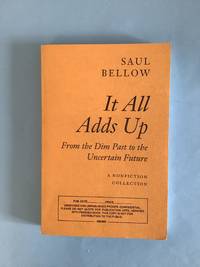
1994ref. 25008New York: Viking Press 1994. Uncorrected proofs of the first edition. Printed wrappers. Fine. 8vo. A selection of Bellow's nonfiction articles. Between the issuance of this proof and the published book several essays some 40 pages were expunged for unknown reasons. The only copy of this textually significant text we've seen. Viking Press
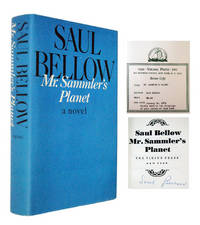
1970ref. 184New York: The Viking Press 1970. First edition of the author's third and final National Book Award-winning novel. Octavo original half cloth. Signed by Saul Bellow on the title page. Review copy with the slip laid in fine in a fine dust jacket. Jacket design by Mel Williamsom. Saul Bellow is the only author to have received three National Book Awards for The Adventures of Augie March Herzog and Mr. Sammlers Planet in addition to both the Pulitzer and Nobel Prizes. The Sunday Times praised these achievements when it revered "Bellows oeuvre as both timeless and ruthlessly contemporary. The Viking Press hardcover
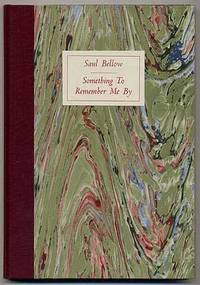
1991ref. 362364New York: Albondocani Press 1991. Hardcover. Near Fine/Near Fine. First edition. Quarter cloth and marbled papercovered boards. Prospectus laid in. Fine in fine unprinted acetate dustwrapper. Copy number 2 of 350 numbered copies Signed by Bellow. Ray Roberts's copy. Roberts was an influential editor with Viking Henry Holt and then Little Brown and he worked closely with John Fowles Martha Grimes Thomas Pynchon and Jacqueline Kennedy Onassis. Albondocani Press hardcover
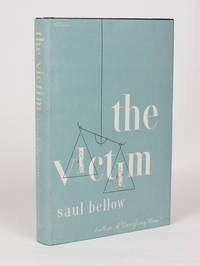
1947ref. 64666New York: The Vanguard Press Inc 1947. New York: The Vanguard Press Inc. 1947. First edition. Octavo 8 1/8 x 5 1/2 inches; 205 x 140 mm. 8 1-294 2 blank pp. Original full black cloth blue lettering on spine. Top edge blue fore-edge uncut. With original pictorial dust jacket. Sight foxing to endpapers and inner flaps of the dust jacket. Back panel of the dust jacket with a small closed tear. Otherwise near fine. This author's first two books Dangling Man and The Victim 1947 had a profound impact on the mid-twentieth century literary scene. "Together they effectively introduced a new style of American fiction. The "Gentile" era of Fitzgerald Hemingway and Faulkner began with Bellow to give way to a new Jewish tradition and a sense of moral and social alarm. Bellow's characters are generally anti-heroes caught up in the existential dilemma of trying to define themselves with some measure of dignity despite the constant impediments of objective and subjective circumstances." Benet's The Reader's Encyclopedia fourth edition. Bellow is the recipient of the Pulitzer Prize for Humbolt's Gift 1975 and the Nobel Prize in Literature in 1976. HBS 64666. $750. The Vanguard Press, Inc unknown
1964ref. 2308210New York: Viking 1964. First. hardcover. Fine/Fine. A fine first edition in a fine dust jacket signed by Saul Bellow on the front free endpaper. Viking unknown books
1991ref. 362364New York: Albondocani Press 1991. Hardcover. Near Fine/Near Fine. First edition. Quarter cloth and marbled papercovered boards. Prospectus laid in. Fine in fine unprinted acetate dustwrapper. Copy number 2 of 350 numbered copies Signed by Bellow. Ray Roberts's copy. Roberts was an influential editor with Viking Henry Holt and then Little Brown and he worked closely with John Fowles Martha Grimes Thomas Pynchon and Jacqueline Kennedy Onassis. Albondocani Press hardcover books
1947ref. 64666New York: The Vanguard Press Inc 1947. New York: The Vanguard Press Inc. 1947. First edition. Octavo 8 1/8 x 5 1/2 inches; 205 x 140 mm. 8 1-294 2 blank pp. Original full black cloth blue lettering on spine. Top edge blue fore-edge uncut. With original pictorial dust jacket. Sight foxing to endpapers and inner flaps of the dust jacket. Back panel of the dust jacket with a small closed tear. Otherwise near fine. This author's first two books Dangling Man and The Victim 1947 had a profound impact on the mid-twentieth century literary scene. "Together they effectively introduced a new style of American fiction. The "Gentile" era of Fitzgerald Hemingway and Faulkner began with Bellow to give way to a new Jewish tradition and a sense of moral and social alarm. Bellow's characters are generally anti-heroes caught up in the existential dilemma of trying to define themselves with some measure of dignity despite the constant impediments of objective and subjective circumstances." Benet's The Reader's Encyclopedia fourth edition. Bellow is the recipient of the Pulitzer Prize for Humbolt's Gift 1975 and the Nobel Prize in Literature in 1976. HBS 64666. $750. The Vanguard Press, Inc unknown books