Norman E SaulBiblio.com

6922 resultados
ref. Bloomsbury-9780810855373Scarecrow Press. Hardback. New. 496 pages Scarecrow Press hardcover
ref. Bloomsbury-9781442223493Rowman & Littlefield. Hardback. New. 504 pages Rowman & Littlefield hardcover
ref. Bloomsbury-9781442223493Rowman & Littlefield. Hardback. New. 504 pages Rowman & Littlefield hardcover
ref. Bloomsbury-9781350420694Bloomsbury Academic. Hardback. New. 424 pages Bloomsbury Academic hardcover
ref. Bloomsbury-9781350420694Bloomsbury Academic. Hardback. New. 424 pages Bloomsbury Academic hardcover
ref. 75035like new. unknown
1964ref. 17054New York: Viking 1964. Book. VG. Cloth. Signed By the Author. 1st. Octavo. Blue cloth in price clipped dust jacket with 2 inch tear to back panel and very shallow chipping to head and heel of spine. Bookplate to front paste-down endpaper and some light paper scarring to front endpaper. Signed by Bellow on the front endpaper. Nice copy. Viking Hardcover
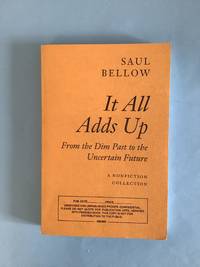
1994ref. 25008New York: Viking Press 1994. Uncorrected proofs of the first edition. Printed wrappers. Fine. 8vo. A selection of Bellow's nonfiction articles. Between the issuance of this proof and the published book several essays some 40 pages were expunged for unknown reasons. The only copy of this textually significant text we've seen. Viking Press
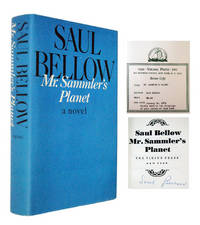
1970ref. 184New York: The Viking Press 1970. First edition of the author's third and final National Book Award-winning novel. Octavo original half cloth. Signed by Saul Bellow on the title page. Review copy with the slip laid in fine in a fine dust jacket. Jacket design by Mel Williamsom. Saul Bellow is the only author to have received three National Book Awards for The Adventures of Augie March Herzog and Mr. Sammlers Planet in addition to both the Pulitzer and Nobel Prizes. The Sunday Times praised these achievements when it revered "Bellows oeuvre as both timeless and ruthlessly contemporary. The Viking Press hardcover
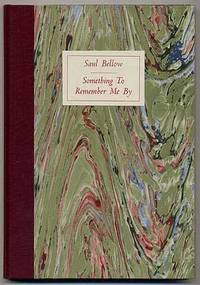
1991ref. 362364New York: Albondocani Press 1991. Hardcover. Near Fine/Near Fine. First edition. Quarter cloth and marbled papercovered boards. Prospectus laid in. Fine in fine unprinted acetate dustwrapper. Copy number 2 of 350 numbered copies Signed by Bellow. Ray Roberts's copy. Roberts was an influential editor with Viking Henry Holt and then Little Brown and he worked closely with John Fowles Martha Grimes Thomas Pynchon and Jacqueline Kennedy Onassis. Albondocani Press hardcover
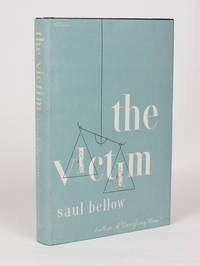
1947ref. 64666New York: The Vanguard Press Inc 1947. New York: The Vanguard Press Inc. 1947. First edition. Octavo 8 1/8 x 5 1/2 inches; 205 x 140 mm. 8 1-294 2 blank pp. Original full black cloth blue lettering on spine. Top edge blue fore-edge uncut. With original pictorial dust jacket. Sight foxing to endpapers and inner flaps of the dust jacket. Back panel of the dust jacket with a small closed tear. Otherwise near fine. This author's first two books Dangling Man and The Victim 1947 had a profound impact on the mid-twentieth century literary scene. "Together they effectively introduced a new style of American fiction. The "Gentile" era of Fitzgerald Hemingway and Faulkner began with Bellow to give way to a new Jewish tradition and a sense of moral and social alarm. Bellow's characters are generally anti-heroes caught up in the existential dilemma of trying to define themselves with some measure of dignity despite the constant impediments of objective and subjective circumstances." Benet's The Reader's Encyclopedia fourth edition. Bellow is the recipient of the Pulitzer Prize for Humbolt's Gift 1975 and the Nobel Prize in Literature in 1976. HBS 64666. $750. The Vanguard Press, Inc unknown
1991ref. 362364New York: Albondocani Press 1991. Hardcover. Near Fine/Near Fine. First edition. Quarter cloth and marbled papercovered boards. Prospectus laid in. Fine in fine unprinted acetate dustwrapper. Copy number 2 of 350 numbered copies Signed by Bellow. Ray Roberts's copy. Roberts was an influential editor with Viking Henry Holt and then Little Brown and he worked closely with John Fowles Martha Grimes Thomas Pynchon and Jacqueline Kennedy Onassis. Albondocani Press hardcover books
1947ref. 64666New York: The Vanguard Press Inc 1947. New York: The Vanguard Press Inc. 1947. First edition. Octavo 8 1/8 x 5 1/2 inches; 205 x 140 mm. 8 1-294 2 blank pp. Original full black cloth blue lettering on spine. Top edge blue fore-edge uncut. With original pictorial dust jacket. Sight foxing to endpapers and inner flaps of the dust jacket. Back panel of the dust jacket with a small closed tear. Otherwise near fine. This author's first two books Dangling Man and The Victim 1947 had a profound impact on the mid-twentieth century literary scene. "Together they effectively introduced a new style of American fiction. The "Gentile" era of Fitzgerald Hemingway and Faulkner began with Bellow to give way to a new Jewish tradition and a sense of moral and social alarm. Bellow's characters are generally anti-heroes caught up in the existential dilemma of trying to define themselves with some measure of dignity despite the constant impediments of objective and subjective circumstances." Benet's The Reader's Encyclopedia fourth edition. Bellow is the recipient of the Pulitzer Prize for Humbolt's Gift 1975 and the Nobel Prize in Literature in 1976. HBS 64666. $750. The Vanguard Press, Inc unknown books
1954ref. 130925Weidenfeld and Nicholson 1954. First UK. hardcover. Very Good. 0x0x0. Signed by Author. 1954 Weidenfeld and Nicolson London first British edition signed by Bellow on the title page. Long inscription prior owner to half title page. No jacket. Light corner wear top edge dust dulled. Please email for photos. Weidenfeld and Nicholson hardcover
1913ref. 45772John Richmond Ltd: London 1913. Very Good. London: John Richmond Ltd 1913. First Edition. Octavo 21cm; publisher's mustard card wrappers printed in red; 30pp. Light shelf wear especially along spine edge wrapper margins a bit toned contemporary heraldic ex libris mounted inside upper wrapper else Very Good and sound. A contemporary pencil note signed "EBH" notes that "Siegfried Sassoon 'Saul Kain' says he is 'mortally ashamed' of the parody." Siegfried Sassoon's first appearance in print "The Daffodil Murderer" is a long poem published pseudonymously with the help of the poet T.W.H. Crosland. Though the poem was originally written as an homage to John Masefield Crosland wanted it published explicitly as a satire of Masefield's recently published collection "The Daffodil Fields" while the preface attributed to "William Butler" also a Sassoon pseudonym was a snipe at Yeats. The Chatrey Prize is also entirely made up. Reference: Jean Moorcroft Wilson "Siegfried Sassoon: The Making of a War Poet" 2024. London unknown
1913ref. 45772John Richmond Ltd: London 1913. Very Good. London: John Richmond Ltd 1913. First Edition. Octavo 21cm; publisher's mustard card wrappers printed in red; 30pp. Light shelf wear especially along spine edge wrapper margins a bit toned contemporary heraldic ex libris mounted inside upper wrapper else Very Good and sound. A contemporary pencil note signed "EBH" notes that "Siegfried Sassoon 'Saul Kain' says he is 'mortally ashamed' of the parody." Siegfried Sassoon's first appearance in print "The Daffodil Murderer" is a long poem published pseudonymously with the help of the poet T.W.H. Crosland. Though the poem was originally written as an homage to John Masefield Crosland wanted it published explicitly as a satire of Masefield's recently published collection "The Daffodil Fields" while the preface attributed to "William Butler" also a Sassoon pseudonym was a snipe at Yeats. The Chatrey Prize is also entirely made up. Reference: Jean Moorcroft Wilson "Siegfried Sassoon: The Making of a War Poet" 2024. London unknown books
2008ref. 3565Stated First Edition. In near fine condition clean and unmarked light toning at edges. In a near fine dust jacket. Signed and inscribed by Saul Leiter on the title page. Steidl hardcover
ref. 1465305Maeght Editeur. Collectible - Like New. Condition: Fine; Dust Jacket Condition: This special edition of Derriere Le Miroir was limited to 150 copies and is signed by Steinberg in pencil on the limitation page. #79/150 copies. Includes 3 original lithographs. Printed on Velin d'Arches paper. Folio 15 x 11. Lithographed wrapssoftcover housed in a blue chemise with a blue slipcase. 18 total lithographs plus the lithographed wraps. Text in French by Hubert Damisch. The covers and lithographs are in Fine condition. The chemise has a little fading on the printed spine and is in Very Good condition. The slipcase has fading to the closed end and along back edge Very Good. Photos upon request. Maeght Editeur paperback
1959ref. 48378(No place), The Association for Symbolic Logic, 1959. Lev8vo. Bound in red half cloth with gilt lettering to spine. In ""Journal of Symbolic Logic"", Volume 24. Barcode label pasted on to back board. Small library stamp to lower part of 6 pages. A very fine copy. Pp. (1) - 14. [Entire volume: VI, 374 pp.).
1959ref. 46888(No place), The Association for Symbolic Logic, 1959. 8vo. Wrappers blank with printed title on spine. Entire issue No. 1 of vol. 24, offered. Fine and clean.
1959ref. 48378No place The Association for Symbolic Logic 1959. Lev8vo. Bound in red half cloth with gilt lettering to spine. In "Journal of Symbolic Logic" Volume 24. Barcode label pasted on to back board. Small library stamp to lower part of 6 pages. A very fine copy. Pp. 1 - 14. Entire volume: VI 374 pp. The seminal first printing of Kripke's debut article which provided the basis for his logic and for the model theory for modal logic in general. The work constitutes the very beginning of Kripke Semantics often called possible world semantics. Kripke's works in general are rare in fist editions. Many of them remain unpublished and are only known in privately circulated manuscripts.The American philosopher Saul A. Kripke born 1940 is an exceedingly important logician and philosopher of language and one of the most powerful and influential thinkers of analytic and Anglo-American philosophy. He is considered the greatest living philosopher and perhaps the greatest since Wittgenstein. In 2001 he was awarded the Schock Prize in Logic and Philosophy which is considered the philosopical equivalent of the Nobel Prize.Kripke who grew up in Omaha in a religious Jewish family was somewhat of a prodigy child. During grammar school he got intimately acquainted with and mastered to perfection algebra geometry and calculus and very early on he took up philosophy which later became his career. Still a teenager in high school he wrote a work that was to change the face of philosophical logic forever namely the groundbreaking paper "A Completeness Theorem for Modal Logic" which was printed a few years later in 1959 in the Journal of Symbolic Logic while he was in his first year at Harvard University. This seminal debut work proposed what later came to be known as Kripke models for modal logic. The story goes that the paper earned a letter from the department of mathematics urging Kripke to apply for a job there to which he is said to have written an answer explaining "My mother said that I should finish high school and go to college first."In 1962 he graduated from Harvard University where he remained until 1968 first as a member of the Harvard Society of Fellows and then as a lecturer. During these years he developed the logical theories founded in the "Completeness Theorem" further and made seminal contributions to the field of logic and semantics. Kripke Semantics is a formal semantics for non-classical logic systems that Kripke began developing in his teenage years first published something on in 1959 the present work and further developed in the 60'ies and. The development of Kripke Semantics was no less than a breakthrough in the making of non-classical logics of which no model theory existed before Kripke's. With this work Kripke laid the foundation for proving completeness theorems for modal logic and for identifying the weakest normal modal logic which is now named K after him. hardcover
1959ref. 46888No place The Association for Symbolic Logic 1959. 8vo. Wrappers blank with printed title on spine. Entire issue No. 1 of vol. 24 offered. Fine and clean. The seminal first printing of Kripke's debut article which provided the basis for his logic and for the model theory for modal logic in general. The work constitutes the very beginning of Kripke Semantics often called possible world semantics. Kripke's works in general are rare in fist editions. Many of them remain unpublished and are only known in privately circulated manuscripts.The American philosopher Saul A. Kripke born 1940 is an exceedingly important logician and philosopher of language and one of the most powerful and influential thinkers of analytic and Anglo-American philosophy. He is considered the greatest living philosopher and perhaps the greatest since Wittgenstein. In 2001 he was awarded the Schock Prize in Logic and Philosophy which is considered the philosopical equivalent of the Nobel Prize.Kripke who grew up in Omaha in a religious Jewish family was somewhat of a prodigy child. During grammar school he got intimately acquainted with and mastered to perfection algebra geometry and calculus and very early on he took up philosophy which later became his career. Still a teenager in high school he wrote a work that was to change the face of philosophical logic forever namely the groundbreaking paper "A Completeness Theorem for Modal Logic" which was printed a few years later in 1959 in the Journal of Symbolic Logic while he was in his first year at Harvard University. This seminal debut work proposed what later came to be known as Kripke models for modal logic. The story goes that the paper earned a letter from the department of mathematics urging Kripke to apply for a job there to which he is said to have written an answer explaining "My mother said that I should finish high school and go to college first."In 1962 he graduated from Harvard University where he remained until 1968 first as a member of the Harvard Society of Fellows and then as a lecturer. During these years he developed the logical theories founded in the "Completeness Theorem" further and made seminal contributions to the field of logic and semantics. Kripke Semantics is a formal semantics for non-classical logic systems that Kripke began developing in his teenage years first published something on in 1959 the present work and further developed in the 60'ies and. The development of Kripke Semantics was no less than a breakthrough in the making of non-classical logics of which no model theory existed before Kripke's. With this work Kripke laid the foundation for proving completeness theorems for modal logic and for identifying the weakest normal modal logic which is now named K after him. unknown
1988ref. 45839HEYNE WILHELM 1988. 3. softcover. Deutsche Erstausgabe! HEYNE, WILHELM paperback
ref. 113114Vienna Bamberger & Wahrman 1933. . First edition. Small 4to publisher's vellum backed marbled boards with Hebrew title pastedown to spine corners rubbed; slight browning to first few leaves pages crisp and clean; text in Hebrew and Yiddish; XIV 335 1 10 5 66 pp. Index of pen-names in Hebrew and Yiddish literature; an unnumbered copy out of a limited edition of 250. Vienna, Bamberger & Wahrman, 1933. hardcover
ref. DADAX0670911380Viking 2006 0000-00-00. hardcover. New. 6.30x1.89x9.49. Buy with confidence. Excellent Customer Service & Return policy. Viking, 2006 hardcover